
BuddhistCatholicContemplativeEvangelicalGeneral ChristianHinduJewishLatter-day SaintMuslimNew VisionsProgressive Christian
Beliefs
- Buddhist
- Catholic
- Contemplative
- Evangelical
- General Christian
- Hindu
- Jewish
- Latter-day Saint
- More Voices
- Muslim
- New Visions
- Pagan
- Progressive Christian
Topics
- Religion News
- Food and Religion
- Sports and Religion
- Religious Art
- Religious Music and Entertainment
- Religious Events
- History and Religion
- Style and Religion
- Politics and Religion
- Women in Religion
- Recreation Outdoors and Religion
- Business Finance and Religion
- Careers Workplace and Religion
- Education and Religion
- Family Parenting and Religion
- Health Fitness and Religion
- Home and Religion
- Relationships and Religion
- Technology and Religion
- Travel and Religion
Columnists
- Buddhist Columnists
- Business Finance and Religion Columnists
- Careers Workplace and Religion Columnists
- Catholic Columnists
- Contemplative Columnists
- Education and Religion Columnists
- Evangelists Columnists
- Family Parenting and Religion Columnists
- General Christian Columnists
- Health Fitness and Religion Columnists
- Hindu Columnists
- History and Religion Columnists
- Home and Religion Columnists
- Jewish Columnists
- More Voices Columnists
- Latter Day Columnists
- Muslim Columnists
- New Visions Columnists
- Nonreligious Columnists
- Pagan Columnists
- Politics and Religion Columnists
- Progressive Columnists
- Recreation Outdoors and Religion Columnists
- Relationships and Religion Columnists
- Religion News Columnists
- Religious Art Columnists
- Religious Events Columnists
- Religious Music and Entertainment Columnists
- Sports and Religion Columnists
- Style and Religion Columnists
- Technology and Religion Columnists
- Travel and Religion Columnists
- Women in Religion Columnists
Resource Library
- 2026 Calendar
- Library of World Religions
- The 100 Most Holy Places on Earth
- Patheos Answers
- Podcasts
- Videos
- Faith Leaders Database
- Anglican Episcopalian
- Bahai
- Baptist
- Buddhism
- Christianity
- Confucianism
- Eastern Orthodoxy
- Hinduism
- Holiness and Pentecostal
- ISKCON
- Islam
- Judaism
- Lutheran
- Methodist
- The Church of Jesus Christ of Latter-day Saints
- New Age
- Paganism
- Presbytarian and Reformed
- Protestantism
- Religion Behind the Scenes
- Roman Catholic
- Scientology
- Shia Islam
- Sikhism
- Sufism
- Sunni Islam
- Taoism
- Zen
- See all religions
Research Tools
 Ad-Free & Subscriber Log-In Subscription Support
Ad-Free & Subscriber Log-In Subscription Support
Follow Patheos 

- Trending:
- Forgiveness
- |
- Marriage
- |
- Consciousness
- |
- Death Penalty
- |
- Election
- |
- Halloween

-
More
- Home
- Evangelical
- James devotional guide #2; 3:1-5:20
James devotional guide #2; 3:1-5:20
Last updated on: March 10, 2023 at 12:25 am by Rob Dalrymple
James devotional guide #2; 3:1-5:20 2023-03-06T11:49:01-08:00 Rob Dalrymple
Patheos Explore the world's faith through different perspectives on religion and spirituality! Patheos has the views of the prevalent religions and spiritualities of the world.
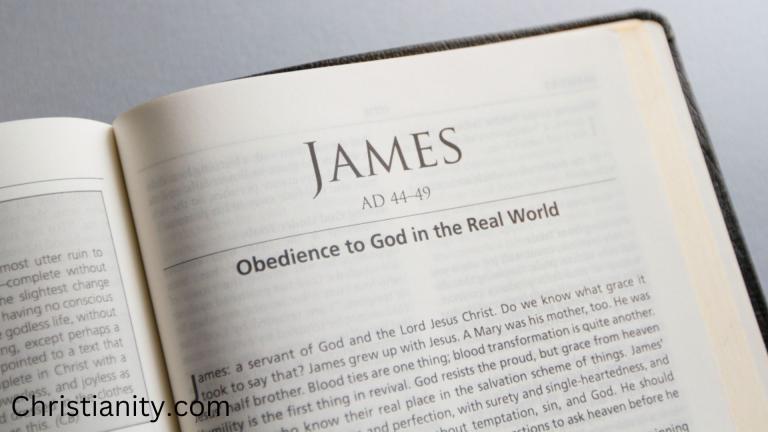
Monday: Read James 3:1-12
James opened with a reminder that we should be “quick to hear, slow to speak and slow to anger” (1:19). Then, in 1:26, he asserted, “If anyone thinks himself to be religious, and yet does not bridle his tongue but deceives his own heart, this man’s religion is worthless.” In 2:1-12, James reiterates the royal law of love and added, “So speak and so act as those who are to be judged by the law of liberty” (2:12). Clearly something was going on with the recipients of this letter that James was addressing.
James begins by confronting those who teach. He urges his readers not to seek to become teachers because “knowing that as such we will incur a stricter judgment” (3:1). This warning was certainly leveled at those who were teaching and not displaying love in their teaching.
The problem for the teacher is that their primary vehicle is the tongue. James explains that we all sin but since the tongue is the most difficult part of the body to bridle the teacher is more susceptible to stumbling.
James uses two illustrations to highlight the significance of the tongue (3-4). Both illustrations relate to transportation: one by land (horse) and one by sea (ship). He also illustrates this by referencing fire (5-6). For James, the irony is that we can tame the animals (7), but “no one can tame the tongue” (lit, of humans) (8).
The power of the tongue is evidenced in that it is used to bless and curse (9-10a). James adds, “these things ought not to be this way” (10).
Questions to ponder/discuss:
- Replying to the old adage about sticks and stones Doug Moo notes, “Far easier to heal are the wounds caused by sticks and stones than the damage caused by words.”[2] This is the danger of teaching. The book of Hebrews adds that pastors (who are teachers) “keep watch over your souls as those who will give an account. Let them do this with joy and not with grief, for this would be unprofitable for you” (Heb 13:17).
- If you are a teacher, I urge you to always surrender your preparation and your teaching to the Spirit.
- If you are under a teacher, pray for them, for yourself, and for all whom they might influence.
Tuesday: Read James 3:13-18
For James, teachers must teach with a wisdom that is displayed in godly living and humility. When James asks, “Who among you is wise and understanding?’ (13), he is still addressing teachers. James is seeking wisdom from the teachers, not by telling them to be wise but by manifesting good works in wisdom.
For James, there are two kinds of wisdom to be pursued. There is one with envy and ambition (14-16) and there is a true wisdom that leads to peace (17-18).
James contends that wisdom is tied to “good behavior” (13; Prov 1:1-7). By good behavior, he means “the gentleness of wisdom” (13). In James’ world, this meant not retaliating with anger to criticism. Thus, he says, “where jealousy and selfish ambition exist, there is disorder and every evil thing” (16). The word for “jealousy” (14, 16) here indicates a “zeal” that often results in violence. Though this may not seem like much to our modern western culture, what James is advocating for was radically counter-cultural.
James then adds, “If you have bitter jealousy and selfish ambition in your heart” (14), then you are manifesting an earthly and even a demonic form of wisdom (15). The problem with such behavior is that it undermines the very message of the truth that we profess (14).
James then lists seven attributes of wisdom that is from above (17). For James, “the seed whose fruit is righteousness is sown in peace” (18)
Questions to ponder/discuss:
- Scot McKnight says, “A wise teacher is the one who creates godly, loving peace in the community.”[3] How might this look when there are significant disputes within the community? How might this look when the disputes are over matters of doctrine? How might this look when the disputes are over significant moral issues? (discuss these questions and what it means to pursue peace and yet maintain integrity in beliefs and conduct).
Wednesday: Read James 4:1-10
As James begins to bring his discussion to a close regarding teachers and their efforts to retaliate in anger, we should note the change from 3rd person to 2nd person. James now addresses them directly: “you.”
He begins by asking, “What is the source of quarrels and conflicts?” (1). Commentators are in disagreement over whether they were actually waging war against one another or just metaphorically doing so. That it was only metaphorical derives from the fact that Jesus said that hatred was equal to killing (Matt 5:22). At the same time, the context certainly suggests that they were committing acts of violence. Ralph Martin notes: “Since James and his community were situated in a Zealot-infested society and since it is quite conceivable that (at least) some of the Jewish Christians were former Zealots, the taking of another’s life is not out of the realm of possibility for church members as a response to disagreement.”[4]
For James, acting in a retaliatory manner is what the world does, and “friendship with the world is hostility with God” (4). But, James notes, “God gives a greater grace” (6).
James begins to close this section with a call to repentance (7-10). By means of ten commands, James explains that this is how one becomes humble and repents. He begins with “Submit therefore to God” and “resist the devil and he will flee” (7). Note the presence of mourning and weeping (9). James concludes the list with “humble yourselves in the presence of the Lord and He will exalt you” (10). To be humble is to align with those in need and to become dependent on God.
Questions to ponder/discuss:
- When James says that “You do not have because you do not ask” (2) it is likely wisdom that they do not have. This raises the question as to why God doesn’t answer our prayers. Scripture gives us some reasons: including “doubt” (1:6-8; 5:14-15); “not asking” (4:2); and “asking for wrong reasons” (4:3). What are some other reasons why you suspect that God doesn’t answer our prayers?
Thursday: Read James 4:11-17
In 4:11-12, James sets forth his conclusion to his long presentation on pure speech that began in 3:1-2. The focus of this extended section has been verbal sins in church. James concludes that since we are not God, we should not judge one another (11-12). Note the change of tone in 4:11 to “brothers” or “brothers and sisters.”
When James warns them “not to speak against one another” (11) he is likely directing this at the teachers. When he says “do not speak against one another,” he has in mind the ideas of falsely accusing and slandering others. This corresponds with the “jealousy” or “zeal” of 3:14, 16.
In 4:13-17, James speaks harshly against the wealthy merchants. There is good reason to suppose that these are not members of the church, but are in fact the ones who were oppressing those within the church.
Questions to ponder/discuss:
- Context is everything. We must be careful here about taking James’ words and making concrete rules with regard to them and not considering the context. James should not be understood as condemning all judging (he condemns the wealthy oppressors in the closing part of this letter). There was a specific problem that James was addressing. The context suggests that he was speaking against those who were harshly responding to criticism by denouncing their brothers and sisters and doing so in a way that fails to reflect the love of the Gospel.
- At the same time, we should not too quickly dismiss James’ words. There is a time and a place for firm action against those who are creating trouble (see 2 John and 3 John).
- What then are we to take away from James’ words? We should begin with: love comes first. In addition, this is where wisdom enters the story.
- With all this in mind, what are your thoughts with regard to dealing with conflict in the church?
Friday: Read James 5:1-20
In 5:1-6, James continues his strong speech against the wealthy who were oppressing believers. This group may well be the same as the merchants in 4:13-17. As we saw in 2:1-7 the members of the church were favoring the wealthy. Although may seem odd to us, it was the nature of the Roman world. The wealthy had almost complete control of the economy. In order to get by in the Roman world, one had to give honor to those in power.
James begins by pronouncing a coming judgment upon those who are rich and oppressing the poor (1). James notes that their riches (2), their garments (2), and their gold and silver (3) will not last.
The problem is that they have withheld “the pay of the laborers who mowed your fields” (4). To withhold pay from a day laborer who needed their daily wages to survive was a great travesty (note: the OT law required daily pay; see Lev 19:13; Deut 24:13; Matt 20:8). In addition, they “have condemned and put to death the righteous” (6; 2:11; 4:2). The righteous who have not even resisted them (6).
As a result, God will bring judgment upon the wealthy oppressors (5). James refers to a “day of slaughter” (5), which was commonly used by the prophets to indicate a time of judgment (Obad 10; Zech 11:4, 7; Isa 30:25; 34:2, 6; 53:7; 65:12; Jer 12:3; 15:3; 19:6; 25:34; 48:15; 50:27; 51:40; Ezek 7:14-23; 21:15).
In 5:7-11, James addresses the Christian community and how they ought to respond to the arrogant and oppressive actions of the wealthy. In essence, they should wait for the Day of the Lord—when God judges the oppressors—and not resort to violence (8). James notes that they can be patient because God will bring judgment (9).
They are also to remember the examples of suffering and patience in the prophets (10). Then he adds, “We count them blessed who endured” (11).
In 5:12-20, James brings the letter to a close. The closing, however, does not conform to other NT letters. There is no repetition of previous matters. And there are no greetings.
In 5:12, he adds a note about not swearing oaths. In 5:13-18, he encourages them to help one another through prayer and acts of forgiveness.
Questions to ponder/discuss:
- James is a powerful book. What are your primary takeaways? What parts have been the most convicting? What are some steps that you are going to take in response to this study of James?
[1] This guide is meant to be done either as a group study over the course of 2 or 4 meetings (Day 1-5; 6-10; 11-15; 16-20), or as a private devotion over the course of 4 weeks (or a calendar month—5 lessons per week).
[2] Doug Moo, 160.
[3] McKnight, 303.
[4] Cited in McKnight, 322.
General Christian
Previous Post

March 6, 2023
He Gets Us? Yes, he does, but is the campaign the solution?

Browse Our Archives
Select a Category 000 1 Cor 11:17-34 1 Corinthians 1 John 1 Peter 1 Thessalonians 1 Timothy 10 Commandments 2 Corinthians 2 John 2 Peter 2 Thessalonians 2 Timothy 3 John 666 Abortion Acts 2:42 Ahmaud Arbery AIPAC All Saints Day America antisemitism BDS Beast Betting Bible Bible study Biblical Interpretation Biden Book of Acts Boycott Campus Protests Catholicism Ceasefire Chavez Ravine Christian Nationalism Christian Zionism Christianity Today Christmas Church Colossians Communion Convict Leasing Covid-19 Craig Blaising creation Crucifixion Daoud Nassar Deception Deconstruction Democracy Devotional guide Discipleship Easter Eden Education Election End-times Ephesians Eschatology Ethnic Cleansing Evangelicalism Evangelicals Evolution Fall Famine Fascism FIFA Freedom of Speech Galatians Gary Burge Gaza Gaza; Genocide; Boycott Genesis Genocide George Floyd Global Warming God's will Gospel Gospel of John Gospel of Luke Gospel of Mark Gospel of Matthew Government Grace Great Prostitute Hamas Harris healthcare Hebrews HeGetsUs Holy Spirit Holy Week Honor Father and Mother ICJ Immigration Indigenous peoples day Iran Israel Israel Palestine Itamar Ben Gvir James Jesus Joel Willits Jude Just war Justice Kamala Harris Kingdom Of God Kings and Queens land of Israel Law (OT) Lazarus Les Miserable LGBTQ+ Love Luke Mahmoud Khalil Man of Lawlessness Mark Mark of the Beast Marriage Martin Luther King Jr Mercy Mexican Repatriation Military-Industrial-Complex Ministry Mission Money NAFTA Nakba Netanyahu New Creation New Testament Nicaragua Nicodemus Non Violence Occupation Pacifism Palestine Parable Paul Peace Pentecost Peonage Philemon Philippians Politics Poor Power Prayer Pride Month Priests Pro-life Propaganda Prophesy Prophet Qatar Queen Elizabeth Racism Reconstruction Redemption Reformation Resurrection Revelation Roe v Wade Romans Romans 13:1-7 Rome Russia Sabbath Samaritan Seals Sermon Settlements Slavery Spiritual gifts Taxes Tent of Nations Terrorism The Beast Theology Titus Torture Trump truth Ukraine Uncategorized Veteran's Day War Warsaw Ghetto wealth Wedding Women World Cup 2022 Worldview Worship Wrath Yemen Zionism
Select a Month September 2026 May 2026 February 2026 November 2025 October 2025 August 2025 July 2025 June 2025 May 2025 April 2025 March 2025 February 2025 January 2025 December 2024 November 2024 October 2024 September 2024 August 2024 July 2024 June 2024 May 2024 April 2024 March 2024 February 2024 January 2024 December 2023 November 2023 October 2023 September 2023 August 2023 July 2023 June 2023 May 2023 April 2023 March 2023 February 2023 January 2023 December 2022 November 2022 October 2022 September 2022 August 2022 July 2022 June 2022 May 2022 April 2022 March 2022 February 2022 January 2022 December 2021 November 2021 October 2021 September 2021 August 2021 July 2021 June 2021 May 2021 April 2021 March 2021 February 2021 January 2021 December 2020 October 2020 September 2020 August 2020 July 2020 June 2020 May 2020 April 2020 March 2020 February 2020 January 2020 December 2019 November 2019 October 2019 August 2019 July 2019 June 2019 May 2019 April 2019 August 2018 June 2018 May 2018 March 2018 September 2017 July 2017 May 2017 November 2016 October 2016 May 2016 April 2016 March 2016 December 2015 November 2015 October 2015 September 2015 August 2015 July 2015
Follow Us!
TAKE THE
Religious Wisdom Quiz
Who interpreted Nebuchadnezzar's dream of a statue?
Select your answer to see how you score.
Joseph Abraham Daniel Ezekiel
Support this
Column


Related posts from Determinetruth

A Scholar Weighs In: Why Don't You Listen...

Christianity & Nationalism are they Mutually exclusive? YES!
Will Trump go to War with Iran? What...
TRENDING AT PATHEOS Evangelical

The Pillar of the Boatmen: the Ancient Monument...
The Pillar of the Boatmen is a Romano-Gaulish sculpture that dates from...

In one sense walking into Westminster Abbey is like walking down the...

'Super Scam Me' Exposes AI Jon Bon Jovi...
Leslie Pickett believed she was in a relationship with Jon Bon Jovi....

The Brazilian Remake of Kendricks' 'Flywheel' Opens in...
“Flywheel,” the story that launched the Kendrick Brothers’ filmmaking career is getting...

The Dangers of Gradual Accommodation (Winking at Sin)
Recently, the “law of gradualness” resurfaced during the opening of a weeklong,...

The Iron Gates and the Lion of the...
Yesterday, I didn't finish my report about, well, yesterday. So I'll...
view all Evangelical blogs
Ad-Free & Subscriber Log-In Subscription Support
- About Us
- 2026 Calendar
- Videos
- Podcasts
- Library of World Religions
- Faith In Media Tracker
- Advertise With Us
- Write for Us
- Privacy Policy
- Terms of Service
- Do Not Sell My Data
- Contact Us
- Radiant Digital
- Manage Newsletter Subscriptions
- Unsubscribe From Notifications
- Sitemap
Copyright 2008-2026, Patheos. All rights reserved.
Subscription Support Ad-Free & Subscriber Log-In
Follow Patheos