
BuddhistCatholicContemplativeEvangelicalGeneral ChristianHinduJewishLatter-day SaintMuslimNew VisionsProgressive Christian
Beliefs
- Buddhist
- Catholic
- Contemplative
- Evangelical
- General Christian
- Hindu
- Jewish
- Latter-day Saint
- More Voices
- Muslim
- New Visions
- Pagan
- Progressive Christian
Topics
- Religion News
- Food and Religion
- Sports and Religion
- Religious Art
- Religious Music and Entertainment
- Religious Events
- History and Religion
- Style and Religion
- Politics and Religion
- Women in Religion
- Recreation Outdoors and Religion
- Business Finance and Religion
- Careers Workplace and Religion
- Education and Religion
- Family Parenting and Religion
- Health Fitness and Religion
- Home and Religion
- Relationships and Religion
- Technology and Religion
- Travel and Religion
Columnists
- Buddhist Columnists
- Business Finance and Religion Columnists
- Careers Workplace and Religion Columnists
- Catholic Columnists
- Contemplative Columnists
- Education and Religion Columnists
- Evangelists Columnists
- Family Parenting and Religion Columnists
- General Christian Columnists
- Health Fitness and Religion Columnists
- Hindu Columnists
- History and Religion Columnists
- Home and Religion Columnists
- Jewish Columnists
- More Voices Columnists
- Latter Day Columnists
- Muslim Columnists
- New Visions Columnists
- Nonreligious Columnists
- Pagan Columnists
- Politics and Religion Columnists
- Progressive Columnists
- Recreation Outdoors and Religion Columnists
- Relationships and Religion Columnists
- Religion News Columnists
- Religious Art Columnists
- Religious Events Columnists
- Religious Music and Entertainment Columnists
- Sports and Religion Columnists
- Style and Religion Columnists
- Technology and Religion Columnists
- Travel and Religion Columnists
- Women in Religion Columnists
Resource Library
- 2026 Calendar
- Library of World Religions
- The 100 Most Holy Places on Earth
- Patheos Answers
- Podcasts
- Videos
- Faith Leaders Database
- Anglican Episcopalian
- Bahai
- Baptist
- Buddhism
- Christianity
- Confucianism
- Eastern Orthodoxy
- Hinduism
- Holiness and Pentecostal
- ISKCON
- Islam
- Judaism
- Lutheran
- Methodist
- The Church of Jesus Christ of Latter-day Saints
- New Age
- Paganism
- Presbytarian and Reformed
- Protestantism
- Religion Behind the Scenes
- Roman Catholic
- Scientology
- Shia Islam
- Sikhism
- Sufism
- Sunni Islam
- Taoism
- Zen
- See all religions
Research Tools
 Ad-Free & Subscriber Log-In Subscription Support
Follow Patheos 

- Trending:
- Advent
- |
- Forgiveness
- |
- Thanksgiving
- |
- Election
- |
- Seasonal Holidays
- |
- Marriage

-
More
- Home
- Evangelical
- Home and Religion
- 1 Pet 1-2: a devotional guide
1 Pet 1-2: a devotional guide
Last updated on: March 17, 2023 at 12:32 am by Rob Dalrymple
1 Pet 1-2: a devotional guide 2023-03-15T12:17:35-08:00 Rob Dalrymple
Patheos Explore the world's faith through different perspectives on religion and spirituality! Patheos has the views of the prevalent religions and spiritualities of the world.
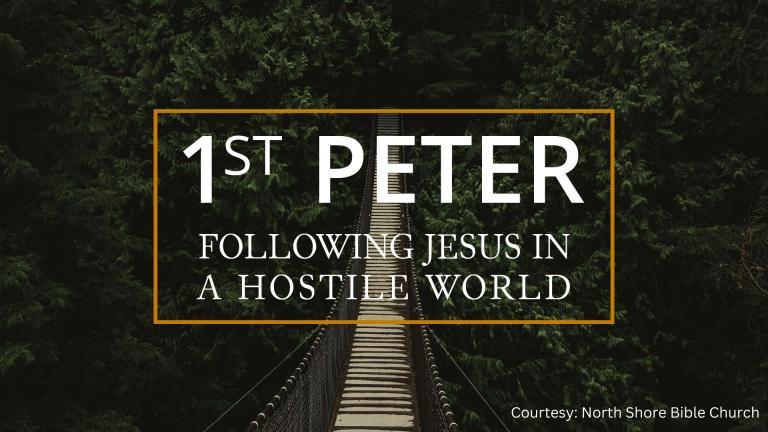
Monday: Read 1 Pet 1:1-12
The letter of 1st Peter is one of the hidden gems of the Bible. The letter is addressed to Christians throughout Northern Asia Minor: “Pontus, Galatia, Cappadocia, Asia, and Bithynia” (1:1). In this letter, Peter describes his readers as an exilic people and strangers. And though one might think that Peter is addressing Jewish Christians, the letter indicates that they have come from a pagan background (1:14, 18; 2:10, 25; 4:3-4) and thus they are likely predominately gentile Christians.
The focus of the letter is on their Christian identity and their behavior in a hostile world. They were apparently suffering some form of persecution and scorn. Peter encourages them to live godly lives in the midst of such persecution (5:12). He then adds that the result of their good behavior is that unbelievers may be won to the faith (2:12).
In the customary opening (1-2), Peter addresses them as “chosen according to the foreknowledge of God the Father, by the sanctifying work of the Spirit, to obey Jesus Christ and be sprinkled with His blood (2-3). Note the trinitarian formula (God, Spirit, Jesus). This is certainly meant to encourage them in the midst of their present afflictions. In Peter’s mind, being chosen by God means that we will be viewed with contempt by society. Thus, their current plight was the result of God’s calling and of their following the example of Jesus.
In 1:3-12, Peter includes a thanksgiving (3-12 is one sentence in Greek). In this sentence, Peter declares and elaborates on God’s mercy. The sentence breaks into three parts (3-5; 6-9; 10-12) each of which either ends or begins with a reference to salvation.
The first part (3-5) refers to the future glory that awaits us all. In the second part (6-9), Peter turns to the present realities and reminds them that in light of the future glory they should “rejoice” (6) even though they were beset by “various trials” (6). Finally, in the third part (10-12), Peter reminds them of the fact that what they are experiencing is what the prophets inquired about and what has come to be fulfilled in “the sufferings of Christ and the glories to follow” (12).
Questions to ponder/discuss:
- Here we are again. Another NT passage that centers on the suffering of Christ and our partaking in that suffering. We should not think of such suffering as “woe is me,” but as the nature of Christian love. Christ suffered on the cross, which for Peter serves as the prime example for us because He loved us.
- This raises the question: “what does suffering look like for us?” Before we answer this, we must bear in mind that in the NT suffering is to be endured in love for the sake of others.
- So, what does (or should) suffering look like for Christians in the modern western world?
Tuesday: Read 1 Pet 1:13-21
Peter begins in 1:13 with “therefore.” In doing so, he connects God’s faithfulness as expressed in the opening thanksgiving (1:3-12) with the need for a new way of living.
Peter opens the body of this letter (1:13-2:10) by presenting the faithful life in terms of an ongoing struggle. Note that today’s section begins and ends with references to “hope” (13, 21). For Peter, the focus is on our behavior, our conduct, and our way of life (15, 17, 18) in the midst of suffering.
There are four commands in 1:13-2:10. Today’s passage contains three of them: First, Peter says, “fix your hope” (13). We are to “fix” it on the grace that is to come at the revelation of Jesus! In doing so, we are not to follow our old way of life (14).
Second, we are to “be holy” (15) just like God is (15, 16; see Lev 19:2).
Third, he urges, “conduct yourselves in fear” (17). After all, he notes, God judges “impartially” (17). In saying this, Peter is reminding them that God does not consider one’s rank or status (including gender, land, or wealth).
Questions to ponder/discuss:
- Today’s passage is very rich and is worth a second look and then some significant contemplation. Reread these verses and then ask the Lord to search your heart. How much do you “fix your hope” on the grace that is coming? How well are you doing at striving for holiness in the imitation of God? And how much do you “conduct yourselves in fear”?
- As you continue through 1st Peter in the coming days, keep reflecting on these questions.
Wednesday: Read 1 Pet 1:22-2:10; Exod 19:5-6
Peter continues his exhortations to his readers that began in 1:13. Because (note again the “therefore” in 1:13) of God’s faithfulness and because of their “obedience to the truth” (22), God has given them a new birth (23). “Therefore” (2:1) they are to “long for the pure milk of the word” (2:2). This is the fourth command in the section of 1:13-2:10.
Peter exhorts them that although they may be rejected by men, they are chosen by God. Note that Peter describes them in terms of their imitation of Jesus. Jesus is the “living stone” (2:4) who is “choice and precious in the sight of God” (2:4). So also they are “living stones” (2:5) and “chosen” (2:9).
Peter’s description of the people of God in 2:4-10 also accords with the description of Israel in the OT. He begins by noting that they are a “spiritual house” (2:5). This accords with numerous passages in the NT that depict the people of God as a new temple (see Eph 2:18-22; 1 Cor 3:16; 6:19; 2 Cor 6:16). Additionally, they are also “a chosen race, a royal priesthood, a holy nation, a people for God’s own possession” (2:9). This corresponds to the call upon Israel in Exod 19:5-6.
It is quite significant to note that this calling displays not simply their status but also their responsibilities: “so that you may proclaim the excellencies of Him who has called you out of darkness into His marvelous light” (2:9)
Questions to ponder/discuss:
-
It is quite significant that the NT people of God are depicted in terms of the fulfillment of the mission and call of the OT people of God. This suggests that we have not simply been saved for our own sake—which is all too commonly taught—but that we have been chosen to fulfill God’s mission for humanity.
- This begins with being His image bearers (Gen 1:26-27) and the need to be holy because He is holy (1:16)
- It also includes the notion that we are to work towards establishing God’s kingdom in which the poor are blessed and the captives are set free (Luke 4:18-19).
- The end result is that we proclaim the excellencies of Him who called us out of darkness and into His marvelous light (2:9).
-
What does fulfilling God’s mission look like for you?
Thursday: Read 1 Pet 2:11-17
1 Pet 2:11 begins the main section of the letter (2:11-4:11). This section focuses on God (19x) and Christ (7x). The section begins with 2:11-12 which sets the theme. We are to “abstain from fleshly lusts” (11) and to “keep your behavior excellent among the Gentiles” (12). The result of this is that their slandering of us may be proven baseless by our good conduct and our good conduct may even result in their glorifying of God (12).
Peter then presents a sort of “code of conduct” (similar to Paul’s use of the Roman household codes in Eph 5:21-6:9 and Col 3:18-25). For Peter, as with Paul, the conduct of believers begins with mutual submission in Christ. The goal is to do what is honoring in the sight of God. Peter also strongly reminds them not to compromise with Roman values—which were focused on submission by those who were lower in social standing and on reciprocity or giving back to others in accord with what they gave you. Peter reminds them that the result of such behavior will be slander and opposition within society.
It is important to note that Peter’s instructions can be arranged in the form of a chiasm:
2:13-17 instruction for everyone
2:18-20 Slaves
2:21-25 Example of Christ
3:1-7 Wives (husbands)
3:8-12 Instruction for everyone
Note also that the center of this section is the example of Christ. In addition, it is important to observe that Peter spends much more time on wives than husbands and that he addresses slaves but not masters. This is likely the result of the fact that Peter was speaking more to those who were socially oppressed (and wives and slaves were more likely suffering in the Roman social context than husbands and masters) and encourages them to model Christ in the midst of their oppression..
Peter begins by encouraging them to “honor all people” (17). This includes the king (17). But our honoring the king is done so in accordance with our “fear” of God (17).
Our submission to all is qualified by Peter with three phrases: “for the Lord’s sake” (13); “as free men” (16); and, “as God’s slaves” (16).
Questions to ponder/discuss:
- I wonder how well we follow Peter’s advice today. What does applying Peter’s words look like in your context (note: you may want to sneak a peek at tomorrow’s passage before answering; especially 2:21-25)?
Friday: Read 1 Pet 2:18-25; Isa 52:13-53:12
Peter takes the general commands of 2:13-17 and applies them to the context of household slaves; though Peter may have in mind all Christians and not just those who are household slaves.
Peter affirms that a slave may have to disobey his master because of his/her conscience before God (19). Peter affirms that “this finds favor” if they suffer for doing what is right (19, 20).
In 2:21-25, Peter, in the first of three key Christological passages in this letter, encourages them to respond to the injustices that they are enduring just like Jesus! Jesus serves as the model for Christian suffering in two ways: First, He didn’t deserve it (22). And, He didn’t retaliate (23). Peter, of course, has in the background Jesus’ fulfillment of the famed suffering servant hymn of Isa 52:13-53:12 (See also Acts 8:25-40).
For Peter, this is the center of his understanding of what it means to live out the Gospel. We are “to die to sin and live to righteousness” (24). This means that we must not compromise in order to gain an advantage in society—after all even the Gentiles do that. Instead, we are to follow the way of Christ, which leads to suffering. And when suffering comes, we are to suffer well!
Questions to ponder/discuss:
- Suffering well is hard to do. We are naturally arrogant and proud people and as such we want to defend ourselves. What do you think it means to suffer well?
- Pray for the suffering church: not necessarily that their suffering would end, but that they would suffer well.
- In addition to prayer, what are some other ways that you can help those who are suffering?
[1] This guide is meant to be done either as a group study over the course of 2 or 4 meetings (Day 1-5; 6-10; 11-15; 16-20), or as a private devotion over the course of 4 weeks (or a calendar month—5 lessons per week).
General Christian
Home and Religion
Education and Religion
About Rob Dalrymple
Rob Dalrymple and his wife Toni have four fabulous children, as well as 2 grandchildren! He has been teaching and pastoring for over 32 years at colleges, seminaries, and the local church. He has a PhD (Westminster Theological Seminary) in biblical interpretation. Rob is currently serving as the Executive Director of Determinetruth ministries, which is a 501c3 parachurch ministry whose vision is to provide a platform of training for pastors, leaders, and members of local churches, especially those who have been wounded by the evangelical church. Rob hosts the weekly determinetruth podcast and writes a weekly blog: all of which can be accessed at determinetruth.com He is the author of four books: Follow the Lamb: A Guide to Reading, Understanding, and Applying the Book of Revelation These Brothers of Mine: A Biblical Theology of Land and Family Understanding the New Testament and the End Times: Why it Matters Revelation and the Two Witnesses. And is presently writing a commentary for the book of Revelation (Cascade Books) titled Revelation: A Love Story You can read more about the author here.
Next Post

March 20, 2023 Deconstruction/Reconstruction: Jesus is the answer! Worldview #8
Browse Our Archives
Select a Category 000 1 Cor 11:17-34 1 Corinthians 1 John 1 Peter 1 Thessalonians 1 Timothy 10 Commandments 2 Corinthians 2 John 2 Peter 2 Thessalonians 2 Timothy 3 John 666 Abortion Acts 2:42 Ahmaud Arbery AIPAC All Saints Day America antisemitism BDS Beast Betting Bible Bible study Biblical Interpretation Biden Book of Acts Boycott Campus Protests Catholicism Ceasefire Chavez Ravine Christian Nationalism Christian Zionism Christianity Today Christmas Church Colossians Communion Convict Leasing Covid-19 Craig Blaising creation Crucifixion Daoud Nassar Deception Deconstruction Democracy Devotional guide Discipleship Easter Eden Education Election End-times Ephesians Eschatology Ethnic Cleansing Evangelicalism Evangelicals Evolution Fall Famine Fascism FIFA Freedom of Speech Galatians Gary Burge Gaza Gaza; Genocide; Boycott Genesis Genocide George Floyd Global Warming God's will Gospel Gospel of John Gospel of Luke Gospel of Mark Gospel of Matthew Government Grace Great Prostitute Hamas Harris healthcare Hebrews HeGetsUs Holy Spirit Holy Week Honor Father and Mother ICJ Immigration Indigenous peoples day Iran Israel Israel Palestine Itamar Ben Gvir James Jesus Joel Willits Jude Just war Justice Kamala Harris Kingdom Of God Kings and Queens land of Israel Law (OT) Lazarus Les Miserable LGBTQ+ Love Luke Mahmoud Khalil Man of Lawlessness Mark Mark of the Beast Marriage Martin Luther King Jr Mercy Mexican Repatriation Military-Industrial-Complex Ministry Mission Money NAFTA Nakba Netanyahu New Creation New Testament Nicaragua Nicodemus Non Violence Occupation Pacifism Palestine Parable Paul Peace Pentecost Peonage Philemon Philippians Politics Poor Power Prayer Pride Month Priests Pro-life Propaganda Prophesy Prophet Qatar Queen Elizabeth Racism Reconstruction Redemption Reformation Resurrection Revelation Roe v Wade Romans Romans 13:1-7 Rome Russia Sabbath Samaritan Seals Sermon Settlements Slavery Spiritual gifts Taxes Tent of Nations Terrorism The Beast Theology Titus Torture Trump truth Ukraine Uncategorized Veteran's Day War Warsaw Ghetto wealth Wedding Women World Cup 2022 Worldview Worship Wrath Yemen Zionism
Select a Month September 2026 May 2026 February 2026 November 2025 October 2025 August 2025 July 2025 June 2025 May 2025 April 2025 March 2025 February 2025 January 2025 December 2024 November 2024 October 2024 September 2024 August 2024 July 2024 June 2024 May 2024 April 2024 March 2024 February 2024 January 2024 December 2023 November 2023 October 2023 September 2023 August 2023 July 2023 June 2023 May 2023 April 2023 March 2023 February 2023 January 2023 December 2022 November 2022 October 2022 September 2022 August 2022 July 2022 June 2022 May 2022 April 2022 March 2022 February 2022 January 2022 December 2021 November 2021 October 2021 September 2021 August 2021 July 2021 June 2021 May 2021 April 2021 March 2021 February 2021 January 2021 December 2020 October 2020 September 2020 August 2020 July 2020 June 2020 May 2020 April 2020 March 2020 February 2020 January 2020 December 2019 November 2019 October 2019 August 2019 July 2019 June 2019 May 2019 April 2019 August 2018 June 2018 May 2018 March 2018 September 2017 July 2017 May 2017 November 2016 October 2016 May 2016 April 2016 March 2016 December 2015 November 2015 October 2015 September 2015 August 2015 July 2015
Follow Us!
TAKE THE
Religious Wisdom Quiz
What tree were Adam and Eve told not to eat from?
Select your answer to see how you score.
Fig Tree Olive Tree Tree of Knowledge of Good and Evil Tree of Life
Support this
Column


Related posts from Determinetruth
Devotional guide: Rev 15:1-19:10
Devotional guide: Rev 12:1-14:20
Devotional Guide: Rev 8:1-11:19
TRENDING AT PATHEOS Evangelical

Happy Thanksgiving! I published this Thanksgiving column back in 2017 in...

More Than a Meal: A Messianic Thanksgiving
A Messianic Thanksgiving What if Thanksgiving became more than a meal to...

The Darkening of the Sun, Moon, and Stars
The darkening of the sun and moon and the falling of stars...

Gratitude as the Parent of All Virtues
Giving thanks stems from gratitude. Cicero said that gratitude is the parent...

Make Thanksgiving Bring Family Closer
Written by Dr. David K. Ewen from Eternal Truth Bible College Start...

Ghosts, Spirits, and Wizards in Post-Puritan New England
As it is Thanksgiving, I have a seasonal post concerned with New...
view all Evangelical blogs
Ad-Free & Subscriber Log-In Subscription Support
- About Us
- 2026 Calendar
- Videos
- Podcasts
- Library of World Religions
- Faith In Media Tracker
- Advertise With Us
- Write for Us
- Privacy Policy
- Terms of Service
- Do Not Sell My Data
- Contact Us
- Radiant Digital
- Manage Newsletter Subscriptions
- Unsubscribe From Notifications
- Sitemap
Copyright 2008-2026, Patheos, part of the Radiant Digital network of media brands. All rights reserved.
Subscription Support Ad-Free & Subscriber Log-In
Follow Patheos