
BuddhistCatholicContemplativeEvangelicalGeneral ChristianHinduJewishLatter-day SaintMuslimNew VisionsProgressive Christian
Beliefs
- Buddhist
- Catholic
- Contemplative
- Evangelical
- General Christian
- Hindu
- Jewish
- Latter-day Saint
- More Voices
- Muslim
- New Visions
- Pagan
- Progressive Christian
Topics
- Religion News
- Food and Religion
- Sports and Religion
- Religious Art
- Religious Music and Entertainment
- Religious Events
- History and Religion
- Style and Religion
- Politics and Religion
- Women in Religion
- Recreation Outdoors and Religion
- Business Finance and Religion
- Careers Workplace and Religion
- Education and Religion
- Family Parenting and Religion
- Health Fitness and Religion
- Home and Religion
- Relationships and Religion
- Technology and Religion
- Travel and Religion
Columnists
- Buddhist Columnists
- Business Finance and Religion Columnists
- Careers Workplace and Religion Columnists
- Catholic Columnists
- Contemplative Columnists
- Education and Religion Columnists
- Evangelists Columnists
- Family Parenting and Religion Columnists
- General Christian Columnists
- Health Fitness and Religion Columnists
- Hindu Columnists
- History and Religion Columnists
- Home and Religion Columnists
- Jewish Columnists
- More Voices Columnists
- Latter Day Columnists
- Muslim Columnists
- New Visions Columnists
- Nonreligious Columnists
- Pagan Columnists
- Politics and Religion Columnists
- Progressive Columnists
- Recreation Outdoors and Religion Columnists
- Relationships and Religion Columnists
- Religion News Columnists
- Religious Art Columnists
- Religious Events Columnists
- Religious Music and Entertainment Columnists
- Sports and Religion Columnists
- Style and Religion Columnists
- Technology and Religion Columnists
- Travel and Religion Columnists
- Women in Religion Columnists
Resource Library
- 2026 Calendar
- Library of World Religions
- The 100 Most Holy Places on Earth
- Patheos Answers
- Podcasts
- Videos
- Faith Leaders Database
- Anglican Episcopalian
- Bahai
- Baptist
- Buddhism
- Christianity
- Confucianism
- Eastern Orthodoxy
- Hinduism
- Holiness and Pentecostal
- ISKCON
- Islam
- Judaism
- Lutheran
- Methodist
- The Church of Jesus Christ of Latter-day Saints
- New Age
- Paganism
- Presbytarian and Reformed
- Protestantism
- Religion Behind the Scenes
- Roman Catholic
- Scientology
- Shia Islam
- Sikhism
- Sufism
- Sunni Islam
- Taoism
- Zen
- See all religions
Research Tools
 Ad-Free & Subscriber Log-In Subscription Support
Ad-Free & Subscriber Log-In Subscription Support
Follow Patheos 

- Trending:
- Forgiveness
- |
- Marriage
- |
- Consciousness
- |
- Death Penalty
- |
- Election
- |
- Halloween

-
More
- Home
- Evangelical
- Live a life worthy of the Calling: Phil 1-2: A devotional guide
Live a life worthy of the Calling: Phil 1-2: A devotional guide
Last updated on: November 18, 2022 at 12:03 am by Rob Dalrymple
Live a life worthy of the Calling: Phil 1-2: A devotional guide 2022-11-12T11:42:20-08:00 Rob Dalrymple
Patheos Explore the world's faith through different perspectives on religion and spirituality! Patheos has the views of the prevalent religions and spiritualities of the world.
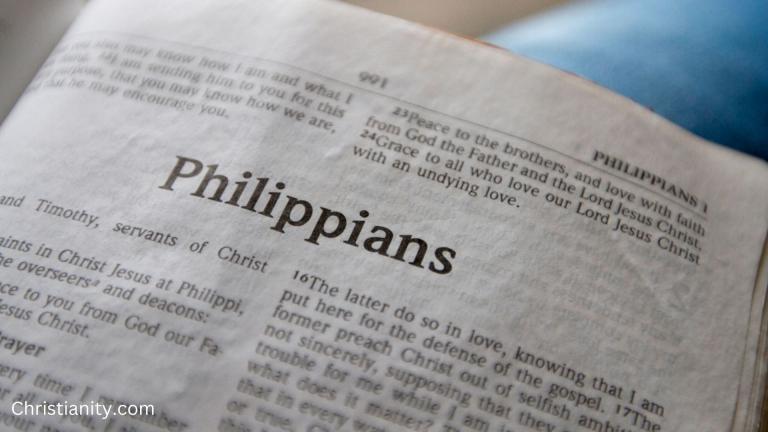 Monday: Read Philippians 1:1-11
The book of Philippians is widely acknowledged to be one of Paul’s 4 Prison Epistles (Ephesians, Philippians, Colossians, and Philemon) which was written in Rome.
Philippians opens with a salutation (“Paul and Timothy”: 1-2). This is followed by Paul’s customary thanksgiving (3-8). This opening section closes with Paul’s prayer (9-11).
In his thanksgiving, Paul rejoices in the fact that they have been partners with him in the gospel (5). Paul affirms that God who began a good work in them will carry them through to the end (6).[2] Moises Silva notes, there is “tension that exists between the believers’ accountability for their own spiritual conduct and their need to rely totally on God’s grace in order to meet that obligation.”[3] This corresponds to what Paul said in Gal 3:3 “having begun by the Spirit are you being perfected by the flesh?”
To the Philippians, however, Paul assures them that God “will” bring it to completion (6). Paul adds, “it is only right for me to feel this way about you” (7). He then proceeds to list reasons for his confidence in them. Paul reminds them that they remained faithful to him even in midst of his imprisonment (7).
Paul concludes with a prayer for them (9-11). He prays that their love may abound more and more (9). He prays that they would continue in “real knowledge and all discernment” (9). Paul does so with the hope that they may continue to “approve things that are excellent” (10; see Rom 2:18). His prayer also intends that as a result they may become “sincere and blameless” at the end (11).
Questions to ponder/discuss:
- We like to take comfort in Phil 1:6 and Paul’s assurance that God will complete the work He began in our lives. And there is merit to this. But note that Paul says that the reason why he is confident that God will complete the work He began in them is because of what they have done (1:7). Do you think we can affirm the promise of Phil 1:6 if we are not faithful?
Tuesday: Read Philippians 1:12-26
Today’s reading provides an account of Paul’s circumstances. It may be that one of Paul’s reasons for writing was that the Philippians were concerned with Paul’s well-being. Paul assures them that all that has happened to him has only served to advance the gospel (12, 25: note “to advance” frames this section).
Paul explains that his imprisonment has not hindered the work of the Gospel. After all, the “whole praetorian guard” has come to hear the gospel (13). In addition, Paul’s faithfulness in the midst of imprisonment other Christians are preaching more boldly (14).
Paul adds that there were some who were opposing him (we do not know who they were nor why they were doing this), but even then the Gospel is progressing (15-17). They were preaching out of “envy” (15). Paul, somewhat surprisingly, affirms that at least the gospel is still being preached.
Paul relays his attitude in the midst of his imprisonment. He begins with, “I rejoice (18). Why? Because Paul says, “I know that this shall turn out for my deliverance” (19)
Paul then affirms, which might be one of his more famous statements, “to live is Christ and to die is gain” (21). Paul is torn between his personal desire to depart (23) and the necessity of remaining and having a fruitful ministry, which is in the best interest of the church in Philippi (24). Paul concludes, “I know that I will remain” (25).
Questions to ponder/discuss:
- Paul teaches us that when difficult circumstances arise we should look to see how God might be using them to advance the Gospel. Have you had experiences that were full of difficulties and yet God brought about something great from it? (of course, we are referring to God bringing about great with regards to the kingdom and not our personal gain) If not, pray that God will grant you faith in the midst of trouble and help you to see the work of the kingdom that is advancing as a result.
Wednesday: Read Philippians 1:27-2:4
Philippians 1:27-4:1 is one of the central passages in the NT for Christian living. Paul lays out what it means to grow in “sanctification”: that is, growing in the likeness and image of Christ.
He begins with, “conduct yourselves in a manner worthy of the gospel of Christ” (27). This is likely his key theme for Philippians. Paul adds, “to you it has been granted . . . not only to believe . . . but also to suffer for His sake” (29).
Paul continues, “make my joy complete” (2:1). How are they to do this? By being unified. Paul appeals to them: “do nothing from selfishness or empty conceit” (3) But instead, they should, “with humility of mind regard one another as more important than yourselves” (3). Paul adds, “do not merely look out for your own personal interests” (4). But instead, they should, also consider “the interests of others” (4).
Questions to ponder/discuss:
- “Conduct yourselves in a manner worthy of the gospel of Christ” (27). Whatever the circumstances of life, may this be our ambition.
- We should note that this statement has significant political implications. It suggests that we should live according to the gospel and not according to the standards of being a good citizen in Philippi, Rome, or wherever we may live.
- Suffering for Christ is a central part of the gospel message. In fact, cross-bearing is a fundamental feature of following Jesus (Mark 8:34). Reflect on the following verses and then pray for the persecuted church and for God’s grace and peace for yourself: (Acts 14:22; 1 Thess 3:3-4; 2 Thess 1:4-7; Rom 8:17; 2 Cor 4:8-11; 2 Tim 2:12; 1 Pet 4:13 Col 1:24; Phil 3:10).
- The call to not look for our own interests is another way of stating the highest Christian ethic of love. Love considers others first (see: 1 Cor 10:24). This must begin in our closest relations and then extend towards all.
Thursday: Read Philippians 2:5-11
Philippians 2:5-11 is considered a hymn. It may have been something that Paul wrote. Or it may be something that Paul simply used. Either way, it is one of the classic hymns in the NT. The hymn connects with the previous passage in that it provides an illustration of what considering others first looks like.
Paul begins by exhorting them “Have this attitude in yourselves which was also in Christ Jesus” (5). Paul then illustrates exactly what this meant for Christ.
The hymn is broken into two parts: 2:6-8 emphasize Jesus’ humiliation; 2:9-11 emphasize Jesus’ exaltation.
The first part of the hymn illustrates Jesus’ acts of humiliation and proceeds in three stages.
First, he begins with the fact that Jesus was eternally God: “He existed in the form of God” (6). Yet, he willingly chose to become human: He “emptied Himself, taking the form of a bond-servant, and being made in the likeness of men” (7).
Second, not only did Jesus humble Himself by becoming human. He also humbled Himself by His willingness to die: “He humbled Himself by becoming obedient to the point of death” (8).
Third, Paul notes that Jesus not only became obedient to death but “even death on a cross” (8).
The second part of the hymn emphasizes Jesus’ exaltation. Note that His exaltation was a result of His humiliation: “For this reason also, God highly exalted Him” (9).
God’s exaltation of Jesus included giving Him “the name which is above every name” (9). This is likely a reference to the divine Name “Yahweh” or “Lord.”
As a result, “every knee will bow” (10; Isa 45:23). In addition, “every tongue will confess that Jesus Christ is Lord” (11).
Questions to ponder/discuss:
- This passage is the pinnacle of Paul’s theology. It illustrates beautifully the mission of God’s people which Jesus carried out. Paul’s conviction is that if we want to be exalted like Jesus then we must also be humiliated like Jesus.
- Michael Gorman’s assessment of Paul’s ethic sums it up well, “There is a fairly consistent pattern that Paul either uses explicitly or implies throughout his exhortations to cruciformity. He grounds these exhortations in the narrative of Christ’s incarnation and crucifixion found in Philippians 2:6–8. The basic pattern is that those who have a certain status, right, or prerogative are called, shaped, and empowered by Christ to relinquish the right for the good, edification, or salvation of others. The grammar of the pattern is ‘although [x] not [y] but [z],’ meaning ‘although [status], not [selfishness] but [self-giving].’”[4]
Friday: Read Philippians 2:12-18
Paul begins this section with “therefore, my beloved” (12).[5] This indicates that what follows is important and that it is the application of what Paul has just said.
Paul opens with words of encouragement: “just as you have always obeyed” (12). He then exhorts them, “work out your salvation with fear and trembling” (12). Of course, the context here is Paul’s exhortation to the community. Moises Silva, nonetheless notes, “it is impossible to tone down the force with which Paul here points to our conscious activity in sanctification.”[6]
Their work, of course, is not to be done without the power of God. Paul adds, “for it is God who is at work in you, both to will and to work for His good pleasure” (13). This statement parallels what Paul affirmed in 1:6.
As they do their work, Paul admonishes them to do so “without grumbling or complaining” (14). The language of grumbling was used of the Israelites in the OT (Num 14:2, 36). Paul’s exhortations throughout this section suggest that there were some conflicts in the church in Philippi.
Paul finishes his exhortations here by reminding them of their role as God’s people in the world. Paul describes the world as “crooked and perverse” (15). They, however, are to “appear as lights in the world” (15).
Questions to ponder/discuss:
- There is much to say about the unity of the church and its effectiveness in the world. The church is called to be a light to the world (15). What do you think this means in a democratic society? How could we do a better job of making our light shine before others?
Our goal is to keep these posts free of charge. I do not intend to ever hide them behind a paywall. I can only do this if those of you who have been blessed by them and can afford to give ($5, $10, $25, or more/month) do so. You can give a tax-deductible contribution by following this link.
Please share this post and let others know about determinetruth.
If you wish to view this blog on your smartphone through the Determinetruth app simply download the “tithe.ly church” app on your smartphone and insert “determinetruth” as the church name you wish to follow. Once it is loaded, simply click on the “blog” icon and it will automatically load.
If you would like to have Rob speak at your church or organization in person or via zoom, please let us know by filling out the contact info on the Contact me tab on this site.
Remember that our friends at Hearts & Minds, an independent bookstore in central Pennsylvania, have offered to give our listeners a 20% off on nearly anything ordered. Just mention Determinetruth and they will get back to you promptly with personalized service like you rarely see these days.
[1] This guide is meant to be done either as a group study over the course of 2 or 4 meetings (Day 1-5; 6-10; 11-15; 16-20), or as a private devotion over the course of 4 weeks (or a calendar month—5 lessons per week).
[2] NAS, NET “perfect”; ESV, NIV, NRS, RSV: “complete.”
[3] Silva, Philippians, 45.
[4] Gorman, Michael J. Participating in Christ (p. 13). Baker Publishing Group. Kindle Edition.
[5] My translation.
[6] Silva, Philippians, 122
Progressive Christian
Latter-day Saint
General Christian
Eastern Orthodox
Contemplative
Catholic
About Rob Dalrymple
Rob Dalrymple is married to his wife Toni and is the father of four fabulous children, and two grandchildren. He has been teaching and pastoring for over 33 years at colleges, seminaries, and the local church. He has a PhD (Westminster Theological Seminary) in biblical interpretation. He is the author of four books (including Follow the Lamb: A Guide to Reading, Understanding, and Applying the Book of Revelation & Understanding the New Testament and the End Times: Why it Matters) as well as numerous articles and other publications. He is currently completing a commentary on the book of Revelation titled, “Revelation: a Love story” (Cascade Books, pending 2024). You can read more about the author here.

Browse Our Archives
Select a Category 000 1 Cor 11:17-34 1 Corinthians 1 John 1 Peter 1 Thessalonians 1 Timothy 10 Commandments 2 Corinthians 2 John 2 Peter 2 Thessalonians 2 Timothy 3 John 666 Abortion Acts 2:42 Ahmaud Arbery AIPAC All Saints Day America antisemitism BDS Beast Betting Bible Bible study Biblical Interpretation Biden Book of Acts Boycott Campus Protests Catholicism Ceasefire Chavez Ravine Christian Nationalism Christian Zionism Christianity Today Christmas Church Colossians Communion Convict Leasing Covid-19 Craig Blaising creation Crucifixion Daoud Nassar Deception Deconstruction Democracy Devotional guide Discipleship Easter Eden Education Election End-times Ephesians Eschatology Ethnic Cleansing Evangelicalism Evangelicals Evolution Fall Famine Fascism FIFA Freedom of Speech Galatians Gary Burge Gaza Gaza; Genocide; Boycott Genesis Genocide George Floyd Global Warming God's will Gospel Gospel of John Gospel of Luke Gospel of Mark Gospel of Matthew Government Grace Great Prostitute Hamas Harris healthcare Hebrews HeGetsUs Holy Spirit Holy Week Honor Father and Mother ICJ Immigration Indigenous peoples day Iran Israel Israel Palestine Itamar Ben Gvir James Jesus Joel Willits Jude Just war Justice Kamala Harris Kingdom Of God Kings and Queens land of Israel Law (OT) Lazarus Les Miserable LGBTQ+ Love Luke Mahmoud Khalil Man of Lawlessness Mark Mark of the Beast Marriage Martin Luther King Jr Mercy Mexican Repatriation Military-Industrial-Complex Ministry Mission Money NAFTA Nakba Netanyahu New Creation New Testament Nicaragua Nicodemus Non Violence Occupation Pacifism Palestine Parable Paul Peace Pentecost Peonage Philemon Philippians Politics Poor Power Prayer Pride Month Priests Pro-life Propaganda Prophesy Prophet Qatar Queen Elizabeth Racism Reconstruction Redemption Reformation Resurrection Revelation Roe v Wade Romans Romans 13:1-7 Rome Russia Sabbath Samaritan Seals Sermon Settlements Slavery Spiritual gifts Taxes Tent of Nations Terrorism The Beast Theology Titus Torture Trump truth Ukraine Uncategorized Veteran's Day War Warsaw Ghetto wealth Wedding Women World Cup 2022 Worldview Worship Wrath Yemen Zionism
Select a Month September 2026 May 2026 February 2026 November 2025 October 2025 August 2025 July 2025 June 2025 May 2025 April 2025 March 2025 February 2025 January 2025 December 2024 November 2024 October 2024 September 2024 August 2024 July 2024 June 2024 May 2024 April 2024 March 2024 February 2024 January 2024 December 2023 November 2023 October 2023 September 2023 August 2023 July 2023 June 2023 May 2023 April 2023 March 2023 February 2023 January 2023 December 2022 November 2022 October 2022 September 2022 August 2022 July 2022 June 2022 May 2022 April 2022 March 2022 February 2022 January 2022 December 2021 November 2021 October 2021 September 2021 August 2021 July 2021 June 2021 May 2021 April 2021 March 2021 February 2021 January 2021 December 2020 October 2020 September 2020 August 2020 July 2020 June 2020 May 2020 April 2020 March 2020 February 2020 January 2020 December 2019 November 2019 October 2019 August 2019 July 2019 June 2019 May 2019 April 2019 August 2018 June 2018 May 2018 March 2018 September 2017 July 2017 May 2017 November 2016 October 2016 May 2016 April 2016 March 2016 December 2015 November 2015 October 2015 September 2015 August 2015 July 2015
Follow Us!
TAKE THE
Religious Wisdom Quiz
Which king was known for his extravagant building projects and many wives?
Select your answer to see how you score.
Ahab David Solomon Hezekiah
Support this
Column


Related posts from Determinetruth

When Character Is Cast Aside: Trump, the Church,...

Have we been lied to? America’s war machine...

Devotional guide: Rev 15:1-19:10
TRENDING AT PATHEOS Evangelical

In one sense walking into Westminster Abbey is like walking down the...

'Super Scam Me' Exposes AI Jon Bon Jovi...
Leslie Pickett believed she was in a relationship with Jon Bon Jovi....

The Brazilian Remake of Kendricks' 'Flywheel' Opens in...
“Flywheel,” the story that launched the Kendrick Brothers’ filmmaking career is getting...

The Dangers of Gradual Accommodation (Winking at Sin)
Recently, the “law of gradualness” resurfaced during the opening of a weeklong,...

The Iron Gates and the Lion of the...
Yesterday, I didn't finish my report about, well, yesterday. So I'll...

The Image: On the Horror of Capitalism and...
The Image Then went the Pharisees, and took counsel how they might...
view all Evangelical blogs
Ad-Free & Subscriber Log-In Subscription Support
- About Us
- 2026 Calendar
- Videos
- Podcasts
- Library of World Religions
- Faith In Media Tracker
- Advertise With Us
- Write for Us
- Privacy Policy
- Terms of Service
- Do Not Sell My Data
- Contact Us
- Radiant Digital
- Manage Newsletter Subscriptions
- Unsubscribe From Notifications
- Sitemap
Copyright 2008-2026, Patheos. All rights reserved.
Subscription Support Ad-Free & Subscriber Log-In
Follow Patheos