
BuddhistCatholicContemplativeEvangelicalGeneral ChristianHinduJewishLatter-day SaintMuslimNew VisionsProgressive Christian
Beliefs
- Buddhist
- Catholic
- Contemplative
- Evangelical
- General Christian
- Hindu
- Jewish
- Latter-day Saint
- More Voices
- Muslim
- New Visions
- Pagan
- Progressive Christian
Topics
- Religion News
- Food and Religion
- Sports and Religion
- Religious Art
- Religious Music and Entertainment
- Religious Events
- History and Religion
- Style and Religion
- Politics and Religion
- Women in Religion
- Recreation Outdoors and Religion
- Business Finance and Religion
- Careers Workplace and Religion
- Education and Religion
- Family Parenting and Religion
- Health Fitness and Religion
- Home and Religion
- Relationships and Religion
- Technology and Religion
- Travel and Religion
Columnists
- Buddhist Columnists
- Business Finance and Religion Columnists
- Careers Workplace and Religion Columnists
- Catholic Columnists
- Contemplative Columnists
- Education and Religion Columnists
- Evangelists Columnists
- Family Parenting and Religion Columnists
- General Christian Columnists
- Health Fitness and Religion Columnists
- Hindu Columnists
- History and Religion Columnists
- Home and Religion Columnists
- Jewish Columnists
- More Voices Columnists
- Latter Day Columnists
- Muslim Columnists
- New Visions Columnists
- Nonreligious Columnists
- Pagan Columnists
- Politics and Religion Columnists
- Progressive Columnists
- Recreation Outdoors and Religion Columnists
- Relationships and Religion Columnists
- Religion News Columnists
- Religious Art Columnists
- Religious Events Columnists
- Religious Music and Entertainment Columnists
- Sports and Religion Columnists
- Style and Religion Columnists
- Technology and Religion Columnists
- Travel and Religion Columnists
- Women in Religion Columnists
Resource Library
- 2026 Calendar
- Library of World Religions
- The 100 Most Holy Places on Earth
- Patheos Answers
- Podcasts
- Videos
- Faith Leaders Database
- Anglican Episcopalian
- Bahai
- Baptist
- Buddhism
- Christianity
- Confucianism
- Eastern Orthodoxy
- Hinduism
- Holiness and Pentecostal
- ISKCON
- Islam
- Judaism
- Lutheran
- Methodist
- The Church of Jesus Christ of Latter-day Saints
- New Age
- Paganism
- Presbytarian and Reformed
- Protestantism
- Religion Behind the Scenes
- Roman Catholic
- Scientology
- Shia Islam
- Sikhism
- Sufism
- Sunni Islam
- Taoism
- Zen
- See all religions
Research Tools
 Ad-Free & Subscriber Log-In Subscription Support
Ad-Free & Subscriber Log-In Subscription Support
Follow Patheos 

- Trending:
- Forgiveness
- |
- Marriage
- |
- Consciousness
- |
- Death Penalty
- |
- Election
- |
- Halloween

-
More
- Home
- Evangelical
- Careers, Workplace and Religion
- Live a life worthy of the calling! A devotional guide for Eph 4-6.
Live a life worthy of the calling! A devotional guide for Eph 4-6.
Last updated on: November 11, 2022 at 12:43 am by Rob Dalrymple
Live a life worthy of the calling! A devotional guide for Eph 4-6. 2022-11-02T15:56:13-08:00 Rob Dalrymple
Patheos Explore the world's faith through different perspectives on religion and spirituality! Patheos has the views of the prevalent religions and spiritualities of the world.
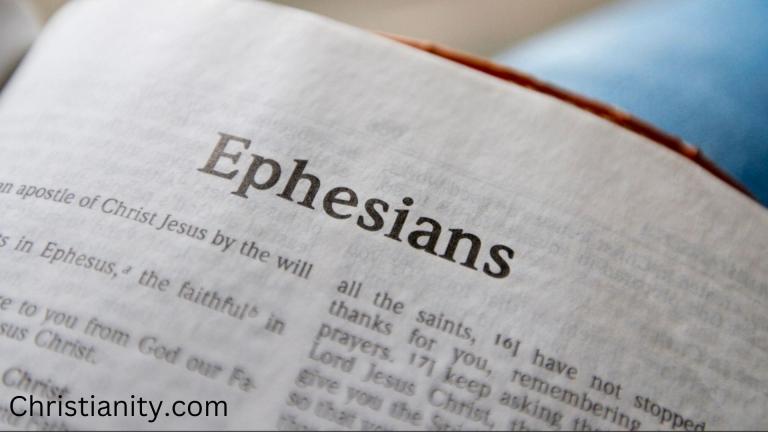
Monday: Read Ephesians 4:1-16
In 4:1-6:20, Paul turns his attention to the ethical life of the people of God and what it looks like to be a new community.
Paul begins in 4:1-16 by exhorting the community to maintain their unity in Christ. He opens with a strong exhortation, “Therefore, I implore/urge,beg you” (4:1). This certainly is meant to get the readers’ attention!
The use of “therefore ‘’ (1) looks back to Paul’s argument thus far in Ephesians. As such, 4:1 serves as the topic sentence for the rest of Ephesians. Paul’s point is that in light of the fact that God saved us in His grace while we were dead in our sins and included the gentiles into the body of Christ, we should “live a life worthy of the calling” (1). Paul, in other words, is now calling those who “formerly walked according to the course of this world” (2:1-2) to now walk according to their calling in Christ.
What does this look like? It begins with humility, gentleness, and patience (2).
Paul’s appeal to unity is based on the divine Trinity (4-6). Of course, unity in Christ does not deny diversity. Thus, he notes that we have all been given grace, but not all have the same quantity of grace (7). Paul goes on to list four gifts/offices (11): Apostles, prophets, evangelists, and pastors and teachers. (the Greek is pretty clear that there are four offices and not five. The last two—pastors and teachers—are one office).
God’s purpose in giving these gifts is the “equipping of the saints for work of service” (12). The goal is that God may “fill all things” (11). That is, in the present, the kingdom of God has not yet come in fulness. Until it does, we are to “grow up in all aspects into Him who is the head, even Christ” (15).
Questions to ponder/discuss:
- What is critical to note about the lists of spiritual gifts (1 Cor 12:8-10, 28; Rom 12:6-8; Eph 4:11) is that all Christians have at least one and that we cannot function well without everyone exercising their gifts. What gifts do you have? (not sure, ask others to help you). How are you using your gifts?
Tuesday: Read Ephesians 4:17-5:2
Paul continues to expand on his call to live a life worthy of the calling (4:1). He builds on the language of walking by contrasting their former lives (17-19) with their new life in Christ (20-24). As for our former lives, we are not to walk as the nations do (17). Paul then elaborates on what this means (17-19).
Then, Paul lays out what a life in Christ should look like (20-24). He begins by noting that we are to lay aside the old self (22), be renewed in our minds (23), and put on the new self (24).
In 4:25-5:2, Paul further expands on what it means to lay aside the old self. Paul lists negative commands (25-31) followed by positive commands (32-5:2).
He begins by noting that it means to speak the truth (25). Also, we should no longer steal. In fact, we should work so that we can give to others (28). And when we speak we are to do in a way that edifies others (29).
Paul’s list of positive commands include: be kind to one another (32), compassionate (32), and forgiving (32).
Paul concludes with “be imitators of God” (5:1). How do we do this? We are to “walk in love” (1). It is essential to note Paul’s example as to what it means to “walk in love”: “just as Christ also loved you and gave Himself up for us” (2).
Questions to ponder/discuss:
- It is my conviction that not walking like the nations (17) is one of the most difficult things to communicate to the contemporary western church. Too often we look just like everyone else. What do you think this might look like for Christians to live differently than the nations?
- When Paul says to “speak the truth” (25) it may appear as something easy. After all, I doubt that most of us make it a habit to lie to our neighbors. What, then, does he mean? Consider situations in which we might lie to someone else. What motivates us to lie in such situations? Now resolve yourself to rely on His grace to equip you to be truthful at all times.
- It is critical for the church to recognize that these are not lists of recommendations or suggestions. These are fundamental for what it means for God’s people. Oh, if only we as God’s people would live in accord with the new creation today! Then the church would be a force for good in the world.
- The command to work and support others has been abused by some. We will discuss this in our study of 1-2 Thessalonians.
Wednesday: Read Ephesians 5:3-14
Paul continues his contrast what they were before Christ and what they are now. He begins by noting that “immorality or any impurity or greed must not even be named among you” (3). By “immorality” Paul includes any kind of sexual immorality: in particular adultery and prostitution. When he lists “impurity” he is indicating sins that go beyond sexual sins. Finally, “greed” is the insatiable desire to have more. It is greed that leads to acts of immorality and impurity. Paul closes this command off with a strong reminder that such people will not inherit the kingdom (5).
Paul then uses the metaphor of light and darkness to contrast our old self and our new self (8-14). We were darkness (8). Therefore we should “not participate in the unfruitful deeds of darkness, but instead even expose them” (11). After all, it is “disgraceful even to speak of the things which are done by them in secret” (12)
On the contrary, we should “walk as children of Light” (8). What does this look like? Paul adds, “the fruit of the Light consists in all goodness and righteousness and truth” (9).
For Paul, the Christian life consists of “trying to learn what is pleasing to the Lord” (10).
Questions to ponder/discuss:
- What sins do you struggle with (this might be a private question if you are doing a group study)? How might you go about not participating “in the unfruitful deeds of darkness”? Ask the Lord for help. And consider asking others for help.
Thursday: Read Ephesians 5:15-6:9
Paul again exhorts them to be careful how they walk (15). In 5:15-21, Paul applies this to life in general. Then in 5:22-6:9, he applies it to life in the church.
Paul has previously contrasted their old life with their new by using the metaphor of light and darkness, now he employs the metaphor of wisdom and folly (15-18).
For Paul, to be wise means to understand the importance of God’s will (17). To live foolishly is to live according to our previous life.
Paul now takes what he has been saying (recall that 4:1 is the thesis statement for this entire section) and applies it to various relationships among the people of God (5:22-6:9). In this section, Paul discusses the relationship between husbands and wives (22-29), children and parents (6:1-4), and slaves and masters (5-9).
This section has much in common with Greco-Roman (GR) household codes. There are, however, some notable differences. For one, ancient household codes were hierarchical and patriarchal and based on the beliefs of the time. Paul’s code derives from a creational foundation (31: see Gen 2:24). Furthermore, GR codes were based on what advanced the interest of the state and those in power. Paul’s code is based on mutual obligations to one another. Finally, Paul’s code is profoundly liberating. He addresses wives, children, and slaves equally with husbands, parents, and masters. This was unheard of in the ancient world.
Questions to ponder/discuss:
- It is critical for our understanding of this passage to recognize that, although 5:21 closes the previous section, its force continues into the section that follows. Paul clearly establishes that the people of God are founded on mutual submission: “be subject to one another in the fear of Christ” (21). What are some examples of mutual submission in 5:22-6:9?
- This passage can hardly be read as NT support for the practice of slavery. Sure Paul does not condemn the institution. But we must recognize that slavery in the Greco-Roman world was not the same as the chattel slavery of the US. Furthermore, Paul had no voice with which to speak up in the GR political world. That is, speaking up would not have made a difference in the Roman world and it may have caused harm to the Gospel as it infiltrated Roman society. Paul does, however, undermine the very practice of slavery (both then and now) when he commands masters to “give up threatening” (6:9). Without the use of threats and punishments, masters would be left powerless to keep rebellious slaves in line.
Friday: Read Ephesians 6:10-24
In this closing section, Paul summarizes the whole of the letter. He does this by putting our struggles of living according to the Spirit into a cosmic perspective. Our struggles, he contends, are part of a larger war between forces of evil and good (11-13).
Paul first admonishes them to be “strong in the Lord” (10) and to “put on the full armor of God” (11): then we will be able to “resist in the evil day” (13).
In 14-17, he urges them to “stand firm” (14). This is followed by a listing of the armor (14-17). The list of the “armor of God” provides the details as to what it means to “stand firm.”
When it comes to the armor of God it is worth noting that the only offensive weapon is the “sword of the Spirit”, which Paul says is “the word of God” (17). Thus, although Paul uses the armor of God based on a soldier’s garb, he certainly does not mean to suppose that the people of God should use violence.
Finally, in 18-20, Paul concludes with a reminder that we need constant prayer. (note: when he says, “in the Spirit” (18) he likely means that we are to pray as we are guided by the Spirit)
Questions to ponder/discuss:
- Recognizing that our enemy is the devil is critical to fully understanding the nature of the kingdom and life in the kingdom. The nature of the kingdom is that Christ died for the nations. They are not our enemies—even though they may be the ones who imprison, torture, and kill us. They are at the same time those for whom Christ died. In addition, our struggle to be faithful is a cosmic struggle. We have an enemy. And he uses a “divide and conquer” strategy. Reflect on this and then list some ways in which understanding this may help to transform your perspective on things. What difference does it make knowing this? How might you view others differently?
- How well do you “pray at all times”? (18).
Catholic
Contemplative
Eastern Orthodox
General Christian
Latter-day Saint
Progressive Christian
Careers, Workplace and Religion
Education and Religion
Family, Parenting and Religion
Health, Fitness and Religion
Home and Religion
Politics and Religion
Style and Religion
Previous Post

November 7, 2022
Why our hope is not in the Election. The Beast/Anti-Christ #5
Browse Our Archives
Select a Category 000 1 Cor 11:17-34 1 Corinthians 1 John 1 Peter 1 Thessalonians 1 Timothy 10 Commandments 2 Corinthians 2 John 2 Peter 2 Thessalonians 2 Timothy 3 John 666 Abortion Acts 2:42 Ahmaud Arbery AIPAC All Saints Day America antisemitism BDS Beast Betting Bible Bible study Biblical Interpretation Biden Book of Acts Boycott Campus Protests Catholicism Ceasefire Chavez Ravine Christian Nationalism Christian Zionism Christianity Today Christmas Church Colossians Communion Convict Leasing Covid-19 Craig Blaising creation Crucifixion Daoud Nassar Deception Deconstruction Democracy Devotional guide Discipleship Easter Eden Education Election End-times Ephesians Eschatology Ethnic Cleansing Evangelicalism Evangelicals Evolution Fall Famine Fascism FIFA Freedom of Speech Galatians Gary Burge Gaza Gaza; Genocide; Boycott Genesis Genocide George Floyd Global Warming God's will Gospel Gospel of John Gospel of Luke Gospel of Mark Gospel of Matthew Government Grace Great Prostitute Hamas Harris healthcare Hebrews HeGetsUs Holy Spirit Holy Week Honor Father and Mother ICJ Immigration Indigenous peoples day Iran Israel Israel Palestine Itamar Ben Gvir James Jesus Joel Willits Jude Just war Justice Kamala Harris Kingdom Of God Kings and Queens land of Israel Law (OT) Lazarus Les Miserable LGBTQ+ Love Luke Mahmoud Khalil Man of Lawlessness Mark Mark of the Beast Marriage Martin Luther King Jr Mercy Mexican Repatriation Military-Industrial-Complex Ministry Mission Money NAFTA Nakba Netanyahu New Creation New Testament Nicaragua Nicodemus Non Violence Occupation Pacifism Palestine Parable Paul Peace Pentecost Peonage Philemon Philippians Politics Poor Power Prayer Pride Month Priests Pro-life Propaganda Prophesy Prophet Qatar Queen Elizabeth Racism Reconstruction Redemption Reformation Resurrection Revelation Roe v Wade Romans Romans 13:1-7 Rome Russia Sabbath Samaritan Seals Sermon Settlements Slavery Spiritual gifts Taxes Tent of Nations Terrorism The Beast Theology Titus Torture Trump truth Ukraine Uncategorized Veteran's Day War Warsaw Ghetto wealth Wedding Women World Cup 2022 Worldview Worship Wrath Yemen Zionism
Select a Month September 2026 May 2026 February 2026 November 2025 October 2025 August 2025 July 2025 June 2025 May 2025 April 2025 March 2025 February 2025 January 2025 December 2024 November 2024 October 2024 September 2024 August 2024 July 2024 June 2024 May 2024 April 2024 March 2024 February 2024 January 2024 December 2023 November 2023 October 2023 September 2023 August 2023 July 2023 June 2023 May 2023 April 2023 March 2023 February 2023 January 2023 December 2022 November 2022 October 2022 September 2022 August 2022 July 2022 June 2022 May 2022 April 2022 March 2022 February 2022 January 2022 December 2021 November 2021 October 2021 September 2021 August 2021 July 2021 June 2021 May 2021 April 2021 March 2021 February 2021 January 2021 December 2020 October 2020 September 2020 August 2020 July 2020 June 2020 May 2020 April 2020 March 2020 February 2020 January 2020 December 2019 November 2019 October 2019 August 2019 July 2019 June 2019 May 2019 April 2019 August 2018 June 2018 May 2018 March 2018 September 2017 July 2017 May 2017 November 2016 October 2016 May 2016 April 2016 March 2016 December 2015 November 2015 October 2015 September 2015 August 2015 July 2015
Follow Us!
TAKE THE
Religious Wisdom Quiz
What is the main point of the Parable of the Persistent Widow?
Select your answer to see how you score.
Give money generously Pray and don't give up Avoid judges Obey the law
Support this
Column


Related posts from Determinetruth

Obey Governments? Not What Paul Said: Reading Rom...

Fantasy Football & the Bible: Drafting To Understand

What can we learn from Bathsheba? Understanding Isr-Pal...

Have we been misled? The Beast: Part 2
TRENDING AT PATHEOS Evangelical

The Pillar of the Boatmen: the Ancient Monument...
The Pillar of the Boatmen is a Romano-Gaulish sculpture that dates from...

In one sense walking into Westminster Abbey is like walking down the...

'Super Scam Me' Exposes AI Jon Bon Jovi...
Leslie Pickett believed she was in a relationship with Jon Bon Jovi....

The Brazilian Remake of Kendricks' 'Flywheel' Opens in...
“Flywheel,” the story that launched the Kendrick Brothers’ filmmaking career is getting...

The Dangers of Gradual Accommodation (Winking at Sin)
Recently, the “law of gradualness” resurfaced during the opening of a weeklong,...

The Iron Gates and the Lion of the...
Yesterday, I didn't finish my report about, well, yesterday. So I'll...
view all Evangelical blogs
Ad-Free & Subscriber Log-In Subscription Support
- About Us
- 2026 Calendar
- Videos
- Podcasts
- Library of World Religions
- Faith In Media Tracker
- Advertise With Us
- Write for Us
- Privacy Policy
- Terms of Service
- Do Not Sell My Data
- Contact Us
- Radiant Digital
- Manage Newsletter Subscriptions
- Unsubscribe From Notifications
- Sitemap
Copyright 2008-2026, Patheos. All rights reserved.
Subscription Support Ad-Free & Subscriber Log-In
Follow Patheos