
BuddhistCatholicContemplativeEvangelicalGeneral ChristianHinduJewishLatter-day SaintMuslimNew VisionsProgressive Christian
Beliefs
- Buddhist
- Catholic
- Contemplative
- Evangelical
- General Christian
- Hindu
- Jewish
- Latter-day Saint
- More Voices
- Muslim
- New Visions
- Pagan
- Progressive Christian
Topics
- Religion News
- Food and Religion
- Sports and Religion
- Religious Art
- Religious Music and Entertainment
- Religious Events
- History and Religion
- Style and Religion
- Politics and Religion
- Women in Religion
- Recreation Outdoors and Religion
- Business Finance and Religion
- Careers Workplace and Religion
- Education and Religion
- Family Parenting and Religion
- Health Fitness and Religion
- Home and Religion
- Relationships and Religion
- Technology and Religion
- Travel and Religion
Columnists
- Buddhist Columnists
- Business Finance and Religion Columnists
- Careers Workplace and Religion Columnists
- Catholic Columnists
- Contemplative Columnists
- Education and Religion Columnists
- Evangelists Columnists
- Family Parenting and Religion Columnists
- General Christian Columnists
- Health Fitness and Religion Columnists
- Hindu Columnists
- History and Religion Columnists
- Home and Religion Columnists
- Jewish Columnists
- More Voices Columnists
- Latter Day Columnists
- Muslim Columnists
- New Visions Columnists
- Nonreligious Columnists
- Pagan Columnists
- Politics and Religion Columnists
- Progressive Columnists
- Recreation Outdoors and Religion Columnists
- Relationships and Religion Columnists
- Religion News Columnists
- Religious Art Columnists
- Religious Events Columnists
- Religious Music and Entertainment Columnists
- Sports and Religion Columnists
- Style and Religion Columnists
- Technology and Religion Columnists
- Travel and Religion Columnists
- Women in Religion Columnists
Resource Library
- 2026 Calendar
- Library of World Religions
- The 100 Most Holy Places on Earth
- Patheos Answers
- Podcasts
- Videos
- Faith Leaders Database
- Anglican Episcopalian
- Bahai
- Baptist
- Buddhism
- Christianity
- Confucianism
- Eastern Orthodoxy
- Hinduism
- Holiness and Pentecostal
- ISKCON
- Islam
- Judaism
- Lutheran
- Methodist
- The Church of Jesus Christ of Latter-day Saints
- New Age
- Paganism
- Presbytarian and Reformed
- Protestantism
- Religion Behind the Scenes
- Roman Catholic
- Scientology
- Shia Islam
- Sikhism
- Sufism
- Sunni Islam
- Taoism
- Zen
- See all religions
Research Tools
 Ad-Free & Subscriber Log-In Subscription Support
Ad-Free & Subscriber Log-In Subscription Support
Follow Patheos 

- Trending:
- Forgiveness
- |
- Marriage
- |
- Consciousness
- |
- Death Penalty
- |
- Election
- |
- Halloween

-
More
- Home
- Evangelical
- Careers, Workplace and Religion
- Eph 1-3: He has made the two into one new creation: a devotional guide
Eph 1-3: He has made the two into one new creation: a devotional guide
Last updated on: November 4, 2022 at 12:36 am by Rob Dalrymple
Eph 1-3: He has made the two into one new creation: a devotional guide 2022-11-03T09:56:05-08:00 Rob Dalrymple
Patheos Explore the world's faith through different perspectives on religion and spirituality! Patheos has the views of the prevalent religions and spiritualities of the world.
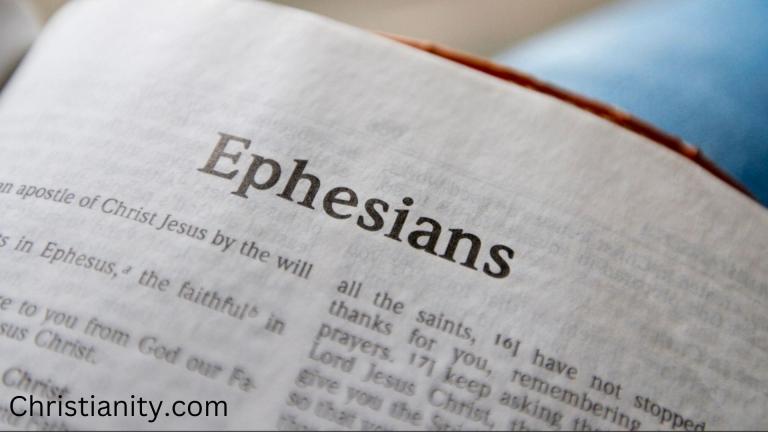
Monday: Read Eph 1:1-23
Lest you think Romans stands alone as the pinnacle of Paul’s writings, we now turn to Ephesians. One of my favorite NT scholars of the last century, F. F. Bruce, said that Ephesians is, “the quintessence of Paulinism” because it “in large measure sums up the leading themes of the Pauline letters, and sets forth the cosmic implications of Paul’s ministry as an apostle to the Gentiles.”2 Another notable scholar, Raymond Brown claimed that only Romans could match Ephesians “as a candidate for exercising the most influence on Christian thought and spirituality.”3
Ephesians 1:1-23 is the introduction. Paul begins, in 1:3-14, with an extensive shout of praise to God for his blessings in Christ (note: 1:3-14 is one sentence in Greek). It is widely believed that this functions as a eulogy. This eulogy will introduce most the key themes in the letter!
He begins by praising God for “every spiritual blessing in the heavenly places in Christ” (3). This is likely a general statement of praise, which is then followed (4-14) with the specifics.
The specifics of Paul’s praise to God begin with praise for our adoption as His children (4-6). Then he praises God for our redemption and the forgiveness of our sins (7-8). Then he praises God for revealing to us “the mystery of His will” (9-10). He concludes by praising God for the gift of the Holy Spirit who is a pledge of our inheritance” (11-14).
The chapter concludes with Paul’s turning to words of thanksgiving and prayer (15-23). Paul thanks them for their faith and their love (15-16). He then prays for them that they will continue to grow in knowledge and hope (17-18).
Questions to ponder/discuss:
- Paul’s extensive words of praise should be a model for us. How often do we give thanks to God for what He has done? Note that Paul’s list is not about him and the “things” he has. It is about God and what He has done for us with regard to the kingdom. God is the source of “every spiritual blessing” (3).
- That the Holy Spirit is a “pledge” (NAS, NRS; “guarantee” ESV, NKJ, NLT; “payment” NET; “pledge guaranteeing” NIV) first indicates that the Spirit is the presence of God among us now. But His presence among us also is a way of God providing for us now in part what will be true for us in eternity: namely, that we will dwell in the fulness of His presence (note: Rev 22:4 says, “we will see His face.”). In other words, the Scriptures promise us that someday we will be in God’s presence for eternity and there will be no more sin, death, or pain (Rev 21:4). Until that day arrives, God’s presence is among us in the person of the Holy Spirit. And the presence of the Holy Spirit is God’s “down payment” and promise that He will eventually bring about our eternal dwelling in His presence.
- Our hope is in what God will do: namely, He will manifest his power by resurrecting us and bringing about His new creation. What does the promise of hope mean for you?
Tuesday: Read Ephesians 2:1-10
Ephesians 2:1-10 may be one of the more famous passages describing our salvation in Christ. Paul contrasts their past state with their present status.
We “were dead” in our “trespasses and sins” (1). By implication, Paul is saying that we no longer are dead. This is an important point for Paul. We used to be dead in sin. Now, he will conclude, “we are his workmanship, created in Christ Jesus for good works, which God prepared beforehand, that we should walk in them (10).
Of course, Paul is speaking to gentiles.
He then details in what way they were dead. Namely, we were indulging in our flesh (3). But God, who is rich in mercy, and because of His great love, made us alive in Christ! (4-5). As a result, we have already been raised with Christ and seated in heavenly places (6). And all of this will result in the “age to come” (which, to keep it simple, is another way of saying the new creation) when all God’s promises will be realized (7).
In 2:8-10, Paul elaborates on the nature of salvation and the theme of “by grace you have been saved” (6). He begins by reiterating, “For by grace you have been saved through faith” (8). This is the theme of Ephesians (see 1:6-8; 3:2, 7-8).
Then he adds that it is not of ourselves: it is a gift (8) and not a result of works (9). After all, we are “For we are His workmanship, created in Christ Jesus for good works, which God prepared beforehand so that we would walk in them” (10). This is new creation language. The “good works” then have to do with the goal of new creation. The fruit of the new creation is made evident in our good works.
Paul begins and ends this section with a reference to “walk” (2, 10). We used to walk according to the course of this world, but now we are to walk in the good works of the new creation.
Questions to ponder/discuss:
-
Paul reminds them of the change that has been given them: note the contrasts:
- They were dead but now by God’s kindness they have been made alive, raised, and exalted with Christ
- They were subject to the Prince of the power of the air but now they rule with Christ and are seated with Him in the heavenly places
- God’s wrath vs God’s mercy, love, and grace
-
How much do we struggle with living in accord with the new creation that is true for us in Christ? No one said it would be easy. In fact, what is easy is living according to our old life before Christ.
Wednesday: Read Ephesians 2:11-22
Today’s reading may be the most important statement regarding the church in the NT. Paul’s point is that gentiles have been included in the one body of God’s people alongside Jewish believers.
As gentile believers, they were previously separated from Christ and God’s covenant people (11-12). Note: circumcision was the “sign” of the covenant with Abraham and marked those who were a part of God’s covenant community (see Gen 17). “But now,” Paul says they have been brought into[2] the body of God’s people by means of the blood of Christ (13).
We are now “one new man” (15). The result is that “we both have our access in one Spirit to the Father (18). By “both”, Paul means Jewish believers and Gentile believers—who together constitute one “new man.”
Paul continues, they are “no longer strangers and aliens” (19)—this is the language describing those who were outside of Israel. In fact, they are now, “fellow citizens with the saints, and are of God’s household” (19).
In 2:19-22, Paul expounds on the nature of the people of God (i.e., the church) in terms of the temple.
Questions to ponder/discuss:
- 2:19-22 is one of Paul’s most explicit descriptions of the Church as the temple (see also, 1 Cor 61:15-20 and 2 Cor 6:14-7:1). Note that when Paul describes the church as a temple there is an accompanying ethical demand. In Ephesians, Paul will elaborate on this in chs 4-6. At this point, what do you think are the implications of being the place where God dwells (temples) for Christian living?
- The question of Israel (i.e., the Jewish people) and the church (i.e., the NT people of God) is quite controversial.[3] Although there are significant differences among Christians today (most notably among evangelicals) I would note that all followers of Christ are members within God’s covenant community.
- For Jewish people today, whether or not they continue to have a special status before God, Paul indicates that they may only be brought back into the covenant family of God by faith in Jesus. In saying this, we should acknowledge the church’s role in antisemitism[4] as well as the continued suffering of the Jewish people today. In addition, we should also be careful of leaning so far towards philosemitism (the love of the Jewish people) that we are unable to criticize the state of Israel. Israel and the Jewish people are both the subjects of hatred and acts of terror. But Israel is a secular state that must also be held accountable for its own acts of injustice.
Thursday: Read Ephesians 3:1-13
Paul is about to pray for the gentiles (i.e., the nations) who have been brought into the Temple community of God’s people. Paul interrupts himself, however, and gives an account of his own calling.
He begins by disclosing the mystery of God (2-7: note, in the NT all mysteries are revealed). He notes that he received this insight from a revelation (3). In addition, this insight was not known to previous generations (5).
The mystery refers to the inclusion of the gentiles (6). They are “fellow heirs and fellow members” of the body of Christ (6). Paul then explains that it is this mission to reach the gentiles to which he was called (6-7).
Paul concludes by noting that revealing the mystery is God’s desire (8-13). And the revealing of God’s will to the nations is through “the church” (8: see 20: “God’s power works within us”).[5] For Paul, this meant suffering. But this is what he was called to do!
He concludes by encouraging the Ephesians to not lose heart because of his sufferings. His sufferings are the result of his calling which is for their benefit.
Questions to ponder/discuss:
- What would you do if God called you to serve a people group and you knew that it would bring great suffering? What if that calling had no guarantees of “success”? Would you do it?
- Of course, most of us do not have such an explicit calling. Spend some time praying for those who do—missionaries, pastors, teachers, and others
Friday: Read Ephesians 3:14-21
Paul resumes the prayer (note the repetition of “for this reason” in 1 and 14). His prayers contain the themes of chapters 1-2. In particular, it focuses on praise for God for bringing about His mysterious will among the nations.
His prayer has two central requests (16-19). First, he asks for an inner strength through God’s Spirit (16). Second, he includes a request for knowledge.
The prayer is grounded in God’s purpose of creating a new humanity in Christ—which is part of his design of summing up all things in Christ (1:10)
He concludes his prayer with a doxology (20-21). God, he says, is able to do more than we ask or think (20).
Paul’s prayer concludes with a Trinitarian formula: (20-21: God, Spirit, Christ). He ascribes glory to God (20-21), who is able to do all things according to the power (Spirit). He closes with the affirmation “to Him be the glory in the Church and in Christ Jesus (21).
Questions to ponder/discuss:
- How often do you pray simply to give God thanks? Spend some time thanking God.
Our goal is to keep these posts free of charge. I do not intend to ever hide them behind a paywall. I can only do this if those of you who have been blessed by them and can afford to give ($5, $10, $25, or more/month) do so. You can give a tax-deductible contribution by following this link.
Please share this post and let others know about determinetruth.
If you wish to view this blog on your smartphone through the Determinetruth app simply download the “tithe.ly church” app on your smartphone and insert “determinetruth” as the church name you wish to follow. Once it is loaded, simply click on the “blog” icon and it will automatically load.
If you would like to have Rob speak at your church or organization in person or via zoom, please let us know by filling out the contact info on the Contact me tab on this site.
[1] This guide is meant to be done either as a group study over the course of 2 or 4 meetings (Day 1-5; 6-10; 11-15; 16-20), or as a private devotion over the course of 4 weeks (or a calendar month—5 lessons per week).
2 F. F. Bruce, Paul: Apostle of the Free Spirit (Exeter: Paternoster, 1977), 424. Bruce used the expression ‘the quintessence of Paulinism’, originally coined by A. S. Peake, in his lecture ‘St. Paul in Rome. 4. The Epistle to the Ephesians’, BJRL 49 (1967), 303.
3 R. E. Brown, An Introduction to the New Testament (New York/London: Doubleday, 1997), 620.
[2] The language of “near” doesn’t mean “well, you are close but not quite inside.” Instead, it connotes closeness to the presence of God as when the High Priest entered the temple and was close to God. See 2:18!
[3] See the Determinetruth podcast Oct 3, 2022.
[4] See my chapter “Was John antisemitic” in John Among His Critics. (Jan 2023).
[5] This is one reason why I believe “rapture” theology is wrong. The people of God are the means through which God reveals Himself to the nations. Rapturing them out of the way would defeat this purpose.
Catholic
Contemplative
Eastern Orthodox
General Christian
Latter-day Saint
Progressive Christian
Careers, Workplace and Religion
Education and Religion
Family, Parenting and Religion
Health, Fitness and Religion
Home and Religion
Politics and Religion
Next Post

November 7, 2022 Why our hope is not in the Election. The Beast/Anti-Christ #5
Browse Our Archives
Select a Category 000 1 Cor 11:17-34 1 Corinthians 1 John 1 Peter 1 Thessalonians 1 Timothy 10 Commandments 2 Corinthians 2 John 2 Peter 2 Thessalonians 2 Timothy 3 John 666 Abortion Acts 2:42 Ahmaud Arbery AIPAC All Saints Day America antisemitism BDS Beast Betting Bible Bible study Biblical Interpretation Biden Book of Acts Boycott Campus Protests Catholicism Ceasefire Chavez Ravine Christian Nationalism Christian Zionism Christianity Today Christmas Church Colossians Communion Convict Leasing Covid-19 Craig Blaising creation Crucifixion Daoud Nassar Deception Deconstruction Democracy Devotional guide Discipleship Easter Eden Education Election End-times Ephesians Eschatology Ethnic Cleansing Evangelicalism Evangelicals Evolution Fall Famine Fascism FIFA Freedom of Speech Galatians Gary Burge Gaza Gaza; Genocide; Boycott Genesis Genocide George Floyd Global Warming God's will Gospel Gospel of John Gospel of Luke Gospel of Mark Gospel of Matthew Government Grace Great Prostitute Hamas Harris healthcare Hebrews HeGetsUs Holy Spirit Holy Week Honor Father and Mother ICJ Immigration Indigenous peoples day Iran Israel Israel Palestine Itamar Ben Gvir James Jesus Joel Willits Jude Just war Justice Kamala Harris Kingdom Of God Kings and Queens land of Israel Law (OT) Lazarus Les Miserable LGBTQ+ Love Luke Mahmoud Khalil Man of Lawlessness Mark Mark of the Beast Marriage Martin Luther King Jr Mercy Mexican Repatriation Military-Industrial-Complex Ministry Mission Money NAFTA Nakba Netanyahu New Creation New Testament Nicaragua Nicodemus Non Violence Occupation Pacifism Palestine Parable Paul Peace Pentecost Peonage Philemon Philippians Politics Poor Power Prayer Pride Month Priests Pro-life Propaganda Prophesy Prophet Qatar Queen Elizabeth Racism Reconstruction Redemption Reformation Resurrection Revelation Roe v Wade Romans Romans 13:1-7 Rome Russia Sabbath Samaritan Seals Sermon Settlements Slavery Spiritual gifts Taxes Tent of Nations Terrorism The Beast Theology Titus Torture Trump truth Ukraine Uncategorized Veteran's Day War Warsaw Ghetto wealth Wedding Women World Cup 2022 Worldview Worship Wrath Yemen Zionism
Select a Month September 2026 May 2026 February 2026 November 2025 October 2025 August 2025 July 2025 June 2025 May 2025 April 2025 March 2025 February 2025 January 2025 December 2024 November 2024 October 2024 September 2024 August 2024 July 2024 June 2024 May 2024 April 2024 March 2024 February 2024 January 2024 December 2023 November 2023 October 2023 September 2023 August 2023 July 2023 June 2023 May 2023 April 2023 March 2023 February 2023 January 2023 December 2022 November 2022 October 2022 September 2022 August 2022 July 2022 June 2022 May 2022 April 2022 March 2022 February 2022 January 2022 December 2021 November 2021 October 2021 September 2021 August 2021 July 2021 June 2021 May 2021 April 2021 March 2021 February 2021 January 2021 December 2020 October 2020 September 2020 August 2020 July 2020 June 2020 May 2020 April 2020 March 2020 February 2020 January 2020 December 2019 November 2019 October 2019 August 2019 July 2019 June 2019 May 2019 April 2019 August 2018 June 2018 May 2018 March 2018 September 2017 July 2017 May 2017 November 2016 October 2016 May 2016 April 2016 March 2016 December 2015 November 2015 October 2015 September 2015 August 2015 July 2015
Follow Us!
TAKE THE
Religious Wisdom Quiz
How many visions does the book of Revelation contain?
Select your answer to see how you score.
5 12 10 7
Support this
Column


Related posts from Determinetruth

Fantasy Football & the Bible: Drafting To Understand

Have we been lied to? America’s war machine...

The Purpose of the Law: Why Jesus and...

Why we could be breaking the Sabbath when...
TRENDING AT PATHEOS Evangelical

The Dangers of Gradual Accommodation (Winking at Sin)
Recently, the “law of gradualness” resurfaced during the opening of a weeklong,...

The Iron Gates and the Lion of the...
Yesterday, I didn't finish my report about, well, yesterday. So I'll...

Dolly Parton’s Last Song Wins Dove Award with...
Bluegrass band The Grascals, speaking on the red carpet at the 57th...

The Image: On the Horror of Capitalism and...
The Image Then went the Pharisees, and took counsel how they might...

We are approaching the date of our new American national holiday: October...

Letters on Living the Faith by C.S. Lewis
Most of us met C.S. Lewis as a public intellectual. Mere Christianity....
view all Evangelical blogs
Ad-Free & Subscriber Log-In Subscription Support
- About Us
- 2026 Calendar
- Videos
- Podcasts
- Library of World Religions
- Faith In Media Tracker
- Advertise With Us
- Write for Us
- Privacy Policy
- Terms of Service
- Do Not Sell My Data
- Contact Us
- Radiant Digital
- Manage Newsletter Subscriptions
- Unsubscribe From Notifications
- Sitemap
Copyright 2008-2026, Patheos. All rights reserved.
Subscription Support Ad-Free & Subscriber Log-In
Follow Patheos