
BuddhistCatholicContemplativeEvangelicalGeneral ChristianHinduJewishLatter-day SaintMuslimNew VisionsProgressive Christian
Beliefs
- Buddhist
- Catholic
- Contemplative
- Evangelical
- General Christian
- Hindu
- Jewish
- Latter-day Saint
- More Voices
- Muslim
- New Visions
- Pagan
- Progressive Christian
Topics
- Religion News
- Food and Religion
- Sports and Religion
- Religious Art
- Religious Music and Entertainment
- Religious Events
- History and Religion
- Style and Religion
- Politics and Religion
- Women in Religion
- Recreation Outdoors and Religion
- Business Finance and Religion
- Careers Workplace and Religion
- Education and Religion
- Family Parenting and Religion
- Health Fitness and Religion
- Home and Religion
- Relationships and Religion
- Technology and Religion
- Travel and Religion
Columnists
- Buddhist Columnists
- Business Finance and Religion Columnists
- Careers Workplace and Religion Columnists
- Catholic Columnists
- Contemplative Columnists
- Education and Religion Columnists
- Evangelists Columnists
- Family Parenting and Religion Columnists
- General Christian Columnists
- Health Fitness and Religion Columnists
- Hindu Columnists
- History and Religion Columnists
- Home and Religion Columnists
- Jewish Columnists
- More Voices Columnists
- Latter Day Columnists
- Muslim Columnists
- New Visions Columnists
- Nonreligious Columnists
- Pagan Columnists
- Politics and Religion Columnists
- Progressive Columnists
- Recreation Outdoors and Religion Columnists
- Relationships and Religion Columnists
- Religion News Columnists
- Religious Art Columnists
- Religious Events Columnists
- Religious Music and Entertainment Columnists
- Sports and Religion Columnists
- Style and Religion Columnists
- Technology and Religion Columnists
- Travel and Religion Columnists
- Women in Religion Columnists
Resource Library
- 2026 Calendar
- Library of World Religions
- The 100 Most Holy Places on Earth
- Patheos Answers
- Podcasts
- Videos
- Faith Leaders Database
- Anglican Episcopalian
- Bahai
- Baptist
- Buddhism
- Christianity
- Confucianism
- Eastern Orthodoxy
- Hinduism
- Holiness and Pentecostal
- ISKCON
- Islam
- Judaism
- Lutheran
- Methodist
- The Church of Jesus Christ of Latter-day Saints
- New Age
- Paganism
- Presbytarian and Reformed
- Protestantism
- Religion Behind the Scenes
- Roman Catholic
- Scientology
- Shia Islam
- Sikhism
- Sufism
- Sunni Islam
- Taoism
- Zen
- See all religions
Research Tools
 Ad-Free & Subscriber Log-In Subscription Support
Ad-Free & Subscriber Log-In Subscription Support
Follow Patheos 

- Trending:
- Forgiveness
- |
- Marriage
- |
- Consciousness
- |
- Death Penalty
- |
- Election
- |
- Halloween

-
More
- Home
- Evangelical
- Careers, Workplace and Religion
- 2nd Cor 10-13: Paul’s apostolic defense: a devotional guide to 2nd Cor #3.
2nd Cor 10-13: Paul’s apostolic defense: a devotional guide to 2nd Cor #3.
Last updated on: October 14, 2022 at 12:57 am by Rob Dalrymple
2nd Cor 10-13: Paul’s apostolic defense: a devotional guide to 2nd Cor #3. 2022-10-06T14:15:29-08:00 Rob Dalrymple
Patheos Explore the world's faith through different perspectives on religion and spirituality! Patheos has the views of the prevalent religions and spiritualities of the world.
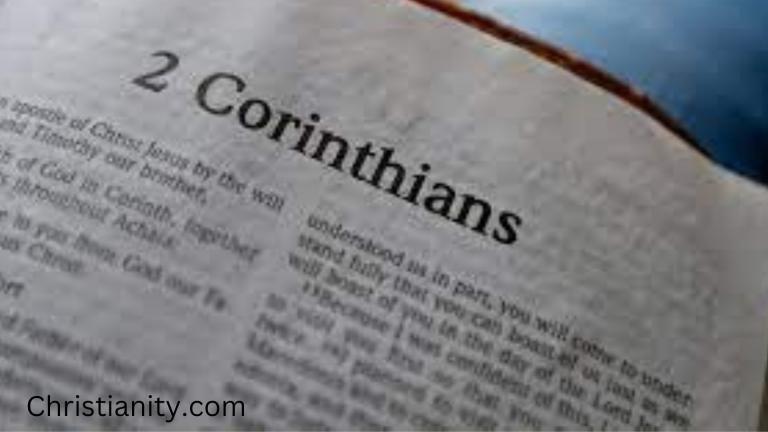 Monday: Read 2 Cor 10:1-18
As we noted before, 2nd Corinthians is Paul’s most autobiographical work. A large part of this is the result of Paul’s continued need to defend himself in order that they might accept him as an apostle.
In chapters 10-13, Paul addresses groups with whom he disagrees in order that these matters may be settled before he arrives. In 1-11, he refers to some of the insiders who regard Paul as “walking according to the flesh” (2).
Then, in 12-18, Paul refers to those who commend themselves by comparing themselves to Paul.
Over the next four chapters (10-13) we will see Paul’s response to accusations against him that, in the Corinthians’ mind, shows Paul’s weaknesses.
Paul’s responses include: his “weakness” is an imitation of Christ; his weakness was for their sakes; and his weaknesses demonstrate the Gospel and what real power looks like.
The first sign of Paul’s weakness is that he has an attitude of humility (1). It is important to know that humility was not a virtue in the Greco-Roman world.
Paul responds by saying that our pride should be in Christ (10:17; 1 Cor 1:3). He adds that our boasting should be in Christ (1 Cor 3:5-9). This doesn’t mean that Paul won’t exercise his apostolic authority if needed. This is, after all, what he does here (2-11). For Paul, we don’t “wage war according to the flesh” (3). That is, we are not concerned with honor and power as the world does honor and power.
Questions to ponder/discuss:
- It is important to recognize that our understanding of “boasting” is a bit distorted. It is almost as if we believe that we should never boast. But how do we expect someone to hire us if we never tell them our credentials? If a person is preaching or teaching and the audience doesn’t know them, it is customary to be introduced and to give the speaker’s credentials. It is not wrong to tell people why they should listen to you. This is what Paul was doing. (today, of course, what Paul does sounds like bragging. It wasn’t. it was necessary information). Perhaps, the question we should ask is: “why are we boasting?” What do you think are some valid reasons to boast?
Tuesday: Read 2 Cor 11:1-21a
In 11:1-12:13, Paul defends his ministry against the charges of some who are claiming to be “super” apostles (this could be Paul’s sarcastic title for them—although even then it might be based on something they said). This brings us to the second sign of Paul’s weakness: he refused to receive pay and was instead performing manual labor (7-12; see 1 Thess 2:5-9; 1 Cor 9:15-18).
This was a serious problem for Paul. In the GR world, A teacher who didn’t charge would appear as though he was not worth listening to. And the idea of manual labor was degrading—something for the lower classes and slaves. The belief was that a true philosopher would charge for his work—showing that he is worth the money—and would not stoop to self-support.
Paul viewed his actions as embodying the story of Jesus and self-giving love (11). Paul adds that he was renouncing his rights to be paid so that he would not be a burden (7-11; see also 1 Thess 2:9; 1 Cor 9:12, 15, 18-19; 2 Cor 12:13).
Paul’s opponents (the “super-apostles”) claimed equality because they charged money. Paul says that the Corinthians have been enslaved by them (this is the result of the system of patronage and power; 20-21). Paul, by way of contrast, was committed to living out power in weakness.
Questions to ponder/discuss:
- A study of 1-2 Corinthians should force us to begin to ask how and why we do church the way we do today. We need to ask: how much of what we do manifests weakness and exalts the gospel? There is a delicate balance here for sure. But I fear that much of what we do crosses the line towards pride, power, and self-centeredness. And I fear that little of what we do crosses the line towards humility and the exaltation of Christ.
- What are your thoughts here? Maybe you haven’t considered this much. I hope this study of 1-2 Corinthians is helping you learn to ask some different questions.
Wednesday: Read 2 Cor 11:21b-33
Today’s reading is the first part of what is known as Paul’s “fool speech” (21). It is a rich chronicle of his sufferings. This passage is Paul’s “fool speech” because he is boasting—which he believes he must do because they continue to not listen to him. For Paul, his boasts “pertain to my weakness” (30).
Paul defends his claim that he is an apostle by noting all of his sufferings! In Paul’s understanding of the Gospel, an approved worker is one who has suffered for Christ. After all, we preach Christ crucified!
In this list of sufferings are some matters for which we have no other source. He was beaten by the Jewish authorities 5 times (39 lashes). He was beaten by Roman officials (‘rods”) 3 times (these beatings were with the *lictor’s [*policeman] rods.
Questions to ponder/discuss:
- Reading a list of sufferings like this leads us to ask, how is it that Paul endured? What do you think?
- We might be intimidated by a list like this and think that we would never be able to endure such hardships. Although I completely understand this sentiment, I also recognize that it is not a good one. If you feel this way or are concerned, ask the Lord for faith, and the power of the Spirit to endure.
Thursday: Read 2 Cor 12:1-21
Paul continues his “fool speech.” One of the charges against him was that he was not a genuine apostle. Paul concludes by saying that he should have been commended by them but was instead forced to speak as a fool (11).
We noted that in the opening verse of both 1st and 2nd Corinthians Paul begins with a very forceful assertion that he was indeed an apostle and that it was “by the will of God” (1 Cor 1:1; 2 Cor 1:1).
Paul finishes off the defense of his apostolic credentials by claiming that he has seen the resurrected Jesus (1-9). This appears to have been a central criterion for being an apostle: namely, that Christ called and appointed you.
NB: this is why many, including myself, would claim that there cannot be apostles today. An apostle is someone who was appointed by Christ to lead the church. The apostles certainly appointed others to continue to lead the church after them. Those that they appointed, however, are not apostles because they were not appointed by Jesus Himself.
Paul adds that because of the incredible things he saw (the “surpassing greatness of the revelations”; 7), he was given a “thorn in his flesh”; which he says was “a messenger of Satan” (12:1, 6-10; esp. 7).
This serves as the fourth accusation against him and his claims to be an apostle: Pain has some type of physical “weakness.” We don’t know what the “thorn in his flesh” was, but the notion that it was a physical ailment gains a lot of traction here. After all, it provided another reason why some refused to follow him and accept his claims to be an apostle.
Questions to ponder/discuss:
- I suppose that today’s lesson might be titled, “be careful what you ask for.” What I mean is that we often ask for miracles, for God to reveal Himself, or for some sort of inside information that will make sense of things for us. Paul, however, notes that because of the greatness of the revelation he was given, he was also given a messenger of Satan (which we do not know what it was; although it apparently caused some sort of suffering) to keep him from becoming conceited.
- I suspect that this might be the answer to yesterday’s question. God’s grace is what sustained Paul. He was able to endure all that he did because he had seen God’s throne room. He knew what was in store for him. He has seen glory and it is worth his present suffering.
- It is important here to note the possibility that Paul had some form of a physical ailment. We are often really good at saying that all persons are made in the image of God—although we have a much harder time putting that into practice than I think we are willing to admit. One of the people groups that have a hard time in society and, tragically, in the church also, are those who are physically or mentally challenged. They too should be welcomed into the community of God’s people with a status that is equal to all others. Consider ways in which you might unwittingly discriminate against people with physical or mental challenges.
Friday: Read 2 Cor 13:1-14
Paul’s closing remarks are certainly forceful as he continues to defend himself and his Gospel.
When Paul does finally arrive in Corinth, he will initiate a judicial action against those who remain unrepentant and continue to rebel against his leadership (1). Paul has already warned them. In fact, he has delayed coming in order that they might have time to repent (1:23-2:2).
It may be that the claim that “Christ was crucified in weakness” (4) is a quote from Paul’s opponents. Paul’s response is to affirm that the Christ that he preaches is powerful because He has risen (4). And it is because Jesus has risen that Christ judges them (4: contra the NIV) and for this reason, they should examine themselves (5). How do they do this? By recognizing that Paul has already passed the test (6).
Paul hopes that they will understand his message and that there will be no need to be forceful when he comes (10).
The letter ends with a formal closing and a greeting (13). Paul includes a trinitarian statement: Jesus Christ, the love of God, and the fellowship of the Holy Spirit (14).
Questions to ponder/discuss:
- One may read this chapter and conclude that Paul is arrogant and forceful, or even that it is cult-like—a sort of listen to me or you are out of here! But this would be a serious misreading of Paul. Paul affirms, “we rejoice when we ourselves are weak but you are strong” (9).
- I suspect that it is difficult for us to understand Paul’s harsh tone in large part because we are unaware of just how bad things were in Corinth and how much trouble they had given Paul. I suspect even more so that we have no real idea how much suffering Paul went through for the sake of the church in the first century.
- What are your biggest takeaways from this letter?
- How can you better apply the principle of unity in the church in your content?
[1] This guide is meant to be done either as a group study over the course of 2 or 4 meetings (Day 1-5; 6-10; 11-15; 16-20), or as a private devotion over the course of 4 weeks (or a calendar month—5 lessons per week).
Catholic
Contemplative
Eastern Orthodox
General Christian
Latter-day Saint
Progressive Christian
Careers, Workplace and Religion
Education and Religion
Family, Parenting and Religion
Home and Religion
Politics and Religion
Relationships and Religion
About Rob Dalrymple
Rob Dalrymple and his wife Toni have four fabulous children, as well as 2 grandchildren! He has been teaching and pastoring for over 32 years at colleges, seminaries, and the local church. He has a PhD (Westminster Theological Seminary) in biblical interpretation. Rob is currently serving as the Executive Director of Determinetruth ministries, which is a 501c3 parachurch ministry whose vision is to provide a platform of training for pastors, leaders, and members of local churches, especially those who have been wounded by the evangelical church. Rob hosts the weekly determinetruth podcast and writes a weekly blog: all of which can be accessed at determinetruth.com He is the author of four books: Follow the Lamb: A Guide to Reading, Understanding, and Applying the Book of Revelation These Brothers of Mine: A Biblical Theology of Land and Family Understanding the New Testament and the End Times: Why it Matters Revelation and the Two Witnesses. And is presently writing a commentary for the book of Revelation (Cascade Books) titled Revelation: A Love Story You can read more about the author here.
Previous Post

October 10, 2022
Why I celebrate Indigenous Peoples Day and not Columbus Day
Next Post
October 18, 2022 Who/What is the Beast/anti-Christ? And why you should care #2
Browse Our Archives
Select a Category 000 1 Cor 11:17-34 1 Corinthians 1 John 1 Peter 1 Thessalonians 1 Timothy 10 Commandments 2 Corinthians 2 John 2 Peter 2 Thessalonians 2 Timothy 3 John 666 Abortion Acts 2:42 Ahmaud Arbery AIPAC All Saints Day America antisemitism BDS Beast Betting Bible Bible study Biblical Interpretation Biden Book of Acts Boycott Campus Protests Catholicism Ceasefire Chavez Ravine Christian Nationalism Christian Zionism Christianity Today Christmas Church Colossians Communion Convict Leasing Covid-19 Craig Blaising creation Crucifixion Daoud Nassar Deception Deconstruction Democracy Devotional guide Discipleship Easter Eden Education Election End-times Ephesians Eschatology Ethnic Cleansing Evangelicalism Evangelicals Evolution Fall Famine Fascism FIFA Freedom of Speech Galatians Gary Burge Gaza Gaza; Genocide; Boycott Genesis Genocide George Floyd Global Warming God's will Gospel Gospel of John Gospel of Luke Gospel of Mark Gospel of Matthew Government Grace Great Prostitute Hamas Harris healthcare Hebrews HeGetsUs Holy Spirit Holy Week Honor Father and Mother ICJ Immigration Indigenous peoples day Iran Israel Israel Palestine Itamar Ben Gvir James Jesus Joel Willits Jude Just war Justice Kamala Harris Kingdom Of God Kings and Queens land of Israel Law (OT) Lazarus Les Miserable LGBTQ+ Love Luke Mahmoud Khalil Man of Lawlessness Mark Mark of the Beast Marriage Martin Luther King Jr Mercy Mexican Repatriation Military-Industrial-Complex Ministry Mission Money NAFTA Nakba Netanyahu New Creation New Testament Nicaragua Nicodemus Non Violence Occupation Pacifism Palestine Parable Paul Peace Pentecost Peonage Philemon Philippians Politics Poor Power Prayer Pride Month Priests Pro-life Propaganda Prophesy Prophet Qatar Queen Elizabeth Racism Reconstruction Redemption Reformation Resurrection Revelation Roe v Wade Romans Romans 13:1-7 Rome Russia Sabbath Samaritan Seals Sermon Settlements Slavery Spiritual gifts Taxes Tent of Nations Terrorism The Beast Theology Titus Torture Trump truth Ukraine Uncategorized Veteran's Day War Warsaw Ghetto wealth Wedding Women World Cup 2022 Worldview Worship Wrath Yemen Zionism
Select a Month September 2026 May 2026 February 2026 November 2025 October 2025 August 2025 July 2025 June 2025 May 2025 April 2025 March 2025 February 2025 January 2025 December 2024 November 2024 October 2024 September 2024 August 2024 July 2024 June 2024 May 2024 April 2024 March 2024 February 2024 January 2024 December 2023 November 2023 October 2023 September 2023 August 2023 July 2023 June 2023 May 2023 April 2023 March 2023 February 2023 January 2023 December 2022 November 2022 October 2022 September 2022 August 2022 July 2022 June 2022 May 2022 April 2022 March 2022 February 2022 January 2022 December 2021 November 2021 October 2021 September 2021 August 2021 July 2021 June 2021 May 2021 April 2021 March 2021 February 2021 January 2021 December 2020 October 2020 September 2020 August 2020 July 2020 June 2020 May 2020 April 2020 March 2020 February 2020 January 2020 December 2019 November 2019 October 2019 August 2019 July 2019 June 2019 May 2019 April 2019 August 2018 June 2018 May 2018 March 2018 September 2017 July 2017 May 2017 November 2016 October 2016 May 2016 April 2016 March 2016 December 2015 November 2015 October 2015 September 2015 August 2015 July 2015
Follow Us!
TAKE THE
Religious Wisdom Quiz
I was a scribe skilled in the Law, and I set my heart to study, practice, and teach it. Who am I?
Select your answer to see how you score.
Solomon Nehemiah Samuel Ezra
Support this
Column


Related posts from Determinetruth

Obey Governments? Not What Paul Said: Reading Rom...

Fantasy Football & the Bible: Drafting To Understand

What can we learn from Bathsheba? Understanding Isr-Pal...

Have we been misled? The Beast: Part 2
TRENDING AT PATHEOS Evangelical

Emotion in Early Christianity by Andrew Crislip
Andrew Crislip’s Emotion in Early Christianity examines an often overlooked dimension of...

16 Spiritual Touchstones for a More Grounded Life
After decades of spiritual study, here are 16 principles I try...

Catholic Evangelization: Sharing Your Faith Every Day
Welcome back to the Graceful Awakening mini-series called, “From Faith to Mission.” ...

The Pillar of the Boatmen: the Ancient Monument...
The Pillar of the Boatmen is a Romano-Gaulish sculpture that dates from...

In one sense walking into Westminster Abbey is like walking down the...

'Super Scam Me' Exposes AI Jon Bon Jovi...
Leslie Pickett believed she was in a relationship with Jon Bon Jovi....
view all Evangelical blogs
Ad-Free & Subscriber Log-In Subscription Support
- About Us
- 2026 Calendar
- Videos
- Podcasts
- Library of World Religions
- Faith In Media Tracker
- Advertise With Us
- Write for Us
- Privacy Policy
- Terms of Service
- Do Not Sell My Data
- Contact Us
- Radiant Digital
- Manage Newsletter Subscriptions
- Unsubscribe From Notifications
- Sitemap
Copyright 2008-2026, Patheos. All rights reserved.
Subscription Support Ad-Free & Subscriber Log-In
Follow Patheos