
BuddhistCatholicContemplativeEvangelicalGeneral ChristianHinduJewishLatter-day SaintMuslimNew VisionsProgressive Christian
Beliefs
- Buddhist
- Catholic
- Contemplative
- Evangelical
- General Christian
- Hindu
- Jewish
- Latter-day Saint
- More Voices
- Muslim
- New Visions
- Pagan
- Progressive Christian
Topics
- Religion News
- Food and Religion
- Sports and Religion
- Religious Art
- Religious Music and Entertainment
- Religious Events
- History and Religion
- Style and Religion
- Politics and Religion
- Women in Religion
- Recreation Outdoors and Religion
- Business Finance and Religion
- Careers Workplace and Religion
- Education and Religion
- Family Parenting and Religion
- Health Fitness and Religion
- Home and Religion
- Relationships and Religion
- Technology and Religion
- Travel and Religion
Columnists
- Buddhist Columnists
- Business Finance and Religion Columnists
- Careers Workplace and Religion Columnists
- Catholic Columnists
- Contemplative Columnists
- Education and Religion Columnists
- Evangelists Columnists
- Family Parenting and Religion Columnists
- General Christian Columnists
- Health Fitness and Religion Columnists
- Hindu Columnists
- History and Religion Columnists
- Home and Religion Columnists
- Jewish Columnists
- More Voices Columnists
- Latter Day Columnists
- Muslim Columnists
- New Visions Columnists
- Nonreligious Columnists
- Pagan Columnists
- Politics and Religion Columnists
- Progressive Columnists
- Recreation Outdoors and Religion Columnists
- Relationships and Religion Columnists
- Religion News Columnists
- Religious Art Columnists
- Religious Events Columnists
- Religious Music and Entertainment Columnists
- Sports and Religion Columnists
- Style and Religion Columnists
- Technology and Religion Columnists
- Travel and Religion Columnists
- Women in Religion Columnists
Resource Library
- 2026 Calendar
- Library of World Religions
- The 100 Most Holy Places on Earth
- Patheos Answers
- Podcasts
- Videos
- Faith Leaders Database
- Anglican Episcopalian
- Bahai
- Baptist
- Buddhism
- Christianity
- Confucianism
- Eastern Orthodoxy
- Hinduism
- Holiness and Pentecostal
- ISKCON
- Islam
- Judaism
- Lutheran
- Methodist
- The Church of Jesus Christ of Latter-day Saints
- New Age
- Paganism
- Presbytarian and Reformed
- Protestantism
- Religion Behind the Scenes
- Roman Catholic
- Scientology
- Shia Islam
- Sikhism
- Sufism
- Sunni Islam
- Taoism
- Zen
- See all religions
Research Tools
 Ad-Free & Subscriber Log-In Subscription Support
Ad-Free & Subscriber Log-In Subscription Support
Follow Patheos 

- Trending:
- Forgiveness
- |
- Marriage
- |
- Consciousness
- |
- Death Penalty
- |
- Election
- |
- Halloween

-
More
- Home
- Evangelical
- Business, Finance and Religion
- 2 Cor 5-9: Giving in the NT: a devotional guide
2 Cor 5-9: Giving in the NT: a devotional guide
Last updated on: October 7, 2022 at 12:18 am by Rob Dalrymple
2 Cor 5-9: Giving in the NT: a devotional guide 2022-09-29T13:33:57-08:00 Rob Dalrymple
Patheos Explore the world's faith through different perspectives on religion and spirituality! Patheos has the views of the prevalent religions and spiritualities of the world.
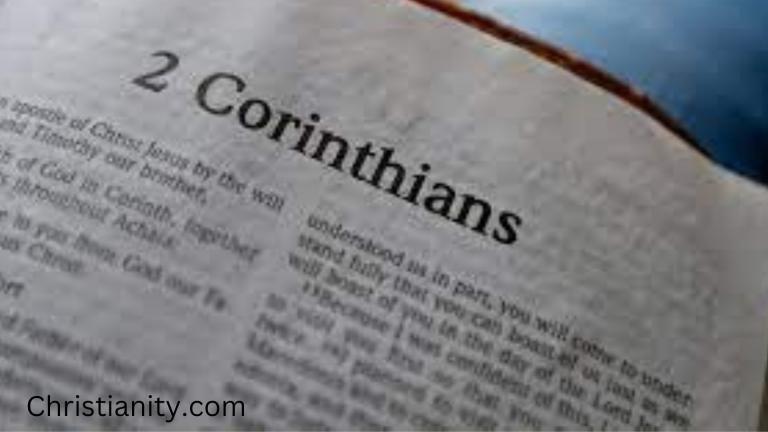
Monday: Read 2 Cor 5:11-6:2
2nd Cor 5:11-7:4 marks a new section in the book. Today’s reading of 5:11-21 might well be the key to the whole book!
The section begins with Paul defending himself against outsiders. In particular, those who take pride in their appearance. Paul argues for the legitimacy of his ministry in terms of its character. His central point is that because Christ died for us we too have learned to die for Christ. As a result, Paul says, “those who live would live no longer for themselves, but for the one who died for them and was raised” (15).
Because we have died to ourselves we no longer live according to the world’s standards. That is, what the world deems as wise, as the right way to do things, or as the way things should be done, we no longer follow. We should not follow such things because they are “passing away” (5:18). It is the new creation that lasts forever!
For Paul, to be “in Christ” is to be a new creation (17). The result of all this is: “so that we ourselves would become the justice [or “righteousness”] of God in him” (21).
Questions to ponder/discuss:
- If we understand this passage, then so much of the New Testament and the Gospel message of what true discipleship means will come alive. To deny ourselves and follow Jesus is what the New Creation is about. The Kingdom of God (New Creation) is about love and denying oneself for Christ and others. The world, by way of contrast, is about honor, power, and wealth and comfort. The differences between the two kingdoms are great. Most notably, the New Creation brings justice for all (equity, no more hunger, no more suffering). And the other brings prosperity, power, and comfort for some; and this is usually at the expense of the majority. Finally, the two kingdoms are distinguished by the fact that one lasts forever and the other passes away!
- The statement that “those who live would live no longer for themselves, but for the one who died for them and was raised” (15) is surely the heart of Christian discipleship. It is also very easy to say and quite difficult to do. The more we have, the more comforts we enjoy, and the harder it is to deny ourselves.
- The fact that Christ died for us, the fact that He denied himself for us, means that we too shall live as Jesus lived. To live like this is life! After all, the old (our pride, our comforts, our lust for power) has passed away (or is passing away).
Tuesday: Read 2 Cor 6:3-7:4
Paul’s ministry was one of reconciliation. He had been careful in his ministry to do things the right way. Of course, this meant suffering. Paul’s sufferings provided the basis for his appeal for them to be reconciled to God (3-10).
Paul lists 9 examples of suffering. The first 3 arise out of the difficulty of preaching in a culture hostile to God (4: afflictions, hardships, in distresses: NAS). The next 3 give specific examples of suffering (5: beatings, imprisonments, in tumults—riots). The final 3 speak of voluntary sufferings (5: labors, sleeplessness, hunger).
This is followed by a list of 8 qualities (in 2 groups of 4) that correspond to endurance (6-7).
Paul follows this with a list of 7 antitheses: that is, how things look in the eyes of the world versus how they are in reality: (8b-10): for example, “regarded as deceivers and yet true” (8b).
The section (5:11-7:1) concludes with one of Paul’s most significant affirmations. In 6:14-7:1, Paul argues strongly that we must be separate from pagan ways. Why? Paul explains that it is because we are a new creation: which means that we are the temple of God (16). Paul opens with 5 statements in which the items cannot be combined (14-16). The reason why these things cannot be combined is because (“for”; 16), “we are the temple of the living God.”
Paul then cites several OT passages to affirm this view (most notably Lev 26:11-12; Ezek 37:23-27).
Paul concludes, “therefore” (7:1), we must “cleanse ourselves from all defilement of flesh and spirit, perfecting holiness in the fear of God.”
Questions to ponder/discuss:
- It is still my conviction that we must wrestle with the lack of suffering in our western churches. For Paul, suffering served to verify that his ministry was indeed from Christ. Note, however, not just what Paul says here about his suffering, but also what he says with regard to how he responds to suffering. What are some things that you notice with regard to how Paul has responded to suffering?
- What do you think it means to be separate from pagan ways? (my thoughts are that pagan ways are associated with the world’s wisdom. That is, with how we should do politics, economics, or any other sphere of life. The key is that every system makes sense and may be the best the world has to offer. But only the wisdom that comes from Christ is true and beneficial for all).
Wednesday: Read 2 Cor 7:5-16
In 7:5-9:15, Paul addresses the coming of Titus to him. Paul apparently had a number of exchanges with the church in Corinth. These include 1st Corinthians and other letters that he wrote to them (which we do not have). Paul also made several trips to Corinth to deal with the problems there.
It appears that during one of those visits Paul was wronged by someone (2:5; 7:12). This person gained the support of some in Corinth against Paul (2:6). Paul was disappointed because the rest of the church did not take action against the man. So, Paul sent Titus to Corinth with a “harsh letter.” This harsh letter advocated disciplinary action against the person (2:9; 7:12).
This letter raised two issues. First, Paul wrote to them instead of visiting—which he had earlier agreed that he would do (1:12-24; 10:9-11). Second, the letter was hurtful to them (8-12).
This meant that the relationship between Paul and Corinth was at stake. As a result, he was anxious to hear how the church received his letter from Titus. Paul even acknowledges that he had regret over writing the letter (8).
Titus arrives with good news. They have repented. Paul realizes that his ”harsh letter” was good for them and that his regret over sending the letter was unfounded (8).
Questions to ponder/discuss:
- We’ve all had regrets for our actions. What are some things we can do when we have regret for our actions?
- Paul may have been “harsh” in his letter. This is not necessarily a sin. The key is that we are always motivated by love! Sometimes, love necessitates harshness. But such harshness must be the fruit of love.
Thursday: Read 2 Cor 8:1-24
The next two readings are perhaps the most significant teaching we have in the NT on giving. Paul has spent the last year or so taking an offering from the churches in the Aegean Sea area in order to present them as a gift for the poor in Jerusalem and Judea (see 1 Cor 16:1-3; Rom 15:23-33). Paul had asked them to save a little each week (1 Cor 16:1-3).
Titus’ report on the collection was not good. The Corinthians, however, have not been saving; which Paul says is a sign that they have not been transformed by the Gospel. Paul writes to encourage them to complete the collection.
The key theme of these 2 Cor 8-9 is that giving is an act of divine grace! Note that “grace” occurs a total of 10x in chapters 8-9 (8:1, 4, 6, 7, 9, 16, 19; 9:8, 14, 15)
Of course, our model for giving is Jesus. Paul says, “that though He was rich, yet for your sake He became poor, so that you through His poverty might become rich” (9).
Paul says that his writing is advice and not a command (8:8). Their response should be readiness (8:8-11; 9:6-15). He is not asking them to give more than they have (8:11-12). His request is that equality would be had between the Jerusalemites and themselves (8:13-15).
Questions to ponder/discuss:
- The Gospel is a gospel of generosity. Jesus was wealthy and powerful and yet He gave Himself up so that others might be saved. Michael Gorman summarizes this text well when he says, “If Christ’s ‘wealth’ consists of his generosity, then the purpose of this momentum is to make ‘you’ rich . . . not in the sense of what you acquire as possessions, but in the sense of becoming rich in generosity. . . . The purpose of ‘enrichment’ or ‘abundance’ is not that believers may possess more, but give more.”[1]
- 2 Cor 8:9 may be viewed as the Gospel as stated in financial metaphors! We must not think of the Gospel as only pertaining to our salvation. The Gospel speaks to a total life transformation. This means that we must learn to deny ourselves for the sake of the other. If then, we have means and others do not, then we should share. After all, we only have because of God’s grace!
- What do you think of Paul’s statement that there should be equality among all Christians (8:13-15)?
Friday: Read 2 Cor 9:1-15
If the primary source of Paul’s troubles with the church in Corinth has been wealthy, elite men, then we can only imagine the tension that Paul felt as he continued to ask them for support for the poor in Jerusalem. After all, those who would be expected to give and perhaps to give substantively would be these very men. These men, then, not only have to agree with Paul on the issues that are raised throughout these two letters, but they must also be willing to listen to Paul and give freely.
Paul makes three points about giving. First, he notes that we will reap what we sow! (generously vs. sparingly): “Remember this: Whoever sows sparingly will also reap sparingly, and whoever sows generously will also reap generously” (6). Paul is using an agricultural metaphor here that is obviously true. If we sow a few seeds, we will only reap a few crops.
Second, we should only give what we have decided in our hearts to give: “Each of you should give what you have decided in your heart to give, not reluctantly or under compulsion, for God loves a cheerful giver” (7).
Finally, Paul says that God will bless the giver abundantly, “And God is able to bless you abundantly, so that in all things at all times, having all that you need, you will abound in every good work” (8).
Paul then follows this with four effects of giving. First, he says, God will supply and increase our “store of seed and enlarge the harvest of your righteousness” (10). Second, by giving God will give us more so we can give more (11). Third, Paul says that people will praise God because of our obedience in giving (13). Finally, Paul says that because of our giving people will pray to God for us (14-15).
The result is that the giver will always have what they need.
Questions to ponder/discuss:
- To reiterate: if you struggle to pay your basic bills or to provide food for your family, then perhaps you should not give at all (of course, you might be able to give of your time or talents). At the same time, if you have more than enough, then you might be called to give well beyond 10%.
- Did you know that the giving rate today is lower than it was during the Great Depression?
- When Paul says that we should give not reluctantly nor under compulsion, some respond by saying that they can’t give because it would be reluctantly. To this, I would reply: learn how to give cheerfully.
- Remember Jesus’ words, “It is more blessed to give than to receive” (Acts 20:35).
- Paul indicates that by giving God will provide even more. The result is that we can then give even more! (those who say we give in order to get more both fail to recognize that the getting of more is so that we can give more away, and that giving is an act of self-denying love. If we give only so we can get, then we have not loved.
[1] Gorman, Michael J. Participating in Christ (p. 230). Baker Publishing Group. Kindle Edition.
Catholic
Contemplative
General Christian
Latter-day Saint
Progressive Christian
Business, Finance and Religion
Careers, Workplace and Religion
Education and Religion
Family, Parenting and Religion
Health, Fitness and Religion
History and Religion
Home and Religion
Politics and Religion
Recreation, Outdoors and Religion
Relationships and Religion
About Rob Dalrymple
Rob Dalrymple and his wife Toni have four fabulous children, as well as 2 grandchildren! He has been teaching and pastoring for over 32 years at colleges, seminaries, and the local church. He has a PhD (Westminster Theological Seminary) in biblical interpretation. Rob is currently serving as the Executive Director of Determinetruth ministries, which is a 501c3 parachurch ministry whose vision is to provide a platform of training for pastors, leaders, and members of local churches, especially those who have been wounded by the evangelical church. Rob hosts the weekly determinetruth podcast and writes a weekly blog: all of which can be accessed at determinetruth.com He is the author of four books: Follow the Lamb: A Guide to Reading, Understanding, and Applying the Book of Revelation These Brothers of Mine: A Biblical Theology of Land and Family Understanding the New Testament and the End Times: Why it Matters Revelation and the Two Witnesses. And is presently writing a commentary for the book of Revelation (Cascade Books) titled Revelation: A Love Story You can read more about the author here.
Previous Post

October 4, 2022
Bring your bible to school day: Maybe not such a great idea
Next Post
October 7, 2022 The Abuse of Women continues. We cannot remain silent!
Browse Our Archives
Select a Category 000 1 Cor 11:17-34 1 Corinthians 1 John 1 Peter 1 Thessalonians 1 Timothy 10 Commandments 2 Corinthians 2 John 2 Peter 2 Thessalonians 2 Timothy 3 John 666 Abortion Acts 2:42 Ahmaud Arbery AIPAC All Saints Day America antisemitism BDS Beast Betting Bible Bible study Biblical Interpretation Biden Book of Acts Boycott Campus Protests Catholicism Ceasefire Chavez Ravine Christian Nationalism Christian Zionism Christianity Today Christmas Church Colossians Communion Convict Leasing Covid-19 Craig Blaising creation Crucifixion Daoud Nassar Deception Deconstruction Democracy Devotional guide Discipleship Easter Eden Education Election End-times Ephesians Eschatology Ethnic Cleansing Evangelicalism Evangelicals Evolution Fall Famine Fascism FIFA Freedom of Speech Galatians Gary Burge Gaza Gaza; Genocide; Boycott Genesis Genocide George Floyd Global Warming God's will Gospel Gospel of John Gospel of Luke Gospel of Mark Gospel of Matthew Government Grace Great Prostitute Hamas Harris healthcare Hebrews HeGetsUs Holy Spirit Holy Week Honor Father and Mother ICJ Immigration Indigenous peoples day Iran Israel Israel Palestine Itamar Ben Gvir James Jesus Joel Willits Jude Just war Justice Kamala Harris Kingdom Of God Kings and Queens land of Israel Law (OT) Lazarus Les Miserable LGBTQ+ Love Luke Mahmoud Khalil Man of Lawlessness Mark Mark of the Beast Marriage Martin Luther King Jr Mercy Mexican Repatriation Military-Industrial-Complex Ministry Mission Money NAFTA Nakba Netanyahu New Creation New Testament Nicaragua Nicodemus Non Violence Occupation Pacifism Palestine Parable Paul Peace Pentecost Peonage Philemon Philippians Politics Poor Power Prayer Pride Month Priests Pro-life Propaganda Prophesy Prophet Qatar Queen Elizabeth Racism Reconstruction Redemption Reformation Resurrection Revelation Roe v Wade Romans Romans 13:1-7 Rome Russia Sabbath Samaritan Seals Sermon Settlements Slavery Spiritual gifts Taxes Tent of Nations Terrorism The Beast Theology Titus Torture Trump truth Ukraine Uncategorized Veteran's Day War Warsaw Ghetto wealth Wedding Women World Cup 2022 Worldview Worship Wrath Yemen Zionism
Select a Month September 2026 May 2026 February 2026 November 2025 October 2025 August 2025 July 2025 June 2025 May 2025 April 2025 March 2025 February 2025 January 2025 December 2024 November 2024 October 2024 September 2024 August 2024 July 2024 June 2024 May 2024 April 2024 March 2024 February 2024 January 2024 December 2023 November 2023 October 2023 September 2023 August 2023 July 2023 June 2023 May 2023 April 2023 March 2023 February 2023 January 2023 December 2022 November 2022 October 2022 September 2022 August 2022 July 2022 June 2022 May 2022 April 2022 March 2022 February 2022 January 2022 December 2021 November 2021 October 2021 September 2021 August 2021 July 2021 June 2021 May 2021 April 2021 March 2021 February 2021 January 2021 December 2020 October 2020 September 2020 August 2020 July 2020 June 2020 May 2020 April 2020 March 2020 February 2020 January 2020 December 2019 November 2019 October 2019 August 2019 July 2019 June 2019 May 2019 April 2019 August 2018 June 2018 May 2018 March 2018 September 2017 July 2017 May 2017 November 2016 October 2016 May 2016 April 2016 March 2016 December 2015 November 2015 October 2015 September 2015 August 2015 July 2015
Follow Us!
TAKE THE
Religious Wisdom Quiz
What was the name of the first murderer in the Bible?
Select your answer to see how you score.
Cain Ishmael Esau Lamech
Support this
Column


Related posts from Determinetruth

The Gospel Above Party: Why I Speak Critically...

A Scholar Weighs In: Why Don't You Listen...

10 things about the war in Iran and...

What's the Church's Greatest Threat? It’s Not What...
TRENDING AT PATHEOS Evangelical

The Dangers of Gradual Accommodation (Winking at Sin)
Recently, the “law of gradualness” resurfaced during the opening of a weeklong,...

The Iron Gates and the Lion of the...
Yesterday, I didn't finish my report about, well, yesterday. So I'll...

Dolly Parton’s Last Song Wins Dove Award with...
Bluegrass band The Grascals, speaking on the red carpet at the 57th...

The Image: On the Horror of Capitalism and...
The Image Then went the Pharisees, and took counsel how they might...

We are approaching the date of our new American national holiday: October...

Letters on Living the Faith by C.S. Lewis
Most of us met C.S. Lewis as a public intellectual. Mere Christianity....
view all Evangelical blogs
Ad-Free & Subscriber Log-In Subscription Support
- About Us
- 2026 Calendar
- Videos
- Podcasts
- Library of World Religions
- Faith In Media Tracker
- Advertise With Us
- Write for Us
- Privacy Policy
- Terms of Service
- Do Not Sell My Data
- Contact Us
- Radiant Digital
- Manage Newsletter Subscriptions
- Unsubscribe From Notifications
- Sitemap
Copyright 2008-2026, Patheos. All rights reserved.
Subscription Support Ad-Free & Subscriber Log-In
Follow Patheos