
BuddhistCatholicContemplativeEvangelicalGeneral ChristianHinduJewishLatter-day SaintMuslimNew VisionsProgressive Christian
Beliefs
- Buddhist
- Catholic
- Contemplative
- Evangelical
- General Christian
- Hindu
- Jewish
- Latter-day Saint
- More Voices
- Muslim
- New Visions
- Pagan
- Progressive Christian
Topics
- Religion News
- Food and Religion
- Sports and Religion
- Religious Art
- Religious Music and Entertainment
- Religious Events
- History and Religion
- Style and Religion
- Politics and Religion
- Women in Religion
- Recreation Outdoors and Religion
- Business Finance and Religion
- Careers Workplace and Religion
- Education and Religion
- Family Parenting and Religion
- Health Fitness and Religion
- Home and Religion
- Relationships and Religion
- Technology and Religion
- Travel and Religion
Columnists
- Buddhist Columnists
- Business Finance and Religion Columnists
- Careers Workplace and Religion Columnists
- Catholic Columnists
- Contemplative Columnists
- Education and Religion Columnists
- Evangelists Columnists
- Family Parenting and Religion Columnists
- General Christian Columnists
- Health Fitness and Religion Columnists
- Hindu Columnists
- History and Religion Columnists
- Home and Religion Columnists
- Jewish Columnists
- More Voices Columnists
- Latter Day Columnists
- Muslim Columnists
- New Visions Columnists
- Nonreligious Columnists
- Pagan Columnists
- Politics and Religion Columnists
- Progressive Columnists
- Recreation Outdoors and Religion Columnists
- Relationships and Religion Columnists
- Religion News Columnists
- Religious Art Columnists
- Religious Events Columnists
- Religious Music and Entertainment Columnists
- Sports and Religion Columnists
- Style and Religion Columnists
- Technology and Religion Columnists
- Travel and Religion Columnists
- Women in Religion Columnists
Resource Library
- 2026 Calendar
- Library of World Religions
- The 100 Most Holy Places on Earth
- Patheos Answers
- Podcasts
- Videos
- Faith Leaders Database
- Anglican Episcopalian
- Bahai
- Baptist
- Buddhism
- Christianity
- Confucianism
- Eastern Orthodoxy
- Hinduism
- Holiness and Pentecostal
- ISKCON
- Islam
- Judaism
- Lutheran
- Methodist
- The Church of Jesus Christ of Latter-day Saints
- New Age
- Paganism
- Presbytarian and Reformed
- Protestantism
- Religion Behind the Scenes
- Roman Catholic
- Scientology
- Shia Islam
- Sikhism
- Sufism
- Sunni Islam
- Taoism
- Zen
- See all religions
Research Tools
 Ad-Free & Subscriber Log-In Subscription Support
Ad-Free & Subscriber Log-In Subscription Support
Follow Patheos 

- Trending:
- Forgiveness
- |
- Marriage
- |
- Consciousness
- |
- Death Penalty
- |
- Election
- |
- Halloween

-
More
- Home
- Evangelical
- Relationships and Religion
- 2 Cor 1-5: Paul defends his ministry: devotional guide 2nd Cor #1
2 Cor 1-5: Paul defends his ministry: devotional guide 2nd Cor #1
Last updated on: September 30, 2022 at 1:11 am by Rob Dalrymple
2 Cor 1-5: Paul defends his ministry: devotional guide 2nd Cor #1 2022-09-23T09:43:26-08:00 Rob Dalrymple
Patheos Explore the world's faith through different perspectives on religion and spirituality! Patheos has the views of the prevalent religions and spiritualities of the world.
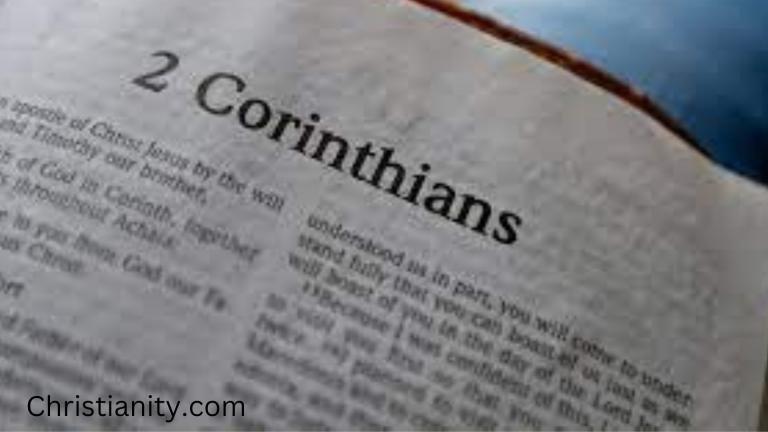
Monday: Read 2 Cor 1:1-22
The problems in Corinth continue to build. That is right: what Paul said in 1st Corinthians didn’t help—well at least not enough. Many in Corinth continued to reject Paul’s claims as an apostle and they refused to listen to his counsel. As we discussed in 1st Corinthians, they rejected Paul for several reasons.
For one, Paul refused to speak the way the professional rhetoricians (orators) did. They were funny. They knew how to win over a crowd. They regularly drew applause as they spoke. They were people that others were proud to follow!
The people in Corinth wanted Paul to be like them. They wanted him to make his message more appealing; to speak more eloquently; and, to make them proud. They wanted Paul to make great speeches like the famous orators.
They also wanted him to stop working as a leather worker. Paul’s day job associated him with the poor and the lower classes.
This was especially a problem for the wealthy and powerful men in Corinth who had come to faith in Christ. These men were having trouble following Paul and maintaining their place in society: “You are embarrassing us, Paul.”
Another problem had arisen between Paul and the Corinthians. Namely, Paul changed his travel plans—several times. This was viewed by the Corinthians as an indication that Paul could not be trusted.
He opens this letter by noting that his suffering has made known God’s comfort (4; see Isa 40:1-3). And the comfort Paul has received makes him able to provide comfort for others. More than anything, Paul notes that his suffering is for them (6).
Paul replies that the proof of his apostleship is in his suffering (see 2 Cor 10-13). Notice what he says here: God is the God of all comfort (3); who Comforts us (4); his suffering is in abundance—comfort (5); our affliction/tribulation (8); they had the sentence of death (9).
Paul also reminds them that he used godliness and not fleshly wisdom (1:12-14; i.e., speaking like the great Corinthian orators).
In 1:15-22, Paul defends his actions and why he changed his plans. Paul explains to them that his word is not “yes” and “no” as if one day he says “yes” and the next day he says “no.” (17-18). Paul’s conviction that “as many as are the promises of God, in Him, they are ‘yes’” (20) has been understood to mean that the entirety of the OT message is fulfilled in Jesus.
Questions to ponder/discuss:
- It is worthwhile to spend some time doing a google search on the suffering of the church today. Then pray for them. It is one thing that most western Christians do not suffer. It is another thing that our brothers and sisters in Christ are suffering. We must do something about the latter.
- Have you considered why it is that we don’t suffer? What are some reasons that might account for why most western Christians do not suffer?
Tuesday: Read 2 Cor 1:23-2:13
Paul explains that one of the reasons why he didn’t return to Corinth was to “spare” them (23), which we suppose indicates the level of contention between Paul and the Corinthians. Whatever was happening in Corinth, it appears that the conflicts had been so great that Paul thought it wise not to visit them for a time (2:1).
The situation behind the punishment of one member of the Corinthians church is uncertain (2:5-11). It may have been that one of them had personally been responsible for troubling Paul. The man had then been punished (6). Paul encourages the church that now they must forgive (7) and reaffirm their love for the man (8).
Questions to ponder/discuss:
- Perhaps you have been hurt by others in the church. As you read through Paul’s letters try to discern some of the ways in which he dealt with his sufferings at the hands of the church and learn from him.
- Perhaps you have been the source of another’s pain. I suspect that you may not be aware of how much grief you actually caused (those who inflict suffering are often not aware of how much pain they have caused others). Search your heart deeply (in prayer and contemplation) in order to discern if you have caused others grief. If so, seek the Lord as to how you might seek reconciliation. Perhaps you might meet with them and ask if you have harmed them.
Wednesday: Read 2 Cor 2:14-3:18
2nd Corinthians 2:14-7:4 is the longest unified section in the book: and it is probably the center of the book. In this section, Paul places his ministry in the context of the new covenant.
Paul begins by noting that Christ leads them in triumph. The imagery he uses here si that of a conquered slave on a march for all to see. Not something the elite in Corinth were hoping for. Again, who wants to follow a conquered slave?
Paul then contrasts his ministry with those who “peddle the word of God” (17). They might preach for profit. Paul preaches out of sincerity.
Paul explains that through his preaching the Corinthians have received the Spirit of the living God (3). They received the Spirit not on stone (as was the case for the 10 commandments), but in their hearts (4). The coming of the Spirit in their hearts is the fulfillment of the promises of the prophets (see: Ezek 36:26-27; Jer 31:31-34). For Paul, the presence of the Spirit is proof positive that the new age has arrived.
The contrast here is between the glory of the old covenant, which made Moses radiate for a time, and the glory that is given to the Corinthians (8; see Exod 34:29-35). Paul notes that the new glory they have received through the Spirit is permanent and more glorious (8).
Paul concludes that because of the Spirit, they have freedom (17). This freedom is not a freedom to do whatever one wants. Instead, it is freedom from death.
As a result of the presence of the Spirit, the faces of God’s people, in contrast to Moses’ face, who had to wear a veil (Exod 34:29-35), are unveiled (16). And the people of God are being transformed into the image of Christ (18; Rom 8:29).
Questions to ponder/discuss:
- It is important to note that Paul is not arguing that the old covenant was bad and the new is good. For Paul, the new covenant gives life, but that life is in accord with the old covenant. In fact, the law of the old covenant is now written on our hearts through the Spirit.
- We do a great injustice to the Bible when we neglect God’s law. The old covenant was of death (7) because we were unable to do it. The key for Paul and the NT is that law is now written on our hearts by means of the Spirit. This means that through the Spirit we can and are fulfilling it!
- The law, of course, is summed up in loving the Lord and loving our neighbor. Or, as Paul might say, loving others like Christ loved us and laid down His life for us. When we do this, we are truly being transformed into the “image” (18).
Thursday: Read 2 Cor 4:1-18
Paul continues his defense and his challenge against those who peddle the Gospel. He notes that his life is characterized by perseverance (1); he has not taken part in acts of shame (2); and he is not corrupting the Word of God (2). Paul argues that he does not preach himself but Jesus Christ “as Lord, and ourselves as slaves” (5).
If Paul’s Gospel is veiled, it is only to those whom Satan has blinded (3-4). This claim must be understood against the backdrop of the New Testament. Satan is the ruler of this age (4). And he has “blinded the minds of the unbelieving” (4). Throughout the Bible, Satan is the deceiver. He deceived Adam and Eve and he continues to deceive. Note the parable of the Sower: the seed that fell on the roadside (Mark 4:4) represents those who cannot receive the Word because “Satan comes and takes away the Word” (Mark 4:15).
Paul reiterates that the Gospel is about suffering and death (7-15). We might skip ahead for a moment to 2 Cor 12:9 where Paul states that Christ’s “power is perfected in weakness.” For Paul, suffering is what it means to imitate Christ (10). Suffering and death were also the means of resurrection (14).
The result is, “For momentary, light affliction is producing for us an eternal weight of glory far beyond all comparison” (17).
Questions to ponder/discuss:
- Passages like this are difficult for western Christians because we don’t see ourselves suffering as Paul describes. As a result, we come up with all kinds of reasons why we don’t suffer. Have we considered, however, that maybe our lack of suffering is a problem? Maybe we are called to suffer more directly for the Gospel?
- We should note that when Paul talks about suffering he is referring to that which we face because we are following Jesus (not what we face because we are jerks—there is no “blessed are the jerks” in the Bible. Neither is Paul talking about the suffering we face because we made mistakes).
- Paul argues that his suffering was a sign of the coming resurrection (14). I don’t intend to suppose that our lack of suffering means that we will not partake of the resurrection. I do wonder, however, as I asked above, if our lack of suffering is a problem. I also wonder how Paul would have looked at our lack of suffering and our material wealth. What do you think Paul would have to say to us?
Friday: Read 2 Cor 5:1-10
Paul provides a response to those who advocate an over-realized eschatology: that is, those who believe that they have already attained the state of glory.
Paul explains that we have a home in eternity awaiting us (1). We long to be clothed with our eternal dwelling (2). In the present life, we continue to experience pain and hardship—which is a basic part of life (3-4). This is not the end.
We know we will attain the promised resurrection body because we have the Spirit (5). The Spirit is the down payment, or God’s pledge, that we will receive our resurrected bodies. Paul explains that we are not yet away from the body and at home with the Lord (6, 8). As a result, we walk by faith and not by sight (5:7)
Paul then concludes that “we must all appear before the judgment seat of Christ” (10). Paul explains the purpose for our appearing at the judgment seat is: “so that each one may be recompensed [paid back: NET] for his deeds in the body, according to what he has done, whether good or bad” (10).
Questions to ponder/discuss:
- To understand Paul well we need to recognize the major distinction between the “present age”, which is the age of the world of sin and death with Satan as its ruler (4:4), and the “age to come”, which is the age of Christ’s kingdom, which has already begun but has not come in fulness. When the kingdom of Christ comes in fulness, then our flesh will be resurrected and glorified and we will become like Christ in His glory (3:18). Until it comes in fulness, we sin and experience pain, suffering, and death.
- The idea of Christians going before the judgment seat of God has been troublesome for many Christians. The Greek is clear—even if our English translations are not—that the purpose (Gk hina) for us appearing before God’s judgment seat is to be judged for our deeds. What this means is certainly going to be disputed. One NT scholar notes, “Clearly the two positions—God-given salvation . . . and the judgment of each according to his works . . . –were reconcilable to Paul.”[2] He then adds, “the teaching about the judgment seat before which all believers must come reminds us that we have been saved, not for a life of aimlessness or indifference, but to live as to the Lord.”[3]
[1] This guide is meant to be done either as a group study over the course of 2 or 4 meetings (Day 1-5; 6-10; 11-15; 16-20) or as a private devotion over the course of 4 weeks (or a calendar month—5 lessons per week).
[2] Barnett, 276.
[3] Barnett, 277.
Progressive Christian
General Christian
Catholic
Relationships and Religion
Politics and Religion
Home and Religion
Education and Religion
Previous Post

September 26, 2022
Was Queen Elizabeth II a Christian? Why I don't like the question
Next Post
October 4, 2022 Bring your bible to school day: Maybe not such a great idea
Browse Our Archives
Select a Category 000 1 Cor 11:17-34 1 Corinthians 1 John 1 Peter 1 Thessalonians 1 Timothy 10 Commandments 2 Corinthians 2 John 2 Peter 2 Thessalonians 2 Timothy 3 John 666 Abortion Acts 2:42 Ahmaud Arbery AIPAC All Saints Day America antisemitism BDS Beast Betting Bible Bible study Biblical Interpretation Biden Book of Acts Boycott Campus Protests Catholicism Ceasefire Chavez Ravine Christian Nationalism Christian Zionism Christianity Today Christmas Church Colossians Communion Convict Leasing Covid-19 Craig Blaising creation Crucifixion Daoud Nassar Deception Deconstruction Democracy Devotional guide Discipleship Easter Eden Education Election End-times Ephesians Eschatology Ethnic Cleansing Evangelicalism Evangelicals Evolution Fall Famine Fascism FIFA Freedom of Speech Galatians Gary Burge Gaza Gaza; Genocide; Boycott Genesis Genocide George Floyd Global Warming God's will Gospel Gospel of John Gospel of Luke Gospel of Mark Gospel of Matthew Government Grace Great Prostitute Hamas Harris healthcare Hebrews HeGetsUs Holy Spirit Holy Week Honor Father and Mother ICJ Immigration Indigenous peoples day Iran Israel Israel Palestine Itamar Ben Gvir James Jesus Joel Willits Jude Just war Justice Kamala Harris Kingdom Of God Kings and Queens land of Israel Law (OT) Lazarus Les Miserable LGBTQ+ Love Luke Mahmoud Khalil Man of Lawlessness Mark Mark of the Beast Marriage Martin Luther King Jr Mercy Mexican Repatriation Military-Industrial-Complex Ministry Mission Money NAFTA Nakba Netanyahu New Creation New Testament Nicaragua Nicodemus Non Violence Occupation Pacifism Palestine Parable Paul Peace Pentecost Peonage Philemon Philippians Politics Poor Power Prayer Pride Month Priests Pro-life Propaganda Prophesy Prophet Qatar Queen Elizabeth Racism Reconstruction Redemption Reformation Resurrection Revelation Roe v Wade Romans Romans 13:1-7 Rome Russia Sabbath Samaritan Seals Sermon Settlements Slavery Spiritual gifts Taxes Tent of Nations Terrorism The Beast Theology Titus Torture Trump truth Ukraine Uncategorized Veteran's Day War Warsaw Ghetto wealth Wedding Women World Cup 2022 Worldview Worship Wrath Yemen Zionism
Select a Month September 2026 May 2026 February 2026 November 2025 October 2025 August 2025 July 2025 June 2025 May 2025 April 2025 March 2025 February 2025 January 2025 December 2024 November 2024 October 2024 September 2024 August 2024 July 2024 June 2024 May 2024 April 2024 March 2024 February 2024 January 2024 December 2023 November 2023 October 2023 September 2023 August 2023 July 2023 June 2023 May 2023 April 2023 March 2023 February 2023 January 2023 December 2022 November 2022 October 2022 September 2022 August 2022 July 2022 June 2022 May 2022 April 2022 March 2022 February 2022 January 2022 December 2021 November 2021 October 2021 September 2021 August 2021 July 2021 June 2021 May 2021 April 2021 March 2021 February 2021 January 2021 December 2020 October 2020 September 2020 August 2020 July 2020 June 2020 May 2020 April 2020 March 2020 February 2020 January 2020 December 2019 November 2019 October 2019 August 2019 July 2019 June 2019 May 2019 April 2019 August 2018 June 2018 May 2018 March 2018 September 2017 July 2017 May 2017 November 2016 October 2016 May 2016 April 2016 March 2016 December 2015 November 2015 October 2015 September 2015 August 2015 July 2015
Follow Us!
TAKE THE
Religious Wisdom Quiz
Where did God tell Moses to remove his shoes because it was holy ground?
Select your answer to see how you score.
At the burning bush Red Sea Mount Sinai Egyptian palace
Support this
Column


Related posts from Determinetruth

The Gospel Above Party: Why I Speak Critically...

A Scholar Weighs In: Why Don't You Listen...

10 things about the war in Iran and...

What's the Church's Greatest Threat? It’s Not What...
TRENDING AT PATHEOS Evangelical

Catholic Evangelization: Sharing Your Faith Every Day
Welcome back to the Graceful Awakening mini-series called, “From Faith to Mission.” ...

The Pillar of the Boatmen: the Ancient Monument...
The Pillar of the Boatmen is a Romano-Gaulish sculpture that dates from...

In one sense walking into Westminster Abbey is like walking down the...

'Super Scam Me' Exposes AI Jon Bon Jovi...
Leslie Pickett believed she was in a relationship with Jon Bon Jovi....

The Brazilian Remake of Kendricks' 'Flywheel' Opens in...
“Flywheel,” the story that launched the Kendrick Brothers’ filmmaking career is getting...

The Dangers of Gradual Accommodation (Winking at Sin)
Recently, the “law of gradualness” resurfaced during the opening of a weeklong,...
view all Evangelical blogs
Ad-Free & Subscriber Log-In Subscription Support
- About Us
- 2026 Calendar
- Videos
- Podcasts
- Library of World Religions
- Faith In Media Tracker
- Advertise With Us
- Write for Us
- Privacy Policy
- Terms of Service
- Do Not Sell My Data
- Contact Us
- Radiant Digital
- Manage Newsletter Subscriptions
- Unsubscribe From Notifications
- Sitemap
Copyright 2008-2026, Patheos. All rights reserved.
Subscription Support Ad-Free & Subscriber Log-In
Follow Patheos