
BuddhistCatholicContemplativeEvangelicalGeneral ChristianHinduJewishLatter-day SaintMuslimNew VisionsProgressive Christian
Beliefs
- Buddhist
- Catholic
- Contemplative
- Evangelical
- General Christian
- Hindu
- Jewish
- Latter-day Saint
- More Voices
- Muslim
- New Visions
- Pagan
- Progressive Christian
Topics
- Religion News
- Food and Religion
- Sports and Religion
- Religious Art
- Religious Music and Entertainment
- Religious Events
- History and Religion
- Style and Religion
- Politics and Religion
- Women in Religion
- Recreation Outdoors and Religion
- Business Finance and Religion
- Careers Workplace and Religion
- Education and Religion
- Family Parenting and Religion
- Health Fitness and Religion
- Home and Religion
- Relationships and Religion
- Technology and Religion
- Travel and Religion
Columnists
- Buddhist Columnists
- Business Finance and Religion Columnists
- Careers Workplace and Religion Columnists
- Catholic Columnists
- Contemplative Columnists
- Education and Religion Columnists
- Evangelists Columnists
- Family Parenting and Religion Columnists
- General Christian Columnists
- Health Fitness and Religion Columnists
- Hindu Columnists
- History and Religion Columnists
- Home and Religion Columnists
- Jewish Columnists
- More Voices Columnists
- Latter Day Columnists
- Muslim Columnists
- New Visions Columnists
- Nonreligious Columnists
- Pagan Columnists
- Politics and Religion Columnists
- Progressive Columnists
- Recreation Outdoors and Religion Columnists
- Relationships and Religion Columnists
- Religion News Columnists
- Religious Art Columnists
- Religious Events Columnists
- Religious Music and Entertainment Columnists
- Sports and Religion Columnists
- Style and Religion Columnists
- Technology and Religion Columnists
- Travel and Religion Columnists
- Women in Religion Columnists
Resource Library
- 2026 Calendar
- Library of World Religions
- The 100 Most Holy Places on Earth
- Patheos Answers
- Podcasts
- Videos
- Faith Leaders Database
- Anglican Episcopalian
- Bahai
- Baptist
- Buddhism
- Christianity
- Confucianism
- Eastern Orthodoxy
- Hinduism
- Holiness and Pentecostal
- ISKCON
- Islam
- Judaism
- Lutheran
- Methodist
- The Church of Jesus Christ of Latter-day Saints
- New Age
- Paganism
- Presbytarian and Reformed
- Protestantism
- Religion Behind the Scenes
- Roman Catholic
- Scientology
- Shia Islam
- Sikhism
- Sufism
- Sunni Islam
- Taoism
- Zen
- See all religions
Research Tools
 Ad-Free & Subscriber Log-In Subscription Support
Ad-Free & Subscriber Log-In Subscription Support
Follow Patheos 

- Trending:
- Forgiveness
- |
- Marriage
- |
- Consciousness
- |
- Death Penalty
- |
- Election
- |
- Halloween

-
More
- Home
- Evangelical
- Devotional Guide the book of Acts #5: Acts 19-23
Devotional Guide the book of Acts #5: Acts 19-23
Last updated on: February 25, 2024 at 3:58 pm by Rob Dalrymple
Devotional Guide the book of Acts #5: Acts 19-23 2024-02-25T15:58:10-08:00 Rob Dalrymple
Patheos Explore the world's faith through different perspectives on religion and spirituality! Patheos has the views of the prevalent religions and spiritualities of the world.
Monday: Read Acts 19
Paul’s 3rd missionary journey (53-57) takes him to Ephesus which was a leading city in the Roman world. At the time, it was a port city on the West coast of Asia Minor (modern-day Turkey). Paul had set his sights on Ephesus from the beginning of his ministry. Paul, in fact, remained in Ephesus longer than he did in any other city (2+ years).
While in Ephesus, significant problems arose in the church in Corinth that garnered much of Paul’s attention. He writes several letters to the church in Corinth, including what would be our 1st Corinthians.
Acts 19 again narrates a conflict that arises from the acceptance of the Christian message amidst the pagan culture. This has been a regular theme for Paul. He and Barnabas experienced troubles in Lystra where they were worshiped as gods (Acts 14). Paul and Silas experienced imprisonment and danger in Philippi after casting out a spirit from a girl which provided a profit for her owners (Acts 16). In Thessalonica, an uproar was created by those from the synagogue who accused them of upsetting the whole world (17:6). Later in Acts 17, Paul was dragged before the authorities in Athens who accused him of advancing other gods (Jesus and the resurrection—which were considered to be different gods).
Now, in Acts 19, the acceptance of the Christian message was threatening the livelihood of the local silversmiths and was seen as a threat to the worship of Artemis. The temple of Artemis in Ephesus was one of the 7 wonders of the ancient world. It was 4x larger than the Parthenon in Greece. These were serious charges.
Questions to ponder/discuss:
- Why do you suspect that the Christian gospel in the Western world does not present the same sort of conflicts with culture as Paul experienced as he traveled the Roman world?
Tuesday: Read Acts 20
Acts 20 narrates Paul’s travels through the Aegean sea area—note the details, which was the result of Luke’s presence with Paul (5). He leaves Ephesus and travels to Macedonia (Philippi and Thessalonica). At this point, he writes 2nd Corinthians. Paul visits Corinth and spends 3 months there. From Corinth, Paul writes Romans.
One of his goals on this journey, in addition to revisiting the churches that he had planted, was to take an offering for the poor at the church in Jerusalem (see 1 Cor 16:1-4). Paul’s intentions were to visit Jerusalem and then venture west to Rome and Spain.
Instead of traveling to Syria (Antioch) and then to Jerusalem, a plot against Paul forced him to travel again to Macedonia (3). Luke lists a number of individuals who accompany Paul (4): some of whom will become important as the story moves forward.
Paul’s visit to the Ephesian elders (17-35) was emotional. Paul had spent more time in Ephesus than any other city and had likely grown quite close with many. Paul actually landed in Miletus and called the elders of Ephesus to meet him there. Paul’s speech to the leaders of Ephesus should be read in light of the fact that Paul is not sure he will ever see them again (36-38). His plan was to venture on to the West—whether or not he would return was not certain.
Questions to ponder/discuss:
- Carefully read Paul’s speech to the leaders of Ephesus (18-35). Knowing that Paul is speaking to the leaders of the community, what stands out to you?
Wednesday: Read Acts 21:1-36 (Num 6:1-21)
Paul continues his journey to Jerusalem. He must have considered it his responsibility to see that the offering for the church in Jerusalem reached its destination. Paul, also, may have wanted to show the Jewish leaders in Jerusalem that he was not a threat. Nonetheless, many warned him not to go (12): including the prophet Agabus (10-11). Paul reminds them that he is ready to die in Jerusalem if necessary.
Paul arrives in Jerusalem and is greeted by the Church: including James (18: the brother of Jesus). Paul related to them all that the Lord had done (19). His presence in Jerusalem, however, was a problem. There were many who were zealous for the Law “and they have been told about you” (21). Paul had been traveling the Roman world and bringing Gentiles into the faith and was not requiring them to be circumcised and to “follow the Jewish customs” (21).
The decision was made that Paul would assist 4 men in completing their purifications in order to fulfill a Nazarite vow (23, 24). The idea was that by doing so, Paul would show everyone that he affirmed the ancestral customs.
This would require Paul to pay the necessary expenses for their sacrifices (over a 7-day period), and then to notify the priests when their days of purification ended.
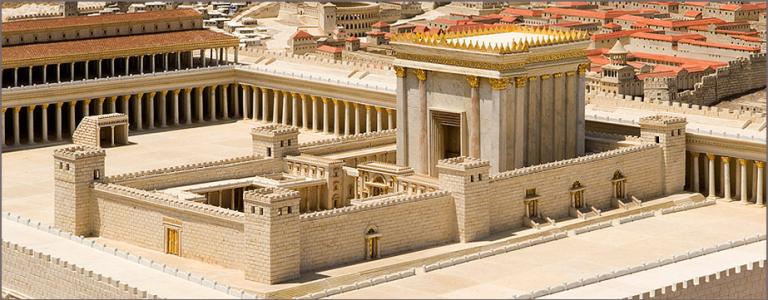
While visiting the temple, a mob attacks Paul accusing him of bringing a gentile into the temple: Luke notes, “For they had previously seen Trophimus the Ephesian in the city with him, and they supposed that Paul had brought him into the temple” (29). This was no simple accusation. It was a charge that could result in his death.
Fortunately, for Paul’s sake, the Romans were able to intervene and take him into custody, sparing his life.
For the rest of the story of Acts, Paul will remain in custody.
Questions to ponder/discuss:
- The account with Agabus shows us that just because one knows that calamity will come it doesn’t mean that it is not God’s will. We think too often that God only wills good for us. Paul has known since his transformation that he will suffer much: “I will show him how much he must suffer for my name’s sake” (9:16). At the same time, we must be careful to listen to the voice of others.
- Why do you think Paul didn’t listen to the voice of others, including the prophet Agabus, and continued on to Jerusalem?
Thursday: Read Acts 21:37-22:30
Paul requests the Roman official, who was surprised to learn that Paul spoke Greek, for permission to speak to the people. Paul’s speech is very autobiographical. I am like you—a Jew. I too opposed the Jesus movement. I even persecuted them to death (Stephen: 8:1). I put others in prison.
Paul then relays what happened while en route to Damascus (9:1-19). He notes that Jesus appeared to him and then Ananias came and restored his sight. He later returned to Jerusalem.
Those who were listening may well have been tracking with Paul. Well, at least until Paul explained that God again appeared to him and warned him to flee Jerusalem because “they will not accept your testimony about me” (18). Even here, Paul seemed to have reasoned that they will surely understand!
Those listening to Paul were finally aroused to an uproar when Paul stated that the Lord responded to him, “Go! For I will send you far away to the Gentiles” (21).
The Romans then brought Paul into the Antonia Fortress for scourging. Paul, in contrast to his and Silas’ silence in Philipp, calls attention to the fact that he is a Roman citizen (27). Thus, he escapes the whipping.
Questions to ponder/discuss:
- It is hard to psychoanalyze a person from ancient history. One wonders, however, if Paul was so convinced that his fellow Jews would believe if they truly understood what he was saying. Paul had a similar idea in Ephesus. He wanted to enter the theater and speak to the Ephesians: but “the disciples would not let him” (19:30). We know, from hindsight, that such people were not likely to be convinced.
- Was Paul blinded by his own convictions? Was he overly optimistic about others? It is impossible to know. Sometimes we cannot see the reality of the situation because of our own convictions. In such instances, it is important to listen to others and discern what is wisest.
Friday: Read Acts 23
Paul is brought before the Jewish Sanhedrin (their supreme court). His speech before the Sanhedrin was quite strategic. Discerning that the Sadducees among them were not about to listen, Paul appeals to the like-minded Pharisees and their shared belief in the resurrection (8).
Luke notes that the Lord again appeared to Paul and assured him that he will bear witness in Rome. (Of course, it doesn’t say if he will do so as a free person or a prisoner!)
Paul’s nephew then learned of a conspiracy to take his life. He is removed to Caesarea (the Roman capital for the area). The Roman official Claudius Lysias writes a letter to the Roman Governor Felix (same title as Pilate had) explaining why Paul was being sent to Caesarea. Note that the letter says that Paul is not worthy of death or imprisonment (29).
Paul remains in prison in Caesarea for 2 years. We might ask, why? After all, if the commander’s letter expresses his conviction that Paul was innocent, then why was he detained? There may be several reasons here:
First, it confirms the complexities of the Roman occupation of the land and the difficulty they had in keeping peace with those in Jerusalem. The conflict was intensifying and the eventual war between Rome and Jerusalem (AD 66-70) was only a few years away. Paul may have been a bargaining chip. The authorities in Jerusalem wanted him to stand trial in Jerusalem. Rome had the obligation to protect a Roman citizen.
Another reason for Paul’s detainment in Caesarea was likely the corruption of the Roman judicial system. Rome rarely detained prisoners for such a length of time. Word, however, had surely reached the governor’s ears that Paul had arrived in Jerusalem not too much earlier with a large sum of money (recall the collection for the poor in Jerusalem). Surely, they assumed he had access to money and a bribe would ensure his release.
Questions to ponder/discuss:
- One cannot overstate the hardships that Paul faced. We cannot imagine his grief that his own people rejected him. Then we must add the troubles that he was experiencing from the believers in Corinth. Then we add the constant dangers that he faced from the Gentiles throughout the Roman world. How was Paul able to endure? I suspect that he had learned to rely utterly and completely on the Holy Spirit. In addition, we know of several instances in which Paul had visions from the Lord. In one such instance, he relays that he was taken into the 3rd heaven/Paradise (2 Cor 12:2, 4) and heard “inexpressible words, which a man is not permitted to speak” (2 Cor 12:4).
- We might ask why don’t we have such experiences? Well, I suppose we might say Paul was unique and his calling was unique. But, perhaps, we might also say that if we are willing to truly take up our crosses, deny ourselves, and follow Him, maybe He will grant us such grace too. Of course, I am not sure we are ready for such a call. After all, with more grace comes more suffering!
[1] This guide is meant to be done either as a group study over the course of 2 or 4 meetings (Day 1-5; 6-10; 11-15; 16-20), or as a private devotion over the course of 4 weeks (or a calendar month—5 lessons per week).
NB: our goal is to keep these posts free of charge. I do not intend to ever hide them behind a paywall. I can only do this if those of you who have been blessed by them and can afford to give ($5, $10, $25, or more/month) do so. You can give a tax-deductible contribution by following this link.
Please share this post and let others know about determinetruth.
If you wish to view this blog on your smartphone through the Determinetruth app simply download the “tithe.ly church” app on your smartphone and insert “determinetruth” as the church name you wish to follow. Once it is loaded, simply click on the “blog” icon and it will automatically load.
If you would like to have Rob speak at your church or organization in person or via zoom, please let us know by filling out the contact info on the Contact me tab on this site.
About Rob Dalrymple
Rob Dalrymple is married to his wife Toni and is the father of four fabulous children, and two grandchildren. He has been teaching and pastoring for over 32 years at colleges, seminaries, and the local church. He has a PhD (Westminster Theological Seminary) in biblical interpretation. He is the author of four books (including: Follow the Lamb: A Guide to Reading, Understanding, and Applying the Book of Revelation & Understanding the New Testament and the End Times: Why it Matters) as well as numerous articles and other publications. You can read more about the author here.
Previous Post

June 28, 2022
I'm Pro-life and I'm grieved that Roe v Wade was overturned
Next Post
July 5, 2022 What do evangelicals believe?
Browse Our Archives
Select a Category 000 1 Cor 11:17-34 1 Corinthians 1 John 1 Peter 1 Thessalonians 1 Timothy 10 Commandments 2 Corinthians 2 John 2 Peter 2 Thessalonians 2 Timothy 3 John 666 Abortion Acts 2:42 Ahmaud Arbery AIPAC All Saints Day America antisemitism BDS Beast Betting Bible Bible study Biblical Interpretation Biden Book of Acts Boycott Campus Protests Catholicism Ceasefire Chavez Ravine Christian Nationalism Christian Zionism Christianity Today Christmas Church Colossians Communion Convict Leasing Covid-19 Craig Blaising creation Crucifixion Daoud Nassar Deception Deconstruction Democracy Devotional guide Discipleship Easter Eden Education Election End-times Ephesians Eschatology Ethnic Cleansing Evangelicalism Evangelicals Evolution Fall Famine Fascism FIFA Freedom of Speech Galatians Gary Burge Gaza Gaza; Genocide; Boycott Genesis Genocide George Floyd Global Warming God's will Gospel Gospel of John Gospel of Luke Gospel of Mark Gospel of Matthew Government Grace Great Prostitute Hamas Harris healthcare Hebrews HeGetsUs Holy Spirit Holy Week Honor Father and Mother ICJ Immigration Indigenous peoples day Iran Israel Israel Palestine Itamar Ben Gvir James Jesus Joel Willits Jude Just war Justice Kamala Harris Kingdom Of God Kings and Queens land of Israel Law (OT) Lazarus Les Miserable LGBTQ+ Love Luke Mahmoud Khalil Man of Lawlessness Mark Mark of the Beast Marriage Martin Luther King Jr Mercy Mexican Repatriation Military-Industrial-Complex Ministry Mission Money NAFTA Nakba Netanyahu New Creation New Testament Nicaragua Nicodemus Non Violence Occupation Pacifism Palestine Parable Paul Peace Pentecost Peonage Philemon Philippians Politics Poor Power Prayer Pride Month Priests Pro-life Propaganda Prophesy Prophet Qatar Queen Elizabeth Racism Reconstruction Redemption Reformation Resurrection Revelation Roe v Wade Romans Romans 13:1-7 Rome Russia Sabbath Samaritan Seals Sermon Settlements Slavery Spiritual gifts Taxes Tent of Nations Terrorism The Beast Theology Titus Torture Trump truth Ukraine Uncategorized Veteran's Day War Warsaw Ghetto wealth Wedding Women World Cup 2022 Worldview Worship Wrath Yemen Zionism
Select a Month September 2026 May 2026 February 2026 November 2025 October 2025 August 2025 July 2025 June 2025 May 2025 April 2025 March 2025 February 2025 January 2025 December 2024 November 2024 October 2024 September 2024 August 2024 July 2024 June 2024 May 2024 April 2024 March 2024 February 2024 January 2024 December 2023 November 2023 October 2023 September 2023 August 2023 July 2023 June 2023 May 2023 April 2023 March 2023 February 2023 January 2023 December 2022 November 2022 October 2022 September 2022 August 2022 July 2022 June 2022 May 2022 April 2022 March 2022 February 2022 January 2022 December 2021 November 2021 October 2021 September 2021 August 2021 July 2021 June 2021 May 2021 April 2021 March 2021 February 2021 January 2021 December 2020 October 2020 September 2020 August 2020 July 2020 June 2020 May 2020 April 2020 March 2020 February 2020 January 2020 December 2019 November 2019 October 2019 August 2019 July 2019 June 2019 May 2019 April 2019 August 2018 June 2018 May 2018 March 2018 September 2017 July 2017 May 2017 November 2016 October 2016 May 2016 April 2016 March 2016 December 2015 November 2015 October 2015 September 2015 August 2015 July 2015
Follow Us!
TAKE THE
Religious Wisdom Quiz
Which Psalm begins, "The Lord is my light and my salvation; whom shall I fear?"
Select your answer to see how you score.
Psalm 14 Psalm 139 Psalm 91 Psalm 27
Support this
Column


Related posts from Determinetruth

Have we been lied to? America’s war machine...
Devotional guide: Rev 15:1-19:10
Devotional guide: Rev 12:1-14:20
TRENDING AT PATHEOS Evangelical

16 Spiritual Touchstones for a More Grounded Life
After decades of spiritual study, here are 16 principles I try...

Catholic Evangelization: Sharing Your Faith Every Day
Welcome back to the Graceful Awakening mini-series called, “From Faith to Mission.” ...

The Pillar of the Boatmen: the Ancient Monument...
The Pillar of the Boatmen is a Romano-Gaulish sculpture that dates from...

In one sense walking into Westminster Abbey is like walking down the...

'Super Scam Me' Exposes AI Jon Bon Jovi...
Leslie Pickett believed she was in a relationship with Jon Bon Jovi....

The Brazilian Remake of Kendricks' 'Flywheel' Opens in...
“Flywheel,” the story that launched the Kendrick Brothers’ filmmaking career is getting...
view all Evangelical blogs
Ad-Free & Subscriber Log-In Subscription Support
- About Us
- 2026 Calendar
- Videos
- Podcasts
- Library of World Religions
- Faith In Media Tracker
- Advertise With Us
- Write for Us
- Privacy Policy
- Terms of Service
- Do Not Sell My Data
- Contact Us
- Radiant Digital
- Manage Newsletter Subscriptions
- Unsubscribe From Notifications
- Sitemap
Copyright 2008-2026, Patheos. All rights reserved.
Subscription Support Ad-Free & Subscriber Log-In
Follow Patheos