
BuddhistCatholicContemplativeEvangelicalGeneral ChristianHinduJewishLatter-day SaintMuslimNew VisionsProgressive Christian
Beliefs
- Buddhist
- Catholic
- Contemplative
- Evangelical
- General Christian
- Hindu
- Jewish
- Latter-day Saint
- More Voices
- Muslim
- New Visions
- Pagan
- Progressive Christian
Topics
- Religion News
- Food and Religion
- Sports and Religion
- Religious Art
- Religious Music and Entertainment
- Religious Events
- History and Religion
- Style and Religion
- Politics and Religion
- Women in Religion
- Recreation Outdoors and Religion
- Business Finance and Religion
- Careers Workplace and Religion
- Education and Religion
- Family Parenting and Religion
- Health Fitness and Religion
- Home and Religion
- Relationships and Religion
- Technology and Religion
- Travel and Religion
Columnists
- Buddhist Columnists
- Business Finance and Religion Columnists
- Careers Workplace and Religion Columnists
- Catholic Columnists
- Contemplative Columnists
- Education and Religion Columnists
- Evangelists Columnists
- Family Parenting and Religion Columnists
- General Christian Columnists
- Health Fitness and Religion Columnists
- Hindu Columnists
- History and Religion Columnists
- Home and Religion Columnists
- Jewish Columnists
- More Voices Columnists
- Latter Day Columnists
- Muslim Columnists
- New Visions Columnists
- Nonreligious Columnists
- Pagan Columnists
- Politics and Religion Columnists
- Progressive Columnists
- Recreation Outdoors and Religion Columnists
- Relationships and Religion Columnists
- Religion News Columnists
- Religious Art Columnists
- Religious Events Columnists
- Religious Music and Entertainment Columnists
- Sports and Religion Columnists
- Style and Religion Columnists
- Technology and Religion Columnists
- Travel and Religion Columnists
- Women in Religion Columnists
Resource Library
- 2026 Calendar
- Library of World Religions
- The 100 Most Holy Places on Earth
- Patheos Answers
- Podcasts
- Videos
- Faith Leaders Database
- Anglican Episcopalian
- Bahai
- Baptist
- Buddhism
- Christianity
- Confucianism
- Eastern Orthodoxy
- Hinduism
- Holiness and Pentecostal
- ISKCON
- Islam
- Judaism
- Lutheran
- Methodist
- The Church of Jesus Christ of Latter-day Saints
- New Age
- Paganism
- Presbytarian and Reformed
- Protestantism
- Religion Behind the Scenes
- Roman Catholic
- Scientology
- Shia Islam
- Sikhism
- Sufism
- Sunni Islam
- Taoism
- Zen
- See all religions
Research Tools
 Ad-Free & Subscriber Log-In Subscription Support
Ad-Free & Subscriber Log-In Subscription Support
Follow Patheos 

- Trending:
- Forgiveness
- |
- Marriage
- |
- Consciousness
- |
- Death Penalty
- |
- Election
- |
- Halloween

-
More
- Home
- Evangelical
- Gospel of John Devotional Guide #3: John 7:40-11:46
Gospel of John Devotional Guide #3: John 7:40-11:46
Last updated on: May 13, 2022 at 1:48 am by Rob Dalrymple
Gospel of John Devotional Guide #3: John 7:40-11:46 2022-05-01T08:58:54-08:00 Rob Dalrymple
Patheos Explore the world's faith through different perspectives on religion and spirituality! Patheos has the views of the prevalent religions and spiritualities of the world.
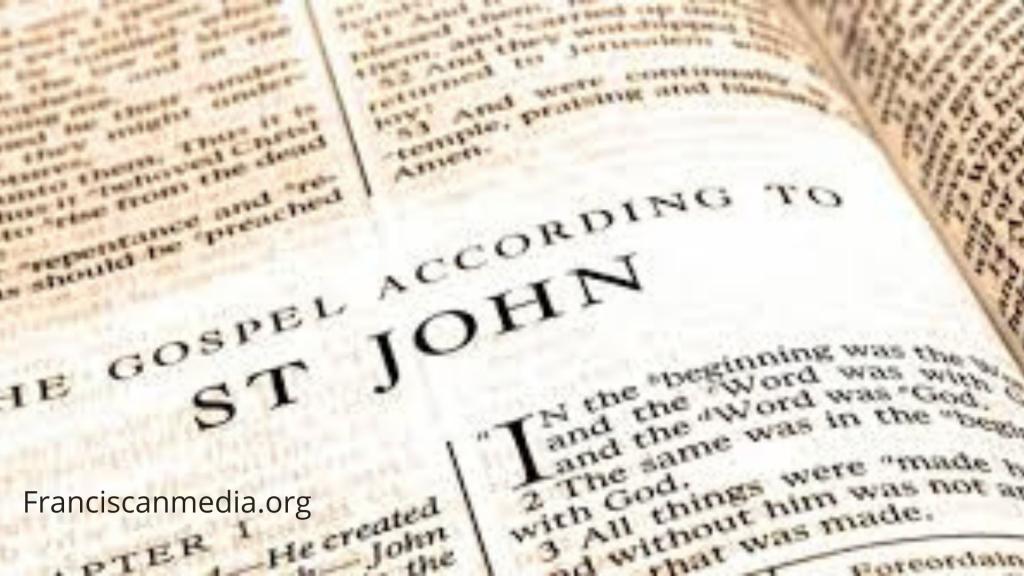 Week #3
Monday: Read John 7:40-8:20
The debate continues regarding Jesus’ identity. Jesus’ identity is a central issue in the Gospel of John. Some suggest that Jesus is “the prophet” (7:40). The allusion here is to Deut 18:15, 18 and the promise that God will raise up a prophet like Moses. Others were affirming that Jesus is the Christ (41: “Messiah/Anointed One”: i.e., the promised King). Some rejected this claim because Jesus was from “Galilee” and the Messiah comes from Bethlehem (41-42).
This section is full of Johannine irony. John expects his readers to know the deeper reality that those who are debating in the story itself obviously do not. Jesus is the Prophet like Moses. He is the Messiah. He is from Galilee, but He was born in Bethlehem. We might conclude that John records these disputes for us because they were still going on at the time he wrote.
The greatest irony comes in the 7:48: “No one of the rulers or Pharisees has believed in Him, has he.” It is here that we want to interject and say, “Um, yea, there is this guy named Nicodemus!” In case we forgot about him, John quotes Nicodemus in 7:50.
John continues the clash between Jesus and the Jews. The Jews do not understand Jesus’ messianic claims. It is, therefore, His claims versus theirs. Jesus’ “I am” (8:12) proclamations become the central point: If He is who He claims to be, then His assessments regarding the Temple, manna from heaven, Sabbath, and living water are all confirmed.
The discussion on who Jesus is reaches a climax in Jesus’ claim, “I am the light of the World’ (12). This statement is highlighted by the fact that Jesus declares it during the Feast of Tabernacles when gigantic Menorahs were light in the Temple courts each night and the entire city was illuminated.
The famed story of the woman caught in adultery (7:53-8:11) clearly interrupts the debate. There is almost no question that the story was inserted in John by a later scribe (the manuscript evidence affirms that it was not original to the Gospel). The story, however, is ancient and may be a true account. It was just not a part of the original text.
Questions to ponder/discuss:
- We continue to be confronted with the question of who is Jesus? We must always be careful about assuming that we are on “team Jesus” and that Jesus’ opponents are “them” and not “us.”
- Thus, the question for us becomes: “have we put a fence around who Jesus is and who He isn’t so that when the Gospel is understood we reject Jesus because of our preconceptions”? Perhaps the best example of this is with regard to Jesus and the poor. We noted throughout Matt, Mark, and Luke that Jesus commands us to care for the poor and the oppressed even if it costs us and we cannot be paid back. Yet, it seems that most American churches rarely, if ever, wrestle with the issue. In fact, we are comfortable reading Paul’s claim that “if anyone is not willing to work, then he is not to eat, either” (2 Thess 3:10) as though it mitigates everything that Jesus has said. Are we not then like the opponents of Jesus here who make excuses as to why Jesus is not the Christ? Do we too quickly think that we are better because “we believe in Jesus,” yet, it seems that we do not believe in what He said?
Tuesday: Read John 8:21-59
The debate as to who Jesus is continues. Note that when John says, “the Jews” (22; and throughout) he is using a term that applies to the authorities and not all Jews.
In order to understand this passage well, we must be reminded of John’s use of irony. John uses irony to point out that those who were contesting Jesus’ identity have a poor or inaccurate understanding of who Jesus is and thus their denial that He is the messiah is mistaken. When John uses irony, he usually assumes that we will notice the inaccuracies and so he does not comment on them.
Jesus’ opponents claim to be descendants of Abraham to which Jesus replies, “I know that you are Abraham’s descendants; yet you seek to kill Me” (37). Jesus adds, “If you are Abraham’s children, do the deeds of Abraham” (39). They reply that they are from God to which Jesus says, “If God were your Father, you would love Me, for I proceeded forth and have come from God” (42).
The debate reaches a peak when Jesus claims, “You are of your father the devil, and you want to do the desires of your father. He was a murderer from the beginning” (44)—alluding to the murder of Abel in Gen 4.
The authorities counter by claiming that Jesus has a demon (48). Then they add, “Surely You are not greater than our father Abraham, who died” (53). To which Jesus famously replies, “Truly, truly, I say to you, before Abraham was born, I am” (58). There is little doubt here that Jesus has invoked the Divine identity (see Exod 3:14-15; Isa 41:4; 43:10-13; 44:6; 45:6, 18, 21; 48:12, 17). That they picked up stones to stone Him affirms that they understood Jesus. In other words, Jesus is in effect saying, “yea, I have seen Abraham, after all, I am eternal.”
Questions to ponder/discuss:
- Again, we must ask ourselves, “what sort of barriers have we constructed that limit our ability to hear Jesus and do what he says.” If we answer this question with “none” then we must ask why our churches so often do not reflect the teachings of Jesus? Why do we care so little for the poor, the marginalized, and the oppressed? when that was seemingly all Jesus cared about. Something is wrong.
Wednesday: Read John 9:1-41
The healing of a man who was born blind is often thought to be one of Jesus’ greatest miracles. The ancient world knew of persons who had lost their sight and regained it. But no one knew of a person never having sight and gaining it.
Jesus sends the man to the pool of Siloam (7). This pool was at the southern end of the city where the water ceremony began each day during the Feast of Tabernacles. The miracle occurred on the Sabbath (14) and the making of clay would have been understood as a Sabbath violation.
That the man gains his sight down at the pool means that He does not know what Jesus looks. He only knowns that He is “the man who is called Jesus” (11).
Again, we are confronted with attempts to deny Jesus’ identity. He can’t be the Messiah because He works on the Sabbath (16).
Some denied that this is the same man who used to sit and beg (8). The man kept insisting “I am the one” (9). Then some make the claim that the man was not even born blind (18). The man’s parents are even interrogated. The authorities finally decide to excommunicate the man from the community (34).
The account ends with Jesus’ assertion, “For judgment I came into this world, so that those who do not see may see, and that those who see may become blind” (39). Some of the leaders then assert, “We are not blind too, are we” (40). The irony is thick indeed.
Questions to ponder/discuss:
- The length to which Jesus’ opponents go in this account to stand their ground would be unbelievable if it were not for the fact that we too have likely done something similar. Recount a time in which you defended a position only later to realize that you were wrong. What can we learn from such experiences?
Thursday: Read John 10:1-40 (Ezek 34:1-24)
Jesus’ Good Shepherd discourse both continues the narrative of the healing of the man born blind (note there is no transition in 10:1 but that it just continues the account from 9:41), and it looks forward to the raising of Lazarus.
The background for the Good Shepherd speech is Ezekiel 34. In Ezekiel 34, the leaders of Israel are depicted as the shepherds of the people who have failed to care for the sheep (Ezek 34:6). Because of their failure to care for the sheep, God declares “I will care for My sheep” (34:12).
The meaning of the story is evident. Jesus is the Door of the sheep (7, 9) and the Good Shepherd (11, 14). He is the One who “lays down His life for the sheep” (11). The authorities are the hired hands who care nothing for the sheep (12-13). They are the false shepherds of Ezekiel 34. The blind man is the sheep who refuses to follow a stranger’s voice (10:5), but instead listens to Jesus.
Jesus’ affirmation “I have other sheep, which are not of this fold; I must bring them also, and they will hear My voice; and they will become one flock with one shepherd” (16) alludes to the Gentile mission.
The closing discussion of this chapter (22-38) takes place during the Feast of Dedication (22: Hanukkah). Hanukkah commemorates the rededication of the Temple in 164 BC after the defilement of the Greek leader Antiochus (see 1 Maccabees for the story).
Questions to ponder/discuss:
- The image of a shepherd and his sheep would have been well understood in Jesus’ day. Few today are familiar with sheep husbandry. Shepherds love their sheep. They lead them where they need to go and keep them safe from predators. This imagery reminds us that we need to trust the Lord when He leads us to places we don’t want to go. And we need to trust Him when he seeks us out after we have wandered away. Consider today whether you have wandered away and need to return or if God is leading you somewhere that perhaps you don’t want to go. Commit to trusting in Him as the Shepherd.
Friday: Read John 11:1-46
The story of the raising of Lazarus is central to the Gospel of John (cf 5:25). In John, the raising of Lazarus becomes the final straw that leads to the authority’s determination that Jesus must die (11:53). In fact, they determine that Lazarus must die also (12:10).
It is very apparent from this account that Jesus is not safe in Jerusalem (8). Upon hearing that Lazarus was ill, Jesus deliberately remains where He was “two days longer” (6). The result is that by the time He arrived in Bethany (1 mile or so from Jerusalem) Lazarus had been dead for 4 days (17). The significance of this is that the conviction of that day was that a person could be resuscitated within the first 3 days of their death. The belief was that after 3 days one’s soul left the body and could not be recovered.
Thus, just as healing the man born blind could not be explained in that day, neither could raising someone who had been dead for 4 days. This is why the raising of Lazarus was so problematic for the authorities.
This is also why even Martha was resigned that it was too late for even Jesus to do anything, “Lord, if You had been here, my brother would not have died. Even now I know that whatever You ask of God, God will give You” (21-22). Her affirmation is not a conviction that Jesus could raise Lazarus but a polite remark that evidences a coming to terms with the fact that it is too late even for Jesus. Note her hesitation in removing the stone (39).
Why is it that Jesus wept (35)? It may be that He was overwhelmed by everyone else’s grief. It may also be He is weeping because death is not supposed to be a part of this creation.
Although Lazarus’ resurrection is a prelude to Jesus’ resurrection, there is a significant difference: namely, that Lazarus merely received his old life back—he ultimately died again. Whereas Jesus was resurrected to a new life—that is, He received a resurrected body which is a part of the new creation.
That Jesus has raised Lazarus from the dead proves that He is the resurrection and the life (25).
Questions to ponder/discuss:
- That Jesus is the Resurrection and the Life reminds us that there is something better awaiting us. This does not mean that the now does not matter. It simply means that we can endure the present because we know that we will be rewarded in the end.
- The resurrection also reminds us that death is not the end. This provides some comfort when we are reminded of the passing of our loved ones.
- That Jesus is the Resurrection and the Life is the gospel that people need to hear. Many in the world long for something better and live in despair in light of the present. It is the hope of resurrection that our world desperately needs. Make it your aim to share this hope with others.
NB: our goal is to keep these posts free of charge. I do not intend to ever hide them behind a paywall. I can only do this if those of you who have been blessed by them and can afford to give ($5, $10, $25, or more/month) do so. You can give a tax-deductible contribution by following this link.
Please share this post and let others know about determinetruth.
If you wish to view this blog on your smartphone through the Determinetruth app simply download the “tithe.ly church” app on your smartphone and insert “determinetruth” as the church name you wish to follow. Once it is loaded, simply click on the “blog” icon and it will automatically load.
If you would like to have Rob speak at your church or organization in person or via zoom, please let us know by filling out the contact info on the Contact me tab on this site.
[1] This guide is meant to be done either as a group study over the course of 2 or 4 meetings (Day 1-5; 6-10; 11-15; 16-20), or as a private devotion over the course of 4 weeks (or a calendar month—5 lessons per week).
About Rob Dalrymple
Rob Dalrymple is married to his wife Toni and is the father of four fabulous children, and has two grandchildren. He has been teaching and pastoring for over 32 years at colleges, seminaries, and the local church. He has a PhD (Westminster Theological Seminary) in biblical interpretation. He is the author of four books (including: Follow the Lamb: A Guide to Reading, Understanding, and Applying the Book of Revelation & Understanding the New Testament and the End Times: Why it Matters) as well as numerous articles and other publications. You can read more about the author here.
Previous Post

May 10, 2022
The way we do church: #2 Fellowship
Next Post
May 17, 2022 The way we do church #3: A way forward?
Browse Our Archives
Select a Category 000 1 Cor 11:17-34 1 Corinthians 1 John 1 Peter 1 Thessalonians 1 Timothy 10 Commandments 2 Corinthians 2 John 2 Peter 2 Thessalonians 2 Timothy 3 John 666 Abortion Acts 2:42 Ahmaud Arbery AIPAC All Saints Day America antisemitism BDS Beast Betting Bible Bible study Biblical Interpretation Biden Book of Acts Boycott Campus Protests Catholicism Ceasefire Chavez Ravine Christian Nationalism Christian Zionism Christianity Today Christmas Church Colossians Communion Convict Leasing Covid-19 Craig Blaising creation Crucifixion Daoud Nassar Deception Deconstruction Democracy Devotional guide Discipleship Easter Eden Education Election End-times Ephesians Eschatology Ethnic Cleansing Evangelicalism Evangelicals Evolution Fall Famine Fascism FIFA Freedom of Speech Galatians Gary Burge Gaza Gaza; Genocide; Boycott Genesis Genocide George Floyd Global Warming God's will Gospel Gospel of John Gospel of Luke Gospel of Mark Gospel of Matthew Government Grace Great Prostitute Hamas Harris healthcare Hebrews HeGetsUs Holy Spirit Holy Week Honor Father and Mother ICJ Immigration Indigenous peoples day Iran Israel Israel Palestine Itamar Ben Gvir James Jesus Joel Willits Jude Just war Justice Kamala Harris Kingdom Of God Kings and Queens land of Israel Law (OT) Lazarus Les Miserable LGBTQ+ Love Luke Mahmoud Khalil Man of Lawlessness Mark Mark of the Beast Marriage Martin Luther King Jr Mercy Mexican Repatriation Military-Industrial-Complex Ministry Mission Money NAFTA Nakba Netanyahu New Creation New Testament Nicaragua Nicodemus Non Violence Occupation Pacifism Palestine Parable Paul Peace Pentecost Peonage Philemon Philippians Politics Poor Power Prayer Pride Month Priests Pro-life Propaganda Prophesy Prophet Qatar Queen Elizabeth Racism Reconstruction Redemption Reformation Resurrection Revelation Roe v Wade Romans Romans 13:1-7 Rome Russia Sabbath Samaritan Seals Sermon Settlements Slavery Spiritual gifts Taxes Tent of Nations Terrorism The Beast Theology Titus Torture Trump truth Ukraine Uncategorized Veteran's Day War Warsaw Ghetto wealth Wedding Women World Cup 2022 Worldview Worship Wrath Yemen Zionism
Select a Month September 2026 May 2026 February 2026 November 2025 October 2025 August 2025 July 2025 June 2025 May 2025 April 2025 March 2025 February 2025 January 2025 December 2024 November 2024 October 2024 September 2024 August 2024 July 2024 June 2024 May 2024 April 2024 March 2024 February 2024 January 2024 December 2023 November 2023 October 2023 September 2023 August 2023 July 2023 June 2023 May 2023 April 2023 March 2023 February 2023 January 2023 December 2022 November 2022 October 2022 September 2022 August 2022 July 2022 June 2022 May 2022 April 2022 March 2022 February 2022 January 2022 December 2021 November 2021 October 2021 September 2021 August 2021 July 2021 June 2021 May 2021 April 2021 March 2021 February 2021 January 2021 December 2020 October 2020 September 2020 August 2020 July 2020 June 2020 May 2020 April 2020 March 2020 February 2020 January 2020 December 2019 November 2019 October 2019 August 2019 July 2019 June 2019 May 2019 April 2019 August 2018 June 2018 May 2018 March 2018 September 2017 July 2017 May 2017 November 2016 October 2016 May 2016 April 2016 March 2016 December 2015 November 2015 October 2015 September 2015 August 2015 July 2015
Follow Us!
TAKE THE
Religious Wisdom Quiz
True or False: 2 Peter warns that false teachers will secretly introduce destructive heresies.
Select your answer to see how you score.
TRUE FALSE
Support this
Column


Related posts from Determinetruth

Why I Am No Longer a Christian Zionist

The Gospel Above Party: Why I Speak Critically...

What's the Church's Greatest Threat? It’s Not What...
Team Jesus or Team Empire? Rethinking Our Allegiances:...
TRENDING AT PATHEOS Evangelical

In one sense walking into Westminster Abbey is like walking down the...

'Super Scam Me' Exposes AI Jon Bon Jovi...
Leslie Pickett believed she was in a relationship with Jon Bon Jovi....

The Brazilian Remake of Kendricks' 'Flywheel' Opens in...
“Flywheel,” the story that launched the Kendrick Brothers’ filmmaking career is getting...

The Dangers of Gradual Accommodation (Winking at Sin)
Recently, the “law of gradualness” resurfaced during the opening of a weeklong,...

The Iron Gates and the Lion of the...
Yesterday, I didn't finish my report about, well, yesterday. So I'll...

The Image: On the Horror of Capitalism and...
The Image Then went the Pharisees, and took counsel how they might...
view all Evangelical blogs
Ad-Free & Subscriber Log-In Subscription Support
- About Us
- 2026 Calendar
- Videos
- Podcasts
- Library of World Religions
- Faith In Media Tracker
- Advertise With Us
- Write for Us
- Privacy Policy
- Terms of Service
- Do Not Sell My Data
- Contact Us
- Radiant Digital
- Manage Newsletter Subscriptions
- Unsubscribe From Notifications
- Sitemap
Copyright 2008-2026, Patheos. All rights reserved.
Subscription Support Ad-Free & Subscriber Log-In
Follow Patheos