
BuddhistCatholicContemplativeEvangelicalGeneral ChristianHinduJewishLatter-day SaintMuslimNew VisionsProgressive Christian
Beliefs
- Buddhist
- Catholic
- Contemplative
- Evangelical
- General Christian
- Hindu
- Jewish
- Latter-day Saint
- More Voices
- Muslim
- New Visions
- Pagan
- Progressive Christian
Topics
- Religion News
- Food and Religion
- Sports and Religion
- Religious Art
- Religious Music and Entertainment
- Religious Events
- History and Religion
- Style and Religion
- Politics and Religion
- Women in Religion
- Recreation Outdoors and Religion
- Business Finance and Religion
- Careers Workplace and Religion
- Education and Religion
- Family Parenting and Religion
- Health Fitness and Religion
- Home and Religion
- Relationships and Religion
- Technology and Religion
- Travel and Religion
Columnists
- Buddhist Columnists
- Business Finance and Religion Columnists
- Careers Workplace and Religion Columnists
- Catholic Columnists
- Contemplative Columnists
- Education and Religion Columnists
- Evangelists Columnists
- Family Parenting and Religion Columnists
- General Christian Columnists
- Health Fitness and Religion Columnists
- Hindu Columnists
- History and Religion Columnists
- Home and Religion Columnists
- Jewish Columnists
- More Voices Columnists
- Latter Day Columnists
- Muslim Columnists
- New Visions Columnists
- Nonreligious Columnists
- Pagan Columnists
- Politics and Religion Columnists
- Progressive Columnists
- Recreation Outdoors and Religion Columnists
- Relationships and Religion Columnists
- Religion News Columnists
- Religious Art Columnists
- Religious Events Columnists
- Religious Music and Entertainment Columnists
- Sports and Religion Columnists
- Style and Religion Columnists
- Technology and Religion Columnists
- Travel and Religion Columnists
- Women in Religion Columnists
Resource Library
- 2026 Calendar
- Library of World Religions
- The 100 Most Holy Places on Earth
- Patheos Answers
- Podcasts
- Videos
- Faith Leaders Database
- Anglican Episcopalian
- Bahai
- Baptist
- Buddhism
- Christianity
- Confucianism
- Eastern Orthodoxy
- Hinduism
- Holiness and Pentecostal
- ISKCON
- Islam
- Judaism
- Lutheran
- Methodist
- The Church of Jesus Christ of Latter-day Saints
- New Age
- Paganism
- Presbytarian and Reformed
- Protestantism
- Religion Behind the Scenes
- Roman Catholic
- Scientology
- Shia Islam
- Sikhism
- Sufism
- Sunni Islam
- Taoism
- Zen
- See all religions
Research Tools
 Ad-Free & Subscriber Log-In Subscription Support
Ad-Free & Subscriber Log-In Subscription Support
Follow Patheos 

- Trending:
- Forgiveness
- |
- Marriage
- |
- Consciousness
- |
- Death Penalty
- |
- Election
- |
- Halloween

-
More
- Home
- Evangelical
- Evangelicalism: Where have all the young people gone?
Evangelicalism: Where have all the young people gone?
Last updated on: January 25, 2022 at 7:24 am by Rob Dalrymple
Evangelicalism: Where have all the young people gone? 2022-01-25T07:24:47-08:00 Rob Dalrymple
Patheos Explore the world's faith through different perspectives on religion and spirituality! Patheos has the views of the prevalent religions and spiritualities of the world.

NB: apologies for those who read this blog regularly. This post is essentially the same as last week’s. Somehow it was reduplicated. A new post will be posted next Tues. User error I’m sure!
Evangelical Christianity is one of the most popular types of Christianity in the American landscape. Statistics vary as to how many American Christians identify as evangelicals but it is a significant number.
Evangelical Christianity is neither a religion nor a denomination. Instead, it is a faith movement that has grown in importance in the United States over the last five decades.
What makes an evangelical?
Most people do not realize that self-identified evangelicals reside on both sides of the political aisle. Evangelicals attend are sorts of churches: there are evangelical Lutherans and evangelical Presbyterians; there are evangelical Southern Baptist and non-denominational, mega-church evangelicals.[1]
The most widely recognized definition of “evangelical” is that of historian David Bebbington. According to Bebbington, there are four fundamental beliefs that unite all evangelicals.
- Biblicism: having a high regard for the Bible and a conviction that it contains all the spiritual truths needed for Christians.
- Cross-centered: a strong conviction of the Cross of Christ and its atoning significance for our salvation.
- Conversion: that individuals need to have a personal trust in the cross of Christ for their salvation.
- Activism: that all Christians are called to proclaim the gospel to everyone.
It is the conviction that all persons must personally believe in the Gospel that gave rise to the label “evangelical,” which comes from the Greek word “euangelion” (“good news” or “gospel”).
When did evangelicalism begin?
Evangelicalism could only have arisen after the Protestant Reformation (1500’s). This is because the exalted belief in the Bible as the sole basis for one’s beliefs and practices, which was a central pillar in the formation of Protestantism, along with the conviction that every person needs to make a personal confession of Christ in order to be saved, were distinctives of the burgeoning protestant movement that were not shared by Catholicism.[2] Once these distinctives were in place, the field was set for the formation of what became known as evangelicalism.
The rise of modern evangelicalism is largely due to the influence of Billy Graham.[3] The publication Christianity Today, which was formed by Graham in 1956, served as a media arm of the new movement. Academic institutions such as Wheaton College and Fuller Seminary served as training grounds for the new evangelicals.
If we were to ask evangelicals, and even non-evangelicals, today, “what is the defining issue of evangelicalism?” I suspect that most would respond, “abortion.”
But, did you know that abortion was not the defining issue of evangelicals in the 1960s and ’70s?[4] In fact, it was not the leading issue among evangelicals for the several years after Roe v Wade.[5] In the 1950s-70s, the evangelical movement formed around the issue of segregation[6] (see my previous post).
One of the primary battlegrounds for segregation in the 1950s and ’60s was education. Some White parents feared the prospect of their White girls attending schools with Black boys and eventually growing up, falling in love, and having “brown babies.” Thus, the response to the government’s demands to integrate the schools was the formation of private Christian schools: aka “segregation academies.” And many of those within evangelicalism supported this cause.
In the 1980s-90s evangelicalism coalesced even further around politics with the formation of the Moral Majority.
Living in the wake of evangelicalism: where have all the young people gone?
One might ask why I have written this brief introduction on evangelicalism in the midst of a series on the Church. My answer is that one must recognize the serious impact that evangelicalism has had on contemporary western Christianity.
Many Christians under 40[7] who have grown up in an evangelical church have become quite disillusioned. A good number of them are leaving evangelicalism, many are leaving the Church, and a fair number are leaving their faith.
This crisis is often not evident to older Christians who remain faithful members of their churches. They might assume that the younger folks have left to find churches that are “more relevant” for them. These older Christians often have no idea that “relevant” means to the younger generation of Christians a rejection of much of what they were taught in their youth. Nor do many of the older Christians understand that some of these younger people no longer choose to identify as Christians!
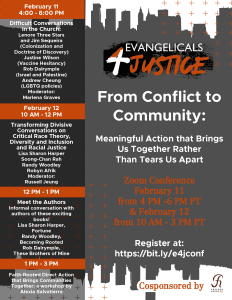
NB: I will be speaking at this zoom conference on Feb 11 & 12. Click here to register for this FREE event.
Why? Why have they left?
As much as I wish to give an answer, I would first encourage you to go ask them. The conversation might be good for them. It will certainly be good for you.
I would urge you to be prepared. And when they share with you why they left and that they believe much of what they were taught in our churches when they were younger is fraudulent, don’t be defensive. Just listen. You may want to apologize.
As far as the research on why they have left, Elizabeth Dreschers’ book, Choosing Our Religion, states it pretty plainly. She notes that young people who are leaving “tended to express anger and frustration with both the teachings and practices of their childhood church.”
Like what? You might ask. Before I provide a list of some of the teachings and practices, I should note that you’re probably not going to like the list. Also, the point is not whether we are right or not. The point is that these are some of the reasons why young people are leaving evangelicalism and in some instances why they are leaving Christianity.
To name a few:
- Politics—specifically, that many evangelicals are wed to one party and are not willing or even able to critique it fairly.
- Global warming: older people may or may not care about global warming and they may or may not believe in the overwhelming scientific evidence supporting it, but young people do. They, after all, are the ones who are planning on living on this planet for the next half-century or more and their kids may well live into the next century. Older evangelicals’ lack of concern for global warming is considered as a lack of love for the next generation who have to face the devastating effects of global warming. We will be dead, or pretty close to it.
- Immigration: for a religious ideology that expresses love for one’s enemies, young people cannot understand the fear and lack of concern for those fleeing devastation and injustice. The notion that we need to stay safe in our country and protect our citizens expresses self-interest and not a sacrificial love for the other.
- Poverty alleviation Evangelicalism’s stress on the individual has contributed to a lack of concern for poverty alleviation.
For the sake of space, allow me to list other topics that are of great significance to the younger generations.
- Women’s rights
- Abortion
- LGBTQ+
- Justification of war; militarism
- Racism
- Nationalism
- White nationalism
- Narrow-mindedness; judgmentalism
- Zionism and Islamaphobia
- Gun violence
- Anti-science: anti-evolution
There are certainly more items on the list, but I hope you get the point.
What is far worse than evangelical views on these issues is the lack of love evangelicals have shown to those who disagree. You may or may not like some or all of these issues, but we are still called to love those who do.
“By this all men will know that you are My disciples, if you have love for one another” (John 13:35).
The next generation looks at statements like this and concludes that many evangelicals must not be disciples of Jesus.
To receive auto-updates when new posts go live sign up for the newsletter on the top right-hand side of the homepage.
NB: My goal is to keep these posts free of charge. I do not intend to ever hide them behind a paywall. I can only do this if those of you who have been blessed by them and can afford to give ($5, $10, $25, or more/month) do so. You can give a tax-deductible contribution by following this link.
Please share this post and let others know about determinetruth.
If you wish to view this blog on your smartphone through the Determinetruth app simply download the “tithe.ly church” app on your smartphone and insert “determinetruth” as the church name you wish to follow. Once it is loaded, simply click on the “blog” icon and they will automatically load.
If you would like to have Rob speak at your church or organization in person or via zoom, please let us know by filling out the contact info on the Contact me tab on this site.
[1] There is a chart of 40 “evangelical” churches and their interrelationships available on the National Assocation of Evangelicals website https://v2ieg1eiji227cna43m44rey-wpengine.netdna-ssl.com/wp-content/uploads/2022/01/NAE-Denominational-Network-Diagram.pdf. There are “evangelical” churches that are not included in this chart, but nonetheless it gives a good representation of the diversity and distinctives of evangelicalism.
[2] This is not to say that Catholics do not or cannot believe in such. It is simply to state that such beliefs were not a distinctive part of Catholicism and were not widely held.
[3] I am not interested in presenting a thorough history of evangelicalism. Many claim that it formally arose in the early 1900’s after some began to break from the Fundamentalist movement.
[4] See: Daniel Williams, Defenders of the Unborn, Oxford University Press; Reprint Edition (December 4, 2015).
https://www.thegospelcoalition.org/blogs/evangelical-history/christian-right-discovered-abortion-rights-transformed-culture-wars/. Last accessed 9-7-20.
[5] Abortion did not become the defining issue for American evangelicals until 1980. Prior to the 1980’s abortion was viewed by many evangelicals as a “Catholic” issue. Because evangelicals were often anti-Catholic, this meant that most evangelicals prior to 1980 were pro-abortion.
[6] See https://www.bostonglobe.com/opinion/2018/02/05/race-not-abortion-was-founding-issue-religious-right/A5rnmClvuAU7EaThaNLAnK/story.html. Last accessed 9-7-20. https://www.politico.com/magazine/story/2014/05/religious-right-real-origins-107133. Last accessed 9-7-20.
[7] Certainly, there are a number who are over 40 as well.
About Rob Dalrymple
Rob Dalrymple is married to his wife Toni and is the father of four fabulous children, as well as the grandfather of Oliver and Holland! He has been teaching and pastoring for over 32 years at colleges, seminaries, and the local church. He has a PhD (Westminster Theological Seminary) in biblical interpretation. He is the author of four books (including: Follow the Lamb: A Guide to Reading, Understanding, and Applying the Book of Revelation & Understanding the New Testament and the End Times: Why it Matters) as well as numerous articles and other publications. You can read more about the author here.
Previous Post

January 21, 2022
Mark week #4 Devotional Guide
Next Post
January 28, 2022 Gospel of Matthew #1: devotional guide
Browse Our Archives
Select a Category 000 1 Cor 11:17-34 1 Corinthians 1 John 1 Peter 1 Thessalonians 1 Timothy 10 Commandments 2 Corinthians 2 John 2 Peter 2 Thessalonians 2 Timothy 3 John 666 Abortion Acts 2:42 Ahmaud Arbery AIPAC All Saints Day America antisemitism BDS Beast Betting Bible Bible study Biblical Interpretation Biden Book of Acts Boycott Campus Protests Catholicism Ceasefire Chavez Ravine Christian Nationalism Christian Zionism Christianity Today Christmas Church Colossians Communion Convict Leasing Covid-19 Craig Blaising creation Crucifixion Daoud Nassar Deception Deconstruction Democracy Devotional guide Discipleship Easter Eden Education Election End-times Ephesians Eschatology Ethnic Cleansing Evangelicalism Evangelicals Evolution Fall Famine Fascism FIFA Freedom of Speech Galatians Gary Burge Gaza Gaza; Genocide; Boycott Genesis Genocide George Floyd Global Warming God's will Gospel Gospel of John Gospel of Luke Gospel of Mark Gospel of Matthew Government Grace Great Prostitute Hamas Harris healthcare Hebrews HeGetsUs Holy Spirit Holy Week Honor Father and Mother ICJ Immigration Indigenous peoples day Iran Israel Israel Palestine Itamar Ben Gvir James Jesus Joel Willits Jude Just war Justice Kamala Harris Kingdom Of God Kings and Queens land of Israel Law (OT) Lazarus Les Miserable LGBTQ+ Love Luke Mahmoud Khalil Man of Lawlessness Mark Mark of the Beast Marriage Martin Luther King Jr Mercy Mexican Repatriation Military-Industrial-Complex Ministry Mission Money NAFTA Nakba Netanyahu New Creation New Testament Nicaragua Nicodemus Non Violence Occupation Pacifism Palestine Parable Paul Peace Pentecost Peonage Philemon Philippians Politics Poor Power Prayer Pride Month Priests Pro-life Propaganda Prophesy Prophet Qatar Queen Elizabeth Racism Reconstruction Redemption Reformation Resurrection Revelation Roe v Wade Romans Romans 13:1-7 Rome Russia Sabbath Samaritan Seals Sermon Settlements Slavery Spiritual gifts Taxes Tent of Nations Terrorism The Beast Theology Titus Torture Trump truth Ukraine Uncategorized Veteran's Day War Warsaw Ghetto wealth Wedding Women World Cup 2022 Worldview Worship Wrath Yemen Zionism
Select a Month September 2026 May 2026 February 2026 November 2025 October 2025 August 2025 July 2025 June 2025 May 2025 April 2025 March 2025 February 2025 January 2025 December 2024 November 2024 October 2024 September 2024 August 2024 July 2024 June 2024 May 2024 April 2024 March 2024 February 2024 January 2024 December 2023 November 2023 October 2023 September 2023 August 2023 July 2023 June 2023 May 2023 April 2023 March 2023 February 2023 January 2023 December 2022 November 2022 October 2022 September 2022 August 2022 July 2022 June 2022 May 2022 April 2022 March 2022 February 2022 January 2022 December 2021 November 2021 October 2021 September 2021 August 2021 July 2021 June 2021 May 2021 April 2021 March 2021 February 2021 January 2021 December 2020 October 2020 September 2020 August 2020 July 2020 June 2020 May 2020 April 2020 March 2020 February 2020 January 2020 December 2019 November 2019 October 2019 August 2019 July 2019 June 2019 May 2019 April 2019 August 2018 June 2018 May 2018 March 2018 September 2017 July 2017 May 2017 November 2016 October 2016 May 2016 April 2016 March 2016 December 2015 November 2015 October 2015 September 2015 August 2015 July 2015
Follow Us!
TAKE THE
Religious Wisdom Quiz
Which letter emphasizes faith without works is dead?
Select your answer to see how you score.
Hebrews 1 Peter Titus James
Support this
Column


Related posts from Determinetruth

Why I Am No Longer a Christian Zionist

The Gospel Above Party: Why I Speak Critically...

A Scholar Weighs In: Why Don't You Listen...

Obey Governments? Not What Paul Said: Reading Rom...
TRENDING AT PATHEOS Evangelical

In one sense walking into Westminster Abbey is like walking down the...

'Super Scam Me' Exposes AI Jon Bon Jovi...
Leslie Pickett believed she was in a relationship with Jon Bon Jovi....

The Brazilian Remake of Kendricks' 'Flywheel' Opens in...
“Flywheel,” the story that launched the Kendrick Brothers’ filmmaking career is getting...

The Dangers of Gradual Accommodation (Winking at Sin)
Recently, the “law of gradualness” resurfaced during the opening of a weeklong,...

The Iron Gates and the Lion of the...
Yesterday, I didn't finish my report about, well, yesterday. So I'll...

The Image: On the Horror of Capitalism and...
The Image Then went the Pharisees, and took counsel how they might...
view all Evangelical blogs
Ad-Free & Subscriber Log-In Subscription Support
- About Us
- 2026 Calendar
- Videos
- Podcasts
- Library of World Religions
- Faith In Media Tracker
- Advertise With Us
- Write for Us
- Privacy Policy
- Terms of Service
- Do Not Sell My Data
- Contact Us
- Radiant Digital
- Manage Newsletter Subscriptions
- Unsubscribe From Notifications
- Sitemap
Copyright 2008-2026, Patheos. All rights reserved.
Subscription Support Ad-Free & Subscriber Log-In
Follow Patheos