
BuddhistCatholicContemplativeEvangelicalGeneral ChristianHinduJewishLatter-day SaintMuslimNew VisionsProgressive Christian
Beliefs
- Buddhist
- Catholic
- Contemplative
- Evangelical
- General Christian
- Hindu
- Jewish
- Latter-day Saint
- More Voices
- Muslim
- New Visions
- Pagan
- Progressive Christian
Topics
- Religion News
- Food and Religion
- Sports and Religion
- Religious Art
- Religious Music and Entertainment
- Religious Events
- History and Religion
- Style and Religion
- Politics and Religion
- Women in Religion
- Recreation Outdoors and Religion
- Business Finance and Religion
- Careers Workplace and Religion
- Education and Religion
- Family Parenting and Religion
- Health Fitness and Religion
- Home and Religion
- Relationships and Religion
- Technology and Religion
- Travel and Religion
Columnists
- Buddhist Columnists
- Business Finance and Religion Columnists
- Careers Workplace and Religion Columnists
- Catholic Columnists
- Contemplative Columnists
- Education and Religion Columnists
- Evangelists Columnists
- Family Parenting and Religion Columnists
- General Christian Columnists
- Health Fitness and Religion Columnists
- Hindu Columnists
- History and Religion Columnists
- Home and Religion Columnists
- Jewish Columnists
- More Voices Columnists
- Latter Day Columnists
- Muslim Columnists
- New Visions Columnists
- Nonreligious Columnists
- Pagan Columnists
- Politics and Religion Columnists
- Progressive Columnists
- Recreation Outdoors and Religion Columnists
- Relationships and Religion Columnists
- Religion News Columnists
- Religious Art Columnists
- Religious Events Columnists
- Religious Music and Entertainment Columnists
- Sports and Religion Columnists
- Style and Religion Columnists
- Technology and Religion Columnists
- Travel and Religion Columnists
- Women in Religion Columnists
Resource Library
- 2026 Calendar
- Library of World Religions
- The 100 Most Holy Places on Earth
- Patheos Answers
- Podcasts
- Videos
- Faith Leaders Database
- Anglican Episcopalian
- Bahai
- Baptist
- Buddhism
- Christianity
- Confucianism
- Eastern Orthodoxy
- Hinduism
- Holiness and Pentecostal
- ISKCON
- Islam
- Judaism
- Lutheran
- Methodist
- The Church of Jesus Christ of Latter-day Saints
- New Age
- Paganism
- Presbytarian and Reformed
- Protestantism
- Religion Behind the Scenes
- Roman Catholic
- Scientology
- Shia Islam
- Sikhism
- Sufism
- Sunni Islam
- Taoism
- Zen
- See all religions
Research Tools
 Ad-Free & Subscriber Log-In Subscription Support
Ad-Free & Subscriber Log-In Subscription Support
Follow Patheos 

- Trending:
- Forgiveness
- |
- Marriage
- |
- Consciousness
- |
- Death Penalty
- |
- Election
- |
- Halloween

-
More
- Home
- Evangelical
- Mark week #1 Devotional guide 2022
Mark week #1 Devotional guide 2022
Last updated on: December 31, 2021 at 3:25 am by Rob Dalrymple
Mark week #1 Devotional guide 2022 2021-12-30T07:09:31-08:00 Rob Dalrymple
Patheos Explore the world's faith through different perspectives on religion and spirituality! Patheos has the views of the prevalent religions and spiritualities of the world.
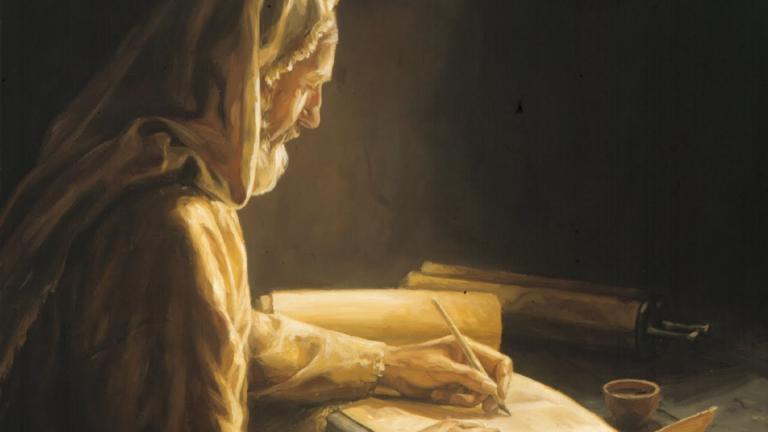 Day 1: Read Mark 1
There is little question that Mark was the first Gospel written—hence the reason for beginning our study with Mark. It is very likely that both Matthew and Luke not only wrote after Mark but that they knew of Mark and used Mark as one of their sources (using written sources was common at the time; note Luke 1:1-4).
Mark was written to people who knew the stories of Jesus. However, they probably did not live in Palestine (thus, Mark must explain the customs of the Pharisees and the meaning of Aramaic words—e.g., see 7:3-4).
Because Mark’s reader/hearers[2] knew the stories, Mark decides that he doesn’t need to explain everything. For example, at the end of the stories of the feeding of the 5,000 (6:33-44) and the 4,000 (8:1-9), Mark includes a dialogue with Jesus and His disciples that ends with the question, “do you understand?” (8:21). We, however, do not understand—read 8:10-21 and see if you “understand.”[3] Thus, we want to reply to Mark, “no, please explain.” In Mark’s mind, he doesn’t think he needs to explain because his reader/hearers knew what he meant.
When reading the Gospel of Mark, it is important to note that the opening verse (1:1) is likely a title statement. Mark provides his purpose: he aims to demonstrate that the “good news” (i.e., the Gospel) is that Jesus is the Son of God (1:1). The Gospel of Mark, in fact, is framed with references to Jesus as the “Son of God” (cf 1:1; 15:39).
Questions to ponder/discuss:
- As you read through Mark pay special attention to Mark’s portrayal of Jesus (you might even make a notebook and list everything you see with regard to how Mark portrays Jesus).
- After reading Mark 1 what are your impressions of Jesus?
- What matters does Jesus seem to be most concerned with?
Day 2: Read Mark 2:1-3:6
Mark 2:1-3:6 contains a series of stories in which the Scribes[4] confront Jesus—or Jesus confronts the Scribes.
Perhaps, the most important question we can ask when reading the Gospel of Mark is “who is Jesus?” We, the reader/hearers, know the answer from the beginning—Mark tells us in 1:1. As you read, pay attention to how the characters in the story struggle with figuring out who Jesus is. E.g.:
- In 4:35-41, the disciples encounter Jesus calming a storm (something that only God can do; cf Ps 65:7; 89:9; 107:28-29) and ask, “who is this that even the wind and the waves obey Him?” (4:41).
- The demons apparently know who Jesus is from the beginning: “What business do we have with each other, Jesus of Nazareth? Have You come to destroy us? I know who You are—the Holy One of God!” (1:24).
- In 2:1-3:6, the religious leaders (for Mark, Jesus’ conflict is primarily with the Scribes), encounter Jesus.
- The Gospel reaches a climax in Mark 8:29 with Jesus’ question, “Who do you say I am?” and Peter’s answer “you are the Christ.”
Questions to ponder/discuss:
- Carefully read the account of Jesus’ healing the paralytic (2:1-13). Does anything stand out as strange or intriguing?
- Mark 2:1-3:6 relays five stories in which the Scribes confront Jesus. Notice that there is a progression in these stories. What progression do you notice? Hint: by the end they want to kill Him!
Day 3 Read Mark 3:7-4:34
It is important to recognize that the title “Son of God” (1:1), which in the OT was reserved for Israel (i.e., the people of God as a whole; cf Exod 4:22), was likely meant by Mark as a political statement. In the Roman world, there was only one “son of the gods” and it was Caesar. Mark begins his gospel by asserting that Jesus is “the Son of the God” (1:1). This statement is a highly charged political statement that is directly challenging Caesar’s authority. This is why Mark points out that it was the Roman centurion on duty at Jesus’ crucifixion who also affirms, “Truly this man was the Son of God” (15:39): even a Roman can see that Jesus is the true Son of God!
Questions to ponder/discuss:
- What is the Kingdom of God? Jesus gives some indications of it in the parables of Mark 4 (Note, this is not a question that we might be able to answer fully without studying Jesus and the Gospels carefully. Therefore, it is a question that you should constantly be asking as you read through Mark, Matthew, Luke, John, Acts, and the NT!)
- At this point in your study, who do you suppose is the primary opponent of the Kingdom of God according to Mark?
Day 4 Read Mark 4:35-6:6
Mark often arranges his stories in accord with what is often deemed the “sandwich technique.” Sandwiching is when Mark intentionally interrupts the telling of a story with another story before returning to complete the original story.
There are numerous examples of this in the Gospel of Mark. One of the clearest examples is the account of Jesus raising the synagogue official’s (Jairus) daughter from the dead (Mark 5:21-43). The story begins with Jairus asking Jesus to heal his daughter (5:22-23). Jesus agrees and Jesus and His entourage begin the journey to Jairus’ home (Mark 5:24). Mark, then, interrupts this account by noting that while on the way to Jairus’ home a woman with a bleeding problem touches Jesus and is healed (Mark 5:27-29). Jesus then inquires as to who touched Him (5:30)? The woman, “fearing and trembling . . . fell down before Him and told Him the whole truth” (Mark 5:33). Jesus then replies, “Daughter, your faith has made you well; go in peace and be healed of your affliction” (Mark 5:34). The incident with the woman, however, interrupted the account of the healing of the synagogue rulers’ daughter.
Mark resumes this story of the healing of the man’s daughter by noting that while Jesus was speaking to the woman, some people from Jairus’ home arrived and informed him that his daughter had died (Mark 5:35). We are almost left to wonder if the woman’s delaying of Jesus was responsible. Mark then returns to the story of Jairus’ daughter by noting that Jesus encourages him, “Do not be afraid any longer, only believe” (Mark 5:36).
Mark then adds that, for no apparent reason, Jesus decides that only Peter, James, and John may accompany Him to the home (Mark 5:37). When they arrive at Jairus’ home, Jesus expels everyone except His three disciples and the girl’s parents (Mark 5:40). Then, Jesus enters the child’s room and raises her up by touching her (Mark 5:40-41).
This is a very typical example of Mark’s use of sandwiching. He begins by introducing us to Jairus and his sick daughter (Mark 5:21-24; the bottom piece of bread in a sandwich). Mark interrupts this account with a story about a woman with a bleeding problem (Mark 5:25-34; the peanut butter and jelly; turkey and swiss; or insert your preference here). Finally, Mark returns to the original story, the healing of the little girl (Mark 5:35-43; the top piece of bread).
That these two stories are meant to be read together is clearly indicated by the fact that both stories are about women; both of the women would have been considered as ‘unclean’ (the woman has a bleeding problem, which rendered her unclean; and the little girl was dead and thereby unclean) and, yet, both are touched by Jesus—which should have made Him unclean but that is for another time; both stories have the number twelve (the number of years the woman was bleeding; and the age of the little girl); and both women are deemed “daughter” (Mark 5:23, 34, 35). There is no question that Mark meant for us to read these stories in light of one another.
The key to understanding Mark’s use of sandwiching is that the story in the middle often provides the clue for Mark’s telling of the main story. In this instance, the woman who was healed had faith (Mark 5:33-34). Jesus, then, says to Jairus, “Do not be afraid any longer, only believe” (Mark 5:36).
Mark employs numerous sandwiches throughout the Gospel. In chapter 11, Mark notes that Jesus entered the temple and looked around and left (11:11—the lower bread). Left to itself, this verse is one of the most obscure statements in Scripture. What do you mean Jesus entered the temple and looked around and left? Why tell us that Jesus entered the temple and looked around if you are not going to tell us what He saw? Then, in Mark 11:12-14 (the peanut butter and jelly) Jesus curses a fig tree for failing to have fruit. Then, in 11:15-18, Jesus enters the temple (the upper bread) and creates havoc because the temple authorities had no fruit! By means of the sandwich technique, we now understand what Jesus saw when He entered the temple in 11:11. He saw no fruit![5]
Questions to ponder/discuss
- As you read the Gospel of Mark make a list of every “sandwich” you are able to find (there are probably more than you realize). Then ask, “how does this sandwich help our understanding of Mark”?
Day 5: Read Mark 6:7-32
As we will discuss in the studies to follow, discipleship is a significant concern for Mark. An important aspect of becoming a disciple is to get out into the world and put what you have learned into practice. So, even though the disciples had not received the Holy Spirit, Jesus sends them out.
Questions to ponder/discuss:
- Why do you think Mark tells the story of John the Baptist’s beheading (6:14-29) in the middle of Jesus’ sending the disciples out (6:7-13; 30-32)? Is this a sandwich? What is the significance of the story of John the Baptist’s beheading falling in the middle of the disciples being sent out?
[1] This guide is meant to be done either as a group study over the course of 2 or 4 meetings (Day 1-5; 6-10; 11-15; 16-20) or as a private devotion over the course of 4 weeks (or a calendar month—5 lessons per week).
[2] It is very important to remember that the books of the Bible were initially “read” aloud by one person and “heard” by everyone else. Bibles were not read for private devotion by the common person until after the invention of the printing press in the 15th century. We would do well to “listen” to the Bible more!
[3] We will explain these accounts in an upcoming podcast. So, if you want to “understand,” then tune into the determinetruth podcast on Jan 18, 2022.
[4] Note that in Mark’s gospel it is the Scribes who are the primary antagonists to Jesus. Scribes were professional “lawyers”—meaning they were experts in the OT Law. The Scribes were not necessarily Pharisees. A Scribe is a profession and they may adhere to the beliefs of any of the “parties” within the first-century Jewish communities.
[5] Note that the cursing of the fig tree (11:12-14) is also the bottom piece of bread of another sandwich. The peanut butter and jelly is the havoc in the temple (11:15-19). The withered fig tree (11:20) is the top piece of bread!

About Rob Dalrymple
Rob Dalrymple is married to his wife Toni and is the father of four fabulous children, as well as the grandfather of Oliver and Holland! He has been teaching and pastoring for over 32 years at colleges, seminaries, and the local church. He has a PhD (Westminster Theological Seminary) in biblical interpretation. He is the author of four books (including: Follow the Lamb: A Guide to Reading, Understanding, and Applying the Book of Revelation & Understanding the New Testament and the End Times: Why it Matters) as well as numerous articles and other publications. You can read more about the author here.
Previous Post

December 23, 2021
Communion and the Church as the Body of Christ; Part 2
Next Post
January 4, 2022 Church: Can't I just Leave?
Browse Our Archives
Select a Category 000 1 Cor 11:17-34 1 Corinthians 1 John 1 Peter 1 Thessalonians 1 Timothy 10 Commandments 2 Corinthians 2 John 2 Peter 2 Thessalonians 2 Timothy 3 John 666 Abortion Acts 2:42 Ahmaud Arbery AIPAC All Saints Day America antisemitism BDS Beast Betting Bible Bible study Biblical Interpretation Biden Book of Acts Boycott Campus Protests Catholicism Ceasefire Chavez Ravine Christian Nationalism Christian Zionism Christianity Today Christmas Church Colossians Communion Convict Leasing Covid-19 Craig Blaising creation Crucifixion Daoud Nassar Deception Deconstruction Democracy Devotional guide Discipleship Easter Eden Education Election End-times Ephesians Eschatology Ethnic Cleansing Evangelicalism Evangelicals Evolution Fall Famine Fascism FIFA Freedom of Speech Galatians Gary Burge Gaza Gaza; Genocide; Boycott Genesis Genocide George Floyd Global Warming God's will Gospel Gospel of John Gospel of Luke Gospel of Mark Gospel of Matthew Government Grace Great Prostitute Hamas Harris healthcare Hebrews HeGetsUs Holy Spirit Holy Week Honor Father and Mother ICJ Immigration Indigenous peoples day Iran Israel Israel Palestine Itamar Ben Gvir James Jesus Joel Willits Jude Just war Justice Kamala Harris Kingdom Of God Kings and Queens land of Israel Law (OT) Lazarus Les Miserable LGBTQ+ Love Luke Mahmoud Khalil Man of Lawlessness Mark Mark of the Beast Marriage Martin Luther King Jr Mercy Mexican Repatriation Military-Industrial-Complex Ministry Mission Money NAFTA Nakba Netanyahu New Creation New Testament Nicaragua Nicodemus Non Violence Occupation Pacifism Palestine Parable Paul Peace Pentecost Peonage Philemon Philippians Politics Poor Power Prayer Pride Month Priests Pro-life Propaganda Prophesy Prophet Qatar Queen Elizabeth Racism Reconstruction Redemption Reformation Resurrection Revelation Roe v Wade Romans Romans 13:1-7 Rome Russia Sabbath Samaritan Seals Sermon Settlements Slavery Spiritual gifts Taxes Tent of Nations Terrorism The Beast Theology Titus Torture Trump truth Ukraine Uncategorized Veteran's Day War Warsaw Ghetto wealth Wedding Women World Cup 2022 Worldview Worship Wrath Yemen Zionism
Select a Month September 2026 May 2026 February 2026 November 2025 October 2025 August 2025 July 2025 June 2025 May 2025 April 2025 March 2025 February 2025 January 2025 December 2024 November 2024 October 2024 September 2024 August 2024 July 2024 June 2024 May 2024 April 2024 March 2024 February 2024 January 2024 December 2023 November 2023 October 2023 September 2023 August 2023 July 2023 June 2023 May 2023 April 2023 March 2023 February 2023 January 2023 December 2022 November 2022 October 2022 September 2022 August 2022 July 2022 June 2022 May 2022 April 2022 March 2022 February 2022 January 2022 December 2021 November 2021 October 2021 September 2021 August 2021 July 2021 June 2021 May 2021 April 2021 March 2021 February 2021 January 2021 December 2020 October 2020 September 2020 August 2020 July 2020 June 2020 May 2020 April 2020 March 2020 February 2020 January 2020 December 2019 November 2019 October 2019 August 2019 July 2019 June 2019 May 2019 April 2019 August 2018 June 2018 May 2018 March 2018 September 2017 July 2017 May 2017 November 2016 October 2016 May 2016 April 2016 March 2016 December 2015 November 2015 October 2015 September 2015 August 2015 July 2015
Follow Us!
TAKE THE
Religious Wisdom Quiz
What is the name for a church led by a bishop in the Catholic, Anglican, and Orthodox traditions?
Select your answer to see how you score.
Synagogue Cathedral Chapel Tabernacle
Support this
Column


Related posts from Determinetruth

The victors write history: Have we also been...

Fantasy Football & the Bible: Drafting To Understand

Have we been misled? The Beast: Part 2

Gaza When will this damnable war end, When...
TRENDING AT PATHEOS Evangelical

'Super Scam Me' Exposes AI Jon Bon Jovi...
Leslie Pickett believed she was in a relationship with Jon Bon Jovi....

The Brazilian Remake of Kendricks' 'Flywheel' Opens in...
“Flywheel,” the story that launched the Kendrick Brothers’ filmmaking career is getting...

The Dangers of Gradual Accommodation (Winking at Sin)
Recently, the “law of gradualness” resurfaced during the opening of a weeklong,...

The Iron Gates and the Lion of the...
Yesterday, I didn't finish my report about, well, yesterday. So I'll...

The Image: On the Horror of Capitalism and...
The Image Then went the Pharisees, and took counsel how they might...

We are approaching the date of our new American national holiday: October...
view all Evangelical blogs
Ad-Free & Subscriber Log-In Subscription Support
- About Us
- 2026 Calendar
- Videos
- Podcasts
- Library of World Religions
- Faith In Media Tracker
- Advertise With Us
- Write for Us
- Privacy Policy
- Terms of Service
- Do Not Sell My Data
- Contact Us
- Radiant Digital
- Manage Newsletter Subscriptions
- Unsubscribe From Notifications
- Sitemap
Copyright 2008-2026, Patheos. All rights reserved.
Subscription Support Ad-Free & Subscriber Log-In
Follow Patheos