
BuddhistCatholicContemplativeEvangelicalGeneral ChristianHinduJewishLatter-day SaintMuslimNew VisionsProgressive Christian
Beliefs
- Buddhist
- Catholic
- Contemplative
- Evangelical
- General Christian
- Hindu
- Jewish
- Latter-day Saint
- More Voices
- Muslim
- New Visions
- Pagan
- Progressive Christian
Topics
- Religion News
- Food and Religion
- Sports and Religion
- Religious Art
- Religious Music and Entertainment
- Religious Events
- History and Religion
- Style and Religion
- Politics and Religion
- Women in Religion
- Recreation Outdoors and Religion
- Business Finance and Religion
- Careers Workplace and Religion
- Education and Religion
- Family Parenting and Religion
- Health Fitness and Religion
- Home and Religion
- Relationships and Religion
- Technology and Religion
- Travel and Religion
Columnists
- Buddhist Columnists
- Business Finance and Religion Columnists
- Careers Workplace and Religion Columnists
- Catholic Columnists
- Contemplative Columnists
- Education and Religion Columnists
- Evangelists Columnists
- Family Parenting and Religion Columnists
- General Christian Columnists
- Health Fitness and Religion Columnists
- Hindu Columnists
- History and Religion Columnists
- Home and Religion Columnists
- Jewish Columnists
- More Voices Columnists
- Latter Day Columnists
- Muslim Columnists
- New Visions Columnists
- Nonreligious Columnists
- Pagan Columnists
- Politics and Religion Columnists
- Progressive Columnists
- Recreation Outdoors and Religion Columnists
- Relationships and Religion Columnists
- Religion News Columnists
- Religious Art Columnists
- Religious Events Columnists
- Religious Music and Entertainment Columnists
- Sports and Religion Columnists
- Style and Religion Columnists
- Technology and Religion Columnists
- Travel and Religion Columnists
- Women in Religion Columnists
Resource Library
- 2026 Calendar
- Library of World Religions
- The 100 Most Holy Places on Earth
- Patheos Answers
- Podcasts
- Videos
- Faith Leaders Database
- Anglican Episcopalian
- Bahai
- Baptist
- Buddhism
- Christianity
- Confucianism
- Eastern Orthodoxy
- Hinduism
- Holiness and Pentecostal
- ISKCON
- Islam
- Judaism
- Lutheran
- Methodist
- The Church of Jesus Christ of Latter-day Saints
- New Age
- Paganism
- Presbytarian and Reformed
- Protestantism
- Religion Behind the Scenes
- Roman Catholic
- Scientology
- Shia Islam
- Sikhism
- Sufism
- Sunni Islam
- Taoism
- Zen
- See all religions
Research Tools
 Ad-Free & Subscriber Log-In Subscription Support
Ad-Free & Subscriber Log-In Subscription Support
Follow Patheos 

- Trending:
- Forgiveness
- |
- Marriage
- |
- Consciousness
- |
- Death Penalty
- |
- Election
- |
- Halloween

- Home
- Contemplative
- Relationships and Religion
- Contemplative Parenting
Contemplative Parenting
Last updated on: January 19, 2024 at 2:34 pm by Sarah Forti
Contemplative Parenting 2024-01-19T14:34:30-05:00 Sarah Forti
Patheos Explore the world's faith through different perspectives on religion and spirituality! Patheos has the views of the prevalent religions and spiritualities of the world.
Contemplative Parenting and Control
I have been on a journey of contemplative leadership, and that includes how to lead within my own home through contemplative parenting.
There is a pervasive idea within our culture that we create change through exerting control over others. This leadership model is on full display all the way from young bullies on the playground to old bullies in each political party. In both scenarios, we are saying, “because I want this, you must do/lose that.”
In contemplative leadership, one goal is to be fully present. This means being fully present to oneself, to God, and to others. This goal can shift us away from the posturing of offense or defense, and into a posture of learning and receiving. One thing that can stop us from being fully present is our desire for control.
Can we be fully present and attentive to someone whom we are trying to control?
Being Present to Our Children
This brings me back to the first few months of my son’s life. You cannot control a baby. You can create structure, but even that is a way of being present to them. It took several weeks before I had ten minutes of uninterrupted sleep, because you can’t control a baby.
Now my son is three years old. His preschool gave us an ultimatum to potty train him within a short period of time. I can add structure, but I cannot control a toddler.
Part of my contemplative leadership is a commitment to let my presence be an embodiment of my core values, rather than reacting out of my fears or short-term desires. My desire to meet the preschool’s deadline does not supersede my core value of being a loving presence in my son’s life. Creating structure and boundaries is a very real and necessary way of being present and loving to children; however, punishing them for natural bodily functions is not.
If he doesn’t meet the deadline, it doesn’t mean he’s a failure.
If he doesn’t meet the deadline, it doesn’t mean I’m a failure.
It may simply take an additional week, or an additional month, or however long he needs for this transition. I want to be present to his unique needs, and not just to the school’s generic policy. This issue of potty-training also leads to larger questions of parental leadership.
Is the purpose of parenting to control children?
Do we create who our children will become?
Being Present to Ourselves
It can be extremely frustrating when my child doesn’t listen to my instructions. He primarily wants to eat chicken, pizza, and spaghetti. When I want him to eat more fruits and vegetables, I feed it to him rather than letting him choose. When I told someone else about this, they said “that’s a control thing”.
In my heart, I know that I want to help him. That’s why I want him to have fruits and vegetables. But I need to be fully present to the fact that this is not only a desire, it’s also a fear that is driving my behavior.
What if he doesn’t eat enough?
What if I’m not doing enough?
Even the pediatrician has told us to let him eat the amount that he wants. He has always been big for his age, so there is no reason to think that he’s not getting what he needs. My fear is not based on my son, it comes from within me.
My fear is whether I am a good parent. Even when I was pregnant with him, I overate. I gained more weight than I needed to, and I drank protein and meal replacement shakes in addition to my regular meals out of the fear that he wouldn’t get what he needed within me.
What other scenarios come to mind when you think of exerting control as a response to fear?
How often do you exert control over others in response to “what if” scenarios within you?
What if we don’t meet the potty-training deadline, and he fails in comparison to others, because I failed in comparison to others?
What if I don’t teach him good eating habits, and he fails to learn what he needs to know, and he fails in life because I failed as a parent?
When we are fully present to our own desires, we can uncover realistic fears that escalate into inflated worst-case scenarios.
How often are we reacting to hypothetical scenarios instead of embodying our core values in our present scenario?
Who my son will be is still unfolding, and I do not control that. I can love and be present to who he is today. My core values determine who I will be, not who I will force him to be.
Being Present to God
It is a struggle, but I am committed to contemplative parenting. I am committed to being fully present to myself, trying to recognize when I am reacting out of fear. I am committed to being fully present to my son, not only to the goals of his school or his measurement compared to others, but to his heart and his wholeness.
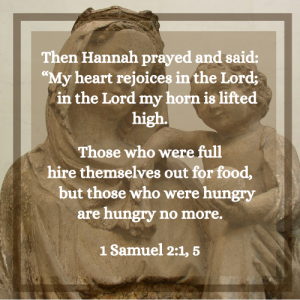
In scripture, there are two very important mothers who sing songs about their children. Hannah in the Old Testament promises that she will give her child to the Lord’s service if she is able to get pregnant. Mary in the New Testament is told that her child will be the son of God. Their songs mirror one another.
Both women experience the joy of motherhood. Both women experience the fear and heartache that comes with releasing control, and allowing their sons to follow their calling.
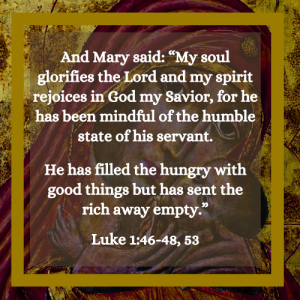
This is the call to be fully present to God in our parenting. This is the commitment to not only pour out our desires in prayer, but to listen as well. Part of being fully present is listening for the work of God in the life of my child.
Hannah’s child was Samuel, and God called out to him by name when he was still a young boy.
Am I fully present to the ways that God might speak to me through my child’s life?
Am I fully present to hear what God might teach me through my child’s voice?
Can I hear the voice of God within my son if I’m always controlling the dialogue?
I’m reminded of how the Pharisees were challenged in the Gospels. Following the law did not impart holiness upon them. Similarly, the purpose of my son’s life is not to follow rules. As Jesus reminded us, “the Sabbath exists for man, not man for the Sabbath”.
 I believe that the purpose of my son’s life is love.
He is loved by God, and I will spend the rest of my life showing him that he is loved by me.
To read more posts, visit my column here. Check out my writing in “Soul Food: Nourishing Essays on Contemplative Living and Leadership”, or listen to me read a portion of my writing for the podcast Read, Pray, Write.
General Christian
Family, Parenting and Religion
Previous Post
January 9, 2024
Becoming Episcopalian
Next Post

February 7, 2024 Jesus is the Voice of God
Browse Our Archives
Select a Category Uncategorized
Select a Month November 2025 October 2025 July 2025 June 2025 March 2025 February 2025 January 2025 December 2024 November 2024 October 2024 July 2024 May 2024 April 2024 March 2024 February 2024 January 2024 December 2023 November 2023
TAKE THE
Religious Wisdom Quiz
What does Paul tell Titus that the grace of God teaches us to do?
Select your answer to see how you score.
Say no to ungodliness and live self-controlled, upright and godly lives Spread the gospel Love one another Obey the authorities
Related posts from Deeper Still

Handy Contemplative Practices for Political Spaces

Halloween: The Holiday of Loving Your Neighbor

Trusting Jesus's Hard Parables: The Shrewd Manager
How Mary and the Good Samaritan teach us...
TRENDING AT PATHEOS Contemplative

Handy Contemplative Practices for Political Spaces
A Spiritually Grounded Presence In order to bring a spiritually grounded presence...

Halloween: The Holiday of Loving Your Neighbor
All Hallows Eve Is Halloween the least Christian holiday in America, or...

Can Love Be Saved? Some Thoughts on the...
Happy Valentine's Day! I recently published a post on Patreon called Can...

"This Loving, Uniting Embrace": the Holy Ordinary
Today's guest post is by Mark Longhurst, author of The Holy Ordinary:...

How Are We Called to Live?: More About...
How Are We Called to Live? Many of us struggle with discerning...

A Spiritual Practice of Reading: Join Us Online
A Spiritual Practice of Reading A healthy spiritual practice of reading is...
view all Contemplative blogs
Ad-Free & Subscriber Log-In Subscription Support
- About Us
- 2026 Calendar
- Videos
- Podcasts
- Library of World Religions
- Faith In Media Tracker
- Advertise With Us
- Write for Us
- Privacy Policy
- Terms of Service
- Do Not Sell My Data
- Contact Us
- Radiant Digital
- Manage Newsletter Subscriptions
- Unsubscribe From Notifications
- Sitemap
Copyright 2008-2026, Patheos. All rights reserved.
Subscription Support Ad-Free & Subscriber Log-In
Follow Patheos