
BuddhistCatholicContemplativeEvangelicalGeneral ChristianHinduJewishLatter-day SaintMuslimNew VisionsProgressive Christian
Beliefs
- Buddhist
- Catholic
- Contemplative
- Evangelical
- General Christian
- Hindu
- Jewish
- Latter-day Saint
- More Voices
- Muslim
- New Visions
- Pagan
- Progressive Christian
Topics
- Religion News
- Food and Religion
- Sports and Religion
- Religious Art
- Religious Music and Entertainment
- Religious Events
- History and Religion
- Style and Religion
- Politics and Religion
- Women in Religion
- Recreation Outdoors and Religion
- Business Finance and Religion
- Careers Workplace and Religion
- Education and Religion
- Family Parenting and Religion
- Health Fitness and Religion
- Home and Religion
- Relationships and Religion
- Technology and Religion
- Travel and Religion
Columnists
- Buddhist Columnists
- Business Finance and Religion Columnists
- Careers Workplace and Religion Columnists
- Catholic Columnists
- Contemplative Columnists
- Education and Religion Columnists
- Evangelists Columnists
- Family Parenting and Religion Columnists
- General Christian Columnists
- Health Fitness and Religion Columnists
- Hindu Columnists
- History and Religion Columnists
- Home and Religion Columnists
- Jewish Columnists
- More Voices Columnists
- Latter Day Columnists
- Muslim Columnists
- New Visions Columnists
- Nonreligious Columnists
- Pagan Columnists
- Politics and Religion Columnists
- Progressive Columnists
- Recreation Outdoors and Religion Columnists
- Relationships and Religion Columnists
- Religion News Columnists
- Religious Art Columnists
- Religious Events Columnists
- Religious Music and Entertainment Columnists
- Sports and Religion Columnists
- Style and Religion Columnists
- Technology and Religion Columnists
- Travel and Religion Columnists
- Women in Religion Columnists
Resource Library
- 2026 Calendar
- Library of World Religions
- The 100 Most Holy Places on Earth
- Patheos Answers
- Podcasts
- Videos
- Faith Leaders Database
- Anglican Episcopalian
- Bahai
- Baptist
- Buddhism
- Christianity
- Confucianism
- Eastern Orthodoxy
- Hinduism
- Holiness and Pentecostal
- ISKCON
- Islam
- Judaism
- Lutheran
- Methodist
- The Church of Jesus Christ of Latter-day Saints
- New Age
- Paganism
- Presbytarian and Reformed
- Protestantism
- Religion Behind the Scenes
- Roman Catholic
- Scientology
- Shia Islam
- Sikhism
- Sufism
- Sunni Islam
- Taoism
- Zen
- See all religions
Research Tools
 Ad-Free & Subscriber Log-In Subscription Support
Ad-Free & Subscriber Log-In Subscription Support
Follow Patheos 

- Trending:
- Forgiveness
- |
- Marriage
- |
- Consciousness
- |
- Death Penalty
- |
- Election
- |
- Halloween
 Debra Landwehr Engle "Everyday Miracles"
- Home
- New Visions
- Saying Thanks on International Women’s Day
Saying Thanks on International Women’s Day
Last updated on: March 8, 2016 at 1:01 pm by Debra Landwehr Engle
Saying Thanks on International Women’s Day 2016-03-08T13:01:52-05:00 Debra Landwehr Engle
Patheos Explore the world's faith through different perspectives on religion and spirituality! Patheos has the views of the prevalent religions and spiritualities of the world.
Yesterday would have been my mom’s 101st birthday. She died at the age of 90—at home, of congestive heart failure, with all her affairs and family in order, in the home she and my dad bought in the mid 1950s.
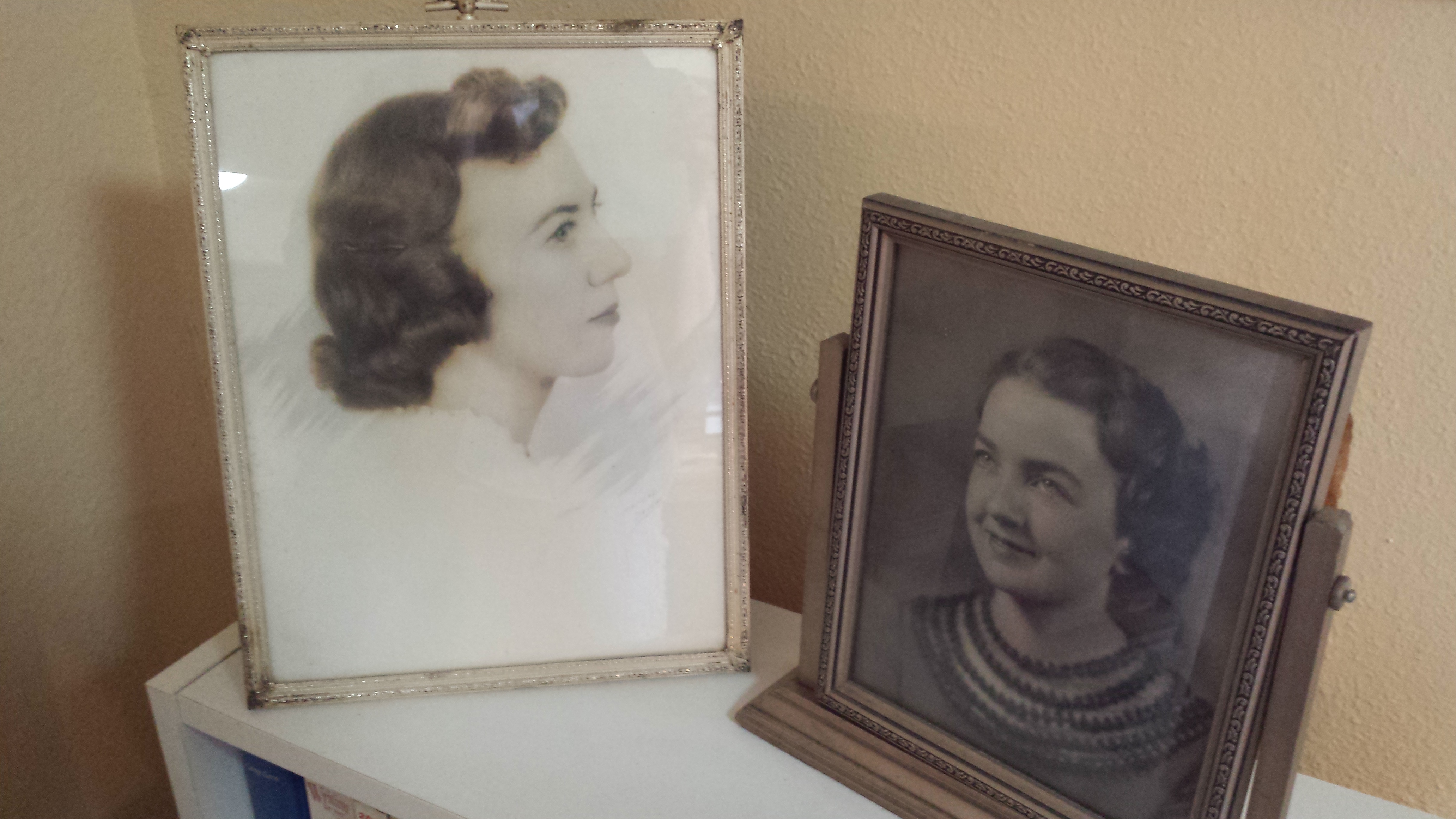
My mom, left, and Aunt Grada, right. Photo by the author.
This weekend, we’re hosting a birthday party for my mother-in-law, who turns 90 today. About 35 people, almost all family and some from halfway across the country, will converge at our house to eat cake and celebrate her life—and she’ll probably laugh more than anyone at the party.
This morning I received an email from a friend who recently traveled home to the Midwest after wintering down South. On the drive, as her mind wandered, she was surprised to hear the voice of her mom, who passed away years ago. They had an excellent chat, she says. Her mom was encouraging and had a lot to say.
My friend Kathy’s mother is 96 years old and has pancreatic cancer. Yet when Kathy and her family visited her over the weekend, she was as upbeat as ever, and they made paper snowflakes into the evening.
Life is filled with memories, stories and celebrations of older women right now. On International Women’s Day, it seems an appropriate time to thank them.
These are women who were born, came of age and raised their families before women’s lib, before parity, before birth control.
Their lives have spanned sea changes in social and cultural mores, and they’ve adapted. Sometimes unwillingly, of course. They may still gripe about today’s lenient parents and the benefits of one-room schoolhouses, but they adapted nonetheless.
Today, when we’re focused on how we can move forward as women, it’s important to remember those connections to the past.
So I want to reprint an excerpt of an essay I wrote that appeared in a book called My Mother’s Garden. It’s based on a conversation I had with my mom a few months before she died….about gardening, one of her favorite pastimes.
“People didn’t have nurseries back then,” my mom says of her grandmother’s era, “and they were better gardeners.” In the early 1900s, her grandparents lived near Myrtle, Missouri, just above the Arkansas line. Their house sat on Doniphan Road.
With her fingers, my mom draws the layout of her grandparents’ property on the coffee table. “The house was here*, and the apple orchard was back* here*,” she says. “Granddad planted every kind of apple there was. And the barn was back here. The garden was large, between the orchard and the barn.”*
She remembers it well because she and her older sister Grada spent many days there. The girls’ own home was separated from the Fairview schoolhouse by a creek. When the water rose in the spring and became impassable, my mom and Grada lived at their grandparents’ house, which was on the same side of the creek as the school. Despite the felled three that served as a bridge, my mom fell in the creek once. “They had to wrap me up and put me in front of the fire,” she says.
A lilac bush hid one corner of my great-grandmother’s porch; a prolific vine climbed a trellis at the other end. “She had beautiful roses,” my mom says. But most striking of all were the plants beyond my great-grandmother’s garden: the wild roses growing along the fence across the road, right in front of an entire field of wild daisies.
“Grandpa wasn’t fond of those daisies,” my mom says. After all, they usurped perfectly good pasture ground. For my mom, that field of daisies taught an early and simple lesson: In a world of constant work, sometimes wonder trumped utility.
In her childhood, the lines between work and play blurred as she gathered gooseberries for pie or ate black haws from wild bushes on the way to school, or climbed down into the cellar, using the trapdoor in her grandparents’ living room floor, to gather apples and sweet potatoes.
She and Grada sat on the front porch for hours at a time, peeling apples and peaches from the orchard. Their grandmother then spread out the slices on a bedsheet and left them to dry on the roof before she and her daughter turned them into a twelve-layer cake. “Sumptuous,” my mom says. It is one of many things that she declares as “The best thing I ever ate.”
So there it is. A picture. A verbal photograph. My great-grandmother was a lilac bush, a peach tree, a safe harbor from a swollen creek, a view of daisies dancing in the sun.
I am thinking about the ways we come to know one another. I will never hear the exact words of my great-grandmother or grandmother, although they speak through the generations in the language of flowers. But I can get a glimpse of them, and the glimpse becomes a picture, just as every river or apple tree or gooseberry bush is part of the earth and is the earth, all at the same time.
Debra Engle is the author of The Only Little Prayer You Need. You can find her on Facebook and at debraengle.com.
Previous Post

February 26, 2016
Thank You, Donald Trump, for Bringing These Kids Together
Next Post

March 14, 2016 Are You Confusing Perfectionism with Perfection?
Browse Our Archives
Select a Category Uncategorized
Select a Month September 2017 May 2017 March 2017 February 2017 January 2017 November 2016 October 2016 September 2016 August 2016 July 2016 June 2016 May 2016 April 2016 March 2016 February 2016 January 2016 December 2015 November 2015 October 2015
Follow Us!
TAKE THE
Religious Wisdom Quiz
What was the primary trade good in Biblical times?
Select your answer to see how you score.
Purple cloth Spices Wheat Olive oil
Related posts from Debra Landwehr Engle "Everyday Miracles"

5 Spiritual Steps to Ease Tensions with North...
Debra Landwehr Engle "Everyday Miracles"

What (Not Who) Do You Think You Are?
Debra Landwehr Engle "Everyday Miracles"

A "Miracles" Message to Donald Trump
Debra Landwehr Engle "Everyday Miracles"
Patience, Grasshopper—Your Dreams Will Come
Debra Landwehr Engle "Everyday Miracles"
TRENDING AT PATHEOS New Visions

Did Prayer Cure His Cancer? Or Was It...
At 4 AM one morning, Joshua W. Brown’s wife awoke to a...

8 Ways a Near-Death Experience Rewires the Soul
Does Consciousness Survive Physical Death? After 50 Years of Research, Dr. Raymond...

Holy Longing: What Our Restlessness Is Telling Us
“One can find so many pains when the rain is falling.” -John...

What this is NOT about. This blog is definitely not about...

Who said the Israelites were God’s chosen? That’s right, they did. Who...

The Spirit World Is the Real World: God...
A Monk’s Wisdom on Body and Spirit I sit with Brother Martin...
view all New Visions blogs
Ad-Free & Subscriber Log-In Subscription Support
- About Us
- 2026 Calendar
- Videos
- Podcasts
- Library of World Religions
- Faith In Media Tracker
- Advertise With Us
- Write for Us
- Privacy Policy
- Terms of Service
- Do Not Sell My Data
- Contact Us
- Radiant Digital
- Manage Newsletter Subscriptions
- Unsubscribe From Notifications
- Sitemap
Copyright 2008-2026, Patheos. All rights reserved.
Subscription Support Ad-Free & Subscriber Log-In
Follow Patheos