
BuddhistCatholicContemplativeEvangelicalGeneral ChristianHinduJewishLatter-day SaintMuslimNew VisionsProgressive Christian
Beliefs
- Buddhist
- Catholic
- Contemplative
- Evangelical
- General Christian
- Hindu
- Jewish
- Latter-day Saint
- More Voices
- Muslim
- New Visions
- Pagan
- Progressive Christian
Topics
- Religion News
- Food and Religion
- Sports and Religion
- Religious Art
- Religious Music and Entertainment
- Religious Events
- History and Religion
- Style and Religion
- Politics and Religion
- Women in Religion
- Recreation Outdoors and Religion
- Business Finance and Religion
- Careers Workplace and Religion
- Education and Religion
- Family Parenting and Religion
- Health Fitness and Religion
- Home and Religion
- Relationships and Religion
- Technology and Religion
- Travel and Religion
Columnists
- Buddhist Columnists
- Business Finance and Religion Columnists
- Careers Workplace and Religion Columnists
- Catholic Columnists
- Contemplative Columnists
- Education and Religion Columnists
- Evangelists Columnists
- Family Parenting and Religion Columnists
- General Christian Columnists
- Health Fitness and Religion Columnists
- Hindu Columnists
- History and Religion Columnists
- Home and Religion Columnists
- Jewish Columnists
- More Voices Columnists
- Latter Day Columnists
- Muslim Columnists
- New Visions Columnists
- Nonreligious Columnists
- Pagan Columnists
- Politics and Religion Columnists
- Progressive Columnists
- Recreation Outdoors and Religion Columnists
- Relationships and Religion Columnists
- Religion News Columnists
- Religious Art Columnists
- Religious Events Columnists
- Religious Music and Entertainment Columnists
- Sports and Religion Columnists
- Style and Religion Columnists
- Technology and Religion Columnists
- Travel and Religion Columnists
- Women in Religion Columnists
Resource Library
- 2026 Calendar
- Library of World Religions
- The 100 Most Holy Places on Earth
- Patheos Answers
- Podcasts
- Videos
- Faith Leaders Database
- Anglican Episcopalian
- Bahai
- Baptist
- Buddhism
- Christianity
- Confucianism
- Eastern Orthodoxy
- Hinduism
- Holiness and Pentecostal
- ISKCON
- Islam
- Judaism
- Lutheran
- Methodist
- The Church of Jesus Christ of Latter-day Saints
- New Age
- Paganism
- Presbytarian and Reformed
- Protestantism
- Religion Behind the Scenes
- Roman Catholic
- Scientology
- Shia Islam
- Sikhism
- Sufism
- Sunni Islam
- Taoism
- Zen
- See all religions
Research Tools
 Ad-Free & Subscriber Log-In Subscription Support
Ad-Free & Subscriber Log-In Subscription Support
Follow Patheos 

- Trending:
- Forgiveness
- |
- Marriage
- |
- Consciousness
- |
- Death Penalty
- |
- Election
- |
- Halloween
 The Deacon's Bench
- Home
- Catholic
- Religion News
- Archbishop Gregory: ‘Reject language that ridicules, condemns, vilifies another’
Archbishop Gregory: ‘Reject language that ridicules, condemns, vilifies another’
Last updated on: August 1, 2019 at 1:57 pm by Deacon Greg Kandra
Archbishop Gregory: ‘Reject language that ridicules, condemns, vilifies another’ 2019-08-01T13:57:51-04:00 Deacon Greg Kandra
Patheos Explore the world's faith through different perspectives on religion and spirituality! Patheos has the views of the prevalent religions and spiritualities of the world.
“Such discourse has no place on the lips of those who confess Christ or who claim to be civilized members of society.”
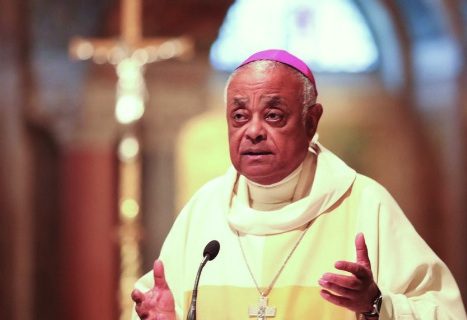
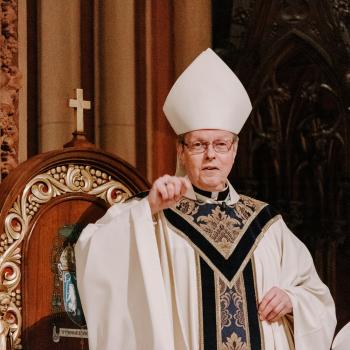
Archdiocese of Washington website / Andrew Biraj
The Archbishop of Washington, Wilton Gregory, speaks out in an interview:
What is your reaction to the controversy over President Trump’s tweets on some members of Congress, deploring Baltimore and related matters?
In my brief time in Washington, I have been doing a lot of listening and learning. I have promised to try to preach the Gospel, tell the truth and attempt to heal wounds in the body of Christ and our broader community. I have stressed that I am a pastor and fellow disciple of Jesus, not a political leader.
There are, however, sometimes, when a pastor and a disciple of Jesus is called to speak out to defend the dignity of all God’s children.
I fear that recent public comments by our President and others and the responses they have generated, have deepened divisions and diminished our national life. In particular, I join my brother Archbishop William Lori in sadness and deep regret for the ways our Maryland neighbors in Baltimore have been denigrated in recent public attacks.
Our faith teaches us that respect for people of every race, religion, gender, ethnicity and background are requirements of fundamental human dignity and basic decency. This include newcomers to our country, people who have differing political views and people who may be different from us. Comments which dismiss, demean or demonize any of God’s children are destructive of the common good and a denial of our national pledge of “liberty and justice for all.”
What can we do about this kind of rhetoric or divisions?
I have recently met with leaders of the Knights of Columbus and many lay ecclesial movements in the Archdiocese. We discussed what we can do together to advance our Gospel mission. I encouraged them and their members to seek to promote respect for all, the common good and humble dialogue in a time of growing and destructive divisions. This request builds on the good work and outstanding service of the Knights and these exemplary lay movements in our family of faith and our Washington community. I asked their help in lifting up and defending the dignity of every person, promoting respect, civility and principled discussion of what unites us and where we may differ. We all need to reject racism, disrespect or brutality in speech and action…
…We must all take responsibility to reject language that ridicules, condemns, or vilifies another person because of their race, religion, gender, age, culture or ethnic background. Such discourse has no place on the lips of those who confess Christ or who claim to be civilized members of society. Speech that vilifies or denigrates another is a violation of the humanity of the speaker and those to whom it is directed – and deprives each of us of our God-given dignity.
It’s worth noting that the kind of speech the archbishop is describing occurs in many places, from a variety of sources, not just in the public square or in politics. Social media is overflowing with it.

One example is this story, which popped up yesterday in Utah, describing a protest by parishioners upset at the online postings of a priest who will be their new pastor. They’ve organized a petition to try and stop the appointment.
Most of us know this only too well: the Internet can be toxic, and it only encourages bad behavior. Six years ago, I proposed an Examination of Conscience for the Internet. Things haven’t gotten any better since then. This seems a good moment to revisit that reflection and strive to live on this “digital continent” as better Christians and witnesses to the Gospel.
The world is watching us. What are they seeing?
***
I am the Lord your God; you shall not have strange Gods before me. Have I treated people, events or things as more important than God? Have I elevated the Internet to a deity? Is commenting on Facebook, Twitter, or blogs supplanting my prayer life?
You shall not take the name of the Lord your God in vain. Have my words, actively or passively put down God, the Church or people? Have I inflicted wounds on the Body of Christ by showing disrespect, dissent or disdain? Have I mocked online the leadership of the Church—whether it’s my pope, my bishop or my pastor?
Remember to keep holy the Lord’s Day. Do I go to Mass when I should? Do I avoid work that impedes worship to God? Do I spend too much time on Sunday surfing the Internet and chat rooms and forums, when I could be spending time with my family or with God?
Honor your father and your mother. Do I show my parents due respect? Do I maintain good communication with my parents? Do I criticize them to others, or online?
You shall not kill. Have I harmed another through physical, verbal or emotional means, including gossip? Have I destroyed another’s reputation online? Have I used comments to mock, disrespect, slander or attack? Have I gleefully ridiculed another person’s failings online and enjoyed their setbacks? Have I resorted to petty name-calling to score points or make another person feel bad? Have I robbed another of basic human dignity online?
You shall not commit adultery. Have I respected the physical and sexual dignity of others and of myself? Have I used the Internet to visit porn sites or engage in sinful conversations about sex?
You shall not steal. Have I taken or wasted time or resources that belonged to another? Have I spent valuable time at my job on the Internet when I should have been working?
You shall not bear false witness against your neighbor. Have I gossiped, spread lies or embellished stories at the expense of another? Have I posted online something I suspect may not be true?
You shall not covet your neighbor’s spouse. Have I honored my spouse with my full affection and exclusive love? Have I made my life online, and the time I spend there, more important than my life with my husband or wife?
You shall not covet your neighbor’s goods. Am I content with my own means and needs, or do I compare myself to others unnecessarily? Do I surf online shopping sites, wishing I could buy things I don’t need and being jealous or resentful of others?
***
The USCCB site also offers this:
How well do we love God and others? Do we love as Christ calls us to? In the Gospel of Matthew, Christ gives us two commandments: “He said to him, ‘You shall love the Lord, your God, with all your heart, with all your soul, and with all your mind. This is the greatest and first commandment. The second is like it: You shall love your neighbor as yourself. The whole law and the prophets depend on these two commandments’” (Mt 22”37-40.)
Not sure what love is? St. Paul describes it for us. Is this how you love God and others? “Love is patient. Love is kind. It is not jealous, it is not pompous. It is not inflated, it is not rude, it does not seek its own interests, it is not quick-tempered, it does not brood over injury, it does not rejoice over wrongdoing, but rejoices with the truth. It bears all things, believes all things, hopes all things, endures all things. Love never fails.” (1 Cor 13:4-8.)
I know I fail at this often. I do not love as I ought. I’m just as susceptible to snark, meanness, pettiness, and ridicule.
We can do better. We all can.
We need to — for the sake of the world and for the sake of our souls.

Next Post
August 1, 2019 WATCH: If Bible characters took Uber
Browse Our Archives
Select a Category "Mad Men" 9/11 advent All Things New Amazing video amazing videos amazon america Anglicans Anti-Catholicism art ascension thursday ash wednesday Atheists baltimore Bible Bishops Blogging bonnie engstrom Books bridgeport Brooklyn Chaplains children christian art christmas Church Churches CNEWA Converts criticism Deacons Death Penalty easter eastern christian Eastern Christians Ecumenism education Education Eucharist Europe euthanasia Evangelization Exorcism Family Feasts Gay rights Good Friday Great links Great Moments in Journalism Hanging with the saints heather renshaw Hispanic Catholics Hispanics History homelies Homilies Humor Hymn of the Week Immigration indianapolis Inspiration Interfaith news ireland Jesus Jews Journalism Judaism lent Liturgy logos Marriage Mary Media Medical news Mental health Middle East Monks Movies Music Muslims My world and welcome to it New Evangelization new york News Nuns Parenting Parish life peoria Persecution Politics politics Pope pope francis pope john paul Prayer Preaching Priests Pro-life Quote of the day radio rebecca frech ripp Ripped from the headlines rippred from the headlines Sacraments saints Scripture sex abuse Sex abuse crisis SEX ABUSE CRISIS TAGGED WITH: SEX ABUSE CRISIS The people in the pews the visitation project theatre This & that Thomas Merton Trappists TV Uncategorized uncategorized Vatican VATICAN vocation Vocations Voices & Views Women Worth a thousand words Writing Year of Faith year of mercy young people
Select a Month December 2019 November 2019 October 2019 September 2019 August 2019 July 2019 June 2019 May 2019 April 2019 March 2019 February 2019 January 2019 December 2018 November 2018 October 2018 September 2018 August 2018 July 2018 June 2018 May 2018 April 2018 March 2018 February 2018 January 2018 December 2017 November 2017 October 2017 September 2017 August 2017 July 2017 June 2017 May 2017 April 2017 March 2017 February 2017 January 2017 December 2016 November 2016 October 2016 September 2016 August 2016 July 2016 June 2016 May 2016 April 2016 March 2016 February 2016 January 2016 December 2015 November 2015 October 2015 September 2015 August 2015 July 2015 June 2015 May 2015 April 2015 March 2015 February 2015 January 2015 December 2014 November 2014 October 2014 September 2014 August 2014 July 2014 June 2014 May 2014 April 2014 March 2014 February 2014 January 2014 December 2013 November 2013 October 2013 September 2013 August 2013 July 2013 June 2013 May 2013 April 2013 March 2013 February 2013 January 2013 December 2012 November 2012 October 2012 September 2012 August 2012 July 2012 June 2012 May 2012 April 2012 March 2012 February 2012 January 2012 December 2011 November 2011 October 2011 September 2011 August 2011 July 2011 June 2011 May 2011 April 2011 March 2011 February 2011 January 2011 December 2010
Follow Us!
TAKE THE
Religious Wisdom Quiz
Which animal did Jesus ride into Jerusalem on, fulfilling prophecy?
Select your answer to see how you score.
Donkey Horse Camel Ox
Books by This Author Books by Deacon Greg Kandra
Related posts from The Deacon's Bench

CNA: Rochester bishop requested Sheen beatification delay
Growing number of U.S. Latinos leaving Catholic Church...
It's official: Malone resigns; Albany's Scharfenberger to Buffalo...
TRENDING AT PATHEOS Catholic

Rejecting Doom: Christian Hope And Human Action
Christianity is a religion of hope. We are to have hope and...

It’s What Comes From Within Which Matters
One of the most difficult things for us to understand is why...

Why I Choose the Eucharist Over the Sermon
Choose the Eucharist, Not the Sermon What are we supposed to get...

5 Design Elements Found in Spiritually Rooted Homes
Putting Spirituality Into Home Decor Our homes are more than our living...

Credo: A Story of God Told with the...
About 10 years ago, I began to imagine a personal "Credo" that...

The Anatomy of Divine Revelation in Catholic Thought
The claim that God has made Himself known to human beings is...
view all Catholic blogs
Ad-Free & Subscriber Log-In Subscription Support
- About Us
- 2026 Calendar
- Videos
- Podcasts
- Library of World Religions
- Faith In Media Tracker
- Advertise With Us
- Write for Us
- Privacy Policy
- Terms of Service
- Do Not Sell My Data
- Contact Us
- Radiant Digital
- Manage Newsletter Subscriptions
- Unsubscribe From Notifications
- Sitemap
Copyright 2008-2026, Patheos. All rights reserved.
Subscription Support Ad-Free & Subscriber Log-In
Follow Patheos