
BuddhistCatholicContemplativeEvangelicalGeneral ChristianHinduJewishLatter-day SaintMuslimNew VisionsProgressive Christian
Beliefs
- Buddhist
- Catholic
- Contemplative
- Evangelical
- General Christian
- Hindu
- Jewish
- Latter-day Saint
- More Voices
- Muslim
- New Visions
- Pagan
- Progressive Christian
Topics
- Religion News
- Food and Religion
- Sports and Religion
- Religious Art
- Religious Music and Entertainment
- Religious Events
- History and Religion
- Style and Religion
- Politics and Religion
- Women in Religion
- Recreation Outdoors and Religion
- Business Finance and Religion
- Careers Workplace and Religion
- Education and Religion
- Family Parenting and Religion
- Health Fitness and Religion
- Home and Religion
- Relationships and Religion
- Technology and Religion
- Travel and Religion
Columnists
- Buddhist Columnists
- Business Finance and Religion Columnists
- Careers Workplace and Religion Columnists
- Catholic Columnists
- Contemplative Columnists
- Education and Religion Columnists
- Evangelists Columnists
- Family Parenting and Religion Columnists
- General Christian Columnists
- Health Fitness and Religion Columnists
- Hindu Columnists
- History and Religion Columnists
- Home and Religion Columnists
- Jewish Columnists
- More Voices Columnists
- Latter Day Columnists
- Muslim Columnists
- New Visions Columnists
- Nonreligious Columnists
- Pagan Columnists
- Politics and Religion Columnists
- Progressive Columnists
- Recreation Outdoors and Religion Columnists
- Relationships and Religion Columnists
- Religion News Columnists
- Religious Art Columnists
- Religious Events Columnists
- Religious Music and Entertainment Columnists
- Sports and Religion Columnists
- Style and Religion Columnists
- Technology and Religion Columnists
- Travel and Religion Columnists
- Women in Religion Columnists
Resource Library
- 2026 Calendar
- Library of World Religions
- The 100 Most Holy Places on Earth
- Patheos Answers
- Podcasts
- Videos
- Faith Leaders Database
- Anglican Episcopalian
- Bahai
- Baptist
- Buddhism
- Christianity
- Confucianism
- Eastern Orthodoxy
- Hinduism
- Holiness and Pentecostal
- ISKCON
- Islam
- Judaism
- Lutheran
- Methodist
- The Church of Jesus Christ of Latter-day Saints
- New Age
- Paganism
- Presbytarian and Reformed
- Protestantism
- Religion Behind the Scenes
- Roman Catholic
- Scientology
- Shia Islam
- Sikhism
- Sufism
- Sunni Islam
- Taoism
- Zen
- See all religions
Research Tools
 Ad-Free & Subscriber Log-In Subscription Support
Ad-Free & Subscriber Log-In Subscription Support
Follow Patheos 

- Trending:
- Forgiveness
- |
- Marriage
- |
- Consciousness
- |
- Death Penalty
- |
- Election
- |
- Halloween
 The Deacon's Bench
- Home
- Catholic
- Religion News
- Bishop mandates an ad orientem Mass at cathedral, encourages it across the diocese
Bishop mandates an ad orientem Mass at cathedral, encourages it across the diocese
Last updated on: July 22, 2019 at 8:45 pm by Deacon Greg Kandra
Bishop mandates an ad orientem Mass at cathedral, encourages it across the diocese 2019-07-22T20:45:31-04:00 Deacon Greg Kandra
Patheos Explore the world's faith through different perspectives on religion and spirituality! Patheos has the views of the prevalent religions and spiritualities of the world.
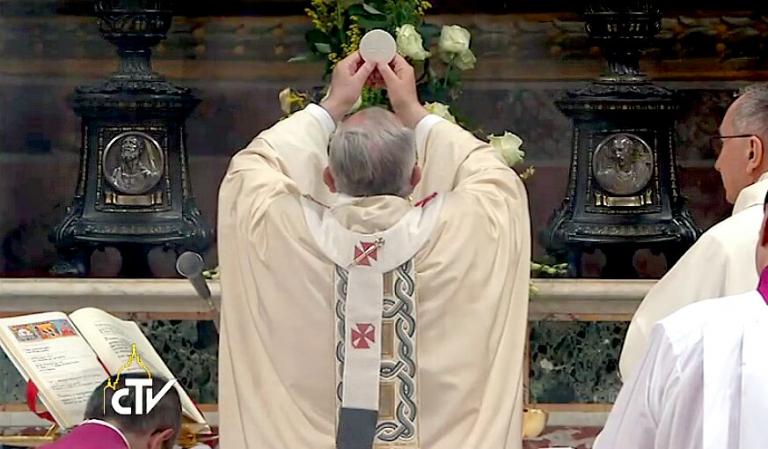
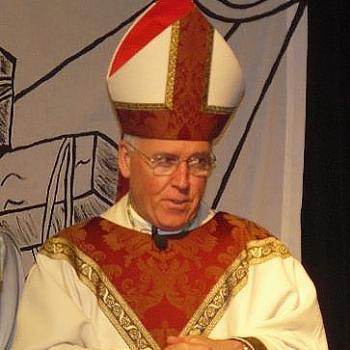
From the Diocese of Gallup in New Mexico, here’s part of a letter from Bishop James S. Wall:
Let me say at the outset: I know this can be a contentious topic. To make changes to the way we pray can be difficult, especially when it comes to liturgical prayer. By explaining and advocating for this, I am in no way trying to disrupt the way the people of this Diocese pray. Rather, I am trying to open the treasury of the Church’s patrimony, so that, together, we can all experience one of the most ancient ways that the Church has always prayed, starting with Jesus and reaching even to our own day, and thereby learn from the “ever ancient, ever new” wisdom of the Church.
With that in mind, let me start with just a brief historical note. Essentially, we can say that celebrating Mass ad orientem is one of the most ancient and most consistent practices in the life of the Church—it is part of how the Church has always understood the proper worship of God. Uwe Michael Lang has published a book showing just this, entitled Turning Towards the Lord: Orientation in Liturgical Prayer and published by Ignatius Press. His extensive and thorough research shows this very fact: that, in the words of Cardinal Ratzinger, “Despite all the variations in practice that have taken place far into the second millennium, one thing has remained clear for the whole of Christendom: praying toward the east is a tradition that goes back to the beginning” (The Spirit of the Liturgy, p. 75). This means that celebration of Mass ad orientem is not a form of antiquarianism, i.e. choosing to do something because it is old, but rather choosing to do something that has always been. This also means, in turn, that versus populum worship is extremely new in the life of the Church, and, while a valid liturgical option today, it still must be considered novel when it comes to the celebration of Mass.
Allow me now to give a brief explanation of ad orientem or ad Deum worship*.* Prayer and worship “toward the East” (ad orientem, oriented prayer) “is, first and foremost, a simple expression of looking to Christ as the meeting place between God and man. It expresses the basic christological form of our prayer. […] Praying toward the east means going to meet the coming Christ. The liturgy, turned toward the East, effects entry, so to speak, into the procession of history toward the future, the New Heaven and the New Earth, which we encounter in Christ” (Joseph Ratzinger, The Spirit of the Liturgy, p. 69-70). By facing Christ together at Mass, we can see how “[o]ur prayer is thus inserted into the procession of the nations to God” (ibid., p. 76).
Related: What happens when a parish adopts the ad orientem posture?
Deacon, look East: Serving my first Mass ad orientem
Ad orientem worship is thus a very powerful reminder of what we are about at Mass: meeting Christ Who comes to meet us. Practically speaking, this means that things will look a bit different, for at such Masses the Priest faces the same direction as the Assembly when he is at the altar. More specifically, when addressing God, such as during the orations and Eucharistic Prayer, he faces the same direction as the people, that is, toward God (ad Deum). He does so literally, to use a phrase dear to St. Augustine, by “turning toward the Lord” present in the Blessed Sacrament. In contrast, when addressing the people, he turns to face them (versus populum).
…I have decided that, since the recent solemnity of Corpus Christi, the 11:00am Sunday Mass will henceforth be celebrated ad orientem at the Cathedral of the Sacred Heart in Gallup.
This provides the faithful with the opportunity to attend the Mass in this way—indeed, in this way which is still approved and generously allowed by the Church. This is also a practice I would like to encourage throughout the Diocese of Gallup. I believe it is pastoral to offer Masses both ad orientem and versus populum, so that, together, we can all be exposed to the varied riches of the Church and Her prayerful history. With St. Augustine, allow me to conclude with this heartfelt prayer: in our worship, hearts, and lives, “let us turn towards the Lord God and Father Almighty, and with a pure heart let us give Him sincere thanks as well as our littleness will allow…. May He increase our faith, rule our mind, give us spiritual thoughts, and at last lead us to His blessedness, through Jesus Christ His Son. Amen.”
UPDATE: Some interesting history and background on this practice can be found in Wikipedia. Snip:
In early Christianity, the practice of praying towards the east did not result in uniformity in the orientation of the buildings in which Christians worshipped and did not mean that the priest necessarily faced away from the congregation, the meaning today commonly attached to the phrase ad orientem. The earliest churches in Rome had a façade to the east and an apse with the altar to the west; the priest celebrating Mass stood behind the altar, facing east and so towards the people. According to Louis Bouyer, not only the priest but also the congregation faced east at prayer, a view strongly criticized on the grounds of the unlikelihood that, in churches where the altar was to the west, they would turn their backs on the altar (and the priest) at the celebration of the Eucharist. The view prevails therefore that the priest, facing east, would celebrate ad populum in some churches, in others not, in accordance with the churches’ architecture.
It was in the 8th or 9th century that the position whereby the priest faced the apse, not the people, when celebrating Mass was adopted in the basilicas of Rome. This usage was introduced from the Frankish Empire and later became almost universal in the West. However, the Tridentine Roman Missal continued to recognize the possibility of celebrating Mass “versus populum” (facing the people), and in several churches in Rome, it was physically impossible, even before the twentieth-century liturgical reforms, for the priest to celebrate Mass facing away from the people, because of the presence, immediately in front of the altar, of the “confession” (Latin: confessio), an area sunk below floor level to enable people to come close to the tomb of the saint buried beneath the altar.
Anglican Bishop Colin Buchanan writes that there “is reason to think that in the first millennium of the church in Western Europe, the president of the eucharist regularly faced across the eucharistic table toward the ecclesiastical west. Somewhere between the 10th and 12th centuries, a change occurred in which the table itself was moved to be fixed against the east wall, and the president stood before it, facing east, with his back to the people.”This change, according to Buchanan, “was possibly precipitated by the coming of tabernacles for reservation, which were ideally both to occupy a central position and also to be fixed to the east wall without the president turning his back to them.”
Previous Post

July 22, 2019
This may be the best-kept secret in the Church
Next Post
July 22, 2019 A gay rabbi-in-residence at a Catholic university?
Browse Our Archives
Select a Category "Mad Men" 9/11 advent All Things New Amazing video amazing videos amazon america Anglicans Anti-Catholicism art ascension thursday ash wednesday Atheists baltimore Bible Bishops Blogging bonnie engstrom Books bridgeport Brooklyn Chaplains children christian art christmas Church Churches CNEWA Converts criticism Deacons Death Penalty easter eastern christian Eastern Christians Ecumenism education Education Eucharist Europe euthanasia Evangelization Exorcism Family Feasts Gay rights Good Friday Great links Great Moments in Journalism Hanging with the saints heather renshaw Hispanic Catholics Hispanics History homelies Homilies Humor Hymn of the Week Immigration indianapolis Inspiration Interfaith news ireland Jesus Jews Journalism Judaism lent Liturgy logos Marriage Mary Media Medical news Mental health Middle East Monks Movies Music Muslims My world and welcome to it New Evangelization new york News Nuns Parenting Parish life peoria Persecution politics Politics Pope pope francis pope john paul Prayer Preaching Priests Pro-life Quote of the day radio rebecca frech ripp Ripped from the headlines rippred from the headlines Sacraments saints Scripture sex abuse Sex abuse crisis SEX ABUSE CRISIS TAGGED WITH: SEX ABUSE CRISIS The people in the pews the visitation project theatre This & that Thomas Merton Trappists TV Uncategorized uncategorized VATICAN Vatican vocation Vocations Voices & Views Women Worth a thousand words Writing Year of Faith year of mercy young people
Select a Month December 2019 November 2019 October 2019 September 2019 August 2019 July 2019 June 2019 May 2019 April 2019 March 2019 February 2019 January 2019 December 2018 November 2018 October 2018 September 2018 August 2018 July 2018 June 2018 May 2018 April 2018 March 2018 February 2018 January 2018 December 2017 November 2017 October 2017 September 2017 August 2017 July 2017 June 2017 May 2017 April 2017 March 2017 February 2017 January 2017 December 2016 November 2016 October 2016 September 2016 August 2016 July 2016 June 2016 May 2016 April 2016 March 2016 February 2016 January 2016 December 2015 November 2015 October 2015 September 2015 August 2015 July 2015 June 2015 May 2015 April 2015 March 2015 February 2015 January 2015 December 2014 November 2014 October 2014 September 2014 August 2014 July 2014 June 2014 May 2014 April 2014 March 2014 February 2014 January 2014 December 2013 November 2013 October 2013 September 2013 August 2013 July 2013 June 2013 May 2013 April 2013 March 2013 February 2013 January 2013 December 2012 November 2012 October 2012 September 2012 August 2012 July 2012 June 2012 May 2012 April 2012 March 2012 February 2012 January 2012 December 2011 November 2011 October 2011 September 2011 August 2011 July 2011 June 2011 May 2011 April 2011 March 2011 February 2011 January 2011 December 2010
Follow Us!
TAKE THE
Religious Wisdom Quiz
I'm a number that marks the beast, feared by many throughout history. Triple digits, all the same. What number am I?
Select your answer to see how you score.
999 333 777 666
Books by This Author Books by Deacon Greg Kandra
Related posts from The Deacon's Bench
CNA: Rochester bishop requested Sheen beatification delay
It's official: Malone resigns; Albany's Scharfenberger to Buffalo...
Reports: Buffalo's Bishop Malone to step down Wednesday
Alberto Rojas, Chicago auxiliary, appointed to San Bernardino
TRENDING AT PATHEOS Catholic

Rejecting Doom: Christian Hope And Human Action
Christianity is a religion of hope. We are to have hope and...

It’s What Comes From Within Which Matters
One of the most difficult things for us to understand is why...

Why I Choose the Eucharist Over the Sermon
Choose the Eucharist, Not the Sermon What are we supposed to get...

5 Design Elements Found in Spiritually Rooted Homes
Putting Spirituality Into Home Decor Our homes are more than our living...

Credo: A Story of God Told with the...
About 10 years ago, I began to imagine a personal "Credo" that...

The Anatomy of Divine Revelation in Catholic Thought
The claim that God has made Himself known to human beings is...
view all Catholic blogs
Ad-Free & Subscriber Log-In Subscription Support
- About Us
- 2026 Calendar
- Videos
- Podcasts
- Library of World Religions
- Faith In Media Tracker
- Advertise With Us
- Write for Us
- Privacy Policy
- Terms of Service
- Do Not Sell My Data
- Contact Us
- Radiant Digital
- Manage Newsletter Subscriptions
- Unsubscribe From Notifications
- Sitemap
Copyright 2008-2026, Patheos. All rights reserved.
Subscription Support Ad-Free & Subscriber Log-In
Follow Patheos