
BuddhistCatholicContemplativeEvangelicalGeneral ChristianHinduJewishLatter-day SaintMuslimNew VisionsProgressive Christian
Beliefs
- Buddhist
- Catholic
- Contemplative
- Evangelical
- General Christian
- Hindu
- Jewish
- Latter-day Saint
- More Voices
- Muslim
- New Visions
- Pagan
- Progressive Christian
Topics
- Religion News
- Food and Religion
- Sports and Religion
- Religious Art
- Religious Music and Entertainment
- Religious Events
- History and Religion
- Style and Religion
- Politics and Religion
- Women in Religion
- Recreation Outdoors and Religion
- Business Finance and Religion
- Careers Workplace and Religion
- Education and Religion
- Family Parenting and Religion
- Health Fitness and Religion
- Home and Religion
- Relationships and Religion
- Technology and Religion
- Travel and Religion
Columnists
- Buddhist Columnists
- Business Finance and Religion Columnists
- Careers Workplace and Religion Columnists
- Catholic Columnists
- Contemplative Columnists
- Education and Religion Columnists
- Evangelists Columnists
- Family Parenting and Religion Columnists
- General Christian Columnists
- Health Fitness and Religion Columnists
- Hindu Columnists
- History and Religion Columnists
- Home and Religion Columnists
- Jewish Columnists
- More Voices Columnists
- Latter Day Columnists
- Muslim Columnists
- New Visions Columnists
- Nonreligious Columnists
- Pagan Columnists
- Politics and Religion Columnists
- Progressive Columnists
- Recreation Outdoors and Religion Columnists
- Relationships and Religion Columnists
- Religion News Columnists
- Religious Art Columnists
- Religious Events Columnists
- Religious Music and Entertainment Columnists
- Sports and Religion Columnists
- Style and Religion Columnists
- Technology and Religion Columnists
- Travel and Religion Columnists
- Women in Religion Columnists
Resource Library
- 2026 Calendar
- Library of World Religions
- The 100 Most Holy Places on Earth
- Patheos Answers
- Podcasts
- Videos
- Faith Leaders Database
- Anglican Episcopalian
- Bahai
- Baptist
- Buddhism
- Christianity
- Confucianism
- Eastern Orthodoxy
- Hinduism
- Holiness and Pentecostal
- ISKCON
- Islam
- Judaism
- Lutheran
- Methodist
- The Church of Jesus Christ of Latter-day Saints
- New Age
- Paganism
- Presbytarian and Reformed
- Protestantism
- Religion Behind the Scenes
- Roman Catholic
- Scientology
- Shia Islam
- Sikhism
- Sufism
- Sunni Islam
- Taoism
- Zen
- See all religions
Research Tools
 Ad-Free & Subscriber Log-In Subscription Support
Ad-Free & Subscriber Log-In Subscription Support
Follow Patheos 

- Trending:
- Forgiveness
- |
- Marriage
- |
- Consciousness
- |
- Death Penalty
- |
- Election
- |
- Halloween
 The Deacon's Bench
- Home
- Catholic
- Religion News
- Pope Francis released his message for World Communications Day — and it’s one we need today
Pope Francis released his message for World Communications Day — and it’s one we need today
Last updated on: January 24, 2019 at 7:06 am by Deacon Greg Kandra
Pope Francis released his message for World Communications Day — and it’s one we need today 2019-01-24T07:06:23-05:00 Deacon Greg Kandra
Patheos Explore the world's faith through different perspectives on religion and spirituality! Patheos has the views of the prevalent religions and spiritualities of the world.

I can’t imagine a more timely, necessary or urgent message for this moment. Here is Pope Francis’s message for World Communications Day, observed today, the feast of St. Francis De Sales.
+
Dear Brothers and Sisters,
Ever since the internet first became available, the Church has always sought to promote its use in the service of the encounter between persons, and of solidarity among all. With this Message I would like to invite you once again to reflect on the foundation and importance of our being-in-relation and to rediscover, in the vast array of challenges of the current communications context, the desire of the human person who does not want to be left isolated and alone.
The metaphors of the net and community
Today’s media environment is so pervasive as to be indistinguishable from the sphere of everyday life. The Net is a resource of our time. It is a source of knowledge and relationships that were once unthinkable. However, in terms of the profound transformations technology has brought to bear on the process of production, distribution and use of content, many experts also highlight the risks that threaten the search for, and sharing of, authentic information on a global scale. If the Internet represents an extraordinary possibility of access to knowledge, it is also true that it has proven to be one of the areas most exposed to disinformation and to the conscious and targeted distortion of facts and interpersonal relationships, which are often used to discredit.
We need to recognize how social networks, on the one hand, help us to better connect, rediscover, and assist one another, but on the other, lend themselves to the manipulation of personal data, aimed at obtaining political or economic advantages, without due respect for the person and his or her rights. Statistics show that among young people one in four is involved in episodes of cyberbullying.[1]
In this complex scenario, it may be useful to reflect again on the metaphor of the net, which was the basis of the Internet to begin with, to rediscover its positive potential. The image of the net invites us to reflect on the multiplicity of lines and intersections that ensure its stability in the absence of a centre, a hierarchical structure, a form of vertical organization. The net works because all its elements share responsibility.
From an anthropological point of view, the metaphor of the net recalls another meaningful image: the community. A community is that much stronger if it is cohesive and supportive, if it is animated by feelings of trust, and pursues common objectives. The community as a network of solidarity requires mutual listening and dialogue, based on the responsible use of language.
Everyone can see how, in the present scenario, social network communities are not automatically synonymous with community. In the best cases, these virtual communities are able to demonstrate cohesion and solidarity, but often they remain simply groups of individuals who recognize one another through common interests or concerns characterized by weak bonds. Moreover, in the social web identity is too often based on opposition to the other, the person outside the group: we define ourselves starting with what divides us rather than with what unites us, giving rise to suspicion and to the venting of every kind of prejudice (ethnic, sexual, religious and other). This tendency encourages groups that exclude diversity, that even in the digital environment nourish unbridled individualism which sometimes ends up fomenting spirals of hatred. In this way, what ought to be a window on the world becomes a showcase for exhibiting personal narcissism.
The Net is an opportunity to promote encounter with others, but it can also increase our self-isolation, like a web that can entrap us. Young people are the ones most exposed to the illusion that the social web can completely satisfy them on a relational level. There is the dangerous phenomenon of young people becoming “social hermits” who risk alienating themselves completely from society. This dramatic situation reveals a serious rupture in the relational fabric of society, one we cannot ignore.
This multiform and dangerous reality raises various questions of an ethical, social, juridical, political and economic nature, and challenges the Church as well. While governments seek legal ways to regulate the web and to protect the original vision of a free, open and secure network, we all have the possibility and the responsibility to promote its positive use.
Clearly, it is not enough to multiply connections in order to increase mutual understanding. How, then, can we find our true communitarian identity, aware of the responsibility we have towards one another in the online network as well?
We are members one of another
A possible answer can be drawn from a third metaphor: that of the body and the members, which Saint Paul uses to describe the reciprocal relationship among people, based on the organism that unites them. “Therefore, putting away falsehood, speak the truth, each to his neighbor, for we are members one of another” (Eph 4:25). Being members one of another is the profound motivation with which the Apostle invites us to put away falsehood and speak the truth: the duty to guard the truth springs from the need not to belie the mutual relationship of communion. Truth is revealed in communion. Lies, on the other hand, are a selfish refusal to recognize that we are members of one body; they are a refusal to give ourselves to others, thus losing the only way to find ourselves.
The metaphor of the body and the members leads us to reflect on our identity, which is based on communion and on “otherness”. As Christians, we all recognize ourselves as members of the one body whose head is Christ. This helps us not to see people as potential competitors, but to consider even our enemies as persons. We no longer need an adversary in order to define ourselves, because the all-encompassing gaze we learn from Christ leads us to discover otherness in a new way, as an integral part and condition of relationship and closeness.
Such a capacity for understanding and communication among human persons is based on the communion of love among the divine Persons. God is not Solitude, but Communion; he is Love, and therefore communication, because love always communicates; indeed, it communicates itself in order to encounter the other. In order to communicate with us and to communicate himself to us, God adapts himself to our language, establishing a real dialogue with humanity throughout history (cf. Second Vatican Ecumenical Council, Dogmatic Constitution Dei Verbum, 2).
By virtue of our being created in the image and likeness of God who is communion and communication-of-Self, we carry forever in our hearts the longing for living in communion, for belonging to a community. “Nothing, in fact, is as specific to our nature as entering into a relationship one with another, having need of one another,” says Saint Basil.[2]
The present context calls on all of us to invest in relationships, and to affirm the interpersonal nature of our humanity, including in and through the network. All the more so, we Christians are called to manifest that communion which marks our identity as believers. Faith itself, in fact, is a relationship, an encounter; and under the impetus of God’s love, we can communicate, welcome and understand the gift of the other and respond to it.
Communion in the image of the Trinity is precisely what distinguishes the person from the individual. From faith in God who is Trinity, it follows that in order to be myself I need others. I am truly human, truly personal, only if I relate to others. In fact, the word “person” signifies the human being as a “face”, whose face is turned towards the other, who is engaged with others. Our life becomes more human insofar as its nature becomes less individual and more personal; we see this authentic path of becoming more human in one who moves from being an individual who perceives the other as a rival, to a person who recognizes others as travelling companions.
From a “like” to an “amen”
The image of the body and the members reminds us that the use of the social web is complementary to an encounter in the flesh that comes alive through the body, heart, eyes, gaze, breath of the other. If the Net is used as an extension or expectation of such an encounter, then the network concept is not betrayed and remains a resource for communion. If a family uses the Net to be more connected, to then meet at table and look into each other’s eyes, then it is a resource. If a Church community coordinates its activity through the network, and then celebrates the Eucharist together, then it is a resource. If the Net becomes an opportunity to share stories and experiences of beauty or suffering that are physically distant from us, in order to pray together and together seek out the good to rediscover what unites us, then it is a resource.
We can, in this way, move from diagnosis to treatment: opening the way for dialogue, for encounter, for “smiles” and expressions of tenderness… This is the network we want, a network created not to entrap, but to liberate, to protect a communion of people who are free. The Church herself is a network woven together by Eucharistic communion, where unity is based not on “likes”, but on the truth, on the “Amen”, by which each one clings to the Body of Christ, and welcomes others.
From the Vatican, 24 January 2019, the Memorial of Saint Francis de Sales.
Franciscus
Previous Post

January 23, 2019
'Why hasn't Governor Cuomo been excommunicated?' — UPDATED
Next Post

January 24, 2019 Congress investigating Twitter account behind the Covington video
Browse Our Archives
Select a Category "Mad Men" 9/11 advent All Things New Amazing video amazing videos amazon america Anglicans Anti-Catholicism art ascension thursday ash wednesday Atheists baltimore Bible Bishops Blogging bonnie engstrom Books bridgeport Brooklyn Chaplains children christian art christmas Church Churches CNEWA Converts criticism Deacons Death Penalty easter eastern christian Eastern Christians Ecumenism education Education Eucharist Europe euthanasia Evangelization Exorcism Family Feasts Gay rights Good Friday Great links Great Moments in Journalism Hanging with the saints heather renshaw Hispanic Catholics Hispanics History homelies Homilies Humor Hymn of the Week Immigration indianapolis Inspiration Interfaith news ireland Jesus Jews Journalism Judaism lent Liturgy logos Marriage Mary Media Medical news Mental health Middle East Monks Movies Music Muslims My world and welcome to it New Evangelization new york News Nuns Parenting Parish life peoria Persecution Politics politics Pope pope francis pope john paul Prayer Preaching Priests Pro-life Quote of the day radio rebecca frech ripp Ripped from the headlines rippred from the headlines Sacraments saints Scripture sex abuse Sex abuse crisis SEX ABUSE CRISIS TAGGED WITH: SEX ABUSE CRISIS The people in the pews the visitation project theatre This & that Thomas Merton Trappists TV Uncategorized uncategorized Vatican VATICAN vocation Vocations Voices & Views Women Worth a thousand words Writing Year of Faith year of mercy young people
Select a Month December 2019 November 2019 October 2019 September 2019 August 2019 July 2019 June 2019 May 2019 April 2019 March 2019 February 2019 January 2019 December 2018 November 2018 October 2018 September 2018 August 2018 July 2018 June 2018 May 2018 April 2018 March 2018 February 2018 January 2018 December 2017 November 2017 October 2017 September 2017 August 2017 July 2017 June 2017 May 2017 April 2017 March 2017 February 2017 January 2017 December 2016 November 2016 October 2016 September 2016 August 2016 July 2016 June 2016 May 2016 April 2016 March 2016 February 2016 January 2016 December 2015 November 2015 October 2015 September 2015 August 2015 July 2015 June 2015 May 2015 April 2015 March 2015 February 2015 January 2015 December 2014 November 2014 October 2014 September 2014 August 2014 July 2014 June 2014 May 2014 April 2014 March 2014 February 2014 January 2014 December 2013 November 2013 October 2013 September 2013 August 2013 July 2013 June 2013 May 2013 April 2013 March 2013 February 2013 January 2013 December 2012 November 2012 October 2012 September 2012 August 2012 July 2012 June 2012 May 2012 April 2012 March 2012 February 2012 January 2012 December 2011 November 2011 October 2011 September 2011 August 2011 July 2011 June 2011 May 2011 April 2011 March 2011 February 2011 January 2011 December 2010
Follow Us!
TAKE THE
Religious Wisdom Quiz
Who leaped for joy after being healed at the Temple gate (by Peter, in Jesus' name)?
Select your answer to see how you score.
A rich man A blind man A lame man A Pharisee
Books by This Author Books by Deacon Greg Kandra
Related posts from The Deacon's Bench

Hollywood on the Tiber: When Francis met Redford


Pope writes Apostolic Letter on meaning, importance of...
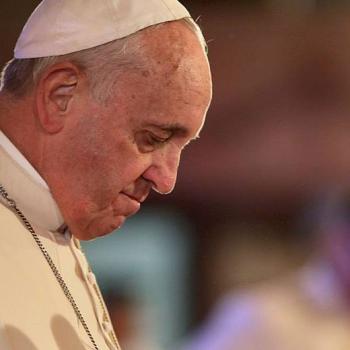
Pope Francis on prostitutes, addicts, migrants: 'All are...
TRENDING AT PATHEOS Catholic

Rejecting Doom: Christian Hope And Human Action
Christianity is a religion of hope. We are to have hope and...

It’s What Comes From Within Which Matters
One of the most difficult things for us to understand is why...

Why I Choose the Eucharist Over the Sermon
Choose the Eucharist, Not the Sermon What are we supposed to get...

5 Design Elements Found in Spiritually Rooted Homes
Putting Spirituality Into Home Decor Our homes are more than our living...

Credo: A Story of God Told with the...
About 10 years ago, I began to imagine a personal "Credo" that...

The Anatomy of Divine Revelation in Catholic Thought
The claim that God has made Himself known to human beings is...
view all Catholic blogs
Ad-Free & Subscriber Log-In Subscription Support
- About Us
- 2026 Calendar
- Videos
- Podcasts
- Library of World Religions
- Faith In Media Tracker
- Advertise With Us
- Write for Us
- Privacy Policy
- Terms of Service
- Do Not Sell My Data
- Contact Us
- Radiant Digital
- Manage Newsletter Subscriptions
- Unsubscribe From Notifications
- Sitemap
Copyright 2008-2026, Patheos. All rights reserved.
Subscription Support Ad-Free & Subscriber Log-In
Follow Patheos