
BuddhistCatholicContemplativeEvangelicalGeneral ChristianHinduJewishLatter-day SaintMuslimNew VisionsProgressive Christian
Beliefs
- Buddhist
- Catholic
- Contemplative
- Evangelical
- General Christian
- Hindu
- Jewish
- Latter-day Saint
- More Voices
- Muslim
- New Visions
- Pagan
- Progressive Christian
Topics
- Religion News
- Food and Religion
- Sports and Religion
- Religious Art
- Religious Music and Entertainment
- Religious Events
- History and Religion
- Style and Religion
- Politics and Religion
- Women in Religion
- Recreation Outdoors and Religion
- Business Finance and Religion
- Careers Workplace and Religion
- Education and Religion
- Family Parenting and Religion
- Health Fitness and Religion
- Home and Religion
- Relationships and Religion
- Technology and Religion
- Travel and Religion
Columnists
- Buddhist Columnists
- Business Finance and Religion Columnists
- Careers Workplace and Religion Columnists
- Catholic Columnists
- Contemplative Columnists
- Education and Religion Columnists
- Evangelists Columnists
- Family Parenting and Religion Columnists
- General Christian Columnists
- Health Fitness and Religion Columnists
- Hindu Columnists
- History and Religion Columnists
- Home and Religion Columnists
- Jewish Columnists
- More Voices Columnists
- Latter Day Columnists
- Muslim Columnists
- New Visions Columnists
- Nonreligious Columnists
- Pagan Columnists
- Politics and Religion Columnists
- Progressive Columnists
- Recreation Outdoors and Religion Columnists
- Relationships and Religion Columnists
- Religion News Columnists
- Religious Art Columnists
- Religious Events Columnists
- Religious Music and Entertainment Columnists
- Sports and Religion Columnists
- Style and Religion Columnists
- Technology and Religion Columnists
- Travel and Religion Columnists
- Women in Religion Columnists
Resource Library
- 2026 Calendar
- Library of World Religions
- The 100 Most Holy Places on Earth
- Patheos Answers
- Podcasts
- Videos
- Faith Leaders Database
- Anglican Episcopalian
- Bahai
- Baptist
- Buddhism
- Christianity
- Confucianism
- Eastern Orthodoxy
- Hinduism
- Holiness and Pentecostal
- ISKCON
- Islam
- Judaism
- Lutheran
- Methodist
- The Church of Jesus Christ of Latter-day Saints
- New Age
- Paganism
- Presbytarian and Reformed
- Protestantism
- Religion Behind the Scenes
- Roman Catholic
- Scientology
- Shia Islam
- Sikhism
- Sufism
- Sunni Islam
- Taoism
- Zen
- See all religions
Research Tools
 Ad-Free & Subscriber Log-In Subscription Support
Ad-Free & Subscriber Log-In Subscription Support
Follow Patheos 

- Trending:
- Forgiveness
- |
- Marriage
- |
- Consciousness
- |
- Death Penalty
- |
- Election
- |
- Halloween
 The Deacon's Bench
- Home
- Catholic
- Religion News
- Should a priest use the word ‘badass’ in a homily?
Should a priest use the word ‘badass’ in a homily?
Last updated on: April 30, 2018 at 1:54 pm by Deacon Greg Kandra
Should a priest use the word ‘badass’ in a homily? 2018-04-30T13:54:51-04:00 Deacon Greg Kandra
Patheos Explore the world's faith through different perspectives on religion and spirituality! Patheos has the views of the prevalent religions and spiritualities of the world.
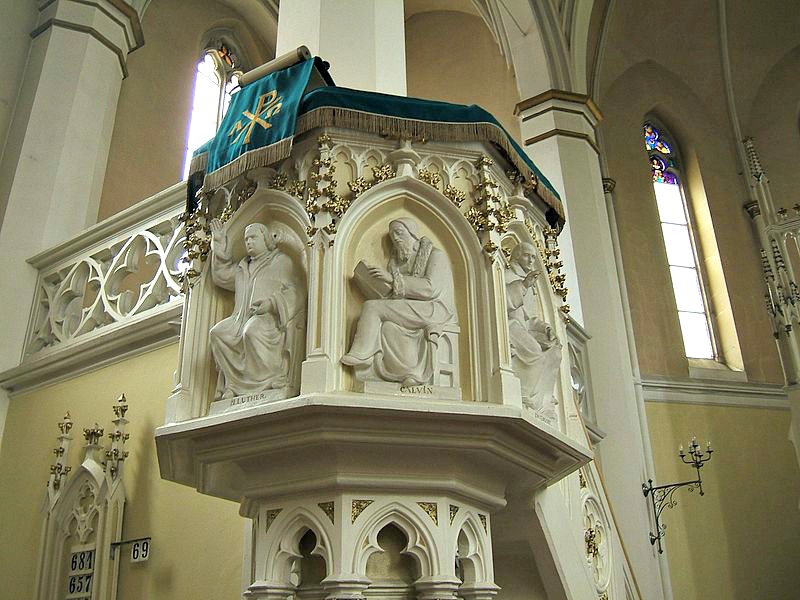
Taylor Marshall on Facebook described something he heard at Mass this weekend:
I heard in today’s homily this quote from priest: “Paul was a badass.” It was actually a good sermon but that line threw me off and gave me a chuckle. For context, he was referring to Saul pre-conversion.
Still, I’ve never heard the term “badass” employed in Catholic homiletics. Have you?
Short answer: no.
Longer answer:
Hey, I’m hardly a prude. I’ve said worse—sometimes much worse. But never from the pulpit. And there’s the rub.
I would wager that most of the people in that congregation Sunday morning don’t remember anything else from the Mass except this: “Father said ‘badass’!”
Some probably thought it was cool and appreciated it. A few likely found it distracting. Some, I’m sure, considered it offensive and distasteful.
Preachers, take heed: know your audience. And know the context.
If you’re preaching to a mixed crowd of congregants (and likely a lot of families) on a Sunday morning, think of what they will hear and how they will hear it. (If you’re preaching to residents at Rikers, that’s another matter. I’d still question if the word was necessary.)
But remember: This is the Holy Sacrifice of the Mass, not a campus kegger.
Under most circumstances, know that there are people—maybe many—who will hear a word like that in the pulpit and find it deeply offensive. Know that there are others who will have young children in tow. What will they tell them afterward? Do you want them to have to explain why they should not talk the way Father talked?
Know that it doesn’t take much to distract people from the act of prayer—and everything that happens in the Mass is, in fact, part of the greatest prayer on earth. Distraction can come in many forms—from crude words, careless gestures, or the ridiculous use of unnecessary props in the pulpit. Remember that. Remember what you are doing. Respect that you are being given one of the greatest privileges available—to proclaim the Word of God and share it with others.
If you’re thinking of using a crude word because it will be hip and relevant—don’t.
I remember once when a priest began a homily by alluding to a popular YouTube series, “Where in the Hell is Matt?,” and he quickly apologized, saying, “I don’t mean to be vulgar, but that’s what it’s called…” Respect the sensitivities of the many different sets of ears that are in the pews.
Use common sense. Use good taste. And use this barometer: if you think something might be too vulgar to say in a homily, it probably is.
I’ll conclude with some words of wisdom from the Homiletic Directory, published by the Vatican in 2014:
Because the homily is an integral part of the liturgy, it is not only an instruction, it is also an act of worship. When we read the homilies of the Fathers, we find that many of them concluded their discourse with a doxology and the word “Amen”: they understood that the purpose of the homily was not only to sanctify the people, but to glorify God. The homily is a hymn of gratitude for the magnalia Dei, which not only tells those assembled that God’s Word is fulfilled in their hearing, but praises God for this fulfillment.
Given its liturgical nature, the homily also possesses a sacramental significance: Christ is present in the assembly gathered to listen to his word and in the preaching of his minister, through whom the same Lord who spoke long ago in the synagogue at Nazareth now instructs his people. In the words of Verbum Domini: “The sacramentality of the Word can thus be understood by analogy with the real presence of Christ under the appearances of the consecrated bread and wine. By approaching the altar and partaking in the Eucharistic banquet we truly share in the body and blood of Christ. The proclamation of God’s word at the celebration entails an acknowledgment that Christ himself is present, that he speaks to us, and that he wishes to be heard”
It is very appropriate for a preacher to relate the texts of a particular celebration to the events and questions of the day, to share the fruits of scholarship in understanding a passage of Scripture and to demonstrate the connection between the Word of God and the doctrine of the Church. Like fire, all of these things make good servants but poor masters: if they serve the purpose of the homily, they are good; if they take the place of the homily, they are not. Furthermore, the preacher needs to speak in such a way that his hearers can sense his belief in the power of God. He must not lower the standards of his message to the level of his own personal witness, fearing that he will be accused of not practicing what he preaches. Since he is preaching not himself, but Christ, he can, without hypocrisy, point out the heights of sanctity, to which, like every other individual, in his pilgrim faith he is aspiring.
To my way of thinking, there are millions of valuable words that can be employed effectively for a Sunday homily in a parish setting.
“Badass” isn’t one of them.
Previous Post
April 30, 2018
Tennessee moves to create a 'Memorial to the Unborn' at state capitol
Next Post

April 30, 2018 Worth a thousand words: deacon cookies!!
Browse Our Archives
Select a Category "Mad Men" 9/11 advent All Things New Amazing video amazing videos amazon america Anglicans Anti-Catholicism art ascension thursday ash wednesday Atheists baltimore Bible Bishops Blogging bonnie engstrom Books bridgeport Brooklyn Chaplains children christian art christmas Church Churches CNEWA Converts criticism Deacons Death Penalty easter eastern christian Eastern Christians Ecumenism Education education Eucharist Europe euthanasia Evangelization Exorcism Family Feasts Gay rights Good Friday Great links Great Moments in Journalism Hanging with the saints heather renshaw Hispanic Catholics Hispanics History homelies Homilies Humor Hymn of the Week Immigration indianapolis Inspiration Interfaith news ireland Jesus Jews Journalism Judaism lent Liturgy logos Marriage Mary Media Medical news Mental health Middle East Monks Movies Music Muslims My world and welcome to it New Evangelization new york News Nuns Parenting Parish life peoria Persecution politics Politics Pope pope francis pope john paul Prayer Preaching Priests Pro-life Quote of the day radio rebecca frech ripp Ripped from the headlines rippred from the headlines Sacraments saints Scripture sex abuse Sex abuse crisis SEX ABUSE CRISIS TAGGED WITH: SEX ABUSE CRISIS The people in the pews the visitation project theatre This & that Thomas Merton Trappists TV uncategorized Uncategorized VATICAN Vatican vocation Vocations Voices & Views Women Worth a thousand words Writing Year of Faith year of mercy young people
Select a Month December 2019 November 2019 October 2019 September 2019 August 2019 July 2019 June 2019 May 2019 April 2019 March 2019 February 2019 January 2019 December 2018 November 2018 October 2018 September 2018 August 2018 July 2018 June 2018 May 2018 April 2018 March 2018 February 2018 January 2018 December 2017 November 2017 October 2017 September 2017 August 2017 July 2017 June 2017 May 2017 April 2017 March 2017 February 2017 January 2017 December 2016 November 2016 October 2016 September 2016 August 2016 July 2016 June 2016 May 2016 April 2016 March 2016 February 2016 January 2016 December 2015 November 2015 October 2015 September 2015 August 2015 July 2015 June 2015 May 2015 April 2015 March 2015 February 2015 January 2015 December 2014 November 2014 October 2014 September 2014 August 2014 July 2014 June 2014 May 2014 April 2014 March 2014 February 2014 January 2014 December 2013 November 2013 October 2013 September 2013 August 2013 July 2013 June 2013 May 2013 April 2013 March 2013 February 2013 January 2013 December 2012 November 2012 October 2012 September 2012 August 2012 July 2012 June 2012 May 2012 April 2012 March 2012 February 2012 January 2012 December 2011 November 2011 October 2011 September 2011 August 2011 July 2011 June 2011 May 2011 April 2011 March 2011 February 2011 January 2011 December 2010
Follow Us!
TAKE THE
Religious Wisdom Quiz
What happened to Jesus 40 days after His resurrection?
Select your answer to see how you score.
He performed one last miracle He visited the temple He went back into hiding He ascended into heaven
Books by This Author Books by Deacon Greg Kandra
Related posts from The Deacon's Bench

On women preaching: 'The pulpit is not our...
Are there times when women can preach?
How About Parish Missions on Contraception?

This is Why Deacons, Like Boy Scouts, Should...
TRENDING AT PATHEOS Catholic

Rejecting Doom: Christian Hope And Human Action
Christianity is a religion of hope. We are to have hope and...

It’s What Comes From Within Which Matters
One of the most difficult things for us to understand is why...

Why I Choose the Eucharist Over the Sermon
Choose the Eucharist, Not the Sermon What are we supposed to get...

5 Design Elements Found in Spiritually Rooted Homes
Putting Spirituality Into Home Decor Our homes are more than our living...

Credo: A Story of God Told with the...
About 10 years ago, I began to imagine a personal "Credo" that...

The Anatomy of Divine Revelation in Catholic Thought
The claim that God has made Himself known to human beings is...
view all Catholic blogs
Ad-Free & Subscriber Log-In Subscription Support
- About Us
- 2026 Calendar
- Videos
- Podcasts
- Library of World Religions
- Faith In Media Tracker
- Advertise With Us
- Write for Us
- Privacy Policy
- Terms of Service
- Do Not Sell My Data
- Contact Us
- Radiant Digital
- Manage Newsletter Subscriptions
- Unsubscribe From Notifications
- Sitemap
Copyright 2008-2026, Patheos. All rights reserved.
Subscription Support Ad-Free & Subscriber Log-In
Follow Patheos