
BuddhistCatholicContemplativeEvangelicalGeneral ChristianHinduJewishLatter-day SaintMuslimNew VisionsProgressive Christian
Beliefs
- Buddhist
- Catholic
- Contemplative
- Evangelical
- General Christian
- Hindu
- Jewish
- Latter-day Saint
- More Voices
- Muslim
- New Visions
- Pagan
- Progressive Christian
Topics
- Religion News
- Food and Religion
- Sports and Religion
- Religious Art
- Religious Music and Entertainment
- Religious Events
- History and Religion
- Style and Religion
- Politics and Religion
- Women in Religion
- Recreation Outdoors and Religion
- Business Finance and Religion
- Careers Workplace and Religion
- Education and Religion
- Family Parenting and Religion
- Health Fitness and Religion
- Home and Religion
- Relationships and Religion
- Technology and Religion
- Travel and Religion
Columnists
- Buddhist Columnists
- Business Finance and Religion Columnists
- Careers Workplace and Religion Columnists
- Catholic Columnists
- Contemplative Columnists
- Education and Religion Columnists
- Evangelists Columnists
- Family Parenting and Religion Columnists
- General Christian Columnists
- Health Fitness and Religion Columnists
- Hindu Columnists
- History and Religion Columnists
- Home and Religion Columnists
- Jewish Columnists
- More Voices Columnists
- Latter Day Columnists
- Muslim Columnists
- New Visions Columnists
- Nonreligious Columnists
- Pagan Columnists
- Politics and Religion Columnists
- Progressive Columnists
- Recreation Outdoors and Religion Columnists
- Relationships and Religion Columnists
- Religion News Columnists
- Religious Art Columnists
- Religious Events Columnists
- Religious Music and Entertainment Columnists
- Sports and Religion Columnists
- Style and Religion Columnists
- Technology and Religion Columnists
- Travel and Religion Columnists
- Women in Religion Columnists
Resource Library
- 2026 Calendar
- Library of World Religions
- The 100 Most Holy Places on Earth
- Patheos Answers
- Podcasts
- Videos
- Faith Leaders Database
- Anglican Episcopalian
- Bahai
- Baptist
- Buddhism
- Christianity
- Confucianism
- Eastern Orthodoxy
- Hinduism
- Holiness and Pentecostal
- ISKCON
- Islam
- Judaism
- Lutheran
- Methodist
- The Church of Jesus Christ of Latter-day Saints
- New Age
- Paganism
- Presbytarian and Reformed
- Protestantism
- Religion Behind the Scenes
- Roman Catholic
- Scientology
- Shia Islam
- Sikhism
- Sufism
- Sunni Islam
- Taoism
- Zen
- See all religions
Research Tools
 Ad-Free & Subscriber Log-In Subscription Support
Ad-Free & Subscriber Log-In Subscription Support
Follow Patheos 

- Trending:
- Forgiveness
- |
- Marriage
- |
- Consciousness
- |
- Death Penalty
- |
- Election
- |
- Halloween
 The Deacon's Bench
- Home
- Catholic
- Religion News
- God doesn’t just love people like us: Homily for August 20, 2017, 20th Sunday in Ordinary Time
God doesn’t just love people like us: Homily for August 20, 2017, 20th Sunday in Ordinary Time
Last updated on: August 20, 2017 at 3:00 pm by Deacon Greg Kandra
God doesn’t just love people like us: Homily for August 20, 2017, 20th Sunday in Ordinary Time 2017-08-20T15:00:12-04:00 Deacon Greg Kandra
Patheos Explore the world's faith through different perspectives on religion and spirituality! Patheos has the views of the prevalent religions and spiritualities of the world.
Well, my planned trip to Columbus, Ohio ended up being scrapped Friday night; the flight was cancelled because of thunderstorms, and I was unable to reschedule it for Saturday morning. I wasn’t really prepared to preach anything this weekend—and nobody was expecting me to preach, anyway, since I was supposed to be out of town. But this morning, following the Boy Scout motto (and the advice I give to my homily students), I decided it best to “Be Prepared.” Over my morning coffee, I dug around in the vault and found a homily from six years ago, addressing the same readings. I rewrote about a third of it. (If I’d given it more time, I’m sure it would have turned out better. But you do what you can.) And, sure enough, one of the priests when he saw me this morning said, “You wanna preach?”What you see below is the result. I ended up delivering this twice.
+
Last weekend, our country was shaken. And angered. And wounded. And the wounds this morning are still deep.
We’ve spent much of the last week trying to process what happened in Charlottesville, and why. What are we supposed to learn from these tragic events?
This weekend, unexpectedly, God gives us an answer—one of reconciliation and hope.
The Gospel we just heard offers us startling lesson – an idea that we need to hear, especially now, especially in this country, at this moment.
The message is this: God doesn’t just love those who are like us.
God doesn’t just love those who are like us.
What this Gospel tells us is that God’s mercy extends to those who are different from us, to those whom we might even consider to be our enemy, even to those we might hate or who might hate us.
To our amazement, sometimes, those enemies may even have a deeper faith than we do – the kind of conviction that can bring about miracles.
Certainly, the Jews considered Canaanites an enemy. You can hear the scorn when the disciples tried to shoo the Canaanite woman away.
It’s important for us to remember here that Matthew was a Jew writing for other Jews – and that the words of Jesus and his apostles echoed the prevailing sentiment of Matthew’s audience.
So, that audience would have been surprised to learn that the Son of David worked a miracle for someone many of them had been taught to hate.
More than surprised: they would have been stunned.
But Jesus was constantly upsetting the status quo, and forcing people to think differently about themselves, and those around them. And here he does it again. Faith, we learn, can astonish us. Miracles can happen. God’s vision is so much greater than ours.
As an old hymn puts it, “There is a wideness in God’s mercy.” It is available to all.
In the first reading, from Isaiah, we heard of how God embraces those “foreigners who join themselves to the Lord…” and the passage concludes with the beautiful words that are inscribed in the National Cathedral in Washington, DC: “My house shall be called a house of prayer for all peoples.”
Then we sang the responsorial psalm and made that idea our own prayer: “Lord, let all the peoples praise you!”
And then we heard from Paul, writing to the Romans, and he even celebrated the fact that he was an apostle to the Gentiles, one sent to those outside his own circle of belief.
“There is a wideness in God’s mercy.”
The sorrowful and tragic and hate-filled events of last weekend—and the wounds that they opened within our country— challenge us to ask ourselves:
How wide is our mercy?
Is it wide enough to embrace people not only of other colors, but other religions, other ideologies, other political parties?
Is it wide enough to include, even, people who hate? Are we Christian enough to love even them?
The readings remind us: Those who may seem to be outside our circle aren’t necessarily outside the circle of God. His circle is limitless. And there is always room for more.
What a comfort! All of us, at one time or another, have been “outside the circle.” All of us have felt like foreigners: isolated, uncomfortable, like we don’t belong. Remember that first day at a new school? The first hours in a new job? Or even the first months in a new country?
God never forgets it. And he extends his hand to us, and to everyone seeking to be a part of His circle. Are we willing to take what He has to offer? Are we willing to “join ourselves to the Lord”? Are we ready, like the Canaanite woman, to dare to believe what others would find unbelievable?
And: mindful of this gospel, are we willing to extend to others the same kind of mercy that God extends to us?
Yesterday, my friend Leticia Adams published an essay online that put this so beautifully:
“My Catholic faith, which is rooted in a relationship with the living God, requires me to respect the dignity of all human beings. In simplest terms, it means that, while I get to call out evil behavior for what it is, I do not get to relish the thought of punching these people in the face. I don’t get to call them names, or gleefully enjoy it when others do. The only option for me is to recognize the evil acts as evil, fight for justice, and pray for the conversion and redemption of those people carrying nazi flags, because Christ hung on a cross for them just as much as he did for me.”
Can we accept this? Are we willing to love those we’ve been taught to despise?
They may be more like us than we realize.
And they are, like all of us, works in progress. As a conservative friend of mine used to say all the time about Barack Obama, with words that could apply to the present occupant of the White House: “God isn’t finished with him yet.”
The fact is, he isn’t finished with any of us yet.
Just 10 days ago, we celebrated the feast of St. Teresa Benedicta, better known as Edith Stein. Born Jewish, she became an atheist – completely rejecting God — before converting to Catholicism, joining a convent, and then losing her life in a Nazi death camp. At any given moment, she would have been considered “outside the circle.” Not a Christian, then not a Jew, then not a believer.
But she was never beyond God’s circle of grace. All it took was her own yearning, her seeking – her desire, like the Canaanite woman, to have God work a miracle in her life.
This morning, as we gather around this table for communion – people of every race, from every country, from every region – we gather literally in communion, bound by our love of the Lord and our hunger for the Eucharist, our own yearning to be a part of this miracle.
Pray for those who may not be here yet – but who may be on their way. Because God doesn’t just love those who are like us.
This Sunday, in a special way, pray for those who carry hate in their hearts for one reason or another. We may know them. We may live with them. We may even sometimes be them. But God loves them, and loves us, anyway.
There is a wideness in God’s mercy.
I was thinking this morning of the father of the woman who was killed last weekend in Charlottesville. In the middle of his grief, he managed to find grace. “I can only think of Jesus on the cross,” he said. “Father, forgive them, they don’t know what they’re doing.”
Pray that we may be as merciful to one another as God is to us — because God isn’t finished with any of us yet.
Previous Post
August 20, 2017
Hymn of the Week: 'Come, Christians, Join to Sing'
Next Post

August 20, 2017 MUST-SEE VIDEO: Woman reunites with lion cubs she gave up for adoption
Browse Our Archives
Select a Category "Mad Men" 9/11 advent All Things New Amazing video amazing videos amazon america Anglicans Anti-Catholicism art ascension thursday ash wednesday Atheists baltimore Bible Bishops Blogging bonnie engstrom Books bridgeport Brooklyn Chaplains children christian art christmas Church Churches CNEWA Converts criticism Deacons Death Penalty easter eastern christian Eastern Christians Ecumenism education Education Eucharist Europe euthanasia Evangelization Exorcism Family Feasts Gay rights Good Friday Great links Great Moments in Journalism Hanging with the saints heather renshaw Hispanic Catholics Hispanics History homelies Homilies Humor Hymn of the Week Immigration indianapolis Inspiration Interfaith news ireland Jesus Jews Journalism Judaism lent Liturgy logos Marriage Mary Media Medical news Mental health Middle East Monks Movies Music Muslims My world and welcome to it New Evangelization new york News Nuns Parenting Parish life peoria Persecution Politics politics Pope pope francis pope john paul Prayer Preaching Priests Pro-life Quote of the day radio rebecca frech ripp Ripped from the headlines rippred from the headlines Sacraments saints Scripture sex abuse Sex abuse crisis SEX ABUSE CRISIS TAGGED WITH: SEX ABUSE CRISIS The people in the pews the visitation project theatre This & that Thomas Merton Trappists TV Uncategorized uncategorized Vatican VATICAN vocation Vocations Voices & Views Women Worth a thousand words Writing Year of Faith year of mercy young people
Select a Month December 2019 November 2019 October 2019 September 2019 August 2019 July 2019 June 2019 May 2019 April 2019 March 2019 February 2019 January 2019 December 2018 November 2018 October 2018 September 2018 August 2018 July 2018 June 2018 May 2018 April 2018 March 2018 February 2018 January 2018 December 2017 November 2017 October 2017 September 2017 August 2017 July 2017 June 2017 May 2017 April 2017 March 2017 February 2017 January 2017 December 2016 November 2016 October 2016 September 2016 August 2016 July 2016 June 2016 May 2016 April 2016 March 2016 February 2016 January 2016 December 2015 November 2015 October 2015 September 2015 August 2015 July 2015 June 2015 May 2015 April 2015 March 2015 February 2015 January 2015 December 2014 November 2014 October 2014 September 2014 August 2014 July 2014 June 2014 May 2014 April 2014 March 2014 February 2014 January 2014 December 2013 November 2013 October 2013 September 2013 August 2013 July 2013 June 2013 May 2013 April 2013 March 2013 February 2013 January 2013 December 2012 November 2012 October 2012 September 2012 August 2012 July 2012 June 2012 May 2012 April 2012 March 2012 February 2012 January 2012 December 2011 November 2011 October 2011 September 2011 August 2011 July 2011 June 2011 May 2011 April 2011 March 2011 February 2011 January 2011 December 2010
Follow Us!
TAKE THE
Religious Wisdom Quiz
What does Paul tell Timothy to fan into flame?
Select your answer to see how you score.
The gift of God The Holy Spirit His faith His zeal
Books by This Author Books by Deacon Greg Kandra
Related posts from The Deacon's Bench
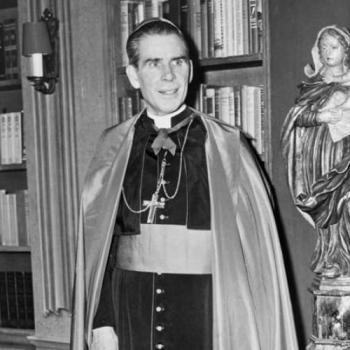
CNA: Rochester bishop requested Sheen beatification delay
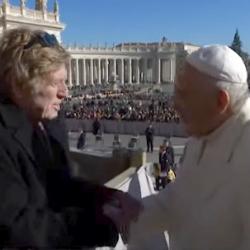
Hollywood on the Tiber: When Francis met Redford
Growing number of U.S. Latinos leaving Catholic Church...
TRENDING AT PATHEOS Catholic

Creation, Preservation, and Teleology in Catholic Theology
As I write this, it is very early Monday morning. Like millions...

The Parable Of The Sower And The Word...
One of Christ’s most famous parables is that of the sower who...

Rejecting Doom: Christian Hope And Human Action
Christianity is a religion of hope. We are to have hope and...

Why I Choose the Eucharist Over the Sermon
Choose the Eucharist, Not the Sermon What are we supposed to get...

5 Design Elements Found in Spiritually Rooted Homes
Putting Spirituality Into Home Decor Our homes are more than our living...

Credo: A Story of God Told with the...
About 10 years ago, I began to imagine a personal "Credo" that...
view all Catholic blogs
Ad-Free & Subscriber Log-In Subscription Support
- About Us
- 2026 Calendar
- Videos
- Podcasts
- Library of World Religions
- Faith In Media Tracker
- Advertise With Us
- Write for Us
- Privacy Policy
- Terms of Service
- Do Not Sell My Data
- Contact Us
- Radiant Digital
- Manage Newsletter Subscriptions
- Unsubscribe From Notifications
- Sitemap
Copyright 2008-2026, Patheos. All rights reserved.
Subscription Support Ad-Free & Subscriber Log-In
Follow Patheos