
BuddhistCatholicContemplativeEvangelicalGeneral ChristianHinduJewishLatter-day SaintMuslimNew VisionsProgressive Christian
Beliefs
- Buddhist
- Catholic
- Contemplative
- Evangelical
- General Christian
- Hindu
- Jewish
- Latter-day Saint
- More Voices
- Muslim
- New Visions
- Pagan
- Progressive Christian
Topics
- Religion News
- Food and Religion
- Sports and Religion
- Religious Art
- Religious Music and Entertainment
- Religious Events
- History and Religion
- Style and Religion
- Politics and Religion
- Women in Religion
- Recreation Outdoors and Religion
- Business Finance and Religion
- Careers Workplace and Religion
- Education and Religion
- Family Parenting and Religion
- Health Fitness and Religion
- Home and Religion
- Relationships and Religion
- Technology and Religion
- Travel and Religion
Columnists
- Buddhist Columnists
- Business Finance and Religion Columnists
- Careers Workplace and Religion Columnists
- Catholic Columnists
- Contemplative Columnists
- Education and Religion Columnists
- Evangelists Columnists
- Family Parenting and Religion Columnists
- General Christian Columnists
- Health Fitness and Religion Columnists
- Hindu Columnists
- History and Religion Columnists
- Home and Religion Columnists
- Jewish Columnists
- More Voices Columnists
- Latter Day Columnists
- Muslim Columnists
- New Visions Columnists
- Nonreligious Columnists
- Pagan Columnists
- Politics and Religion Columnists
- Progressive Columnists
- Recreation Outdoors and Religion Columnists
- Relationships and Religion Columnists
- Religion News Columnists
- Religious Art Columnists
- Religious Events Columnists
- Religious Music and Entertainment Columnists
- Sports and Religion Columnists
- Style and Religion Columnists
- Technology and Religion Columnists
- Travel and Religion Columnists
- Women in Religion Columnists
Resource Library
- 2026 Calendar
- Library of World Religions
- The 100 Most Holy Places on Earth
- Patheos Answers
- Podcasts
- Videos
- Faith Leaders Database
- Anglican Episcopalian
- Bahai
- Baptist
- Buddhism
- Christianity
- Confucianism
- Eastern Orthodoxy
- Hinduism
- Holiness and Pentecostal
- ISKCON
- Islam
- Judaism
- Lutheran
- Methodist
- The Church of Jesus Christ of Latter-day Saints
- New Age
- Paganism
- Presbytarian and Reformed
- Protestantism
- Religion Behind the Scenes
- Roman Catholic
- Scientology
- Shia Islam
- Sikhism
- Sufism
- Sunni Islam
- Taoism
- Zen
- See all religions
Research Tools
 Ad-Free & Subscriber Log-In Subscription Support
Ad-Free & Subscriber Log-In Subscription Support
Follow Patheos 

- Trending:
- Forgiveness
- |
- Marriage
- |
- Consciousness
- |
- Death Penalty
- |
- Election
- |
- Halloween
 The Deacon's Bench
- Home
- Catholic
- Religion News
- Homily for November 1, 2015: All Saints Day
Homily for November 1, 2015: All Saints Day
Last updated on: October 31, 2015 at 3:57 am by Deacon Greg Kandra
Homily for November 1, 2015: All Saints Day 2015-10-31T03:57:48-04:00 Deacon Greg Kandra
Patheos Explore the world's faith through different perspectives on religion and spirituality! Patheos has the views of the prevalent religions and spiritualities of the world.

When I’m doing a baptism, the first question that is asked in the ritual is: “What name do you give your child?”
Everyone answers that perfectly.
But the second question is trickier.
“What do you ask of God’s church for your child?” The correct answer, of course, is “Baptism.”
Even though we’ve gone over this in the baptism class, sometimes people’s nerves get the best of them. They’re stumped.
So I repeat: What do you ask of God’s church for your child?
A parent will search for the right answer. “Happiness.” “Peace.” “Good health.” “Grace.” All of which are fine.
But it’s not what we’re there for.
Thinking about today’s readings, and the feast we are celebrating, it occurs to me that there might be another way of answering that question.
When the priest or deacon asks “What do you ask of God’s church for your child?” maybe an even better answer is:
“To help them become a saint.”
That says it all. That should be our goal, our desire, our dream—for ourselves and all those we love.
To be saints. To be with God one day in Paradise. What more could anyone want?
The problem is: we don’t usually think this way. We’re too worried about paying the mortgage, driving the kids to soccer practice, finding a good orthodontist in the dental plan, socking away more money in the college fund. Life gets in the way, and we forget what life is about—and what the end of life may bring.
And that’s one reason the Church has placed this feast on our calendar: to make us think this way. To challenge us. To inspire us. To see sainthood as something real and attainable.
But it goes even further than that.
I think there are two aspects of this feast we need to bear in mind.
One is that we honor those who lived lives of heroic virtue, and who showed us how it’s done. Look around this church, in its windows and its shrines, and you will see them: scholars and writers, missionaries and preachers. We pray for their intercession and ask for their companionship.
But the second part may be more important—and more difficult.
It is this: This feast forces us to not just look up—up at the stained glass and plaster and wood figures around us. It also asks us to look within—into our hearts.
What have we done—or what haven’t we done—to be like the saints?
For most of us, All Saints Day tells us that we have our work cut out for us. It shows us both both our fullest potential and where we fall short. And it reminds us of why God made us.
Remember the old Baltimore Catechism? It had this classic question:
“Why did God make you?”
“God made me to know Him, to love Him, and to serve Him in this world, and to be happy with Him for ever in heaven.”
In other words: God made us to become saints.
He made us to become like those we see in the windows and pedestals around us – to be like Anthony and Jude, like Rose and Bernard, like Peter and Ambrose and Padre Pio and Lorenzo Ruiz. These figures that surround us serve to encourage us on our journey. Here is the Communion of Saints, praying for us and with us and challenging us to aim higher and reach further.
They bear silent witness to this humbling fact: we stand on the shoulders of giants—and not just those who lived hundreds of years ago.
The other day my friend the writer Heather King posted online a beautiful and inspiring essay about a trip she made to a church in Rome: San Bartolomeo, Saint Bartholomew. It is an ancient church, but with a new mission—to commemorate the modern martyrs, saints of the 20th century. The church contains chapels with relics. Heather described some of what she saw:
“Chalice, paten and stole of Don Andrea Santoro, Catholic priest missionary in Turkey, killed while he was praying in his parish in Trabzon, on the afternoon of Sunday, February 5, 2006.
“Rosary of Father Alexander Men, Orthodox priest from Moscow, killed in September 1990, as he was on his way to his church to celebrate the Sunday liturgy.”
“The missal of Archbishop Oscar Arnulfo Romero, killed while celebrating the Eucharist on the altar, March 24, 1980.”
And on and on. Heather wrote:
“It’s one thing to visit the Colosseum and contemplate the martyrs who were thrown to the lions 1800 years ago, but these men and women who had been killed for the faith 70, 50, and as recently as eight years ago moved me in a way that was more immediate and more piercing. In fact, the Church has produced more martyrs in the last 100 years than in the previous 1900 put together.”
Certainly, the daily headlines from places of persecution remind us that the age of martyrs hasn’t ended. It goes on. Every day. That is a sobering but important message for all of us who worship here, in this church dedicated to the Queen of Martyrs.
But it also tells us that true greatness, sainthood, knows no particular time period.
Remember this: We live in an age that gave the world Mother Teresa and John Paul and Padre Pio and Dorothy Day and Fulton Sheen.
The 20th century knew men and women like Maria Goretti, Edith Stein, Maximillian Kolbe, Pier Giorgio Frassati.
Who knows what others walk among us now, maybe even praying beside us in this church?

Blessed Pier Giorgio Frassati
We can all aspire to lives that are holy. Lives that are even, as the gospel puts it today, “Blessed.”
This gospel passage, in fact, could stand as a handbook on holiness. If you want to know how to become a saint, it’s all here. Make peace. Be meek. Offer mercy. Live with a clean heart and a poor spirit and a hunger for righteousness. These are the characteristics of the saints. Because, first and foremost, they are also the characteristics of Christ.
I go back to the question I ask at every baptism: what do you ask of God’s church?
What do any of us ask? What do we want above all else for ourselves and those we love?
For myself, there can only be one answer: to become a saint.
We all need prayer and practice to get there. Some of us, a lot more than others.
This morning, let us ask God—and the innumerable saints around us— to make that great work possible.
Previous Post

October 31, 2015
Deacon at work: blessing the hounds
Next Post
October 31, 2015 How did that “exorcism” show turn out?
Browse Our Archives
Select a Category "Mad Men" 9/11 advent All Things New Amazing video amazing videos amazon america Anglicans Anti-Catholicism art ascension thursday ash wednesday Atheists baltimore Bible Bishops Blogging bonnie engstrom Books bridgeport Brooklyn Chaplains children christian art christmas Church Churches CNEWA Converts criticism Deacons Death Penalty easter eastern christian Eastern Christians Ecumenism Education education Eucharist Europe euthanasia Evangelization Exorcism Family Feasts Gay rights Good Friday Great links Great Moments in Journalism Hanging with the saints heather renshaw Hispanic Catholics Hispanics History homelies Homilies Humor Hymn of the Week Immigration indianapolis Inspiration Interfaith news ireland Jesus Jews Journalism Judaism lent Liturgy logos Marriage Mary Media Medical news Mental health Middle East Monks Movies Music Muslims My world and welcome to it New Evangelization new york News Nuns Parenting Parish life peoria Persecution Politics politics Pope pope francis pope john paul Prayer Preaching Priests Pro-life Quote of the day radio rebecca frech ripp Ripped from the headlines rippred from the headlines Sacraments saints Scripture sex abuse Sex abuse crisis SEX ABUSE CRISIS TAGGED WITH: SEX ABUSE CRISIS The people in the pews the visitation project theatre This & that Thomas Merton Trappists TV Uncategorized uncategorized Vatican VATICAN vocation Vocations Voices & Views Women Worth a thousand words Writing Year of Faith year of mercy young people
Select a Month December 2019 November 2019 October 2019 September 2019 August 2019 July 2019 June 2019 May 2019 April 2019 March 2019 February 2019 January 2019 December 2018 November 2018 October 2018 September 2018 August 2018 July 2018 June 2018 May 2018 April 2018 March 2018 February 2018 January 2018 December 2017 November 2017 October 2017 September 2017 August 2017 July 2017 June 2017 May 2017 April 2017 March 2017 February 2017 January 2017 December 2016 November 2016 October 2016 September 2016 August 2016 July 2016 June 2016 May 2016 April 2016 March 2016 February 2016 January 2016 December 2015 November 2015 October 2015 September 2015 August 2015 July 2015 June 2015 May 2015 April 2015 March 2015 February 2015 January 2015 December 2014 November 2014 October 2014 September 2014 August 2014 July 2014 June 2014 May 2014 April 2014 March 2014 February 2014 January 2014 December 2013 November 2013 October 2013 September 2013 August 2013 July 2013 June 2013 May 2013 April 2013 March 2013 February 2013 January 2013 December 2012 November 2012 October 2012 September 2012 August 2012 July 2012 June 2012 May 2012 April 2012 March 2012 February 2012 January 2012 December 2011 November 2011 October 2011 September 2011 August 2011 July 2011 June 2011 May 2011 April 2011 March 2011 February 2011 January 2011 December 2010
Follow Us!
TAKE THE
Religious Wisdom Quiz
What empire was in power when Jesus was born?
Select your answer to see how you score.
Roman Babylonian Persian Greek
Books by This Author Books by Deacon Greg Kandra
Related posts from The Deacon's Bench
Sheen beatification postponed after bishops 'ask for further...
Another 20th century American is about to be...
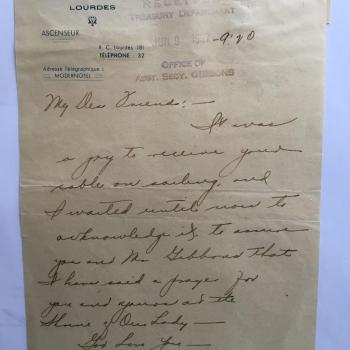
Read a rare, handwritten letter from Fulton Sheen
The significance of December 21 for Fulton Sheen's...
TRENDING AT PATHEOS Catholic

The Parable Of The Sower And The Word...
One of Christ’s most famous parables is that of the sower who...

Rejecting Doom: Christian Hope And Human Action
Christianity is a religion of hope. We are to have hope and...

Why I Choose the Eucharist Over the Sermon
Choose the Eucharist, Not the Sermon What are we supposed to get...

5 Design Elements Found in Spiritually Rooted Homes
Putting Spirituality Into Home Decor Our homes are more than our living...

Credo: A Story of God Told with the...
About 10 years ago, I began to imagine a personal "Credo" that...

The Anatomy of Divine Revelation in Catholic Thought
The claim that God has made Himself known to human beings is...
view all Catholic blogs
Ad-Free & Subscriber Log-In Subscription Support
- About Us
- 2026 Calendar
- Videos
- Podcasts
- Library of World Religions
- Faith In Media Tracker
- Advertise With Us
- Write for Us
- Privacy Policy
- Terms of Service
- Do Not Sell My Data
- Contact Us
- Radiant Digital
- Manage Newsletter Subscriptions
- Unsubscribe From Notifications
- Sitemap
Copyright 2008-2026, Patheos. All rights reserved.
Subscription Support Ad-Free & Subscriber Log-In
Follow Patheos