
BuddhistCatholicContemplativeEvangelicalGeneral ChristianHinduJewishLatter-day SaintMuslimNew VisionsProgressive Christian
Beliefs
- Buddhist
- Catholic
- Contemplative
- Evangelical
- General Christian
- Hindu
- Jewish
- Latter-day Saint
- More Voices
- Muslim
- New Visions
- Pagan
- Progressive Christian
Topics
- Religion News
- Food and Religion
- Sports and Religion
- Religious Art
- Religious Music and Entertainment
- Religious Events
- History and Religion
- Style and Religion
- Politics and Religion
- Women in Religion
- Recreation Outdoors and Religion
- Business Finance and Religion
- Careers Workplace and Religion
- Education and Religion
- Family Parenting and Religion
- Health Fitness and Religion
- Home and Religion
- Relationships and Religion
- Technology and Religion
- Travel and Religion
Columnists
- Buddhist Columnists
- Business Finance and Religion Columnists
- Careers Workplace and Religion Columnists
- Catholic Columnists
- Contemplative Columnists
- Education and Religion Columnists
- Evangelists Columnists
- Family Parenting and Religion Columnists
- General Christian Columnists
- Health Fitness and Religion Columnists
- Hindu Columnists
- History and Religion Columnists
- Home and Religion Columnists
- Jewish Columnists
- More Voices Columnists
- Latter Day Columnists
- Muslim Columnists
- New Visions Columnists
- Nonreligious Columnists
- Pagan Columnists
- Politics and Religion Columnists
- Progressive Columnists
- Recreation Outdoors and Religion Columnists
- Relationships and Religion Columnists
- Religion News Columnists
- Religious Art Columnists
- Religious Events Columnists
- Religious Music and Entertainment Columnists
- Sports and Religion Columnists
- Style and Religion Columnists
- Technology and Religion Columnists
- Travel and Religion Columnists
- Women in Religion Columnists
Resource Library
- 2026 Calendar
- Library of World Religions
- The 100 Most Holy Places on Earth
- Patheos Answers
- Podcasts
- Videos
- Faith Leaders Database
- Anglican Episcopalian
- Bahai
- Baptist
- Buddhism
- Christianity
- Confucianism
- Eastern Orthodoxy
- Hinduism
- Holiness and Pentecostal
- ISKCON
- Islam
- Judaism
- Lutheran
- Methodist
- The Church of Jesus Christ of Latter-day Saints
- New Age
- Paganism
- Presbytarian and Reformed
- Protestantism
- Religion Behind the Scenes
- Roman Catholic
- Scientology
- Shia Islam
- Sikhism
- Sufism
- Sunni Islam
- Taoism
- Zen
- See all religions
Research Tools
 Ad-Free & Subscriber Log-In Subscription Support
Ad-Free & Subscriber Log-In Subscription Support
Follow Patheos 

- Trending:
- Forgiveness
- |
- Marriage
- |
- Consciousness
- |
- Death Penalty
- |
- Election
- |
- Halloween
 The Deacon's Bench
- Home
- Catholic
- Religion News
- So what does the new annulment process mean?
So what does the new annulment process mean?
Last updated on: September 8, 2015 at 4:15 pm by Deacon Greg Kandra
So what does the new annulment process mean? 2015-09-08T16:15:45-04:00 Deacon Greg Kandra
Patheos Explore the world's faith through different perspectives on religion and spirituality! Patheos has the views of the prevalent religions and spiritualities of the world.

Someone asked me this morning if I knew anyone personally who would benefit from the changes announced today, and I had to say, “Honestly, it’s all too new to tell.” I serve as an advocate in my diocese, helping newly divorced work their way through the annulment process; people who have already begun an annulment will likely have to continue under the old process, though, because the new law doesn’t take effect until December. And, frankly, I expect the rollout may have a glitch or two, as dioceses and their lawyers continue to figure it out.
But what are people saying about it all? Analysis is trickling in from all over.
Austen Ivereigh, a papal biographer and commentator on the Vatican, called it “revolutionary” that Francis has granted bishops the power to nullify a marriage – a power that has rested with church courts. Bishops, he said, could also delegate that power to priests. This will make annulments more accessible, especially in much of the developing world, where, Ivereigh said, many areas have no church courts.
“This is the most far-reaching reform to the Church’s nullity process in 300 years,” he added.
Tuesday’s announcement is procedural and makes no change in the way the church sees marriage and its permanent nature. However, Ivereigh said, the change shows Francis has been listening to regular Catholics and “the reason for this change is that society has changed. This speeded-up procedure recognizes and reflects a new reality.”
…Kurt Martens, a professor of canon law at Catholic University, said the expedited process would apply to Catholic couples facing certain conditions, including those who have an abortion, a grave contagious disease, children from a previous relationship or imprisonment. Essentially, Martens said, the church is providing a path that looks like the Catholic version of no-fault divorce.
“If I were a bishop, I would be upset,” Martens said. “It’s a bit strange and even a sign of contradiction that a pope who is big on consultation and collegiality seems to forget that on something like this. It’s highly unusual for legislation like this to get through that way.”
Francis, for his part, acknowledged some of those concerns in his letters.
“The extent to which an abbreviated process of judgment might put the principle of the indissolubility of marriage at risk, did not escape me,” Francis wrote. “Thus, I have desired that, in such cases the Bishop himself shall be constituted judge, who, by force of his pastoral office is with Peter the greatest guarantor of Catholic unity in faith and in discipline.”
Despite those concerns, the changes come with a notable silver lining for Catholics seeking to annul their marriages and return to a closer relationship with the church.
Over at his blog, venerable canon lawyer Ed Peters has some thoughts, based on a quick overview of the documents released today and what they portend. (Warning: Latin ahead!)
And Jimmy Akin offers his own handy guide to understanding annulments and the impending changes:
Among the major changes, as listed in the introduction to Mitis Iudex Dominus Iesus, are as follows:
Only a single judgment of nullity is required. Until now, in most cases, if one tribunal determined that a marriage was null, the decision was automatically appealed to a court of second instance, and only if the second tribunal agreed was an annulment granted. Now the morally certain decision of the first court will be sufficient in uncontested cases.
The bishop himself is a judge. Although the bishop has always been the principal judge in his diocese, previously, the section on annulments did not establish that the bishop himself was a judge in marriage cases. Now, in keeping with his role as shepherd of the faithful, it does. In fact, he is the principal judge in his diocese, to be assisted by others whom he chooses. The new law thus puts the responsibility squarely on the bishop as a pastor.
A new, briefer process involving the bishop has been created. Up to now there have been two processes for handling annulments: the formal process (which is the lengthier one involving gathering and weighing testimony) and the documentary process (which deals with situations where a marriage can be proved invalid simply by presenting certain documents, such as showing that a Catholic got married outside the Church without the required permission). Now there is a middle process involving the bishop. If the evidences for nullity are especially clear, they can be presented to the bishop in a process intended to take less time than a formal process case. However, if the evidences require more examination, the case is to be referred to the formal process.
Appeals can be made against the judgment of the bishop to the metropolitan. As a check on the judgment of the bishop, parties can appeal his decision to the metropolitan bishop (i.e., the bishop who heads the local ecclesiastical province, composed of several neighboring dioceses). Or, if it was the metropolitan himself who heard the original case, appeal can be made to the senior suffragan bishop (i.e., the bishop in the province with the most seniority, apart from the metropolitan).
Stay tuned. I’m sure others will be weighing in soon.
Previous Post

September 8, 2015
So what does the new annulment process mean?
Next Post
September 8, 2015 Hungarian bishop on pope’s view of refugees: he’s wrong—UPDATED
Browse Our Archives
Select a Category "Mad Men" 9/11 advent All Things New Amazing video amazing videos amazon america Anglicans Anti-Catholicism art ascension thursday ash wednesday Atheists baltimore Bible Bishops Blogging bonnie engstrom Books bridgeport Brooklyn Chaplains children christian art christmas Church Churches CNEWA Converts criticism Deacons Death Penalty easter eastern christian Eastern Christians Ecumenism Education education Eucharist Europe euthanasia Evangelization Exorcism Family Feasts Gay rights Good Friday Great links Great Moments in Journalism Hanging with the saints heather renshaw Hispanic Catholics Hispanics History homelies Homilies Humor Hymn of the Week Immigration indianapolis Inspiration Interfaith news ireland Jesus Jews Journalism Judaism lent Liturgy logos Marriage Mary Media Medical news Mental health Middle East Monks Movies Music Muslims My world and welcome to it New Evangelization new york News Nuns Parenting Parish life peoria Persecution politics Politics Pope pope francis pope john paul Prayer Preaching Priests Pro-life Quote of the day radio rebecca frech ripp Ripped from the headlines rippred from the headlines Sacraments saints Scripture sex abuse Sex abuse crisis SEX ABUSE CRISIS TAGGED WITH: SEX ABUSE CRISIS The people in the pews the visitation project theatre This & that Thomas Merton Trappists TV Uncategorized uncategorized Vatican VATICAN vocation Vocations Voices & Views Women Worth a thousand words Writing Year of Faith year of mercy young people
Select a Month December 2019 November 2019 October 2019 September 2019 August 2019 July 2019 June 2019 May 2019 April 2019 March 2019 February 2019 January 2019 December 2018 November 2018 October 2018 September 2018 August 2018 July 2018 June 2018 May 2018 April 2018 March 2018 February 2018 January 2018 December 2017 November 2017 October 2017 September 2017 August 2017 July 2017 June 2017 May 2017 April 2017 March 2017 February 2017 January 2017 December 2016 November 2016 October 2016 September 2016 August 2016 July 2016 June 2016 May 2016 April 2016 March 2016 February 2016 January 2016 December 2015 November 2015 October 2015 September 2015 August 2015 July 2015 June 2015 May 2015 April 2015 March 2015 February 2015 January 2015 December 2014 November 2014 October 2014 September 2014 August 2014 July 2014 June 2014 May 2014 April 2014 March 2014 February 2014 January 2014 December 2013 November 2013 October 2013 September 2013 August 2013 July 2013 June 2013 May 2013 April 2013 March 2013 February 2013 January 2013 December 2012 November 2012 October 2012 September 2012 August 2012 July 2012 June 2012 May 2012 April 2012 March 2012 February 2012 January 2012 December 2011 November 2011 October 2011 September 2011 August 2011 July 2011 June 2011 May 2011 April 2011 March 2011 February 2011 January 2011 December 2010
Follow Us!
TAKE THE
Religious Wisdom Quiz
Which battle did Jonathan, Saul's son, win using faith instead of army size?
Select your answer to see how you score.
Garrison of the Philistines Siege of Jerusalem Battle of Ramah Battle of Gilboa
Books by This Author Books by Deacon Greg Kandra
Related posts from The Deacon's Bench
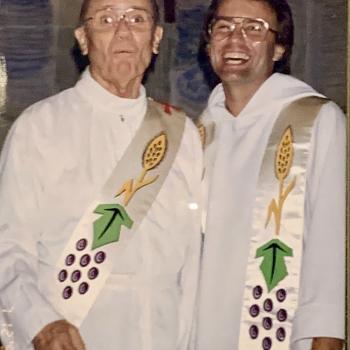
A deacon father's priceless gift to his son,...

Survey: Most Catholics in U.S. say living together...

The secret to a long marriage? Maybe It's...

'I do' x 50: A great marriage ministry...
TRENDING AT PATHEOS Catholic

Rejecting Doom: Christian Hope And Human Action
Christianity is a religion of hope. We are to have hope and...

It’s What Comes From Within Which Matters
One of the most difficult things for us to understand is why...

Why I Choose the Eucharist Over the Sermon
Choose the Eucharist, Not the Sermon What are we supposed to get...

5 Design Elements Found in Spiritually Rooted Homes
Putting Spirituality Into Home Decor Our homes are more than our living...

Credo: A Story of God Told with the...
About 10 years ago, I began to imagine a personal "Credo" that...

The Anatomy of Divine Revelation in Catholic Thought
The claim that God has made Himself known to human beings is...
view all Catholic blogs
Ad-Free & Subscriber Log-In Subscription Support
- About Us
- 2026 Calendar
- Videos
- Podcasts
- Library of World Religions
- Faith In Media Tracker
- Advertise With Us
- Write for Us
- Privacy Policy
- Terms of Service
- Do Not Sell My Data
- Contact Us
- Radiant Digital
- Manage Newsletter Subscriptions
- Unsubscribe From Notifications
- Sitemap
Copyright 2008-2026, Patheos. All rights reserved.
Subscription Support Ad-Free & Subscriber Log-In
Follow Patheos