
BuddhistCatholicContemplativeEvangelicalGeneral ChristianHinduJewishLatter-day SaintMuslimNew VisionsProgressive Christian
Beliefs
- Buddhist
- Catholic
- Contemplative
- Evangelical
- General Christian
- Hindu
- Jewish
- Latter-day Saint
- More Voices
- Muslim
- New Visions
- Pagan
- Progressive Christian
Topics
- Religion News
- Food and Religion
- Sports and Religion
- Religious Art
- Religious Music and Entertainment
- Religious Events
- History and Religion
- Style and Religion
- Politics and Religion
- Women in Religion
- Recreation Outdoors and Religion
- Business Finance and Religion
- Careers Workplace and Religion
- Education and Religion
- Family Parenting and Religion
- Health Fitness and Religion
- Home and Religion
- Relationships and Religion
- Technology and Religion
- Travel and Religion
Columnists
- Buddhist Columnists
- Business Finance and Religion Columnists
- Careers Workplace and Religion Columnists
- Catholic Columnists
- Contemplative Columnists
- Education and Religion Columnists
- Evangelists Columnists
- Family Parenting and Religion Columnists
- General Christian Columnists
- Health Fitness and Religion Columnists
- Hindu Columnists
- History and Religion Columnists
- Home and Religion Columnists
- Jewish Columnists
- More Voices Columnists
- Latter Day Columnists
- Muslim Columnists
- New Visions Columnists
- Nonreligious Columnists
- Pagan Columnists
- Politics and Religion Columnists
- Progressive Columnists
- Recreation Outdoors and Religion Columnists
- Relationships and Religion Columnists
- Religion News Columnists
- Religious Art Columnists
- Religious Events Columnists
- Religious Music and Entertainment Columnists
- Sports and Religion Columnists
- Style and Religion Columnists
- Technology and Religion Columnists
- Travel and Religion Columnists
- Women in Religion Columnists
Resource Library
- 2026 Calendar
- Library of World Religions
- The 100 Most Holy Places on Earth
- Patheos Answers
- Podcasts
- Videos
- Faith Leaders Database
- Anglican Episcopalian
- Bahai
- Baptist
- Buddhism
- Christianity
- Confucianism
- Eastern Orthodoxy
- Hinduism
- Holiness and Pentecostal
- ISKCON
- Islam
- Judaism
- Lutheran
- Methodist
- The Church of Jesus Christ of Latter-day Saints
- New Age
- Paganism
- Presbytarian and Reformed
- Protestantism
- Religion Behind the Scenes
- Roman Catholic
- Scientology
- Shia Islam
- Sikhism
- Sufism
- Sunni Islam
- Taoism
- Zen
- See all religions
Research Tools
 Ad-Free & Subscriber Log-In Subscription Support
Ad-Free & Subscriber Log-In Subscription Support
Follow Patheos 

- Trending:
- Forgiveness
- |
- Marriage
- |
- Consciousness
- |
- Death Penalty
- |
- Election
- |
- Halloween
 The Deacon's Bench
- Home
- Catholic
- Religion News
- “To refer to God purely as male is just unhelpful to many people now”
“To refer to God purely as male is just unhelpful to many people now”
Last updated on: June 1, 2015 at 2:14 pm by Deacon Greg Kandra
“To refer to God purely as male is just unhelpful to many people now” 2015-06-01T14:14:33-04:00 Deacon Greg Kandra
Patheos Explore the world's faith through different perspectives on religion and spirituality! Patheos has the views of the prevalent religions and spiritualities of the world.
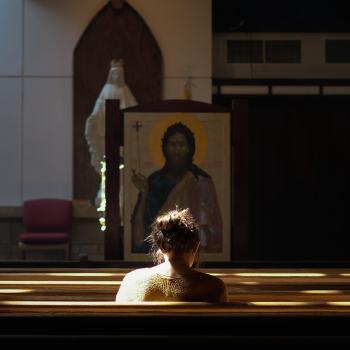
[getty src=”462267832?et=iO38wC-dQoZqbo9lhUW51Q&viewMoreLink=on&sig=Rd6qYLZ1q9BchFB1YTjtOtIg9Mfuh_eKFtq4KnB_R0M=&caption=true” width=”594″ height=”594″]
My blog neighbor Fr. Dwight Longenecker called attention yesterday to this item in The Telegraph, which notes a persistent trend among some in the Church of England to refer to God as a female:
Support is growing within the Church of England to rewrite its official liturgy to refer to God as female following the selection of the first women bishops.
Growing numbers of priests already insert words such as “she” and “mother” informally into traditional service texts as part of a move to make the language of worship more inclusive, it has been claimed.
But calls for a full overhaul of liturgy to recognise the equal status of women have already been discussed informally at a senior level.
It comes after the “Transformations Steering Group”, a body which meets in Lambeth Palace to examine the impact of women in ministry on the Church of England, issued a public call to the bishops to encourage more “expansive language and imagery about God”.
Hilary Cotton, chair of Women And The Church (Watch), the group which led the campaign for female bishops, said the shift away from the traditional patriarchal language of the Book of Common Prayer in already at an “advanced” stage in some quarters.
…“There is a thin thread of this throughout history but having women bishops makes it particularly obvious that … to continue to refer to God purely as male is just unhelpful to many people now,” [Mrs. Cotton] said.
Over twenty years ago when I was a minister in the Church of England they were already insinuating newly written feminist “canticles” and “psalms” into the worship books. Already at that time trendy vicars were referring to God as “Creator, Redeemer, Sustainer” to avoid patriarchal language. Already at that time we had feminist liturgies being foisted upon us.
The only thing new about this is that the feminists are flexing their muscles even more now that they have finally got women bishops.
It might be useful to understand what the Catholic Church teaches on this subject.
From the Catechism:
370 In no way is God in man’s image. He is neither man nor woman. God is pure spirit in which there is no place for the difference between the sexes. But the respective “perfections” of man and woman reflect something of the infinite perfection of God: those of a mother and those of a father and husband.
And there is this:
238 Many religions invoke God as “Father”. The deity is often considered the “father of gods and of men”. In Israel, God is called “Father” inasmuch as he is Creator of the world. Even more, God is Father because of the covenant and the gift of the law to Israel, “his first-born son”. God is also called the Father of the king of Israel. Most especially he is “the Father of the poor”, of the orphaned and the widowed, who are under his loving protection.
239By calling God “Father”, the language of faith indicates two main things: that God is the first origin of everything and transcendent authority; and that he is at the same time goodness and loving care for all his children. God’s parental tenderness can also be expressed by the image of motherhood, which emphasizes God’s immanence, the intimacy between Creator and creature. The language of faith thus draws on the human experience of parents, who are in a way the first representatives of God for man. But this experience also tells us that human parents are fallible and can disfigure the face of fatherhood and motherhood. We ought therefore to recall that God transcends the human distinction between the sexes. He is neither man nor woman: he is God. He also transcends human fatherhood and motherhood, although he is their origin and standard: no one is father as God is Father.
Catholic News Agency summed it up well, in this posting from A Catholic Response:
In the Bible the title “Mother” is never used for God. In the Old Testament (OT), God does use the title “Father” for Himself, but only rarely:
He (King David) shall cry to Me (God), “Thou art my Father, my God, and the Rock of my salvation.” [Psalm 89:26; RSV; cf. 2 Samuel 7:14; Psalm 68:6]
The OT titles for God are mainly political (Lord, King, Master) or military (Fortress, Rock, Shield). It was Christ who first fully developed the title “Abba” for the God of Israel. “Abba” is Aramaic for father and not mother or parent (Mark 14:36). Jesus in the Gospel refers to the God of Israel as “my Father” [Luke 2:49] and “Our Father” as in the Lord’s Prayer [Matt. 6:9; 23:9]. In the New Testament (NT) Epistles, the titles “God the Father” [Gal. 1:1; Eph. 5:20] and “God our Father” [Rom. 1:7; 1 Cor. 1:3] are frequently used. God may at times describe His actions in terms of motherhood, but Moses and St. Paul liken themselves as mothers too (Num. 11:12; Gal. 4:19).
In the Bible, God is described by many metaphors including that of motherhood (Deut. 32:18; Matt. 23:37), but never called “Mother” per se. In describing God, we must recognize the problems of our language. Even though our language is inadequate to describe God, it does influence our behavior and how we think of Him; therefore, it must be as correct and precise as possible. We may never find the exact words, but we must avoid using the wrong words. As Christians, we do not have the right to personally change God’s title to fit our whims.
Previous Post

June 1, 2015
I’m ready to roll for vocations. Are you?
Next Post
June 1, 2015 This is our Church: more Catholics, more parishes, fewer priests
Browse Our Archives
Select a Category "Mad Men" 9/11 advent All Things New Amazing video amazing videos amazon america Anglicans Anti-Catholicism art ascension thursday ash wednesday Atheists baltimore Bible Bishops Blogging bonnie engstrom Books bridgeport Brooklyn Chaplains children christian art christmas Church Churches CNEWA Converts criticism Deacons Death Penalty easter eastern christian Eastern Christians Ecumenism education Education Eucharist Europe euthanasia Evangelization Exorcism Family Feasts Gay rights Good Friday Great links Great Moments in Journalism Hanging with the saints heather renshaw Hispanic Catholics Hispanics History homelies Homilies Humor Hymn of the Week Immigration indianapolis Inspiration Interfaith news ireland Jesus Jews Journalism Judaism lent Liturgy logos Marriage Mary Media Medical news Mental health Middle East Monks Movies Music Muslims My world and welcome to it New Evangelization new york News Nuns Parenting Parish life peoria Persecution Politics politics Pope pope francis pope john paul Prayer Preaching Priests Pro-life Quote of the day radio rebecca frech ripp Ripped from the headlines rippred from the headlines Sacraments saints Scripture sex abuse Sex abuse crisis SEX ABUSE CRISIS TAGGED WITH: SEX ABUSE CRISIS The people in the pews the visitation project theatre This & that Thomas Merton Trappists TV Uncategorized uncategorized VATICAN Vatican vocation Vocations Voices & Views Women Worth a thousand words Writing Year of Faith year of mercy young people
Select a Month December 2019 November 2019 October 2019 September 2019 August 2019 July 2019 June 2019 May 2019 April 2019 March 2019 February 2019 January 2019 December 2018 November 2018 October 2018 September 2018 August 2018 July 2018 June 2018 May 2018 April 2018 March 2018 February 2018 January 2018 December 2017 November 2017 October 2017 September 2017 August 2017 July 2017 June 2017 May 2017 April 2017 March 2017 February 2017 January 2017 December 2016 November 2016 October 2016 September 2016 August 2016 July 2016 June 2016 May 2016 April 2016 March 2016 February 2016 January 2016 December 2015 November 2015 October 2015 September 2015 August 2015 July 2015 June 2015 May 2015 April 2015 March 2015 February 2015 January 2015 December 2014 November 2014 October 2014 September 2014 August 2014 July 2014 June 2014 May 2014 April 2014 March 2014 February 2014 January 2014 December 2013 November 2013 October 2013 September 2013 August 2013 July 2013 June 2013 May 2013 April 2013 March 2013 February 2013 January 2013 December 2012 November 2012 October 2012 September 2012 August 2012 July 2012 June 2012 May 2012 April 2012 March 2012 February 2012 January 2012 December 2011 November 2011 October 2011 September 2011 August 2011 July 2011 June 2011 May 2011 April 2011 March 2011 February 2011 January 2011 December 2010
Follow Us!
TAKE THE
Religious Wisdom Quiz
Who betrayed Jesus for 30 pieces of silver?
Select your answer to see how you score.
John Judas Iscariot James Simon Peter
Books by This Author Books by Deacon Greg Kandra
Related posts from The Deacon's Bench
'A vivid example of how NOT to Catholic'

On women preaching: 'The pulpit is not our...

'I’m sorry, Mom, but I don’t think I’ll...

What Makes 'Nones' Become Catholic?
TRENDING AT PATHEOS Catholic

Creation, Preservation, and Teleology in Catholic Theology
As I write this, it is very early Monday morning. Like millions...

The Parable Of The Sower And The Word...
One of Christ’s most famous parables is that of the sower who...

Rejecting Doom: Christian Hope And Human Action
Christianity is a religion of hope. We are to have hope and...

Why I Choose the Eucharist Over the Sermon
Choose the Eucharist, Not the Sermon What are we supposed to get...

5 Design Elements Found in Spiritually Rooted Homes
Putting Spirituality Into Home Decor Our homes are more than our living...

Credo: A Story of God Told with the...
About 10 years ago, I began to imagine a personal "Credo" that...
view all Catholic blogs
Ad-Free & Subscriber Log-In Subscription Support
- About Us
- 2026 Calendar
- Videos
- Podcasts
- Library of World Religions
- Faith In Media Tracker
- Advertise With Us
- Write for Us
- Privacy Policy
- Terms of Service
- Do Not Sell My Data
- Contact Us
- Radiant Digital
- Manage Newsletter Subscriptions
- Unsubscribe From Notifications
- Sitemap
Copyright 2008-2026, Patheos. All rights reserved.
Subscription Support Ad-Free & Subscriber Log-In
Follow Patheos