
BuddhistCatholicContemplativeEvangelicalGeneral ChristianHinduJewishLatter-day SaintMuslimNew VisionsProgressive Christian
Beliefs
- Buddhist
- Catholic
- Contemplative
- Evangelical
- General Christian
- Hindu
- Jewish
- Latter-day Saint
- More Voices
- Muslim
- New Visions
- Pagan
- Progressive Christian
Topics
- Religion News
- Food and Religion
- Sports and Religion
- Religious Art
- Religious Music and Entertainment
- Religious Events
- History and Religion
- Style and Religion
- Politics and Religion
- Women in Religion
- Recreation Outdoors and Religion
- Business Finance and Religion
- Careers Workplace and Religion
- Education and Religion
- Family Parenting and Religion
- Health Fitness and Religion
- Home and Religion
- Relationships and Religion
- Technology and Religion
- Travel and Religion
Columnists
- Buddhist Columnists
- Business Finance and Religion Columnists
- Careers Workplace and Religion Columnists
- Catholic Columnists
- Contemplative Columnists
- Education and Religion Columnists
- Evangelists Columnists
- Family Parenting and Religion Columnists
- General Christian Columnists
- Health Fitness and Religion Columnists
- Hindu Columnists
- History and Religion Columnists
- Home and Religion Columnists
- Jewish Columnists
- More Voices Columnists
- Latter Day Columnists
- Muslim Columnists
- New Visions Columnists
- Nonreligious Columnists
- Pagan Columnists
- Politics and Religion Columnists
- Progressive Columnists
- Recreation Outdoors and Religion Columnists
- Relationships and Religion Columnists
- Religion News Columnists
- Religious Art Columnists
- Religious Events Columnists
- Religious Music and Entertainment Columnists
- Sports and Religion Columnists
- Style and Religion Columnists
- Technology and Religion Columnists
- Travel and Religion Columnists
- Women in Religion Columnists
Resource Library
- 2026 Calendar
- Library of World Religions
- The 100 Most Holy Places on Earth
- Patheos Answers
- Podcasts
- Videos
- Faith Leaders Database
- Anglican Episcopalian
- Bahai
- Baptist
- Buddhism
- Christianity
- Confucianism
- Eastern Orthodoxy
- Hinduism
- Holiness and Pentecostal
- ISKCON
- Islam
- Judaism
- Lutheran
- Methodist
- The Church of Jesus Christ of Latter-day Saints
- New Age
- Paganism
- Presbytarian and Reformed
- Protestantism
- Religion Behind the Scenes
- Roman Catholic
- Scientology
- Shia Islam
- Sikhism
- Sufism
- Sunni Islam
- Taoism
- Zen
- See all religions
Research Tools
 Ad-Free & Subscriber Log-In Subscription Support
Ad-Free & Subscriber Log-In Subscription Support
Follow Patheos 

- Trending:
- Forgiveness
- |
- Marriage
- |
- Consciousness
- |
- Death Penalty
- |
- Election
- |
- Halloween
 The Deacon's Bench
- Home
- Catholic
- Religion News
- Historic: Francis becomes first pope to visit Waldensian temple
Historic: Francis becomes first pope to visit Waldensian temple
Last updated on: June 22, 2015 at 9:43 am by Deacon Greg Kandra
Historic: Francis becomes first pope to visit Waldensian temple 2015-06-22T09:43:13-04:00 Deacon Greg Kandra
Patheos Explore the world's faith through different perspectives on religion and spirituality! Patheos has the views of the prevalent religions and spiritualities of the world.
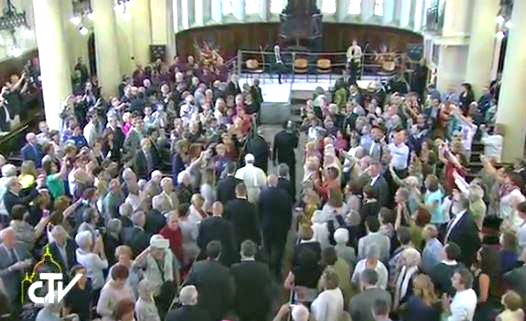
From Vatican Radio:
On the second day of his Apostolic Visit, Pope Francis made an historic visit to the Waldensian temple in Turin. Although numbering only about 30,000 adherents, the Waldensian Evangelical Church is an important dialogue partner with the Catholic Church, as it is one of the only non-Catholic Christian communities native to Italy.
The early morning meeting marked the first time a Pope had visited a Waldensian house of worship.
Pope Francis began his speech to representatives of the Italian Waldensian community with a brief personal remembrance of his previous meetings with the friends of the Waldensian Evangelical Church of Rio del Plata, when he was Archbishop of Buenos Aires. The Pope spoke of his appreciation of the “spirituality and faith” of those meetings, from which he “learned many good things.”
The Pope went on to speak about the fruits of the ecumenical movement in recent years. The principle fruit, he said, “is the rediscovery of the fraternity that unites all those who believe in Jesus Christ and are baptized in His Name.” This, he said, “allows us to grasp the profound ties that already unite us, despite our differences. It concerns a communion that is still on a journey, which, with prayer, with continual personal and communal conversion, and with the help of the theologians, we hope, trusting in the action of the Holy Spirit, can become full and visible communion in truth and charity.”
“But the unity that is the fruit of the Holy Spirit,” the Pope said, “does not mean uniformity. Brothers have in common the same origin, but they are not identical among themselves.” Unfortunately, he continued, historically this diversity was not accepted and was a cause of violence and disputes “committed in the name of the faith itself.” This history, the Pope said, can only grieve us, who pray for the grace “to recognize that we are all sinners and to know to forgive one another.” He then asked for forgiveness for “the non-Christian attitudes and behaviour” of the Catholic Church against Waldensians.
Check out the rest.
More on the Waldensians, from Catholic Encyclopedia:
The real founder of the sect was a wealthy merchant of Lyons who in the early documents is called Waldes(Waldo). To this name is added from 1368 the designation of Peter, assumed by him at his “conversion”, or more likely, attributed to him by his followers. Few details concerning his personal history are known; there are extant, however, two important accounts of the complete change in his religious life; one written about 1220 by a Premonstratensian monk, usually designated as the “anonymous chronicler of Laon“; the other by a Dominican Friar and Inquisitor Stephen of Bourbon (died about 1262), and dates back to about the middle of the thirteenth century. The former writer assigns a prominent place to the influence exercised on Waldes by the history of St. Alexius, while the latter makes no mention of it but speaks of his acquaintance with the contents of the Bible through translations.
The history of Waldes’s conversion may perhaps be reconstructed in the following manner. Desirous of acquiring a knowledge of biblical teaching, Waldes requested two priests to translate for him the four Gospels. In a similar manner he subsequently obtained translations of other Biblical books and of some writings of the Fathers. Through the reading of these works he was attracted to the practice of Christian perfection; his fervour increased when one day he heard from an itinerant singer (ioculator) the history of St. Alexius. He now consulted a master of theology on the best and surest way tosalvation. In answer the words of Christ to the rich young man were cited to him: “If thou wilt be perfect, go sell what thou hast, and give to the poor.” (Matthew 19:21). Waldes immediately put into effect the counsel of the Divine Master. He made over part of his wealth to his wife, part to those from whom he had acquired it, left some to the nuns of Fontevrault in whose monastery he placed his two little daughters, and distributed the greatest part to the poor. On the feast of the Assumption, 1176, he disposed of the last of his earthly possessions and shortly after took the vow of poverty.
From Wikipedia:
The present Waldensian Church considers itself to be a Protestant church of the Reformed tradition originally framed by Huldrych Zwingli and John Calvin. It recognizes as its doctrinal standard the confession of faith published in 1655 and based on the Reformed confession of 1559. It admits only two ceremonies, baptism and the Lord’s Supper.[7]Supreme authority in the body is exercised by an annual synod, and the affairs of the individual congregations are administered by a consistory under the presidency of the pastor.
Over the centuries, Waldensian churches have been established in countries as far away from France as Uruguay and the United States where the active Waldensian congregations continue the purpose of the Waldensian movement. The contemporary and historic Waldensian spiritual heritage describes itself as proclaiming the Gospel, serving the marginalized, promoting social justice, fostering inter-religious work, and advocating respect for religious diversity and freedom of conscience.[1] Today, the Waldensian Church is member of the World Communion of Reformed Churches, the World Methodist Council, the Federation of Evangelical Churches in Italy, and the World Council of Churches.
Photo via CNS/Twitter
Previous Post

June 21, 2015
Report: Archbishop Nienstedt sought to limit investigation
Next Post
June 22, 2015 Superb: Fr. Michael Duffy's homily for a new priest
Browse Our Archives
Select a Category "Mad Men" 9/11 advent All Things New Amazing video amazing videos amazon america Anglicans Anti-Catholicism art ascension thursday ash wednesday Atheists baltimore Bible Bishops Blogging bonnie engstrom Books bridgeport Brooklyn Chaplains children christian art christmas Church Churches CNEWA Converts criticism Deacons Death Penalty easter eastern christian Eastern Christians Ecumenism Education education Eucharist Europe euthanasia Evangelization Exorcism Family Feasts Gay rights Good Friday Great links Great Moments in Journalism Hanging with the saints heather renshaw Hispanic Catholics Hispanics History homelies Homilies Humor Hymn of the Week Immigration indianapolis Inspiration Interfaith news ireland Jesus Jews Journalism Judaism lent Liturgy logos Marriage Mary Media Medical news Mental health Middle East Monks Movies Music Muslims My world and welcome to it New Evangelization new york News Nuns Parenting Parish life peoria Persecution Politics politics Pope pope francis pope john paul Prayer Preaching Priests Pro-life Quote of the day radio rebecca frech ripp Ripped from the headlines rippred from the headlines Sacraments saints Scripture sex abuse Sex abuse crisis SEX ABUSE CRISIS TAGGED WITH: SEX ABUSE CRISIS The people in the pews the visitation project theatre This & that Thomas Merton Trappists TV uncategorized Uncategorized VATICAN Vatican vocation Vocations Voices & Views Women Worth a thousand words Writing Year of Faith year of mercy young people
Select a Month December 2019 November 2019 October 2019 September 2019 August 2019 July 2019 June 2019 May 2019 April 2019 March 2019 February 2019 January 2019 December 2018 November 2018 October 2018 September 2018 August 2018 July 2018 June 2018 May 2018 April 2018 March 2018 February 2018 January 2018 December 2017 November 2017 October 2017 September 2017 August 2017 July 2017 June 2017 May 2017 April 2017 March 2017 February 2017 January 2017 December 2016 November 2016 October 2016 September 2016 August 2016 July 2016 June 2016 May 2016 April 2016 March 2016 February 2016 January 2016 December 2015 November 2015 October 2015 September 2015 August 2015 July 2015 June 2015 May 2015 April 2015 March 2015 February 2015 January 2015 December 2014 November 2014 October 2014 September 2014 August 2014 July 2014 June 2014 May 2014 April 2014 March 2014 February 2014 January 2014 December 2013 November 2013 October 2013 September 2013 August 2013 July 2013 June 2013 May 2013 April 2013 March 2013 February 2013 January 2013 December 2012 November 2012 October 2012 September 2012 August 2012 July 2012 June 2012 May 2012 April 2012 March 2012 February 2012 January 2012 December 2011 November 2011 October 2011 September 2011 August 2011 July 2011 June 2011 May 2011 April 2011 March 2011 February 2011 January 2011 December 2010
Follow Us!
TAKE THE
Religious Wisdom Quiz
According to the Beatitudes, who will be blessed?
Select your answer to see how you score.
The wealthiest The strongest The merciful The most powerful
Books by This Author Books by Deacon Greg Kandra
Related posts from The Deacon's Bench
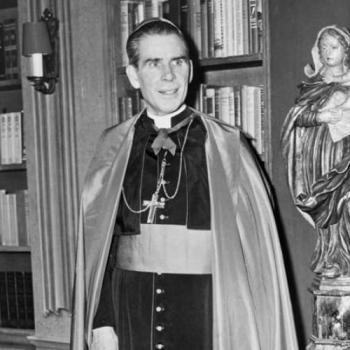
CNA: Rochester bishop requested Sheen beatification delay
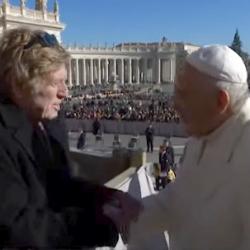
Hollywood on the Tiber: When Francis met Redford
Growing number of U.S. Latinos leaving Catholic Church...
TRENDING AT PATHEOS Catholic

Rejecting Doom: Christian Hope And Human Action
Christianity is a religion of hope. We are to have hope and...

It’s What Comes From Within Which Matters
One of the most difficult things for us to understand is why...

Why I Choose the Eucharist Over the Sermon
Choose the Eucharist, Not the Sermon What are we supposed to get...

5 Design Elements Found in Spiritually Rooted Homes
Putting Spirituality Into Home Decor Our homes are more than our living...

Credo: A Story of God Told with the...
About 10 years ago, I began to imagine a personal "Credo" that...

The Anatomy of Divine Revelation in Catholic Thought
The claim that God has made Himself known to human beings is...
view all Catholic blogs
Ad-Free & Subscriber Log-In Subscription Support
- About Us
- 2026 Calendar
- Videos
- Podcasts
- Library of World Religions
- Faith In Media Tracker
- Advertise With Us
- Write for Us
- Privacy Policy
- Terms of Service
- Do Not Sell My Data
- Contact Us
- Radiant Digital
- Manage Newsletter Subscriptions
- Unsubscribe From Notifications
- Sitemap
Copyright 2008-2026, Patheos. All rights reserved.
Subscription Support Ad-Free & Subscriber Log-In
Follow Patheos