
BuddhistCatholicContemplativeEvangelicalGeneral ChristianHinduJewishLatter-day SaintMuslimNew VisionsProgressive Christian
Beliefs
- Buddhist
- Catholic
- Contemplative
- Evangelical
- General Christian
- Hindu
- Jewish
- Latter-day Saint
- More Voices
- Muslim
- New Visions
- Pagan
- Progressive Christian
Topics
- Religion News
- Food and Religion
- Sports and Religion
- Religious Art
- Religious Music and Entertainment
- Religious Events
- History and Religion
- Style and Religion
- Politics and Religion
- Women in Religion
- Recreation Outdoors and Religion
- Business Finance and Religion
- Careers Workplace and Religion
- Education and Religion
- Family Parenting and Religion
- Health Fitness and Religion
- Home and Religion
- Relationships and Religion
- Technology and Religion
- Travel and Religion
Columnists
- Buddhist Columnists
- Business Finance and Religion Columnists
- Careers Workplace and Religion Columnists
- Catholic Columnists
- Contemplative Columnists
- Education and Religion Columnists
- Evangelists Columnists
- Family Parenting and Religion Columnists
- General Christian Columnists
- Health Fitness and Religion Columnists
- Hindu Columnists
- History and Religion Columnists
- Home and Religion Columnists
- Jewish Columnists
- More Voices Columnists
- Latter Day Columnists
- Muslim Columnists
- New Visions Columnists
- Nonreligious Columnists
- Pagan Columnists
- Politics and Religion Columnists
- Progressive Columnists
- Recreation Outdoors and Religion Columnists
- Relationships and Religion Columnists
- Religion News Columnists
- Religious Art Columnists
- Religious Events Columnists
- Religious Music and Entertainment Columnists
- Sports and Religion Columnists
- Style and Religion Columnists
- Technology and Religion Columnists
- Travel and Religion Columnists
- Women in Religion Columnists
Resource Library
- 2026 Calendar
- Library of World Religions
- The 100 Most Holy Places on Earth
- Patheos Answers
- Podcasts
- Videos
- Faith Leaders Database
- Anglican Episcopalian
- Bahai
- Baptist
- Buddhism
- Christianity
- Confucianism
- Eastern Orthodoxy
- Hinduism
- Holiness and Pentecostal
- ISKCON
- Islam
- Judaism
- Lutheran
- Methodist
- The Church of Jesus Christ of Latter-day Saints
- New Age
- Paganism
- Presbytarian and Reformed
- Protestantism
- Religion Behind the Scenes
- Roman Catholic
- Scientology
- Shia Islam
- Sikhism
- Sufism
- Sunni Islam
- Taoism
- Zen
- See all religions
Research Tools
 Ad-Free & Subscriber Log-In Subscription Support
Ad-Free & Subscriber Log-In Subscription Support
Follow Patheos 

- Trending:
- Forgiveness
- |
- Marriage
- |
- Consciousness
- |
- Death Penalty
- |
- Election
- |
- Halloween
 The Deacon's Bench
- Home
- Catholic
- Religion News
- Creating an Arctic bible: how do the Eskimos say “desert”?
Creating an Arctic bible: how do the Eskimos say “desert”?
Last updated on: September 30, 2016 at 5:08 pm by Deacon Greg Kandra
Creating an Arctic bible: how do the Eskimos say “desert”? 2016-09-30T17:08:41-04:00 Deacon Greg Kandra
Patheos Explore the world's faith through different perspectives on religion and spirituality! Patheos has the views of the prevalent religions and spiritualities of the world.
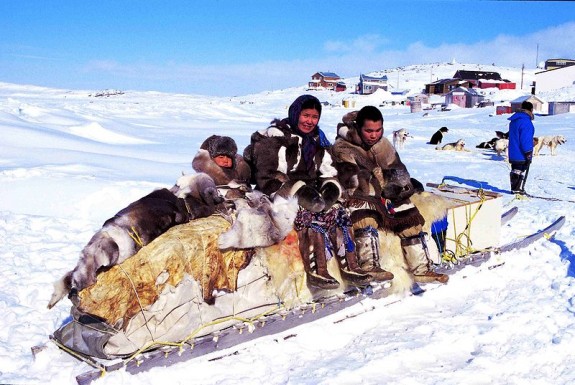
Here’s something the original authors of sacred scripture never had to think about:
Later this spring, an entire Bible in Inuktitut, the language of Inuit people and the most widely spoken aboriginal tongue in Canada’s Arctic, will be dedicated at an igloo-shaped church in Nunavut, an autonomous region carved out of the Northwest Territories in 1999.
Begun in 1978, the massive task marks the first time in Canada that a translation of the whole Bible was accomplished entirely by native speakers of the language rather than by white missionaries.
It was kick-started by the late Rev. Eugene Nida, considered the father of modern biblical translation, whose major contribution to the field was the concept of “functional equivalence.” Instead of using literal translations, the idea was to convey meaning by incorporating native culture and idiom into the Bible’s story.
Nida’s message to non-aboriginal translators about the advantage of native speakers was simple: “You may have learned the language well,” recalled Rev. Jonah Allooloo, an Inuk priest and canon of the Anglican Church of Canada who worked on the Inuktitut project from the start, “but you’ll never learn to think the way these people do.”
Canada’s last census found some 33,000 speakers of Inuktitut, part of the Eskimo-Aleut family of languages. It is spoken in Nunavut, the Northwest Territories and northern Quebec, and almost exclusively north of the tree line.
It was an oral language for thousands of years until an Anglican missionary, Edmund Peck, introduced the syllabic script _ in which characters represent syllables _ in the late 19th century. Most speakers are Christian.
The full translation follows the completion in 1991 of an Inuktitut New Testament, now in its fifth edition. The Old Testament took so long because Allooloo and the project’s translation coordinator, retired Anglican Bishop Benjamin Arreak, worked on it for only one or two months of the year.
“We are priests,” Allooloo pointed out. “We have responsibilities. We are on 24-hour call.” And they have a lot of ground to cover: at 15 times the land mass of Great Britain, the Anglican Church of Canada’s Diocese of the Arctic is the world’s largest Christian diocese.
Inuit Christians longed for a complete Bible, Arreak said. During the translation process, “people were saying, ‘If there are rough drafts, can I have a printout?’
“Our people need the whole Word of God to be inspired and strengthened and as a guide for their lives.”
But adapting the Old Testament, with its litany of desert vegetation and animals, to an Arctic readership presented challenges.
For one, there are no words in Inuktitut for “goat,” “sheep” or “camel.” Those had to be written phonetically.
And what to do about the 30-plus types of trees mentioned in the Bible when there are no trees of any kind for hundreds of miles in the Arctic?
“We used a general term for tree,” explained Allooloo, “and then explained it in the footnotes.” The translation brims with footnotes and explications.
The same word was used for “shepherd” as for someone who tends a dog team. “It’s like ‘baby sitter,'” said Arreak. Similarly, “pomegranate” is described as a sweet fruit with many seeds.
He and Allooloo agree that the Old Testament was easier to translate than the New because both Jewish and aboriginal traditions stress the oral tradition of storytelling and history.
Previous Post

May 6, 2012
"A stunning change"
Next Post
May 7, 2012 Worth a thousand words
Browse Our Archives
Select a Category "Mad Men" 9/11 advent All Things New Amazing video amazing videos amazon america Anglicans Anti-Catholicism art ascension thursday ash wednesday Atheists baltimore Bible Bishops Blogging bonnie engstrom Books bridgeport Brooklyn Chaplains children christian art christmas Church Churches CNEWA Converts criticism Deacons Death Penalty easter eastern christian Eastern Christians Ecumenism Education education Eucharist Europe euthanasia Evangelization Exorcism Family Feasts Gay rights Good Friday Great links Great Moments in Journalism Hanging with the saints heather renshaw Hispanic Catholics Hispanics History homelies Homilies Humor Hymn of the Week Immigration indianapolis Inspiration Interfaith news ireland Jesus Jews Journalism Judaism lent Liturgy logos Marriage Mary Media Medical news Mental health Middle East Monks Movies Music Muslims My world and welcome to it New Evangelization new york News Nuns Parenting Parish life peoria Persecution politics Politics Pope pope francis pope john paul Prayer Preaching Priests Pro-life Quote of the day radio rebecca frech ripp Ripped from the headlines rippred from the headlines Sacraments saints Scripture sex abuse Sex abuse crisis SEX ABUSE CRISIS TAGGED WITH: SEX ABUSE CRISIS The people in the pews the visitation project theatre This & that Thomas Merton Trappists TV Uncategorized uncategorized Vatican VATICAN vocation Vocations Voices & Views Women Worth a thousand words Writing Year of Faith year of mercy young people
Select a Month December 2019 November 2019 October 2019 September 2019 August 2019 July 2019 June 2019 May 2019 April 2019 March 2019 February 2019 January 2019 December 2018 November 2018 October 2018 September 2018 August 2018 July 2018 June 2018 May 2018 April 2018 March 2018 February 2018 January 2018 December 2017 November 2017 October 2017 September 2017 August 2017 July 2017 June 2017 May 2017 April 2017 March 2017 February 2017 January 2017 December 2016 November 2016 October 2016 September 2016 August 2016 July 2016 June 2016 May 2016 April 2016 March 2016 February 2016 January 2016 December 2015 November 2015 October 2015 September 2015 August 2015 July 2015 June 2015 May 2015 April 2015 March 2015 February 2015 January 2015 December 2014 November 2014 October 2014 September 2014 August 2014 July 2014 June 2014 May 2014 April 2014 March 2014 February 2014 January 2014 December 2013 November 2013 October 2013 September 2013 August 2013 July 2013 June 2013 May 2013 April 2013 March 2013 February 2013 January 2013 December 2012 November 2012 October 2012 September 2012 August 2012 July 2012 June 2012 May 2012 April 2012 March 2012 February 2012 January 2012 December 2011 November 2011 October 2011 September 2011 August 2011 July 2011 June 2011 May 2011 April 2011 March 2011 February 2011 January 2011 December 2010
Follow Us!
TAKE THE
Religious Wisdom Quiz
True or False: According to Romans, if God is for us, no one can be against us.
Select your answer to see how you score.
FALSE TRUE
Books by This Author Books by Deacon Greg Kandra
Related posts from The Deacon's Bench
Pope issues motu proprio establishing 'Sunday of the...
Banned: Catholic school removes Harry Potter books due...
J.D. Vance, author of 'Hillbilly Elegy,' becomes Catholic

'A Busy Person's Guide to Prayer' is Now...
TRENDING AT PATHEOS Catholic

Rejecting Doom: Christian Hope And Human Action
Christianity is a religion of hope. We are to have hope and...

It’s What Comes From Within Which Matters
One of the most difficult things for us to understand is why...

Why I Choose the Eucharist Over the Sermon
Choose the Eucharist, Not the Sermon What are we supposed to get...

5 Design Elements Found in Spiritually Rooted Homes
Putting Spirituality Into Home Decor Our homes are more than our living...

Credo: A Story of God Told with the...
About 10 years ago, I began to imagine a personal "Credo" that...

The Anatomy of Divine Revelation in Catholic Thought
The claim that God has made Himself known to human beings is...
view all Catholic blogs
Ad-Free & Subscriber Log-In Subscription Support
- About Us
- 2026 Calendar
- Videos
- Podcasts
- Library of World Religions
- Faith In Media Tracker
- Advertise With Us
- Write for Us
- Privacy Policy
- Terms of Service
- Do Not Sell My Data
- Contact Us
- Radiant Digital
- Manage Newsletter Subscriptions
- Unsubscribe From Notifications
- Sitemap
Copyright 2008-2026, Patheos. All rights reserved.
Subscription Support Ad-Free & Subscriber Log-In
Follow Patheos