
BuddhistCatholicContemplativeEvangelicalGeneral ChristianHinduJewishLatter-day SaintMuslimNew VisionsProgressive Christian
Beliefs
- Buddhist
- Catholic
- Contemplative
- Evangelical
- General Christian
- Hindu
- Jewish
- Latter-day Saint
- More Voices
- Muslim
- New Visions
- Pagan
- Progressive Christian
Topics
- Religion News
- Food and Religion
- Sports and Religion
- Religious Art
- Religious Music and Entertainment
- Religious Events
- History and Religion
- Style and Religion
- Politics and Religion
- Women in Religion
- Recreation Outdoors and Religion
- Business Finance and Religion
- Careers Workplace and Religion
- Education and Religion
- Family Parenting and Religion
- Health Fitness and Religion
- Home and Religion
- Relationships and Religion
- Technology and Religion
- Travel and Religion
Columnists
- Buddhist Columnists
- Business Finance and Religion Columnists
- Careers Workplace and Religion Columnists
- Catholic Columnists
- Contemplative Columnists
- Education and Religion Columnists
- Evangelists Columnists
- Family Parenting and Religion Columnists
- General Christian Columnists
- Health Fitness and Religion Columnists
- Hindu Columnists
- History and Religion Columnists
- Home and Religion Columnists
- Jewish Columnists
- More Voices Columnists
- Latter Day Columnists
- Muslim Columnists
- New Visions Columnists
- Nonreligious Columnists
- Pagan Columnists
- Politics and Religion Columnists
- Progressive Columnists
- Recreation Outdoors and Religion Columnists
- Relationships and Religion Columnists
- Religion News Columnists
- Religious Art Columnists
- Religious Events Columnists
- Religious Music and Entertainment Columnists
- Sports and Religion Columnists
- Style and Religion Columnists
- Technology and Religion Columnists
- Travel and Religion Columnists
- Women in Religion Columnists
Resource Library
- 2026 Calendar
- Library of World Religions
- The 100 Most Holy Places on Earth
- Patheos Answers
- Podcasts
- Videos
- Faith Leaders Database
- Anglican Episcopalian
- Bahai
- Baptist
- Buddhism
- Christianity
- Confucianism
- Eastern Orthodoxy
- Hinduism
- Holiness and Pentecostal
- ISKCON
- Islam
- Judaism
- Lutheran
- Methodist
- The Church of Jesus Christ of Latter-day Saints
- New Age
- Paganism
- Presbytarian and Reformed
- Protestantism
- Religion Behind the Scenes
- Roman Catholic
- Scientology
- Shia Islam
- Sikhism
- Sufism
- Sunni Islam
- Taoism
- Zen
- See all religions
Research Tools
 Ad-Free & Subscriber Log-In Subscription Support
Ad-Free & Subscriber Log-In Subscription Support
Follow Patheos 

- Trending:
- Forgiveness
- |
- Marriage
- |
- Consciousness
- |
- Death Penalty
- |
- Election
- |
- Halloween
 The Deacon's Bench
- Home
- Catholic
- Religion News
- So who was St. Valentine, anyway?
So who was St. Valentine, anyway?
Last updated on: September 30, 2016 at 5:47 pm by Deacon Greg Kandra
So who was St. Valentine, anyway? 2016-09-30T17:47:44-04:00 Deacon Greg Kandra
Patheos Explore the world's faith through different perspectives on religion and spirituality! Patheos has the views of the prevalent religions and spiritualities of the world.
There’s a lot that’s not known about this early saint, but what is known isn’t exactly romantic.

From NPR, which peers into Roman history:
From Feb. 13 to 15, the Romans celebrated the feast of Lupercalia. The men sacrificed a goat and a dog, then whipped women with the hides of the animals they had just slain.
The Roman romantics “were drunk. They were naked,” says Noel Lenski, a historian at the University of Colorado at Boulder. Young women would actually line up for the men to hit them, Lenski says. They believed this would make them fertile.
The brutal fete included a matchmaking lottery, in which young men drew the names of women from a jar. The couple would then be, um, coupled up for the duration of the festival – or longer, if the match was right.
The ancient Romans may also be responsible for the name of our modern day of love. Emperor Claudius II executed two men — both named Valentine — on Feb. 14 of different years in the 3rd century A.D. Their martyrdom was honored by the Catholic Church with the celebration of St. Valentine’s Day.
Later, Pope Gelasius I muddled things in the 5th century by combining St. Valentine’s Day with Lupercalia to expel the pagan rituals. But the festival was more of a theatrical interpretation of what it had once been. Lenski adds, “It was a little more of a drunken revel, but the Christians put clothes back on it. That didn’t stop it from being a day of fertility and love.”
Around the same time, the Normans celebrated Galatin’s Day. Galatin meant “lover of women.” That was likely confused with St. Valentine’s Day at some point, in part because they sound alike.
Meantime, a website devoted to Irish history offers more — because Ireland, it seems, reportedly has the saint’s remains:
The first Valentine was a Roman priest martyred under the Emperor Claudius II in 269 or 270 AD, the second was a Bishop of Terni killed in the same century, and little is known of the third who died in Africa.
St Valentine’s Feast Day falls on 14 February, on which day lovers have customarily exchanged cards and other tokens of affection. It is not clear why Valentine should have been chosen as the patron saint of lovers, but it has been suggested that there may be a connection with the pagan Roman Festival of Lupercalia. During this Festival, which took place in the middle of February, young men and girls chose one another as partners. Legend, no doubt embellished if not entirely fictional, has it that the Roman Valentine resisted an edict of the Emperor forbidding the marriage of young men bound for military service, for which offence he was put to death.
Valentine’s Feast is also linked with the belief that birds are supposed to pair on 14 February, which legend provided the inspiration for Chaucer’s ‘Parliament of Fowls’. The crocus, which starts to bloom in February, is called St Valentine’s Flower. The earliest Valentine letter is found in the fifteenth-century collection of Paston Letters. The general custom of sending tokens on Valentine’s Day developed during the nineteenth century, and in the present century has spread to the east, where it appears to be particularly popular in Japan. The exchange of Valentine cards, flowers, sweets and other gifts has thus become a multi-million dollar international industry. It is estimated that in excess of one billion Valentine cards are sent each year in the United States of America alone.
It may not be widely known outside Ireland that the Carmelite Church in Whitefriar Street in Dublin City claims to hold the remains of St Valentine. The Carmelites first arrived in Ireland in 1271, and today there is a community of 17 in the Monastery attached to Whitefriar Street Church. The story of how the remains of St Valentine came to rest in Whitefriar Street is interesting, and involves a famous nineteenth-century Carmelite attached to the Church, Fr John Spratt. Fr Spratt visited Rome in 1835, and apparently largely on the strength of his powers as a preacher, Pope Gregory XVI decided to make his Church a gift of St Valentine’s body, then believed to be in the Cemetery of St Hippolitus in Rome. The remains of Valentine were duly transferred to Whitefriar Street Church in 1836, and since that date have been venerated there, especially around the time of the Saint’s Feast Day.

Want more? Last but not least: you can always check the Catholic Encyclopedia.
Image at top: Saint Valentine of Terni oversees the construction of his basilica at Terni, from a 14th century French manuscript
Previous Post

February 13, 2011
Looking for someone to pray for? How about Justin Bieber?
Next Post
February 14, 2011 Shoot: county mandates no cursing for Valentine's Day
Browse Our Archives
Select a Category "Mad Men" 9/11 advent All Things New Amazing video amazing videos amazon america Anglicans Anti-Catholicism art ascension thursday ash wednesday Atheists baltimore Bible Bishops Blogging bonnie engstrom Books bridgeport Brooklyn Chaplains children christian art christmas Church Churches CNEWA Converts criticism Deacons Death Penalty easter eastern christian Eastern Christians Ecumenism education Education Eucharist Europe euthanasia Evangelization Exorcism Family Feasts Gay rights Good Friday Great links Great Moments in Journalism Hanging with the saints heather renshaw Hispanic Catholics Hispanics History homelies Homilies Humor Hymn of the Week Immigration indianapolis Inspiration Interfaith news ireland Jesus Jews Journalism Judaism lent Liturgy logos Marriage Mary Media Medical news Mental health Middle East Monks Movies Music Muslims My world and welcome to it New Evangelization new york News Nuns Parenting Parish life peoria Persecution Politics politics Pope pope francis pope john paul Prayer Preaching Priests Pro-life Quote of the day radio rebecca frech ripp Ripped from the headlines rippred from the headlines Sacraments saints Scripture sex abuse Sex abuse crisis SEX ABUSE CRISIS TAGGED WITH: SEX ABUSE CRISIS The people in the pews the visitation project theatre This & that Thomas Merton Trappists TV Uncategorized uncategorized Vatican VATICAN vocation Vocations Voices & Views Women Worth a thousand words Writing Year of Faith year of mercy young people
Select a Month December 2019 November 2019 October 2019 September 2019 August 2019 July 2019 June 2019 May 2019 April 2019 March 2019 February 2019 January 2019 December 2018 November 2018 October 2018 September 2018 August 2018 July 2018 June 2018 May 2018 April 2018 March 2018 February 2018 January 2018 December 2017 November 2017 October 2017 September 2017 August 2017 July 2017 June 2017 May 2017 April 2017 March 2017 February 2017 January 2017 December 2016 November 2016 October 2016 September 2016 August 2016 July 2016 June 2016 May 2016 April 2016 March 2016 February 2016 January 2016 December 2015 November 2015 October 2015 September 2015 August 2015 July 2015 June 2015 May 2015 April 2015 March 2015 February 2015 January 2015 December 2014 November 2014 October 2014 September 2014 August 2014 July 2014 June 2014 May 2014 April 2014 March 2014 February 2014 January 2014 December 2013 November 2013 October 2013 September 2013 August 2013 July 2013 June 2013 May 2013 April 2013 March 2013 February 2013 January 2013 December 2012 November 2012 October 2012 September 2012 August 2012 July 2012 June 2012 May 2012 April 2012 March 2012 February 2012 January 2012 December 2011 November 2011 October 2011 September 2011 August 2011 July 2011 June 2011 May 2011 April 2011 March 2011 February 2011 January 2011 December 2010
Follow Us!
TAKE THE
Religious Wisdom Quiz
Who was the mother of Samuel?
Select your answer to see how you score.
Rebekah Ruth Deborah Hannah
Books by This Author Books by Deacon Greg Kandra
Related posts from The Deacon's Bench

Sheen beatification postponed after bishops 'ask for further...

Another 20th century American is about to be...
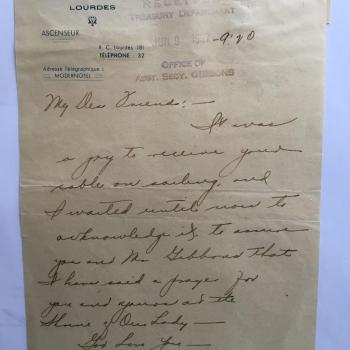
Read a rare, handwritten letter from Fulton Sheen

The significance of December 21 for Fulton Sheen's...
TRENDING AT PATHEOS Catholic

The Parable Of The Sower And The Word...
One of Christ’s most famous parables is that of the sower who...

Rejecting Doom: Christian Hope And Human Action
Christianity is a religion of hope. We are to have hope and...

Why I Choose the Eucharist Over the Sermon
Choose the Eucharist, Not the Sermon What are we supposed to get...

5 Design Elements Found in Spiritually Rooted Homes
Putting Spirituality Into Home Decor Our homes are more than our living...

Credo: A Story of God Told with the...
About 10 years ago, I began to imagine a personal "Credo" that...

The Anatomy of Divine Revelation in Catholic Thought
The claim that God has made Himself known to human beings is...
view all Catholic blogs
Ad-Free & Subscriber Log-In Subscription Support
- About Us
- 2026 Calendar
- Videos
- Podcasts
- Library of World Religions
- Faith In Media Tracker
- Advertise With Us
- Write for Us
- Privacy Policy
- Terms of Service
- Do Not Sell My Data
- Contact Us
- Radiant Digital
- Manage Newsletter Subscriptions
- Unsubscribe From Notifications
- Sitemap
Copyright 2008-2026, Patheos. All rights reserved.
Subscription Support Ad-Free & Subscriber Log-In
Follow Patheos