
BuddhistCatholicContemplativeEvangelicalGeneral ChristianHinduJewishLatter-day SaintMuslimNew VisionsProgressive Christian
Beliefs
- Buddhist
- Catholic
- Contemplative
- Evangelical
- General Christian
- Hindu
- Jewish
- Latter-day Saint
- More Voices
- Muslim
- New Visions
- Pagan
- Progressive Christian
Topics
- Religion News
- Food and Religion
- Sports and Religion
- Religious Art
- Religious Music and Entertainment
- Religious Events
- History and Religion
- Style and Religion
- Politics and Religion
- Women in Religion
- Recreation Outdoors and Religion
- Business Finance and Religion
- Careers Workplace and Religion
- Education and Religion
- Family Parenting and Religion
- Health Fitness and Religion
- Home and Religion
- Relationships and Religion
- Technology and Religion
- Travel and Religion
Columnists
- Buddhist Columnists
- Business Finance and Religion Columnists
- Careers Workplace and Religion Columnists
- Catholic Columnists
- Contemplative Columnists
- Education and Religion Columnists
- Evangelists Columnists
- Family Parenting and Religion Columnists
- General Christian Columnists
- Health Fitness and Religion Columnists
- Hindu Columnists
- History and Religion Columnists
- Home and Religion Columnists
- Jewish Columnists
- More Voices Columnists
- Latter Day Columnists
- Muslim Columnists
- New Visions Columnists
- Nonreligious Columnists
- Pagan Columnists
- Politics and Religion Columnists
- Progressive Columnists
- Recreation Outdoors and Religion Columnists
- Relationships and Religion Columnists
- Religion News Columnists
- Religious Art Columnists
- Religious Events Columnists
- Religious Music and Entertainment Columnists
- Sports and Religion Columnists
- Style and Religion Columnists
- Technology and Religion Columnists
- Travel and Religion Columnists
- Women in Religion Columnists
Resource Library
- 2026 Calendar
- Library of World Religions
- The 100 Most Holy Places on Earth
- Patheos Answers
- Podcasts
- Videos
- Faith Leaders Database
- Anglican Episcopalian
- Bahai
- Baptist
- Buddhism
- Christianity
- Confucianism
- Eastern Orthodoxy
- Hinduism
- Holiness and Pentecostal
- ISKCON
- Islam
- Judaism
- Lutheran
- Methodist
- The Church of Jesus Christ of Latter-day Saints
- New Age
- Paganism
- Presbytarian and Reformed
- Protestantism
- Religion Behind the Scenes
- Roman Catholic
- Scientology
- Shia Islam
- Sikhism
- Sufism
- Sunni Islam
- Taoism
- Zen
- See all religions
Research Tools
 Ad-Free & Subscriber Log-In Subscription Support
Follow Patheos 

- Trending:
- Advent
- |
- Forgiveness
- |
- Thanksgiving
- |
- Election
- |
- Seasonal Holidays
- |
- Marriage
 Edges of Faith
- Home
- Progressive Christian
- Witnessing Murder: Spirituality and Emotional Trauma in the Age of Viral Violence
Witnessing Murder: Spirituality and Emotional Trauma in the Age of Viral Violence
Last updated on: August 3, 2015 at 1:40 pm by David Roberts
Witnessing Murder: Spirituality and Emotional Trauma in the Age of Viral Violence 2015-08-03T13:40:09+00:00 David Roberts
Patheos Explore the world's faith through different perspectives on religion and spirituality! Patheos has the views of the prevalent religions and spiritualities of the world.
 With unprecedented intimacy and frequency, Americans are becoming witnesses to murder.
With the videos of beheadings and the footage of Black people being murdered by police, we’ve begun watching real people die violently in real-time, often from the palm of our hands or from the screens in our laps. Most recently, we streamed the disturbing body camera footage of Sam Dubose’s murder on our phones. We watched video of Tamir Rice’s death, transforming untold scores of people surfing social media into witnesses of the real-life murder of a child. We saw in unedited and gruesome detail the beheadings of innocents at the hands of extremists.
By now, almost all of us are witnesses to a murder. Many of us have seen more than one murder. Some of us have watched dozens.
Take a moment and think about the past year.
How many people have you watched be murdered?
How many people have you watched die violently?
The numbers can be staggering. While some say they refuse to watch any of the videos, many I spoke with say they have watched at least 3 to 5 people murdered this year. Still more count 10, 20, or higher.
What’s troubling, though, is how little reflection I’ve seen people of faith give this development. While there is plenty of concern about fictional violence in the media, less has been said about the real-life violence people now have access to at the tips of their fingers.
Imagine for a moment one of your friends, parishioners or fellow church members witnessed a violent murder. Now imagine they had witnessed a half-dozen or more murders in the span of a year. You would be rightfully concerned about their emotional well-being, wanting to provide them as much spiritual care as possible, visiting with them, listening to them, and praying with them. You might even encourage them to seek counseling.
Given increasing ubiquity and frequency of these videos, it is time to start thinking seriously about and discussing honestly the psychological trauma that can come from watching people be murdered. Now, before dismissing this post as one giant experiment in concern trolling, even researchers and scientific studies suggest that watching these kinds of videos can cause many of the same symptoms we see in people with post-traumatic stress disorder. In fact, one study found that repeated exposure to videos and stories in the media of a traumatic event like the Boston Marathon Bombing can cause more lasting psychological trauma than the people in the community where the tragic events took place.
Now, many religious folks might prefer to debate whether we should watch these videos. Some might say it desensitizes us to violence. Others will say it sensitizes us to ongoing violence and injustice we have previously been ignoring. But I’m honestly more interested in the effects of watching than the ethics. As people of faith, we don’t need a prescriptive response but a pastoral one. These videos aren’t thought experiments in a classroom but real life and real violence..
And these videos aren’t going anywhere either. People aren’t going to stop watching them. They are part of our new normal. In fact, with the rise in body cameras for police officers, we will likely see more not less of them. Not only are these kinds of videos poised to become more frequently and more readily available in the future, but there may well be increasing pressure to watch them as they fill social media.
So instead of telling people to watch or not to watch these kinds of videos, I think we would be better off helping each other make healthy, informed choices and provide support to those who are emotionally raw because of these videos.
As religious people, we can remind people that the decision to watch videos of murder is a serious one. Not because it is inherently right or wrong but because it does affect us psychologically and emotionally. It’s is not the same as clicking on a funny cat video on Facebook. It is not entertainment, something to view to while away some free time.
By clicking on one of these videos, we are consciously choosing to watch a person be murdered when we do not have to. Interrogate our reasons for doing so, if we haven’t already. Encourage people to take the time to pray or meditate about whether to become witnesses to (another) murder. And help them be prepared for what it might do to them emotionally or spiritually.
Watching the traumatic death of someone will leave a mark on a person as well. If choosing to watch these videos, be aware of the symptoms of secondary or vicarious psychological trauma. Consider talking to a counselor, a pastor, spiritual director, or a psychiatrist, especially taking into consideration the cumulative nature of all these videos over the past year. Find (or offer if you are a religious leader!) a private support group to process emotionally in a safe space.
In other words, before choosing to watch these videos, ask how we will care for ourselves, both in the short-term and long. Ask ourselves what we will do with the images we consume of someone’s death. And if we don’t have good answers or haven’t even thought about it at all, then perhaps we should reconsider clicking play for the moment.
It is a choice to become a witness to murder. No one has to watch these videos to be fully informed and fully outraged by it all.
But even if we are among those who don’t chose to watch these videos, we must be aware that many, many people are choosing to watch. Many are choosing to be witnesses to violent murder and executions. And many of them might be or will be traumatized by it.
So look around your social media feeds and timelines, your communities and your cities, your family and your friends, and your church and in your pews. Consider for a moment just how many witnesses to murder you probably know. Think about the emotional and spiritual burden of witnessing the violent death of another human. Those images and the feelings associated with them just don’t go away.
How can we respond in a more healthy way to people who have experienced trauma?
How can we take seriously the trauma of being murder witnesses?
How should the church respond to the trauma so many are experiencing from these videos?
I’ve long been convinced that the church needs to be a place that calls people to protest and prophetic action on issues like police violence and violence against people of color. But I’m becoming more and more convinced that even as it calls for action the church also needs to be a deeply pastoral place of healing, restoration, and support for the trauma and emotional damage that might come with such prophetic action. In fact, offering a pastoral place for processing the effects of witnessing the videos of these murders might actually open up spaces to encourage constructive and prophetic responses in ways simply preaching and teaching on police violence can’t.
Without a doubt, the church needs to be forming more than protestors, activists, and accomplices.
Maybe, in the face of witnessing such trauma, it also needs to be forming chaplains and building safe spaces as well.
Because with unprecedented frequency and intimacy, Americans are becoming mass witnesses to murder.
And, by and large, we aren’t even talking about it.
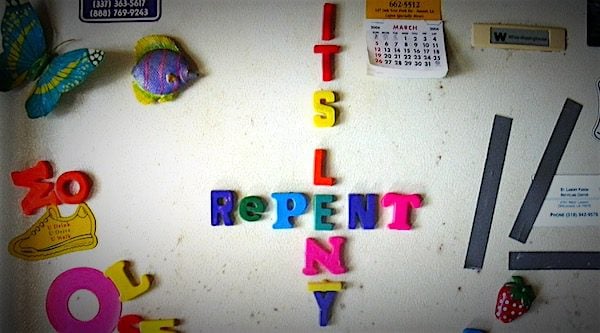
Image Credit: Brandon Anderson, Flickr, Used under Creative Commons
Previous Post

July 27, 2015
"Because Cotillions!" & Other Episcopal #AutoCorrect Fails
Next Post

August 27, 2015 Questioning Prayer: Why Should I Keep Praying After Yet Another Shooting?
Browse Our Archives
Select a Category Black Lives Matter Christian Calendar Daily Office Essay Fiction Film homily Humor Lectionary Lenten Meditations Living Faith Meditation Ministry Parable Parenting Poem Politics Pop Culture Reflection Satire Sketch Uncategorized
Select a Month December 2016 September 2016 August 2016 July 2016 June 2016 May 2016 April 2016 March 2016 February 2016 January 2016 December 2015 November 2015 October 2015 September 2015 August 2015 July 2015 June 2015 May 2015 April 2015 March 2015 February 2015 January 2015 December 2014 November 2014 October 2014 August 2014 July 2014 June 2014 April 2014 March 2014 February 2014 December 2013 November 2013 October 2013 September 2013 August 2013 July 2013 June 2013 May 2013 April 2013 March 2013 February 2013 December 2012 October 2012 September 2012 August 2012 May 2012 April 2012 March 2012 February 2012 January 2012 December 2011 November 2011 October 2011 September 2011
Follow Us!
TAKE THE
Religious Wisdom Quiz
How many plagues did God send upon Egypt?
Select your answer to see how you score.
7 12 10 5
Related posts from Edges of Faith

Welcoming Wonder and Curiosity: Lessons from a Comic...

Keep Christianity Weird: The Trinity, Mermaids, UFOs, and...

Fear Will Be the Big Winner on Super...
TRENDING AT PATHEOS Progressive Christian

The Secret behind A Charlie Brown Thanksgiving
Where Franklin Sat at Charlie Brown's Thanksgiving Table Sparky was sticking to...

Bridging the Gap Between God and Man
From Far Off to the Ultimate Embrace “God is a Spirit: and...

Let Matthew 25 Guide You to a Greater...
With the crisp feel of fall in the air, our minds quickly...

Can a Chatbot Touch Your Soul?
Can a chatbot offer genuine spiritual counsel? One conversation brought me to...

Religion and Politics: How Should We Then Live?
Two cultural axioms get repeated in polite company. Don't mix religion and...

7 Things We Get Wrong About Giving Thanks
It's a time of year when many of us turn to the...
view all Progressive Christian blogs
Ad-Free & Subscriber Log-In Subscription Support
- About Us
- 2026 Calendar
- Videos
- Podcasts
- Library of World Religions
- Faith In Media Tracker
- Advertise With Us
- Write for Us
- Privacy Policy
- Terms of Service
- Do Not Sell My Data
- Contact Us
- Radiant Digital
- Manage Newsletter Subscriptions
- Unsubscribe From Notifications
- Sitemap
Copyright 2008-2026, Patheos, part of the Radiant Digital network of media brands. All rights reserved.
Subscription Support Ad-Free & Subscriber Log-In
Follow Patheos