
BuddhistCatholicContemplativeEvangelicalGeneral ChristianHinduJewishLatter-day SaintMuslimNew VisionsProgressive Christian
Beliefs
- Buddhist
- Catholic
- Contemplative
- Evangelical
- General Christian
- Hindu
- Jewish
- Latter-day Saint
- More Voices
- Muslim
- New Visions
- Pagan
- Progressive Christian
Topics
- Religion News
- Food and Religion
- Sports and Religion
- Religious Art
- Religious Music and Entertainment
- Religious Events
- History and Religion
- Style and Religion
- Politics and Religion
- Women in Religion
- Recreation Outdoors and Religion
- Business Finance and Religion
- Careers Workplace and Religion
- Education and Religion
- Family Parenting and Religion
- Health Fitness and Religion
- Home and Religion
- Relationships and Religion
- Technology and Religion
- Travel and Religion
Columnists
- Buddhist Columnists
- Business Finance and Religion Columnists
- Careers Workplace and Religion Columnists
- Catholic Columnists
- Contemplative Columnists
- Education and Religion Columnists
- Evangelists Columnists
- Family Parenting and Religion Columnists
- General Christian Columnists
- Health Fitness and Religion Columnists
- Hindu Columnists
- History and Religion Columnists
- Home and Religion Columnists
- Jewish Columnists
- More Voices Columnists
- Latter Day Columnists
- Muslim Columnists
- New Visions Columnists
- Nonreligious Columnists
- Pagan Columnists
- Politics and Religion Columnists
- Progressive Columnists
- Recreation Outdoors and Religion Columnists
- Relationships and Religion Columnists
- Religion News Columnists
- Religious Art Columnists
- Religious Events Columnists
- Religious Music and Entertainment Columnists
- Sports and Religion Columnists
- Style and Religion Columnists
- Technology and Religion Columnists
- Travel and Religion Columnists
- Women in Religion Columnists
Resource Library
- 2026 Calendar
- Library of World Religions
- The 100 Most Holy Places on Earth
- Patheos Answers
- Podcasts
- Videos
- Faith Leaders Database
- Anglican Episcopalian
- Bahai
- Baptist
- Buddhism
- Christianity
- Confucianism
- Eastern Orthodoxy
- Hinduism
- Holiness and Pentecostal
- ISKCON
- Islam
- Judaism
- Lutheran
- Methodist
- The Church of Jesus Christ of Latter-day Saints
- New Age
- Paganism
- Presbytarian and Reformed
- Protestantism
- Religion Behind the Scenes
- Roman Catholic
- Scientology
- Shia Islam
- Sikhism
- Sufism
- Sunni Islam
- Taoism
- Zen
- See all religions
Research Tools
 Ad-Free & Subscriber Log-In Subscription Support
Ad-Free & Subscriber Log-In Subscription Support
Follow Patheos 

- Trending:
- Forgiveness
- |
- Marriage
- |
- Consciousness
- |
- Death Penalty
- |
- Election
- |
- Halloween
 Edges of Faith
- Home
- Progressive Christian
- Abuse Happens in Progressive Churches, Too: The Duggar Scandal and the Failure of Self-Critical Reflection
Abuse Happens in Progressive Churches, Too: The Duggar Scandal and the Failure of Self-Critical Reflection
Last updated on: May 29, 2015 at 9:49 pm by David Roberts
Abuse Happens in Progressive Churches, Too: The Duggar Scandal and the Failure of Self-Critical Reflection 2015-05-29T21:49:00+00:00 David Roberts
Patheos Explore the world's faith through different perspectives on religion and spirituality! Patheos has the views of the prevalent religions and spiritualities of the world.
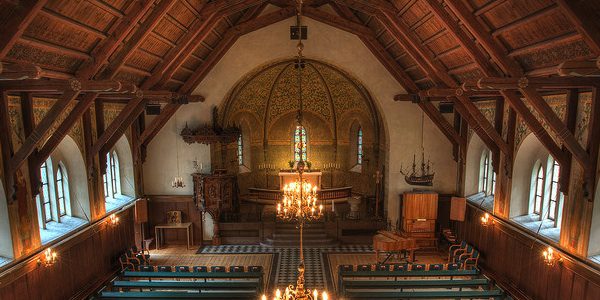
Creative Commons Copyright by Michael Caven (Flickr) photo cropped
Now is the time to talk about abuse in the church.
Now, when you are tired of talking about it. Now, when you’ve moved on to the next social media buzz. Now, when you think you’ve exhausted every possible angle of it.
That’s because now is the time where we get to decide whether we will change or whether this was just another distraction, another voyeuristic foray of using tragedy to score political or cultural points.
Now is the time to stop pointing fingers at the far away.
One of the most frustrating elements of the progressive response to the horrendous Duggar scandal is the unspoken insinuation that this kind of abuse only occurs or is much more likely to occur in fundamentalist, conservative, or patriarchal churches.
It been a way for liberals and progressives to tut-tut in the wake of tragedy rather than engage in critical self-reflection of our own institutions. While some social and theological elements certainly can exacerbate in terrible ways abuse, the sobering truth is that any institution — religious or secular, conservative or liberal — that includes or ministers to children can find itself in the midst of an abuse scandal. Institutions and their leaders must remain vigilant at all times and must not succumb to the self-satisfied notion that this kind of scandal is something more likely to happen in those churches over there, among those conservatives, or with those homeschoolers. With a one in four women and one in six men were sexually abused, it’s clear that abuse isn’t just happening in conservative spaces.
For example, read this story about an Episcopal school and the similarities of admission without repercussion that allowed for more victims.
Look around your parish. Regardless of how progressive it is, that statistic is true for the people in your pews and for the people leading. There is a pastoral responsibility, as a result, to know the warning signs of abuse, to understand the effects of abuse, and to be aware of the ways in which abusers exploit systems to gain trust and access to potential victims.
That’s why the single most hospitable thing any church can do for young families is to get their workers, leadership, and clergy trained in the prevention of child abuse so that churches can become the safe spaces they truly should be. This is especially true as we enter into summer, the season of Vacation Bible School and youth camps.
And after spending several hours renewing my training this past week, I’ve become convinced that progressive Christians, by and large, have fumbled an opportunity to truly lead in the aftermath of the Duggar scandal.
1. Get educated. No, reading about it on the internet isn’t enough. It’s a start, but you need real training and, if it’s been awhile, you might need a refresher. Many, if not all, mainline churches require these types of programs. But if you attend a nondenominational church or one that has no firm policies on this, find a training and get educated. Call a local mainline church and ask to join one of their trainings.
2. Train others. Here is where I think many churches, especially among the mainline, have failed. We have a unique opportunity to educate and to lead in order to make more churches safe, not just our own. With consciousness high about the prevalence of child abuse, we might do better than tsk-tsking others. Reach out to the local church community, the ministerial association, or interfaith groups in order to offer city- or county-wide trainings. Work hand-in-hand with local government agencies and nonprofits to create trainings for all churches. Advocate for legislation that requires proof of training for any organization that wants to rent public property for events or camps. Many mainline churches have the benefit of a centralized hierarchy that requires these types of trainings. Let’s put that to use in our communities and be leaders. (I know some may be already doing this)
3. Take action. During a training course, you will learn how institutions and systems are exploited and manipulated. You’ll learn to spot warning signs and red flags of potential abusers. You’ll learn how to structure events involving children and youth better. You’ll learn how to respond to victims appropriately and in a way that doesn’t do additional harm. And if you’re training doesn’t teach these things, then by all means, find another one and talk to your ecclesiastical superiors about improving the training.
4. Revisit your own policies. Perhaps you’ve already been trained. Now is a good time to refresh your memory and the memories of your church governing board about these policies. Create or revisit the action plan and steps if abuse is reported or suspected. Update your policies. Check to see whose training might have lapsed and might need to renew it. And remind each other to follow the policies. Even if they seem cumbersome. Even if they are inconvenient.
5. Talk about it in your church. Remember those statistics? Someone in your church has experienced abuse or is being abused. Consider bringing in trained experts to lead a support group. Talk about abuse, its consequences, and how it is NEVER okay. Push back against notions of redemptive suffering that can silence victims or encourage them to see their abuse as part of God’s will or teaching. Post signs at Sunday school and nursery doors notifying that visitors that all workers, paid or volunteer, have been trained in the prevention of abuse. Silence can an abuser’s accomplice.
These are not all-inclusive, but a starting point to suggest how churches might do better to protect the children in their care and communities.
Previous Post

May 28, 2015
Don't Thank God that Nebraska Ended the Death Penalty
Next Post
June 15, 2015 Jeremiah 29:11 Isn't about You ... And That's a Good Thing
Browse Our Archives
Select a Category Black Lives Matter Christian Calendar Daily Office Essay Fiction Film homily Humor Lectionary Lenten Meditations Living Faith Meditation Ministry Parable Parenting Poem Politics Pop Culture Reflection Satire Sketch Uncategorized
Select a Month December 2016 September 2016 August 2016 July 2016 June 2016 May 2016 April 2016 March 2016 February 2016 January 2016 December 2015 November 2015 October 2015 September 2015 August 2015 July 2015 June 2015 May 2015 April 2015 March 2015 February 2015 January 2015 December 2014 November 2014 October 2014 August 2014 July 2014 June 2014 April 2014 March 2014 February 2014 December 2013 November 2013 October 2013 September 2013 August 2013 July 2013 June 2013 May 2013 April 2013 March 2013 February 2013 December 2012 October 2012 September 2012 August 2012 May 2012 April 2012 March 2012 February 2012 January 2012 December 2011 November 2011 October 2011 September 2011
Follow Us!
TAKE THE
Religious Wisdom Quiz
What is taught about gossip in the Bible?
Select your answer to see how you score.
Spread it Avoid it Enjoy it Encourage it
Related posts from Edges of Faith

Welcoming Wonder and Curiosity: Lessons from a Comic...

Holy Ship: Four Ways the Church is like...

Should Boys Dress as Female Characters for Halloween?...
Peace is Not Tranquility (A #WGFest2015 Lectionary Reflection)
TRENDING AT PATHEOS Progressive Christian

Why Christians Have a Sacred Duty to Vote:...
The Bible offers strong support for the sacred duty to vote. Here...

What Being a Modern-Day Apostle Means to Me
In my last column, I discussed the ins and outs of modern-day...

Did Ancient China Once Worship the God of...
Across human history, a common thread weaves through the origins of the...

Love Your Neighbor – Including Earth-Kin: Lev. 19,...
God’s command to love your neighbor means acting in an ethical and...

Lead a Church Study of “Jesus and Lao...
Guest writer Jack Thomas (The Irreverent Reverend) reflects on leading his church...

Principles for Understanding the Apostolic Ministry Today
Whenever people discover that my formal ministry title is "apostle," as in...
view all Progressive Christian blogs
Ad-Free & Subscriber Log-In Subscription Support
- About Us
- 2026 Calendar
- Videos
- Podcasts
- Library of World Religions
- Faith In Media Tracker
- Advertise With Us
- Write for Us
- Privacy Policy
- Terms of Service
- Do Not Sell My Data
- Contact Us
- Radiant Digital
- Manage Newsletter Subscriptions
- Unsubscribe From Notifications
- Sitemap
Copyright 2008-2026, Patheos. All rights reserved.
Subscription Support Ad-Free & Subscriber Log-In
Follow Patheos