
BuddhistCatholicContemplativeEvangelicalGeneral ChristianHinduJewishLatter-day SaintMuslimNew VisionsProgressive Christian
Beliefs
- Buddhist
- Catholic
- Contemplative
- Evangelical
- General Christian
- Hindu
- Jewish
- Latter-day Saint
- More Voices
- Muslim
- New Visions
- Pagan
- Progressive Christian
Topics
- Religion News
- Food and Religion
- Sports and Religion
- Religious Art
- Religious Music and Entertainment
- Religious Events
- History and Religion
- Style and Religion
- Politics and Religion
- Women in Religion
- Recreation Outdoors and Religion
- Business Finance and Religion
- Careers Workplace and Religion
- Education and Religion
- Family Parenting and Religion
- Health Fitness and Religion
- Home and Religion
- Relationships and Religion
- Technology and Religion
- Travel and Religion
Columnists
- Buddhist Columnists
- Business Finance and Religion Columnists
- Careers Workplace and Religion Columnists
- Catholic Columnists
- Contemplative Columnists
- Education and Religion Columnists
- Evangelists Columnists
- Family Parenting and Religion Columnists
- General Christian Columnists
- Health Fitness and Religion Columnists
- Hindu Columnists
- History and Religion Columnists
- Home and Religion Columnists
- Jewish Columnists
- More Voices Columnists
- Latter Day Columnists
- Muslim Columnists
- New Visions Columnists
- Nonreligious Columnists
- Pagan Columnists
- Politics and Religion Columnists
- Progressive Columnists
- Recreation Outdoors and Religion Columnists
- Relationships and Religion Columnists
- Religion News Columnists
- Religious Art Columnists
- Religious Events Columnists
- Religious Music and Entertainment Columnists
- Sports and Religion Columnists
- Style and Religion Columnists
- Technology and Religion Columnists
- Travel and Religion Columnists
- Women in Religion Columnists
Resource Library
- 2026 Calendar
- Library of World Religions
- The 100 Most Holy Places on Earth
- Patheos Answers
- Podcasts
- Videos
- Faith Leaders Database
- Anglican Episcopalian
- Bahai
- Baptist
- Buddhism
- Christianity
- Confucianism
- Eastern Orthodoxy
- Hinduism
- Holiness and Pentecostal
- ISKCON
- Islam
- Judaism
- Lutheran
- Methodist
- The Church of Jesus Christ of Latter-day Saints
- New Age
- Paganism
- Presbytarian and Reformed
- Protestantism
- Religion Behind the Scenes
- Roman Catholic
- Scientology
- Shia Islam
- Sikhism
- Sufism
- Sunni Islam
- Taoism
- Zen
- See all religions
Research Tools
 Ad-Free & Subscriber Log-In Subscription Support
Ad-Free & Subscriber Log-In Subscription Support
Follow Patheos 

- Trending:
- Forgiveness
- |
- Marriage
- |
- Consciousness
- |
- Death Penalty
- |
- Election
- |
- Halloween
 Edges of Faith
- Home
- Progressive Christian
- Making Room at Christ’s Table: The Gift of Progressive Christianity
Making Room at Christ’s Table: The Gift of Progressive Christianity
Last updated on: January 21, 2015 at 2:50 pm by David Roberts
Making Room at Christ’s Table: The Gift of Progressive Christianity 2015-01-21T14:50:24+00:00 David Roberts
Patheos Explore the world's faith through different perspectives on religion and spirituality! Patheos has the views of the prevalent religions and spiritualities of the world.

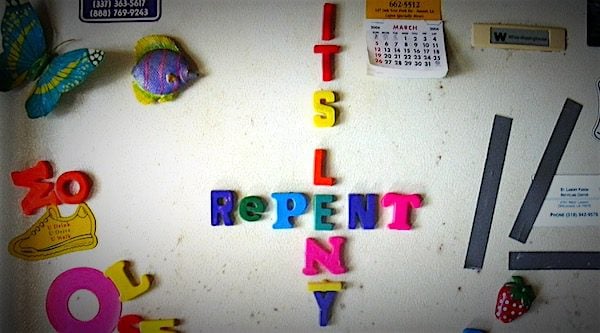
Flickr Creative Commons Copyright by timlewisnm
You might underestimate how large the Christian umbrella is.
This simple sentence appeared in red ink in the margins of a reflection essay I had written for an interreligious dialogue course in graduate school.
It changed my life.
The professor, a kindly and soft-spoken Jesuit, had written it as the gentlest of rebukes to my conclusion in that paper that my growing heterodox beliefs and increasing doubts might mean I no longer fit underneath the sacred canopy of Christianity.
At the time, I had dropped the divinity portion of my degree, was pursuing a purely academic track in graduate school, and was blogging anonymously at my first (now closed) site, Unorthodoxology. At the time, I had lost my faith in the most foundational and traditional doctrines of the church.
At the time, I was ready to move on from Christianity all together.
But that one sentence, innocuous as it might seem, completely reframed my faith and my future.
Without that sentence, I likely would have wandered off into the world of the Nones or the Spiritual but Not Religious.
Without that sentence, I likely never would have become a priest at all.
Now, to be clear, there is nothing wrong with the Spiritual but Not Religious or the Nones. I have deep sympathies with folks who no longer feel comfortable sitting in churches or no longer feel like they fit under the umbrella of Christianity.
But, just as I did in the throes of agnosticism and unbelief, I think there is a tendency because of our obsession with belief as intellectual assent to underestimate just how wide that umbrella of Christianity really is.
Now, that sentence didn’t erase my doubts. It didn’t magically impart orthodox belief. It didn’t solve my wrestling with spiritual darkness and with a tendency toward agnosticism and unbelief. It didn’t immediately make the Nicene Creed something I could say without dozens of mental hoops and rationalizations.
But it did make room for me. It made room for me in Christ’s church and at Christ’s table. And that grace-filled welcome made all the difference.
It reminded me of what I knew intellectually was true spiritually as well — that agnosticism, doubt, and demythologization is an important and integral part of faith development.
It reminded me that no one gets to pick a singular moment of doubt or outright unbelief to declare a person outside the bounds of the Christian journey, because God is in the midst of doubt and unbelief just as surely as God is in the midst of certainty and confident belief.
It reminded me that sometimes doubt and unbelief are exactly what’s needed to open a person up to compassion, empathy, and love of neighbor.
Looking back, I see now how many Christians at the time made room for my doubts and for me at Christ’s table. Like my parish priest who knew my doubts and struggles but encouraged my writing, who opened up places for me to speak during services, who asked if I would serve on Vestry, and, eventually, who walked with me through the ordination process.
In short, in the absence of perfect belief, she invited me to the practice of being Christian.
This, to me, is the gift of Progressive Christianity.
It made room for me at Christ’s table when I thought there was none.
It offered grace to me when I had none for myself.
It didn’t say I had to believe certain things to be welcomed, but trusted that in welcoming me, I would, at some point, experience God again, and experience God in a completely transfigured way.
It suggested to me not to be so arrogant as to think that my doubts and disbelief were so unique and profound that I was completely alone in them. It gave me companions and guides along the Way.
It invited me to live as a Christian even if I didn’t quite believe as one traditionally would.
This is the gift not just of Progressive Christianity, but also of liturgical Christianity, which suggests that the law of prayer is the law of belief. That maxim — lex orandi, lex credendi — is if nothing else a call to understand belief as something we embody and enact not something we intellectually comprehend and assent to.
Now, there have always been strains of Christianity concerned with right belief, with orthodoxy, and with individual belief. There have always been heresy hunters, ferreting out in the name of God those who don’t hold to traditional beliefs. With social media and the Internet age, this democratization of the Inquisition has become something of a obsession in some circles.
That’s why we desperately need more Christians who are willing to make room within Christianity for people who just aren’t sure, for people with nagging doubts, and for people who just can’t believe the way tradition says they are supposed to.
We need Christians who will be companions along the Way with the doubters and disbelievers not guardians of orthodoxy erecting walls of exclusion to keep them away until they come around to orthodoxy.
Lately, though, I’ve seen this ethic of inclusion and open-mindedness even among progressive Christians erode some. It worries me when I see progressive Christians fighting for what the right way to believe is rather than making joyous room at Christ’s table for the rejected.
Because, here’s the thing. Were it not for a Jesuit making room for me, I would not be here today. Were it not for parish priests making room for me, I would not be here today. I would not have started working through the long and painful process of demythologization nor would I have experienced the joys of the second naivete and of remythologization.
I would have stopped listening for God, and never heard the divine call that would lead me to the home I never knew existed, to where I fit, to Christ’s table set with bread and wine.
I would not now, more than a decade later, be a priest.
Now, as a priest, I get to give that gift back to others in the midst and throes of doubts and disbelief. I get to welcome the unorthodox, to embrace the agnostic, to listen to those whose faith has evaporated.
I get to remind them, like I was reminded, not to underestimate just how wide the umbrella of Christianity is and just how long the pilgrimage of faith really is.
I get to remind them there is room at Christ’s table even for them.
Especially for them.

Browse Our Archives
Select a Category Black Lives Matter Christian Calendar Daily Office Essay Fiction Film homily Humor Lectionary Lenten Meditations Living Faith Meditation Ministry Parable Parenting Poem Politics Pop Culture Reflection Satire Sketch Uncategorized
Select a Month December 2016 September 2016 August 2016 July 2016 June 2016 May 2016 April 2016 March 2016 February 2016 January 2016 December 2015 November 2015 October 2015 September 2015 August 2015 July 2015 June 2015 May 2015 April 2015 March 2015 February 2015 January 2015 December 2014 November 2014 October 2014 August 2014 July 2014 June 2014 April 2014 March 2014 February 2014 December 2013 November 2013 October 2013 September 2013 August 2013 July 2013 June 2013 May 2013 April 2013 March 2013 February 2013 December 2012 October 2012 September 2012 August 2012 May 2012 April 2012 March 2012 February 2012 January 2012 December 2011 November 2011 October 2011 September 2011
Follow Us!
TAKE THE
Religious Wisdom Quiz
Though your sins are like scarlet, they shall be as white as what?
Select your answer to see how you score.
Snow Light Wool A lamb
Related posts from Edges of Faith

Welcoming Wonder and Curiosity: Lessons from a Comic...

Keep Christianity Weird: The Trinity, Mermaids, UFOs, and...

Fear Will Be the Big Winner on Super...
TRENDING AT PATHEOS Progressive Christian

Why Christians Have a Sacred Duty to Vote:...
The Bible offers strong support for the sacred duty to vote. Here...

What Being a Modern-Day Apostle Means to Me
In my last column, I discussed the ins and outs of modern-day...

Did Ancient China Once Worship the God of...
Across human history, a common thread weaves through the origins of the...

Love Your Neighbor – Including Earth-Kin: Lev. 19,...
God’s command to love your neighbor means acting in an ethical and...

Lead a Church Study of “Jesus and Lao...
Guest writer Jack Thomas (The Irreverent Reverend) reflects on leading his church...

Principles for Understanding the Apostolic Ministry Today
Whenever people discover that my formal ministry title is "apostle," as in...
view all Progressive Christian blogs
Ad-Free & Subscriber Log-In Subscription Support
- About Us
- 2026 Calendar
- Videos
- Podcasts
- Library of World Religions
- Faith In Media Tracker
- Advertise With Us
- Write for Us
- Privacy Policy
- Terms of Service
- Do Not Sell My Data
- Contact Us
- Radiant Digital
- Manage Newsletter Subscriptions
- Unsubscribe From Notifications
- Sitemap
Copyright 2008-2026, Patheos. All rights reserved.
Subscription Support Ad-Free & Subscriber Log-In
Follow Patheos