
BuddhistCatholicContemplativeEvangelicalGeneral ChristianHinduJewishLatter-day SaintMuslimNew VisionsProgressive Christian
Beliefs
- Buddhist
- Catholic
- Contemplative
- Evangelical
- General Christian
- Hindu
- Jewish
- Latter-day Saint
- More Voices
- Muslim
- New Visions
- Pagan
- Progressive Christian
Topics
- Religion News
- Food and Religion
- Sports and Religion
- Religious Art
- Religious Music and Entertainment
- Religious Events
- History and Religion
- Style and Religion
- Politics and Religion
- Women in Religion
- Recreation Outdoors and Religion
- Business Finance and Religion
- Careers Workplace and Religion
- Education and Religion
- Family Parenting and Religion
- Health Fitness and Religion
- Home and Religion
- Relationships and Religion
- Technology and Religion
- Travel and Religion
Columnists
- Buddhist Columnists
- Business Finance and Religion Columnists
- Careers Workplace and Religion Columnists
- Catholic Columnists
- Contemplative Columnists
- Education and Religion Columnists
- Evangelists Columnists
- Family Parenting and Religion Columnists
- General Christian Columnists
- Health Fitness and Religion Columnists
- Hindu Columnists
- History and Religion Columnists
- Home and Religion Columnists
- Jewish Columnists
- More Voices Columnists
- Latter Day Columnists
- Muslim Columnists
- New Visions Columnists
- Nonreligious Columnists
- Pagan Columnists
- Politics and Religion Columnists
- Progressive Columnists
- Recreation Outdoors and Religion Columnists
- Relationships and Religion Columnists
- Religion News Columnists
- Religious Art Columnists
- Religious Events Columnists
- Religious Music and Entertainment Columnists
- Sports and Religion Columnists
- Style and Religion Columnists
- Technology and Religion Columnists
- Travel and Religion Columnists
- Women in Religion Columnists
Resource Library
- 2026 Calendar
- Library of World Religions
- The 100 Most Holy Places on Earth
- Patheos Answers
- Podcasts
- Videos
- Faith Leaders Database
- Anglican Episcopalian
- Bahai
- Baptist
- Buddhism
- Christianity
- Confucianism
- Eastern Orthodoxy
- Hinduism
- Holiness and Pentecostal
- ISKCON
- Islam
- Judaism
- Lutheran
- Methodist
- The Church of Jesus Christ of Latter-day Saints
- New Age
- Paganism
- Presbytarian and Reformed
- Protestantism
- Religion Behind the Scenes
- Roman Catholic
- Scientology
- Shia Islam
- Sikhism
- Sufism
- Sunni Islam
- Taoism
- Zen
- See all religions
Research Tools
 Ad-Free & Subscriber Log-In Subscription Support
Ad-Free & Subscriber Log-In Subscription Support
Follow Patheos 

- Trending:
- Forgiveness
- |
- Marriage
- |
- Consciousness
- |
- Death Penalty
- |
- Election
- |
- Halloween
 Edges of Faith
- Home
- Progressive Christian
- The Foolish Death of God
The Foolish Death of God
Last updated on: August 31, 2012 at 11:36 am by David Roberts
The Foolish Death of God 2012-08-31T11:36:01+00:00 David Roberts
Patheos Explore the world's faith through different perspectives on religion and spirituality! Patheos has the views of the prevalent religions and spiritualities of the world.
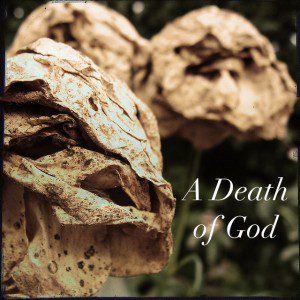
photo copyright Edu_Fon (Flickr)
Over the next week, I will be posting a three-part essay on the death of God, my experience of it, and my search for meaning through it. I know that much of what I write here intersects with the Death of God movement, but I also hope that I will add something to that conversation as well. I invite you to walk with me and dialogue with me.
God has died.
And when it happened, I wept.
I wept for the loss of my Beloved. I wept for the loss of meaning. I wept for the loss of many things. I grieved God’s death.
I grieved it for more than a decade after it happened, because before then, I could not fathom the death of God, even though I experienced it, lived it, tumbled through it, had my soul scraped dry by it.
For more than a decade, I have searched for answers and tried to wrestle an angel that wasn’t there. For more than a decade, I have attempted to explain this death, to unravel through graduate work; through mounds of theological books; through liturgies, retreats, prayer and contemplation; through a spiritual life that denied its fundamental, constitutive truth.
God has died.
When I saw this clearly recently, I felt as if I could finally be swept away by a rushing wind. I felt as if my tongue had been set ablaze. I felt liberated to be who I already was.
But first, let me be clear as to what I am not saying. I am not saying I am an atheist, or even an agnostic, though this is a common reaction. Nor am I making a totalizing statement that God is dead in an historical way, as if it were an isolated event in the history of humanity as in the 1960s Death of God movement. Nor am I parroting Nietzsche who said that God is dead and we are God’s murderers, or that religion is dead, or that modern humanity has lost its ability to see the sacred, or the death of a certain outdated concept of God.
What I am talking about is that the death of God is a profoundly spiritual and Christian experience, one that, while we perhaps should not seek it, we should embrace it.
That God has died does not mean that God is unimportant just as the death of a spouse, a parent or a child does not diminish that beloved person’s importance. Nor does it mean that God ceases to be real, just as the death of a beloved does not cause her or him to be any less real to us. Their lives, their influences, their ideas, their vision, their entire existence — even their death — continues to shape our whole beings. Nor does it mean we cease to have a relationship — a personal connection — with God.
Certainly, the death of God transforms all these things, but it does not negate them or obliterate them into meaninglessness. In fact, that God has died adds a more profound, mystical element to our union with God. In death, we engage with God traumatically with burning grief, aching anger and unrepentant honesty that can escape us with the living. We see God with clearer eyes. Permanent absence has that tendency, to sharpen our vision of that which we cherish and that which we despise about the Absented One.
A common challenge to the notion of the death of God, as seen in the Death of God movement in the 1960s and 1970s, was that it was little more than veiled atheism or agnosticism. I am convinced that it was quite the opposite, for a God that dies is a God that refuses to be imaginary, a God that jolts humanity with the divine death. That God has died speaks to God’s determination to experience that which is most real for all humans, that which comprises the grounded being of all human existence: death. It is the ultimate and radical act of solidarity of God to die with God’s creation.
It is the foolishness of God.
God has died.
Thanks be to God.
Coming Tuesday: The Orthodox Death of God.
Previous Post

May 29, 2012
The Rain Bow: A Short Story
Next Post
September 4, 2012 The Orthodox Death of God
Browse Our Archives
Select a Category Black Lives Matter Christian Calendar Daily Office Essay Fiction Film homily Humor Lectionary Lenten Meditations Living Faith Meditation Ministry Parable Parenting Poem Politics Pop Culture Reflection Satire Sketch Uncategorized
Select a Month December 2016 September 2016 August 2016 July 2016 June 2016 May 2016 April 2016 March 2016 February 2016 January 2016 December 2015 November 2015 October 2015 September 2015 August 2015 July 2015 June 2015 May 2015 April 2015 March 2015 February 2015 January 2015 December 2014 November 2014 October 2014 August 2014 July 2014 June 2014 April 2014 March 2014 February 2014 December 2013 November 2013 October 2013 September 2013 August 2013 July 2013 June 2013 May 2013 April 2013 March 2013 February 2013 December 2012 October 2012 September 2012 August 2012 May 2012 April 2012 March 2012 February 2012 January 2012 December 2011 November 2011 October 2011 September 2011
Follow Us!
TAKE THE
Religious Wisdom Quiz
What island was John on when he wrote Revelation?
Select your answer to see how you score.
Crete Cyprus Malta Patmos
Related posts from Edges of Faith
The Appearance of Hope (An #Advent Poem)
Practicing Advent: A Guide for Parents and Families

The Sacrament of the Church Rummage Sale (A...

Liberation Keeps the Sabbath Holy (A Homily)
TRENDING AT PATHEOS Progressive Christian

Why Christians Have a Sacred Duty to Vote:...
The Bible offers strong support for the sacred duty to vote. Here...

What Being a Modern-Day Apostle Means to Me
In my last column, I discussed the ins and outs of modern-day...

Did Ancient China Once Worship the God of...
Across human history, a common thread weaves through the origins of the...

Love Your Neighbor – Including Earth-Kin: Lev. 19,...
God’s command to love your neighbor means acting in an ethical and...

Lead a Church Study of “Jesus and Lao...
Guest writer Jack Thomas (The Irreverent Reverend) reflects on leading his church...

Principles for Understanding the Apostolic Ministry Today
Whenever people discover that my formal ministry title is "apostle," as in...
view all Progressive Christian blogs
Ad-Free & Subscriber Log-In Subscription Support
- About Us
- 2026 Calendar
- Videos
- Podcasts
- Library of World Religions
- Faith In Media Tracker
- Advertise With Us
- Write for Us
- Privacy Policy
- Terms of Service
- Do Not Sell My Data
- Contact Us
- Radiant Digital
- Manage Newsletter Subscriptions
- Unsubscribe From Notifications
- Sitemap
Copyright 2008-2026, Patheos. All rights reserved.
Subscription Support Ad-Free & Subscriber Log-In
Follow Patheos