
BuddhistCatholicContemplativeEvangelicalGeneral ChristianHinduJewishLatter-day SaintMuslimNew VisionsProgressive Christian
Beliefs
- Buddhist
- Catholic
- Contemplative
- Evangelical
- General Christian
- Hindu
- Jewish
- Latter-day Saint
- More Voices
- Muslim
- New Visions
- Pagan
- Progressive Christian
Topics
- Religion News
- Food and Religion
- Sports and Religion
- Religious Art
- Religious Music and Entertainment
- Religious Events
- History and Religion
- Style and Religion
- Politics and Religion
- Women in Religion
- Recreation Outdoors and Religion
- Business Finance and Religion
- Careers Workplace and Religion
- Education and Religion
- Family Parenting and Religion
- Health Fitness and Religion
- Home and Religion
- Relationships and Religion
- Technology and Religion
- Travel and Religion
Columnists
- Buddhist Columnists
- Business Finance and Religion Columnists
- Careers Workplace and Religion Columnists
- Catholic Columnists
- Contemplative Columnists
- Education and Religion Columnists
- Evangelists Columnists
- Family Parenting and Religion Columnists
- General Christian Columnists
- Health Fitness and Religion Columnists
- Hindu Columnists
- History and Religion Columnists
- Home and Religion Columnists
- Jewish Columnists
- More Voices Columnists
- Latter Day Columnists
- Muslim Columnists
- New Visions Columnists
- Nonreligious Columnists
- Pagan Columnists
- Politics and Religion Columnists
- Progressive Columnists
- Recreation Outdoors and Religion Columnists
- Relationships and Religion Columnists
- Religion News Columnists
- Religious Art Columnists
- Religious Events Columnists
- Religious Music and Entertainment Columnists
- Sports and Religion Columnists
- Style and Religion Columnists
- Technology and Religion Columnists
- Travel and Religion Columnists
- Women in Religion Columnists
Resource Library
- 2026 Calendar
- Library of World Religions
- The 100 Most Holy Places on Earth
- Patheos Answers
- Podcasts
- Videos
- Faith Leaders Database
- Anglican Episcopalian
- Bahai
- Baptist
- Buddhism
- Christianity
- Confucianism
- Eastern Orthodoxy
- Hinduism
- Holiness and Pentecostal
- ISKCON
- Islam
- Judaism
- Lutheran
- Methodist
- The Church of Jesus Christ of Latter-day Saints
- New Age
- Paganism
- Presbytarian and Reformed
- Protestantism
- Religion Behind the Scenes
- Roman Catholic
- Scientology
- Shia Islam
- Sikhism
- Sufism
- Sunni Islam
- Taoism
- Zen
- See all religions
Research Tools
 Ad-Free & Subscriber Log-In Subscription Support
Ad-Free & Subscriber Log-In Subscription Support
Follow Patheos 

- Trending:
- Forgiveness
- |
- Marriage
- |
- Consciousness
- |
- Death Penalty
- |
- Election
- |
- Halloween
 When Gods Were Men
- Home
- Latter-day Saint
- History and Religion
- Who Wrote the Gospels (part 2)
Who Wrote the Gospels (part 2)
Last updated on: March 24, 2015 at 5:55 pm by David Bokovoy
Who Wrote the Gospels (part 2) 2015-03-24T17:55:06-06:00 David Bokovoy
Patheos Explore the world's faith through different perspectives on religion and spirituality! Patheos has the views of the prevalent religions and spiritualities of the world.
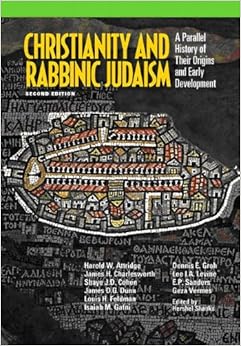
Back in 1992, the Biblical Archaeology Society published a collection of introductory essays in a book titled, Christianity and Rabbinic Judaism: A Parallel History of Their Origins and Development. The book contained essays by some of the most influential contributors to this fascinating field of study. Since then, it has become a standard textbook and reference work for undergraduate, graduate, and Bible study courses across the country. A newly revised version appeared in 2011.
As an undergraduate student, I purchased my first copy of Christianity and Rabbinic Judaism shorty after its initial publication. At that time, I didn’t make it very far into the book, but I did have it on my shelf.
Later during my graduate studies, I had the opportunity to take courses from one of the contributing scholars to this volume, visiting professor E.P. Sanders. This was my first serious exposure to a historical critical analysis of the New Testament. It was a wonderful experience. Dr. Sanders is a highly accomplished scholar in the fields of New Testament and Historical Jesus studies. In this classic textbook, Dr. Sanders contributes the essay, “The Life of Jesus.”
Concerning the topic of the four canonical Gospels, E.P. Sanders writes:
“These books were written anonymously, but in the second century Christians began to attribute them to four men: Matthew and John (Jesus’ followers) and Mark and Luke (early Christians, but not direct disciples of Jesus). . . Although the canonical Gospels contain almost the only worthwhile information about Jesus, they are by no means straightforward histories or biographies in the modern sense. The material in them was passed on orally for some years, being modified in the process. Further, the authors of the Gospels were more interested in theological truth than in bare historical accuracy, and their theological concerns sometimes shaped the material” (pg. 42).
Once again, therefore, we witness the standard textbook view (cited in my previous essay) concerning the four Gospels: they are anonymous historical texts that lack historicity. As Dr. Sanders explains (and as I explored in my previous post in this series), the attributions we recognize today began in the second century CE. But the Gospels weren’t originally known by these later titles. And of course there exist compelling reasons why the standard view presented in academic study Bibles and college-level textbooks rejects the possibility that these later attributions preserve correct information concerning original authorship.
The Gospel writers kept their identity anonymous. We don’t know who they were, and we cannot trust the latter attributions. But at least one fact about these books is clear: the authors were highly educated, Greek-speaking Jews who most likely lived outside of Palestine [1]. This means that the Gospels are not eye witness accounts of Jesus’ life and ministry, and they’re certainly not history.
The Gospels indicate that Jesus’ apostles were all lower-class peasants from rural Galilee. Simon Peter, Andrew, James, and John were day laborers—fishermen to be precise [2]. The Disciple Matthew is identified as a “publican” or tax collector. The accounts, however, do not specify the specific rank Matthew held within the imperial bureaucratic system. While it is possible that he may have worked directly with the governing authorities, given the social standing of Jesus’ other disciples, Matthew was most likely employed to extract funds directly from the peasant class. Either way, there is no historical evidence that Matthew’s position would have required an advanced scribal education.
In first-century Palestine, lower-class peasants like Jesus’ apostles were almost always illiterate. This was the normal condition for most people throughout the Roman Empire [3]. Admittedly, this perspective is sometimes hard for us to comprehend. Literacy in modern society, particularly in the West, is so common that we often forget that the ancient world did not share this same standard. Mass public literacy began only with the advent of the Industrial Revolution, when nations found an economic benefit in educating citizens. Nonindustrialized societies that rely primarily upon the production of agricultural goods have always devoted their resources to areas other than education. Unlike the modern West, these nations did/do not benefit either economically or socially from educating their citizens. Hence, in the ancient world, very few people could read or write.
Estimates suggest that at its highest level, literacy rates in ancient societies never amounted to more than 10 percent of the total population. This fact explains why ancient civilizations relied primarily upon oral, rather than written communication.
In Mesopotamia, less than 5 percent of the population was presumably literate. The number may have been a bit higher in ancient Egypt, but it still amounted to no more than 7 percent of the population. We believe that ancient Greece most likely held the highest literacy rate at approximately 10 percent [4].
These numbers reflect the fact that modernized education programs developed only after the invention of the printing press. Prior to that event, only the leisured upper class had the time and economic means to gain literacy skills [5]. In premodern societies, the rest of the population, which in most instances would have included over 90 percent of the community, worked as peasant laborers, lacking the time and resources necessary to purchase expensive hand written documents, let alone the education required to read them.
It comes as no surprise, therefore, that the New Testament indicates that early followers of the Christian movement were illiterate. Two of the most prominent, Peter and John, are described as “unlettered,” a term that specifically denoted illiteracy in the ancient world (Acts 4:13) [7]. The historical evidence shows that this condition was, in fact, common amongst early Christians. This trend partly resulted from the fact that Jesus’ message of “good news” and apocalyptic redemption primarily appealed to women and lower class men who felt oppressed by the imperial system. To this group, the Gospels indicate that Jesus declared such things as, “blessed are you who are poor, for yours is the kingdom of God” (Luke 6:20).
This historical perspective is discussed by Marcus Borg and John Crossan in their book, The Last Week: What the Gospels Really Teach About Jesus’ Final Days in Jeruasalem. On this topic, the authors note:
“In Mark (and the other gospels), Jesus never goes to a city (except Jerusalem, of course). Though the first half of Mark is set in Galilee, Mark does not report that Jesus went to its largest cities, Sepphoris and Tiberias, even though the first is only four miles from Nazareth and the second is on the shore of the Sea of Galilee, the area of most of Jesus’s activity. Instead, Jesus speaks in the countryside and in small towns like Capernaum. Why? The most compelling answer is that Jesus saw his message as to and for peasants.”
——Marcus J. Borg and John Dominic Crossan, The Last Week (Kindle Locations 489-491). HarperCollins. Kindle Edition.
If Jesus’ message of glad tidings was directed specifically to members of the peasant class, in a population that was approximately 95 percent illiterate, then almost certainly very few of Jesus’ original followers could read, let alone write. Though not an “original follower,” in this regard, the Apostle Paul was obviously unique in that he possessed both scribal skills. We can see, however, how unusual this was through Paul’s letter to his Corinthian congregation. In this epistle, Paul acknowledges that most of the community was not considered wise by human standards (1 Cor 1:27)—a statement that many scholars believe illustrates that the community was not as a whole, well-educated [8]. And as apocalyptic-minded peasants, we shouldn’t expect them to be.
The Gospel accounts are clear: Jesus’ apostles were Aramaic-speaking Jewish peasants. Given their professions and social standing, it would be surprising if any of these men could speak Greek, let alone read and compose complex literature in that language. In contrast, the authors of the Gospels were highly-educated Greek-speaking Christians. They lived in a later era (probably after Jesus’ original apostles had all died), and they wrote their accounts outside of the land of Palestine using oral (and some written) traditions about Jesus to construct their theological narratives.
The evidence, therefore, suggests that these men would not have been able to produce literary works in their own native tongue, let alone literary accounts in Greek. Concerning this point, Dr. Bart Erhman states, “to be sure, the Gospels are not the most refined books to appear in the empire—far from it. Still, they are coherent narratives written by highly trained authors who knew how to construct a story and carry out their literary aims with finesse” [9].
It’s hard to imagine that Jesus’ Aramaic speaking peasant followers who embraced his apocalyptic message concerning the kingdom of God would have composed these literary works. And according to mainstream biblical scholarship, they didn’t.
[1] Bart Ehrman, Jesus, Interrupted: Revealing the Hidden Contradictions in the Bible (And Why We Don’t Know About Them)(New York: HarperCollins Publishers, 2009), 106.
[2] Brigham Young University professor Matthew Grey has recently discussed the archaeological and literary record concerning Peter’s socio-economic background and his connection with Capernaum; see Matthew J. Grey, “Simon Peter in Capernaum: An Archaeological Survey of the First-Century Village,” in The Ministry of Peter the Chief Apostle (Salt Lake City: Deseret Book, 2014), 27-66. Grey’s study supports “the more traditional view of Peter as a common fisherman who came from a conservative Jewish background and who likely possessed little or no formal education” (p. 29).
[3] For literacy in the ancient world, see William Harris, Ancient Literacy (Cambridge, MA: Harvard University Press, 1989); on the topic of literacy among Palestinian Jews at the time of Christ, see Catherine Hezser, Jewish Literacy in Roman Palestine (Tübingen: Mohr-Siebeck, 2001).
[4] For these statistics, see Karel van der Toorn, Scribal Culture and the Making of the Hebrew Bible (Cambridge: Harvard University Press, 2009), 10.
[5] Slaves were also sometimes educated in the art of literacy to serve the elite.
[7] Ehrman, Jesus, Interrupted, 105.
[8] Bart Ehrman, Misquoting Jesus: The Story Behind Who Changed the Bible and Why (New York: HarperCollins, 2009), 40.
[9] Ehrman, Jesus, Interrupted, 105-06.
Previous Post

March 24, 2015
Mormon Studies Podcast
Next Post
March 27, 2015 Come You Masters of War: Joshua Madson Lecture
Browse Our Archives
Select a Category Bible Book of Mormon Documentary Hypothesis Eden Eve Feminism Genesis goddesses Gods Historical Criticism Judaism Mormon Studies New Testament Prophecy Prophets Religion Religious Studies Social Justice Uncategorized
Select a Month November 2015 July 2015 May 2015 April 2015 March 2015 February 2015 January 2015 December 2014 November 2014 October 2014 July 2014 April 2014 March 2014 January 2014
Follow Us!
TAKE THE
Religious Wisdom Quiz
What did Solomon famously judge between"two women and what disputed item?
Select your answer to see how you score.
A ring A sheep A house A baby
Related posts from When Gods Were Men


The Word of God: Both Scandalous and Divine

Marcus Borg on How to Save the Bible

Who Wrote the Gospels? (part 3)
TRENDING AT PATHEOS Latter-day Saint

Did Prayer Cure His Cancer? Or Was It...
At 4 AM one morning, Joshua W. Brown’s wife awoke to a...

8 Ways a Near-Death Experience Rewires the Soul
Does Consciousness Survive Physical Death? After 50 Years of Research, Dr. Raymond...

Holy Longing: What Our Restlessness Is Telling Us
“One can find so many pains when the rain is falling.” -John...

What this is NOT about. This blog is definitely not about...

Who said the Israelites were God’s chosen? That’s right, they did. Who...

The Spirit World Is the Real World: God...
A Monk’s Wisdom on Body and Spirit I sit with Brother Martin...
view all Latter-day Saint blogs
Ad-Free & Subscriber Log-In Subscription Support
- About Us
- 2026 Calendar
- Videos
- Podcasts
- Library of World Religions
- Faith In Media Tracker
- Advertise With Us
- Write for Us
- Privacy Policy
- Terms of Service
- Do Not Sell My Data
- Contact Us
- Radiant Digital
- Manage Newsletter Subscriptions
- Unsubscribe From Notifications
- Sitemap
Copyright 2008-2026, Patheos. All rights reserved.
Subscription Support Ad-Free & Subscriber Log-In
Follow Patheos