
BuddhistCatholicContemplativeEvangelicalGeneral ChristianHinduJewishLatter-day SaintMuslimNew VisionsProgressive Christian
Beliefs
- Buddhist
- Catholic
- Contemplative
- Evangelical
- General Christian
- Hindu
- Jewish
- Latter-day Saint
- More Voices
- Muslim
- New Visions
- Pagan
- Progressive Christian
Topics
- Religion News
- Food and Religion
- Sports and Religion
- Religious Art
- Religious Music and Entertainment
- Religious Events
- History and Religion
- Style and Religion
- Politics and Religion
- Women in Religion
- Recreation Outdoors and Religion
- Business Finance and Religion
- Careers Workplace and Religion
- Education and Religion
- Family Parenting and Religion
- Health Fitness and Religion
- Home and Religion
- Relationships and Religion
- Technology and Religion
- Travel and Religion
Columnists
- Buddhist Columnists
- Business Finance and Religion Columnists
- Careers Workplace and Religion Columnists
- Catholic Columnists
- Contemplative Columnists
- Education and Religion Columnists
- Evangelists Columnists
- Family Parenting and Religion Columnists
- General Christian Columnists
- Health Fitness and Religion Columnists
- Hindu Columnists
- History and Religion Columnists
- Home and Religion Columnists
- Jewish Columnists
- More Voices Columnists
- Latter Day Columnists
- Muslim Columnists
- New Visions Columnists
- Nonreligious Columnists
- Pagan Columnists
- Politics and Religion Columnists
- Progressive Columnists
- Recreation Outdoors and Religion Columnists
- Relationships and Religion Columnists
- Religion News Columnists
- Religious Art Columnists
- Religious Events Columnists
- Religious Music and Entertainment Columnists
- Sports and Religion Columnists
- Style and Religion Columnists
- Technology and Religion Columnists
- Travel and Religion Columnists
- Women in Religion Columnists
Resource Library
- 2026 Calendar
- Library of World Religions
- The 100 Most Holy Places on Earth
- Patheos Answers
- Podcasts
- Videos
- Faith Leaders Database
- Anglican Episcopalian
- Bahai
- Baptist
- Buddhism
- Christianity
- Confucianism
- Eastern Orthodoxy
- Hinduism
- Holiness and Pentecostal
- ISKCON
- Islam
- Judaism
- Lutheran
- Methodist
- The Church of Jesus Christ of Latter-day Saints
- New Age
- Paganism
- Presbytarian and Reformed
- Protestantism
- Religion Behind the Scenes
- Roman Catholic
- Scientology
- Shia Islam
- Sikhism
- Sufism
- Sunni Islam
- Taoism
- Zen
- See all religions
Research Tools
 Ad-Free & Subscriber Log-In Subscription Support
Ad-Free & Subscriber Log-In Subscription Support
Follow Patheos 

- Trending:
- Forgiveness
- |
- Marriage
- |
- Consciousness
- |
- Death Penalty
- |
- Election
- |
- Halloween
 When Gods Were Men
- Home
- Latter-day Saint
- History and Religion
- Biblical Scholars: Preoccupied With the Reconstruction of History
Biblical Scholars: Preoccupied With the Reconstruction of History
Last updated on: February 14, 2015 at 9:24 pm by David Bokovoy
Biblical Scholars: Preoccupied With the Reconstruction of History 2015-02-14T21:24:30-06:00 David Bokovoy
Patheos Explore the world's faith through different perspectives on religion and spirituality! Patheos has the views of the prevalent religions and spiritualities of the world.
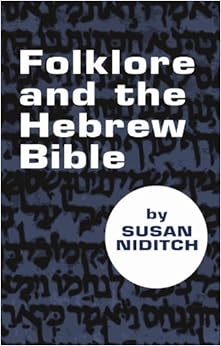
Susan Niditch, Folklore and the Hebrew Bible
From archeology, to literary criticism, to folklore analysis, modern biblical scholars use a variety of tools to help interpret the text. Recently, I have shared a couple of posts that introduce the topic of folklore analysis in the Bible. It’s an exciting field of inquiry.
One of the most important contributors to this line of inquiry is Dr. Susan Niditch who teaches in the field of Religious studies at Amherst College. Her book Folklore and the Hebrew Bible provides an especially helpful introduction to this topic.
Some readers have wondered if this type of inquiry is compatible with a “historical” approach to the Bible. The answer to this question is that skills such as folklore analysis are an essential part of a historical reading. The fact that scholars adopt these types of paradigms to help interpret the Bible does not mean that we have abandoned interpreting it “historically.” Historical analysis is the foundation of mainstream biblical scholarship.
Concerning this point, Dr. Niditch explains:
“When dealing with meaning and context surely one important question is, do biblical narratives tell us about Israel’s origins and history? Some might suggest that biblical scholars have been preoccupied with the reconstruction of history— history in a nineteenth-century, positivistic sense…” (p. 24)
As Dr. Niditch notes, historical analysis is the foundation—the primary “preoccupation” of modern biblical studies. But this does not mean that the Bible contains “historicity.” Instead, reading the Bible as “history” means using the text to determine the historical situation and circumstances at the time biblical authors lived and wrote. As I have shared in previous post, the Bible often tells us more about the historical situation and circumstances of its authors than it does the past they they describe. This does not mean, however, that we are not engaged in “historical” analysis. In fact, it’s just the opposite. Commenting on this point, Dr. Niditch continues:
“Concern with the historical setting of the created composition rather than with historicity leads to biblical scholarship that is, in fact, very interested in ‘history.’ Such an approach treats biblical literature as coming from real people who had tastes, aesthetics, and talents, and who lived in settings—economic, political, ecological, cultural, and religious—that helped to share who they were. It encourages us to search for these real people and their worlds rather than to check the accuracy of their information, interesting through their past (and ours) may be. It is, however, also an approach that refuses to explore the text solely in terms of its meaning to readers or that suggests that the text can be interpreted without attention to its author’s intentions, conscious or subconscious. It is, then, an approach that steers a course between biblical scholarship as a means of historical reconstruction and biblical scholarship as a wholly reader-response variety of literary criticism” (p. 25).
As Dr. Niditch observes, simply because biblical scholars employ tools such as folklore analysis to help interpret the text does not mean that “historical” analysis is no longer the foundation of mainstream biblical scholarship. Folklore studies can make a significant contribution to a historical-critical reading of the Bible.
Previous Post

February 11, 2015
The Key To Success
Next Post
February 16, 2015 Exilic Absorption of the Female Goddess in Deutero-Isaiah
Browse Our Archives
Select a Category Bible Book of Mormon Documentary Hypothesis Eden Eve Feminism Genesis goddesses Gods Historical Criticism Judaism Mormon Studies New Testament Prophecy Prophets Religion Religious Studies Social Justice Uncategorized
Select a Month November 2015 July 2015 May 2015 April 2015 March 2015 February 2015 January 2015 December 2014 November 2014 October 2014 July 2014 April 2014 March 2014 January 2014
Follow Us!
TAKE THE
Religious Wisdom Quiz
What is the main point of the Parable of the Persistent Widow?
Select your answer to see how you score.
Obey the law Give money generously Pray and don't give up Avoid judges
Related posts from When Gods Were Men


The Word of God: Both Scandalous and Divine

Marcus Borg on How to Save the Bible

Who Wrote the Gospels? (part 3)
TRENDING AT PATHEOS Latter-day Saint

Did Prayer Cure His Cancer? Or Was It...
At 4 AM one morning, Joshua W. Brown’s wife awoke to a...

8 Ways a Near-Death Experience Rewires the Soul
Does Consciousness Survive Physical Death? After 50 Years of Research, Dr. Raymond...

Holy Longing: What Our Restlessness Is Telling Us
“One can find so many pains when the rain is falling.” -John...

What this is NOT about. This blog is definitely not about...

Who said the Israelites were God’s chosen? That’s right, they did. Who...

The Spirit World Is the Real World: God...
A Monk’s Wisdom on Body and Spirit I sit with Brother Martin...
view all Latter-day Saint blogs
Ad-Free & Subscriber Log-In Subscription Support
- About Us
- 2026 Calendar
- Videos
- Podcasts
- Library of World Religions
- Faith In Media Tracker
- Advertise With Us
- Write for Us
- Privacy Policy
- Terms of Service
- Do Not Sell My Data
- Contact Us
- Radiant Digital
- Manage Newsletter Subscriptions
- Unsubscribe From Notifications
- Sitemap
Copyright 2008-2026, Patheos. All rights reserved.
Subscription Support Ad-Free & Subscriber Log-In
Follow Patheos