
BuddhistCatholicContemplativeEvangelicalGeneral ChristianHinduJewishLatter-day SaintMuslimNew VisionsProgressive Christian
Beliefs
- Buddhist
- Catholic
- Contemplative
- Evangelical
- General Christian
- Hindu
- Jewish
- Latter-day Saint
- More Voices
- Muslim
- New Visions
- Pagan
- Progressive Christian
Topics
- Religion News
- Food and Religion
- Sports and Religion
- Religious Art
- Religious Music and Entertainment
- Religious Events
- History and Religion
- Style and Religion
- Politics and Religion
- Women in Religion
- Recreation Outdoors and Religion
- Business Finance and Religion
- Careers Workplace and Religion
- Education and Religion
- Family Parenting and Religion
- Health Fitness and Religion
- Home and Religion
- Relationships and Religion
- Technology and Religion
- Travel and Religion
Columnists
- Buddhist Columnists
- Business Finance and Religion Columnists
- Careers Workplace and Religion Columnists
- Catholic Columnists
- Contemplative Columnists
- Education and Religion Columnists
- Evangelists Columnists
- Family Parenting and Religion Columnists
- General Christian Columnists
- Health Fitness and Religion Columnists
- Hindu Columnists
- History and Religion Columnists
- Home and Religion Columnists
- Jewish Columnists
- More Voices Columnists
- Latter Day Columnists
- Muslim Columnists
- New Visions Columnists
- Nonreligious Columnists
- Pagan Columnists
- Politics and Religion Columnists
- Progressive Columnists
- Recreation Outdoors and Religion Columnists
- Relationships and Religion Columnists
- Religion News Columnists
- Religious Art Columnists
- Religious Events Columnists
- Religious Music and Entertainment Columnists
- Sports and Religion Columnists
- Style and Religion Columnists
- Technology and Religion Columnists
- Travel and Religion Columnists
- Women in Religion Columnists
Resource Library
- 2026 Calendar
- Library of World Religions
- The 100 Most Holy Places on Earth
- Patheos Answers
- Podcasts
- Videos
- Faith Leaders Database
- Anglican Episcopalian
- Bahai
- Baptist
- Buddhism
- Christianity
- Confucianism
- Eastern Orthodoxy
- Hinduism
- Holiness and Pentecostal
- ISKCON
- Islam
- Judaism
- Lutheran
- Methodist
- The Church of Jesus Christ of Latter-day Saints
- New Age
- Paganism
- Presbytarian and Reformed
- Protestantism
- Religion Behind the Scenes
- Roman Catholic
- Scientology
- Shia Islam
- Sikhism
- Sufism
- Sunni Islam
- Taoism
- Zen
- See all religions
Research Tools
 Ad-Free & Subscriber Log-In Subscription Support
Ad-Free & Subscriber Log-In Subscription Support
Follow Patheos 

- Trending:
- Forgiveness
- |
- Marriage
- |
- Consciousness
- |
- Death Penalty
- |
- Election
- |
- Halloween
 When Gods Were Men
- Home
- Latter-day Saint
- History and Religion
- Don’t Do Bible (but if you do, do it right) part 3
Don’t Do Bible (but if you do, do it right) part 3
Last updated on: January 21, 2015 at 11:05 am by David Bokovoy
Don’t Do Bible (but if you do, do it right) part 3 2015-01-21T11:05:53-06:00 David Bokovoy
Patheos Explore the world's faith through different perspectives on religion and spirituality! Patheos has the views of the prevalent religions and spiritualities of the world.
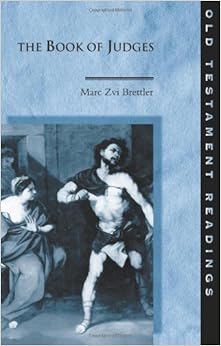
Highly recommended critical study on the book of Judges by Dr. Marc Brettler
It’s hard for many Bible-believing Jews and Christians to learn that their sacred book lacks historicity. I get it. Been there and done that. And this is certainly the case for K.A. Kitchen, a brilliant Bible-believing Christian Egyptologist. Kitchen does his best to present the Hebrew Bible as a record filled with historical reliability. For him, historicity is an important part of scriptural authenticity.
Speaking personally, I’m certainly not of the opinion that there is nothing at all historically reliable about the way Israelite and Judean scribes depicted the past. But as we saw in the previous post, biblical scribal activity has a specific historical setting that should cause us to question how accurate this material is when it depicts the past. And to answer this question, we shouldn’t rely on comparative Egyptian or Mesopotamian royal annuals.
Instead, we have to turn to the Bible itself.
In a previous post, I already shared my views concerning the question of “history” as a literary genre. Here, let’s turn specifically to one of Kitchen’s arguments meant to show the “reliability” of biblical historical narrative. Kitchen suggests that the book of Judges describes a “brief tribal follow-up” to the settlement story depicted in Joshua. Kitchen argues that Judges itself “contains no further account of the settlement process, and is NOT alternative to a (nonexistent) ‘total’ conquest/occupation by Joshua” (p. 237-38).
But the book of Judges (as I discussed here) is not real history. Forget the fact that it depicts a man killing a thousand soldiers with a donkey bone, and bad guys named the “Dark-double Evil One,” forget the fact that Judges contains contradictory statements concerning Jerusalem in 1:8 and 1:21, let’s leave aside the fact that places such as Gaza, Ashkelon, and Ekron are all conquered by Judah in Judges 1:18, even though later in the book they are identified as Philistine strongholds; let’s forget all of that and simply focus on chronology.
The chronology in Judges isn’t consistent. But no matter how we choose to work with it, it doesn’t reflect what we find in other historical narratives in the Bible. Judges seems (emphasis on “seems”) to depict a period of more than 400 years, 111 years of tribal subjugation to various Canaanite rulers, and 299 years of judgment and peace (it may actually be 319 depending on how we count the uncertain length of Samson’s period, but really, does it matter?). None of these figures agree with the chronology for the Judges period in 1 Kings 6:1, which states that 480 years passed between the exodus out of Egypt and the construction of the Jerusalem Temple.
So as they say, one of these things is not like the other one.
But perhaps more importantly, the chronology in Judges does not accord with the archeological record, which indicates that less than 200 years passed from the time the hill country was originally settled at the end of the 13th century BCE to the beginning of the monarchy in the latter half of the 11th century BCE. Whatever it is, Judges is not a royal annual. In fact, as I shared in the previous post, there wasn’t even a written form of Hebrew to create such a record during this era of Israelite history.
Judges, therefore, depicts a past, but it certainly doesn’t depict the past. It’s just not “reliable” as history. But for Kitchens, who ignores the internal textual evidence for what the author of Judges was actually doing, the archeological record can be used to support the historical authenticity of the work. He therefore writes:
The city of Jerusalem enjoys two curious mentions very early in the book of Judges (1:8, 21), according to which the men of Judah actually broke into the city and torched it (at least in part), but evidently could not hold it. This is so because subsequently the Benjaminites failed to retake the town, so could not expel the Jebusites. These mentions are intriguing, and may hold the clue to at least one archeological feature at oldest Jerusalem. The oft-debated ‘stepped-stone structure’ built up against the northeast area of the eventual City of David is now quite clearly to be dated to the end of the Late Bronze II going into Iron IA, or about 1200 or very soon after. The inhabitants must have had good reason for engaging in the massive effort of building such a structure, doubtless to be extended defense works above it (destroyed by tenth-century work, later on). Once Joshua was dead and gone (late thirteenth century), and perhaps also the elders, Judah launched brief attacks on Bezeq and on Jerusalem burning it, before concentrating on the south. This would fall around 1200 on datings offered here. At some unknown interval Benjamin attacked Jerusalem and failed. Is it too much to suppose that the Jebusite defenders of Jerusalem had, in that interval, improved their town defenses by building the stepped-stone structure (and defenses above it, now gone) and possibly other work? And so Benjamin was successfully held off? This would at least make sense, and give the structure a historical context; naturally, such a suggestion proves nothing, but may at least be considered. (214-15).
Let’s ignore the fact that in reality verses 8 and 21 directly contradict each other (after all, Kitchen does). Let’s just focus on Kitchen’s assertion that the tribe of Benjamin attacked Jerusalem and failed. Kitchen makes this observation by reading Judges 1:21 as real history. The verse states:
The Benjaminites did not dispossess the Jebusite inhabitants of Jerusalem; so the Jebusites have dwelt with the Benjaminites in Jerusalem to this day.
Well, sounds good enough, right? Well, yes, it does, until, of course, we start digging seriously into the actual text itself. You see, Judges 1:10-15, 20 actually parallels the verses found in Joshua 15:13-19. Since these verses nicely fit the context in Joshua (they naturally follow the introduction of Caleb in 5:13), it’s probably safe to assume that the author of Judges simply borrowed them directly from the earlier account (Caleb in the parallel verses in Judges moves in quite abruptly). The book of Judges really wants to show readers the chaos that existed in ancient Israel without a Davidic monarch (remember all the “in those days there was no king” statements). Caleb was an important tribal leader of Hebron, and Hebron was an important Judean city directly connected with David, the man Judges wants to build up as the appropriate ruler (see 2 Sam 2:11).
Verses 16-19 completely disrupt the narrative flow in Judges 1, which is strong evidence that they were probably added to this text at a later date. This also makes sense because these verses specifically add to, (you guessed it) the successful conquests of Judah, the tribe of David. So the kingdom of Judah conquered the Philistine cities! (v. 18). Wow! Even Saul, the king from the tribe of Benjamin who came before David of Judah couldn’t do that (hint, hint)! But Judges wants to make clear: “The Lord was with Judah” (v. 19), like the Lord was “with Joshua” (same Hebrew in Joshua 6:27). Judah is therefore the rightful leader and successor to Joshua in this account, not the tribe that the first king of Israel came from, i.e. the tribe of Benjamin. After all, they couldn’t even dispossess the Jebusite inhabitants of Jerusalem!
But hold on a minute!! There’s an earlier statement from the book of Joshua that the general scholarly consensus holds influenced Judges 1:21, the verse that Kitchen suggests somehow accords with the archeological record because there’s a “stepped-stone” artifact in Jerusalem that Kitchen would connect with the Jebusite efforts to fortify the city, which Benjamin, the ancestral tribe of Saul, could not conquer. The earlier verse in Joshua 15:63 states:
But the Judites could not dispossess the Jebusites, the inhabitants of Jerusalem; so the Judites dwell with the Jebusites in Jerusalem to this day.
Wait! I thought it was the Benjaminites, Saul’s tribe who could not conquer Jerusalem! Is Joshua really saying that David’s tribe Judah did not dispossess the Jebusites and that they dwell there with the Judites in Jerusalem “to this day”? Yep. That’s exactly what this earlier verse is saying. So somethings going on here and it’s not “history.”
Judges 1:21, the verse that Kitchen argues accords with the archeological record, is simply an intentional reformulation of Joshua 15:63, written to support the thesis for the book of Judges, which is the past can be created in such a way that it glorifies Judah, David’s ancestral tribe. The book of Judges is all about chaos. You see, this is what happens when you don’t have a king, your enemies subjugate you, the people do evil in the sight of God, and concubines are cut up into small pieces with their body parts distributed amongst the tribes (sorry to be so graphic, but just read the book). And since you need a king to counter all of this, what tribe should he be from? Well, Judah of course. He should be a Davidic king from the tribe of Judah. And that’s what’s going on with these scribal documents when we look at them carefully.
Again, here are the two verses just to make sure we all got it. First verse is Joshua 15:63:
But the Judites could not dispossess the Jebusites, the inhabitants of Jerusalem; so the Judites dwell with the Jebusites in Jerusalem to this day.
And now the later revised version in Judges altered to meet the book’s entire purpose, which is to build up David’s tribe Judah and disparage Saul’s tribe of Benjamin:
The Benjaminites did not dispossess the Jebusite inhabitants of Jerusalem; so the Jebusites have dwelt with the Benjaminites in Jerusalem to this day.
And there you have it. We just can’t take this statement in the way many fundamentalists want to and make it reliable “history.” If we do, we misinterpret these texts. Period. I can’t say it any plainer than that. And honestly, we could take this example and do the same thing with much of Kitchen’s work, because when we look critically at the scribal texts themselves the evidence is very clear. Judean scribes were not creating history as we know it. They were creating a historical narrative that presented an important political and theological message (can’t really separate the two in ancient thought).
It doesn’t matter if we’re considering the material in Joshua, Judges, Samuel, Kings, or Chronicles. These books may look like history, but the fact is biblical authors were NOT historians, at least not in the modern sense of the term. They were storytellers. Their accounts were certainly sacred, but they were also entertaining, and sometimes even political and crude.
As I’ve explained in previous posts, biblical stories tell us something about the way their respective authors understood the past, but they don’t always tell us something about “the” past. The original authors who produced the Bible created stories about prophets, kings, and heroic warriors that were carefully crafted to teach valuable ideas concerning divinity and its relationship to humanity, especially the family of Israel.
For these scribal authors, the past was far too important as a political and religious tool to simply recount what really happened. Instead, biblical authors used historical narrative to covey themes concerning the God of Israel and his relationship to his chosen people.
I recognize that this view does not accord with many religious readers’ traditional assumptions. The popularity of Kitchen’s work is certainly evidence that many want the Bible to be historically reliable. But perhaps rather than producing “history,” biblical authors were doing something even more significant. Perhaps they were sharing the way they connected with divinity in their unique time and culture, and maybe, for believers in the religious authority of the Bible, that effort should be enough to inspire their own quest to access divinity.
So, if you’ve made it this far in this three part series, let me say that I’m grateful to you. Sincerely.
I’m going to conclude by agreeing with my kind well-meaning undergraduate professor. If you feel threatened by this approach, don’t do Bible. Because if you do, you need to do it right, and doing it right will change you forever. But for what it’s worth, I’ll simply share that in my life, I’ve found that change to be a good thing.
Historical Reliability Old Testament
Previous Post

January 20, 2015
Don't Do Bible (but if you do, do it right) part 2
Next Post
January 22, 2015 Teaching the Book of Mormon as Literature
Browse Our Archives
Select a Category Bible Book of Mormon Documentary Hypothesis Eden Eve Feminism Genesis goddesses Gods Historical Criticism Judaism Mormon Studies New Testament Prophecy Prophets Religion Religious Studies Social Justice Uncategorized
Select a Month November 2015 July 2015 May 2015 April 2015 March 2015 February 2015 January 2015 December 2014 November 2014 October 2014 July 2014 April 2014 March 2014 January 2014
Follow Us!
TAKE THE
Religious Wisdom Quiz
What event occurred immediately after Jesus died?
Select your answer to see how you score.
The sun turned red The temple curtain tore An earthquake split the land A great flood
Related posts from When Gods Were Men


The Word of God: Both Scandalous and Divine

Marcus Borg on How to Save the Bible

Who Wrote the Gospels? (part 3)
TRENDING AT PATHEOS Latter-day Saint

Did Prayer Cure His Cancer? Or Was It...
At 4 AM one morning, Joshua W. Brown’s wife awoke to a...

8 Ways a Near-Death Experience Rewires the Soul
Does Consciousness Survive Physical Death? After 50 Years of Research, Dr. Raymond...

Holy Longing: What Our Restlessness Is Telling Us
“One can find so many pains when the rain is falling.” -John...

What this is NOT about. This blog is definitely not about...

Who said the Israelites were God’s chosen? That’s right, they did. Who...

The Spirit World Is the Real World: God...
A Monk’s Wisdom on Body and Spirit I sit with Brother Martin...
view all Latter-day Saint blogs
Ad-Free & Subscriber Log-In Subscription Support
- About Us
- 2026 Calendar
- Videos
- Podcasts
- Library of World Religions
- Faith In Media Tracker
- Advertise With Us
- Write for Us
- Privacy Policy
- Terms of Service
- Do Not Sell My Data
- Contact Us
- Radiant Digital
- Manage Newsletter Subscriptions
- Unsubscribe From Notifications
- Sitemap
Copyright 2008-2026, Patheos. All rights reserved.
Subscription Support Ad-Free & Subscriber Log-In
Follow Patheos