
BuddhistCatholicContemplativeEvangelicalGeneral ChristianHinduJewishLatter-day SaintMuslimNew VisionsProgressive Christian
Beliefs
- Buddhist
- Catholic
- Contemplative
- Evangelical
- General Christian
- Hindu
- Jewish
- Latter-day Saint
- More Voices
- Muslim
- New Visions
- Pagan
- Progressive Christian
Topics
- Religion News
- Food and Religion
- Sports and Religion
- Religious Art
- Religious Music and Entertainment
- Religious Events
- History and Religion
- Style and Religion
- Politics and Religion
- Women in Religion
- Recreation Outdoors and Religion
- Business Finance and Religion
- Careers Workplace and Religion
- Education and Religion
- Family Parenting and Religion
- Health Fitness and Religion
- Home and Religion
- Relationships and Religion
- Technology and Religion
- Travel and Religion
Columnists
- Buddhist Columnists
- Business Finance and Religion Columnists
- Careers Workplace and Religion Columnists
- Catholic Columnists
- Contemplative Columnists
- Education and Religion Columnists
- Evangelists Columnists
- Family Parenting and Religion Columnists
- General Christian Columnists
- Health Fitness and Religion Columnists
- Hindu Columnists
- History and Religion Columnists
- Home and Religion Columnists
- Jewish Columnists
- More Voices Columnists
- Latter Day Columnists
- Muslim Columnists
- New Visions Columnists
- Nonreligious Columnists
- Pagan Columnists
- Politics and Religion Columnists
- Progressive Columnists
- Recreation Outdoors and Religion Columnists
- Relationships and Religion Columnists
- Religion News Columnists
- Religious Art Columnists
- Religious Events Columnists
- Religious Music and Entertainment Columnists
- Sports and Religion Columnists
- Style and Religion Columnists
- Technology and Religion Columnists
- Travel and Religion Columnists
- Women in Religion Columnists
Resource Library
- 2026 Calendar
- Library of World Religions
- The 100 Most Holy Places on Earth
- Patheos Answers
- Podcasts
- Videos
- Faith Leaders Database
- Anglican Episcopalian
- Bahai
- Baptist
- Buddhism
- Christianity
- Confucianism
- Eastern Orthodoxy
- Hinduism
- Holiness and Pentecostal
- ISKCON
- Islam
- Judaism
- Lutheran
- Methodist
- The Church of Jesus Christ of Latter-day Saints
- New Age
- Paganism
- Presbytarian and Reformed
- Protestantism
- Religion Behind the Scenes
- Roman Catholic
- Scientology
- Shia Islam
- Sikhism
- Sufism
- Sunni Islam
- Taoism
- Zen
- See all religions
Research Tools
 Ad-Free & Subscriber Log-In Subscription Support
Ad-Free & Subscriber Log-In Subscription Support
Follow Patheos 

- Trending:
- Forgiveness
- |
- Marriage
- |
- Consciousness
- |
- Death Penalty
- |
- Election
- |
- Halloween
 When Gods Were Men
- Home
- Latter-day Saint
- History and Religion
- The Neo-Documentary Hypothesis
The Neo-Documentary Hypothesis
Last updated on: November 9, 2014 at 2:38 pm by David Bokovoy
The Neo-Documentary Hypothesis 2014-11-09T14:38:41-06:00 David Bokovoy
Patheos Explore the world's faith through different perspectives on religion and spirituality! Patheos has the views of the prevalent religions and spiritualities of the world.
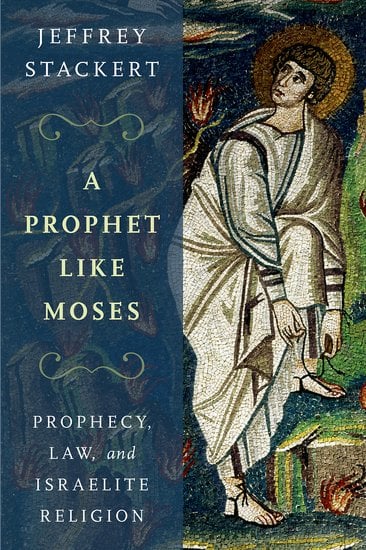
I don’t exaggerate when I state that Dr. Jeffrey Stackert has produced one of the most significant books in the field of biblical studies to emerge in recent years. For anyone interested in the academic study of the Hebrew Bible, Stackert’s A Prophet Like Moses: Prophecy, Law, and Israelite Religion published by Oxford University Press is an absolute must read. Stackert presents a provocative thesis on the relationship between prophecy and law in the Hebrew Bible that carries significant implications for understanding the history of ancient Israelite religion and the development of the Pentateuch.
I’m not going to review the entire book at this point, but in light of the focus this blog has given to the topic of the Documentary Hypothesis, I would like to share Stackert’s articulation of the present state of documentary analysis in the Torah and then simply encourage readers to dive into the book.
What is the present state of documentary analysis in the Pentateuch in biblical scholarship? Has the long-held view that individual documents can be successfully identified in the Pentateuch been abandoned? The answer to this question is of course, “No. Not by a long shot!” Documentary analysis is still the foundation of Pentateuchal scholarship (see here). Criticisms of the Documentary Hypothesis have simply allowed scholars to develop higher standards for identifying these sources.
In the beginning of his book, Stackert summarizes the new approach to what is often referred to as the “Neo-Documentary Hypothesis” (to distinguish contemporary documentary analysis from Wellhausen’s original model). Stackert provides seven points that effectively lay out this new vision, and that I believe provide a compelling response to criticisms of the theory. They’re found on pages 19-22 of Stackert’s book.
He writes:
- The Neo-Documentary Hypothesis creates a hierarchy of literary features for distinguishing texts that prioritizes plot claims and continuity of narrative over stylistic features and terminology (including the divine name). Indeed, style and terminology are relegated to a corroborative role, valuable for the description of a source once identified, not primarily for the identification of source material itself.
- The Neo-Documentary Hypothesis recognizes that, in the midst of their common framework, the Torah sources may each tell its own story and need not include in its unique account episodes, viewpoints, or other elements included by other sources.
- The Neo-Documentary Hypothesis divorces the division of the Torah sources from the reconstruction of Israelite religion. It is not that the former is irrelevant to the latter. . . It is simply that the two are properly independent of each other.
- The Neo Documentary Hypothesis also divorces the division of the Torah sources from their dating. The hypothesis is simply a literary separation of the sources on the base of their internal, narrative claims and narrative continuity (see #1 above), and it is irrelevant to their separation which source came earlier or later.
- The Neo-Documentary Hypothesis proper concerns only the penultimate state in the composition of the Torah, not the earlier stages in the composition of the sources that likely occurred nor the later, post compositional redactional actively for which there is good evidence in the Torah.
- The Neo-Documentary Hypothesis posits that a single compiler, working with a consistent method, is responsible for the combination of the four Torah sources into a single story in a single compilational event. The principles of this compilational method are chronological arrangements of its plot (with reference to the chronologies of the plots of the sources it combines), preservation of source material, and minimal intervention.
- In line with the foregoing, the Neo-Documentary Hypothesis seeks a more economical and defensible solution to the problem of incomprehensibility of the Torah than previous iterations of the Documentary Hypothesis (or, for that matter, current, non-Documentary alternatives).
This is an extremely helpful guide. Though there are still many questions that remain, the Documentary Hypothesis is the best way scholars have come up with to make sense of the inconsistencies and doublets in the Pentateuch. It is a significant literary observation that has withstood the test of time (albeit with continued refinement). So not only is the Documentary Hypothesis alive and well, it’s healthier than it’s ever been. Our understanding of these sources has grown substantially as a result of academic debate. In recent years, Stackert’s work has contributed significantly to this discussion, and his new volume really should be your next book purchase.
Next Post

December 6, 2014 God, Gods, and Goddesses: Making Sense of the Elohim in Genesis
Browse Our Archives
Select a Category Bible Book of Mormon Documentary Hypothesis Eden Eve Feminism Genesis goddesses Gods Historical Criticism Judaism Mormon Studies New Testament Prophecy Prophets Religion Religious Studies Social Justice Uncategorized
Select a Month November 2015 July 2015 May 2015 April 2015 March 2015 February 2015 January 2015 December 2014 November 2014 October 2014 July 2014 April 2014 March 2014 January 2014
Follow Us!
TAKE THE
Religious Wisdom Quiz
How long did it take to rebuild Jerusalem's walls under Nehemiah?
Select your answer to see how you score.
12 months 7 years 52 days 40 days
Related posts from When Gods Were Men


The Word of God: Both Scandalous and Divine

Marcus Borg on How to Save the Bible

Who Wrote the Gospels? (part 3)
TRENDING AT PATHEOS Latter-day Saint

Did Prayer Cure His Cancer? Or Was It...
At 4 AM one morning, Joshua W. Brown’s wife awoke to a...

8 Ways a Near-Death Experience Rewires the Soul
Does Consciousness Survive Physical Death? After 50 Years of Research, Dr. Raymond...

Holy Longing: What Our Restlessness Is Telling Us
“One can find so many pains when the rain is falling.” -John...

What this is NOT about. This blog is definitely not about...

Who said the Israelites were God’s chosen? That’s right, they did. Who...

The Spirit World Is the Real World: God...
A Monk’s Wisdom on Body and Spirit I sit with Brother Martin...
view all Latter-day Saint blogs
Ad-Free & Subscriber Log-In Subscription Support
- About Us
- 2026 Calendar
- Videos
- Podcasts
- Library of World Religions
- Faith In Media Tracker
- Advertise With Us
- Write for Us
- Privacy Policy
- Terms of Service
- Do Not Sell My Data
- Contact Us
- Radiant Digital
- Manage Newsletter Subscriptions
- Unsubscribe From Notifications
- Sitemap
Copyright 2008-2026, Patheos. All rights reserved.
Subscription Support Ad-Free & Subscriber Log-In
Follow Patheos