
BuddhistCatholicContemplativeEvangelicalGeneral ChristianHinduJewishLatter-day SaintMuslimNew VisionsProgressive Christian
Beliefs
- Buddhist
- Catholic
- Contemplative
- Evangelical
- General Christian
- Hindu
- Jewish
- Latter-day Saint
- More Voices
- Muslim
- New Visions
- Pagan
- Progressive Christian
Topics
- Religion News
- Food and Religion
- Sports and Religion
- Religious Art
- Religious Music and Entertainment
- Religious Events
- History and Religion
- Style and Religion
- Politics and Religion
- Women in Religion
- Recreation Outdoors and Religion
- Business Finance and Religion
- Careers Workplace and Religion
- Education and Religion
- Family Parenting and Religion
- Health Fitness and Religion
- Home and Religion
- Relationships and Religion
- Technology and Religion
- Travel and Religion
Columnists
- Buddhist Columnists
- Business Finance and Religion Columnists
- Careers Workplace and Religion Columnists
- Catholic Columnists
- Contemplative Columnists
- Education and Religion Columnists
- Evangelists Columnists
- Family Parenting and Religion Columnists
- General Christian Columnists
- Health Fitness and Religion Columnists
- Hindu Columnists
- History and Religion Columnists
- Home and Religion Columnists
- Jewish Columnists
- More Voices Columnists
- Latter Day Columnists
- Muslim Columnists
- New Visions Columnists
- Nonreligious Columnists
- Pagan Columnists
- Politics and Religion Columnists
- Progressive Columnists
- Recreation Outdoors and Religion Columnists
- Relationships and Religion Columnists
- Religion News Columnists
- Religious Art Columnists
- Religious Events Columnists
- Religious Music and Entertainment Columnists
- Sports and Religion Columnists
- Style and Religion Columnists
- Technology and Religion Columnists
- Travel and Religion Columnists
- Women in Religion Columnists
Resource Library
- 2026 Calendar
- Library of World Religions
- The 100 Most Holy Places on Earth
- Patheos Answers
- Podcasts
- Videos
- Faith Leaders Database
- Anglican Episcopalian
- Bahai
- Baptist
- Buddhism
- Christianity
- Confucianism
- Eastern Orthodoxy
- Hinduism
- Holiness and Pentecostal
- ISKCON
- Islam
- Judaism
- Lutheran
- Methodist
- The Church of Jesus Christ of Latter-day Saints
- New Age
- Paganism
- Presbytarian and Reformed
- Protestantism
- Religion Behind the Scenes
- Roman Catholic
- Scientology
- Shia Islam
- Sikhism
- Sufism
- Sunni Islam
- Taoism
- Zen
- See all religions
Research Tools
 Ad-Free & Subscriber Log-In Subscription Support
Ad-Free & Subscriber Log-In Subscription Support
Follow Patheos 

- Trending:
- Forgiveness
- |
- Marriage
- |
- Consciousness
- |
- Death Penalty
- |
- Election
- |
- Halloween
 Dave Willis
- Home
- Relationships and Religion
- The 7 types of dysfunctional marriages
The 7 types of dysfunctional marriages
Last updated on: December 13, 2015 at 3:34 pm by Dave Willis
The 7 types of dysfunctional marriages 2015-12-13T15:34:41-05:00 Dave Willis
Patheos Explore the world's faith through different perspectives on religion and spirituality! Patheos has the views of the prevalent religions and spiritualities of the world.

My wife, Ashley, and I have interacted with married couples from all over the world. Many of these couples are healthy and thriving, but many others remain stuck in a perpetual state of dysfunction. Some of them have been living in the dysfunction for so long that they don’t even think anything is wrong. It’s remarkable what can start feeling “normal” if it goes on long enough!
I’m not a Psychologist, so I’m hesitant to give anything that looks like a diagnosis, but over the years, I’ve seen some clear patterns in marital behavior, and I believe these “dysfunctions” below represent some of the most common marriage mistakes. If you find yourself stuck in any (or all) of these patterns, you don’t have to stay stuck! Take immediate action to replace the dysfunction with health.
This isn’t a comprehensive list, but here are seven of the most common dysfunctional marriage types:
1. The Scorekeepers.
These are the marriages where one or both spouses is always “keeping score” of the other spouse’s behavior and then using that information to manipulate or control aspects of the marriage. Forgiveness is never truly sought or truly given. Scorekeepers always have their guards up, because they see marriage as a contest to be won against their spouse instead of something to be won in partnership with their spouse.
2. The Fantasizers.
These couples have nearly given up on pursuing passionate intimacy with each other, so they often escape into fantasy through romance novels or porn. The deeper they go into the fantasy, the more desensitized they become to real love and the more unsatisfied they become with their spouse, their sex life and their marriage.
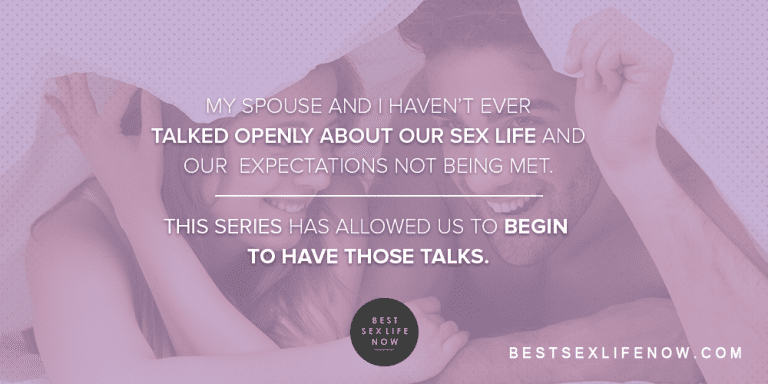
For ways to help you build a healthy and vibrant sex life WITH your spouse, check out “Best Sex Life Now” (by clicking here)
3. The Outsourcers.
These dysfunctional couples take the most sacred aspects of marriage (emotional support, friendship, acceptance, companionship and sometimes even sex) and “outsource” those roles to other people or pursuits. They may also escape into their career or hobbies if they find fulfillment in those arenas. They give the best of themselves to other people or pursuits at the expense of their marriage.
4. The Blamers.
These are the marriages where one or both spouses consistently blame the other for all the struggles in the marriage. These couples tend to have regular arguments (often heated) with no real resolutions. Even when they are not arguing, their communication still contains a great deal of sarcasm and nagging. They live in perpetual frustration with each other.
For daily tools to help you build a stronger marriage plus a library of marriage ebooks, please download our new Marriage App in iTunes by clicking here. A Facebook login is required to access the app.

5. The Separatists.
These are the couples who never seem to fully grasp the partnership required for a healthy marriage. They live as two separate individuals with separate hopes, separate dreams, separate money (often separate bank accounts), separate hobbies, separate friends, and eventually, separate lives altogether. For more on this, listen to me reading this Free audio clip from my iVow: Secrets to a Stronger Marriage audiobook.
6. The Deceivers.
These couples have no trust in each other, and their lack of trust is perpetuated by keeping secrets and hiding details (or hiding money, conversations, etc) from each other. Without trust and transparency in the marriage, the couples lives in a state of artificial harmony and they never experience true intimacy, because secrecy is an enemy of intimacy.
7. The Quitters.
These couples throw around the word “divorce” in nearly every disagreement until they finally follow through and give up on the marriage. They see struggles in marriage as an excuse to quit instead of an opportunity to work together and grow stronger with their spouse. They very often remarry someone else and then repeat the same cycles of dysfunction in the new relationship.
Don’t settle for dysfunction! For tools to help you build a healthy, happy, thriving marriage, download our new Marriage App on iTunes by clicking here and also check out my brand new book “The 7 Laws of Love: Essential Principles for Building Stronger Relationships.”

If this post helped you, please share it using the links below, so we can help others too!
Previous Post

June 10, 2015
3 truths to remember when tragedy strikes
Next Post
June 11, 2015 God's message to those with messy kids
Browse Our Archives
Select a Category Bible Study Family and Parenthood General Inspiration and Encouragement Life Tools Marriage Uncategorized Videos
Select a Month August 2022 May 2018 February 2018 January 2018 December 2017 November 2017 October 2017 September 2017 August 2017 July 2017 June 2017 May 2017 April 2017 March 2017 February 2017 January 2017 December 2016 November 2016 October 2016 September 2016 August 2016 July 2016 June 2016 May 2016 April 2016 March 2016 February 2016 January 2016 December 2015 November 2015 October 2015 September 2015 August 2015 July 2015 June 2015 May 2015 April 2015 March 2015 February 2015 January 2015 December 2014 November 2014 October 2014 September 2014 August 2014 July 2014 June 2014 May 2014 April 2014 March 2014 February 2014 January 2014 December 2013 November 2013 October 2013 September 2013 August 2013 July 2013 June 2013 May 2013 April 2013 March 2013 February 2013 January 2013
Follow Us!
TAKE THE
Religious Wisdom Quiz
Who said, 'For the wages of sin is death, but the gift of God is eternal life'?
Select your answer to see how you score.
John Peter Paul James
Books by This Author Books by Dave Willis
Related posts from Dave Willis
My All-Time Favorite Marriage Advice

8 Ways to Show Your Wife Respect
7 Valentine's Day Gifts Your Husband Actually Wants
TRENDING AT PATHEOS Relationships and Religion

The Pillar of the Boatmen: the Ancient Monument...
The Pillar of the Boatmen is a Romano-Gaulish sculpture that dates from...

In one sense walking into Westminster Abbey is like walking down the...

'Super Scam Me' Exposes AI Jon Bon Jovi...
Leslie Pickett believed she was in a relationship with Jon Bon Jovi....

The Brazilian Remake of Kendricks' 'Flywheel' Opens in...
“Flywheel,” the story that launched the Kendrick Brothers’ filmmaking career is getting...

The Dangers of Gradual Accommodation (Winking at Sin)
Recently, the “law of gradualness” resurfaced during the opening of a weeklong,...

The Iron Gates and the Lion of the...
Yesterday, I didn't finish my report about, well, yesterday. So I'll...
view all Relationships and Religion blogs
Ad-Free & Subscriber Log-In Subscription Support
- About Us
- 2026 Calendar
- Videos
- Podcasts
- Library of World Religions
- Faith In Media Tracker
- Advertise With Us
- Write for Us
- Privacy Policy
- Terms of Service
- Do Not Sell My Data
- Contact Us
- Radiant Digital
- Manage Newsletter Subscriptions
- Unsubscribe From Notifications
- Sitemap
Copyright 2008-2026, Patheos. All rights reserved.
Subscription Support Ad-Free & Subscriber Log-In
Follow Patheos