
BuddhistCatholicContemplativeEvangelicalGeneral ChristianHinduJewishLatter-day SaintMuslimNew VisionsProgressive Christian
Beliefs
- Buddhist
- Catholic
- Contemplative
- Evangelical
- General Christian
- Hindu
- Jewish
- Latter-day Saint
- More Voices
- Muslim
- New Visions
- Pagan
- Progressive Christian
Topics
- Religion News
- Food and Religion
- Sports and Religion
- Religious Art
- Religious Music and Entertainment
- Religious Events
- History and Religion
- Style and Religion
- Politics and Religion
- Women in Religion
- Recreation Outdoors and Religion
- Business Finance and Religion
- Careers Workplace and Religion
- Education and Religion
- Family Parenting and Religion
- Health Fitness and Religion
- Home and Religion
- Relationships and Religion
- Technology and Religion
- Travel and Religion
Columnists
- Buddhist Columnists
- Business Finance and Religion Columnists
- Careers Workplace and Religion Columnists
- Catholic Columnists
- Contemplative Columnists
- Education and Religion Columnists
- Evangelists Columnists
- Family Parenting and Religion Columnists
- General Christian Columnists
- Health Fitness and Religion Columnists
- Hindu Columnists
- History and Religion Columnists
- Home and Religion Columnists
- Jewish Columnists
- More Voices Columnists
- Latter Day Columnists
- Muslim Columnists
- New Visions Columnists
- Nonreligious Columnists
- Pagan Columnists
- Politics and Religion Columnists
- Progressive Columnists
- Recreation Outdoors and Religion Columnists
- Relationships and Religion Columnists
- Religion News Columnists
- Religious Art Columnists
- Religious Events Columnists
- Religious Music and Entertainment Columnists
- Sports and Religion Columnists
- Style and Religion Columnists
- Technology and Religion Columnists
- Travel and Religion Columnists
- Women in Religion Columnists
Resource Library
- 2026 Calendar
- Library of World Religions
- The 100 Most Holy Places on Earth
- Patheos Answers
- Podcasts
- Videos
- Faith Leaders Database
- Anglican Episcopalian
- Bahai
- Baptist
- Buddhism
- Christianity
- Confucianism
- Eastern Orthodoxy
- Hinduism
- Holiness and Pentecostal
- ISKCON
- Islam
- Judaism
- Lutheran
- Methodist
- The Church of Jesus Christ of Latter-day Saints
- New Age
- Paganism
- Presbytarian and Reformed
- Protestantism
- Religion Behind the Scenes
- Roman Catholic
- Scientology
- Shia Islam
- Sikhism
- Sufism
- Sunni Islam
- Taoism
- Zen
- See all religions
Research Tools
 Ad-Free & Subscriber Log-In Subscription Support
Follow Patheos 

- Trending:
- Advent
- |
- Forgiveness
- |
- Thanksgiving
- |
- Election
- |
- Seasonal Holidays
- |
- Marriage

-
About
-
Catholic Apologetics
-
Church History
-
Great Apologists
-
Christian Worldview
-
Protestantism & Misc.
- Home
- Catholic
- History and Religion
- On Protestant Explanations of Catholic Conversion
On Protestant Explanations of Catholic Conversion
Last updated on: October 15, 2026 at 11:58 am by Dave Armstrong
On Protestant Explanations of Catholic Conversion 2026-10-15T11:58:51-04:00 Dave Armstrong
Patheos Explore the world's faith through different perspectives on religion and spirituality! Patheos has the views of the prevalent religions and spiritualities of the world.
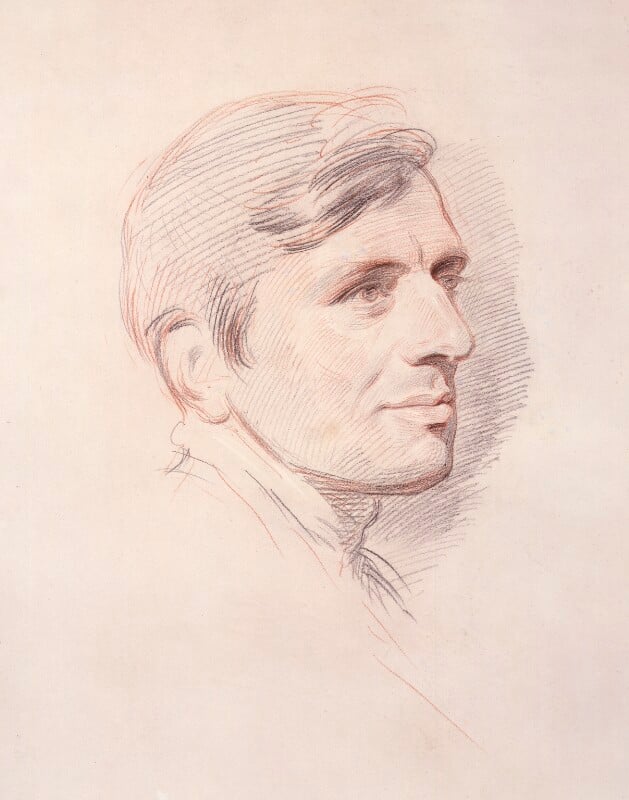
Photo credit: St. John Henry Cardinal Newman, my hero, Doctor of the Church, and the biggest influence in my conversion; in 1844, a year before he was famously received into the Catholic Church.
It’s a very common theme among Protestants, in explaining why some in their circles decide to become Catholics, to basically dismiss it as some sort of subjective, semi-infantile desire for a security and comfort that doesn’t really exist in the “real world”: a dubious espousal of a Church with supposedly profound authority that claims to be the fullness of theological and spiritual and moral (and biblical) truth, and the lure of the “smells and bells” etc. I’ve seen this many times in 36 years of Catholic apologetics (30 of them online).
It’s not really complicated. Catholic converts like myself, to a person, will assert that they converted because they came to believe that Catholicism was true, including having many aspects that Protestants either fully or largely lacks. Period. Full stop. But of course, Protestants can never accept that (since they would have to cease being Protestants, were they to arrive at that conclusion), so they necessarily have to — short of specifically discussing each doctrine or moral position in depth — explain it in some other fashion.
But no one need take my “biased” Catholic word alone on this matter. I’ll let Protestants speak for themselves. Gavin Ortlund, a Reformed Baptist, is very active and influential as a result of his YouTube channel. He stated in his video, “Is Gen Z Turning Catholic? Analyzing a Fascinating Trend” (4-8-26):
1:25 People are feeling deep anxiety and a desire and a nostalgia for stability.
2:20 They’re looking for a sense of belonging. And third, aesthetic starvation. People are longing for beauty. Modern life feels very thin and disenchanted. . . . I don’t look down at that at all. I relate to this. I know these feelings.
3:15 People are aching for stability . . . a sense of solidity, right? Feels like everything is evaporating. I need a solid rock to stand on.
3:46 One way to capture this is the word nostalgia.
5:45 I completely understand why in this environment, people are intrigued by Roman Catholicism. There’s a lot of beauty in this tradition.
6:33 That nostalgia in the human heart is ultimately found in the gospel. This is basically my message. . . . the gospel meets those needs in the human heart.
. . . Which of course, Protestantism possesses in a way — or with a biblical fullness — that Catholicism does not, according to many Protestants, and strongly implied here by Gavin. He goes on to describe what it is like to give one’s heart to Jesus as His disciple, and correctly notes that it is a legitimate spiritual experience that fills our deep needs and longings. All of that is quite true. I experienced it myself as a Protestant (in 1977 and in a greater measure — an infilling of the Holy Spirit — in 1980), and still consider all of that completely valid.
But it’s not at issue between Catholics and Protestants. We all agree with that (though how we experience or apply or theologically interpret it differs in some details). The difference at hand lies in the nature of theological or ecclesial authority and how the different parties approach the question of the determination of truth, or what is called “the rule of faith.” That’s what is fundamentally at issue here; not the gospel itself.
Note that Gavin approaches the matter in a completely subjective “touchy feely” sort of way at first (the above), but then pivots to an assertion that acceptance of the gospel fulfills these needs. And to his credit, he does, to some extent, eventually address the question of which Christian tradition has the most plausible, believable claim for being the fullness of Christian, biblical truth:
10:53 Maybe they feel this sense of rootedness, this longing for rootedness, and then they become Catholic without really hearing much about Protestantism. . . . they just have no idea [of] the riches of historic Protestantism.
11:08 If you’re a Catholic watching this video, I hope you could agree with me that we want Protestantism to be understood on its best terms because you wouldn’t want someone to become Catholic because they misunderstood an alternative.
I absolutely agree. We have the same problem in reverse in Catholicism: people leaving, who don’t know Catholic theology from a hole in the ground; who have never taken the time to become properly catechized or to read any Catholic apologetics, such as what I wrote about, or to read the Bible as they should. So they become Protestant because of the many attractive elements that it offers: often non-theological things like fellowship, the community of small groups like Bible studies, youth groups, prayer meetings, etc., without ever having made any serious attempt to properly understand the Catholicism they grew up in, or why it believes as it does.
This was not the case with me. I was a Protestant apologist for nine years and a campus missionary for four years; I did street witnessing for nine years at the University of Michigan campus, and was thoroughly familiar with the various Protestant traditions, and influenced by most of them. My conversion (that I’ve written and spoken about several times) proceeded from three major things:
Consideration of moral theology, and the determination of which group preserved apostolic, early Church morality (particularly, the issue of contraception, which all Christian groups opposed until 1930).
Studying and understanding the nature of the development of doctrine, by reading St. Cardinal Newman’s famous Essay on that topic.
Studying the controversies of the 16th century from both sides, not just the Protestant perspective.
All of these reasons were factually based ones, not mere subjective longings for stability and belonging, etc. The anti-Catholic polemicist James White accused me, years ago, when he still acknowledged that I exist, of being utterly ignorant of the Protestantism that I left for Catholicism. I produced for him a long list of Protestant books and figures that I had read. Then, without missing a beat, he immediately moved from the view that I was an ignoramus as a Protestant, to one whereby I was — in his eyes — obviously guilty of “deliberate deception.”
In his view, I couldn’t possibly have left Protestantism without being an idiot and an imbecile, or else a deliberate deceiver and liar. I had to be either stupid or evil. There was no possibility that I had a sincere rationally- and theologically- and historically- and biblically-based and Christian opinion that led me to Catholicism. His low view of Catholicism simply doesn’t allow that as a permissible option. Gavin isn’t anti-Catholic, so he has a very different approach. But his view nevertheless still has the typically Protestant subjective emphasis and “de facto doctrinal relativism”, in the final analysis.
I’ve been inclined to dismiss all of the subjective and one-sided, rather simplistic analyses of Catholic coverts as mere diversions and non sequiturs in the larger discussion about conversion, but it occurred to me today that they actually — almost inadvertently — highlight something very important: that is, that these sorts of converts were indeed searching in their own way for absolute truth in doctrinal matters. In other words, there is a legitimate aspect of this search for “security” or what Gavin described as “stability” and “solidity” and “rootedness.” They are actually onto something central and profoundly biblical.
The New Testament, and above all, the apostle Paul, take quite for granted the fact that there is an apostolic “tradition” and “truth” that is “out there” and can be identified in the real world, in real time. In the New Testament, the phrase, “the truth” occurs in RSV 70 times, and it’s clear that it is used in a way that makes it synonymous with a received apostolic tradition that is known and that has been received and passed on, or delivered. St. Paul never asserts that everyone must somehow grasp after the highest degree of truth they can find (in their subjective, fallible judgment) in one given Protestant assembly among several hundred, where contradictions are innumerable; therefore, also falsehood (by the laws of logic). So, for example, Paul writes:
Galatians 5:7 (RSV) You were running well; who hindered you from obeying the truth?
2 Thessalonians 2:10, 12-13 and with all wicked deception for those who are to perish, because they refused to love the truth and so be saved. . . . [12] so that all may be condemned who did not believe the truth . . . [13] . . . God chose you from the beginning to be saved, through sanctification by the Spirit and belief in the truth.
1 Timothy 2:4 who desires all men to be saved and to come to the knowledge of the truth.
1 Timothy 4:3 . . . those who believe and know the truth.
2 Timothy 1:14 guard the truth that has been entrusted to you by the Holy Spirit who dwells within us.
Titus 1:14 . . . men who reject the truth.
There are many other “biblical synonyms” for “the truth” also, such as:
“the faith” (Acts 6:7; 14:22; 16:5; Gal 1:23; Eph 4:13; Col 1:23; 2:7; 1 Tim 1:2; 4:1; 6:10; 2 Tim 4:7; Titus 1:13; Jude 3)
“the commandment” (Mt 15:3, 6; Mk 7:8, 13; 1 Tim 6:14; 2 Pet 2:21; 3:2; 1 Jn 2:7-8)
“the doctrine” (Rom 16:17; 1 Tim 4:6; Titus 2:10; 2 Jn 1:9)
“the way” (Acts 9:2; 22:4; 24:14, 22)
“[the] teaching” (Acts 2:41-42; Rom 6:17; 1 Tim 4:16; 6:1)
“the message” (Mk 16:20; Acts 11:14; 13:26; 1 Cor 2:4; 2 Cor 5:19; 2 Tim 4:15, 17; 1 Jn 1:5; 3:11; often rendered as “the word” in KJV)
“[new] covenant” (Mt 26:28; Mk 14:24; Lk 22:20; 1 Cor 11:25; 2 Cor 3:6; Heb 7:22; 8:6-7-10, 13; 9:1, 15, 18; 10:16)
“the tradition[s]” (1 Cor 11:2; 2 Thess 2:15; 3:6)
St. Paul refers to “one faith” (Eph 4:5). Jesus prayed three times during the Last Supper that Christians “may be one” (Jn 17:11, 21-22). And what did He mean by that? Would it include massive doctrinal disagreements, as we find in Protestantism? It seems not, since Jesus defines this oneness as being “one, even as we are one” (Jn 17:11, 22) and “one; even as thou, Father, art in me, and I in thee” (Jn 17:21) and “perfectly one” (Jn 17:23). This is the oneness and unity between God the Father and God the Son. Do they ever disagree with each other? No; never.
It seems to me that Gavin and Protestantism as a whole deny that doctrinal and moral unity is supremely important. They have given up on seeking it. I vigorously submit that the New Testament assumes or presupposes “the one true Church” as a discernible, objective fact. Protestants today almost always assume that the search for the one Church is impossible; it can’t be found. The “quest for certainty” analysis of Catholic converts will no doubt continue indefinitely, but I submit that the table can be turned, and objections made to “the quest for uncertainty” or the “non-quest for certainty” that prevails in Protestantism as a whole. I have written about it several times:
The Protestant “Non-Quest” for Certainty [3-15-06; abridged and links added on 7-12-20]
Glorying in Uncertainty in Modern Protestantism (Dialogue with a Calvinist) [11-11-09]
Radically Unbiblical Protestant “Quest for Uncertainty” [2-12-14]
This approach of “winked-at contradiction / falsehood” leaves Protestants in real danger of falling into what Paul warned about: men “who have swerved from the truth” (2 Tim 2:18) and “who will listen to anybody and can never arrive at a knowledge of the truth” (2 Tim 3:7) and who “will turn away from listening to the truth and wander into myths” (2 Tim 4:4).
This isn’t, by the way, how the first Protestants expressed things. Luther and Calvin and other early leaders in the Protestant Revolt believed in “the one Church.” But as they continued to endlessly split into endless competing groups as time went on, and moved further away from “classic Reformation Protestantism,” as it is called, most of them forgot about that and stopped taking about it.
The New Testament takes a very different view. In 21 passages, the word “church” (which also often refers to individual congregations) refers to the one true Church (Mt 16:18; Acts 5:11; 20:28; 1 Cor 10:32; 11:22; 12:28; 15:9; Eph 1:22-23; 3:10, 21; 5:23-25, 27, 29, 32; Phil 3:6; Col 1:18, 24; 1 Tim 3:15). In other words, again, the “one faith” referred to in Ephesians 4:5 or “the truth” is assumed in the New Testament to be a unified body of doctrine or “apostolic deposit” that can be identified. It’s not everyone’s subjective opinions. How can this one true Church be described by Paul as “the pillar and bulwark of the truth” (1 Tim 3:15) if all it is, is a self-contradictory confusing mess of hundreds of individual denominations?
Our Lord Jesus viewed His Church as being “one flock” (Jn. 10:16). St. Luke described the earliest Christians as being “of one heart and soul” (Acts 4:32). Luke 2:42 casually refers to “the apostles’ teaching” without any hint that there were competing interpretations of it. St. Peter warned about “false teachers” among Christians, who would “secretly bring in destructive heresies,” which go against “the way of truth” (2 Pet. 2:1-2).
St. Paul, above all, repeatedly condemns “dissensions” (Rom 16:17), “quarreling” (1 Cor 1:11), “jealousy and strife” (1 Cor 3:3), “divisions” and “factions” (1 Cor 11:18-19), “discord” (1 Cor 12:25), “enmity” and “party spirit” (Gal 5:20), and calls for Christians to be “united in the same mind and the same judgment” (1 Cor 1:10; cf. Phil 2:2).
Paul condemns party affiliations associated with persons and asks, “Is Christ divided?” (1 Cor 1:13; cf. 3:4-7) and regards Christian tradition as of one piece; not an amalgam of permissible competing theories: “the tradition that you received from us” (2 Thess 3:6); “the doctrine which you have been taught” (Rom 16:17); “being in full accord and of one mind” (Phil 2:2); “stand firm in one spirit, with one mind striving side by side for the faith of the gospel” (Phil 1:27).
He, like Jesus, ties doctrinal unity together with the one God: “maintain the unity of the Spirit in the bond of peace. There is one body and one Spirit, . . . one Lord, one faith, one baptism, . . .” (Eph 4:3-5). His strong and certain teaching on this topic is well summed up in the following two passages:
1 Timothy 6:3-5 If any one teaches otherwise and does not agree with the sound words of our Lord Jesus Christ and the teaching which accords with godliness, he is puffed up with conceit, he knows nothing; he has a morbid craving for controversy and for disputes about words, which produce envy, dissension, slander, base suspicions, and wrangling among men who are depraved in mind and bereft of the truth, imagining that godliness is a means of gain.
What does a Protestant do with all of this biblical data? We’ll, they reply — I used to argue this myself in my Protestant days –, that they have a broad doctrinal unity on the most important doctrines (this is true, for the most part), but allow differences on what they call “secondary doctrines”. But that concept cannot be found in the New Testament. In Matthew 28:19, Jesus urged us to “observe all” that He commanded us. He didn’t separate that into two groups, with one being open to all sorts of disagreements.
This is arguably far more critical than anything we have said above. Protestants have to grapple with this matter of sectarianism: a thing extraordinarily difficult if not impossible to defend from biblical teaching. I freely admitted this when I was a Protestant, too, by the way. I thought it was scandalous and that it made evangelism very difficult to undertake, seeing that Christians disagreed about so much.
I didn’t have a definitive “answer” to that (other than that sin brought about seemingly unsolvable division). How I resolved the difficulty in the long run was to accept that the Catholic point of view made a lot more biblical and historical sense: that it tied everything together in a way that no form of Protestantism could or ever would. One could criticize that as subjective, too, I suppose, except that it is harmonious with what the Bible teaches about the “one faith” (Eph 4:5), which is “the pillar and bulwark of the truth” (1 Tim 3:15), and which Jesus built upon the human leadership (subject to His own) of Peter (Mt 16:18).
Therefore, this “sense of belonging” and “need” for “a solid rock to stand on” that Gavin refers to is, I submit, based, at bottom, on an actual and legitimate human need that God intends to fulfill in His one true Church, and the fullness of theological, spiritual, and moral truth found in this Catholic Church. Similar to how St. Augustine wrote about God, I believe that there is also a “Catholic Church-shaped hole” in everyone’s soul, which at first they aren’t aware of, but as their yearning grows, they become more conscious of, sometimes leading all the way to — by God’s grace, as always, being convinced of Catholicism and a conversion to it.
***
Photo credit: St. John Henry Cardinal Newman, my hero, Doctor of the Church, and the biggest influence in my conversion; in 1844, a year before he was famously received into the Catholic Church.
Summary: I take a deeper look at a common explanation that Protestants offer as the leading reason for why Protestants become Catholics; and make a related biblical analysis.
*
***
*
Practical Matters: This is the most comprehensive and multi-faceted Catholic apologetics blog: rated #1 for Christian sites by leading AI tool, ChatGPT. I offer more than 5,000 free online articles, fifty-nine books, and many scores of videos at the Catholic Bible Highlights YouTube channel (please subscribe!). If you believe my full-time apostolate is worth supporting, please seriously consider financially supporting it. PayPal donations are the easiest: just send to my email address: [email protected]. You’ll see the term “Dave Armstrong Bookstore”. To learn about the different methods of contributing (including Zelle and 100% tax-deductible donations if desired), see my page: About Catholic Apologist Dave Armstrong / Donation Information. Thanks a million!
*
***
*
Calvinism & General Protestantism
Previous Post
October 9, 2026
Three More Anti-Catholic Lies About Catholicism (#6-4)
Next Post
October 16, 2026 Top Three Anti-Catholic Lies About Catholicism
Recent Comments
"Special pleading, and not a serious response to my arguments . . ."
Is Venerating Men & Angels Worship? ..."
""no man needs to teach us."Didn't you just teach us?"
Is Venerating Men & Angels Worship? ..."
""Catholics say they are the only church that can lead people into heaven."In fact, we ..."
Is Venerating Men & Angels Worship? ..."
"And lastly, I belong to no denomination and am free to serve God as He ..."
Is Venerating Men & Angels Worship? ..."
Browse Our Archives
Select a Category & Last Things About Me Anti-Catholicism Atheism & Agnosticism Baptism and Sacramentalism Bible and Tradition Blessed Virgin Mary Books by Dave Armstrong C. S. Lewis Calvinism & General Protestantism Catholic Apologetics Catholic Apologists Catholic conversion Catholic converts Christmas Church (Ecclesiology) Church History Conversion and Converts Development of Doctrine Eastern Orthodoxy Ecumenism & Christian Unity Eucharist & Liturgy Fathers of the Church French Translations G. K. Chesterton Hell Hell & Satan Hell & Satan & Last Things Heresies & Comparative Religion Holistic Health Inquisition & Crusades & Scandals James White Jews & Judaism & Old Testament John Calvin John Henry Newman Liberal / Modernist Theology Life Issues Literary Resume Lutheranism Mariology Martin Luther Music Orthodoxy Papacy & Infallibility Personal Page Philosophy & Science Political & Ethical & Moral Issues Protestant Persecution & Intolerance Protestantism Purgatory Purgatory & Penance Romantic & Imaginative Theology Saints & Purgatory & Penance Salvation Salvation & Justification Satan & Last Things Sexuality and Gender Issues Spanish Translations Traditionalism vs. Radical Catholic Reactionaries Traducciones al español / tradução para português Trinitarianism & Christology Uncategorized Videos
Select a Month November 2026 October 2026 September 2026 August 2026 July 2026 June 2026 May 2026 April 2026 March 2026 February 2026 January 2026 December 2025 November 2025 October 2025 September 2025 August 2025 July 2025 June 2025 May 2025 April 2025 March 2025 February 2025 January 2025 December 2024 November 2024 October 2024 September 2024 August 2024 July 2024 June 2024 May 2024 April 2024 March 2024 February 2024 January 2024 December 2023 November 2023 October 2023 September 2023 August 2023 July 2023 June 2023 May 2023 April 2023 March 2023 February 2023 January 2023 December 2022 November 2022 October 2022 September 2022 August 2022 July 2022 June 2022 May 2022 April 2022 March 2022 February 2022 January 2022 December 2021 November 2021 October 2021 September 2021 August 2021 July 2021 June 2021 May 2021 April 2021 March 2021 February 2021 January 2021 December 2020 November 2020 October 2020 September 2020 August 2020 July 2020 June 2020 May 2020 April 2020 March 2020 February 2020 January 2020 December 2019 November 2019 October 2019 September 2019 August 2019 July 2019 June 2019 May 2019 April 2019 March 2019 February 2019 January 2019 December 2018 November 2018 October 2018 September 2018 August 2018 July 2018 June 2018 May 2018 April 2018 March 2018 February 2018 January 2018 December 2017 November 2017 October 2017 September 2017 August 2017 July 2017 June 2017 May 2017 April 2017 March 2017 February 2017 January 2017 December 2016 November 2016 October 2016 September 2016 August 2016 July 2016 June 2016 May 2016 April 2016 March 2016 February 2016 January 2016 December 2015 November 2015 October 2015 September 2015 August 2015 July 2015 June 2015 May 2015 April 2015 March 2015 February 2015 January 2015 December 2014 November 2014 October 2014 September 2014 August 2014 July 2014 June 2014 April 2014 March 2014 February 2014 January 2014 December 2013 November 2013 October 2013 September 2013 August 2013 July 2013 June 2013 April 2013 March 2013 February 2013 January 2013 December 2012 November 2012 October 2012 September 2012 August 2012 July 2012 June 2012 May 2012 April 2012 March 2012 February 2012 January 2012 December 2011 November 2011 October 2011 September 2011 August 2011 July 2011 June 2011 April 2011 March 2011 February 2011 October 2010 September 2010 August 2010 July 2010 April 2010 March 2010 December 2009 October 2009 August 2009 July 2009 June 2009 May 2009 March 2009 February 2009 October 2008 September 2008 April 2008 March 2008 February 2008 January 2008 December 2007 November 2007 October 2007 May 2007 March 2007 February 2007 January 2007 November 2006 October 2006 September 2006 August 2006 July 2006 June 2006 May 2006 April 2006 March 2006 February 2006 October 2005 June 2005 April 2005 February 2005 July 2004 May 2004 April 2004
Follow Us!
TAKE THE
Religious Wisdom Quiz
Who killed Goliath with a stone and sling?
Select your answer to see how you score.
Saul Samson Jonathan David
Books by This Author Books by Dave Armstrong
Related posts from Biblical Evidence for Catholicism
Denominationalism: 50 Biblical Condemnations
Biblical Evidence for Catholicism
Protestant Confessions & "Ever-Virgin" Mary
Biblical Evidence for Catholicism
A Few "Worst" & "Best" Arguments vs. Protestantism
Biblical Evidence for Catholicism
Reply to Anglican Sean Luke on Denominationalism
Biblical Evidence for Catholicism
TRENDING AT PATHEOS Catholic

For many years, Catholicism has been caught up in division over the...

'Statements of Faith' never get shorter
Nothing demonstrates a conservative commitment to faith and faithfulness like a "statement...

Michele's Reviews - Future Grace by John Piper
In God's Place, at God's Pace, by Future Grace Impatience is...

Bama Gramma's Blackout Christmas: the Power of Light...
Another Christmas Skit: I have an alter ego: Bama Gramma. She shows...

Thanksgiving as a Way of Life: A Christian...
Each year, Thanksgiving brings families and friends together to share meals, stories,...

Two Women Doctors Who Went Against the Current
Women physicians who transformed healthcare for "Indians" “I shall have an advantage...
view all Catholic blogs
What Are Your Thoughts?leave a comment
Ad-Free & Subscriber Log-In Subscription Support
- About Us
- 2026 Calendar
- Videos
- Podcasts
- Library of World Religions
- Faith In Media Tracker
- Advertise With Us
- Write for Us
- Privacy Policy
- Terms of Service
- Do Not Sell My Data
- Contact Us
- Radiant Digital
- Manage Newsletter Subscriptions
- Unsubscribe From Notifications
- Sitemap
Copyright 2008-2026, Patheos, part of the Radiant Digital network of media brands. All rights reserved.
Subscription Support Ad-Free & Subscriber Log-In
Follow Patheos