
BuddhistCatholicContemplativeEvangelicalGeneral ChristianHinduJewishLatter-day SaintMuslimNew VisionsProgressive Christian
Beliefs
- Buddhist
- Catholic
- Contemplative
- Evangelical
- General Christian
- Hindu
- Jewish
- Latter-day Saint
- More Voices
- Muslim
- New Visions
- Pagan
- Progressive Christian
Topics
- Religion News
- Food and Religion
- Sports and Religion
- Religious Art
- Religious Music and Entertainment
- Religious Events
- History and Religion
- Style and Religion
- Politics and Religion
- Women in Religion
- Recreation Outdoors and Religion
- Business Finance and Religion
- Careers Workplace and Religion
- Education and Religion
- Family Parenting and Religion
- Health Fitness and Religion
- Home and Religion
- Relationships and Religion
- Technology and Religion
- Travel and Religion
Columnists
- Buddhist Columnists
- Business Finance and Religion Columnists
- Careers Workplace and Religion Columnists
- Catholic Columnists
- Contemplative Columnists
- Education and Religion Columnists
- Evangelists Columnists
- Family Parenting and Religion Columnists
- General Christian Columnists
- Health Fitness and Religion Columnists
- Hindu Columnists
- History and Religion Columnists
- Home and Religion Columnists
- Jewish Columnists
- More Voices Columnists
- Latter Day Columnists
- Muslim Columnists
- New Visions Columnists
- Nonreligious Columnists
- Pagan Columnists
- Politics and Religion Columnists
- Progressive Columnists
- Recreation Outdoors and Religion Columnists
- Relationships and Religion Columnists
- Religion News Columnists
- Religious Art Columnists
- Religious Events Columnists
- Religious Music and Entertainment Columnists
- Sports and Religion Columnists
- Style and Religion Columnists
- Technology and Religion Columnists
- Travel and Religion Columnists
- Women in Religion Columnists
Resource Library
- 2026 Calendar
- Library of World Religions
- The 100 Most Holy Places on Earth
- Patheos Answers
- Podcasts
- Videos
- Faith Leaders Database
- Anglican Episcopalian
- Bahai
- Baptist
- Buddhism
- Christianity
- Confucianism
- Eastern Orthodoxy
- Hinduism
- Holiness and Pentecostal
- ISKCON
- Islam
- Judaism
- Lutheran
- Methodist
- The Church of Jesus Christ of Latter-day Saints
- New Age
- Paganism
- Presbytarian and Reformed
- Protestantism
- Religion Behind the Scenes
- Roman Catholic
- Scientology
- Shia Islam
- Sikhism
- Sufism
- Sunni Islam
- Taoism
- Zen
- See all religions
Research Tools
 Ad-Free & Subscriber Log-In Subscription Support
Follow Patheos 

- Trending:
- Advent
- |
- Forgiveness
- |
- Thanksgiving
- |
- Election
- |
- Seasonal Holidays
- |
- Marriage

-
About
-
Catholic Apologetics
-
Church History
-
Great Apologists
-
Christian Worldview
-
Protestantism & Misc.
- Home
- Catholic
- History and Religion
- Deuterocanon & Javier Perdomo’s Straw Men
Deuterocanon & Javier Perdomo’s Straw Men
Last updated on: August 5, 2026 at 11:21 am by Dave Armstrong
Deuterocanon & Javier Perdomo’s Straw Men 2026-08-05T11:21:49-04:00 Dave Armstrong
Patheos Explore the world's faith through different perspectives on religion and spirituality! Patheos has the views of the prevalent religions and spiritualities of the world.
+ The Fathers on Susanna as Part of Daniel & St. Basil on the Deuterocanon
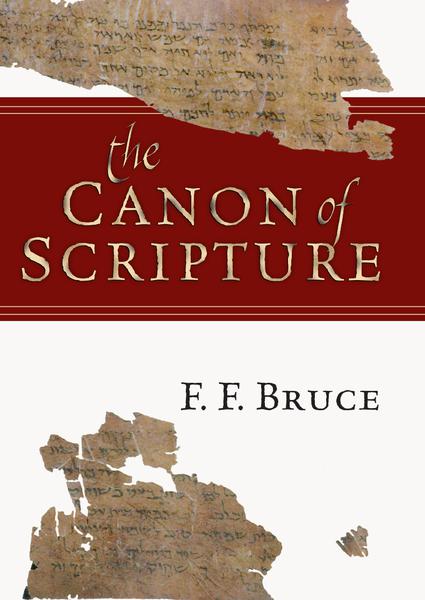
Photo credit: F. F. Bruce’s seminal book, The Canon of Scripture (1988) from the Westminster Bookstore page.
Lutheran apologist and YouTuber Javier Perdomo, on his Substack, posted an article with the ambitious title, “Church Fathers & Medievals on the Biblical Canon: An EXTENSIVE list of 90+ Patristic & Medieval quotes undermining the Roman Catholic position on the Biblical canon” (4-18-25). Here is his stated purpose:
The focus of this article is simply to try to figure out if church history is unanimously in support of the Tridentine definition of the canon.
In his Introduction he wrote:
The general talking point on the Roman Catholic side of the internet is that the Church down through the ages by and large (almost unanimously!) agreed with the Roman Catholic canon as later infallibly defined by the Roman Catholic church.
Per the usual tired modus operandi of contra-Catholic Protestant apologetics, what is argued against is the widespread position of what he calls “online RC pop-apologists”: who “love to sling about slogans.” Frankly, who cares about that? I want to know the official positions of religious groups and what their scholars hold, not the views of inadequate and often poorly qualified and uncredentialed representatives online.
Even his title reflects that because it includes the notion of “the Roman Catholic position”. But innumerable online apologists make for an easy target, so his dubious technique is used all the time. Equally common — and from where I sit, very annoying — among these endeavors, he names no names, so the reader is left with a prejudiced-type image in his mind of who-knows-how-many “Roman” Catholic simpletons and fools spewing out erroneous platitudes through their keyboards. And of course that’s the goal.
In my first treatment of his article, highlighting St. Athanasius, I first explained the general position of educated, scholarly Catholics and the Church herself on this matter, which is that there is substantial, significant consensus on the Old Testament canon through the ages, up to the Protestant Revolt and the Council of Trent, according to not only Catholics, but also three very highly regarded Protestant scholarly authorities. I cited F. F. Bruce, Philip Schaff, and the Oxford Dictionary of the Christian Church. That’s where the discussion ought to be, not centering on anonymous online Catholic “pop apologists”. But because Perdomo focused on them, his approach was essentially a war against straw men.
The second typical Protestant apologist approach that he utilizes is his reliance upon the common perception of the word “unanimous” as “all without exceptions.” He starts with that and then shows examples of people who have some different views through history, and then triumphantly claims victory in the pseudo debate over a straw man proposition. The problem is that the Catholic terminology of “unanimous consent of the fathers” does not mean, in the first place, “absolutely every one”: as I have explained in an article.
This is widely misunderstood, and in this instance, understandably so. All we Catholic apologists can do is explain and clarify that. But even in English, “unanimity” doesn’t have to mean “absolutely every one.” Roget’s Thesaurus (New York: Thomas Y. Crowell Co., 3rd edition, 1962, p. 339) lists the words accord, general agreement, and general acclamation as synonyms.
That’s the Catholic claim. What I’m doing is analyzing the examples he provides and showing that even when they do demonstrate some differences, he ignores or downplays their agreement with certain deuterocanonical books. He selectively cites, whereas, with St. Athanasius, I took into account his overall teaching on the matter. When one takes a closer look at Athanasius, we see statements from the great evangelical scholar F. F. Bruce such as the following:
In practice Athanasius appears to have paid little attention to the formal distinction between those books which he listed in the canon and those which were suitable for instruction of new Christians. He was familiar with the text of all, and quoted from them freely, often with the same introductory formula — ‘as it is written’, ‘as the scripture says’, etc. (The Canon of Scripture, Downers Grove, Illinois: InterVarsity Press, 1988, 80)
We see, then, that he was closer to the Catholic position than the Protestant one, and that is the point I am making. What Perdomo is doing proves nothing at all as to the overall question of what the broad consensus of the Church fathers was. For Catholics they are not part of the magisterial teaching authority, anyway. We only regard a broad consensus among the fathers as highly indicative of doctrinal truth but not determinative. Individual Church fathers can be wrong in particulars: even regarding major issues.
Moreover, it also appears to be the case that every single Church father (yes, even including St. Jerome) accepted as canonical and/or referred to as “Scripture” at least one or more of the deuterocanonical books that Protestants call “Apocrypha.”
Perdomo cites Amphilochius of Iconium (c. 340-403), who is not included in Schaff’s famous 38-volume set of the fathers. He appears to question Esther, by writing that “some approve the inclusion” of it. According to Edmon L. Gallagher and John D. Meade, The Biblical Canon Lists from Early Christianity: Texts and Analysis (Oxford University Press, 2017), Amphilochius accepted the canonicity of Baruch and the traditionally accepted sections of the book of Daniel, Susanna and Bel and the Dragon. Catholic Matthew Mark McWhorter, wrote in his book, Canon Crossfire: Does the Protestant Bible Blow up the Case for Christianity? (2025):
Rufinus [Apology, Bk. II] tells us that Susanna is Scripture to the early Church and always has been. But how do we know that Rufinus was correct? Partly, we can corroborate it with evidence from his enemy, Jerome. On whether Susanna is accepted as Scripture, they agree entirely.
First, we have Book 2 of Jerome’s Apology Against Rufinus (402 AD):
… In reference to Daniel … We have four versions to choose from: those of Aquila, Symmachus, the Seventy [the Septuagint], and Theodotion. The churches choose to read Daniel in the version of Theodotion [the modern Catholic/Orthodox version, with Susanna]. What sin have I committed in following the judgment of the churches? But when I repeat what the Jews say against the Story of Susanna … which [is] not contained in the Hebrew Bible, the man who makes this a charge against me proves himself to be a fool and a slanderer; for I explained not what I thought but what they commonly say against us. . . .
So, Jerome repeatedly confirms that the early Church is not following the Jewish/Protestant canon and accepts Susanna as Scripture. Thus, everyone in the dispute is agreeing that to the early Church, Susanna is Scripture and always had been.
[Footnotes: It is clear from Rufinus and Jerome that anyone calling for the removal of Susanna in 400 AD would have found it a very unpopular position, . . . Neither Jerome nor Rufinus (nor anyone else) says that the early Church sees Susanna as “Ecclesiastical” or just “to be read” or “not to confirm doctrine” or anything of the sort. As far as the evidence shows, Susanna was just a piece of Daniel, even if the Jews did not accept it. Until Jerome, it was treated like everything else in Daniel, without any distinction whatsoever. (pp. 4-5)
Jerome tells us that Susanna is accepted and publicly read by “all the churches of Christ, whether belonging to the Greek-speaking territory or the Latin, the Syrian or the Egyptian.” He could not have been more specific or certain on that point. (p. 7)
As some examples of this widespread support, St. Athanasius referred to Susanna as Scripture (Four Discourses Against the Arians, 1:12-13). So does Epiphanius (Panarion, Section 2, Heresy 30, Ebionites 9, 2), and Eusebius, citing Origen in support (Church History, 6, 31, 1), and Cyril of Jerusalem (Catechetical Lecture 16:29-32). Gregory Nazianzus refers to Susanna as part of Daniel, and therefore, as Scripture (Oration, 2, 64).
Likewise, Baruch is accepted as canonical in every list of the biblical canon up to the year 450, excepting only Jerome (McWhorter, p. 17).
Perdomo cites the Apostolic Canons from c. 380. I don’t know what he thinks he is proving in so doing. The Greek version of Canon 85 that he cites includes the deuterocanonical books of Judith, Tobit, 1-2 Maccabees [also 3 and 4], Wisdom of Solomon, Sirach, Baruch, and the Letter of Jeremiah. The New Testament list contains the current 27 books, but also includes 1 Clement and 2 Clement, but includes Revelation only in the Ethiopian tradition.
Basil the Great (c. 330-379) is brought up. He quotes the Book of Judith (On the Holy Spirit, 19) in context with citations from the Gospel of John minus any distinctions. And he cites Wisdom, Baruch, and the extra chapters of Daniel in the same manner that he cites agreed-upon canonical books. In his famous work Hexaemeron (Homily 6, Section 10), Basil directly quotes Sirach 27:11 as follows: “What Scripture says is very true, As for a fool he changes as the moon. ” Moreover, he stated:
Now let us examine, and to the best of our ability explain, the meaning of the words of Holy Scripture, which our opponents seize and wrest to their own sense, and urge against us for the destruction of the glory of the Only begotten….How then can the two following passages stand? The Spirit of the Lord fills the world… (here he cites Wisdom 1:7 For the Spirit of the Lord filleth the world: and that which containeth all things hath knowledge of the voice). (Letter 8, section 10)
He appears in context to cite Wisdom 1:4 as Scripture, in the same letter, section 12. In On the Holy Spirit (23, 54), he cites Wisdom 1:7 again, in between citations from Acts, Ezekiel, and Haggai, with no distinctions made. In the same book (28, 70), he cites Sirach / Ecclesiasticus 43:30: Exalt Him as much as you can, for even yet will He far exceed; and when you exalt Him put forth all your strength, and be not weary, for you can never go far enough — among seven New Testament passages. It reads in RSV:
When you praise the Lord, exalt him as much as you can; for he will surpass even that. When you exalt him, put forth all your strength, and do not grow weary, for you cannot praise him enough.
I won’t go through his whole list. There’s no need. I have shown how the underlying methodology and the premises are suspect, that he proves nothing of any consequence, and that it is an effort against straw men, not the actual Catholic position.
***
Photo credit: F. F. Bruce’s seminal book, The Canon of Scripture (1988) from the Westminster Bookstore page.
Summary: I critique the dubious methodology of Lutheran apologist Javier Perdomo regarding the vexed issue of the deuterocanon (aka “Apocrypha”), including interesting factual tidbits.
*
***
*
Practical Matters: This is the most comprehensive and multi-faceted Catholic apologetics blog: rated #1 for Christian sites by leading AI tool, ChatGPT. I offer more than 5,000 free online articles, fifty-nine books, and many scores of videos at the Catholic Bible Highlights YouTube channel (please subscribe!). If you believe my full-time apostolate is worth supporting, please seriously consider financially supporting it. PayPal donations are the easiest: just send to my email address: [email protected]. You’ll see the term “Dave Armstrong Bookstore”. To learn about the different methods of contributing (including Zelle and 100% tax-deductible donations if desired), see my page: About Catholic Apologist Dave Armstrong / Donation Information. Thanks a million!
*
***
*
St. Athanasius & the Deuterocanon
Previous Post
August 2, 2026
St. Athanasius & the Deuterocanon (vs. Javier Perdomo)
Next Post
August 7, 2026 "Baptism" & Romans 10 (Engwer's Silly Word Games)
Recent Comments
"Special pleading, and not a serious response to my arguments . . ."
Is Venerating Men & Angels Worship? ..."
""no man needs to teach us."Didn't you just teach us?"
Is Venerating Men & Angels Worship? ..."
""Catholics say they are the only church that can lead people into heaven."In fact, we ..."
Is Venerating Men & Angels Worship? ..."
"And lastly, I belong to no denomination and am free to serve God as He ..."
Is Venerating Men & Angels Worship? ..."
Browse Our Archives
Select a Category & Last Things About Me Anti-Catholicism Atheism & Agnosticism Baptism and Sacramentalism Bible and Tradition Blessed Virgin Mary Books by Dave Armstrong C. S. Lewis Calvinism & General Protestantism Catholic Apologetics Catholic Apologists Catholic conversion Catholic converts Christmas Church (Ecclesiology) Church History Conversion and Converts Development of Doctrine Eastern Orthodoxy Ecumenism & Christian Unity Eucharist & Liturgy Fathers of the Church French Translations G. K. Chesterton Hell Hell & Satan Hell & Satan & Last Things Heresies & Comparative Religion Holistic Health Inquisition & Crusades & Scandals James White Jews & Judaism & Old Testament John Calvin John Henry Newman Liberal / Modernist Theology Life Issues Literary Resume Lutheranism Mariology Martin Luther Music Orthodoxy Papacy & Infallibility Personal Page Philosophy & Science Political & Ethical & Moral Issues Protestant Persecution & Intolerance Protestantism Purgatory Purgatory & Penance Romantic & Imaginative Theology Saints & Purgatory & Penance Salvation Salvation & Justification Satan & Last Things Sexuality and Gender Issues Spanish Translations Traditionalism vs. Radical Catholic Reactionaries Traducciones al español / tradução para português Trinitarianism & Christology Uncategorized Videos
Select a Month November 2026 October 2026 September 2026 August 2026 July 2026 June 2026 May 2026 April 2026 March 2026 February 2026 January 2026 December 2025 November 2025 October 2025 September 2025 August 2025 July 2025 June 2025 May 2025 April 2025 March 2025 February 2025 January 2025 December 2024 November 2024 October 2024 September 2024 August 2024 July 2024 June 2024 May 2024 April 2024 March 2024 February 2024 January 2024 December 2023 November 2023 October 2023 September 2023 August 2023 July 2023 June 2023 May 2023 April 2023 March 2023 February 2023 January 2023 December 2022 November 2022 October 2022 September 2022 August 2022 July 2022 June 2022 May 2022 April 2022 March 2022 February 2022 January 2022 December 2021 November 2021 October 2021 September 2021 August 2021 July 2021 June 2021 May 2021 April 2021 March 2021 February 2021 January 2021 December 2020 November 2020 October 2020 September 2020 August 2020 July 2020 June 2020 May 2020 April 2020 March 2020 February 2020 January 2020 December 2019 November 2019 October 2019 September 2019 August 2019 July 2019 June 2019 May 2019 April 2019 March 2019 February 2019 January 2019 December 2018 November 2018 October 2018 September 2018 August 2018 July 2018 June 2018 May 2018 April 2018 March 2018 February 2018 January 2018 December 2017 November 2017 October 2017 September 2017 August 2017 July 2017 June 2017 May 2017 April 2017 March 2017 February 2017 January 2017 December 2016 November 2016 October 2016 September 2016 August 2016 July 2016 June 2016 May 2016 April 2016 March 2016 February 2016 January 2016 December 2015 November 2015 October 2015 September 2015 August 2015 July 2015 June 2015 May 2015 April 2015 March 2015 February 2015 January 2015 December 2014 November 2014 October 2014 September 2014 August 2014 July 2014 June 2014 April 2014 March 2014 February 2014 January 2014 December 2013 November 2013 October 2013 September 2013 August 2013 July 2013 June 2013 April 2013 March 2013 February 2013 January 2013 December 2012 November 2012 October 2012 September 2012 August 2012 July 2012 June 2012 May 2012 April 2012 March 2012 February 2012 January 2012 December 2011 November 2011 October 2011 September 2011 August 2011 July 2011 June 2011 April 2011 March 2011 February 2011 October 2010 September 2010 August 2010 July 2010 April 2010 March 2010 December 2009 October 2009 August 2009 July 2009 June 2009 May 2009 March 2009 February 2009 October 2008 September 2008 April 2008 March 2008 February 2008 January 2008 December 2007 November 2007 October 2007 May 2007 March 2007 February 2007 January 2007 November 2006 October 2006 September 2006 August 2006 July 2006 June 2006 May 2006 April 2006 March 2006 February 2006 October 2005 June 2005 April 2005 February 2005 July 2004 May 2004 April 2004
Follow Us!
TAKE THE
Religious Wisdom Quiz
What was a standard day's wage in Biblical times?
Select your answer to see how you score.
Denarius Mina Talent Shekel
Books by This Author Books by Dave Armstrong
Related posts from Biblical Evidence for Catholicism
Filioque & Twelve Eastern Church Fathers
Biblical Evidence for Catholicism
17 Church Fathers on Purgatory (Esp. 1 Cor...
Biblical Evidence for Catholicism
St. Athanasius & the Deuterocanon (vs. Javier Perdomo)
Biblical Evidence for Catholicism
Chrysostom vs. Faith Alone (vs. Lutheran Will Weedon)
Biblical Evidence for Catholicism
TRENDING AT PATHEOS Catholic

Thanksgiving as a Way of Life: A Christian...
Each year, Thanksgiving brings families and friends together to share meals, stories,...

Two Women Doctors Who Went Against the Current
Women physicians who transformed healthcare for "Indians" “I shall have an advantage...

Reading Culture Through Scripture, Not the Other Way...
A Radix Teleology and Faith Before Seeing: Essentialism “For we also have...
Thy Word is Truth: The Bible Vindicated by...
My 59th book, completed on 9 November 2026; 204 pages. *****...

Adventurous Lectionary -1st. Sunday of Advent - November...
The Adventurous Lectionary - The First Sunday of Advent – November 29,...

Will Islam become the world's biggest religion by 2035? Congo will replace...
view all Catholic blogs
What Are Your Thoughts?leave a comment
Ad-Free & Subscriber Log-In Subscription Support
- About Us
- 2026 Calendar
- Videos
- Podcasts
- Library of World Religions
- Faith In Media Tracker
- Advertise With Us
- Write for Us
- Privacy Policy
- Terms of Service
- Do Not Sell My Data
- Contact Us
- Radiant Digital
- Manage Newsletter Subscriptions
- Unsubscribe From Notifications
- Sitemap
Copyright 2008-2026, Patheos, part of the Radiant Digital network of media brands. All rights reserved.
Subscription Support Ad-Free & Subscriber Log-In
Follow Patheos