
BuddhistCatholicContemplativeEvangelicalGeneral ChristianHinduJewishLatter-day SaintMuslimNew VisionsProgressive Christian
Beliefs
- Buddhist
- Catholic
- Contemplative
- Evangelical
- General Christian
- Hindu
- Jewish
- Latter-day Saint
- More Voices
- Muslim
- New Visions
- Pagan
- Progressive Christian
Topics
- Religion News
- Food and Religion
- Sports and Religion
- Religious Art
- Religious Music and Entertainment
- Religious Events
- History and Religion
- Style and Religion
- Politics and Religion
- Women in Religion
- Recreation Outdoors and Religion
- Business Finance and Religion
- Careers Workplace and Religion
- Education and Religion
- Family Parenting and Religion
- Health Fitness and Religion
- Home and Religion
- Relationships and Religion
- Technology and Religion
- Travel and Religion
Columnists
- Buddhist Columnists
- Business Finance and Religion Columnists
- Careers Workplace and Religion Columnists
- Catholic Columnists
- Contemplative Columnists
- Education and Religion Columnists
- Evangelists Columnists
- Family Parenting and Religion Columnists
- General Christian Columnists
- Health Fitness and Religion Columnists
- Hindu Columnists
- History and Religion Columnists
- Home and Religion Columnists
- Jewish Columnists
- More Voices Columnists
- Latter Day Columnists
- Muslim Columnists
- New Visions Columnists
- Nonreligious Columnists
- Pagan Columnists
- Politics and Religion Columnists
- Progressive Columnists
- Recreation Outdoors and Religion Columnists
- Relationships and Religion Columnists
- Religion News Columnists
- Religious Art Columnists
- Religious Events Columnists
- Religious Music and Entertainment Columnists
- Sports and Religion Columnists
- Style and Religion Columnists
- Technology and Religion Columnists
- Travel and Religion Columnists
- Women in Religion Columnists
Resource Library
- 2026 Calendar
- Library of World Religions
- The 100 Most Holy Places on Earth
- Patheos Answers
- Podcasts
- Videos
- Faith Leaders Database
- Anglican Episcopalian
- Bahai
- Baptist
- Buddhism
- Christianity
- Confucianism
- Eastern Orthodoxy
- Hinduism
- Holiness and Pentecostal
- ISKCON
- Islam
- Judaism
- Lutheran
- Methodist
- The Church of Jesus Christ of Latter-day Saints
- New Age
- Paganism
- Presbytarian and Reformed
- Protestantism
- Religion Behind the Scenes
- Roman Catholic
- Scientology
- Shia Islam
- Sikhism
- Sufism
- Sunni Islam
- Taoism
- Zen
- See all religions
Research Tools
 Ad-Free & Subscriber Log-In Subscription Support
Ad-Free & Subscriber Log-In Subscription Support
Follow Patheos 

- Trending:
- Forgiveness
- |
- Marriage
- |
- Consciousness
- |
- Death Penalty
- |
- Election
- |
- Halloween

-
About
-
Catholic Apologetics
-
Church History
-
Great Apologists
-
Christian Worldview
-
Protestantism & Misc.
- Home
- Catholic
- History and Religion
- Perspicuity & Denominationalism (vs. Javier Perdomo)
Perspicuity & Denominationalism (vs. Javier Perdomo)
Last updated on: June 23, 2026 at 1:43 pm by Dave Armstrong
Perspicuity & Denominationalism (vs. Javier Perdomo) 2026-06-23T13:43:54-04:00 Dave Armstrong
Patheos Explore the world's faith through different perspectives on religion and spirituality! Patheos has the views of the prevalent religions and spiritualities of the world.

Photo credit: Image by “Jsaneke88” [Pixabay / CC0 public domain]
Javier Perdomo is a Lutheran apologist and YouTuber. He wrote a very in-depth tract on his Substack, entitled, “Does Disagreement Prove Scripture is Unclear?: How a Common Roman Catholic Objection to Sola Scriptura Refutes Itself” (6-20-26). I replied there; so far he has made one short counter-reply. I’ll add any more replies from him as they are made.
*****
An extremely ambitious essay indeed! I sincerely commend you for that (I always appreciate serious and detailed thought). It’s so densely argued it seems that it would take about a month to properly refute! But at this point, I’d like to (as one of the Catholic apologists mentioned) make a response to just one of your points. You write:
The argument advanced . . . turns on a single underlying principle. I am going to give it a name so we can handle it precisely. I will call it the Ecclesialist Perspicuity Objection—the EPO.
EPO: Any body of data that generates widespread and persistent disagreement among competent, good-faith interpreters about which of its competing interpretations is correct thereby fails to rationally compel assent to any one of those interpretations over the others.
I don’t believe that in my own critique of perspicuity and the denominationalism that derives in part from it (I’d say it derives from the larger notion of sola Scriptura and the ultimately unbounded and unchecked exercise of private judgment), I ever put it in this particular way.
*
The following is the point that I habitually make (and in fact made again in my most recent YouTube video at the Catholic Bible Highlights channel: dated 6-19-26). I’ll re-use some of your words for the first part. But my essentially different formulation is more aptly entitled the “Logical / Falsehood Perspicuity Objection” (LFPO for short):
“Any body of data that generates widespread and persistent disagreement among competent, good-faith interpreters about which of its competing interpretations is correct thereby necessarily creates — by the intrinsic laws of logic and contradiction — a large number of institutionally sanctioned theological falsehoods. These are present beyond any doubt whatever in at least one instance (and possibly also in both cases), where denominations have honest disagreements that are logically contradictory.”
Further Troublesome Implications of LFPO:
*
Falsehood (I think all can agree) is not a good thing. Protestantism, by its very nature and rule of faith (sola Scriptura, including, prominently, the notion of perspicuity) literally promotes (or at best “winks” at or reluctantly tolerates) the ever-increasing prevalence of such erroneous beliefs within its purview. We may not know with absolute certainty which view is wrong where contradictions are present, but we know with absolute certainty that at the very least one of the two is wrong, if true contradiction is present.
*
And that is not the biblical outlook. Denominations clearly aren’t, in and of themselves, but beyond that, the alarming, scandalous level of falsehood necessarily and institutionally present in Protestant circles is equally hostile to the biblical worldview. In the New Testament (In RSV) the phrase “the truth” appears 70 times, “the faith” 34 times, and there are several other synonyms (gospel, tradition, the message, etc.).
*
Bottom line: it’s everywhere assumed — especially in St. Paul — that there is one unified body of truth, and that it’s readily known among Christians; so much so that Paul repeatedly urges his followers to separate themselves from anyone who doesn’t abide by the known “tradition.” This in turn presupposes, it seems to me, a Catholic / Orthodox / Anglican idea of apostolic succession.
*
Secondly, we know where falsehood ultimately comes from:
John 8:44 (RSV). . . the devil . . . has nothing to do with the truth, because there is no truth in him. When he lies, he speaks according to his own nature, for he is a liar and the father of lies
Revelation 12:9 . . . Satan, the deceiver of the whole world . . .
Now, of course I’m not saying that every Protestant is consciously following the devil or beliefs that he or she knows to be false (and when anyone in my hearing says such a thing they are rebuked, and/or their comment is removed from my venues). Of course not.
*
My point is much more subtle: falsehoods that are necessarily present in the endless and unresolvable Protestant disagreements are a bad thing, and ultimately from the devil. And that can’t possibly be good. Protestantism ends up unwittingly (but at this late date, irresponsibly, and with less and less excuse) promoting and bringing about that which the devil rejoices in, and which expressly contradicts the scriptural notion of “the [theological / spiritual / moral] truth.”
*
The Bible even states twice that those who “practice falsehood” will be prohibited from entering heaven (Rev 21:27; 22:15). Note that this isn’t the same as being a deliberate liar (which category of persons is also barred from heaven: Rev 21:8).
In light of all this, my questions are very simple, and two in number:
- Why would any Christian system want to promote a rule of faith whereby great amounts of error and falsehood will necessarily be present as a result: up to and including possibly helping to cause who knows how many souls to be lost forever?
- How does a Protestant resolve these internecine disputes when they occur, so as to present a unified teaching of truth, rather than truth (?) + necessarily present various errors that are curiously tolerated as necessary consequences of a fatally flawed rule of faith?
When I have asked Protestants these provocative questions over my 35 years as a Catholic apologist (especially the second), I’ve never received — to my recollection — a proper relevant answer. I have received, however, many times, some version of the “your dad’s uglier than mine” non sequitur, whereby I learn that the person I challenged can’t possibly be — could never ever become — a Catholic “because of a, b, c, d, e . . .”
*
But that’s perfectly irrelevant to the question, which asks how Protestants resolve these problems within their own system and framework. That’s a completely different issue from a consideration of whether Protestantism or Catholicism is true, or whether one of the two has significantly more truth than the other, leading one to profess allegiance to it. It’s a critique of an internal incoherence and inconsistency and a conflict between Protestantism and the teaching of the Bible.
*
I think an honest question to an informed Protestant deserves an honest answer, and not just the tiresome “BUT the big bad boogeyman Catholicism . . . !!!” evasion. One’s own problems are never solved merely by pointing out that someone else has, or reputedly has, bigger problems. We all gotta address the beam in our own eye and not the speck in the other guy’s eye, as someone famously said.
***
You claimed near the beginning, “five different apologists, one argument.” I was one of the five named apologists, yet something else you assert that is uniformly true of all five arguments we made (which you claim amount to “one argument”) was the following:
The objection, to be valid, must show not merely that some readers disagree about some passages, but that the saving content of Scripture is not accessible to competent, good-faith, Spirit-directed readers without an external infallible interpretive authority. That is the target.
In other words, if we can’t show that, then the argument fails, being invalid. I can’t speak for everyone else, but I have never MADE this argument (nor, I highly suspect, have they). I’ve always agreed that one can be saved with the Bible alone, and even largely understand it in relative isolation. Hence, I wrote in an article nine years ago:
It’s not that Scripture is so unclear and esoteric that it is an utter mystery and an undecipherable “code” that only Holy Mother Church can break, and that no individual can possibly understand.
You cited my words from my book, 100 Biblical Arguments Against Sola Scriptura. I devote 14 sections to perspicuity there, taking up about 16 pages (so you only cited one of 14 of my arguments). At the beginning of that chapter, I wrote the following:
If a man was stranded on a desert island with nothing but a Bible, I believe he could be saved. . . . It wouldn’t be absolutely necessary to have a Church or Tradition. For that matter, he could be saved without a Bible, or without ever having heard a word of it, as long as he sought truth; for God said his existence is evident from the things he made (see Romans 1).(p. 45 of the 2nd 2025 edition; p. 59 in the first Catholic Answers edition of 2012)
I wrote in another article from 2002:
I think the Bible is pretty clearly understood even if read on one’s own, provided that the person is truly open to what the Holy Spirit is trying to say to them and teach them . . . I don’t believe that Scripture itself is all that obscure or difficult to understand, at least not in its main outlines. I have never found that to be the case in any serious Bible study I have undertaken on my own . . .
So obviously, what you claim is a goal of Catholic argumentation against perspicuity — or, more specifically, what needs to be shown to succeed in our argument, lest it defeat itself, has never been my goal, because my arguments were of a different nature. I explained the broad outline of how it works in my initial longer comment.
*
Near the end, you state:
Furthermore, the inference from denominational disagreement to the falsification of perspicuity presupposes that all such disagreements are produced by the text’s failure to communicate, rather than by the reader’s failure to attend, by the noetic effects of sin on theological reasoning, by the distorting influence of prior philosophical commitments, or by inadequate catechetical formation. The apologist has given no argument for this presupposition. Without it, the empirical observation is consistent with the perspicuity doctrine: a text can be clear enough to communicate its saving content and still be misread by readers who bring distorting factors to the act of reading.
Once again, this has no power against my own formulations because I basically agree with it, as already observed in my prior comments and citations from my past writings. In my book that you quote, I write on pp. 47-48 (2nd edition):
Catholics don’t think it [the Bible] is so much obscure or mysterious as it is prone to distorted interpretations. . . . the difficulty is compounded by readers’ false theological presuppositions, selective prooftexting, neglect of context, . . . disregard for exegetical and doctrinal precedent, and so on . . .
Holy Scripture is inherently what it is: God’s inspired, inerrant, written revelation. But human error, sin, and inability to achieve unity of belief on the basis of individualism made the teaching of the Church absolutely necessary.
Hence, my premise is not that Scripture is inherently unclear. I argue that it’s largely clear (much in the sense that you do), including clear about how one is saved, but that human beings — for the various reasons you and I both detail — wrongly interpret it; making an authoritative framework or “final say” necessary. We believe that is the Church, which is protected by the Holy Spirit and granted infallibility in order to preserve true doctrine and to provide certainty for the believer. We don’t think there are any insuperable problems in the biblical text itself.
***
[Javier]: Hello, Dave. Thank you for taking the time to interact. Do you agree that the dogmas of faith, the knowledge of which is necessary to all for their salvation, have been set forth clearly in Scripture? And to that end, would you agree that the more obscure passages can be understood in light of the plainer passages—such that the meaning of Scripture regarding these doctrines can be discerned from the text? Because if you do, then I’m unsure why you claim to deny the doctrine of perspicuity.
Additionally, if you grant that the issue behind misinterpretation lies in the reader (and not the Scriptures themselves), then I fail to see how the magisterium solves that; after all, a reader of the magisterium can, in principle, make all the same sort of errors when interpreting magisterial documents.
Greetings. Thanks for letting me freely comment here. Double yes (material sufficiency). I’m not so much opposed to the clarity of Scripture (as explained), as I am to sola Scriptura as a whole, and how it utilizes private judgment: up to and including internal revolt and division, as in Luther’s own revolt, that inspired the whole thing.
*
It leads to theological relativism and ecclesiological chaos, as we have seen in Protestantism from almost the very beginning, with Carlstadt, Zwingli, and the Anabaptists. They simply applied Luther’s “Here I Stand” to him, just as he had against the Catholic Church. If he could do it, why not them also? And so it has been ever since. It’ll never stop, because it can’t, with these flawed first principles. They’re simply applied over and over, with each new denomination being yet another mini version of the “Wittenberg door.” “We know better than you. We’re the ‘real’ Bible people! We get it right!”
*
The fundamental error is the denial of infallibility to the Church and tradition, as had been believed previously. It’s not a matter of replacing the Bible with the Church (as you implied). We don’t believe in sola ecclesia. We believe in the “three-legged-stool” of Scripture-Church-Tradition: always in harmony with each other, by God’s grace and power. Nor does the Catholic Church dogmatically interpret every Bible passage. This is a huge myth. There are in fact only eight or nine that must be interpreted in one way only. Jimmy Akin wrote about that. The Church constitutes the orthodox framework within which good and proper exegesis can take place.
*
I think one of the big problems in Protestantism is that it holds that inspired Scripture could be written even by sinful men, but Protestants don’t have enough faith to believe that a merely infallible Church (a lesser gift and protection) could be run by sinful men and still be under God’s protection. If God can do one thing, He can do the other, and we believe He did, because Scripture teaches us that He did.
*
I don’t get why that’s so hard to believe, in light of the fact that God chose to make an eternal covenant with a guy who basically caused a man’s death so that he could steal his wife (he was also the biggest prototype of the Messiah), and chose as the premier evangelist and writer of most of the New Testament a man who murdered Christians for who knows how long.
*
So, an infallible Church? No problem. It was taught in the Jerusalem Council, where the Holy Spirit confirmed the decision (Acts 15:28), and it’s taught in 1 Timothy 3:15 : “. . . the church of the living God, the pillar and bulwark of the truth.” Something lesser than pure truth can’t be the pillar of truth itself. Therefore, the Church is infallible. Sola Scriptura collapses in a heap, just from those two passages. But there are many more. I recently collected 350.
*
So, I’m looking at the whole picture: why Protestantism is the way it is and how and why it can never achieve unity, and so must forever be fragmented into a thousand pieces, with rampant falsehood and theological relativism necessarily present by the laws of logic. I have called this the “Protestant Non-Quest for Certainty.” Certainty and assurance can’t occur under the false premise of sola Scriptura.
*
And that’s why Protestant denominations always go liberal over time, while the Catholic Church has the same theology and morals that it has always had. Apparently it’s now creeping into even the Lutheran Church Missouri Synod (which has lost about half of its members in the last 20 years), according to conservative Lutherans. Francis Schaeffer wrote The Great Evangelical Disaster in 1984, back when I was a Protestant apologist, writing about the Trinity and refuting Jehovah’s Witnesses. It’s only gotten much worse since then.
*
But I have great respect for individual Protestants who attempt to hold onto Protestant theological and moral tradition. It’s commendable, but I think it’s doomed to failure. I think if you ponder the situation more deeply, and realize that it can never be resolved, you’ll consider Catholicism a more biblical and consistent alternative.
*
*****
*
Photo credit: Image by “Jsaneke88” [Pixabay / CC0 public domain]
*
Summary: I examine a Lutheran argument favoring perspicuity (clearness) of Scripture, that replied to five Catholic critiques, including my own. But my view was not accurately understood.
Calvinism & General Protestantism
Previous Post

June 22, 2026
"Martin Luther: Dissenter & Defender": Introduction
Next Post
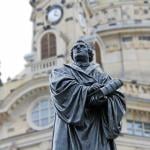
June 25, 2026 Luther’s Anfechtung vs. Paul’s Spiritual Confidence
Recent Comments
"And lastly, I belong to no denomination and am free to serve God as He ..."
Is Venerating Men & Angels Worship? ..."
"And obeisance doesn't mean "worship". It means "respect", "obey", or "submission". Very weird that you ..."
Is Venerating Men & Angels Worship? ..."
"Many of these scriptures you have noted have been taken out of context. With Daniel, ..."
Is Venerating Men & Angels Worship? ..."
""Protestants often point out that Jesus is now triumphant in heaven and object to Catholics ..."
Three More Anti-Catholic Lies About Catholicism ..."
Browse Our Archives
Select a Category & Last Things About Me Anti-Catholicism Atheism & Agnosticism Baptism and Sacramentalism Bible and Tradition Blessed Virgin Mary Books by Dave Armstrong C. S. Lewis Calvinism & General Protestantism Catholic Apologetics Catholic Apologists Catholic conversion Catholic converts Christmas Church (Ecclesiology) Church History Conversion and Converts Development of Doctrine Eastern Orthodoxy Ecumenism & Christian Unity Eucharist & Liturgy Fathers of the Church French Translations G. K. Chesterton Hell Hell & Satan Hell & Satan & Last Things Heresies & Comparative Religion Holistic Health Inquisition & Crusades & Scandals James White Jews & Judaism & Old Testament John Calvin John Henry Newman Liberal / Modernist Theology Life Issues Literary Resume Lutheranism Mariology Martin Luther Music Orthodoxy Papacy & Infallibility Personal Page Philosophy & Science Political & Ethical & Moral Issues Protestant Persecution & Intolerance Protestantism Purgatory Purgatory & Penance Romantic & Imaginative Theology Saints & Purgatory & Penance Salvation Salvation & Justification Satan & Last Things Sexuality and Gender Issues Spanish Translations Traditionalism vs. Radical Catholic Reactionaries Traducciones al español / tradução para português Trinitarianism & Christology Uncategorized Videos
Select a Month October 2026 September 2026 August 2026 July 2026 June 2026 May 2026 April 2026 March 2026 February 2026 January 2026 December 2025 November 2025 October 2025 September 2025 August 2025 July 2025 June 2025 May 2025 April 2025 March 2025 February 2025 January 2025 December 2024 November 2024 October 2024 September 2024 August 2024 July 2024 June 2024 May 2024 April 2024 March 2024 February 2024 January 2024 December 2023 November 2023 October 2023 September 2023 August 2023 July 2023 June 2023 May 2023 April 2023 March 2023 February 2023 January 2023 December 2022 November 2022 October 2022 September 2022 August 2022 July 2022 June 2022 May 2022 April 2022 March 2022 February 2022 January 2022 December 2021 November 2021 October 2021 September 2021 August 2021 July 2021 June 2021 May 2021 April 2021 March 2021 February 2021 January 2021 December 2020 November 2020 October 2020 September 2020 August 2020 July 2020 June 2020 May 2020 April 2020 March 2020 February 2020 January 2020 December 2019 November 2019 October 2019 September 2019 August 2019 July 2019 June 2019 May 2019 April 2019 March 2019 February 2019 January 2019 December 2018 November 2018 October 2018 September 2018 August 2018 July 2018 June 2018 May 2018 April 2018 March 2018 February 2018 January 2018 December 2017 November 2017 October 2017 September 2017 August 2017 July 2017 June 2017 May 2017 April 2017 March 2017 February 2017 January 2017 December 2016 November 2016 October 2016 September 2016 August 2016 July 2016 June 2016 May 2016 April 2016 March 2016 February 2016 January 2016 December 2015 November 2015 October 2015 September 2015 August 2015 July 2015 June 2015 May 2015 April 2015 March 2015 February 2015 January 2015 December 2014 November 2014 October 2014 September 2014 August 2014 July 2014 June 2014 April 2014 March 2014 February 2014 January 2014 December 2013 November 2013 October 2013 September 2013 August 2013 July 2013 June 2013 April 2013 March 2013 February 2013 January 2013 December 2012 November 2012 October 2012 September 2012 August 2012 July 2012 June 2012 May 2012 April 2012 March 2012 February 2012 January 2012 December 2011 November 2011 October 2011 September 2011 August 2011 July 2011 June 2011 April 2011 March 2011 February 2011 October 2010 September 2010 August 2010 July 2010 April 2010 March 2010 December 2009 October 2009 August 2009 July 2009 June 2009 May 2009 March 2009 February 2009 October 2008 September 2008 April 2008 March 2008 February 2008 January 2008 December 2007 November 2007 October 2007 May 2007 March 2007 February 2007 January 2007 November 2006 October 2006 September 2006 August 2006 July 2006 June 2006 May 2006 April 2006 March 2006 February 2006 October 2005 June 2005 April 2005 February 2005 July 2004 May 2004 April 2004
Follow Us!
TAKE THE
Religious Wisdom Quiz
What does "Pentateuch" mean?
Select your answer to see how you score.
Five Scrolls God's Law Sacred Teachings Holy Writings
Books by This Author Books by Dave Armstrong
Related posts from Biblical Evidence for Catholicism

On Protestant Explanations of Catholic Conversion
Biblical Evidence for Catholicism

Protestant Confessions & "Ever-Virgin" Mary
Biblical Evidence for Catholicism

A Few "Worst" & "Best" Arguments vs. Protestantism
Biblical Evidence for Catholicism

"Baptism" & Romans 10 (Engwer's Silly Word Games)
Biblical Evidence for Catholicism
TRENDING AT PATHEOS Catholic

In "Irreplaceable," our book on vocation and technology, Trevor Sutton and I...

I was strolling through the top floor of the brand new Parthenon...

What Does Gêvâh Mean For Kimberley Guifoyle &...
This week, a lot of the news is focused on Kimberly Guilfoyle....

INNER CIRCLE: Profound Mystery (Of Christ In All...
Ephesians 5:31-32 “For this reason, a man will leave his father and...

Do Not Rejoice When Your Enemy Falls: The...
Turning an execution into a public spectacle is a disturbing expression of...

'The Chosen' S6 Trailer: The Passion Gets Very...
Not many watching 'The Chosen' worry about spoilers, but just because they...
view all Catholic blogs
What Are Your Thoughts?leave a comment
Ad-Free & Subscriber Log-In Subscription Support
- About Us
- 2026 Calendar
- Videos
- Podcasts
- Library of World Religions
- Faith In Media Tracker
- Advertise With Us
- Write for Us
- Privacy Policy
- Terms of Service
- Do Not Sell My Data
- Contact Us
- Radiant Digital
- Manage Newsletter Subscriptions
- Unsubscribe From Notifications
- Sitemap
Copyright 2008-2026, Patheos. All rights reserved.
Subscription Support Ad-Free & Subscriber Log-In
Follow Patheos