
BuddhistCatholicContemplativeEvangelicalGeneral ChristianHinduJewishLatter-day SaintMuslimNew VisionsProgressive Christian
Beliefs
- Buddhist
- Catholic
- Contemplative
- Evangelical
- General Christian
- Hindu
- Jewish
- Latter-day Saint
- More Voices
- Muslim
- New Visions
- Pagan
- Progressive Christian
Topics
- Religion News
- Food and Religion
- Sports and Religion
- Religious Art
- Religious Music and Entertainment
- Religious Events
- History and Religion
- Style and Religion
- Politics and Religion
- Women in Religion
- Recreation Outdoors and Religion
- Business Finance and Religion
- Careers Workplace and Religion
- Education and Religion
- Family Parenting and Religion
- Health Fitness and Religion
- Home and Religion
- Relationships and Religion
- Technology and Religion
- Travel and Religion
Columnists
- Buddhist Columnists
- Business Finance and Religion Columnists
- Careers Workplace and Religion Columnists
- Catholic Columnists
- Contemplative Columnists
- Education and Religion Columnists
- Evangelists Columnists
- Family Parenting and Religion Columnists
- General Christian Columnists
- Health Fitness and Religion Columnists
- Hindu Columnists
- History and Religion Columnists
- Home and Religion Columnists
- Jewish Columnists
- More Voices Columnists
- Latter Day Columnists
- Muslim Columnists
- New Visions Columnists
- Nonreligious Columnists
- Pagan Columnists
- Politics and Religion Columnists
- Progressive Columnists
- Recreation Outdoors and Religion Columnists
- Relationships and Religion Columnists
- Religion News Columnists
- Religious Art Columnists
- Religious Events Columnists
- Religious Music and Entertainment Columnists
- Sports and Religion Columnists
- Style and Religion Columnists
- Technology and Religion Columnists
- Travel and Religion Columnists
- Women in Religion Columnists
Resource Library
- 2026 Calendar
- Library of World Religions
- The 100 Most Holy Places on Earth
- Patheos Answers
- Podcasts
- Videos
- Faith Leaders Database
- Anglican Episcopalian
- Bahai
- Baptist
- Buddhism
- Christianity
- Confucianism
- Eastern Orthodoxy
- Hinduism
- Holiness and Pentecostal
- ISKCON
- Islam
- Judaism
- Lutheran
- Methodist
- The Church of Jesus Christ of Latter-day Saints
- New Age
- Paganism
- Presbytarian and Reformed
- Protestantism
- Religion Behind the Scenes
- Roman Catholic
- Scientology
- Shia Islam
- Sikhism
- Sufism
- Sunni Islam
- Taoism
- Zen
- See all religions
Research Tools
 Ad-Free & Subscriber Log-In Subscription Support
Ad-Free & Subscriber Log-In Subscription Support
Follow Patheos 

- Trending:
- Forgiveness
- |
- Marriage
- |
- Consciousness
- |
- Death Penalty
- |
- Election
- |
- Halloween

-
About
-
Catholic Apologetics
-
Church History
-
Great Apologists
-
Christian Worldview
-
Protestantism & Misc.
- Home
- Catholic
- History and Religion
- Temporal Punishment of Believers (vs. Sean Luke)
Temporal Punishment of Believers (vs. Sean Luke)
Last updated on: May 7, 2026 at 1:26 pm by Dave Armstrong
Temporal Punishment of Believers (vs. Sean Luke) 2026-05-07T13:26:12-04:00 Dave Armstrong
Patheos Explore the world's faith through different perspectives on religion and spirituality! Patheos has the views of the prevalent religions and spiritualities of the world.

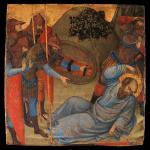
Photo credit: image from the article, “Life is (not always) Good” (Evan Krane, 8-11-19, The Jewish Studio). It portrays Moses’ anger and pride at the waters of Meribah, for which God punished him.
Sean Luke obtained Masters of Divinity and Masters of Systematic Theology degrees from Trinity Evangelical Divinity School. He runs the YouTube channel, Anglican Aesthetics, and a Substack site with the same name. He is a member of GAFCON (Global Fellowship of Confessing Anglicans), which is a traditionalist or “orthodox” reform movement of “authentic Anglicans”. It opposes, for example, Anglicans “who have rejected the authority of God’s written Word and have put their trust in their own reason . . . most evident in the area of sexual ethics and human sexuality.”
The following exchange was on the latter page, in the combox of his article, “How Salvation is By Good Works” (5-6-26). His words will be in blue. My biblical citations are from RSV.
*****
This precise issue is what the Reformers opposed: the notion that there remains, after justification, a debt of temporal punishment . . .
E for effort . . .
Yes, it is an issue, because temporal punishment is biblical. I just made a video about it recently (primarily about indulgences, which is a relaxation of said punishment). Protestants and less informed Catholics wonder where the idea of temporal punishment for sins comes from? It sounds foreign to them: one of the many “icky” and unbiblical Catholic “inventions” as they wrongly perceive them to be. But in fact, it comes from the Bible. Here are several examples:
2 Samuel 12:13-14 (RSV) David said to Nathan, “I have sinned against the LORD.” And Nathan said to David, “The LORD also has put away your sin; you shall not die. Nevertheless, because by this deed you have utterly scorned the LORD, the child that is born to you shall die.”
David had committed murder and adultery. He repented and God forgave him. But he still had “temporal punishment”. His son died, and later his son Absalom would rise up and lead an armed rebellion against him. But there’s much more than this in Scripture.
We have the story of Moses’ sister Miriam, who “spoke against Moses because of the Cushite woman whom he had married” (Numbers 12:1). 12:9 says that “the anger of the LORD was kindled” and in 12:10 we learn that “Miriam was leprous.” This is a prime example of temporal punishment for sin. But then Moses prayed for her healing (12:13-14) and God complied. And this is exactly what an indulgence is: the removal of temporal punishment for sin. It’s clear as day, right in the Bible. Later, Moses himself suffered temporal punishment: he wasn’t allowed to enter the Promised Land:
Deuteronomy 32:51-52 . . . you broke faith with me in the midst of the people of Israel at the waters of Mer’i-bath-ka’desh, in the wilderness of Zin; because you did not revere me as holy in the midst of the people of Israel. For you shall see the land before you; but you shall not go there, into the land which I give to the people of Israel.”
The incident is recorded in Numbers 20. God had told Moses to speak to the rock, to make water come out, but in exasperation with the complaining of the people, Moses struck it twice in disobedience, and he also implied that he had the power to make the water come out, rather than God. In this case, Moses wasn’t granted an indulgence.
In Numbers 14:19 Moses prays, “Pardon the iniquity of this people” and in 14:20 God replies, I have pardoned, according to your word.” But then God goes on to say that none who rebelled against him in the wilderness would be able to enter the Promised Land, either (14:21-23). Like Moses, they didn’t receive an indulgence to remove the penalty for sin, but their sin itself was pardoned.
Thus we already see in the Old Testament both temporal punishment for sin and merciful removal of that punishment in some cases, as with Miriam. This is the doctrine of indulgences, explicitly and clearly taught in the Bible. But some might ask at this point, “are there any examples of this sort of thing in the New Testament?” The answer is yes. Paul referred to receiving Holy Communion “in an unworthy manner” (1 Corinthians 11:27). Then he wrote something very interesting and very “un-Protestant” — noting that the one who does this “drinks judgment upon himself” (11:29) and that as a result, “many of you are weak and ill, and some have died” (11:30). Once again, this is temporal punishment for sin.
In the case of a serious sinner among the Corinthians, Paul pronounced a penance, or a temporal punishment if you will, and a “judgment” so that the man could be “saved”:
1 Corinthians 1:1-5 It is actually reported that there is immorality among you, and of a kind that is not found even among pagans; for a man is living with his father’s wife. [2] . . . Let him who has done this be removed from among you. [3] For though absent in body I am present in spirit, and as if present, I have already pronounced judgment [4] in the name of the Lord Jesus on the man who has done such a thing. When you are assembled, and my spirit is present, with the power of our Lord Jesus, [5] you are to deliver this man to Satan for the destruction of the flesh, that his spirit may be saved in the day of the Lord Jesus.
But then he later decided to relax the penance and grant an indulgence:
2 Corinthians 2:6-8, 10 For such a one this punishment by the majority is enough; [7] so you should rather turn to forgive and comfort him, or he may be overwhelmed by excessive sorrow. [8] So I beg you to reaffirm your love for him. . . . [10] Any one whom you forgive, I also forgive. What I have forgiven, if I have forgiven anything, has been for your sake in the presence of Christ,
Hey, I didn’t write the Bible, but I have defended it these past 45 years. I find that I am defending more and more of it, as time goes on, and the deeper I get into Catholicism, because we accept the whole Bible, not just carefully pre-selected cherry-picked verses, from endlessly repeated slogans. The above passages are sufficient to refute the falsehood that temporal punishment for sin isn’t biblical.
Thanks again for allowing me to make dissenting comments.
This has been addressed ad infinitum.
A) You need to show the text teaches God took the child of David as a retributive measure and not merely as a medicinal one. That is absent from the text. In truth it doesn’t specify, and so you are reading that paradigm in and not from it. The same is true of other such texts.
B) You need to show that when God relents on account of repentance from judgment, it is not merely because repentance is that through which God formally applies the passion proleptically and also because of the merit of the act. That is absent from the text and just assumed.
The text about David is very plain. The prophet Nathan proclaims: “Because by this deed you have utterly scorned the LORD, the child that is born to you shall die.” I don’t see how it could be any clearer than it is. David murdered and committed adultery; his child died as a result, even though his sin was forgiven. If that’s not a “retributive measure” then you must have a different definition. The prophet Nathan at the same time passed along God’s decision to punish David for his sin (not eternally, but temporally), even though it was forgiven:
2 Samuel 12:9-12 Why have you despised the word of the LORD, to do what is evil in his sight? You have smitten Uri’ah the Hittite with the sword, and have taken his wife to be your wife, and have slain him with the sword of the Ammonites. [10] Now therefore the sword shall never depart from your house, because you have despised me, and have taken the wife of Uri’ah the Hittite to be your wife.’ [11] Thus says the LORD, `Behold, I will raise up evil against you out of your own house; and I will take your wives before your eyes, and give them to your neighbor, and he shall lie with your wives in the sight of this sun. [12] For you did it secretly; but I will do this thing before all Israel, and before the sun.'”
Not much “medicine” there, is there? The rebellion of Absalom is predicted, and much more misery and suffering, too. You’re simply dismissing all of the biblical arguments I made without addressing them, and also even mischaracterizing them. This is very unimpressive, and you can do much better. Moses was surely saved, but he was temporally punished directly by God by not being allowed to enter the Promised Land. And what was the reason and the cause?: “Because you did not revere me as holy in the midst of the people of Israel.”
God pardoned the sins of the grumblers in the wilderness under Moses, as a result of his prayer, but they couldn’t enter the Promised Land, either. God provided the reason why: “none of the men who have seen my glory and my signs which I wrought in Egypt and in the wilderness, and yet have put me to the proof these ten times and have not hearkened to my voice, shall see the land which I swore to give to their fathers; and none of those who despised me shall see it” (Num 14:22-23).
The doctrine exhibited in the texts I provided is or can be both medicinal and retributive. It’s not “either/or.” Hence Paul says, “I have already pronounced judgment in the name of the Lord Jesus on the man who has done such a thing. . . . you are to deliver this man to Satan for the destruction of the flesh” (retributive — as God’s representative apostle). He also says, “that his spirit may be saved in the day of the Lord Jesus” and “this punishment by the majority is enough; . . . forgive and comfort him, . . . reaffirm your love for him” (medicinal and literally the biblical basis of an indulgence).
If I said “you son disgraced me in public by disobeying me so you need to go to your room”, that does not show I have a retributive aim towards my son
Once again, you are just asserting that “since God pardoned sinned [sic] but kept the generation from going in to the promised land, he had a retributive aim.” That doesn’t even follow from the premises. You’re missing a premise here. If you say I am “mischaracterizing your argument” you are welcome to say how rather than merely assert it.
You seem to argue that God plaguing David’s household was even primarily retributive (“not much medicinal there”). Once again, you are missing a premise. It does not follow from “God plagued David with the fruits of his sin on account of that sin” that “God sent these plagues retributively.”
***
Re–1 Cor. Paul literally gives his aim: that he may be saved. Where are you deriving the conclusion “it was retributive” from “deliver his flesh to Satan that he may be saved”? And further, where are you getting the notion that such a man wasn’t in mortal sin anyway–since if he was, no one disagrees an eternal debt hangs over him.
I never said he wasn’t in mortal sin. Of course he was.
Also, you apparently missed it in the jumble of comments, but I already stated above that Paul’s words “deliver this man to Satan for the destruction of the flesh” were in my opinion, “retributive — as God’s representative apostle” and that his words, “that his spirit may be saved in the day of the Lord Jesus” were properly classified as “medicinal and literally the biblical basis of an indulgence.”
It also falsifies the notion that “I provided no texts about eternal punishment but temporal punishment”. You obviously did if you think he was in mortal sin.
Then the point is moot.
Not at all. He was still subjected to temporal punishment, which is applied to the elect and the reprobate alike. We don’t know with certainty from the text whether this man is on the way to hell or not. But it seems to me (as plausible speculation) that he is not, based on Paul’s response, because he apparently repented of this sin (the temporal punishment, therefore, seems to have achieved its aim).
No one disagrees the reprobate are subject to both. The disagreement is over whether believers are subject to temporal punishment owed their sin.
That is a dodge.
They [believers] certainly are, as I already proved. David and Moses are gonna be in heaven, and they were temporally punished.
Unless you wish to argue that Moses wasn’t a believer and that David’s profound repentance, sufficient enough to be forgiven, was that of a non-believer.
I’ve addressed this. Saying “Moses was not allowed to enter the promised land on account of sin, therefore the punishment was retributive” does not follow. We can just see this in syllogistic form:
P1) Moses was not allowed to enter the promise land on account of sin
C) Therefore the punishment was retributive
If you say you’ve supplied the missing premise, state it. If it is “not being allowed to enter on account of sin is retributive”, then argue for it and don’t just assert it. You have to actually show why it must be retributive and not merely remedial in light of sin, since remedial chastisements are on account of sin. If it is “there is nothing remedial about being barred entry”, show that–we can manifestly disprove that Scripturally by the sheer fact that it tends towards Moses’s sanctification under divine providence per Rom 8:28-29.
How do you define retributive punishment?
What is the biblical basis for your definition?
On what basis do you determine that it — and/or temporal punishment, if that is a synonym for you — is applied only to nonbelievers?
If you define temporal punishment differently from divine retribution, what is the difference?
While I await your answers to what I think are very important definitional and biblical support aspects, I found a very helpful article by F. Derek Kidner (1913-2008), Anglican Old Testament scholar and Bible commentator, entitled “Retribution and Punishment in the Old Testament, in the Light of the New Testament” (posted at the wonderful biblicalstudies.org.uk site). He makes the same point I made: that St. Paul was exercising both a retributive and restorative / medicinal disciplinary practice:
In his references to his own judicial authority as an apostle, Paul is careful to stress the fact that while he is ‘ready to punish every disobedience’ (using the retributive verb, ekdikeo, 2 Cor. 10:6), his authority was given him ‘for building up and not for tearing down’ (2 Cor. 10:8; 13: 10).
Amen, or should I say, “bingo”?: to use Catholic lingo . . .
Here are fifteen examples of NT temporal punishment / chastisement, cleansing, purifying, sanctifying, etc.:
Matthew 3:11 . . . he will baptize you with the Holy Spirit and with fire. (cf. Luke 3:16)
John 15:2 Every branch of mine that bears no fruit, he takes away, and every branch that does bear fruit he prunes, that it may bear more fruit.
1 Corinthians 11:32 But when we are judged by the Lord, we are chastened so that we may not be condemned along with the world.
2 Corinthians 7:1 Since we have these promises, beloved, let us cleanse ourselves from every defilement of body and spirit, and make holiness perfect in the fear of God.
2 Corinthians 12:7-10 And to keep me from being too elated by the abundance of revelations, a thorn was given me in the flesh, a messenger of Satan, to harass me, to keep me from being too elated. [8] Three times I besought the Lord about this, that it should leave me; [9] but he said to me, “My grace is sufficient for you, for my power is made perfect in weakness.” I will all the more gladly boast of my weaknesses, that the power of Christ may rest upon me. [10] For the sake of Christ, then, I am content with weaknesses, insults, hardships, persecutions, and calamities; for when I am weak, then I am strong.
Philippians 1:6 And I am sure that he who began a good work in you will bring it to completion at the day of Jesus Christ.
1 Thessalonians 2:4 . . . God who tests our hearts.
Titus 2:13-14 . . . our great God and Savior Jesus Christ, [14] who gave himself for us to redeem us from all iniquity and to purify for himself a people of his own who are zealous for good deeds.
Hebrews 12:5-11 And have you forgotten the exhortation which addresses you as sons? — “My son, do not regard lightly the discipline of the Lord, nor lose courage when you are punished by him. [6] For the Lord disciplines him whom he loves, and chastises every son whom he receives.” [7] It is for discipline that you have to endure. God is treating you as sons; for what son is there whom his father does not discipline? [8] If you are left without discipline, in which all have participated, then you are illegitimate children and not sons. [9] Besides this, we have had earthly fathers to discipline us and we respected them. Shall we not much more be subject to the Father of spirits and live? [10] For they disciplined us for a short time at their pleasure, but he disciplines us for our good, that we may share his holiness. [11] For the moment all discipline seems painful rather than pleasant; later it yields the peaceful fruit of righteousness to those who have been trained by it.
James 1:12 Blessed is the man who endures trial, for when he has stood the test he will receive the crown of life which God has promised to those who love him.
1 Peter 1:4-7 and to an inheritance which is imperishable, undefiled, and unfading, kept in heaven for you, [5] who by God’s power are guarded through faith for a salvation ready to be revealed in the last time. [6] In this you rejoice, though now for a little while you may have to suffer various trials, [7] so that the genuineness of your faith, more precious than gold which though perishable is tested by fire, may redound to praise and glory and honor at the revelation of Jesus Christ.
1 Peter 4:12 Beloved, do not be surprised at the fiery ordeal which comes upon you to prove you, as though something strange were happening to you.
1 John 1:9 If we confess our sins, he is faithful and just, and will forgive our sins and cleanse us from all unrighteousness.
1 John 3:2-3 Beloved, we are God’s children now; it does not yet appear what we shall be, but we know that when he appears we shall be like him, for we shall see him as he is. [3] And every one who thus hopes in him purifies himself as he is pure.
Revelation 3:19 Those whom I love, I reprove and chasten; . . .
***
Further, seeing as Anglicans and Lutherans affirm mortal sin–unrepentant sin–severs one from Christ, verses that show believers can fall under God’s eternal condemnation do not show your point.
I provided no verses here about eternal punishment, only temporal, so your first sentence is a non sequitur and has nothing to do with my arguments. Several of them made it clear that the two things were separate: the serious sins were pardoned and forgiven, but temporal punishment still remained: even in the case of the great figures of David and Moses.
***
You haven’t directly interacted with the exegetical arguments I made. I find this to be a rather common tactic in Protestant apologetics, and it gets old real quick. If my interpretations fail, show us better ones.
This is an Assertion. And RC Assertion tactics get real old and reek of desperation.
See, I can do it too.
I literally responded to each verse. And you know that.
Believe as you will. Good grief . . .
***
Photo credit: image from the article, “Life is (not always) Good” (Evan Krane, 8-11-19, The Jewish Studio). It portrays Moses’ anger and pride at the waters of Meribah, for which God punished him.
Summary: I provided several biblical examples of temporal punishment of believers: including Moses and David. Anglican Sean Luke disagreed and contended that God doesn’t do this.
Previous Post
May 5, 2026
Transformation of Believers (NT): 134 Passages
Next Post

May 8, 2026 Un-Protestant Bible #5: Paul Prays for a Dead Man
Recent Comments
"And lastly, I belong to no denomination and am free to serve God as He ..."
Is Venerating Men & Angels Worship? ..."
"And obeisance doesn't mean "worship". It means "respect", "obey", or "submission". Very weird that you ..."
Is Venerating Men & Angels Worship? ..."
"Many of these scriptures you have noted have been taken out of context. With Daniel, ..."
Is Venerating Men & Angels Worship? ..."
""Protestants often point out that Jesus is now triumphant in heaven and object to Catholics ..."
Three More Anti-Catholic Lies About Catholicism ..."
Browse Our Archives
Select a Category & Last Things About Me Anti-Catholicism Atheism & Agnosticism Baptism and Sacramentalism Bible and Tradition Blessed Virgin Mary Books by Dave Armstrong C. S. Lewis Calvinism & General Protestantism Catholic Apologetics Catholic Apologists Catholic conversion Catholic converts Christmas Church (Ecclesiology) Church History Conversion and Converts Development of Doctrine Eastern Orthodoxy Ecumenism & Christian Unity Eucharist & Liturgy Fathers of the Church French Translations G. K. Chesterton Hell Hell & Satan Hell & Satan & Last Things Heresies & Comparative Religion Holistic Health Inquisition & Crusades & Scandals James White Jews & Judaism & Old Testament John Calvin John Henry Newman Liberal / Modernist Theology Life Issues Literary Resume Lutheranism Mariology Martin Luther Music Orthodoxy Papacy & Infallibility Personal Page Philosophy & Science Political & Ethical & Moral Issues Protestant Persecution & Intolerance Protestantism Purgatory Purgatory & Penance Romantic & Imaginative Theology Saints & Purgatory & Penance Salvation Salvation & Justification Satan & Last Things Sexuality and Gender Issues Spanish Translations Traditionalism vs. Radical Catholic Reactionaries Traducciones al español / tradução para português Trinitarianism & Christology Uncategorized Videos
Select a Month October 2026 September 2026 August 2026 July 2026 June 2026 May 2026 April 2026 March 2026 February 2026 January 2026 December 2025 November 2025 October 2025 September 2025 August 2025 July 2025 June 2025 May 2025 April 2025 March 2025 February 2025 January 2025 December 2024 November 2024 October 2024 September 2024 August 2024 July 2024 June 2024 May 2024 April 2024 March 2024 February 2024 January 2024 December 2023 November 2023 October 2023 September 2023 August 2023 July 2023 June 2023 May 2023 April 2023 March 2023 February 2023 January 2023 December 2022 November 2022 October 2022 September 2022 August 2022 July 2022 June 2022 May 2022 April 2022 March 2022 February 2022 January 2022 December 2021 November 2021 October 2021 September 2021 August 2021 July 2021 June 2021 May 2021 April 2021 March 2021 February 2021 January 2021 December 2020 November 2020 October 2020 September 2020 August 2020 July 2020 June 2020 May 2020 April 2020 March 2020 February 2020 January 2020 December 2019 November 2019 October 2019 September 2019 August 2019 July 2019 June 2019 May 2019 April 2019 March 2019 February 2019 January 2019 December 2018 November 2018 October 2018 September 2018 August 2018 July 2018 June 2018 May 2018 April 2018 March 2018 February 2018 January 2018 December 2017 November 2017 October 2017 September 2017 August 2017 July 2017 June 2017 May 2017 April 2017 March 2017 February 2017 January 2017 December 2016 November 2016 October 2016 September 2016 August 2016 July 2016 June 2016 May 2016 April 2016 March 2016 February 2016 January 2016 December 2015 November 2015 October 2015 September 2015 August 2015 July 2015 June 2015 May 2015 April 2015 March 2015 February 2015 January 2015 December 2014 November 2014 October 2014 September 2014 August 2014 July 2014 June 2014 April 2014 March 2014 February 2014 January 2014 December 2013 November 2013 October 2013 September 2013 August 2013 July 2013 June 2013 April 2013 March 2013 February 2013 January 2013 December 2012 November 2012 October 2012 September 2012 August 2012 July 2012 June 2012 May 2012 April 2012 March 2012 February 2012 January 2012 December 2011 November 2011 October 2011 September 2011 August 2011 July 2011 June 2011 April 2011 March 2011 February 2011 October 2010 September 2010 August 2010 July 2010 April 2010 March 2010 December 2009 October 2009 August 2009 July 2009 June 2009 May 2009 March 2009 February 2009 October 2008 September 2008 April 2008 March 2008 February 2008 January 2008 December 2007 November 2007 October 2007 May 2007 March 2007 February 2007 January 2007 November 2006 October 2006 September 2006 August 2006 July 2006 June 2006 May 2006 April 2006 March 2006 February 2006 October 2005 June 2005 April 2005 February 2005 July 2004 May 2004 April 2004
Follow Us!
TAKE THE
Religious Wisdom Quiz
In 2 Corinthians, Paul describes a man being caught up to the third heaven. How many years before writing did this happen?
Select your answer to see how you score.
Ten years Fourteen years Seven years Twelve years
Books by This Author Books by Dave Armstrong
Related posts from Biblical Evidence for Catholicism

Bible & Catholicism on Mortal Sin (vs. John...
Biblical Evidence for Catholicism

Does Catholic Intercession of Saints Require Omniscience?
Biblical Evidence for Catholicism

Capabilities of Heavenly Saints: Protestant Commentaries
Biblical Evidence for Catholicism

Revelation 5 & 8 (Intercession of Saints &...
Biblical Evidence for Catholicism
TRENDING AT PATHEOS Catholic

I was strolling through the top floor of the brand new Parthenon...

What Does Gêvâh Mean For Kimberley Guifoyle &...
This week, a lot of the news is focused on Kimberly Guilfoyle....

INNER CIRCLE: Profound Mystery (Of Christ In All...
Ephesians 5:31-32 “For this reason, a man will leave his father and...

Do Not Rejoice When Your Enemy Falls: The...
Turning an execution into a public spectacle is a disturbing expression of...

'The Chosen' S6 Trailer: The Passion Gets Very...
Not many watching 'The Chosen' worry about spoilers, but just because they...

The purpose-driven labor priest
A labor activist reads Rick Warren and it gets me wondering about...
view all Catholic blogs
What Are Your Thoughts?leave a comment
Ad-Free & Subscriber Log-In Subscription Support
- About Us
- 2026 Calendar
- Videos
- Podcasts
- Library of World Religions
- Faith In Media Tracker
- Advertise With Us
- Write for Us
- Privacy Policy
- Terms of Service
- Do Not Sell My Data
- Contact Us
- Radiant Digital
- Manage Newsletter Subscriptions
- Unsubscribe From Notifications
- Sitemap
Copyright 2008-2026, Patheos. All rights reserved.
Subscription Support Ad-Free & Subscriber Log-In
Follow Patheos