
BuddhistCatholicContemplativeEvangelicalGeneral ChristianHinduJewishLatter-day SaintMuslimNew VisionsProgressive Christian
Beliefs
- Buddhist
- Catholic
- Contemplative
- Evangelical
- General Christian
- Hindu
- Jewish
- Latter-day Saint
- More Voices
- Muslim
- New Visions
- Pagan
- Progressive Christian
Topics
- Religion News
- Food and Religion
- Sports and Religion
- Religious Art
- Religious Music and Entertainment
- Religious Events
- History and Religion
- Style and Religion
- Politics and Religion
- Women in Religion
- Recreation Outdoors and Religion
- Business Finance and Religion
- Careers Workplace and Religion
- Education and Religion
- Family Parenting and Religion
- Health Fitness and Religion
- Home and Religion
- Relationships and Religion
- Technology and Religion
- Travel and Religion
Columnists
- Buddhist Columnists
- Business Finance and Religion Columnists
- Careers Workplace and Religion Columnists
- Catholic Columnists
- Contemplative Columnists
- Education and Religion Columnists
- Evangelists Columnists
- Family Parenting and Religion Columnists
- General Christian Columnists
- Health Fitness and Religion Columnists
- Hindu Columnists
- History and Religion Columnists
- Home and Religion Columnists
- Jewish Columnists
- More Voices Columnists
- Latter Day Columnists
- Muslim Columnists
- New Visions Columnists
- Nonreligious Columnists
- Pagan Columnists
- Politics and Religion Columnists
- Progressive Columnists
- Recreation Outdoors and Religion Columnists
- Relationships and Religion Columnists
- Religion News Columnists
- Religious Art Columnists
- Religious Events Columnists
- Religious Music and Entertainment Columnists
- Sports and Religion Columnists
- Style and Religion Columnists
- Technology and Religion Columnists
- Travel and Religion Columnists
- Women in Religion Columnists
Resource Library
- 2026 Calendar
- Library of World Religions
- The 100 Most Holy Places on Earth
- Patheos Answers
- Podcasts
- Videos
- Faith Leaders Database
- Anglican Episcopalian
- Bahai
- Baptist
- Buddhism
- Christianity
- Confucianism
- Eastern Orthodoxy
- Hinduism
- Holiness and Pentecostal
- ISKCON
- Islam
- Judaism
- Lutheran
- Methodist
- The Church of Jesus Christ of Latter-day Saints
- New Age
- Paganism
- Presbytarian and Reformed
- Protestantism
- Religion Behind the Scenes
- Roman Catholic
- Scientology
- Shia Islam
- Sikhism
- Sufism
- Sunni Islam
- Taoism
- Zen
- See all religions
Research Tools
 Ad-Free & Subscriber Log-In Subscription Support
Ad-Free & Subscriber Log-In Subscription Support
Follow Patheos 

- Trending:
- Forgiveness
- |
- Marriage
- |
- Consciousness
- |
- Death Penalty
- |
- Election
- |
- Halloween

-
About
-
Catholic Apologetics
-
Church History
-
Great Apologists
-
Christian Worldview
-
Protestantism & Misc.
- Home
- Catholic
- History and Religion
- Defense of 50 NT Passages Against “Faith Alone”, Pt. 5
Defense of 50 NT Passages Against “Faith Alone”, Pt. 5
Last updated on: May 21, 2026 at 11:35 am by Dave Armstrong
Defense of 50 NT Passages Against “Faith Alone”, Pt. 5 2026-05-21T11:35:11-04:00 Dave Armstrong
Patheos Explore the world's faith through different perspectives on religion and spirituality! Patheos has the views of the prevalent religions and spiritualities of the world.
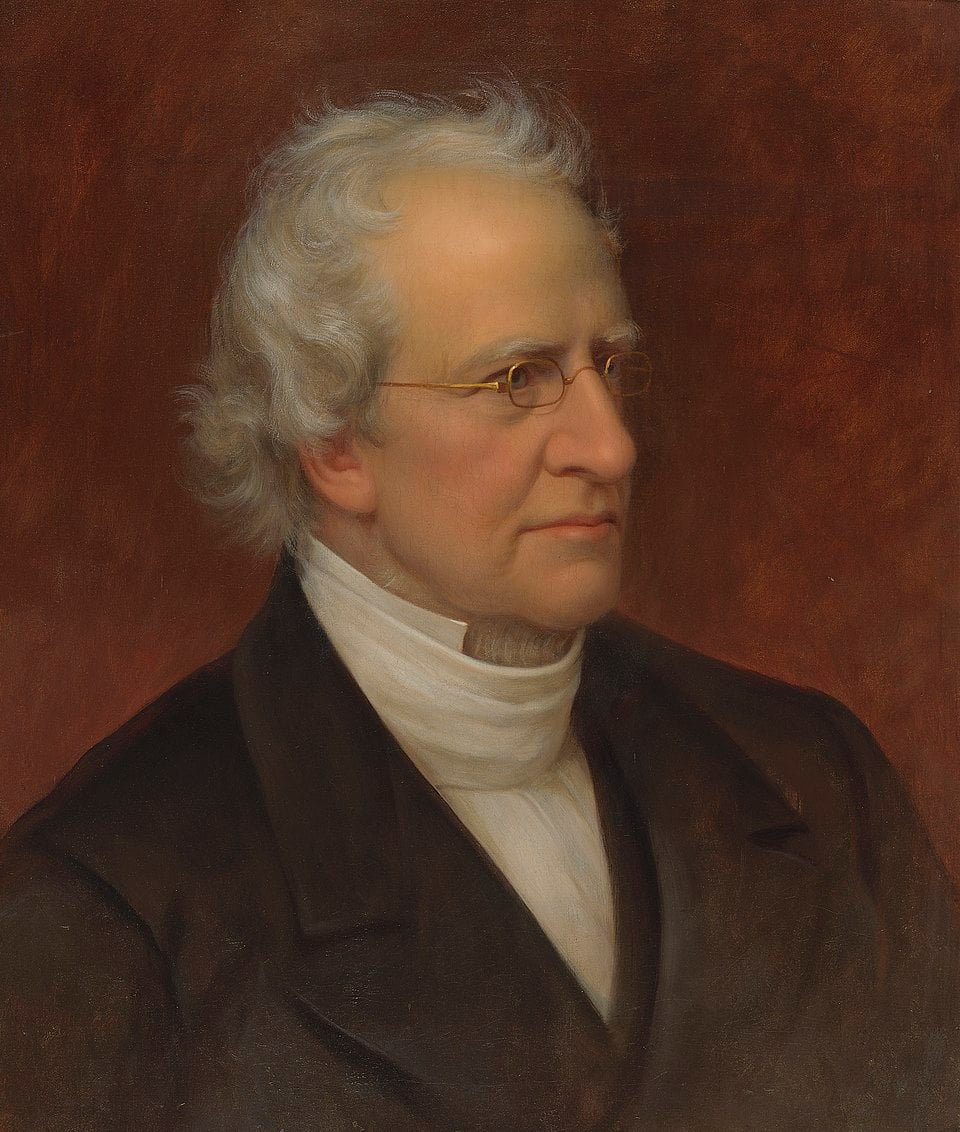
Photo credit: portrait of the Presbyterian theologian Charles Hodge (1797-1878), by Rembrandt Peale (1778-1860) [public domain / Wikipedia]
I’m replying to a lengthy, multi-part critique of my article, 50 Unanswerable NT Passages Against “Faith Alone” (2-24-26) by a very nice Reformed / Calvinist woman who goes by “C Xa” online. We have corresponded off and on, and she promised to make this critique after I challenged her. I greatly appreciate the engagement, which is becoming increasingly rare these days. Her counter-responses can be read in their entirety in comments made underneath this article, and I reproduce virtually all of them, anyway. Bible passages (RSV, as always in my writing) from my article above, that she comments on, will be in green. Her words will be in blue. She uses ESV for her Bible citations.
*****
***
Methodological preamble: My opponent’s complete replies in this portion can already be read — without any of my replies — underneath my article linked above (her parts 5-7). At this point, with my total five-point reply totaling probably more than 50,000 words — an approximate book-length tome of some 175 pages –, I have to omit her replies that are simply repeating the same basic Protestant general taking-points about salvation over and over and not exegeting the passage under consideration. She admits this herself. For example, in her reply to Hebrews 5:9, she writes, “just as we have discussed many times above . . . as we have already discussed many times . . .” How many times is enough? And so I won’t post those sections again. The line has to be drawn somewhere. I will stick strictly to her replies to the Bible passage that she is responding to, and its immediate context (which is closely related), and relevant biblical cross-references.
I’m not ethically or intellectually obliged to re-post again every jot and tittle (already on my blog as it is), when it’s simply repetition of the same point literally made now as many as 30 or 40 times. That may work in sermons and preaching to the choir, so to speak, but not in a lengthy debate. I truly wonder if any readers are still with us at this point! Readers do get weary after a while if they aren’t getting anything fresh and new. I’m weary, myself! But our mutual goal is to be read and to persuade. If we start losing readers due to extreme repetition, what good is that That wouldn’t help either of us.
Hebrews 5:9 and being made perfect he became the source of eternal salvation to all who obey him,
First, let’s add just a little additional context. Hebrews 5:9-10 states:
“9 And being made perfect, he became the source of eternal salvation to all who obey him, 10 being designated by God a high priest after the order of Melchizedek.”
As we have discussed many times now, Christ came and lived a perfect life, living out God’s Moral Law perfectly. Given that He served as the High Priest, and was not of the order of Abraham (the priestly-tribe of Israel (the Levites) who were descendants of the first Adam), He gave the sacrifice, a sacrifice that was perfect and complete, unlike the Levites. . . . their obedience, . . . is simply their gratitude, their service, and their obedience to the One whom they serve, their thanks, their love for Him, and their desire to please/glorify/honor Him.
And once again, it was completely overlooked that the main point of this verse is that obedience is necessary to our salvation. Obedience entails doing things, not simply believing with faith alone. The two sides look at the same thing and make different conclusions. The Protestant says, “yes, of course, the person who is regenerated and justified and one of the elect will inevitably obey and do good works, out of gratitude to God for a salvation already obtained once and for all by grace alone and faith alone.”
The Catholic says, “yes, of course, we have to obey God and work out our salvation, and make our faith alive, and this obedience is necessary for salvation, just as grace and faith also are. They’re all of a piece.” I guess, “never the twain shall meet,” as they say. We’ll all perfectly know the truth one day. It exists. But human beings disagree as to what it is. I’ve given fifty passages in this debate that I think clearly prove the Catholic viewpoint on these matters. And in my recent book, Faith Alone: The “Theological Novum”: Disproofs from 525 Bible Passages & 30 Church Fathers, I provide 475 more.
Hebrews 6:9-12 Though we speak thus, yet in your case, beloved, we feel sure of better things that belong to salvation. [10] For God is not so unjust as to overlook your work and the love which you showed for his sake in serving the saints, as you still do. [11] And we desire each one of you to show the same earnestness in realizing the full assurance of hope until the end, [12] so that you may not be sluggish, but imitators of those who through faith and patience inherit the promises.
Verses 9 and 10 would seem to be the verses that appear most likely to be used to argue for the idea of salvation based on faith plus works. It could easily appear as though the author is saying that the “salvation” in verse 9 is a direct result of the “works” that are done in verse 10. The fact that God is said to not unjustly overlook their works, and importantly this comes just after talking about the “better things that belong to salvation”, this could seem like a convincing argument. But is this what the author really means [?]. Not at all. He is simply saying that God sees and will reward the good works of the believer. . . .
My point in highlighting this passage is to note that he’s saying that attaining salvation is not a one-time event, but involves showing “earnestness” and pressing on “until the end” and doing “work” and loving and “serving the saints.” The “full assurance of hope” isn’t yet realized. It lies in the future. Then we are told that inheriting the “promises” comes not through faith alone but “through faith and patience.” The latter word implies, perseverance, process, and good works.
Let us now look at verses 11 and 12. These verses are really where we see faith in the grace of Christ alone becoming clear. In verse 11, the author tells us that it is his desire that those who are believers will be earnest in their hope that their salvation is assured (see Hebrews 11:1). In verse 12, the author explains that this hope is the same type of hope that those believers who have gone before have also placed their faith in Christ alone for their salvation, and thus the author is exhorting them to simply have that hope, which is assured because of their placing their faith in the grace of Christ alone. Thus, verses 11 and 12 combined simply show us that it is faith in the grace of Christ alone that is what saves an individual, and believers should thus cling to the hope of which they have been assured. . . .
Also, the “things hoped for” in Hebrews 11:1 is right in line with the “better things-things that belong to salvation” mentioned in Hebrews 6:9.
This is another classic case study of both sides interpreting according to an existing framework of interpretation. Everyone does this. But when we contradict each other, we can’t both be right. Either one or both sides is in error, even though both are sincerely seeking truth. My goal in compiling so many Bible passages that I think demonstrate Catholic positions is to bring people to a point where the cumulative biblical evidence is so great that they can’t possibly resist it. They will get to a point where Catholicism is seen to be the biblical — and hence, most plausible — view, and starts to “ring true” due to the massive evidence, all in the direction of Catholicism.
Hebrews 10:10, 14 And by that will we have been sanctified through the offering of the body of Jesus Christ once for all. . . . [14] For by a single offering he has perfected for all time those who are sanctified.
At first glimpse, what it appears that the author of Hebrews is saying here is that the will is involved in sanctification.
Of course it is. We choose to obey or disobey, as Joshua noted long ago:
Joshua 24:15 And if you be unwilling to serve the LORD, choose this day whom you will serve, whether the gods your fathers served in the region beyond the River, or the gods of the Amorites in whose land you dwell; but as for me and my house, we will serve the LORD.”
We see human will and choice there. It’s not just “programmed robots” doing things they couldn’t possibly not do. Its a free choice. God enables it by grace, but we can still refuse it and Him, if we insist on being foolish rebels and inveterate sinners.
But we must first ask, who’s “will” is being spoken of and what is that will specifically. In order to answer these questions, we need to add in some very important missing context (verses 1, 2, 3, 4, 5, 6, 7, 8, and 9 will help establish what is going on here and verses 11, 12, and 13 will help us to more properly link the two verses in question together). With the missing context included, we have the following:
“1 For since the law has but a shadow of the good things to come instead of the true form of these realities, it can never, by the same sacrifices that are continually offered every year, make perfect those who draw near. 2 Otherwise, would they not have ceased to be offered, since the worshipers, having once been cleansed, would no longer have any consciousness of sins? 3 But in these sacrifices there is a reminder of sins every year. 4 For it is impossible for the blood of bulls and goats to take away sins. 5 Consequently, when Christ came into the world, he said, “Sacrifices and offerings you have not desired, but a body have you prepared for me; 6 in burnt offerings and sin offerings you have taken no pleasure. 7 Then I said, ‘Behold, I have come to do your will, O God, as it is written of me in the scroll of the book.'” 8 When he said above, “You have neither desired nor taken pleasure in sacrifices and offerings and burnt offerings and sin offerings” (these are offered according to the law), 9 then he added, “Behold, I have come to do your will.” He does away with the first in order to establish the second. 10 And by that will we have been sanctified through the offering of the body of Jesus Christ once for all. 11 And every priest stands daily at his service, offering repeatedly the same sacrifices, which can never take away sins. 12 But when Christ had offered for all time a single sacrifice for sins, he sat down at the right hand of God, 13 waiting from that time until his enemies should be made a footstool for his feet. 14 For by a single offering he has perfected for all time those who are being sanctified.
I agree that “will” in Hebrews 10:10 is referring to God’s will (in light of 10:7 and 10:9). This is what exegesis is: determining what this passage is saying in the particular words used. My point was not to claim otherwise. I included this passage because it proves, I think, that sanctification is included in justification or is organically merged with it because it’s referred to in the past tense and also in the present tense, as a “done deal” so to speak. That’s not to deny that it also has an ongoing sense. But it’s talked about in a way that seems more in line with the Catholic conjoining of justification and sanctification, rather than the Protestant formal separation, that Philip Melanchthon came up with in the 1530s, as the first person of note in the history of the Church who had ever done so.
Now, if we turn specifically to verse 10, what we see is that Christ’s willingness to take on human flesh and fulfill the Father’s will is the means by which we are sanctified.
Of course it is. It doesn’t follow, however, that we don’t willingly cooperate with God’s will and grace. Protestants prove that they agree that we do so, in believing — in agreement with us — that we receive differential rewards in heaven for what we do. But then they turn around and oddly deny that we ever do meritorious works, which is contradictory. The very notion of reward is the same as merit. We did something that pleased God and was in His will, and so we He rewards for what we did by His grace. That’s exactly what Catholics believe “merit” means.
1) Christ came to do the will of His Father, which is to come, as a man, to this earth, live a perfect life (fulfilling the full Law, and sacrificially giving up His life for all of those who have faith in what He has done on their behalf.
2) Those who believe are being sanctified by their faith in what He has done for them. It is His fulfilling the will of the Father that is sanctifying them, not anything they do. They simply have the faith in what He has done for them.
But this goes against the way sanctification is described: in past and preset tenses. All of a sudden, it has switched to “are being sanctified” and “is sanctifying them” as opposed to what the text actually states: “have been sanctified” and “are sanctified.” Therefore, this is eisegesis, because it asserts something different from what the text at hand plainly states. One can’t contradict a Bible text and at the same time exegete it.
The claim that it’s “not anything they do” is massively contradicted elsewhere; e.g., “yield your members to righteousness for sanctification” (Rom 9:16); “chosen and destined by God the Father and sanctified by the Spirit for obedience to Jesus Christ” (1 Pet 1:2); “but as he who called you is holy, be holy yourselves in all your conduct; since it is written, “You shall be holy, for I am holy” (1 Pet 1:15-16); “For it would have been better for them never to have known the way of righteousness than after knowing it to turn back from the holy commandment delivered to them” (2 Pet 2:21)
1 Thessalonians 4:1-7 Finally, brethren, we beseech and exhort you in the Lord Jesus, that as you learned from us how you ought to live and to please God, just as you are doing, you do so more and more. [2] For you know what instructions we gave you through the Lord Jesus. [3] For this is the will of God, your sanctification: that you abstain from unchastity; [4] that each one of you know how to take a wife for himself in holiness and honor, [5] not in the passion of lust like heathen who do not know God; [6] that no man transgress, and wrong his brother in this matter, because the Lord is an avenger in all these things, as we solemnly forewarned you. [7] For God has not called us for uncleanness, but in holiness.
Colossians 3:12-17 Put on then, as God’s chosen ones, holy and beloved, compassion, kindness, lowliness, meekness, and patience, [13] forbearing one another and, if one has a complaint against another, forgiving each other; as the Lord has forgiven you, so you also must forgive. [14] And above all these put on love, which binds everything together in perfect harmony. [15] And let the peace of Christ rule in your hearts, to which indeed you were called in the one body. And be thankful. [16] Let the word of Christ dwell in you richly, teach and admonish one another in all wisdom, and sing psalms and hymns and spiritual songs with thankfulness in your hearts to God. [17] And whatever you do, in word or deed, do everything in the name of the Lord Jesus, giving thanks to God the Father through him.
Verses 11-14 really just further emphasize what has already been said.
1) The sacrifices of goats, lambs, etc. can never take away our sins (verse 11) and allow us to be in right standing with God (as the work of the priests was never finished).
2) In contrast to the animal sacrifices that could not take away sins, and unlike the priests who had to remain standing and working, when Christ lived a life that perfectly met the full standard of the Law and then sacrificed Himself for sin, His sacrifice was able to completely take away sin and unlike the priests, He then sat down at the right hand of the Father (verses 12-13). On the Cross, Christ said this so beautifully when He proclaimed “It is finished” (see John 19:30).
3) Because of His fulfilling the Law perfectly and His sacrifice that truly takes away the sins of all who have placed their faith alone in Him and what He did on their behalf, He has “perfected for all time those who are being sanctified” (verse 14).
With respect to verse 14, notice that it does not say something like: “those who are sanctifying themselves” or something similar.
It doesn’t have to, because there are so many Bible passages about both obedience and merit. The Bible both presupposes the believer’s free will cooperation in many places and spells it out in many others (such as the ones I have compiled here and in my book against faith alone).
Instead, it says those who are “being sanctified”. Thus, this is not a work on their part, but a work on God’s part.
I have already detailed many instances where the Bible describes synergy: we cooperate with God, work together with Him, please Him, etc. And I just showed above that we cooperate in sanctification through our obedience and acting upon the grace God gives us. This is God’s will. Here doesn’t want a bunch of robots who can’t do otherwise, because that’s not loving Him, just as no one would want to “marry” a robot, because there would be no free choice to love there, either.
Their faith is what allows them to be justified. The works that are involved in sanctification that the believer does are empowered by the LORD and are simply the outpouring of that faith and not a requirement to maintain their salvation.
Yes, we’ve heard that; we understand that it’s Protestant teaching (I used to hold it, myself), but I have provided many Bible passages that contradict it, and prove that it’s one of the causes of salvation. What else can one do? If the debate is over the interpretation of Scripture, and I produce 525 passages that all conform Catholic teachings, then there’s nowhere to go from there. If we disagree, then it’s up to the reader to decide who made a better, more biblical, and believable and plausible case.
James 1:12 Blessed is the man who endures trial, for when he has stood the test he will receive the crown of life which God has promised to those who love him.
Because we just have one single verse here, to better evaluate whether this verse truly is talking about what was suggested above (that one must prove to be steadfast until the end to be given eternal life), we need to add some context. James 1:2-18 says:
“2 Count it all joy, my brothers, when you meet trials of various kinds, 3 for you know that the testing of your faith produces steadfastness. 4 And let steadfastness have its full effect, that you may be perfect and complete, lacking in nothing. 5 If any of you lacks wisdom, let him ask God, who gives generously to all without reproach, and it will be given him. 6 But let him ask in faith, with no doubting, for the one who doubts is like a wave of the sea that is driven and tossed by the wind. 7 For that person must not suppose that he will receive anything from the Lord; 8 he is a double-minded man, unstable in all his ways. 9 Let the lowly brother boast in his exaltation, 10 and the rich in his humiliation, because like a flower of the grass he will pass away. 11 For the sun rises with its scorching heat and withers the grass; its flower falls, and its beauty perishes. So also will the rich man fade away in the midst of his pursuits. 12 Blessed is the man who remains steadfast under trial, for when he has stood the test he will receive the crown of life, which God has promised to those who love him. 13 Let no one say when he is tempted, “I am being tempted by God,” for God cannot be tempted with evil, and he himself tempts no one. 14 But each person is tempted when he is lured and enticed by his own desire. 15 Then desire when it has conceived gives birth to sin, and sin when it is fully grown brings forth death. 16 Do not be deceived, my beloved brothers. 17 Every good gift and every perfect gift is from above, coming down from the Father of lights with whom there is no variation or shadow due to change. 18 Of his own will he brought us forth by the word of truth, that we should be a kind of firstfruits of his creatures.”
Having “stood the test” is a good work. The ones who accomplish that receive “the crown of life” which is salvation / eternal life. That’s not faith alone. Period. End of story. The passage can stand on its own as a straightforward statement of fact. But if we consider context as well, it only strengthens my argument (as always in this debate, I dare say). 1:2-4 makes the same point about enduring “trials of various kinds.” This tests our faith and makes us steadfast. The “full effect” of that is to be “perfect and complete, lacking in nothing”: which is obviously ultimate salvation, which is thus shown to have been a process, with tests and good works as part of it, in addition to a necessary faith. It’s difficult to see how it could be interpreted any other way.
The first thing we need to ask, is to whom James is speaking. It is clear from the term “brothers” that he is speaking primarily to believers.
Yep. No adverse effect on my argument . . .
Second, the focus of this passage is not salvation, but rather it is about facing trials and tribulations. . . .
In the two verses where the phrase “crown of life” is used in the Bible (James 1:12 and Revelation 2:10), we see something quite telling that suggests that the above interpretation is the correct one, that this is a discussion about facing tests and remaining steadfast in our faith and trusting in the LORD during them and not one about being saved.
. . . there is absolutely nothing in James 1:12 or any of the surrounding context that:
a) Suggests that verse 12 is dealing with salvation itself.
b) Even hints at the fact that we must continue to do something to be saved in the end. . . .
As we can plainly see, what has again happened here, is that Dave has made the same categorical error of reading a verse regarding being rewarded as being a verse about salvation that he has made multiple times in the verses he has provided . . .
It’s clearly both. The climax of my passage, James 1:12 is receiving “the crown of life.” This is salvation. Protestant commentators concur:
Jamieson-Fausset-Brown Bible Commentary: “life” constitutes the crown, literally, the life, the only true life, the highest and eternal life.
Matthew Poole’s Commentary: He shall receive the crown of life; so the heavenly glory is called, Revelation 2:10, either because it is not to be had but in eternal life, or because of its duration and not fading away, 1 Peter 5:4.
Gill’s Exposition of the Entire Bible: he shall receive the crown of life, eternal happiness, called a “crown”, because of the glory of it, which will be both upon the bodies and souls of believers to all eternity; and as suitable to their character, they being kings, and having a kingdom and thrones prepared for them; and in allusion to the crown that was given to the conquerors in the Olympic games: and it is called a “crown of life”, because it is for life, which an earthly crown is not always; and because it lies in eternal life, and is an everlasting crown; it is a crown of glory that fadeth not away, an incorruptible one; . . .
Cambridge Bible for Schools and Colleges: The “crown of life,”—i. e. of eternal life, which is the crown . . .
Vincent’s Word Studies: Lit., the life: the article pointing to the well-known eternal life.
The larger passage is about trials and endurance, yes, but 1:4 and especially 1:12 refer to eternal life as the reward, and that’s what proves the Catholic viewpoint, over against Protestant faith alone. I brought forth 1:12 as one of my refutations of faith alone. The context has zero negative effect on my point in citing it. It refers to eternal life. My opponent’s lengthy commentary on the entire larger passage is not responding to my argument, so I see no need to repeat it here. We all agree that the Christian life is one of endurance and perseverance. My opponent’s complete words can be read elsewhere on my blog (we’re at book length, now, as I mentioned earlier).
Revelation 2:10 is also about eternal life as a reward, because it states, “Be faithful unto death, and I will give you the crown of life.” One has to endure until death, and then he receives this crown, which is eternal life. If we want to consult context again (bring it on!), the meaning is only very strongly reinforced by the next verse (Rev 2:11): “He who conquers shall not be hurt by the second death.” That refers to hell and damnation. The phrase is defined twice in the book of Revelation, so there is no doubt:
Revelation 20:14 . . . This is the second death, the lake of fire
Revelation 21:8 But as for the cowardly, the faithless, the polluted, as for murderers, fornicators, sorcerers, idolaters, and all liars, their lot shall be in the lake that burns with fire and sulphur, which is the second death.
This is “not . . . about being saved” ? I won’t even bother citing Protestant commentaries that confirm Revelation 2:10 as also referring to eternal life, because it’s so utterly obvious, especially given the undeniable meaning of 2:11. They will deny at the same time, that there is any merit or works involved in salvation (being Protestant), but that’s an issue that every reader of these passages has to determine on their own: whether my take — the Catholic one — makes more sense than the faith alone interpretation.
James 2:14, 17, 20, 22, 24, 26 What does it profit, my brethren, if a man says he has faith but has not works? Can his faith save him? . . . [17] So faith by itself, if it has no works, is dead. . . . [20] . . . faith apart from works is barren . . . [22] You see that faith was active along with his works, and faith was completed by works, . . . [24] You see that a man is justified by works and not by faith alone. . . . [26] . . . faith apart from works is dead.
First, when we consider the immediate context, James is talking specifically to believers.
Of course he is. It’s perfectly irrelevant to the debate we are having, which is precisely about the role and relation of faith and works in the life of the believer and has nothing to do with non-believers. These are the classic and supreme refutations of faith alone. Faith without works has no “profit” (2:14) and is “dead” (2:17, 2:26) and “barren” (2:20). Works must be present “along with” faith, and faith is not “completed” without them (2:22), one is “justified by works and not by faith alone” (2:24: the only time the phrase “faith alone” appears in the Bible). It’s a complete, compelling, elegantly simple, undeniable, devastating, self-evident refutation of faith alone. God knew from all eternity that this error would arise in the 1530s and lead millions astray, and he made sure there was a ton of refutations of it in the Bible (this being the best of all).
Thus, these are not individuals who are not yet saved but will be saved if they work and have faith.
If they are saved, they will be by the combination of faith and works (through grace), according to James 2 and hundreds of other Bible passages. For the millionth time, the biblical text here simply does not and will not allow the good works to be thrown out of the equation of what one must do to be saved, and consigned to a non-salvific category of sanctification: forever separated in most of Protestantism from justification and salvation. It’s so intertwined with faith (expressed in no less than six different ways within eleven consecutive Bible verses; what more does one need, pray tell?) that it can no more be separated than the yolk and the egg white and milk can be retrieved from scrambled eggs.
Rather, these are individuals who have been called by God, already been justified and saved by placing their faith in the sacrifice of Christ alone that was made on their behalf, have been clothed in the righteousness of Christ, and who are guaranteed to be glorified (see Romans 8:29-30). Thus, we need to be careful about how much we assume from these verses about what is meant by working here.
We also need to consider what other areas of Scripture have to say about works. In Galatians 2:16, Paul says: “yet we know that a person is not justified by works of the law but through faith in Jesus Christ, so we also have believed in Christ Jesus, in order to be justified by faith in Christ and not by works of the law, because by works of the law no one will be justified.”
If we compare this verse with those of James provided above, they would seem to be completely at odds with one another. While James says “You see that a person is justified by works and not by faith alone. “, Paul says that faith in Christ’s sacrifice (and not his works) is what justifies a man. Thus, is one of these two men that God breathed Scripture into wrong, is there a Bible contradiction happening here that shows that Paul or James is not truly Biblical in what he is saying about faith and works, or is there another explanation that can allow both Paul and James to be correct without any error or contradiction?
There is a key verse that likely accidentally got left out of the above verses from James that provides a hint toward answering this question. James 2:23 states: “and the Scripture was fulfilled that says, “Abraham believed God, and it was counted to him as righteousness”-and he was called a friend of God.” This verse shows us that it is not Abraham’s works that made him righteous, but rather his belief which can only come from the LORD giving him new life, opening his eyes, and giving him the gift of faith that we discussed earlier in Ephesians 2:8-9. Thus, only through the power of the Holy Spirit working within him, did Abraham have the ability and gift of faith to believe. Thus, it is not works that make a man righteous, but his faith in the grace of Christ alone for him that results in his being justified, saved, and declared righteous in God’s sight.
SO why then does James seem to be emphasizing works being necessary along with faith. It is because believers have the desire to do good works for their LORD and following His Commands is their desire and what He empowers them to do. If a person claims, I have faith, but they do no good works, their faith is probably false because the desire to follow the LORD by obeying His beautiful commands is not there. Thus, what James is doing here is not saying that faith plus works are necessary for salvation (as would have been impossible for the thief next to Christ on the cross to accomplish, and yet he was promised being with Christ when he left this world) but rather it is saying that if the one who professes to have faith is not desiring to do good works and follow God’s moral standards, then what he professes is likely not real. This fits perfectly with Paul’s statement in Galatians 2:16 and also allows James 2:23 not to be at odds with the rest of James 2:14-26. Thus, just as with every single verse we have examined, these verses too in no way counter faith in the grace of Christ alone for salvation.
I let all this stand as an exception to my “method” described at the top, because of it’s importance in the overall debate and because if I omitted any of it, I’d likely be accused of cynical — perhaps also alleged “fearful” deletion (a charge that my opponent has already made four times in reference to how I cited biblical passages. I’ve exegeted James at great length in the following two articles, that will constitute my further “reply” here:
Reply to James White’s Exegesis of James 2 in Chapter 20 of His Book, The God Who Justifies [10-9-13]
Justification in the Book of James (Different from Paul?) [8-30-23]
Meanwhile, I’m already at 5800 words, with nine passages left to go.
1 Peter 3:21 Baptism … now saves you . . .
Before we look at what this verse is actually saying, let us first provide the entire verse given that there is very clearly missing information, information that I am seriously guessing that Dave very purposefully removed as both:
a) It makes for a very convincing argument when presented as it is presented above.
b) It actually alters the interpretation when just these four words, separated from the full verse are provided.
This is now the fifth time this groundless, “mind-reading” accusation has been made, insinuating (“seriously guessing”) that I am intellectually dishonest and not operating in good faith. I’m just as sincere as she is. We need not get into this sort of nonsense, and it doesn’t deserve the dignity of a reply.
As can be seen, the baptism itself can’t save, it simply is the washing of the flesh, and is a symbolic illustration of the real saving which is through the appeal that the individual makes to the LORD “for a good conscience”. And this good conscience (right standing before the LORD), comes “through the resurrection of Jesus Christ”. In other words, the believer’s right standing before God and thus salvation are not actually through the baptism (as that is merely a physical symbol) but rather through our faith in what Christ did on our behalf. Just like the verses above in James regarding faith and works, if baptism were truly required for salvation to be obtained or maintained, then Peter would be at odds with what Paul said in Galatians 2:16: “yet we know that a person is not justified by works of the law but through faith in Jesus Christ, so we also have believed in Christ Jesus, in order to be justified by faith in Christ and not by works of the law, because by works of the law no one will be justified.”
Just as with James, when we realize that baptism is simply an outward symbol rather than an actual catalyst for salvation, what Peter says fits perfectly fine with Paul and also with James 2:14-26. It is really important to look at what the Scriptures as a whole say in order to properly interpret a verse.
This passage isn’t rocket science. Examining the context doesn’t affect in the slightest the meaning that baptism saves and regenerates. My opponent tries very hard to maintain that it doesn’t, but it won’t fly. It’s too clear. Even John Calvin agrees. He referred to “God, regenerating us in baptism” (Institutes, IV, 17:1) and wrote that in baptism” we are washed and purified once for the whole of life . . . so as to feel certain and secure of the remission of sins . . . it is not abolished by subsequent sins” (Ibid., IV, 15:3).
1 Peter 4:13 But rejoice in so far as you share Christ’s sufferings, that you may also rejoice and be glad when his glory is revealed.
I’m assuming that the point that is being made here is that this is dealing with some type of final justification or that the “sufferings” are being considered as works.
Sharing Christ’s sufferings is something other than faith alone. But he’s expressing more than just that. He also appears to be directly correlating this willing act to being glad and rejoicing when Jesus returns (i.e., being saved and attaining heaven), by the phraseology of “in so far as”. In other words, the more we share in Christ’s sufferings, the more likely (to that degree or extent) we will be happy when Christ returns. Again, it’s a universe away from faith alone. I don’t think any Protestant evangelist has ever, or would ever present the gospel and salvation in this way. It’s foreign to their outlook. But nevertheless it’s biblical, and that poses a big problem for them. Paul is even more graphically clear and explicit in expressing the same teaching:
Romans 8:16-17 it is the Spirit himself bearing witness with our spirit that we are children of God, [17] and if children, then heirs, heirs of God and fellow heirs with Christ, provided we suffer with him in order that we may also be glorified with him.
As we have done a number of times, before we address this verse, let us add a little context in as I think we will see that the verse actually says something different from this meaning. In 1 Peter 4:12-19 Peter states:
“12 Beloved, do not be surprised at the fiery trial when it comes upon you to test you, as though something strange were happening to you. 13 But rejoice insofar as you share Christ’s sufferings, that you may also rejoice and be glad when his glory is revealed. 14 If you are insulted for the name of Christ, you are blessed, because the Spirit of glory and of God rests upon you. 15 But let none of you suffer as a murderer or a thief or an evildoer or as a meddler. 16 Yet if anyone suffers as a Christian, let him not be ashamed, but let him glorify God in that name. 17 For it is time for judgment to begin at the household of God; and if it begins with us, what will be the outcome for those who do not obey the gospel of God? 18 And “If the righteous is scarcely saved, what will become of the ungodly and the sinner?” 19 Therefore let those who suffer according to God’s will entrust their souls to a faithful Creator while doing good.”
As we can clearly see, verse 13 is actually dealing with something we have already addressed earlier. Peter here is encouraging the believers to remain strong in the face of trials that they will go through as believers. They will be hated by the world, so they are to hold fast to the promises that are given to them (their being glorified one day, which we have already seen is a guarantee to any believer (ex., Romans 8:30).
In verses 15-16, Peter is not warning them that they may lose their salvation and suffer as an evil-doer… but rather he is (a) comparing the believer to the non-believer and (b) telling them how, as believers, they should be acting in their suffering (glorifying God in it). He is telling the believers, do not act like the non-believer and suffer because you have acted evil, but allow the things that you suffer for to be those associated with following Christ and to glorify God in your suffering. This is not in any way warning them that they could lose their salvation and that they thus must re-gain it, but rather it is implying that they will suffer in this life and as Christians, they should be suffering for the right reasons. They are also being told that the non-believer, who remains a non-believer will suffer but unlike the believer, their suffering, as it is against the LORD (their evil acts) their suffering will result in eternal punishment.
Verse 17 shows us that judgement will begin with the believer. Each person will be judged. The believer, since they are clothed in the righteousness of Christ because of placing their faith in Him alone, will be declared not guilty. The non-believer, in contrast, because they have not placed their faith in Christ and thus are not clothed in His righteousness, and no one on their own is righteous (see Romans 3:10-12), the judgement of their lack of obedience to the LORD will lead to their destruction.
In verse 18, Peter is telling us that for those who are saved, the life of a believer is difficult. Being a disciple of Christ is not easy, it requires the believer to give up worldly pleasures, to be obedient to Christ, and to attempt to do good works. First, none of these are again required for the believer’s salvation as they are already made righteous, once and for all because of their placing their faith in the grace of Christ alone, at any stage (otherwise babies who are elect who die in the womb, the thief on the cross, and anyone who makes a deathbed profession of their faith will be lost). Also, remember that these works and acts are done through the power of the Holy Spirit Who is working within believers to empower them to live in a way that is in line with the LORD’s will and that will glorify Him. If this verse instead were truly saying that works are required for ultimate salvation and some final justification, then Paul and James as discussed earlier would be liars. Since we know that God can not lie (ex., John 14:6; Titus 1:2), and we know that the Scriptures are inspired by the LORD, we can assume that Paul and James did not lie. This interpretation also ensures that the Scriptures are unified in what they are proclaiming to us.
Verse 19 simply tells us that for the believer, who has done the will of God (placed his faith in the grace of Christ alone), when He suffers, he should do so by placing His trust in the LORD and continue to do good works (which again will be done through the empowerment of the Holy Spirit working within him).
At least this was an attempt to exegete the passage, but I think it totally fails. The text is very clear, and I think it means what I have said that it means. It’s plain; it’s not mysterious or hard to understand. Let readers judge! I’m trying to keep this reply under 10,000 words, so I have to move on. I’m at 7500 with seven passages left.
2 Peter 1:5-7, 10-11 For this very reason make every effort to supplement your faith with virtue, and virtue with knowledge, [6] and knowledge with self-control, and self-control with steadfastness, and steadfastness with godliness, [7] and godliness with brotherly affection, and brotherly affection with love. . . . [10] Therefore, brethren, be the more zealous to confirm your call and election, for if you do this you will never fall; [11] so there will be richly provided for you an entrance into the eternal kingdom of our Lord and Savior Jesus Christ.
In 2 Peter 1:3-15 Peter says:
“3 His divine power has granted to us all things that pertain to life and godliness, through the knowledge of him who called us to his own glory and excellence, 4 by which he has granted to us his precious and very great promises, so that through them you may become partakers of the divine nature, having escaped from the corruption that is in the world because of sinful desire. 5 For this very reason, make every effort to supplement your faith with virtue, and virtue with knowledge, 6 and knowledge with self-control, and self-control with steadfastness, and steadfastness with godliness, 7 and godliness with brotherly affection, and brotherly affection with love. 8 For if these qualities are yours and are increasing, they keep you from being ineffective or unfruitful in the knowledge of our Lord Jesus Christ. 9 For whoever lacks these qualities is so nearsighted that he is blind, having forgotten that he was cleansed from his former sins. 10 Therefore, brothers, be all the more diligent to make your calling and election sure, for if you practice these qualities you will never fall. 11 For in this way there will be richly provided for you an entrance into the eternal kingdom of our Lord and Savior Jesus Christ. 12 Therefore I intend always to remind you of these qualities, though you know them and are established in the truth that you have. 13 I think it right, as long as I am in this body, to stir you up by way of reminder, 14 since I know that the putting off of my body will be soon, as our Lord Jesus Christ made clear to me. 15 And I will make every effort so that after my departure you may be able at any time to recall these things.”
Notice that faith requires a “supplement”: just as in James 2. It’s not alone. Nothing could be more clear. It’s insufficient in and of itself, just as works are. Both necessarily require God’s grace, too. If we do all of these works along with having faith, then we’ll be saved. This is the meaning of the passage.
First, if we look at verses 3-4, we see a few things:
[I omitted yet another reiteration that all salvation is a result of God’s empowering and predestination, that no one disagrees with. This doesn’t wipe out the fact that we must cooperate, and that we get true credit for doing so]
So then what do we do with verses 5-7 and 10-11 since they can look very much like there is a requirement of doing good works along with faith and some sort of final justification that must take place to be saved? This is where the rest of the context (verses 8-9 and 12-15) help us.
She thinks that somehow wipes out the clear meaning of the verses I presented, but it doesn’t. It’s just more Calvinist “either/or” false dichotomies, where God does everything and we do nothing; we’re basically reduced to worms and robots who can’t even freely cooperate with God’s grace and His gifts, by virtue of His indwelling us.
Peter, knowing he will die soon, and knowing that the flesh is still a real thing providing struggle for the believers, wants to see them living godly lives, the way followers of Christ should live, not to ensure they are saved in the end, but so that their lives will please, honor, and glorify God.
Peter writes, “IF you DO this you will never fall; SO there will be richly provided for you an entrance into the eternal kingdom . . .” This is a classic biblical “if / then” conditional promise of God, dependent on our obedience. It’s especially seen throughout the Old Testament (e.g., Ex 23:22; 1 Kgs 3:14; 6:12; 2 Chr 7:14; Jer 12:17; 17:27; 18:10; Mal 2:2; cf. Rev 2:5, 16; 3:3). The very grammatical structure of it — and the strong Old Testament background thinking — requires that the works are directly connected to the attainment of salvation.
The one thing that we do not see in this set of verses, and it is something that has been discussed previously, is that there is no discussion of what (in terms of salvation) will happen if they do not do these things. In other words, what these verses would need to say for this to be rock solid proof that works plus faith are necessary for salvation, is that condemnation will come to the believer if they fail in the end.
That is not logically necessary, as I have discussed before. If one says “x is required to attain y” then it’s logically equivalent to saying, “failure to do x means that y can’t be attained.” The second is not also required to be said because it’s simply a different way of expressing — from a converse point of view — what was in the first statement. In Christian theology we know that the two ultimate destinies are heaven and hell. Hence, saying “one must do x in order to attain heaven” is the same as saying “if one fails to do x, one can’t attain heaven and will, therefore, go to hell [the only alternative].”
This critical piece of information is completely absent from this passage.
It’s not “critical” or required at all, as just shown, through simple logic (and yes, I took a course in logic in college, as well as many philosophy courses).
Thus, to use verses 5-7 and 10-11 to make the argument that believers who do not continue to be perfectly obedient will ultimately be deemed not justified and condemned, after they were bought by the blood of Christ and had faith in His perfect work (covering every one of the sins they have , currently, or will ever commit) on their behalf is purely an argument from silence.
She presupposes that no one can ever fall away from grace and salvation,. The Bible teaches at least 150 times that we can fall away. I wo0pt link to that paper of mine again. I already have at least twice.
1 John 2:3-5 And by this we may be sure that we know him, if we keep his commandments. [4] He who says “I know him” but disobeys his commandments is a liar, and the truth is not in him; [5] but whoever keeps his word, in him truly love for God is perfected. By this we may be sure that we are in him: (cf. 2:10, 15)
1 John 2:17 And the world passes away, and the lust of it; but he who does the will of God abides for ever.
1 John 3:14 We know that we have passed out of death into life, because we love the brethren. He who does not love abides in death. (cf. 3:10, 17-19)
1 John 4:17 In this is love perfected with us, that we may have confidence for the day of judgment . . . (cf. 4:7-8, 11-12, 16, 20-21)
All of which plainly shows that faith alone is untrue. But now my opponent will try to convince you, dear reader, that this is somehow not the case.
This has the exact same explanation as many of the verses we have already looked at. To gain eternal life, one must perfectly fulfill all of the Moral Law from conception to death. However, as we have already discussed:
a) No one naturally desires doing this (Romans 3:10-12).
b) This is impossible for man to do on his own (Matthew 19:26).
Which we don’t deny at all, so it’s non sequitur. Protestants, for some reason (who knows why?) love repeating platitudes, maxims, slogans, and pet verses ad nauseam. Non sequitur (literally, “it does not follow”) is a Latin phrase, meaning “irrelevant” [to a given discussion].
Believers do not follow the commands to ensure that they will be justified and saved, but rather because they have already been justified and saved. What John is doing here therefore is just providing people with a test to see if they are really believers. If you are truly following the commandments of the LORD, it means that you are a believer (because of what has already been stated). If in contrast you are claiming to do the things of the LORD but are not really fulfilling them and have not placed your faith in the grace of Christ alone for your salvation) then you are lying (as John states) and are not a true believer. So this is just a way to test to see whether you are a true believer or a non-believer/false convert.
None of this (nor the repetitious additional material that I omitted, per my initial explanation) directly addresses the elements that constitute the reason for why I selected these passages. I do grant that these particular passages — because of the habitual “proverbial” way that John expresses himself — are a little less strong than many of my other ones. Their strength in my overall argument (the fifty passages herein discussed) comes more so from being consistent with (though less specific) many other passages that are more specific and clear as to cause and instrumentality. What John does is continually associate works and eternal life. The implication, then, is that works play a role in attaining that. And in a few spots, he makes this meaning explicit.
How do we know God? By keeping His commandments (works). If we know Him, it stands to reason that we’re believers and will be saved in the end. The commandments weren’t removed from the whole process. If we keep God’s “word” (i.e., do good works) we’ll love God and be “in” Him: again, insinuating final salvation, as long as it is maintained. It’s an indirect disproof of faith alone, in other words. If John were a good faith alone Protestant, it seems to me that he likely would have written the first passage in a way something like the following:
“1 John 2:3-5” (RFAV: Revised Faith Alone Version) “And by this we may be sure that we know him, if we have faith alone in his promises. [4] He who says “I know him” but doesn’t have faith alone is a liar, and the truth is not in him; [5] but whoever has faith alone, in him truly love for God is perfected. By this we may be sure that we are in him:”
As it is, “faith alone” appears once in the Bible (James 2:24, seen above) and is roundly condemned there. The other passages have the same dynamic. If we do the will of God we’re saved. The “do” is necessary and can’t be removed simply because Protestants pretend without adequate scriptural basis that it’s optional to salvation. We have to love or else we’ll be damned (abiding in “death”). It’s not optional. It’s tied to salvation. All of it contradicts faith alone, which claims that good works are fine and dandy and ought to be done in gratefulness to God for having chosen us and saved us, but aren’t part and parcel of faith and justification. It ain’t biblical, as this entire debate and my book against faith alone prove.
Revelation 20:12-13 . . . And the dead were judged by what was written in the books, by what they had done. [13] . . . and all were judged by what they had done.
Based on what is provided to us here, it looks like a slam-dunk that “all” will be judged for what they in their own power have done and thus clearly faith in Christ’s work alone is not enough to result in one’s full justification and salvation. However, as can be seen there are very clearly some missing portions to this set of verses. Whenever seeing this, it is always a really wise thing to ask yourself, what and why has information been explicitly excluded, is there something that, if provided would destroy, weaken, or counter the argument that is being made. As we will see when we look at the full context, the argument falls apart.
Now it’s six times that I have been falsely accused and second-guessed, simply because I included some verses — or portions of verses — and not others, as every student of the Bible has done at one time or another, to highlight specific portions according to whatever theme or topic is being discussed. I don’t know what’s so difficult to understand about that.
In Revelation 20:11-15 John states:
“11 Then I saw a great white throne and him who was seated on it. From his presence earth and sky fled away, and no place was found for them. 12 And I saw the dead, great and small, standing before the throne, and books were opened. Then another book was opened, which is the book of life. And the dead were judged by what was written in the books, according to what they had done. 13 And the sea gave up the dead who were in it, Death and Hades gave up the dead who were in them, and they were judged, each one of them, according to what they had done. 14 Then Death and Hades were thrown into the lake of fire. This is the second death, the lake of fire. 15 And if anyone’s name was not found written in the book of life, he was thrown into the lake of fire.”
. . . We can easily see in verse 7-8 that the believers are the ones to whom this judgement applies.
That’s not evident at all. The judgment in the above passage is obviously of all men, since it included people who are sent to hell. Nothing in verses 7-8 — whatever they truly teach — is gonna change that fact.
Verse 10 shows us that this is their judgement. Because the living have placed their faith in Christ alone, and because of His unwillingness to ever allow them to truly fall fully from righteousness (see for example Psalm 55:22), their names are in the book of life, and thus the LORD deems them not guilty (Revelation 20:15 shows us which group is guilty), as the judgement of believers is based on His work on the Cross and the perfect life He lived in their place. Thus, because of verse 15, they are not actually judged on their works for salvation, but rather are judged based on the righteous work of Christ on their behalf.
As I’ve observed over and over, it’s both. We need not choose one over the other. The Bible doesn’t require it. It’s simply “Greek” hyper-rationalistic “either/or” false dichotomies, not biblical paradox and “both/and” thought. The elect are written in the book of life. They were predestined from all eternity. They also must do good works in order to be saved. It’s the Bible that puts the “works” and the “books” of God (“of life” and by implication, “of death”) together, and doesn’t oppose them at all. This was part of what I selected: “And the dead were judged by what was written in the books [note the plural], by what they had done” (Rev 20:12). The judgment included what the “books” decreed and also “by what they had done.” Nothing could possibly be plainer than this. If the Protestant claims that only the damned were judged by what they had done, that contradicts 20:12, because it stated that both books included judgment for what was done, in determining the final destinations of each person. This is Catholic theology, not Protestant.
The judgement that they will face based on their works, is to determine whether their works demonstrated faithful living and obedience to their Lord and Savior and thus will be rewarded, so not to determine eternal life or death.
That’s utterly contrary to what the text says (both my selected one and the larger context). In Revelation 20:12 the “dead” are all the dead, not just the reprobate. Hence, Barnes’ Notes on the Bible affirms: “There is no intimation here that it is the wicked dead that are referred to in this description of the final judgment. It is the judgment of all the dead.”
So then who are being judged here for what they themselves, under their own power (not with the power of the LORD working through them by the Holy Spirit) have done? As can clearly be seen, those who are “dead”, those who have not been regenerated (see Romans 5:17-18) are the ones who are being judged by what is in the “books” in verses 12-13, the verses in question). Thus, whoever has their name in the Book of Life is not judged based on what is in the other books as that is what is being judged. Those who have been regenerated and thus are spiritually alive, will not be judged based on the books as they will be judged based on the work of Christ on their behalf.
This is superimposed onto the text. Barnes (a Presbyterian) shows why it’s not a plausible take:
And I saw the dead, small and great – All the dead – for this language would express that – the whole race being composed of the “small and great.” Thus, in other language, the same idea might be expressed by saying, the young and old; the rich and poor; the bond and free; the sick and well; the happy and the unhappy; the righteous and the wicked; for all the human family might, in these respects, be considered as thus divided. The fair meaning in this place therefore is, that all the dead would be there, . . .
Revelation 22:12 Behold, I am coming soon, bringing my recompense, to repay every one for what he has done.
This verse is just like so many before. All it is doing is saying what will be given for what is done. Importantly, it does not say anything specifically about salvation, so we need to be careful about how much of salvation we can read into this.
“Recompense” and “repay” are precisely talking about works playing a big role in judgment, as is always the case (I found fifty such passages, and only one mentioned “faith” at all, with the term “faithless”: Rev 21:8). The word translated “recompense” in RSV at 22:12 is μισθός / misthos: Strong’s word #3408. It is used in this verse “in both senses, rewards and punishments”: according to Thayer’s Greek Lexicon. Kittel, Theological Dictionary of the New Testament, one-volume edition (p. 600) comments on the word in this verse: “there may also be reward in the sense of punishment for the wicked.” When Jesus comes back, He judges the world (Rev 19:11-15).
There is nothing that says if you do not work, you will lose your salvation or justification for instance nor does it say that you must have faith plus works to be ultimately justified and saved.
This is completely in line with many such passages, that we can cross-reference:
Matthew 7:17-19 So, every sound tree bears good fruit, but the bad tree bears evil fruit. [18] A sound tree cannot bear evil fruit, nor can a bad tree bear good fruit. [19] Every tree that does not bear good fruit is cut down and thrown into the fire.
Matthew 16:27 For the Son of man is to come with his angels in the glory of his Father, and then he will repay every man for what he has done.
Matthew 25:31-46 “When the Son of man comes in his glory, and all the angels with him, then he will sit on his glorious throne. Before him will be gathered all the nations, and he will separate them one from another as a shepherd separates the sheep from the goats, and he will place the sheep at his right hand, but the goats at the left. Then the King will say to those at his right hand, `Come, O blessed of my Father, inherit the kingdom prepared for you from the foundation of the world; for I was hungry and you gave me food, I was thirsty and you gave me drink, I was a stranger and you welcomed me, I was naked and you clothed me, I was sick and you visited me, I was in prison and you came to me.’ Then the righteous will answer him, `Lord, when did we see thee hungry and feed thee, or thirsty and give thee drink? And when did we see thee a stranger and welcome thee, or naked and clothe thee? And when did we see thee sick or in prison and visit thee?’ And the King will answer them, `Truly, I say to you, as you did it to one of the least of these my brethren, you did it to me.’ Then he will say to those at his left hand, `Depart from me, you cursed, into the eternal fire prepared for the devil and his angels; for I was hungry and you gave me no food, I was thirsty and you gave me no drink, I was a stranger and you did not welcome me, naked and you did not clothe me, sick and in prison and you did not visit me.’ Then they also will answer, `Lord, when did we see thee hungry or thirsty or a stranger or naked or sick or in prison, and did not minister to thee?’ Then he will answer them, `Truly, I say to you, as you did it not to one of the least of these, you did it not to me.’ And they will go away into eternal punishment, but the righteous into eternal life.“
Luke 3:9 Even now the axe is laid to the root of the trees; every tree therefore that does not bear good fruit is cut down and thrown into the fire.
Luke 21:34-36 “But take heed to yourselves lest your hearts be weighed down with dissipation and drunkenness and cares of this life, and that day come upon you suddenly like a snare; for it will come upon all who dwell upon the face of the whole earth. But watch at all times, praying that you may have strength to escape all these things that will take place, and to stand before the Son of man.
John 5:29 . . . those who have done good, to the resurrection of life, and those who have done evil, to the resurrection of judgment.
Romans 2:5-13 But by your hard and impenitent heart you are storing up wrath for yourself on the day of wrath when God’s righteous judgment will be revealed. For he will render to every man according to his works: To those who by patience in well-doing seek for glory and honour and immortality, he will give eternal life; but for those who are factious and do not obey the truth, but obey wickedness, there will be wrath and fury. There will be tribulation and distress for every human being who does evil, the Jew first and also the Greek, but glory and honour and peace for every one who does good, the Jew first and also the Greek. For God shows no partiality. All who have sinned without the law will also perish without the law, and all who have sinned under the law will be judged by the law. For it is not the hearers of the law who are righteous before God, but the doers of the law who will be justified.
1 Peter 1:17 . . . who judges each one impartially according to his deeds . . .
2 Peter 3:10-14 But the day of the Lord will come like a thief, and then the heavens will pass away with a loud noise, and the elements will be dissolved with fire, and the earth and the works that are upon it will be burned up. Since all these things are thus to be dissolved, what sort of persons ought you to be in lives of holiness and godliness, waiting for and hastening the coming of the day of God, because of which the heavens will be kindled and dissolved, and the elements will melt with fire! But according to his promise we wait for new heavens and a new earth in which righteousness dwells. Therefore, beloved, since you wait for these, be zealous to be found by him without spot or blemish, and at peace.
Hebrews 6:7-8 For land which has drunk the rain that often falls upon it, and brings forth vegetation useful to those for whose sake it is cultivated, receives a blessing from God. But if it bears thorns and thistles, it is worthless and near to being cursed; its end is to be burned.
Revelation 2:23 . . . I am he who searches mind and heart, and I will give to each of you as your works deserve.
Revelation 21:8 But as for the cowardly, the faithless, the polluted, as for murderers, fornicators, sorcerers, idolaters, and all liars, their lot shall be in the lake that burns with fire and sulphur, which is the second death.
*****
Photo credit: portrait of the Presbyterian theologian Charles Hodge (1797-1878), by Rembrandt Peale (1778-1860) [public domain / Wikipedia]

Summary: This is my fifth and final counter-reply in a dialogue with a zealous & devout Calvinist woman who critiqued my article, “50 Unanswerable NT Passages Against ‘Faith Alone’”.
Previous Post

May 20, 2026
Invocation of Dead Saints: 100 Biblical Arguments
Next Post
May 25, 2026 Apostolic Succession: 40 Biblical Arguments
Recent Comments
"And lastly, I belong to no denomination and am free to serve God as He ..."
Is Venerating Men & Angels Worship? ..."
"And obeisance doesn't mean "worship". It means "respect", "obey", or "submission". Very weird that you ..."
Is Venerating Men & Angels Worship? ..."
"Many of these scriptures you have noted have been taken out of context. With Daniel, ..."
Is Venerating Men & Angels Worship? ..."
""Protestants often point out that Jesus is now triumphant in heaven and object to Catholics ..."
Three More Anti-Catholic Lies About Catholicism ..."
Browse Our Archives
Select a Category & Last Things About Me Anti-Catholicism Atheism & Agnosticism Baptism and Sacramentalism Bible and Tradition Blessed Virgin Mary Books by Dave Armstrong C. S. Lewis Calvinism & General Protestantism Catholic Apologetics Catholic Apologists Catholic conversion Catholic converts Christmas Church (Ecclesiology) Church History Conversion and Converts Development of Doctrine Eastern Orthodoxy Ecumenism & Christian Unity Eucharist & Liturgy Fathers of the Church French Translations G. K. Chesterton Hell Hell & Satan Hell & Satan & Last Things Heresies & Comparative Religion Holistic Health Inquisition & Crusades & Scandals James White Jews & Judaism & Old Testament John Calvin John Henry Newman Liberal / Modernist Theology Life Issues Literary Resume Lutheranism Mariology Martin Luther Music Orthodoxy Papacy & Infallibility Personal Page Philosophy & Science Political & Ethical & Moral Issues Protestant Persecution & Intolerance Protestantism Purgatory Purgatory & Penance Romantic & Imaginative Theology Saints & Purgatory & Penance Salvation Salvation & Justification Satan & Last Things Sexuality and Gender Issues Spanish Translations Traditionalism vs. Radical Catholic Reactionaries Traducciones al español / tradução para português Trinitarianism & Christology Uncategorized Videos
Select a Month October 2026 September 2026 August 2026 July 2026 June 2026 May 2026 April 2026 March 2026 February 2026 January 2026 December 2025 November 2025 October 2025 September 2025 August 2025 July 2025 June 2025 May 2025 April 2025 March 2025 February 2025 January 2025 December 2024 November 2024 October 2024 September 2024 August 2024 July 2024 June 2024 May 2024 April 2024 March 2024 February 2024 January 2024 December 2023 November 2023 October 2023 September 2023 August 2023 July 2023 June 2023 May 2023 April 2023 March 2023 February 2023 January 2023 December 2022 November 2022 October 2022 September 2022 August 2022 July 2022 June 2022 May 2022 April 2022 March 2022 February 2022 January 2022 December 2021 November 2021 October 2021 September 2021 August 2021 July 2021 June 2021 May 2021 April 2021 March 2021 February 2021 January 2021 December 2020 November 2020 October 2020 September 2020 August 2020 July 2020 June 2020 May 2020 April 2020 March 2020 February 2020 January 2020 December 2019 November 2019 October 2019 September 2019 August 2019 July 2019 June 2019 May 2019 April 2019 March 2019 February 2019 January 2019 December 2018 November 2018 October 2018 September 2018 August 2018 July 2018 June 2018 May 2018 April 2018 March 2018 February 2018 January 2018 December 2017 November 2017 October 2017 September 2017 August 2017 July 2017 June 2017 May 2017 April 2017 March 2017 February 2017 January 2017 December 2016 November 2016 October 2016 September 2016 August 2016 July 2016 June 2016 May 2016 April 2016 March 2016 February 2016 January 2016 December 2015 November 2015 October 2015 September 2015 August 2015 July 2015 June 2015 May 2015 April 2015 March 2015 February 2015 January 2015 December 2014 November 2014 October 2014 September 2014 August 2014 July 2014 June 2014 April 2014 March 2014 February 2014 January 2014 December 2013 November 2013 October 2013 September 2013 August 2013 July 2013 June 2013 April 2013 March 2013 February 2013 January 2013 December 2012 November 2012 October 2012 September 2012 August 2012 July 2012 June 2012 May 2012 April 2012 March 2012 February 2012 January 2012 December 2011 November 2011 October 2011 September 2011 August 2011 July 2011 June 2011 April 2011 March 2011 February 2011 October 2010 September 2010 August 2010 July 2010 April 2010 March 2010 December 2009 October 2009 August 2009 July 2009 June 2009 May 2009 March 2009 February 2009 October 2008 September 2008 April 2008 March 2008 February 2008 January 2008 December 2007 November 2007 October 2007 May 2007 March 2007 February 2007 January 2007 November 2006 October 2006 September 2006 August 2006 July 2006 June 2006 May 2006 April 2006 March 2006 February 2006 October 2005 June 2005 April 2005 February 2005 July 2004 May 2004 April 2004
Follow Us!
TAKE THE
Religious Wisdom Quiz
Who prayed for rain after a long drought and sent his servant to look seven times?
Select your answer to see how you score.
Elijah Isaiah Samuel Hosea
Books by This Author Books by Dave Armstrong
Related posts from Biblical Evidence for Catholicism

Bible & Catholicism on Mortal Sin (vs. John...
Biblical Evidence for Catholicism

Dialogue on Eternal Security / Absolute Assurance
Biblical Evidence for Catholicism

"Faith Alone" Dialogue with a Calvinist
Biblical Evidence for Catholicism

Exegesis of 75 NT Faith [Alone?] & Works...
Biblical Evidence for Catholicism
TRENDING AT PATHEOS Catholic

I was strolling through the top floor of the brand new Parthenon...

What Does Gêvâh Mean For Kimberley Guifoyle &...
This week, a lot of the news is focused on Kimberly Guilfoyle....

INNER CIRCLE: Profound Mystery (Of Christ In All...
Ephesians 5:31-32 “For this reason, a man will leave his father and...

Do Not Rejoice When Your Enemy Falls: The...
Turning an execution into a public spectacle is a disturbing expression of...

'The Chosen' S6 Trailer: The Passion Gets Very...
Not many watching 'The Chosen' worry about spoilers, but just because they...

The purpose-driven labor priest
A labor activist reads Rick Warren and it gets me wondering about...
view all Catholic blogs
What Are Your Thoughts?leave a comment
Ad-Free & Subscriber Log-In Subscription Support
- About Us
- 2026 Calendar
- Videos
- Podcasts
- Library of World Religions
- Faith In Media Tracker
- Advertise With Us
- Write for Us
- Privacy Policy
- Terms of Service
- Do Not Sell My Data
- Contact Us
- Radiant Digital
- Manage Newsletter Subscriptions
- Unsubscribe From Notifications
- Sitemap
Copyright 2008-2026, Patheos. All rights reserved.
Subscription Support Ad-Free & Subscriber Log-In
Follow Patheos