
BuddhistCatholicContemplativeEvangelicalGeneral ChristianHinduJewishLatter-day SaintMuslimNew VisionsProgressive Christian
Beliefs
- Buddhist
- Catholic
- Contemplative
- Evangelical
- General Christian
- Hindu
- Jewish
- Latter-day Saint
- More Voices
- Muslim
- New Visions
- Pagan
- Progressive Christian
Topics
- Religion News
- Food and Religion
- Sports and Religion
- Religious Art
- Religious Music and Entertainment
- Religious Events
- History and Religion
- Style and Religion
- Politics and Religion
- Women in Religion
- Recreation Outdoors and Religion
- Business Finance and Religion
- Careers Workplace and Religion
- Education and Religion
- Family Parenting and Religion
- Health Fitness and Religion
- Home and Religion
- Relationships and Religion
- Technology and Religion
- Travel and Religion
Columnists
- Buddhist Columnists
- Business Finance and Religion Columnists
- Careers Workplace and Religion Columnists
- Catholic Columnists
- Contemplative Columnists
- Education and Religion Columnists
- Evangelists Columnists
- Family Parenting and Religion Columnists
- General Christian Columnists
- Health Fitness and Religion Columnists
- Hindu Columnists
- History and Religion Columnists
- Home and Religion Columnists
- Jewish Columnists
- More Voices Columnists
- Latter Day Columnists
- Muslim Columnists
- New Visions Columnists
- Nonreligious Columnists
- Pagan Columnists
- Politics and Religion Columnists
- Progressive Columnists
- Recreation Outdoors and Religion Columnists
- Relationships and Religion Columnists
- Religion News Columnists
- Religious Art Columnists
- Religious Events Columnists
- Religious Music and Entertainment Columnists
- Sports and Religion Columnists
- Style and Religion Columnists
- Technology and Religion Columnists
- Travel and Religion Columnists
- Women in Religion Columnists
Resource Library
- 2026 Calendar
- Library of World Religions
- The 100 Most Holy Places on Earth
- Patheos Answers
- Podcasts
- Videos
- Faith Leaders Database
- Anglican Episcopalian
- Bahai
- Baptist
- Buddhism
- Christianity
- Confucianism
- Eastern Orthodoxy
- Hinduism
- Holiness and Pentecostal
- ISKCON
- Islam
- Judaism
- Lutheran
- Methodist
- The Church of Jesus Christ of Latter-day Saints
- New Age
- Paganism
- Presbytarian and Reformed
- Protestantism
- Religion Behind the Scenes
- Roman Catholic
- Scientology
- Shia Islam
- Sikhism
- Sufism
- Sunni Islam
- Taoism
- Zen
- See all religions
Research Tools
 Ad-Free & Subscriber Log-In Subscription Support
Ad-Free & Subscriber Log-In Subscription Support
Follow Patheos 

- Trending:
- Forgiveness
- |
- Marriage
- |
- Consciousness
- |
- Death Penalty
- |
- Election
- |
- Halloween

-
About
-
Catholic Apologetics
-
Church History
-
Great Apologists
-
Christian Worldview
-
Protestantism & Misc.
- Home
- Catholic
- History and Religion
- Anglican Sean Luke & Apologetical Canon Discussion
Anglican Sean Luke & Apologetical Canon Discussion
Last updated on: June 6, 2026 at 12:11 am by Dave Armstrong
Anglican Sean Luke & Apologetical Canon Discussion 2026-06-06T00:11:18-04:00 Dave Armstrong
Patheos Explore the world's faith through different perspectives on religion and spirituality! Patheos has the views of the prevalent religions and spiritualities of the world.
Including a Summary of the “Historical Case” for the Deuterocanon (aka, “Apocrypha”), and Particularly, Athanasius’ Views
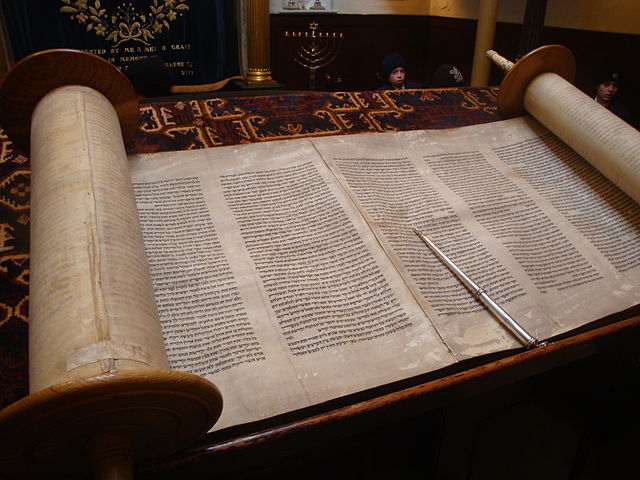
Photo Credit: Lawrie Cate (3-9-09) [Wikimedia Commons / Creative Commons Attribution 2.0 Generic license]
Sean Luke obtained Masters of Divinity and Masters of Systematic Theology degrees from Trinity Evangelical Divinity School. He runs the YouTube channel, Anglican Aesthetics. On that site and on his Substack page he has repeatedly brought up issues regarding the biblical canon and how Catholic apologists (sometimes named, but often not) — actually or allegedly — inadequately argue for it, and critique (he thinks, inaccurately) the Protestant view on it. This is a critical (but friendly) look at his latest video on this topic, called, Protestants and the Canon: Why We Don’t Need an Infallible Magisterium For the Bible’s Books (8-21-23). His words will be in blue.
*****
This is his summary of the video:
In this video, I address the oft-repeated claim that Protestants cannot know what books even belong to the canon of Scripture without an infallible magisterium. I argue that the grounds which we have to believe the books which comprise the canon actually are inspired give Protestants more than sufficient grounds for confidence that we have, in our hands, the inspired Word of God.
Okay! Let’s see what he’s got!
0:50 I’ve seen quite a bit in Roman Catholic Protestant discussions and frankly, I just don’t find this objection from our Roman Catholic friends against Protestantism very compelling. You’ll hear often the claim that we need an infallible magisterium to determine the canon . . . that we can’t even know what Scripture is, so Protestants set up Scripture as the judge over all of tradition . . . and if you only have a fallible authority, . . . you can’t hold Scripture up as an infallible judge because it’s that infallible magisterium that gives us Scripture in the first place that’s that’s the argument in a nutshell. I want to address that.
As the late Presbyterian R. C. Sproul famously expressed it: “The Bible is a fallible collection of infallible books.” And he said that because sola Scriptura holds that the Bible is the only infallible source of doctrine and theology. Since Scripture doesn’t contain a list of its own books, the Protestant must fall back on Christian tradition of some sort, in order to ascertain with certainty the exact books that are in the Bible.
And it turns out, of course, that that tradition is Catholic (and, incidentally it also included the deuterocanonical books, known by Protestants as “the Apocrypha”). So they rely on what they regard as a fallible authority, to proclaim the list of canonical books (which we see as an inconsistency or difficulty or weakness in their rule of faith), whereas Catholics think — more consistently, we say — that the canon was infallibly proclaimed.
I argue it a bit differently, and I’ve been doing so online and in books for thirty years. Sean has dealt with Trent Horn and others on this issue, by name, but he hasn’t addressed my arguments, which have been around longer than those of just about everyone he names (not that mere length of time makes arguments more plausible!). In other words, I’m a Catholic apologist, too, who has been in this arena a long time (35 years, to be exact; published since 1993), so I’m in that group that he is critiquing.
First of all, I haven’t seen Sean cite the most relevant magisterial texts on what the Catholic Church considers its relationship to Holy Scripture to be, and it is helpful for the discussion to do so, to clarify matters. It’s these two:
First Vatican Council (1870)
These the Church holds to be sacred and canonical; not because, having been carefully composed by mere human industry, they were afterward approved by her authority; not because they contain revelation, with no admixture of error; but because, having been written by the inspiration of the Holy Ghost, they have God for their author, and have been delivered as such to the Church herself. (Dogmatic Constitution on the Catholic Faith, chapter II; emphasis added)
Second Vatican Council (1962-1965)
The divinely-revealed realities which are contained and presented in the text of sacred Scripture, have been written down under the inspiration of the Holy Spirit. For Holy Mother Church relying on the faith of the apostolic age, accepts as sacred and canonical the books of the Old and New Testaments, whole and entire, with all their parts, on the grounds that they were written under the inspiration of the Holy Spirit (cf. Jn. 20:31; 2 Tim. 3:16; 2 Pet. 1:19-21; 3:15-16), they have God as their author, and have been handed on as such to the Church herself. (Dogmatic Constitution on Divine Revelation [Dei Verbum], Chapter III, 11; emphasis added)
The Catholic Church merely acknowledged what is already (by its very nature) Scripture, or inspired revelation from God; it didn’t make it so. Nor do we claim that we created either the canon or Scripture itself, or that the Church is “higher” than the Bible (what Protestants often misrepresent and caricature as a position of sola ecclesia).
It doesn’t follow that Catholics are placing Church above Scripture, in simply pointing out that human authority was needed in order to authoritatively proclaim the exact parameters and extent of the canon. As the two statements above assert, the true canonical books were “delivered” or “handed on” to the Church. In other words, they were already what they were and intact, having been “written under the inspiration of the Holy Spirit.”
It’s not that we are saying there is no Scripture or canon unless and until the Catholic Church proclaims the list of books. We’re saying that it settled the issue once and for all, and did it — unlike in the Protestant sola Scriptura system — definitively and in an infallible way. It was necessary that this was done, so Christians could know which books are biblical and canonical. I totally agree with Sean that there was a broad and growing consensus in the early Church about which books were in the Bible and which were not, but there were always exceptions, right up to the time of the Catholic proclamations in the late 4th century.
There was a need for the Church to speak definitively on the matter, and it did, led by popes. The first person who ever listed all 27 of the New Testament books in one place was St. Athanasius, in the year 367. That’s the first evidence we have that anyone “got it completely right” by our standards today.
The exact relationship of Scripture, Church, and tradition in Catholic thinking is commonly misunderstood; it is often referred to as the “three-legged stool” of Catholic authority. We believe in faith that the three don’t and won’t conflict. They are viewed as pieces of a whole. The Bible is central and primary in Catholicism as well, but not exclusively authoritative.
It’s not isolated, nor can it even logically be so, because the Bible itself points to tradition and the Church as authoritative (see, e.g., the Jerusalem Council in Acts 15); it never teaches that it alone is the Christian’s sole ultimate authority. And it’s also necessary to have an “orthodox framework” in which to safely interpret the Bible.
If anyone doubts this, look at, for example, the Jehovah’s Witnesses, and the bizarre things they believe (such as that Christ was created): all proven, so they claim, from the Bible. The New Testament itself expresses how people with “itching ears” for false teachers were already twisting the truths of the Bible and leading others astray. Individuals would have kept disagreeing about which books were canonical till Kingdom Come, unless the Church, in her sublime God-given authority had made the definitive proclamation. This is how I think Catholics should argue the point, but I’ll interact now with Sean’s additional argumentation.
8:09 these four gospels were very early on considered to transmit the teaching of the Apostles; that’s why we hold them as canonical . . . it is not — as some Roman Catholics claim — just because these books were widely used and it is not either just because the books were declared to be authoritative by the teaching authority of the church that we regard these books as authoritative rather it’s that the widespread use of these books and the memory of the church in her social memory gave us a historical piece of evidence that these books actually go back to the apostles.
We agree! That’s what I take the two proclamations from VCI and VCII above to be basically expressing. Consensus had been reached, and these books were already substantially — with disagreements around the “edges”, I add — viewed as Scripture. But the Church still had to make the pronouncement and end any remaining differences and speculation. In other words, it’s sort of like “the buck stops here,” as President Harry Truman said. It was the same function as the Creeds and Protestant Confessions. The Church has made authoritative pronouncements about all Christian doctrines, so the biblical canon was no different from anything else (except that in this instance it — whatever it is — wasn’t in the Bible itself).
Beyond that, there are questions of how individuals discerned which books were biblical. I think it was providential and shows the Holy Spirit’s guidance, that there wasn’t more disagreement than there were, due to difficulties such as the following:
Are All Bible Books Self-Evidently Inspired? [6-19-06]
Are All the Biblical Books Self-Evidently Canonical? [6-22-06]
Were Apostles Always Aware of Writing Scripture? (6-29-06; abridged on 9-25-16)
The Bible: “Clear” & “Self-Interpreting”? [February 2014]
14:25 as a sort of magisterial Protestant – someone who holds still more classical form of Protestantism, we are not saying as Protestants that the church’s consent on these matters is irrelevant. In fact, we do think that it matters, as ministers of the Spirit and participants in the mind of Christ, that they have legitimate and even binding Authority without being infallible . . .
Very good, up till the last word. The denial of infallibility is a falsehood, but that gets into other discussions.
15:38 as a high Church Anglican I look at that and I say, look, if the Spirit; if these Spirit-filled people who participate in the mind of Christ as much or probably more so than I do by their holiness of life; if they come to a consensus on an issue I should probably believe that consensus. I, in fact, ought to, unless I have overwhelming reason not to, so it’s not as though the consensus doesn’t have authority.
Good! That’s a high view of authority, and much better than the low church hyper-individualist Protestant view. We just take it a bit further and claim that God intended that His Church would infallibly proclaim and preserve truth, as indicated in key passages such as the Jerusalem Council (“it has seemed good to the Holy Spirit”: Acts 15:28, RSV) and 1 Timothy 3:15 (“the church of the living God, the pillar and bulwark of the truth”).
16:11 you’ll often hear this line — and sadly it came from R. C. Sproul — that the canon is a fallible list of infallible books, and often Roman Catholics will take that polemic
*
It wasn’t a “polemic” but rather, an honest statement of fact from within the sola Scriptura rule of faith, that Sproul held just as strongly as Sean does.
*
and say, “oh well . . . you only have a fallible list of infallible books. You can never have certainty about what the canon is unless you have a prior infallible magisterium.”
*
Well, yes, by definition and Protestant criteria and ecclesiology and rule of faith, it’s not an infallible statement. It can be called “reliable” or “authoritative” or “trustworthy” or any number of terms, but it’s not infallible, and that’s what Sproul was pointing out (as he must, within his own system). He honestly noted that it was some sort of perplexing problem within Protestantism. Certainly he provided his own solutions, and I’m sure he thought they were adequate, but at least he squarely faced the seeming — whether real or wrongly perceived — inconsistency, and I respect that. So why would that be “sad”?
*
17:57 why could I not have other evidential sources that gives me this very strong confidence of what the canon is in the absence of an infallible magisterium [?]
*
I’m agreeing that he can do that and that the early Christians in fact did that, for the most part. Athanasius arrived at all 27 NT books before there was an official proclamation. The problem is that there were still disagreements, and they would have continued — because this is how human nature is, short of proper boundaries. Just look at the sad history of ever-proliferating denominationalism and the doctrinal relativism necessarily resulting from the contradictions involved in that.
*
The authoritative pronouncement stopped that, so that the non-canonical books were no longer still bandied about by some, and so that all of the the true NT books were no longer disputed by anyone of note, nor were the Old Testament books, for the most part, until Protestantism questioned the deuterocanon 1100 years later. And I think that’s very important, because the Bible is central and unique in Christianity.
*
22:14 so you have these disputes all the way up until Trent about which books constitute the historical canon from those who are within Rome’s fold, until Trent makes a pronunciation on it. But what Protestants pointed out is that those books [of] the deuterocanon were always disputed.
*
Since Sean brings up this vexed issue, I’ll put in my $00.02 cents’ worth on that:
Down to the 4th century the church generally accepted all the books of the Septuagint as canonical . . . (The Oxford Dictionary of the Christian Church, 2nd ed., edited by F. L. Cross & E. A. Livingstone, Oxford University Press, 1983, 70)
In post-NT times, the Christian Fathers down to the later 4th cent. almost all regarded the LXX as the standard form of the OT . . . (Ibid., 1260)
It should be observed that the Old Testament thus admitted as authoritative in the Church was somewhat bulkier and more comprehensive . . . It always included, though with varying degrees of recognition, the so-called Apocrypha, or deutero-canonical books . . . In the first two centuries at any rate the Church seems to have accepted all, or most of, these additional books as inspired and to have treated them without question as Scripture. (J. N. D. Kelly, Early Christian Doctrines, San Francisco: Harper, revised edition of 1978, 53-54)
The West, as a whole, was inclined to form a much more favourable estimate of the Apocrypha . . . For the great majority, however, the deutero-canonical writings ranked as Scripture in the fullest sense. Augustine, for example, whose influence in the West was decisive, made no distinction between them and the rest of the Old Testament . . . The same inclusive attitude to the Apocrypha was authoritatively displayed at the synods of Hippo and Carthage in 393 and 397 respectively, . . . (Ibid., 55-56; he also noted some disagreement of Eastern fathers in the third and fourth centuries)
. . . the custom of Christian churches which continued with isolated remonstrances to make the Greek OT canon, with which the Vulgate agrees almost completely, their standard. (The International Standard Bible Encyclopedia, General editor: James Orr, Grand Rapids, Michigan: Eerdmans, 1939, five volumes, Vol. 1, “Apocrypha,” 182)
The great Protestant evangelical scholar F. F. Bruce notes that the Council of Hippo in 393 (“along the lines approved by Augustine”) and the Third Council of Carthage in 397, and the belief of the Christian Church in “the following centuries”:
[Hippo and Carthage] appear to have been the first church councils to make a formal pronouncement on the canon. When they did so, they did not impose any innovation on the churches; they simply endorsed what had become the general consensus of the churches in the west and of the greater part of the east . . . The Sixth Council of Carthage (419) re-enacted the ruling of the Third Council, again with the inclusion of the apocryphal books . . . Throughout the following centuries most users of the Bible made no distinction between the apocryphal books and the others: all alike were handed down as part of the Vulgate . . . The two Wycliffite versions of the complete Bible in English (1384, 1395) included the apocryphal books as a matter of course. (The Canon of Scripture, Downers Grove, Illinois: InterVarsity Press, 1988, 97, 99-100)
Compare:
A council probably held at Rome in 382 under St. Damasus gave a complete list of the canonical books of both the Old Testament and the New Testament (also known as the ‘Gelasian Decree’ because it was reproduced by Gelasius in 495), which is identical with the list given at Trent. (The Oxford Dictionary of the Christian Church, 232)
The list from 382 — which The Oxford Dictionary of the Christian Church deemed as “identical with the list given at Trent” — includes: Wisdom, Ecclesiasticus, Tobit, Judith, and 1 and 2 Maccabees. Baruch was included as part of Jeremiah, as in St. Athanasius’ list of 15 years previously. This is indeed identical with the Tridentine list, and comprises the seven “extra” deuterocanonical books in Catholic Bibles which Protestants reject from the canon as “apocryphal.” Nevertheless, there they are in the Council of 382.
The Council of Carthage accepted the same list, as detailed by Brooke Foss Westcott (A General Survey of the History of the Canon of the New Testament, Grand Rapids, Michigan: Baker Book House, 1980, rep. from 6th ed. of 1889, 440). Bruce questioned the authenticity of the Gelasian Decree, but note that he did not question the fact that the “Sixth Council of Carthage (419) re-enacted the ruling of the Third Council [Carthage, 397], again with the inclusion of the apocryphal books.”
The renowned Protestant Church historian Philip Schaff concurs about the intervening centuries between the councils of Carthage and Trent:
This canon [of Carthage — see above citation] remained undisturbed till the sixteenth century, and was sanctioned by the council of Trent at its fourth session. (Philip Schaff, History of the Christian Church, vol. 3: Nicene and Post-Nicene Christianity, Grand Rapids, Michigan: Eerdmans, 1974 [orig. 1910], 609-610)
All of the above sources are Protestant. My entire case can be strongly made by them, without even having to cite Catholic scholars.
20:53 Athanasius’ list almost perfectly matches Protestants . . . he actually has a very similar list of [OT] books that are inspired, that Protestants hold.
I don’t think its quite that simple. St. Athanasius calls Wisdom “Scripture” (On the Opinion of Dionysius, 9 [cf. 15]; Four Discourses Against the Arians, II, 42), and also Baruch (ibid., II, 49), Sirach (ibid., II, 79), and Bel and the Dragon (ibid., III, 30). He cites Tobit as recording the words of God, alongside Matthew and Isaiah (Apology to the Emperor Constantius, 17). My friend and fellow Michigander apologist Gary Michuta, in his book on the topic, Why Catholic Bibles are Bigger (Port Huron, Michigan: Grotto Press, 2007), discusses St. Athanasius’ somewhat complex views:
Athanasius quotes both Baruch and Susanna right along passages from Isaiah, Psalms, Romans, and Hebrews; he makes no distinction or qualification between them [1]. Wisdom also is used as an authentic portion of sacred Scripture . . .:
But of these and such like inventions of idolatrous madness, Scripture taught us beforehand long ago, when it said, ‘The devising of idols, as the beginning of fornication, and the invention of them, the corruption of life . . .’ [Ws 14:12] [2]
And later in the same work:
For since they were endeavouring to invest with what Scripture calls the incommunicable name . . . [3]
This reference to the “incommunicable name” comes from Wisdom 14:21 . . .
Athanasius quotes another passage from Wisdom as constituting the teachings of Christ, the Word of God. He undoubtedly uses it to confirm doctrine. [4] In another argument against Arians, he calls both the Protocanonical Proverbs and the Deuterocanonical Wisdom “holy Scripture” . . . [5] . . .Athanasius also quotes the book of Sirach without distinction or qualification, in the midst of several other scriptural quotations. [6] . . . Athanasius calls the Book of Judith Scripture. [7] Tobit is cited right along with several Protocanonical quotations [8] , and even introduced with the solemn formula “it is written.” [9]
[1] Four Discourses Against the Arians, Discourse 1.12.
[2] Against the Heathen, 11.1. Emphasis added.
[3] Against the Heathen, 1, 17.3.
[4] On the Incarnate Word, 4.6; 5.2.
[5] Defense Against Arius, 1, 3.
[6] Life of Anthony, 28 and Apology Against the Arians, 66.
[7] Four Discourses Against the Arians, Discourse 2.35 . . .
[8] Defense of Constantius, 17. Tobit is cited after Matthew and Isaiah.
[9] Defense Against Arius, Part 1, 11. (pp. 110-112; footnote numbering my own)
F. F. Bruce confirms Michuta’s analysis:
As Athanasius includes Baruch and the ‘Letter of Jeremiah’ in one book with Jeremiah and Lamentations [in his list of the OT canon], so he probably includes the Greek additions to Daniel in the canonical book of that name, and the additions to Esther in the book of that name which he recommends for reading in church [but doesn’t list as a canonical book] . . .
In practice Athanasius appears to have paid little attention to the formal distinction between those books which he listed in the canon and those which were suitable for instruction of new Christians. He was familiar with the text of all, and quoted from them freely, often with the same introductory formula — ‘as it is written’, ‘as the scripture says’, etc. (Ibid., 79-80; my bracketed comments, based on the larger context of Bruce’s analysis)
21:34 you find this sort of argument in William Whitaker: his Disputation on Holy Scripture. He’s an Anglican theologian.
Yeah, I wrote an entire book responding to him and fellow Anglican William Goode (15 chapters and 175 pages devoted to Whitaker): Pillars of Sola Scriptura: Replies to Whitaker, Goode, & Biblical “Proofs” for “Bible Alone” (2012 , 310 pages), alongside my other three books on sola Scriptura: 100 Biblical Arguments Against Sola Scriptura (Catholic Answers, 2012 / second revised Amazon KDP edition: Aug. 2025, 127 pages), Bible Conversations: Catholic-Protestant Dialogues on the Bible, Tradition, and Salvation (2002, 218 pages), and The Bible Tells Me So: A Catholic Apologist Challenges Protestants with Scripture (Chorabooks, 2019, 161 pages). And I host probably the largest web page on Bible and Tradition from any single Catholic.
*****
Photo Credit: Lawrie Cate (3-9-09) [Wikimedia Commons / Creative Commons Attribution 2.0 Generic license]

Summary: Reply to Anglican apologist Sean Luke on various issues regarding the way that the establishment of the biblical canon is argued by Protestant & Catholic apologists.
Previous Post
March 16, 2026
Venerating Mary with Heart & Soul, Etc.: Bible Analogies
Next Post
March 17, 2026 Mary's Immaculate Conception: Ten Biblical Arguments
Recent Comments
"Special pleading, and not a serious response to my arguments . . ."
Is Venerating Men & Angels Worship? ..."
""no man needs to teach us."Didn't you just teach us?"
Is Venerating Men & Angels Worship? ..."
""Catholics say they are the only church that can lead people into heaven."In fact, we ..."
Is Venerating Men & Angels Worship? ..."
"And lastly, I belong to no denomination and am free to serve God as He ..."
Is Venerating Men & Angels Worship? ..."
Browse Our Archives
Select a Category & Last Things About Me Anti-Catholicism Atheism & Agnosticism Baptism and Sacramentalism Bible and Tradition Blessed Virgin Mary Books by Dave Armstrong C. S. Lewis Calvinism & General Protestantism Catholic Apologetics Catholic Apologists Catholic conversion Catholic converts Christmas Church (Ecclesiology) Church History Conversion and Converts Development of Doctrine Eastern Orthodoxy Ecumenism & Christian Unity Eucharist & Liturgy Fathers of the Church French Translations G. K. Chesterton Hell Hell & Satan Hell & Satan & Last Things Heresies & Comparative Religion Holistic Health Inquisition & Crusades & Scandals James White Jews & Judaism & Old Testament John Calvin John Henry Newman Liberal / Modernist Theology Life Issues Literary Resume Lutheranism Mariology Martin Luther Music Orthodoxy Papacy & Infallibility Personal Page Philosophy & Science Political & Ethical & Moral Issues Protestant Persecution & Intolerance Protestantism Purgatory Purgatory & Penance Romantic & Imaginative Theology Saints & Purgatory & Penance Salvation Salvation & Justification Satan & Last Things Sexuality and Gender Issues Spanish Translations Traditionalism vs. Radical Catholic Reactionaries Traducciones al español / tradução para português Trinitarianism & Christology Uncategorized Videos
Select a Month October 2026 September 2026 August 2026 July 2026 June 2026 May 2026 April 2026 March 2026 February 2026 January 2026 December 2025 November 2025 October 2025 September 2025 August 2025 July 2025 June 2025 May 2025 April 2025 March 2025 February 2025 January 2025 December 2024 November 2024 October 2024 September 2024 August 2024 July 2024 June 2024 May 2024 April 2024 March 2024 February 2024 January 2024 December 2023 November 2023 October 2023 September 2023 August 2023 July 2023 June 2023 May 2023 April 2023 March 2023 February 2023 January 2023 December 2022 November 2022 October 2022 September 2022 August 2022 July 2022 June 2022 May 2022 April 2022 March 2022 February 2022 January 2022 December 2021 November 2021 October 2021 September 2021 August 2021 July 2021 June 2021 May 2021 April 2021 March 2021 February 2021 January 2021 December 2020 November 2020 October 2020 September 2020 August 2020 July 2020 June 2020 May 2020 April 2020 March 2020 February 2020 January 2020 December 2019 November 2019 October 2019 September 2019 August 2019 July 2019 June 2019 May 2019 April 2019 March 2019 February 2019 January 2019 December 2018 November 2018 October 2018 September 2018 August 2018 July 2018 June 2018 May 2018 April 2018 March 2018 February 2018 January 2018 December 2017 November 2017 October 2017 September 2017 August 2017 July 2017 June 2017 May 2017 April 2017 March 2017 February 2017 January 2017 December 2016 November 2016 October 2016 September 2016 August 2016 July 2016 June 2016 May 2016 April 2016 March 2016 February 2016 January 2016 December 2015 November 2015 October 2015 September 2015 August 2015 July 2015 June 2015 May 2015 April 2015 March 2015 February 2015 January 2015 December 2014 November 2014 October 2014 September 2014 August 2014 July 2014 June 2014 April 2014 March 2014 February 2014 January 2014 December 2013 November 2013 October 2013 September 2013 August 2013 July 2013 June 2013 April 2013 March 2013 February 2013 January 2013 December 2012 November 2012 October 2012 September 2012 August 2012 July 2012 June 2012 May 2012 April 2012 March 2012 February 2012 January 2012 December 2011 November 2011 October 2011 September 2011 August 2011 July 2011 June 2011 April 2011 March 2011 February 2011 October 2010 September 2010 August 2010 July 2010 April 2010 March 2010 December 2009 October 2009 August 2009 July 2009 June 2009 May 2009 March 2009 February 2009 October 2008 September 2008 April 2008 March 2008 February 2008 January 2008 December 2007 November 2007 October 2007 May 2007 March 2007 February 2007 January 2007 November 2006 October 2006 September 2006 August 2006 July 2006 June 2006 May 2006 April 2006 March 2006 February 2006 October 2005 June 2005 April 2005 February 2005 July 2004 May 2004 April 2004
Follow Us!
TAKE THE
Religious Wisdom Quiz
What did the biblical measurement of a cubit represent?
Select your answer to see how you score.
Length of forearm Length of leg Length of foot Length of hand
Books by This Author Books by Dave Armstrong
Related posts from Biblical Evidence for Catholicism

A Few "Worst" & "Best" Arguments vs. Protestantism
Biblical Evidence for Catholicism

17 Church Fathers on Purgatory (Esp. 1 Cor...
Biblical Evidence for Catholicism

Deuterocanon & Javier Perdomo's Straw Men
Biblical Evidence for Catholicism

St. Athanasius & the Deuterocanon (vs. Javier Perdomo)
Biblical Evidence for Catholicism
TRENDING AT PATHEOS Catholic

The First Eucharistic Controversy: Christ’s Real Presence
For Catholics, the Eucharist is the source and summit of the Christian...

What a Stop Sign Can Teach Us About...
How to Make a Decision When You Can't Hear God Main point:...

Archdiocese Hosts Military Marriage Retreat in Germany
RASTATT, Germany — The transient military lifestyle, with its frequent deployments and...

Nearly every morning, I make the drive to Detroit with my high-school-age...

The Real AI Story Is Adoption Without Trust
Artificial intelligence has crossed a political threshold. It is no longer a...

A new article, written by Jeff Lindsay and Gale L. Pooley,...
view all Catholic blogs
What Are Your Thoughts?leave a comment
Ad-Free & Subscriber Log-In Subscription Support
- About Us
- 2026 Calendar
- Videos
- Podcasts
- Library of World Religions
- Faith In Media Tracker
- Advertise With Us
- Write for Us
- Privacy Policy
- Terms of Service
- Do Not Sell My Data
- Contact Us
- Radiant Digital
- Manage Newsletter Subscriptions
- Unsubscribe From Notifications
- Sitemap
Copyright 2008-2026, Patheos. All rights reserved.
Subscription Support Ad-Free & Subscriber Log-In
Follow Patheos