
BuddhistCatholicContemplativeEvangelicalGeneral ChristianHinduJewishLatter-day SaintMuslimNew VisionsProgressive Christian
Beliefs
- Buddhist
- Catholic
- Contemplative
- Evangelical
- General Christian
- Hindu
- Jewish
- Latter-day Saint
- More Voices
- Muslim
- New Visions
- Pagan
- Progressive Christian
Topics
- Religion News
- Food and Religion
- Sports and Religion
- Religious Art
- Religious Music and Entertainment
- Religious Events
- History and Religion
- Style and Religion
- Politics and Religion
- Women in Religion
- Recreation Outdoors and Religion
- Business Finance and Religion
- Careers Workplace and Religion
- Education and Religion
- Family Parenting and Religion
- Health Fitness and Religion
- Home and Religion
- Relationships and Religion
- Technology and Religion
- Travel and Religion
Columnists
- Buddhist Columnists
- Business Finance and Religion Columnists
- Careers Workplace and Religion Columnists
- Catholic Columnists
- Contemplative Columnists
- Education and Religion Columnists
- Evangelists Columnists
- Family Parenting and Religion Columnists
- General Christian Columnists
- Health Fitness and Religion Columnists
- Hindu Columnists
- History and Religion Columnists
- Home and Religion Columnists
- Jewish Columnists
- More Voices Columnists
- Latter Day Columnists
- Muslim Columnists
- New Visions Columnists
- Nonreligious Columnists
- Pagan Columnists
- Politics and Religion Columnists
- Progressive Columnists
- Recreation Outdoors and Religion Columnists
- Relationships and Religion Columnists
- Religion News Columnists
- Religious Art Columnists
- Religious Events Columnists
- Religious Music and Entertainment Columnists
- Sports and Religion Columnists
- Style and Religion Columnists
- Technology and Religion Columnists
- Travel and Religion Columnists
- Women in Religion Columnists
Resource Library
- 2026 Calendar
- Library of World Religions
- The 100 Most Holy Places on Earth
- Patheos Answers
- Podcasts
- Videos
- Faith Leaders Database
- Anglican Episcopalian
- Bahai
- Baptist
- Buddhism
- Christianity
- Confucianism
- Eastern Orthodoxy
- Hinduism
- Holiness and Pentecostal
- ISKCON
- Islam
- Judaism
- Lutheran
- Methodist
- The Church of Jesus Christ of Latter-day Saints
- New Age
- Paganism
- Presbytarian and Reformed
- Protestantism
- Religion Behind the Scenes
- Roman Catholic
- Scientology
- Shia Islam
- Sikhism
- Sufism
- Sunni Islam
- Taoism
- Zen
- See all religions
Research Tools
 Ad-Free & Subscriber Log-In Subscription Support
Ad-Free & Subscriber Log-In Subscription Support
Follow Patheos 

- Trending:
- Forgiveness
- |
- Marriage
- |
- Consciousness
- |
- Death Penalty
- |
- Election
- |
- Halloween

-
About
-
Catholic Apologetics
-
Church History
-
Great Apologists
-
Christian Worldview
-
Protestantism & Misc.
- Home
- Catholic
- History and Religion
- C. S. Lewis’ Argument for God from Desire
C. S. Lewis’ Argument for God from Desire
Last updated on: June 6, 2026 at 12:05 am by Dave Armstrong
C. S. Lewis’ Argument for God from Desire 2026-06-06T00:05:58-04:00 Dave Armstrong
Patheos Explore the world's faith through different perspectives on religion and spirituality! Patheos has the views of the prevalent religions and spiritualities of the world.
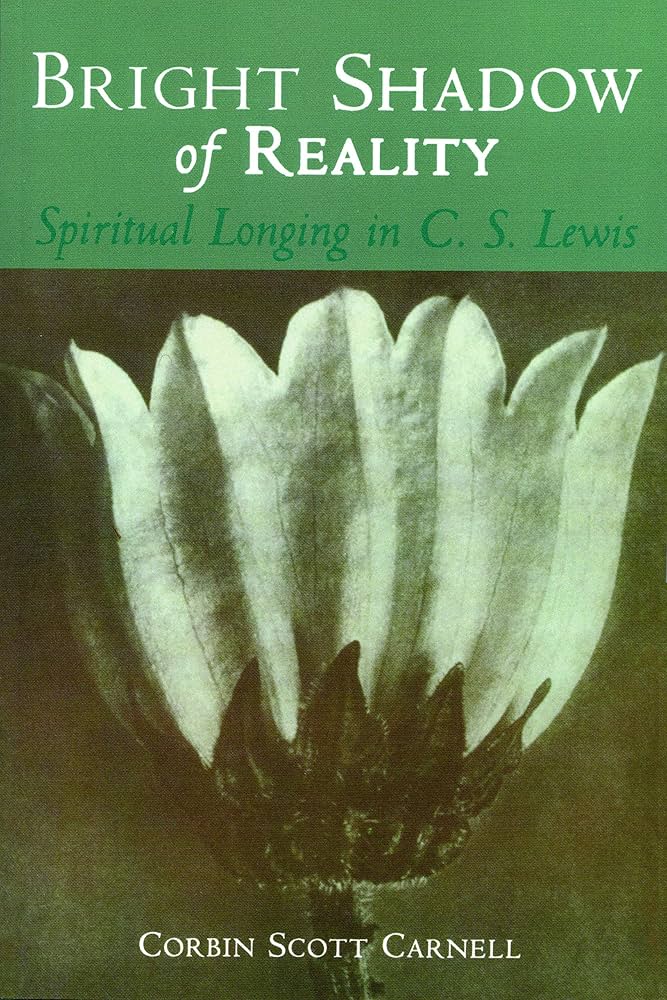
Photo credit: cover from the Amazon page of the classic 1974 study (arguably the best treatment) of C. S. Lewis’ fascination with sehnsucht: a special kind of intense, aching longing, described in German and Norse romantic tradition.
C. S. Lewis, the popular author of The Chronicles of Narnia and other works of fantasy-fiction, and widely considered the most influential defender of Christianity in the 20th century, thought that this experience of ecstasy, that he called “joy” in a particular sense, was of the utmost importance in his life, and indeed – when all is said and done — in everyone’s. We know that because he gave his autobiography the title, Surprised by Joy. It had a double meaning, referring to this ecstasy and also to his wife. And in that book, he wrote that “in a sense the central story of my life is about nothing else.”
Before we examine his thoughts about this intriguing topic, let’s first take a look at the Bible’s many statements about longing or desire for God. Here are fifteen of them:
Job 19:25-27 (RSV) For I know that my Redeemer lives, . . . [26] . . . from my flesh I shall see God, [27] . . . my eyes shall behold, and not another. My heart faints within me! (NIV, NKJV, “yearns”; NABRE: “my inmost being is consumed with longing”)
Psalm 27:4 (NIV) One thing I ask from the Lord, this only do I seek: that I may dwell in the house of the Lord all the days of my life, to gaze on the beauty of the Lord and to seek him in his temple.
Psalm 42:1-2 (RSV) As a hart longs for flowing streams, so longs my soul for thee, O God. [2] My soul thirsts for God, for the living God. When shall I come and behold the face of God?
Psalm 63:1 (NIV) You, God, are my God, earnestly I seek you; I thirst for you, my whole being longs for you, in a dry and parched land where there is no water.
Psalm 73:25 (RSV) . . . there is nothing upon earth that I desire besides thee.
Psalm 84:2 (NIV) My soul yearns, even faints, for the courts of the Lord; my heart and my flesh cry out for the living God.
Psalm 119:20 (NIV) My soul is consumed with longing for your laws at all times.
Psalm 145:19 (RSV) He fulfils the desire of all who fear him, . . .
Ecclesiastes 3:11 (RSV) . . . he has put eternity into man’s mind . . .
Isaiah 26:9 (NIV) My soul yearns for you in the night; in the morning my spirit longs for you.
Romans 8:18 (RSV) I consider that the sufferings of this present time are not worth comparing with the glory that is to be revealed to us.
1 Corinthians 2:9-10 (RSV) But, as it is written, “What no eye has seen, nor ear heard, nor the heart of man conceived, what God has prepared for those who love him,” [10] God has revealed to us through the Spirit. For the Spirit searches everything, even the depths of God.
2 Corinthians 5:2 (RSV) Here indeed we groan, and long to put on our heavenly dwelling,
Philippians 1:21, 23 (RSV) For to me to live is Christ, and to die is gain. . . . [23] . . . My desire is to depart and be with Christ, for that is far better.
Hebrews 11:16 (RSV) . . . they desire a better country, that is, a heavenly one . . . .
Perhaps this provides a clue as to the ultimate origin of the longings and desires of Lewis (and those of all of us, at a deep level)? In his autobiography, Lewis reports that
Once in those very early days my brother brought into the nursery the lid of a biscuit tin which he had covered with moss and garnished with twigs and flowers so as to make it a toy garden or a toy forest. That was the first beauty I ever knew.
But the really fascinating thing is how he described a memory of this toy garden that came later, between the ages of six to eight, as he recalled:
As I stood beside a flowering currant bush on a summer day there suddenly arose in me without warning, and as if from a depth not of years but of centuries, the memory of that earlier morning . . . when my brother had brought his toy garden into the nursery. It is difficult to find words strong enough for the sensation which came over me; Milton’s “enormous bliss” of Eden . . . comes somewhere near it. It was a sensation, of course, of desire; but desire for what? not, certainly, for a biscuit-tin filled with moss, . . . before I knew what I desired, the desire itself was gone, the whole glimpse withdrawn, the world turned commonplace again, or only stirred by a longing for the longing that had just ceased. It had taken only a moment of time; and in a certain sense everything else that had ever happened to me was insignificant in comparison.
Then Lewis described the related “idea of Autumn” that hit him like a thunderbolt:
The second glimpse came through Squirrel Nutkin; through it only, though I loved all the Beatrix Potter books. . . . It troubled me with what I can only describe as the Idea of Autumn. It sounds fantastic to say that one can be enamoured of a season, but that is something like what happened; and, as before, the experience was one of intense desire. And one went back to the book, not to gratify the desire . . . but to re-awake it. And in this experience also there was the same surprise and the same sense of incalculable importance. It was something quite different from ordinary life and even from ordinary pleasure; something, as they would now say, “in another dimension”.
The third thing in his early childhood that provoked these feelings of wonder and intense longing was his introduction, through poetry, to “northernness”. This developed into his love of Norse mythology and Richard Wagner’s operas that explored this deep well of fantasy and fairy tale, anticipating Lewis’ good friend J. R. R. Tolkien’s Lord of the Rings in many respects. Lewis summed up these three episodes in his life as:
an unsatisfied desire which is itself more desirable than any other satisfaction. I call it Joy, . . . Joy (in my sense) has indeed one characteristic, and one only, in common with them; the fact that anyone who has experienced it will want it again. . . . I doubt whether anyone who has tasted it would ever, if both were in his power, exchange it for all the pleasures in the world.
Young Lewis was no ordinary child, but was he tapping into something common to all people, or at least the more imaginative ones? It seems so. What he describes is what was known in early 19th century German romanticism as sehnsucht [pronounced zeen-zoked]. Lewis used this word to describe his experience. He grew up in Belfast, which is surrounded by the beautiful Castlereagh Hills, 1568 feet, or 478 meters at their highest, whereas the lower areas of Belfast are at sea level. These played a role in the spiritual ecstasies of Lewis as well. He wrote about his early childhood:
Every day there were what we called “the Green Hills”; that is, the low line of the Castlereagh Hills which we saw from the nursery windows. They were not very far off but they were, to children, quite unattainable. They taught me longing . . .
Interestingly, Van Morrison, my favorite singer, who is also from Belfast, wrote in a similar way about these hills and how they made him feel, in his song, On Hyndford Street, from 1991:
Going up the Castlereagh hills . . . and coming back . . . feeling wondrous and lit up inside with a sense of everlasting life . . .
And in the quietness we sank into restful slumber in silence and carried on dreaming in God.
In Surprised by Joy, Lewis recounted another extraordinary experience along these lines that he had at around age 14:
The authentic “Joy” . . . had vanished from my life: so completely that not even the memory or the desire of it remained. . . . Joy is distinct not only from pleasure in general but even from aesthetic pleasure. It must have the stab, the pang, the inconsolable longing.
This long winter broke up in a single moment, . . . Someone must have left in the schoolroom a literary periodical: The Bookman, . . . My eye fell upon a headline and a picture, carelessly, expecting nothing. A moment later, as the poet says, “The sky had turned round.”
What I had read was the words Siegfried and the Twilight of the Gods. What I had seen was one of Arthur Rackham’s illustrations to that volume. I had never heard of Wagner, nor of Siegfried. . . . Pure “Northernness” engulfed me: a vision of huge, clear spaces hanging above the Atlantic in the endless twilight of Northern summer, remoteness, severity… and almost at the same moment I knew that I had met this before, long, long ago . . . And with that plunge back into my own past there arose at once, almost like heartbreak, the memory of Joy itself, the knowledge that I had once had what I had now lacked for years, . . . a single, unendurable sense of desire and loss, which suddenly became one with the loss of the whole experience, which, as I now stared round that dusty schoolroom like a man recovering from unconsciousness, had already vanished, had eluded me at the very moment when I could first say It is. And at once I knew (with fatal knowledge) that to “have it again” was the supreme and only important object of desire.
Lewis repeatedly referred back to this theme and even developed it into a longing for heaven or argument from desire: a proposed proof for God’s existence and also of the reality of heaven. Writing to his good friend Arthur Greeves when he was an atheist on 21 March 1916, Lewis proclaimed:
I know quite well that feeling of something strange and wonderful that ought to happen, and wish I could think like you that this hope will someday be fulfilled . . .
C. S. Lewis became convinced of Christianity on 19 September 1931, after discussions with Tolkien and Hugo Dyson. On 24 October 1931 he wrote the following remarks in a letter to his brother Warnie:
It certainly seems to me that the ‘vague something’ which has been suggested to one’s mind as desirable, all one’s life, in experiences of nature and music and poetry . . . and which rouses desires that no finite object even pretends to satisfy, can be argued not to be any product of our own minds.
Lewis wrote in his 1933 novel, The Pilgrim’s Regress, his first Christian book:
“Romanticism” . . . was a particular recurrent experience which dominated my childhood . . . inanimate nature and marvellous literature were among the things that evoked it. I still believe that the experience is common, commonly misunderstood, and of immense importance . . .
The experience is one of intense longing . . . This hunger is better than any other fullness . . .
Later in the same book he describes it as “Something possessed, if at all, only in the act of desiring it, and lost so quickly that the craving itself becomes craved . . .” Revisiting the topic in his 1940 book, The Problem of Pain, in chapter 10, Lewis states:
You have never had it. All the things that have ever deeply possessed your soul have been but hints of it—tantalising glimpses, promises never quite fulfilled, echoes that died away just as they caught your ear . . . We cannot tell each other about it. It is the secret signature of each soul, the incommunicable and unappeasable want . . .
In his sermon, “The Weight of Glory*,”* preached in the Church of St. Mary at Oxford, on June 8, 1941, he tied sehnsucht directly to heaven:
The books or the music in which we thought the beauty was located will betray us if we trust to them; it was not in them, it only came through them, and what came through them was longing. . . .
Our lifelong nostalgia, our longing to be reunited with something in the universe from which we now feel cut off, to be on the inside of some door which we have always seen from the outside, is no mere neurotic fancy, but the truest index of our real situation. And to be at last summoned inside would be both glory and honour beyond all our merits and also the healing of that old ache. . . .
We do not want merely to see beauty, . . . We want something else which can hardly be put into words–to be united with the beauty we see, to pass into it, to receive it into ourselves, to bathe in it, to become part of it.
He elaborated further in the Preface to the 1943 edition of The Pilgrim’s Regress:
It appeared to me . . . that if a man diligently followed this desire, pursuing the false objects until their falsity appeared and then resolutely abandoning them, he must come out at last into the clear knowledge that the human soul was made to enjoy some object that is never fully given . . . The dialectic of Desire, faithfully followed, would retrieve all mistakes, . . . and force you not to propound, but to live through, a sort of ontological proof.
Lewis summed up his ecstatic experiences of what he called “joy” in a letter dated 19 March 1955:
My own experience is rather ‘devastating desire’ – desire for that-of-which-the-present-joy-is-a-Reminder. All my life nature and art have been reminding me of something I’ve never seen: saying ‘Look! What does this – and this – remind you of?’
The thinking of C. S. Lewis along these lines, and the experiences he so brilliantly describes, provide a fruitful avenue of inquiry and hope during a time of loss of faith, millions never having had faith at all, and leading lives of meaninglessness and despair.
My Related Articles
On Sehnsucht & Longing (C. S. Lewis & the Romantics) [11-13-01]
The Relationship of Romanticism to Christianity and Catholicism in Particular (Dave Armstrong) [2001, at Internet Archive]
My Related Web Pages
Romantic and Imaginative Theology: Inklings of Heaven
C. S. Lewis: 20th-Century Christian Knight [no longer active, but the scores of links are either available online or, if defunct, usually at Internet Archive]
*
***
*
Practical Matters: I run the most comprehensive “one-stop” Catholic apologetics site: rated #1 for Christian sites by leading AI tool, ChatGPT — endorsed by popular Protestant blogger Adrian Warnock. Perhaps some of my 5,000+ free online articles or fifty-six books have helped you (by God’s grace) to decide to become a Catholic or to return to the Catholic Church, or better understand some doctrines and why Catholics believe them. If you believe my full-time apostolate is worth supporting, please seriously consider a much-needed monthly or one-time financial contribution. “The laborer is worthy of his wages” (1 Tim 5:18, NKJV).
*
PayPal donations are the easiest: just send to my email address: [email protected]. Here’s also a second page to get to PayPal. You’ll see the term “Catholic Used Book Service”, which is my old side-business. To learn about the different methods of contributing (including Zelle and 100% tax-deductible donations if desired), see my page: About Catholic Apologist Dave Armstrong / Donation Information.
*
You can support my work a great deal in non-financial ways, if you prefer; by subscribing to, commenting on, liking, and sharing videos from my two YouTube channels, Catholic Bible Highlights and Lux Veritatis, in partnership with Kenny Burchard (see my own videos), and/or by signing up to receive notice for new articles on this blog. Just type your email address on the sidebar to the right (scroll down quite a bit), where you see, “Sign Me Up!” Thanks a million!
*
***
*
Photo credit: cover from the Amazon page of the classic 1974 study (arguably the best treatment) of C. S. Lewis’ fascination with sehnsucht: a special kind of intense, aching longing, described in German and Norse romantic tradition.
*
Summary: I briefly summarize an argument for God that C. S. Lewis stressed: “sehnsucht”: a special kind of intense, aching longing, described in German and Norse romantic tradition.
Romantic & Imaginative Theology
Previous Post
February 25, 2026
Mortal Sin & the Classic Protestant Criticism
Next Post
February 27, 2026 God's Presence, the Ark, the Eucharist, & Death
Recent Comments
"Special pleading, and not a serious response to my arguments . . ."
Is Venerating Men & Angels Worship? ..."
""no man needs to teach us."Didn't you just teach us?"
Is Venerating Men & Angels Worship? ..."
""Catholics say they are the only church that can lead people into heaven."In fact, we ..."
Is Venerating Men & Angels Worship? ..."
"And lastly, I belong to no denomination and am free to serve God as He ..."
Is Venerating Men & Angels Worship? ..."
Browse Our Archives
Select a Category & Last Things About Me Anti-Catholicism Atheism & Agnosticism Baptism and Sacramentalism Bible and Tradition Blessed Virgin Mary Books by Dave Armstrong C. S. Lewis Calvinism & General Protestantism Catholic Apologetics Catholic Apologists Catholic conversion Catholic converts Christmas Church (Ecclesiology) Church History Conversion and Converts Development of Doctrine Eastern Orthodoxy Ecumenism & Christian Unity Eucharist & Liturgy Fathers of the Church French Translations G. K. Chesterton Hell Hell & Satan Hell & Satan & Last Things Heresies & Comparative Religion Holistic Health Inquisition & Crusades & Scandals James White Jews & Judaism & Old Testament John Calvin John Henry Newman Liberal / Modernist Theology Life Issues Literary Resume Lutheranism Mariology Martin Luther Music Orthodoxy Papacy & Infallibility Personal Page Philosophy & Science Political & Ethical & Moral Issues Protestant Persecution & Intolerance Protestantism Purgatory Purgatory & Penance Romantic & Imaginative Theology Saints & Purgatory & Penance Salvation Salvation & Justification Satan & Last Things Sexuality and Gender Issues Spanish Translations Traditionalism vs. Radical Catholic Reactionaries Traducciones al español / tradução para português Trinitarianism & Christology Uncategorized Videos
Select a Month October 2026 September 2026 August 2026 July 2026 June 2026 May 2026 April 2026 March 2026 February 2026 January 2026 December 2025 November 2025 October 2025 September 2025 August 2025 July 2025 June 2025 May 2025 April 2025 March 2025 February 2025 January 2025 December 2024 November 2024 October 2024 September 2024 August 2024 July 2024 June 2024 May 2024 April 2024 March 2024 February 2024 January 2024 December 2023 November 2023 October 2023 September 2023 August 2023 July 2023 June 2023 May 2023 April 2023 March 2023 February 2023 January 2023 December 2022 November 2022 October 2022 September 2022 August 2022 July 2022 June 2022 May 2022 April 2022 March 2022 February 2022 January 2022 December 2021 November 2021 October 2021 September 2021 August 2021 July 2021 June 2021 May 2021 April 2021 March 2021 February 2021 January 2021 December 2020 November 2020 October 2020 September 2020 August 2020 July 2020 June 2020 May 2020 April 2020 March 2020 February 2020 January 2020 December 2019 November 2019 October 2019 September 2019 August 2019 July 2019 June 2019 May 2019 April 2019 March 2019 February 2019 January 2019 December 2018 November 2018 October 2018 September 2018 August 2018 July 2018 June 2018 May 2018 April 2018 March 2018 February 2018 January 2018 December 2017 November 2017 October 2017 September 2017 August 2017 July 2017 June 2017 May 2017 April 2017 March 2017 February 2017 January 2017 December 2016 November 2016 October 2016 September 2016 August 2016 July 2016 June 2016 May 2016 April 2016 March 2016 February 2016 January 2016 December 2015 November 2015 October 2015 September 2015 August 2015 July 2015 June 2015 May 2015 April 2015 March 2015 February 2015 January 2015 December 2014 November 2014 October 2014 September 2014 August 2014 July 2014 June 2014 April 2014 March 2014 February 2014 January 2014 December 2013 November 2013 October 2013 September 2013 August 2013 July 2013 June 2013 April 2013 March 2013 February 2013 January 2013 December 2012 November 2012 October 2012 September 2012 August 2012 July 2012 June 2012 May 2012 April 2012 March 2012 February 2012 January 2012 December 2011 November 2011 October 2011 September 2011 August 2011 July 2011 June 2011 April 2011 March 2011 February 2011 October 2010 September 2010 August 2010 July 2010 April 2010 March 2010 December 2009 October 2009 August 2009 July 2009 June 2009 May 2009 March 2009 February 2009 October 2008 September 2008 April 2008 March 2008 February 2008 January 2008 December 2007 November 2007 October 2007 May 2007 March 2007 February 2007 January 2007 November 2006 October 2006 September 2006 August 2006 July 2006 June 2006 May 2006 April 2006 March 2006 February 2006 October 2005 June 2005 April 2005 February 2005 July 2004 May 2004 April 2004
Follow Us!
TAKE THE
Religious Wisdom Quiz
I wrote of a new covenant where God's law would be written not on stone but where?
Select your answer to see how you score.
On scrolls On their hearts In the temple In a book
Books by This Author Books by Dave Armstrong
Related posts from Biblical Evidence for Catholicism

C. S. Lewis: Biggest Cheerleader for "Lord of...
Biblical Evidence for Catholicism
15 “Roman Catholic” Views of C. S. Lewis...
Biblical Evidence for Catholicism
C. S. Lewis: Biggest Fan of Tolkien's Lord...
Biblical Evidence for Catholicism

C. S. Lewis: 50 Gems of Wisdom from...
Biblical Evidence for Catholicism
TRENDING AT PATHEOS Catholic

Janie Learns the Way of the Cross: A...
Teaching children about Jesus' Passion can be challenging. Many parents and educators...

Looking For Good Catholic Writing - October 2026
He alone extends the heavens, and he walks upon the waves of...

In "Irreplaceable," our book on vocation and technology, Trevor Sutton and I...

I was strolling through the top floor of the brand new Parthenon...

What Does Gêvâh Mean For Kimberley Guifoyle &...
This week, a lot of the news is focused on Kimberly Guilfoyle....

INNER CIRCLE: Profound Mystery (Of Christ In All...
Ephesians 5:31-32 “For this reason, a man will leave his father and...
view all Catholic blogs
What Are Your Thoughts?leave a comment
Ad-Free & Subscriber Log-In Subscription Support
- About Us
- 2026 Calendar
- Videos
- Podcasts
- Library of World Religions
- Faith In Media Tracker
- Advertise With Us
- Write for Us
- Privacy Policy
- Terms of Service
- Do Not Sell My Data
- Contact Us
- Radiant Digital
- Manage Newsletter Subscriptions
- Unsubscribe From Notifications
- Sitemap
Copyright 2008-2026, Patheos. All rights reserved.
Subscription Support Ad-Free & Subscriber Log-In
Follow Patheos