
BuddhistCatholicContemplativeEvangelicalGeneral ChristianHinduJewishLatter-day SaintMuslimNew VisionsProgressive Christian
Beliefs
- Buddhist
- Catholic
- Contemplative
- Evangelical
- General Christian
- Hindu
- Jewish
- Latter-day Saint
- More Voices
- Muslim
- New Visions
- Pagan
- Progressive Christian
Topics
- Religion News
- Food and Religion
- Sports and Religion
- Religious Art
- Religious Music and Entertainment
- Religious Events
- History and Religion
- Style and Religion
- Politics and Religion
- Women in Religion
- Recreation Outdoors and Religion
- Business Finance and Religion
- Careers Workplace and Religion
- Education and Religion
- Family Parenting and Religion
- Health Fitness and Religion
- Home and Religion
- Relationships and Religion
- Technology and Religion
- Travel and Religion
Columnists
- Buddhist Columnists
- Business Finance and Religion Columnists
- Careers Workplace and Religion Columnists
- Catholic Columnists
- Contemplative Columnists
- Education and Religion Columnists
- Evangelists Columnists
- Family Parenting and Religion Columnists
- General Christian Columnists
- Health Fitness and Religion Columnists
- Hindu Columnists
- History and Religion Columnists
- Home and Religion Columnists
- Jewish Columnists
- More Voices Columnists
- Latter Day Columnists
- Muslim Columnists
- New Visions Columnists
- Nonreligious Columnists
- Pagan Columnists
- Politics and Religion Columnists
- Progressive Columnists
- Recreation Outdoors and Religion Columnists
- Relationships and Religion Columnists
- Religion News Columnists
- Religious Art Columnists
- Religious Events Columnists
- Religious Music and Entertainment Columnists
- Sports and Religion Columnists
- Style and Religion Columnists
- Technology and Religion Columnists
- Travel and Religion Columnists
- Women in Religion Columnists
Resource Library
- 2026 Calendar
- Library of World Religions
- The 100 Most Holy Places on Earth
- Patheos Answers
- Podcasts
- Videos
- Faith Leaders Database
- Anglican Episcopalian
- Bahai
- Baptist
- Buddhism
- Christianity
- Confucianism
- Eastern Orthodoxy
- Hinduism
- Holiness and Pentecostal
- ISKCON
- Islam
- Judaism
- Lutheran
- Methodist
- The Church of Jesus Christ of Latter-day Saints
- New Age
- Paganism
- Presbytarian and Reformed
- Protestantism
- Religion Behind the Scenes
- Roman Catholic
- Scientology
- Shia Islam
- Sikhism
- Sufism
- Sunni Islam
- Taoism
- Zen
- See all religions
Research Tools
 Ad-Free & Subscriber Log-In Subscription Support
Ad-Free & Subscriber Log-In Subscription Support
Follow Patheos 

- Trending:
- Forgiveness
- |
- Marriage
- |
- Consciousness
- |
- Death Penalty
- |
- Election
- |
- Halloween

-
About
-
Catholic Apologetics
-
Church History
-
Great Apologists
-
Christian Worldview
-
Protestantism & Misc.
- Home
- Catholic
- History and Religion
- Renowned Calvinists On Unconditional Reprobation
Renowned Calvinists On Unconditional Reprobation
Last updated on: June 6, 2026 at 12:10 am by Dave Armstrong
Renowned Calvinists On Unconditional Reprobation 2026-06-06T00:10:59-04:00 Dave Armstrong
Patheos Explore the world's faith through different perspectives on religion and spirituality! Patheos has the views of the prevalent religions and spiritualities of the world.
(Calvin, Beza, Turretin, Charles Hodge, Shedd, Warfield, Bavinck, Berkhof, Sproul, Grudem, Beeke, Horton)
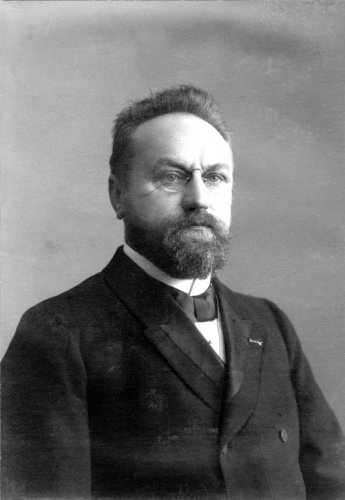
Photo credit: Herman Bavinck (1854-1921); photograph by Atelier Prinses (c. 1911-1914) [public domain / Wikimedia Commons]
John Calvin (1509-1564) famously wrote:
Whence does it happen that Adam’s fall irremediably involved so many peoples, together with their infant offspring, in eternal death unless because it so pleased God? . . . The decree is dreadful indeed, I confess. Yet no one can deny that God foreknew what end man was to have before he created him, and consequently foreknew because he so ordained by his decree . . . God not only foresaw the fall of the first man, and in him the ruin of his descendants, but also mete it out in accordance with his own decision. (Institutes of the Christian Religion, Book III, 23, 7, McNeill / Battles edition, Philadelphia: Westminster Press, 1960, Vol. 2, 955-956)
Calvin’s Articles on Predestination:
Before the first man was created God, by an eternal decree, determined what He willed should come to pass with reference to the whole human race.[WC III. i. iii.]
By this hidden decree of God it was decided that Adam should fall from the perfect state of his nature and should draw all his posterity into the guilt of eternal death.[WC III. i.]
On the same decree hangs the discrimination between the elect and the reprobate: for some He has adopted to Himself to salvation; others He has destined to eternal destruction.[WC III. iii.]
Although the reprobate are vessels of the just vengeance of God, and again the elect are vessels of mercy, nevertheless no other cause of the discrimination is to be sought in God than His mere will, which is the supreme rule of righteousness.[WC III. iii. v. vii.] . . .
***
Dr. Schaff, for example, asserts that “Calvin carried the doctrine of the Divine decrees beyond the Augustinian infralapsarianism, which makes the fall of Adam the object of a permissive or passive decree, to the very verge of supralapsarianism, which traces even the first sin to an efficient or positive decree” (Creeds, i. 453). (W. G. T. Shedd, Calvinism: Pure and Mixed; a Defence of the Westminster Standards, 1893, p. 35)
Herman Bavinck (1854-1921), in his Reformed Dogmatics, Vol. 1 of 4, from a translation by William Hendriksen, agreed with Calvin’s statement in his Institutes above, and stated:
How deeply Calvin felt the gravity and earnestness of what he was saying is apparent from his ‘awful (or terrible) decree.’ With gross injustice this expression has been charged against him. It does not plead against Calvin, but pleads for him. The ‘decree’ regarded as Calvin’s teaching, is not ‘awful’; but awful, indeed, is the reality which is the manifestation of that divine decree; a reality which is revealed by Scripture and by history, remains unchanged whether one chooses to agree with Pelagius or with Augustine, and is not destroyed by any delusion.
Now in the midst of this terrible reality Calvinism does not come forth with a solution, but it offers this comfort: that, in whatsoever happens, it recognizes the will and the governing hand of an omnipotent God. who is at the same time a merciful Father. Calvinism does not offer a solution, but it causes man to rest in him who dwelleth in light unapproachable, whose judgments are unsearchable and whose ways are past tracing out. That was Calvin’s comfort.
Theodore Beza (Calvin’s successor in Geneva; 1519-1605):
When mention is made of the damnation of the Reprobate, although the whole fault thereof be in themselves (Hos. 13.9; John 3.19): yet notwithstanding, sometimes when need requireth, the Scripture to make more manifest by this comparison the great power of God’s patience, and the riches of his glory towards the vessels of mercy (Rom. 9.23), leadeth us unto this high secret, which by order is the first cause of their damnation, of the which secret, no other cause is known to men, but only his just will, which we must with all reverence obey, as coming from him, who is only just, and can not by any means, nor of any man, in any sort be comprehended (Exod. 9.16; Psalm 33.15; Prov. 16.4; Rom. 9.11-13).
Commenting on Romans 9:11-13, Beza continues:
He saith not only that Esau was ordained to be hated before he did any evil (for in so saying he should not seem to exclude any thing but actual sin and incredulity) but saith expressly, before he was born, whereby he excludeth the original sin, & all that which might be considered in the person of Esau by his birth, from the cause of the hate. Therefore anon after, when he sheweth how the Reprobate murmur, and reply, he doth not say, that they speak in this sort: Why doth not God hate others alike, seeing they are also born in the same corruption that we be? The Apostle speaketh no such words, but he saith their reason is in this sort: who can resist his will? For hereof man’s reason gathereth, that they are unjustly condemned. And yet Paul doth not answer, that God would so, because he saw that they would be corrupt, and so consequently that the cause of his decree should be grounded on their corruption (the which answer had been clear and resolute, if it had been true) but forasmuch as he saith plainly, it so pleased God, and it was not in their power to change this his good pleasure, he bridleth man’s wisdom, that it might reverence and wonder at God’s mysteries, as it is most just to do. And also encourageth the Elect to honor the grace of God, which is declared and made famous by such a corruption. In this sort then the other places of the Scripture which conduct and lift us up to behold the sovereign will of God, which is the only rule of justice ought to be expounded. Isa. 54.16; 1 Sam. 2.25; John 6.44-45, 64-65; 10.26; 12.39-40; 1 Pet. 2.8; and in divers other places. (A Brief Declaration of the Table of Predestination, 2nd chapter)
By these things whereof we have now spoken, it may easily appear how God maketh them to go to their own place: (Acts 1.25; Rom. 9.22; Matt. 25.41) whom he created to that end that he might be glorified in their just condemnation. For as Christ the second heavenly Adam, is the foundation and very substance and effect of the Elect’s salvation: so also the first earthly Adam, because he fell, is the first author of the hate, and so consequently of the damnation of the reproved (Rom. 5.18; 1 Cor. 15.21, &c.). For when God, moved with those causes which he only knoweth, had determined to create them to this end, to shew forth in them his just wrath and power (Exod. 9.16; Rom. 9.17, 22), likewise he did orderly dispose the causes and means, whereby it might come to pass that the whole cause of their damnation might be of themselves . . . (Ibid., 5th chapter)
François Turretin (1623-1687):
But we (although willing to confess that the term predestination is according to Scripture usage often restricted to election; yet not only from the proper signification of the word, but also from Scripture usage and received custom) think that it is rightly extended to reprobation so as to embrace both parts of the divine counsel (election and reprobation), in which sense it is taken here by us. . . .
The Scripture uses equivalent phrases when it says that certain persons are appointed to wrath (1 Thess. 5:9; 1 Pet. 2:8), fitted to destruction (Rom. 9:22), ordained to condemnation (Jd. 4), made unto dishonor (Rom. 9:21) and for the day of evil (Prov. 16:4). If reprobation is described in these phrases, why can it not be expressed by the word “predestination”? . . .
The second word which occurs more frequently is prognōsis. Paul speaks of it more than once: “whom he did foreknow” (hous proegnō, Rom. 8:29); “he hath not cast away his people which proegnō” (Rom. 11:2); and they are called elect “according to foreknowledge” (kata prognōsin, 1 Pet. 1:2). Because the ancient and more modem Pelagians falsely abuse this word to establish the foresight of faith and works, we must observe that prognōsin can be taken in two ways: either theoretically or practically. In the former way, it is taken for God’s simple knowledge of future things, which is called prescience and belongs to the intellect. In the latter, it is taken for the practical love and decree which God formed concerning the salvation of particular persons and pertains to the will. In this sense, knowledge is often put for delight and approbation (Ps. 1:6; Jn. 10:14; 2 Tim. 2:19). Thus ginōskein signifies not only to know but also to know and to judge concerning a thing (as the Plebiscitum is not the knowledge of the people, but the sentence—from the verb scisco, which means “to decree and determine”). Therefore when the Scripture uses the word prognōseōs in the doctrine of predestination, it is not in the former sense for the bare foreknowledge of God by which he foresaw the faith or works of men. (1) Because by that, he foreknew those also whom he reprobated, while here it treats of the foreknowledge proper to the effect. (2) Bare foreknowledge is not the cause of things, nor does it impose method or order upon them, but finds it out (as happens here in the chain of salvation). (3) Because nothing could be foreseen by God but what he himself had granted and which would so follow predestination as the effect, not indeed precede it as a cause, as will be proved hereafter. But it is taken in the latter sense for “practical foreknowledge” (i.e., the love and election of God) that we may not suppose it to be without reason (alogon), although the reasons of his wisdom may escape us (in which manner Christ is said to have been foreknown [proegnōsmenos], i.e., foreordained by God “before the foundation of the world,” 1 Pet. 1:20). (Institutes of Elenctic Theology, translated by George Musgrave Giger; edited by James T. Dennison, Jr., Phillipsburg, New Jersey: Presbyterian and Reformed Publishing Company, three volumes, 1992, 1994, 1997; “Predestination”: “Predestination embraces election and reprobation”)
XIX. Rom. 9:11, 12 cannot be reconciled with the foresight of faith or works. (1) It treats of twins who had done nothing good or bad by which they might be distinguished from each other. (2) Election is said expressly to be of him that calleth, not of works. (3) In verses 15 and 16, it is wholly ascribed to the mercy of God alone: “He will have mercy on whom he will have mercy, and it is not of him that willeth, nor of him that runneth, but of God that showeth mercy.” But if God has mercy upon men from foreseen faith, salvation can be said to be of him that willeth and runneth, not only of God that pitieth. (4) If foresight were granted, there would be no place for the objections and scruples proposed by Paul (Rom. 9:14)—as if God were unjust in electing this rather than that one. There is no species of injustice in him who elects those who believe and reprobates unbelievers. . . .
XXI. Although the rejection and election set forth in the person of Esau and Jacob can in some way refer to their posterity secondarily, yet it primarily regards them in order to show the cause of the discrimination between the sons of the flesh and the sons of the promise. What is proposed in Rom. 9:6, 7 is not to be sought in preceding and foreseen good or evil works, but in the eternal purpose of God electing Jacob from grace and reprobating Esau; so that these are not proposed only typically (typice), but also paradigmatically (paradigmatice), just as the previous examples of Israel and Jacob refer to individual persons. (Ibid., “Election is not from foreseen faith”)
[KEY PASSAGE] I. The decree itself, [is] sanctioned from eternity and described as the eternal, unchangeable and most free purpose of God by which he decreed not to pity some certain men lying in exactly equal corruption and guilt with others, but to damn eternally those left in sin (on account of it) in order to demonstrate his glorious justice, liberty and power. . . .
III. What is said of God’s love towards Jacob and hatred towards Esau applies here: “Was not Esau Jacob’s brother? saith the Lord: yet I loved Jacob, and I hated Esau” (Mal. 1:2, 3). This is applied by Paul to election and reprobation (Rom. 9:11–13). Compare also the passages concerning God having mercy and hardening—“He hath mercy on whom he will have mercy, and whom he will he hardeneth” (Rom. 9:18); concerning “the vessels of mercy” which God had prepared unto glory and “the vessels of wrath” which were fitted to destruction (Rom. 9:21, 22); concerning those who were appointed to salvation and others who were appointed unto wrath and disobedience (apeitheian, 1 Thess. 5:9; 1 Pet. 2:8); who are inscribed in the Lamb’s book of life (Rev. 13:8); and others “who were ordained to condemnation” (Jd. 4); concerning the blessed, called by God to the possession of their kingdom, and the cursed whom (as he never knew) he thrusts far away from his face (Mt. 7:23; 25:41). Nor, moreover, is thus endangered either the goodness or the infinite mercy of God, who is so good and merciful that he is also perfectly just. As he demonstrates the former towards the elect, so he justly exercises the latter towards guilty and sinful reprobates.
IV. In order to better understand the nature of reprobation and the state of the proposed question, certain distinctions must be premised. First, before all things, the twofold act of reprobation must be distinguished. Although on the part of God, it is performed by one most simple act, yet according to our inadequate mode of conception (for the readier understanding of the matter), it is usually divided by theologians into two. The former is called negative; the latter, affirmative or positive. The former refers to preterition; the latter to predamnation. Although each in its own sense is positive on the part of God (as denoting an act of the divine will by which he not only does not will to free them, but wills to leave them in their guilt and misery), yet the former is rightly called negative (with respect to the terms which are not to pity and not to give grace) because it consists in the denying of grace. However the other is positive because it affirms something positive (viz., judgment and punishment) concerning them. . . .
VII. Although God by that desertion denies to man that without which sin cannot be avoided, the causality of sin cannot on that account be attributed to him. . . .
VIII. . . . it is evident that reprobation is more extensive than damnation (although sometimes confounded with it by a synecdoche of the whole) because it is not only a decree of damning, but also a decree of not having mercy, of not giving Christ as Mediator, of not calling effectually, etc. . . .
[KEY PASSAGE] XIII. In the meantime, as it is considered absolutely or comparatively, we must answer in different ways regarding it. If considered absolutely, it is rightly ascribed to the natural corruption of man, which makes him justly reprobable. If considered comparatively however, it must be referred solely to the good pleasure of God, electing whom he wills and passing by others according to his most free power. Therefore when it is asked why this or that one was reprobated, the proper answer is that this was done just because, on account of sin, he was worthy of being reprobated. Not that sin is properly the cause of reprobation, otherwise all would have been reprobated who are equally sinners. But because sin is the preceding condition and quality in the object from which the capability of being reprobated arises in man (or the cause sine qua non), for if man were not a sinner he would not be reprobated by God (although every sinner is not forthwith reprobated). But when it is asked why he reprobated this rather than that one (while both were equally sinners and therefore deserving reprobation), here sin cannot be alleged because it is common to both, and common things do not make a difference. No cause can be given but the mere good pleasure of God, i.e., because it so pleased him. Paul has this in mind in the examples of Esau and Jacob (Rom. 9:11), who, although equal mutually, still were distinguished from each other by the love and hatred of God. For there was nothing good in Jacob above Esau, on account of which he should be elected in preference to him; nothing in Esau, on account of which he should be reprobated rather than Jacob. Hence this must be ascribed solely to God’s good pleasure. Further, here the act of God (as autocrat [autokratoros] and supreme Lord) discovers itself. As he is the most free dispenser of his own goods, he can do with his own what he wills —electing this one, passing by that; giving to one grace, denying it to another, without any injustice to either.
[KEY PASSAGE] XIV. The question, therefore, comes back to this—Is God’s eternal decree of reprobation not so much the affirmative as the negative; not so much the absolute as the comparative? Is it independent, not of the consequent means or of the final cause or of the preceding condition or quality, but of the external, immediate cause; and does it depend solely upon the good pleasure (eudokia) of God? Or does it always suppose foreseen sin and unbelief as the meritorious cause of the reprobation of one rather than another? The adversaries affirm the latter; we support the former. . . .
[KEY PASSAGE] XVI. Although holding the object of reprobation no less than of election to be man as a sinner (as was seen above) so that it was not made without the beholding of sin, yet we deny that foreseen sin or unbelief can be accounted the cause why one rather than another is reprobated. We say that no other quality or condition is presupposed in the passed-by than that which is found in the elect and is common to the whole corrupt mass. So that the sole good pleasure (eudokia) of God makes the difference between the elect and reprobate and not any quality, either good or bad, foreseen in them. In this sense, we think the decree of reprobation can properly be called absolute. (Ibid., “FOURTEENTH QUESTION: REPROBATION: Is the decree of reprobation absolute, depending upon the good pleasure (eudokia) of God alone; or is sin its proper cause? We distinguish”)
Charles Hodge (1797-1878):
According to the infralapsarian doctrine, God, with the design to reveal his own glory, that is, the perfections of his own nature, determined to create the world; secondly, to permit the fall of man; thirdly, to elect from the mass of fallen men a multitude whom no man could number as “vessels of mercy;” fourthly, to send his Son for their redemption; and, fifthly, to leave the residue of mankind, as He left the fallen angels, to suffer the just punishment of their sins. . . .
And as God is absolutely sovereign and independent, all his purposes must be determined from within or according to the counsel of his own will. They cannot be supposed to be contingent or suspended on the action of his creatures, or upon anything out of Himself. (Systematic Theology, vol. 2, pp. 319-320)
Louis Berkhof (1873-1957), Systematic Theology (“D. The Parts of Predestination, 2. Reprobation”):
That Calvin was deeply conscious of the seriousness of this doctrine, is perfectly evident from the fact that he speaks of it as a “decretum horribile” (dreadful decree). Nevertheless, he did not feel free to deny what he regarded as an important Scriptural truth. In our day some scholars who claim to be Reformed balk at this doctrine. . . .
According to the most usual representation in Reformed theology the decree of reprobation comprises two elements, namely, preterition or the determination to pass by some men; and condemnation (sometimes called precondemnation ) or the determination to punish those who are passed by for their sins. As such it embodies a twofold purpose: (a) to pass by some in the bestowal of regenerating and saving grace; and (b) to assign them to dishonor and to the wrath of God for their sins. . . .
The positive side of reprobation is so clearly taught in Scripture as the opposite of election that we cannot regard it as something purely negative, Rom. 9:21-22; Jude 4. However, we should notice several points of distinction between the two elements of the decree of reprobation: (a) Preterition is a sovereign act of God, an act of His mere good pleasure, in which the demerits of man do not come into consideration, while precondemnation is a judicial act, visiting sin with punishment.
Benjamin Warfield (1851-1921):
The difficulty which is felt by some in following the apostle’s argument here [in Romans 9], we may suspect, has its roots in part in a shrinking from what appears to them an arbitrary assignment of men to diverse destinies without consideration of their desert. Certainly St. Paul as explicitly affirms the sovereignty of reprobation as of election, – if these twin ideas are, indeed, separable even in thought: if he represents God as sovereignly loving Jacob, he represents Him equally as sovereignly hating Esau; if he declares that He has mercy on whom He will, he equally declares that He hardens whom He will. Doubtless the difficulty often felt here is, in part, an outgrowth of an insufficient realization of St. Paul’s basal conception of the state of men at large as condemned sinners before an angry God. It is with a world of lost sinners that he is representing God as dealing; and out of that world building up a Kingdom of Grace. Were not all men sinners, there might still be an election, as sovereign as now; and there being an election, there would still be as sovereign a rejection: but the rejection would not be a rejection to punishment, to destruction, to eternal death, but to some other destiny consonant to the state in which those passed by should be left. It is not indeed, then, because men are sinners that men are left unelected; election is free, and its obverse of rejection must be equally free: but it is solely because men are sinners that what they are left to is destruction. And it is in this universalism of ruin rather than in a universalism of salvation that St. Paul really roots his theodicy. When all deserve death it is a marvel of pure grace that any receive life; and who shall gain say the right of Him who shows this miraculous mercy, to have mercy on whom He will, and whom He will to harden? (“Predestination,” from A Dictionary of the Bible, ed. by James Hastings, v. 4, pp. 47-63.
Pub. N. Y. 1909, by Charles Scribner’s Sons; p. 2026 in the link)
W. G. T. Shedd (1820-1894):
The object of this work is to define and defend the tenets of Calvinism in their original purity and self-consistence, as distinguished from proposed modifications of them for the purpose of an alleged improvement The controversy has disclosed the fact, that some Presbyterians deny that God may justly pass by any of mankind in the bestowment of saving grace ; and assert that common grace may become saving grace by the sinner’s co-operation, that original sin is not deserving of eternal death and therefore that infants are not liable to it, that the Westminster Standards teach that all the heathen are lost, . . . (Calvinism: Pure and Mixed; a Defence of the Westminster Standards, 1893, Preface, p. 3)
[KEY PASSAGE] According to [the Westminster] Confession iii. 6, both the elect and non-elect are ” fallen In Adam,” and are thereby in a common guilty state of sin. The former are delivered out of sin by regenerating grace, and the latter are left in sin. Why are the latter left in sin ? Because “God so pleased,” is the reason given by the Confession. “On account of their sins,” is the reason which the reviser would insert into the Confession. But this, surely, cannot be the reason why God leaves a sinner in his sin. I see two suicides who have flung themselves into the water. I rescue one of them, and the other I let drown. They are both alike in the water, and by their own free agency. But his being in the water, is not the reason why I do not rescue the one whom I let drown. I have some other reason. It may be a good one or a bad one. But whatever it be, it certainly is not because the man is in the water. Similarly God does not leave a sinner in his own voluntary and loved sin because he is in sin. He has some other reason why he makes this discrimination between two persons, both of whom are in sin, neither of whom has any claim upon his mercy, and neither of whom is more deserving of election and regeneration than the other. God’s reason, in this case, we know must be a good one. But it is a secret with himself. The only answer to the inquiry, “Why didst thou elect and regenerate Saul of Tarsus, and didst not elect and regenerate Judas Iscariot?” is, “Because it seemed good in my sight.” . . . The non-elect sinner has experienced the operation of common grace. It is an error to say that God shows no kind or degree of mercy to the non-elect. But he has resisted and defeated it. God decides to proceed no further with him by the bestowment of that special grace which regenerates, and ” makes willing in the day of God’s power.” The elect sinner has also experienced, resisted, and defeated common grace. God decides to proceed further with him, by effectual calling and regeneration. The particular question, therefore, in this paragraph of the Confession is, ” Why does God leave a sinner to his own wilful free agency?” and not, “Why does God punish him for it?” The answer to the first question is, “Because of his sovereign good pleasure.” The answer to the second is, “Because of the ill-desert of sin.” (Ibid., pp. 19-20)
[KEY PASSAGE] Sinners are punished “for their sin’,” but sin is not the reason why God does not regenerate them. If sin were the reason for non-election, holiness, logically, would be the reason for election. If some men are not regenerated because they are unbelieving, others would be regenerated because they are believing. . . . this is the reason why the Westminster Assembly did not qualify the words, “pass by,” by the proposed clause, “for their sins,” but left “passing by,” or “foreordination to everlasting death,” to be a purely sovereign act according to “the good pleasure” of God. (Ibid., pp. 20-21)
The supralapsarian asserts that in the logical order of nature (not of time, for all the decrees are eternal), the decree to elect and reprobate certain men is before (supra) the decree to create them ; the infralapsarian, that it is after (infra). The former contends that God begins by electing some men and reprobating others, and in order to execute these two decrees creates man and permits (not efficiently causes) the fall. The infralapsarian contends that God begins by creating man and permitting (not causing) the fall, and then out of this fallen and guilty race elects some to life, and leaves others to their voluntary sin and its just penalty. The supralapsarian order is liable to the charge that ” God creates some men in order to damn them,” because creation follows from reprobation. The infralapsarian order is not’ liable to this charge, because creation does not follow from reprobation, but precedes it. The Westminster Assembly, in common with the Calvinistic creeds previously made, adopted the infralapsarian order, . . . (Ibid., pp. 36-37)
The Dort Canons, I. vi., enunciate Paul’s doctrine in the following statement: “That some receive the gift of faith from God, and others do not receive it, proceeds from God’s eternal decree. According to which decree, he graciously softens the hearts of the elect, however obstinate, and inclines them to believe; while he leaves the non-elect in his just judgment to their own wickedness and obduracy.” (Ibid., p. 41)
What is preterition? It is God’s passing by a sinner in the bestowment of regenerating, not of common grace. All men are blessed with common grace. There is no election or reprobation in this reference. God’s mercy in this form and degree of it is universal and indiscriminate. But common grace fails to save the sinner, because of his love of sin, his aversion to holiness, and his unbelief. The martyr Stephen’s words are applicable to every man in respect to common grace: “Ye stiff-necked, ye do always resist the Holy Ghost” (Acts 7:51). Consequently, in order to save any sinner whatsoever requires a still higher grade of grace which, in the phrase of the Larger Catechism (07), “powerfully determines” his will by regenerating it. Here is where the Divine discrimination comes in. It is with reference to this kind and degree of grace that God says: “I will have mercy on whom I will have mercy” (Ex. 33:19 ; Rom. 9:15). (Ibid.,. pp. 43-44)
God himself has decided the question. lie asserts his sovereign right to optional decision in the matter of human salvation. In that wonderful description of his being and attributes which he gave to Moses, among other declarations he says, ” I will be gracious to whom I will be gracious, and will shew mercy to whom I will shew mercy” (Ex. 33 : 19). . . . he distinctly declares that he is under no obligation to redeem sinful men, but that whatever he does in the premises is of his own unobliged, free, and sovereign mercy and decision. (Ibid., p. 76)
The Calvinistic reformers and the Calvinistic creeds asserted the twofold predestination. The Westminster Confession declares it plainly. It is explicitly taught in Scripture. In Rom 8:29, it is said that [I insert RSV] “whom he foreknew he also predestined to be conformed to the image of his Son.” This is predestination to holiness. In Acts 4:27-28 it is said that [RSV] “for truly in this city there were gathered together against thy holy servant Jesus, whom thou didst anoint, both Herod and Pontius Pilate, with the Gentiles and the peoples of Israel, to do whatever thy hand and thy plan had predestined to take place.” This is predestination to sin. Compare also Acts 2:23; Luke 22:22; Jude 4. . . . (Ibid., p. 88)
Election stops the continuation of sin; preterition permits the continuance of it. The non-elect man, then, like the elect, being already in the state of sin and guilt by the free fall in Adam, nothing is requisite in order to make it certain that he will for ever remain in this state but the purpose of God not to restrain and change the action of his free will and self-will in sin by regenerating it. To denominate such merely permissive action as this, compulsion, is absurd. And yet this permissive action of God secures the certainty of everlasting sin and death in the case of the non-elect, just as infallibly as the efficient action of God secures the certainty of everlasting holiness and life in the case of the elect. But in the former instance the certainty is secured wholly by the action of the sinner himself, while in the latter instance it is secured by the action of the Holy Spirit within the sinner. This leaving of the sinful will to its own movement makes endless sin an infallible certainty. For the sinner himself will and can never regenerate himself; and if God has in his sovereignty decided and purposed not to regenerate him, his willing and endless continuance in sin and death is certain. Every Christian knows that if, in his unregeneracy, he had been left wholly to his own free will, without any restraint from God, he would infallibly have gone from bad to worse for ever and ever. (Ibid., p. 93)
[Referring in this paragraph to the opposing Arminian / Catholic view] This view of grace is synergistic. Every man that hears the gospel receives a degree of grace that is sufficient for generating faith and repentance, provided he yields to it. If, therefore, he does not believe and repent, it, must be because of the absence of some human efficiency to cooperate with the Divine; and therefore the difference between the saved and the lost, the elect and the non-elect, is partly referable to the human will, and not wholly to the Divine decree. So far as the Divine influence is concerned, the saved and the lost stand upon the same common position and receive the same common form and degree of grace, which is sufficient to save provided it be rightly used and assisted by the sinner. The saved man makes the common grace effectual by an act of his own will, namely, yielding and ceasing resistance ; while the lost man nullifies it by an act of his own will, namely, persisting in enmity and opposition.
According to the monergistic or Calvinistic view of grace, on the contrary, no man receives a grace that is ” sufficient for generating faith ” who does not receive such a measure of Divine influence as overcomes his hostile will ; so that he does not stop his own resistance but is stopped by the mercy and power of God ; so that his faith and repentance are not the result in part of his own efficiency, but solely of the Holy Spirit’s irresistible and sovereign energy in regeneration. In a word, the dependence upon Divine grace in the Calvinistic system is total ; in the Arminian is partial. In the former, common grace cannot be made saving grace by the sinner’s co-action ; in the latter it can be. (Ibid., pp. 102-103)
Common grace is connected with God’s legislative will, or will of desire; special grace with his decretive will, or will of purpose. . . . These two modes of the Divine will are presented by St. Paul and St. Peter in two passages that are often misapprehended. The texts, “God our Saviour will have all men to be saved, and to come to the knowledge of the truth” (1 Tim. 2:3, 4), and “The Lord is long-suffering to us-ward, not willing that any should perish, but that all should come to repentance” (2 Pet. 3:9), are often quoted as if they were identical in their teaching, and as if both refer to common grace. An examination will show that the first text is universal in its meaning, and refers to the general offer of the gospel; but the last is particular, and relates to the effectual call and actual salvation of the elect alone. . . . The former denotes the will of desire, the latter the will of purpose . . .
In 1 Tim. 2:4, St. Paul declares that God “desires all men to be saved,” but not that he purposes that they all shall be. In 2 Pet. 3:9, St. Peter declares that God “does not purpose that some [of us] should perish, but that all [of us] should go on to repentance” (complete sanctification). . . . All men are the object of the Divine desire ; some are the object of the Divine decree. (Ibid., pp. 103-105)
R. C. Sproul (1939-2017):
We are left with the thorny question of God predestinating the reprobate. If God in any sense predestines or foreordains reprobation, doesn’t this make the rejection of Christ by the reprobate absolutely certain and inevitable? . . . We must answer . . . in the affirmative, . . . (“Double Predestination”)
Wayne Grudem (1948- ):
Another objection is that election is unfair. After all, why would God create some people that he knew would be eternally condemned in the end? Peter addresses this question in one way. God did not save any of the fallen angels (2 Peter 2:4). So why is he obligated to save any humans? Simply put, he’s not. Paul further illuminates the answer by saying God has every right to do with his creation as he wants. Because he is God.
But who are you, O man, to answer back to God? Will what is molded say to its molder, “Why have you made me like this?” Has the potter no right over the clay, to make out of the same lump one vessel for honorable use and another for dishonorable use? What if God, desiring to show his wrath and to make known his power, has endured with much patience vessels of wrath prepared for destruction, in order to make known the riches of his glory for vessels of mercy, which he has prepared beforehand for glory— (Romans 9:20-23)
The doctrine of reprobation is the corollary negative aspect of election. Reprobation “is the sovereign decision of God before creation to pass over some persons, in sorrow deciding not to save them, and to punish them for their sins, and thereby to manifest his justice.” There are several passages that teach reprobation:
- “For certain people have crept in unnoticed who long ago were designated for this condemnation, ungodly people, who pervert the grace of our God into sensuality and deny our only Master and Lord, Jesus Christ” (Jude 1:4).
- “What then? Israel failed to obtain what it was seeking. The elect obtained it, but the rest were hardened” (Romans 11:7).
- “They stumble because they disobey the word, as they were destined to do” (1 Peter 2:8).
Reprobation, sometimes referred to the second part of “double predestination,” can be an emotionally difficult doctrine to accept. Eternal separation from God in hell is a horrendous destiny for anyone. The fact that God would pass over anyone for salvation is hard, especially if we know these unbelievers well. But we must remember people chose to rebel against their creator and failed to respond in faith to God’s offer of salvation. Human responsibility is always present when unbelievers reject the gospel. (from Systematic Theology: An Introduction to Biblical Doctrine, originally 1994, 2nd edition, Zondervan Academic, 2020; ch. 32: “Election and Reprobation”; from linked excerpts)
Joel Beeke (1952- )
- How could a good and loving God choose to damn some people?
It is certainly true that God is love (1 John 4:8). He is good to all people (Luke 6:35). But God is free to exercise his love as he chooses (Ex. 33:19). He did not choose to give eternal life to all sinners. Rather, he chose to save some sinners but to give others the punishment that their sins deserve.
God is the source of all good (James 1:17). Likewise, suffering comes as God’s punishment of sin (Rom. 5:12; 6:23). Thus, God damns sinners not because of any malice in him, but because of his justice against sin. Even in his wrath, God remains good. It is sinners who are evil. The Lord says, “O Israel, thou hast destroyed thyself; but in me is thine help” (Hos. 13:9). . . .
- If God chose whom he saves, how can he blame man for his sin?
Paul again expects an objection: “Why doth he yet find fault? For who hath resisted his will?” (Rom. 9:19). Paul’s answer is breathtaking, for he makes no attempt to explain God’s ways. Instead, the apostle says, “Who are you, O man, to answer back to God?” (Rom. 9:20 ESV). The greatness of God demands that we be silent in such matters.
Paul compares God to a potter who has the right to make different vessels out of the same clay (Rom. 9:21). Some people are “vessels of wrath fitted to destruction” for God “to shew his wrath, and to make his power known” (Rom. 9:22). Others are “vessels of mercy, which he had afore prepared unto glory” so he could “make known the riches of his glory” (Rom. 9:23). God has the right to choose because he is God. He also has the right to judge because he is God. Ultimately, it boils down to this: God is God. Predestination brings us to face the absolute and incomprehensible glory of God, and we must worship him (Rom. 9:33–36). (“Questions About Predestination,” 11-3-25, with Paul M. Smalley; adapted from Essentials of Reformed Systematic Theology)
Michael Horton (1964- )
Calvin warned, “The curiosity of man is such that the more dangerous the subject, the more willing he is to rush boldly into it…Let this, therefore, be our sacred rule, not to seek to know anything about predestination except what the Scripture teaches us. Where the Lord closes his holy mouth, let us also stop our minds from going on further.” [Commentary on Romans 9] Paul does not reply with a sophisticated line of metaphysical reasoning. He simply says, “Who are you, a mere human, to answer back to God?” In other words, to demand that God defend himself in our presence on this matter is the height of arrogance. Is there any reverence for God anymore? Is the Sovereign God allowed no secrets, no privacy in his heavenly chambers? Must every corner of his rooms be ravaged by our naive and fallen speculations? No, here, to switch metaphors, we come to the end of the precipice and to take a single step farther is to fall hopelessly into despair and confusion.
Next, Paul appeals to another Old Testament allusion: the potter and the clay. In Isaiah 29:15-16, the prophet declares, “Surely you have things turned around! Shall the potter be esteemed as the clay; for shall the thing made say of him who made it, ‘He did not make me’?” But Paul changes the last question to read, “Why did you make me thus?” Out of the same lump (i.e., the same mass of fallen humanity), God chooses to make vessels of wrath and vessels of mercy, one to bring him glory by demonstrating his justice, the other to glorify him for his compassion and mercy. There is no distinction, as all are taken from the same group. Therefore, the elect cannot be proud.
Notice that this will of God is not capricious or arbitrary, a view that many Arminians suppose and hyper-Calvinists encourage. This, it must be said, is a view of God that has more in common with Greek philosophy than with Christianity. It is fatalistic and hopelessly at odds with the biblical picture. Rather, God’s will is connected to his nature and attributes. In this sense, as Jonathan Edwards pointed out, no being (including God) has a free will. The will serves the nature and God is moved to elect, redeem, justify, and save not because of an arbitrary decision or whimsical display of power, but in order to show mercy and compassion. Remember, these are “vessels of mercy.” He “will have mercy on whomever he will have mercy.” In other words, God is presented in this passage as electing men, women, and children out of an already condemned and ruined race. Their condemnation is just, so God is not responsible for the resistance, disobedience, and hatred of those who are rejected, but only for the salvation of those who do embrace the forgiving grace of God. (“Who Saves Whom?”, Modern Reformation, Vol. 1, No. 3, 5-1-92)
The Catholic (and Broadly Protestant Arminian) View of Reprobation
The Catholic Church, following St. Augustine (e.g., Grace and Free Will, 1, 1; Sermon 169, 11, 13), accepts predestination of the elect to heaven, but also affirms the freedom of the human will, thus staking out a position distinct from Calvinism. Predestination to hell, in Catholicism, always involves man’s free will, and foreseen sins, so that man is ultimately responsible for his own damnation, not God (double predestination is rejected).
The following material (excepting my bracketed interjections) is from Catholic theologian Ludwig Ott’s Fundamentals of Catholic Dogma (originally, 1952, new edition fully revised and updated by Robert Fastiggi, Baronius Press, 2018, based on the revised German edition from 2010):
Despite the Fall and Original Sin, God truly and earnestly desires the salvation of all men. [Sent. fidei proxima.]
That God desires the salvation, not only of the predestined, but at least of all the faithful, is formally defined. . . .
Jesus shows in his lament for Jerusalem that He desires the salvation of those also, who sin (Matt. 23:37; Luke 19:41.). It is evident from John 3:16 that God desires the salvation of all the faithful, at east, for He gave His Son, “that whoever believes in Him may not perish.” In 1 Tim. 2:4, we read that the divine will for salvation embraces all men without exception: “He (God) wishes all men to be saved and to come to the knowledge of the truth.” (pp. 257-258)
God gives all the faithful who are sinners sufficient grace (gratia saltem remote sufficiens) for conversion. [Sent. communis.] . . .
God gives all blameless unbelievers (infideles negativi) sufficient grace to achieve eternal salvation. [Sent. certa.] (p. 259)
13. The Mystery of Reprobation
- Concept and Reality of Reprobation
With regard to the reason for reprobation, a distinction is made between conditioned and unconditioned (absolute) reprobation, in so far as the divine resolve of reprobation is dependent on, or independent of the prevision of future demerits.
God, by an Eternal Resolve of His Will, predestines certain men, on account of their foreseen sins, to eternal rejection. [De fide.] (p. 263)
The reality of Reprobation is not formally defined, but it is the universal teaching of the Church. . . .
2. Positive Reprobation
a) Heretical Predestinationism in its various forms (the Southern Gallic priest Lucidus in the 5th century; . . . Wycliffe, Hus, and especially Calvin), teaches a positive predetermination to sin, and an unconditional predestination to the eternal punishment of hell, that is, without consideration of future demerits. This was rejected as false doctrine by the Particular Synods of Orange (DH 397), Quiercy and Valence (DH 621, 628-29) and by the Council of Trent (DH 1567). Unconditioned positive reprobation leads to a denial of the universality of God’s salvific will and Redemption, and it contradicts the Justice and Holiness of God as well as the freedom of man.
b) According to the teaching of the Church, there is a conditional positive reprobation, that is, it occurs with consideration of foreseen future demerits (post et propter praevisa demerita). The conditional nature of positive reprobation is demanded by the universality of the divine salvific will. This excludes God’s desiring in advance the damnation of certain men (cf. 1 Tim. 2:4; Ez. 33:11; 2 Pet. 3:9). (p. 264)
Related Reading
[Follow-up Article] Unconditional Reprobation: Calvinist Biblical Prooftexts [1-26-26]
Romans 9: Unanswerable Calvinist Prooftext? [12-28-26]
Reply to a Calvinist Defender of Total Depravity [1-23-26]
Predestination & the Ingenious “Solution” of Fr. Most [4-22-06]
*
***
*
Practical Matters: I run the most comprehensive “one-stop” Catholic apologetics site: rated #1 for Christian sites by leading AI tool, ChatGPT — endorsed by popular Protestant blogger Adrian Warnock. Perhaps some of my 5,000+ free online articles or fifty-six books have helped you (by God’s grace) to decide to become a Catholic or to return to the Catholic Church, or better understand some doctrines and why Catholics believe them. If you believe my full-time apostolate is worth supporting, please seriously consider a much-needed monthly or one-time financial contribution. “The laborer is worthy of his wages” (1 Tim 5:18, NKJV).
*
PayPal donations are the easiest: just send to my email address: [email protected]. Here’s also a second page to get to PayPal. You’ll see the term “Catholic Used Book Service”, which is my old side-business. To learn about the different methods of contributing (including Zelle and 100% tax-deductible donations if desired), see my page: About Catholic Apologist Dave Armstrong / Donation Information.
*
You can support my work a great deal in non-financial ways, if you prefer; by subscribing to, commenting on, liking, and sharing videos from my two YouTube channels, Catholic Bible Highlights and Lux Veritatis, in partnership with Kenny Burchard (see my own videos), and/or by signing up to receive notice for new articles on this blog. Just type your email address on the sidebar to the right (scroll down quite a bit), where you see, “Sign Me Up!” Thanks a million!
*
***
*
Photo credit: Herman Bavinck (1854-1921); photograph by Atelier Prinses (c. 1911-1914) [public domain / Wikimedia Commons]

Summary: I survey the thoughts of twelve renowned Calvinist theologians with regard to the nature of unconditional reprobation. This is not “hyper-Calvinism” but orthodox Calvinism.
Calvinism & General Protestantism
Previous Post

January 23, 2026
Hellbound Because God Willed It? (vs. Allie Beth Stuckey)
Next Post

January 26, 2026 Unconditional Reprobation: Calvinist Biblical Prooftexts
Recent Comments
"Special pleading, and not a serious response to my arguments . . ."
Is Venerating Men & Angels Worship? ..."
""no man needs to teach us."Didn't you just teach us?"
Is Venerating Men & Angels Worship? ..."
""Catholics say they are the only church that can lead people into heaven."In fact, we ..."
Is Venerating Men & Angels Worship? ..."
"And lastly, I belong to no denomination and am free to serve God as He ..."
Is Venerating Men & Angels Worship? ..."
Browse Our Archives
Select a Category & Last Things About Me Anti-Catholicism Atheism & Agnosticism Baptism and Sacramentalism Bible and Tradition Blessed Virgin Mary Books by Dave Armstrong C. S. Lewis Calvinism & General Protestantism Catholic Apologetics Catholic Apologists Catholic conversion Catholic converts Christmas Church (Ecclesiology) Church History Conversion and Converts Development of Doctrine Eastern Orthodoxy Ecumenism & Christian Unity Eucharist & Liturgy Fathers of the Church French Translations G. K. Chesterton Hell Hell & Satan Hell & Satan & Last Things Heresies & Comparative Religion Holistic Health Inquisition & Crusades & Scandals James White Jews & Judaism & Old Testament John Calvin John Henry Newman Liberal / Modernist Theology Life Issues Literary Resume Lutheranism Mariology Martin Luther Music Orthodoxy Papacy & Infallibility Personal Page Philosophy & Science Political & Ethical & Moral Issues Protestant Persecution & Intolerance Protestantism Purgatory Purgatory & Penance Romantic & Imaginative Theology Saints & Purgatory & Penance Salvation Salvation & Justification Satan & Last Things Sexuality and Gender Issues Spanish Translations Traditionalism vs. Radical Catholic Reactionaries Traducciones al español / tradução para português Trinitarianism & Christology Uncategorized Videos
Select a Month October 2026 September 2026 August 2026 July 2026 June 2026 May 2026 April 2026 March 2026 February 2026 January 2026 December 2025 November 2025 October 2025 September 2025 August 2025 July 2025 June 2025 May 2025 April 2025 March 2025 February 2025 January 2025 December 2024 November 2024 October 2024 September 2024 August 2024 July 2024 June 2024 May 2024 April 2024 March 2024 February 2024 January 2024 December 2023 November 2023 October 2023 September 2023 August 2023 July 2023 June 2023 May 2023 April 2023 March 2023 February 2023 January 2023 December 2022 November 2022 October 2022 September 2022 August 2022 July 2022 June 2022 May 2022 April 2022 March 2022 February 2022 January 2022 December 2021 November 2021 October 2021 September 2021 August 2021 July 2021 June 2021 May 2021 April 2021 March 2021 February 2021 January 2021 December 2020 November 2020 October 2020 September 2020 August 2020 July 2020 June 2020 May 2020 April 2020 March 2020 February 2020 January 2020 December 2019 November 2019 October 2019 September 2019 August 2019 July 2019 June 2019 May 2019 April 2019 March 2019 February 2019 January 2019 December 2018 November 2018 October 2018 September 2018 August 2018 July 2018 June 2018 May 2018 April 2018 March 2018 February 2018 January 2018 December 2017 November 2017 October 2017 September 2017 August 2017 July 2017 June 2017 May 2017 April 2017 March 2017 February 2017 January 2017 December 2016 November 2016 October 2016 September 2016 August 2016 July 2016 June 2016 May 2016 April 2016 March 2016 February 2016 January 2016 December 2015 November 2015 October 2015 September 2015 August 2015 July 2015 June 2015 May 2015 April 2015 March 2015 February 2015 January 2015 December 2014 November 2014 October 2014 September 2014 August 2014 July 2014 June 2014 April 2014 March 2014 February 2014 January 2014 December 2013 November 2013 October 2013 September 2013 August 2013 July 2013 June 2013 April 2013 March 2013 February 2013 January 2013 December 2012 November 2012 October 2012 September 2012 August 2012 July 2012 June 2012 May 2012 April 2012 March 2012 February 2012 January 2012 December 2011 November 2011 October 2011 September 2011 August 2011 July 2011 June 2011 April 2011 March 2011 February 2011 October 2010 September 2010 August 2010 July 2010 April 2010 March 2010 December 2009 October 2009 August 2009 July 2009 June 2009 May 2009 March 2009 February 2009 October 2008 September 2008 April 2008 March 2008 February 2008 January 2008 December 2007 November 2007 October 2007 May 2007 March 2007 February 2007 January 2007 November 2006 October 2006 September 2006 August 2006 July 2006 June 2006 May 2006 April 2006 March 2006 February 2006 October 2005 June 2005 April 2005 February 2005 July 2004 May 2004 April 2004
Follow Us!
TAKE THE
Religious Wisdom Quiz
I made a rash vow that cost me my only child after a military victory. Who am I?
Select your answer to see how you score.
Jephthah Samson Gideon Barak
Books by This Author Books by Dave Armstrong
Related posts from Biblical Evidence for Catholicism

On Protestant Explanations of Catholic Conversion
Biblical Evidence for Catholicism

No Hell? Dialogue on Conditional Immortality, Pt. 3
Biblical Evidence for Catholicism
No Hell? Dialogue on Conditional Immortality, Pt. 2
Biblical Evidence for Catholicism
No Hell? Dialogue on Conditional Immortality
Biblical Evidence for Catholicism
TRENDING AT PATHEOS Catholic

The Sermon on the Mount, Part I: Matthew...
The Sermon on the Mount, Part I (Matthew 4:12-5:12) St. Matthew moves...

What's up from Crossway: Reviewing some of their latest A few weeks...

Janie Learns the Way of the Cross: A...
Teaching children about Jesus' Passion can be challenging. Many parents and educators...

Looking For Good Catholic Writing - October 2026
He alone extends the heavens, and he walks upon the waves of...

In "Irreplaceable," our book on vocation and technology, Trevor Sutton and I...

I was strolling through the top floor of the brand new Parthenon...
view all Catholic blogs
What Are Your Thoughts?leave a comment
Ad-Free & Subscriber Log-In Subscription Support
- About Us
- 2026 Calendar
- Videos
- Podcasts
- Library of World Religions
- Faith In Media Tracker
- Advertise With Us
- Write for Us
- Privacy Policy
- Terms of Service
- Do Not Sell My Data
- Contact Us
- Radiant Digital
- Manage Newsletter Subscriptions
- Unsubscribe From Notifications
- Sitemap
Copyright 2008-2026, Patheos. All rights reserved.
Subscription Support Ad-Free & Subscriber Log-In
Follow Patheos