
BuddhistCatholicContemplativeEvangelicalGeneral ChristianHinduJewishLatter-day SaintMuslimNew VisionsProgressive Christian
Beliefs
- Buddhist
- Catholic
- Contemplative
- Evangelical
- General Christian
- Hindu
- Jewish
- Latter-day Saint
- More Voices
- Muslim
- New Visions
- Pagan
- Progressive Christian
Topics
- Religion News
- Food and Religion
- Sports and Religion
- Religious Art
- Religious Music and Entertainment
- Religious Events
- History and Religion
- Style and Religion
- Politics and Religion
- Women in Religion
- Recreation Outdoors and Religion
- Business Finance and Religion
- Careers Workplace and Religion
- Education and Religion
- Family Parenting and Religion
- Health Fitness and Religion
- Home and Religion
- Relationships and Religion
- Technology and Religion
- Travel and Religion
Columnists
- Buddhist Columnists
- Business Finance and Religion Columnists
- Careers Workplace and Religion Columnists
- Catholic Columnists
- Contemplative Columnists
- Education and Religion Columnists
- Evangelists Columnists
- Family Parenting and Religion Columnists
- General Christian Columnists
- Health Fitness and Religion Columnists
- Hindu Columnists
- History and Religion Columnists
- Home and Religion Columnists
- Jewish Columnists
- More Voices Columnists
- Latter Day Columnists
- Muslim Columnists
- New Visions Columnists
- Nonreligious Columnists
- Pagan Columnists
- Politics and Religion Columnists
- Progressive Columnists
- Recreation Outdoors and Religion Columnists
- Relationships and Religion Columnists
- Religion News Columnists
- Religious Art Columnists
- Religious Events Columnists
- Religious Music and Entertainment Columnists
- Sports and Religion Columnists
- Style and Religion Columnists
- Technology and Religion Columnists
- Travel and Religion Columnists
- Women in Religion Columnists
Resource Library
- 2026 Calendar
- Library of World Religions
- The 100 Most Holy Places on Earth
- Patheos Answers
- Podcasts
- Videos
- Faith Leaders Database
- Anglican Episcopalian
- Bahai
- Baptist
- Buddhism
- Christianity
- Confucianism
- Eastern Orthodoxy
- Hinduism
- Holiness and Pentecostal
- ISKCON
- Islam
- Judaism
- Lutheran
- Methodist
- The Church of Jesus Christ of Latter-day Saints
- New Age
- Paganism
- Presbytarian and Reformed
- Protestantism
- Religion Behind the Scenes
- Roman Catholic
- Scientology
- Shia Islam
- Sikhism
- Sufism
- Sunni Islam
- Taoism
- Zen
- See all religions
Research Tools
 Ad-Free & Subscriber Log-In Subscription Support
Ad-Free & Subscriber Log-In Subscription Support
Follow Patheos 

- Trending:
- Forgiveness
- |
- Marriage
- |
- Consciousness
- |
- Death Penalty
- |
- Election
- |
- Halloween

-
About
-
Catholic Apologetics
-
Church History
-
Great Apologists
-
Christian Worldview
-
Protestantism & Misc.
- Home
- Catholic
- History and Religion
- Mary Mediatrix & Theological Grades of Certainty
Mary Mediatrix & Theological Grades of Certainty
Last updated on: June 6, 2026 at 12:05 am by Dave Armstrong
Mary Mediatrix & Theological Grades of Certainty 2026-06-06T00:05:36-04:00 Dave Armstrong
Patheos Explore the world's faith through different perspectives on religion and spirituality! Patheos has the views of the prevalent religions and spiritualities of the world.
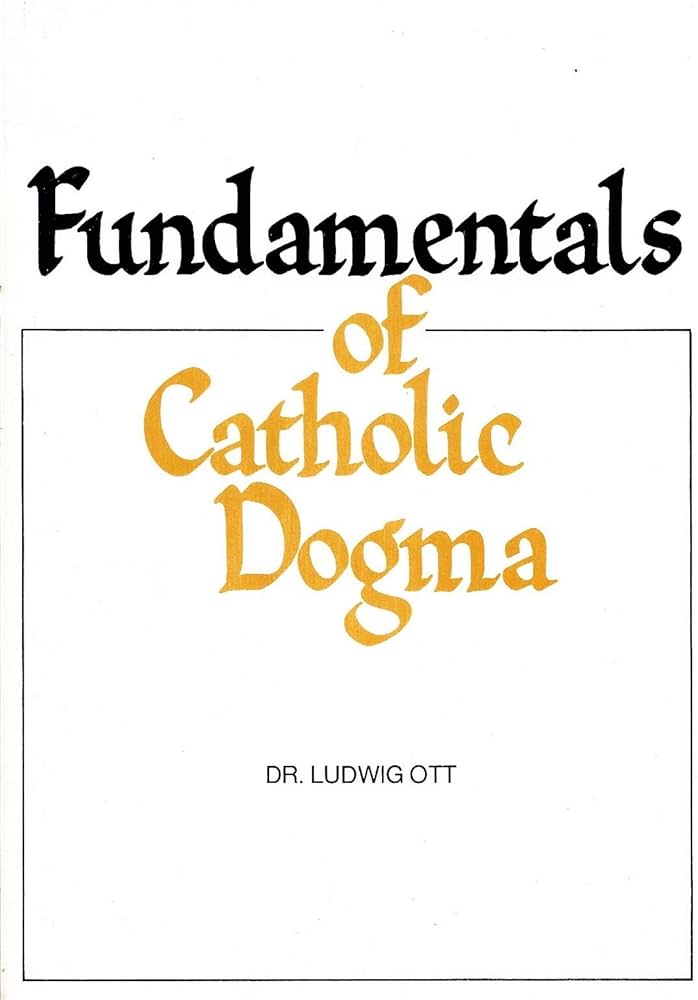
Photo credit: cover of the 1974 reprint of Dr. Ludwig Ott’s book, Fundamentals of Catholic Dogma, by TAN Publishers [Amazon page]
Fr. Ludwig Ott wrote a well-known book called Fundamentals of Catholic Dogma, in 1952 in German (English translation, 1955; available online for free). Dr. Ott revised the book in 1969 (8th edition). This was “fully revised and updated” in 2018 by my good friend, Dr. Robert Fastiggi, professor of systematic theology at Sacred Heart Major Seminary in Detroit, and dedicated Mariologist (member of the Mariological Society of America, the International Marian Association, and an ordinary member of the Pontifical Marian Academy International). He was also co-editor of the English translation of the 43rd edition of the Denzinger-Hünermann compendium (Enchiridion symbolorum) published by Ignatius Press in 2012.
Dr. Fastiggi is thus eminently qualified to provide solid, orthodox commentary on both Catholic Marian doctrines and the dogmatic status of individual beliefs regarding the Blessed Virgin Mary. The latter is vastly misunderstood by Protestant apologists and also not a few Catholics. I hope to help rectify that in this article. It’s always an uphill battle, but we can only try . . .
*****
First I will cite Dr. Ott’s introductory section, “The Theological Grades of Certainty” which appears on pp. 10-11 in the 2018 version of his book. I found it from the 1955 edition online (to save myself a ton of typing), but I will add a few key terms in brackets, indicating the different — and likely, more precisely translated — wording in the 2018 edition, remove some capitalization, and change some bolding to italics (per the new edition):
The highest degree of certainty appertains to the immediately revealed truths. The belief due to them is based on the authority of God [who reveals] (fides divina), and if the Church, through its teaching, vouches for the fact that a truth is contained in revelation, one’s certainty is then also based on the authority of the infallible [Magisterium] of the Church (fides catholica). If truths are defined by a solemn judgment of faith (definition) of the Pope or of a General Council, they are “de fide definita.”
Catholic truths or Church doctrines, on which the infallible [Magisterium] of the Church has finally decided, are to be accepted with a faith which is based on the sole authority of the Church (fides ecclesiastica). These truths are as infallibly certain as dogmas [in the strict sense].
A teaching proximate to faith (sententia fidei proxima) is a doctrine which is [generally] regarded by theologians as a truth of revelation, but [one] which has not yet been finally promulgated as such by the Church.
A teaching pertaining to the Faith, [or a] theologically certain [teaching] (sententia ad fidem pertinens [or] theologice certa) is a doctrine on which the [Magisterium] of the Church has not yet finally pronounced, but whose truth is guaranteed by its intrinsic connection with the doctrine of revelation (theological conclusions).
Common teaching (sententia communis) is [a] doctrine which in itself belongs to the field of [the] free opinions, but which is [generally] accepted by theologians.
Theological opinions of lesser grades of certainty are called probable, more probable, well-founded (sententia probabilis, probabilior, bene fundata). Those which are regarded as being in agreement with the consciousness of [the] faith of the Church are called pious opinions (sententia pia). The least degree of certainty is possessed by the tolerated opinion (opinio tolerata), which is only weakly founded, but which is tolerated by the Church.
With regard to the doctrinal teaching of the Church it must be well noted that not all the assertions of the [Magisterium] of the Church on questions of faith and morals are infallible and consequently irrevocable. Only those [assertions] are infallible which emanate from General Councils representing the whole Episcopate, and the Papal Decisions ex cathedra (cf. [DH 3073-75]). The ordinary and usual form of Papal teaching activity is not infallible. Further[more], the decisions of the Roman Congregations ([Congregation for the Doctrine of the Faith, Pontifical] Bible Commission) are not infallible.
Nevertheless they are [normally] to be accepted with an inner assent which is based on the high supernatural authority of the Holy See (assensus religiosus). The so-called “silentium obsequiosum,” i.e. reverent silence, does not generally suffice. By way of exception, the obligation of inner agreement may cease if a competent expert, after a renewed scientific investigation of all grounds, arrives at the positive conviction that the decision rests on an error. [(Cf. DH 2880, 3408, 3503).]
Note: what Dr. Fastiggi translated as “Congregation for the Doctrine of the Faith” — founded in 1542 to safeguard Catholic doctrine and promote faith and morals (also often known as “the Holy Office”) –, has been, since 2022, called the Dicastery for the Doctrine of the Faith, and this is what produced the recent document, Mater Populi Fidelis. I want to stress that, while Dr. Ott clarifies that documents like Mater Populi Fidelis “are not infallible” he also affirms at the same time that “they are [normally] to be accepted with an inner assent which is based on the high supernatural authority of the Holy See.”
This is why I publicly object — as a professional Catholic apologist — to all of the vociferous dissenting opinions on Mater Populi Fidelis; they violate this obligation on the part of the faithful to accept such pronouncements with not only outward assent (which is itself massively violated), but even inner assent. This reminds me of Solomon’s old maxim, “Even in your thought, do not curse the king . . .” (Ecc 10:29, RSV).
The doctrine of Mary Mediatrix falls under category number 6 above. Dr. Fastiggi wrote in correspondence with me (11-13-25):
I went back to pages 229 and 230 of L. Ott’s Fundamentals (2018 ed.). He makes a distinction between Mary’s universal mediation by virtue of her being the Mother of the Redeemer, who is the source of all graces. This is Mary’s “mediatio in universali,” which Ott believes is a certain opinion or teaching (sent. certa). [Dave: category 4 above]
Marys’ “mediatio in speciali” is the belief that “since Mary’s assumption into heaven no grace is conferred without her actual intercessory cooperation.” Ott believes this is a pious and probable opinion or teaching [category 6]. However, he does not believe defining it as a dogma is impossible (p. 232)
Those who want to dogmatically define Marys’ mediatio in speciali as well as mediatio in universali are called, in theological lingo, opportunists. I think Protestants, generally speaking, would have a lot less objection to Mary’s mediatio in universali and I wouldn’t be opposed to its definition. But I have long opposed the definition of Marys’ mediatio in speciali and the title Co-Redemptrix (thus being an inopportunist in that regard), and I did on the same grounds as that of the recent document: because I believe that the terms are too difficult for non-Catholics to understand without very problematic miscomprehensions. I have no objection, however, to the doctrines themselves and have defended them online since 1998.
*
The clarifications of Mater Populi Fidelis are nothing new (the contrary assertion is another widespread and “fashionable” Protestant “polemical myth”). In fact, the document was specifically devoted to the wording of titles for Mary; not to the doctrines themselves. Along these lines, Dr. Ott wrote in 1952 (I cite the 1969 / 2018 revision):
Although Christ is the one mediator between God and man (1 Tim. 2:5), since He alone, by His death on the cross, fully reconciled mankind with God, this does not exclude a secondary mediatorship, subordinated to Christ (cf. S.th. III 26, 1). (p. 228)
He references St. Thomas Aquinas, who lived in the 13th century. Dr. Ott continues:
The title Coredemptrix (Co-Redeemer), . . . must not be conceived in the sense of an equation of the efficacy of Mary with the redemptive activity of Christ, the sole Redeemer of humanity (1 Tim. 2:5). As she herself required redemption and in fact was redeemed by Christ, she could not of herself merit the grace of the redemption of humanity in accordance with the principle: “The author of an act of merit cannot be a recipient of the same act of merit.” . . . Her cooperation in the objective redemption is an indirect, remote cooperation, and derives from the fact that she voluntarily devoted her whole life to the service of the Redeemer, and under the cross, suffered and sacrificed with Him. . . .
Christ alone truly offered the sacrifice of atonement on the Cross; Mary merely gave Him moral support in this action. . . . Christ, as the Church teaches, “conquered the enemy of the human race alone (solus)” (DH 1347) [Dave: this is from the Council of Florence in 1442] . . . St. Ambrose expressly teaches: “Christ’s Passion did not require any support” (De inst. virg. 7). (pp. 229-230)
Dr. Ott then describes Mary’s powerful maternal intercession:
Mary cooperates in the application of the grace of Redemption to man. She participates in the distribution of grace by her maternal intercession which is far inferior in efficacy to that of the intercessory prayer of Christ, the High Priest, but far surpasses the intercessory prayer of all the other saints. (p. 230)
Then he addresses the nature of this intercession, if construed as universal in nature, with regard to distribution of graces (according to many orthodox theologians, saints, etc.):
The implication of this is not that we are obliged to beg for all graces through Mary, nor that Mary’s intercession is intrinsically necessary for the application of the grace, but that,. according to God’s positive ordinance, the redemptive grace of Christ is conferred on nobody without the actual intercessory cooperation of Mary. (pp. 230-231)
Dr. Fastiggi similarly makes several important clarifying, qualifying observations in his treatise, “Mary as Mediatrix of Grace: A Request to the Dicastery for the Doctrine of the Faith for Clarification”: shared with me on 11-13-25:
Certainly, the source of sanctifying grace is God and not Mary. This is what St. Pius X emphasized in his 1904 encyclical when he said that “We are …very far from attributing to the Mother of God a productive power of grace—a power that belongs to God alone” (Denz.-H, 3370). It is also true that only God is capable of sanctifying souls with his divine grace. . . . The mediation of divine grace by Mary, though, does not mean that she is the source or the power of divine grace. It does, however, mean that she is active in the mediation of the divine grace that sanctifies us. (p. 1)
There are different ways of describing the causality of Marian meditation. Some theologians speak of instrumental causality while others prefer to speak of moral causality. Apart from these different theological explanations, numerous popes have affirmed Mary as the Mediatrix of all graces. (p. 2)
Mary’s mediation of grace is not the same as the divine action of grace. Mary’s mediation of grace is united to God’s action in the sanctification of souls, but it is always a subordinate and dependent cooperation with God’s action. (p. 4)
Pope Francis, in his August 5, 2024 homily at St. Mary Major’s Basilica in celebration of the memorial of Our Lady of the Snows, said that, “she [Mary] is the Mediatrix of the grace that flows always and only through Jesus Christ, by the action of the Holy Spirit.” (p. 5)
Related Reading
Mater Populi Fidelis: Themes & Highlights [11-4-25]
Mary’s Mediation: How it Precisely Functions [11-5-25]
“Co-Redemptrix”: Collection of My Past Opinions [11-5-25]
Key to the Current “Marian Titles” Controversy: My Humble Opinion as an Apologist Who Has Observed and Critiqued Catholic Behavioral Trends for Many Years [Facebook, 11-7-25]
Mater Populi Fidelis: the “Ratzingerian” Non-Opportunist View Regarding Defining “Co-Redemptrix” as a Dogma Prevailed [Facebook, 11-7-25]
Wouldn’t it be nice if Catholics simply accepted new papal or Vatican proclamations with joy and gratefulness: as opportunities to learn and grow? [Facebook, 11-11-25]
*
***
*
Practical Matters: I run the most comprehensive “one-stop” Catholic apologetics site: rated #1 for Christian sites by leading AI tool, ChatGPT — endorsed by popular Protestant blogger Adrian Warnock. Perhaps some of my 5,000+ free online articles or fifty-six books have helped you (by God’s grace) to decide to become a Catholic or to return to the Catholic Church, or better understand some doctrines and why Catholics believe them. If you believe my full-time apostolate is worth supporting, please seriously consider a much-needed monthly or one-time financial contribution. “The laborer is worthy of his wages” (1 Tim 5:18, NKJV).
*
PayPal donations are the easiest: just send to my email address: [email protected]. Here’s also a second page to get to PayPal. You’ll see the term “Catholic Used Book Service”, which is my old side-business. To learn about the different methods of contributing (including Zelle and 100% tax-deductible donations if desired), see my page: About Catholic Apologist Dave Armstrong / Donation Information.
*
You can support my work a great deal in non-financial ways, if you prefer; by subscribing to, commenting on, liking, and sharing videos from my two YouTube channels, Catholic Bible Highlights and Lux Veritatis, in partnership with Kenny Burchard (see my own videos), and/or by signing up to receive notice for new articles on this blog. Just type your email address on the sidebar to the right (scroll down quite a bit), where you see, “Sign Me Up!” Thanks a million!
*
***
*
Photo credit: cover of the 1974 reprint of Dr. Ludwig Ott’s book, Fundamentals of Catholic Dogma, by TAN Publishers [Amazon page]
Summary: I address the “grade of theological certainty” applied to the two senses of Mary’s mediation of grace, found in Fr. Ludwig Ott’s book, Fundamentals of Catholic Dogma.
Previous Post
November 13, 2025
Relics: Scripture vs. Baptist Gavin Ortund
Next Post
November 15, 2025 No Sacraments in the Early Church? Think Again!
Recent Comments
"Special pleading, and not a serious response to my arguments . . ."
Is Venerating Men & Angels Worship? ..."
""no man needs to teach us."Didn't you just teach us?"
Is Venerating Men & Angels Worship? ..."
""Catholics say they are the only church that can lead people into heaven."In fact, we ..."
Is Venerating Men & Angels Worship? ..."
"And lastly, I belong to no denomination and am free to serve God as He ..."
Is Venerating Men & Angels Worship? ..."
Browse Our Archives
Select a Category & Last Things About Me Anti-Catholicism Atheism & Agnosticism Baptism and Sacramentalism Bible and Tradition Blessed Virgin Mary Books by Dave Armstrong C. S. Lewis Calvinism & General Protestantism Catholic Apologetics Catholic Apologists Catholic conversion Catholic converts Christmas Church (Ecclesiology) Church History Conversion and Converts Development of Doctrine Eastern Orthodoxy Ecumenism & Christian Unity Eucharist & Liturgy Fathers of the Church French Translations G. K. Chesterton Hell Hell & Satan Hell & Satan & Last Things Heresies & Comparative Religion Holistic Health Inquisition & Crusades & Scandals James White Jews & Judaism & Old Testament John Calvin John Henry Newman Liberal / Modernist Theology Life Issues Literary Resume Lutheranism Mariology Martin Luther Music Orthodoxy Papacy & Infallibility Personal Page Philosophy & Science Political & Ethical & Moral Issues Protestant Persecution & Intolerance Protestantism Purgatory Purgatory & Penance Romantic & Imaginative Theology Saints & Purgatory & Penance Salvation Salvation & Justification Satan & Last Things Sexuality and Gender Issues Spanish Translations Traditionalism vs. Radical Catholic Reactionaries Traducciones al español / tradução para português Trinitarianism & Christology Uncategorized Videos
Select a Month October 2026 September 2026 August 2026 July 2026 June 2026 May 2026 April 2026 March 2026 February 2026 January 2026 December 2025 November 2025 October 2025 September 2025 August 2025 July 2025 June 2025 May 2025 April 2025 March 2025 February 2025 January 2025 December 2024 November 2024 October 2024 September 2024 August 2024 July 2024 June 2024 May 2024 April 2024 March 2024 February 2024 January 2024 December 2023 November 2023 October 2023 September 2023 August 2023 July 2023 June 2023 May 2023 April 2023 March 2023 February 2023 January 2023 December 2022 November 2022 October 2022 September 2022 August 2022 July 2022 June 2022 May 2022 April 2022 March 2022 February 2022 January 2022 December 2021 November 2021 October 2021 September 2021 August 2021 July 2021 June 2021 May 2021 April 2021 March 2021 February 2021 January 2021 December 2020 November 2020 October 2020 September 2020 August 2020 July 2020 June 2020 May 2020 April 2020 March 2020 February 2020 January 2020 December 2019 November 2019 October 2019 September 2019 August 2019 July 2019 June 2019 May 2019 April 2019 March 2019 February 2019 January 2019 December 2018 November 2018 October 2018 September 2018 August 2018 July 2018 June 2018 May 2018 April 2018 March 2018 February 2018 January 2018 December 2017 November 2017 October 2017 September 2017 August 2017 July 2017 June 2017 May 2017 April 2017 March 2017 February 2017 January 2017 December 2016 November 2016 October 2016 September 2016 August 2016 July 2016 June 2016 May 2016 April 2016 March 2016 February 2016 January 2016 December 2015 November 2015 October 2015 September 2015 August 2015 July 2015 June 2015 May 2015 April 2015 March 2015 February 2015 January 2015 December 2014 November 2014 October 2014 September 2014 August 2014 July 2014 June 2014 April 2014 March 2014 February 2014 January 2014 December 2013 November 2013 October 2013 September 2013 August 2013 July 2013 June 2013 April 2013 March 2013 February 2013 January 2013 December 2012 November 2012 October 2012 September 2012 August 2012 July 2012 June 2012 May 2012 April 2012 March 2012 February 2012 January 2012 December 2011 November 2011 October 2011 September 2011 August 2011 July 2011 June 2011 April 2011 March 2011 February 2011 October 2010 September 2010 August 2010 July 2010 April 2010 March 2010 December 2009 October 2009 August 2009 July 2009 June 2009 May 2009 March 2009 February 2009 October 2008 September 2008 April 2008 March 2008 February 2008 January 2008 December 2007 November 2007 October 2007 May 2007 March 2007 February 2007 January 2007 November 2006 October 2006 September 2006 August 2006 July 2006 June 2006 May 2006 April 2006 March 2006 February 2006 October 2005 June 2005 April 2005 February 2005 July 2004 May 2004 April 2004
Follow Us!
TAKE THE
Religious Wisdom Quiz
Where was Paul's hometown?
Select your answer to see how you score.
Damascus Tarsus Antioch Jerusalem
Books by This Author Books by Dave Armstrong
Related posts from Biblical Evidence for Catholicism

Holy Ground: Why Mary Had NO Other Children...
Biblical Evidence for Catholicism
Protestant Confessions & "Ever-Virgin" Mary
Biblical Evidence for Catholicism

Mary Wife of Clopas (Jn 19:25): Mary's Sister-in-Law?
Biblical Evidence for Catholicism

Jesus Had Four Brothers? The Bible Sez No!
Biblical Evidence for Catholicism
TRENDING AT PATHEOS Catholic

The Sermon on the Mount, Part I: Matthew...
The Sermon on the Mount, Part I (Matthew 4:12-5:12) St. Matthew moves...

What's up from Crossway: Reviewing some of their latest A few weeks...

Janie Learns the Way of the Cross: A...
Teaching children about Jesus' Passion can be challenging. Many parents and educators...

Looking For Good Catholic Writing - October 2026
He alone extends the heavens, and he walks upon the waves of...

In "Irreplaceable," our book on vocation and technology, Trevor Sutton and I...

I was strolling through the top floor of the brand new Parthenon...
view all Catholic blogs
What Are Your Thoughts?leave a comment
Ad-Free & Subscriber Log-In Subscription Support
- About Us
- 2026 Calendar
- Videos
- Podcasts
- Library of World Religions
- Faith In Media Tracker
- Advertise With Us
- Write for Us
- Privacy Policy
- Terms of Service
- Do Not Sell My Data
- Contact Us
- Radiant Digital
- Manage Newsletter Subscriptions
- Unsubscribe From Notifications
- Sitemap
Copyright 2008-2026, Patheos. All rights reserved.
Subscription Support Ad-Free & Subscriber Log-In
Follow Patheos