
BuddhistCatholicContemplativeEvangelicalGeneral ChristianHinduJewishLatter-day SaintMuslimNew VisionsProgressive Christian
Beliefs
- Buddhist
- Catholic
- Contemplative
- Evangelical
- General Christian
- Hindu
- Jewish
- Latter-day Saint
- More Voices
- Muslim
- New Visions
- Pagan
- Progressive Christian
Topics
- Religion News
- Food and Religion
- Sports and Religion
- Religious Art
- Religious Music and Entertainment
- Religious Events
- History and Religion
- Style and Religion
- Politics and Religion
- Women in Religion
- Recreation Outdoors and Religion
- Business Finance and Religion
- Careers Workplace and Religion
- Education and Religion
- Family Parenting and Religion
- Health Fitness and Religion
- Home and Religion
- Relationships and Religion
- Technology and Religion
- Travel and Religion
Columnists
- Buddhist Columnists
- Business Finance and Religion Columnists
- Careers Workplace and Religion Columnists
- Catholic Columnists
- Contemplative Columnists
- Education and Religion Columnists
- Evangelists Columnists
- Family Parenting and Religion Columnists
- General Christian Columnists
- Health Fitness and Religion Columnists
- Hindu Columnists
- History and Religion Columnists
- Home and Religion Columnists
- Jewish Columnists
- More Voices Columnists
- Latter Day Columnists
- Muslim Columnists
- New Visions Columnists
- Nonreligious Columnists
- Pagan Columnists
- Politics and Religion Columnists
- Progressive Columnists
- Recreation Outdoors and Religion Columnists
- Relationships and Religion Columnists
- Religion News Columnists
- Religious Art Columnists
- Religious Events Columnists
- Religious Music and Entertainment Columnists
- Sports and Religion Columnists
- Style and Religion Columnists
- Technology and Religion Columnists
- Travel and Religion Columnists
- Women in Religion Columnists
Resource Library
- 2026 Calendar
- Library of World Religions
- The 100 Most Holy Places on Earth
- Patheos Answers
- Podcasts
- Videos
- Faith Leaders Database
- Anglican Episcopalian
- Bahai
- Baptist
- Buddhism
- Christianity
- Confucianism
- Eastern Orthodoxy
- Hinduism
- Holiness and Pentecostal
- ISKCON
- Islam
- Judaism
- Lutheran
- Methodist
- The Church of Jesus Christ of Latter-day Saints
- New Age
- Paganism
- Presbytarian and Reformed
- Protestantism
- Religion Behind the Scenes
- Roman Catholic
- Scientology
- Shia Islam
- Sikhism
- Sufism
- Sunni Islam
- Taoism
- Zen
- See all religions
Research Tools
 Ad-Free & Subscriber Log-In Subscription Support
Ad-Free & Subscriber Log-In Subscription Support
Follow Patheos 

- Trending:
- Forgiveness
- |
- Marriage
- |
- Consciousness
- |
- Death Penalty
- |
- Election
- |
- Halloween

-
About
-
Catholic Apologetics
-
Church History
-
Great Apologists
-
Christian Worldview
-
Protestantism & Misc.
- Home
- Catholic
- History and Religion
- Vs. Geisler on Catholicism #7: Sola Scriptura 2 (Fathers)
Vs. Geisler on Catholicism #7: Sola Scriptura 2 (Fathers)
Last updated on: June 6, 2026 at 12:53 am by Dave Armstrong
Vs. Geisler on Catholicism #7: Sola Scriptura 2 (Fathers) 2026-06-06T00:53:30-04:00 Dave Armstrong
Patheos Explore the world's faith through different perspectives on religion and spirituality! Patheos has the views of the prevalent religions and spiritualities of the world.
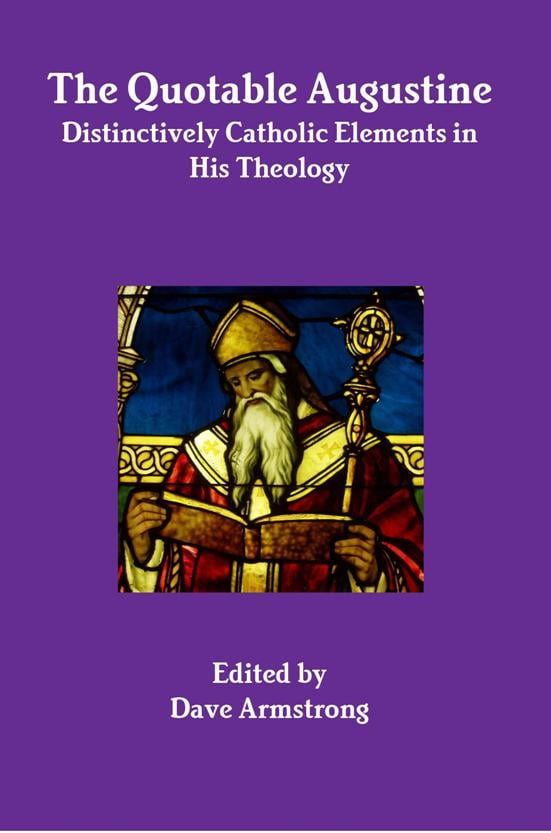
Photo credit: self-designed cover for my book, published in September 2012.
Norman L. Geisler (1932 – 2019) was an American evangelical Protestant theologian, philosopher, and apologist. He obtained an M.A. in theology from Wheaton College and a Ph.D. in philosophy from Loyola University, and made scholarly contributions to the subjects of classical Christian apologetics, systematic theology, philosophy of religion, Calvinism, Catholicism, biblical inerrancy, Bible difficulties, biblical miracles, the resurrection of Jesus, ethics, and other topics. He wrote or edited more 90 books and hundreds of articles.
Dr. Geisler was the Chairman of Philosophy of Religion at Trinity Evangelical Divinity School (1970–79) and Professor of Systematic Theology at Dallas Theological Seminary (1979–88) and a key figure in founding the Evangelical Philosophical Society. He also co-founded Southern Evangelical Seminary. He was known as an evangelical Thomist and considered himself a “moderate Calvinist”. He was not an anti-Catholic (i.e., he didn’t deny that Catholicism was fully a species of Christianity).
This is one of a series of comprehensive replies to his book, Roman Catholics and Evangelicals: Agreements and Differences (co-author, Ralph E. MacKenzie, graduate of Bethel Theological Seminary-West; Grand Rapids, Michigan: Baker Academic, 1995). It’s available online in a public domain version, which has no page numbers, so I will utilize page numbers from my paperback copy, for the sake of full reference. I consider it the best Protestant critique of Catholicism (especially in terms of biblical arguments) that I have ever found, from any time period. The arguments are, for the most part, impressively presented, thought-provoking, respectful, respectable, and worthy of serious consideration (which I’m now giving them).
I’ll be concentrating on the eight sections of Part Two: “Areas of Doctrinal Differences” (202 pages). These installments will be listed and linked on my Calvinism & General Protestantism web page, in section XVII: “Catholics and Protestants” (second from the end). Dr. Geisler’s and Ralph MacKenzie’s words will be in blue. My biblical citations are from RSV.
*****
Indeed, church history shows that many early Fathers, including Athanasius, Cyril of Jerusalem, Chrysostom, and Augustine, believed that the New Testament
was the only infallible basis for all Christian doctrine . . . (p. 187)
Augustine gives supreme authority to Scripture alone. (p. 199)
For Augustine, the Bible alone is an infallible and inerrant authority. (p. 201)
This is sadly typical Protestant revisionist Church history, and very easy to refute. I shall, therefore, document that all four of these men in fact believed in infallible authority besides the Bible.
St. Athanasius
What defect of teaching was there for religious truth in the Catholic Church …? (De Synodis, I, 3)
But the word of the Lord which came through the ecumenical Synod at Nicaea, abides forever. (Ad Afros Epistola Synodica 2)
But let the Faith confessed by the Fathers at Nicæa alone hold good among you, at which all the fathers, including those of the men who now are fighting against it, were present, as we said above, and signed: in order that of us too the Apostle may say, ‘Now I praise you that you remember me in all things, and as I handed the traditions to you, so hold them fast (1 Corinthians 11:2).’ (Ad Afros Epistola Synodica 10)
For had they believed aright, they would have been satisfied with the confession put forth at Nicæa by the whole Ecumenical Council; … Observe how entirely they disregard the truth, and how everything they say and do is for the sake of the Arian heresy. For in that they dare to question those sound definitions of the faith, and take upon themselves to produce others contrary to them, what else do they but accuse the Fathers, and stand up in defense of that heresy which they opposed and protested against? (Ad Episcopus Aegypti et Libyae, 5)
Who, then, that has any real regard for truth, will be willing to suffer these men any longer? Who will not justly reject their writing? Who will not denounce their audacity, that being but few in number, they would have their decisions to prevail over everything, and as desiring the supremacy of their own meetings, held in corners and suspicious in their circumstances, would forcibly cancel the decrees of an uncorrupt, pure and Ecumenical Council? (Ad Episcopus Aegypti et Libyae, 7)
… the sectaries, who have fallen away from the teaching of the Church, and made shipwreck concerning the Faith. (Against the Heathen 1, 6, 3)
For the statements are not fit for Christians to make or to hear, on the contrary they are in every way alien from the Apostolic teaching. . . . For what is so manifestly shewn to be evil, it is not necessary to waste time in exposing further, lest contentious persons think the matter doubtful. It is enough merely to answer such things as follows: we are content with the fact that this is not the teaching of the Catholic Church, nor did the fathers hold this. But lest the ‘inventors of evil things’ make entire silence on our part a pretext for shamelessness, it will be well to mention a few points from Holy Scripture, in case they may even thus be put to shame, and cease from these foul devices. (Letter No. 59 to Epictetus, 3)
Are they not then committing a crime, in their very thought to gainsay so great and ecumenical a Council? . . . masters of their heresy, who are, as James has said, double-minded men, and unstable in all their ways, not having one opinion, but changing to and fro, and now recommending certain statements, but soon dishonouring them, and in turn recommending what just now they were blaming? . . . For, what our Fathers have delivered, this is truly doctrine; and this is truly the token of doctors, to confess the same thing with each other, and to vary neither from themselves nor from their fathers; whereas they who have not this character are to be called not true doctors but evil. . . . the holy and veritable heralds of the truth agree together, and do not differ. For though they lived in different times, yet they one and all tend the same way, being prophets of the one God, and preaching the same Word harmoniously. And thus what Moses taught, that Abraham observed; and what Abraham observed, that Noah and Enoch acknowledged, discriminating pure from impure, and becoming acceptable to God. For Abel too in this way witnessed, knowing what he had learned from Adam, who himself had learned from that Lord, who said, when He came at the end of the ages for the abolishment of sin, “I give no new commandment unto you, but an old commandment, which ye have heard from the beginning.” Wherefore also the blessed Apostle Paul, who had learned it from Him, when describing ecclesiastical functions, forbade that deacons, not to say bishops, should be double-tongued; and in his rebuke of the Galatians, he made a broad declaration, “If anyone preach any other Gospel unto you than that ye have received, let him be anathema, as I have said, so say I again. If even we, or an Angel from heaven should preach unto you any other Gospel than that ye have received, let him be anathema.” (Defence of the Nicene Definition, ch. II, 4 and 5)
. . . on the foundation of the Apostles, and holding fast the traditions of the Fathers, . . . (Councils of Ariminum and Seleucia, 54)
Paul justly praises the Corinthians, because their opinions were in accordance with his traditions. And the Lord most righteously reproved the Jews, saying, ‘Wherefore do ye also transgress the commandments of God on account of your traditions.’ For they changed the commandments they received from God after their own understanding, preferring to observe the traditions of men. And about these, a little after, the blessed Paul again gave directions to the Galatians who were in danger thereof, writing to them, ‘If any man preach to you aught else than that ye have received, let him be accursed.’ (Festal Letter #2, 6)
Let every one lend his aid, as feeling that he is himself a sufferer, lest shortly ecclesiastical Canons, and the faith of the Church be corrupted. . . . our Canons and our forms were not given to the Churches at the present day, but were wisely and safely transmitted to us from our forefathers. Neither had our faith its beginning at this time, but it came down to us from the Lord through His disciples. That therefore the ordinances which have been preserved in the Churches from old time until now, may not be lost in our days, and the trust which has been committed to us required at our hands; rouse yourselves, brethren, as being stewards of the mysteries of God, and seeing them now seized upon by others. (Encyclical Epistle to the Bishops Throughout the World, 1)
We are proving that this view has been transmitted from father to father; but ye, O modern Jews and disciples of Caiaphas, how many fathers can ye assign to your phrases? Not one of the understanding and wise; for all abhor you, but the devil alone; none but he is your father in this apostasy, who both in the beginning sowed you with the seed of this irreligion, and now persuades you to slander the Ecumenical Council, for committing to writing, not your doctrines, but that which from the beginning those who were eye-witnesses and ministers of the Word have handed down to us. For the faith which the Council has confessed in writing, that is the faith of the Catholic Church . . . (A, Defence of the Nicene Definition, ch. VI, 27)
Though we have a succession of teachers and become their disciples, yet, because we are taught by them the things of Christ, we both are, and are called, Christians all the same. . . . how are they of the Catholic Church, who have shaken off the Apostolical faith, and become authors of fresh evils? (Four Discourses Against the Arians, I, 3-4)
But after him and with him are all inventors of unlawful heresies, who indeed refer to the Scriptures, but do not hold such opinions as the saints have handed down, and receiving them as the traditions of men, err, because they do not rightly know them nor their power. . . . Luke . . . hands down the narrations of the saints, saying in the beginning of the Gospel, ‘Since many have presumed to write narrations of those events of which we are assured, as those who from the beginning were witnesses and ministers of the Word have delivered to us; it hath seemed good to me also, who have adhered to them all from the first, to write correctly in order to thee, O excellent Theophilus, that thou mayest know the truth concerning the things in which thou hast been instructed.’ For as each of the saints has received, that they impart without alteration, for the confirmation of the doctrine of the mysteries. Of these the (divine) word would have us disciples, and these should of right be our teachers, and to them only is it necessary to give heed, for of them only is ‘the word faithful and worthy of all acceptation;’ these not being disciples because they heard from others, but being eye-witnesses and ministers of the Word, that which they had heard from Him have they handed down. . . . we are not remiss in giving notice of its seasons, as we have received from the Fathers. . . . keeping to the apostolic traditions, . . . (Festal Letter No. 2, 6-7)
But since they allege the divine oracles and force on them a misinterpretation, according to their private sense, it becomes necessary to meet them just so far as to vindicate these passages, and to shew that they bear an orthodox sense, and that our opponents are in error. (Four Discourses Against the Arians, I, 37)
St. Cyril of Jerusalem
But in learning the Faith and in professing it, acquire and keep that only, which is now delivered to thee by the Church, and which has been built up strongly out of all the Scriptures. . . . the articles of the Faith were not composed as seemed good to men; but the most important points collected out of all the Scripture make up one complete teaching of the Faith. And just as the mustard seed in one small grain contains many branches, so also this Faith has embraced in few words all the knowledge of godliness in the Old and New Testaments. Take heed then, brethren, and hold fast the traditions which ye now receive, and write them an the table of your heart. . . . Guard them with reverence, lest per chance the enemy despoil any who have grown slack; or lest some heretic pervert any of the truths delivered to you. For faith is like putting money into the bank, even as we have now done; but from you God requires the accounts of the deposit. (Fifth Catechetical Lecture, 12-13)
. . . the Holy and Apostolic Faith delivered to you . . . (Eighteenth Catechetical Lecture, 32)
. . . Peter, the foremost of the Apostles and chief herald of the Church, . . . (Eleventh Catechetical Lecture, 3)
St. John Chrysostom
Do not hold aloof from the Church; for nothing is stronger than the Church. The Church is thy hope, thy salvation, thy refuge. (Homily II: After Eutropius having been found outside the Church had been taken captive, 6)
And whence is division? From opinions contrary to the teaching of the Apostles. And whence come opinions of this sort? From men’s being slaves to the belly, and the other passions. For “such,” he says, “serve not the Lord, but their own belly.” And so there would be no offence, there would be no division, unless some opinion were thought of contrary to the doctrine of the Apostles. And this he here points out by saying, “contrary to the doctrine.” And he does not say which we have taught, but “which ye have learned,” so anticipating them, and showing that they were persuaded of and had heard them and received them. (Homily XXXII on Romans 16:17-18, v. 16:17)
There are many things which they [the “sacred writers”: in context] have delivered by unwritten tradition. (Homily I on Acts 1:1-2)
“That ye remember me in all things, and hold fast the traditions, even as I delivered them to you.” It appears then that he used at that time to deliver many things also not in writing, which he shows too in many other places. But at that time he only delivered them, whereas now he adds an explanation of their reason: thus both rendering the one sort, the obedient, more steadfast, and pulling down the others’ pride, who oppose themselves. (Homily XXVI on 1 Corinthians 11:2, 2)
Ver. 15. “So then, brethren, stand fast, and hold the traditions which ye were taught, whether by word, or by Epistle of ours.” Hence it is manifest, that they did not deliver all things by Epistle, but many things also unwritten, and in like manner both the one and the other are worthy of credit. Therefore let us think the tradition of the Church also worthy of credit. It is a tradition, seek no farther. (Homily III on 2 Thessalonians, v. 2:15)
Not by letters alone did Paul instruct his disciple in his duty, but before by words also which he shows, both in many other passages, as where he says, “whether by word or our Epistle” (2 Thess. ii. 15.), and especially here. Let us not therefore suppose that anything relating to doctrine was spoken imperfectly. For many things he delivered to him without writing. Of these therefore he reminds him, when he says, “Hold fast the form of sound words, which thou hast heard of me.” After the manner of artists, I have impressed on thee the image of virtue, fixing in thy soul a sort of rule, and model, and outline of all things pleasing to God. These things then hold fast, and whether thou art meditating any matter of faith or love, or of a sound mind, form from hence your ideas of them. It will not be necessary to have recourse to others for examples, when all has been deposited within thyself. (Homily III on 2 Timothy, v. 1:13-18)
For both they who from the beginning sowed the word were unprofessional and unlearned, and spake nothing of themselves; but what things they received from God, these they distributed to the world: and we ourselves at this time introduce no inventions of our own; but the things which from them we have received, we speak unto all. (Homily VI on 1 Corinthians 2:1-2, 4, v. 2:5, 7)
“And I say unto thee, Thou art Peter, and upon this rock will I build my Church;” that is, on the faith of his confession. Hereby He signifies that many were now on the point of believing, and raises his spirit, and makes him a shepherd. “And the gates of hell shall not prevail against it.” “And if not against it, much more not against me. So be not troubled because thou art shortly to hear that I shall be betrayed and crucified.” Then He mentions also another honor. “And I also will give thee the keys of the heavens.” But what is this, “And I also will give thee?” “As the Father hath given thee to know me, so will I also give thee.” . . . What dost Thou give? tell me. “The keys of the heavens, that whatsoever thou shalt bind on earth, shall be bound in Heaven, and whatsoever thou shalt loose on earth, shall be loosed in Heaven.” . . . For those things which are peculiar to God alone, (both to absolve sins, and to make the church incapable of overthrow in such assailing waves, and to exhibit a man that is a fisher more solid than any rock, while all the world is at war with him), these He promises Himself to give; as the Father, speaking to Jeremiah, said, He would make him as “a brazen pillar, and as a wall;” but him to one nation only, this man in every part of the world. . . . the Son gave him to sow that of the Father and that of Himself in every part of the world; and to a mortal man He entrusted the authority over all things in Heaven, giving him the keys; who extended the church to every part of the world, and declared it to be stronger than heaven. (Homily LII on Matthew 15:21-22, 3)
Both as being ardent, and as having been put in trust by Christ with the flock, and as having precedence in honor, he always begins the discourse. . . . he had the same power to ordain as they all collectively. . . . prelacy then was not an affair of dignity, but of provident care for the governed. . . . they were an hundred and twenty, and he asks for one out of the whole body: with good right, as having been put in charge of them: for to him had Christ said, “And when thou art converted, strengthen thy brethren.” (Luke xxii. 32, Ben.) (Homily III on Acts 1:12)
For addressing the leader of the apostles He said, “Peter, lovest thou me?” and when he confessed that he did, the Lord added, “if thou lovest me tend my sheep.” The Master asked the disciple if He was loved by him, . . . in order to teach us how great an interest He takes in the superintendence of these sheep. . . . these sheep which He entrusted to Peter and his successors. (Treatise Concerning the Christian Priesthood, Book II, 1)
Ver. 21. “Do thy diligence to come before winter. Eubulus greeteth thee, and Pudens and Linus, and Claudia.” This Linus, some say, was second Bishop of the Church of Rome after Peter. (Homily X on 2 Timothy, v. 4:21)
St. Augustine
APOSTOLIC SUCCESSION
If now you seem to yourself to have been tossed to and fro enough, and wish to put an end to labors of this kind, follow the pathway of Catholic teaching, which has flowed down from Christ Himself through the Apostles even unto us, and will hereafter flow down to posterity. (On the Usefulness of Believing, 20)
. . . the Acts of the Apostles; . . . which book I must needs believe if I believe the gospel, since both writings alike Catholic authority commends to me. (Against the Fundamental Epistle of Manichaeus, 5, 6)
The Catholic, which is also the apostolic, doctrine . . . (Against Faustus the Manichee, xxiii, 5)
You immediately deny that Matthew wrote the narrative, though this is affirmed by the continuous testimony of the whole Church, from the days of apostolic presidency to the bishops of our own time. . . . I ask you to believe the book which I quote to have been written by Matthew, since it has been handed down from the days of Matthew in the Church, without any break in the connection between that time and the present. . . . a book acknowledged and approved as handed down from the beginning in the Church founded by Christ Himself, and maintained through the apostles and their successors in an unbroken connection all over the world to the present day . . . (Against Faustus the Manichee, xxviii, 2)
We, namely, the catholic faith, coming from the doctrine of the apostles planted in us, received by a line of succession, to be transmitted sound to posterity—the catholic faith, I say, has, between both those parties, that is, between both errors, held the truth. (Lectures on the Gospel of John, 37, 6)
No one who has not yielded to the malicious and deceitful suggestions of lying devils, can be so blinded by passion as to deny the ability of the Church of the apostles— a community of brethren as numerous as they were faithful— to transmit their writings unaltered to posterity, as the original seats of the apostles have been occupied by a continuous succession of bishops to the present day, . . . (Against Faustus the Manichee, xxxiii, 6)
CATHOLIC CHURCH: INFALLIBILITY AND INDEFECTIBILITY
This same is the holy Church, the one Church, the true Church, the catholic Church, fighting against all heresies: fight, it can: be fought down, it cannot. (Sermon to Catechumens on the Creed, 14)
. . . the immoveable Catholic faith, . . . (Ep. 166 [3, 6]: to St. Jerome [415] )
For in the belly of the Church truth abides. Whosoever shall have been separated from this belly of the Church, must needs speak false things: . . . (Explanations of the Psalms, 58:3 [58, 5]; I rearranged the word order of the awkward translation; changing no words)
. . . sound doctrine, which alone is Catholic, . . . (Against Faustus the Manichee, xx, 23)
. . . to avoid offending the Church by erroneous doctrine, . . . (Against Faustus the Manichee, xxii, 46)
. . . the body of Christ, which is the Church of the living God, the pillar and mainstay of the truth, dispersed throughout the world . . . (Against the Letters of Petilian the Donatist, ii, 104, 237)
. . . the holy and true Church of Christ . . . (Against the Letters of Petilian the Donatist, i, 22, 24)
. . . that Church which is the true Church of Christ. (Ep. 93 [12, 50]: to Vincentius [408] )
. . . the certainty of Catholic truth . . . (Ep. 139 [1]: to Marcellinus [412] )
. . . many states and places where we saw the true Catholic Church firmly established . . . (Ep. 185 [7, 25]: to Boniface [416])
Let us love what we sing: “Behold, how good and how pleasant it is for brethren to dwell together in unity!” that so they may know, by their own experience, with what perfect truth their mother, the Catholic Church, calls out to them . . . let them come to the true Church of Christ, that is, to the Catholic Church our mother . . . (Ep. 185 [9, 36 / 10, 46]: to Boniface [416])
His commands, which He has willed should be confirmed by so great authority of the Catholic Church. (On the Usefulness of Believing, 33)
ECUMENICAL COUNCILS
Councils themselves, which are held in the several districts and provinces, must yield, beyond all possibility of doubt, to the authority of plenary Councils which are formed for the whole Christian world . . . (On Baptism, Against the Donatists, ii, 3, 4)
They attempt, accordingly, to prevail against the firmly-settled authority of the immoveable Church by the name and the promises of a pretended appeal to reason. This kind of effrontery is, we may say, characteristic of all heretics. But He who is the most merciful Lord of faith has both secured the Church in the citadel of authority by most famous ecumenical Councils and the Apostolic sees themselves, and furnished her with the abundant armour of equally invincible reason by means of a few men of pious erudition and unfeigned spirituality. (Ep. 118 [5, 32]: to Deoscorus [410] )
RULE OF FAITH / “THREE-LEGGED STOOL” (BIBLE-CHURCH-TRADITION)
But those reasons which I have here given, I have either gathered from the authority of the church, according to the tradition of our forefathers, or from the testimony of the divine Scriptures, . . . No sober person will decide against reason, no Christian against the Scriptures, no peaceable person against the church. (On the Trinity, iv, 6, 10)
My opinion therefore is, that wherever it is possible, all those things should be abolished without hesitation, which neither have warrant in Holy Scripture, nor are found to have been appointed by councils of bishops, nor are confirmed by the practice of the universal Church, . . . (Ep. 55 [19, 35]: to Januarius [400] )
And let any one, who is led by the past custom of the Church, and by the subsequent authority of a plenary Council, and by so many powerful proofs from holy Scripture, and by much evidence from Cyprian himself, and by the clear reasoning of truth, to understand that the baptism of Christ, consecrated in the words of the gospel, cannot be perverted by the error of any man on earth . . . (On Baptism, Against the Donatists, v, 4, 4)
If, then, you have come to some understanding of what is not at variance with the rule of the Catholic faith, whereto you have attained as the way that is guiding you to your fatherland; and hast so understood it as to feel it a duty to dismiss all doubts whatever on the subject: add to the building, but do not abandon the foundation. And surely of such a character ought to be any teaching given by elders to those who are babes, as not to involve the assertion that Christ the Lord of all, and the prophets and apostles, who are much farther advanced in age than themselves, had in any respect spoken falsely. (Lectures on the Gospel of John, 98, 7)
But this I say, that according to the Holy Scriptures original sin is so manifest, and that this is put away in infants by the laver of regeneration is confirmed by such antiquity and authority of the catholic faith, notorious by such a clear concurrent testimony of the Church, that what is argued by the inquiry or affirmation of anybody concerning the origin of the soul, if it is contrary to this, cannot be true. (Against Two Letters of the Pelagians, iii, 26 [X] )
APOSTOLIC TRADITION
He cannot quote a decisive passage on the subject from the Book of God; nor can he prove his opinion to be right by the unanimous voice of the universal Church . . . (Ep. 54 [4, 5]: to Januarius [400] )
. . . moved, not indeed by the authority of any plenary or even regionary Council, but by a mere epistolary correspondence, to think that they ought to adopt a custom which had no sanction from the ancient custom of the Church, and which was expressly forbidden by the most unanimous resolution of the Catholic world . . . (On Baptism, Against the Donatists, iii, 2, 2)
And this is the firm tradition of the universal Church, in respect of the baptism of infants . . . (On Baptism, Against the Donatists, iv, 23, 31)
Whence, however, was this derived, but from that primitive, as I suppose, and apostolic tradition, by which the Churches of Christ maintain it to be an inherent principle, that without baptism and partaking of the supper of the Lord it is impossible for any man to attain either to the kingdom of God or to salvation and everlasting life? So much also does Scripture testify, according to the words which we already quoted. (On Merit and the Forgiveness of Sins and on Infant Baptism, i, 34 [XXIV] )
You see with what confidence this great man [St. Cyprian] expresses himself after the ancient and undoubted rule of faith. [regarding infants possessing original sin] (On Merit and the Forgiveness of Sins and on Infant Baptism, iii, 11)
*
***
*
Practical Matters: I run the most comprehensive “one-stop” Catholic apologetics site: rated #1 for Christian sites by leading AI tool, ChatGPT — endorsed by popular Protestant blogger Adrian Warnock. Perhaps some of my 5,000+ free online articles or fifty-six books have helped you (by God’s grace) to decide to become a Catholic or to return to the Catholic Church, or better understand some doctrines and why we believe them. If you believe my full-time apostolate is worth supporting, please seriously consider a much-needed monthly or one-time financial contribution. “The laborer is worthy of his wages” (1 Tim 5:18, NKJV).
*
PayPal donations are the easiest: just send to my email address: [email protected]. Here’s also a second page to get to PayPal. You’ll see the term “Catholic Used Book Service”, which is my old side-business. To learn about the different methods of contributing (including Zelle and 100% tax-deductible donations if desired), see my page: About Catholic Apologist Dave Armstrong / Donation Information.
*
You can support my work a great deal in non-financial ways, if you prefer; by subscribing to, commenting on, liking, and sharing videos from my two YouTube channels, Catholic Bible Highlights and Lux Veritatis (featuring documentaries), where I partner with Kenny Burchard (see my own videos and documentaries), and/or by signing up to receive notice for new articles on this blog. Just type your email address on the sidebar to the right (scroll down quite a bit), where you see, “Sign Me Up!” Thanks a million!
*
***
*
Photo credit: self-designed cover for my own book, that I edited: The Quotable Augustine: Distinctively Catholic Elements in His Theology (Sep. 2012).
*
Summary: Dr. Geisler incorrectly asserted that St. Athanasius, St. Cyril of Jerusalem, St. John Chrysostom, & St. Augustine all thought that only the Bible was infallible (sola Scriptura).
Calvinism & General Protestantism
Church fathers & sola Scriptura
critique of Catholic distinctive beliefs
Roman Catholics and Evangelicals: Agreements and Differences
Previous Post

July 11, 2025
Vs. Geisler on Catholicism #6: Sola Scriptura 1
Next Post
July 16, 2025 Vs. Geisler on Catholicism #8: Papal Infallibility
Recent Comments
"Special pleading, and not a serious response to my arguments . . ."
Is Venerating Men & Angels Worship? ..."
""no man needs to teach us."Didn't you just teach us?"
Is Venerating Men & Angels Worship? ..."
""Catholics say they are the only church that can lead people into heaven."In fact, we ..."
Is Venerating Men & Angels Worship? ..."
"And lastly, I belong to no denomination and am free to serve God as He ..."
Is Venerating Men & Angels Worship? ..."
Browse Our Archives
Select a Category & Last Things About Me Anti-Catholicism Atheism & Agnosticism Baptism and Sacramentalism Bible and Tradition Blessed Virgin Mary Books by Dave Armstrong C. S. Lewis Calvinism & General Protestantism Catholic Apologetics Catholic Apologists Catholic conversion Catholic converts Christmas Church (Ecclesiology) Church History Conversion and Converts Development of Doctrine Eastern Orthodoxy Ecumenism & Christian Unity Eucharist & Liturgy Fathers of the Church French Translations G. K. Chesterton Hell Hell & Satan Hell & Satan & Last Things Heresies & Comparative Religion Holistic Health Inquisition & Crusades & Scandals James White Jews & Judaism & Old Testament John Calvin John Henry Newman Liberal / Modernist Theology Life Issues Literary Resume Lutheranism Mariology Martin Luther Music Orthodoxy Papacy & Infallibility Personal Page Philosophy & Science Political & Ethical & Moral Issues Protestant Persecution & Intolerance Protestantism Purgatory Purgatory & Penance Romantic & Imaginative Theology Saints & Purgatory & Penance Salvation Salvation & Justification Satan & Last Things Sexuality and Gender Issues Spanish Translations Traditionalism vs. Radical Catholic Reactionaries Traducciones al español / tradução para português Trinitarianism & Christology Uncategorized Videos
Select a Month October 2026 September 2026 August 2026 July 2026 June 2026 May 2026 April 2026 March 2026 February 2026 January 2026 December 2025 November 2025 October 2025 September 2025 August 2025 July 2025 June 2025 May 2025 April 2025 March 2025 February 2025 January 2025 December 2024 November 2024 October 2024 September 2024 August 2024 July 2024 June 2024 May 2024 April 2024 March 2024 February 2024 January 2024 December 2023 November 2023 October 2023 September 2023 August 2023 July 2023 June 2023 May 2023 April 2023 March 2023 February 2023 January 2023 December 2022 November 2022 October 2022 September 2022 August 2022 July 2022 June 2022 May 2022 April 2022 March 2022 February 2022 January 2022 December 2021 November 2021 October 2021 September 2021 August 2021 July 2021 June 2021 May 2021 April 2021 March 2021 February 2021 January 2021 December 2020 November 2020 October 2020 September 2020 August 2020 July 2020 June 2020 May 2020 April 2020 March 2020 February 2020 January 2020 December 2019 November 2019 October 2019 September 2019 August 2019 July 2019 June 2019 May 2019 April 2019 March 2019 February 2019 January 2019 December 2018 November 2018 October 2018 September 2018 August 2018 July 2018 June 2018 May 2018 April 2018 March 2018 February 2018 January 2018 December 2017 November 2017 October 2017 September 2017 August 2017 July 2017 June 2017 May 2017 April 2017 March 2017 February 2017 January 2017 December 2016 November 2016 October 2016 September 2016 August 2016 July 2016 June 2016 May 2016 April 2016 March 2016 February 2016 January 2016 December 2015 November 2015 October 2015 September 2015 August 2015 July 2015 June 2015 May 2015 April 2015 March 2015 February 2015 January 2015 December 2014 November 2014 October 2014 September 2014 August 2014 July 2014 June 2014 April 2014 March 2014 February 2014 January 2014 December 2013 November 2013 October 2013 September 2013 August 2013 July 2013 June 2013 April 2013 March 2013 February 2013 January 2013 December 2012 November 2012 October 2012 September 2012 August 2012 July 2012 June 2012 May 2012 April 2012 March 2012 February 2012 January 2012 December 2011 November 2011 October 2011 September 2011 August 2011 July 2011 June 2011 April 2011 March 2011 February 2011 October 2010 September 2010 August 2010 July 2010 April 2010 March 2010 December 2009 October 2009 August 2009 July 2009 June 2009 May 2009 March 2009 February 2009 October 2008 September 2008 April 2008 March 2008 February 2008 January 2008 December 2007 November 2007 October 2007 May 2007 March 2007 February 2007 January 2007 November 2006 October 2006 September 2006 August 2006 July 2006 June 2006 May 2006 April 2006 March 2006 February 2006 October 2005 June 2005 April 2005 February 2005 July 2004 May 2004 April 2004
Follow Us!
TAKE THE
Religious Wisdom Quiz
Who said, "You intended to harm me, but God intended it for good"?
Select your answer to see how you score.
David Joseph Solomon Job
Books by This Author Books by Dave Armstrong
Related posts from Biblical Evidence for Catholicism

On Protestant Explanations of Catholic Conversion
Biblical Evidence for Catholicism

Protestant Confessions & "Ever-Virgin" Mary
Biblical Evidence for Catholicism

A Few "Worst" & "Best" Arguments vs. Protestantism
Biblical Evidence for Catholicism

17 Church Fathers on Purgatory (Esp. 1 Cor...
Biblical Evidence for Catholicism
TRENDING AT PATHEOS Catholic

The Sermon on the Mount, Part I: Matthew...
The Sermon on the Mount, Part I (Matthew 4:12-5:12) St. Matthew moves...

What's up from Crossway: Reviewing some of their latest A few weeks...

Janie Learns the Way of the Cross: A...
Teaching children about Jesus' Passion can be challenging. Many parents and educators...

Looking For Good Catholic Writing - October 2026
He alone extends the heavens, and he walks upon the waves of...

In "Irreplaceable," our book on vocation and technology, Trevor Sutton and I...

I was strolling through the top floor of the brand new Parthenon...
view all Catholic blogs
What Are Your Thoughts?leave a comment
Ad-Free & Subscriber Log-In Subscription Support
- About Us
- 2026 Calendar
- Videos
- Podcasts
- Library of World Religions
- Faith In Media Tracker
- Advertise With Us
- Write for Us
- Privacy Policy
- Terms of Service
- Do Not Sell My Data
- Contact Us
- Radiant Digital
- Manage Newsletter Subscriptions
- Unsubscribe From Notifications
- Sitemap
Copyright 2008-2026, Patheos. All rights reserved.
Subscription Support Ad-Free & Subscriber Log-In
Follow Patheos