
BuddhistCatholicContemplativeEvangelicalGeneral ChristianHinduJewishLatter-day SaintMuslimNew VisionsProgressive Christian
Beliefs
- Buddhist
- Catholic
- Contemplative
- Evangelical
- General Christian
- Hindu
- Jewish
- Latter-day Saint
- More Voices
- Muslim
- New Visions
- Pagan
- Progressive Christian
Topics
- Religion News
- Food and Religion
- Sports and Religion
- Religious Art
- Religious Music and Entertainment
- Religious Events
- History and Religion
- Style and Religion
- Politics and Religion
- Women in Religion
- Recreation Outdoors and Religion
- Business Finance and Religion
- Careers Workplace and Religion
- Education and Religion
- Family Parenting and Religion
- Health Fitness and Religion
- Home and Religion
- Relationships and Religion
- Technology and Religion
- Travel and Religion
Columnists
- Buddhist Columnists
- Business Finance and Religion Columnists
- Careers Workplace and Religion Columnists
- Catholic Columnists
- Contemplative Columnists
- Education and Religion Columnists
- Evangelists Columnists
- Family Parenting and Religion Columnists
- General Christian Columnists
- Health Fitness and Religion Columnists
- Hindu Columnists
- History and Religion Columnists
- Home and Religion Columnists
- Jewish Columnists
- More Voices Columnists
- Latter Day Columnists
- Muslim Columnists
- New Visions Columnists
- Nonreligious Columnists
- Pagan Columnists
- Politics and Religion Columnists
- Progressive Columnists
- Recreation Outdoors and Religion Columnists
- Relationships and Religion Columnists
- Religion News Columnists
- Religious Art Columnists
- Religious Events Columnists
- Religious Music and Entertainment Columnists
- Sports and Religion Columnists
- Style and Religion Columnists
- Technology and Religion Columnists
- Travel and Religion Columnists
- Women in Religion Columnists
Resource Library
- 2026 Calendar
- Library of World Religions
- The 100 Most Holy Places on Earth
- Patheos Answers
- Podcasts
- Videos
- Faith Leaders Database
- Anglican Episcopalian
- Bahai
- Baptist
- Buddhism
- Christianity
- Confucianism
- Eastern Orthodoxy
- Hinduism
- Holiness and Pentecostal
- ISKCON
- Islam
- Judaism
- Lutheran
- Methodist
- The Church of Jesus Christ of Latter-day Saints
- New Age
- Paganism
- Presbytarian and Reformed
- Protestantism
- Religion Behind the Scenes
- Roman Catholic
- Scientology
- Shia Islam
- Sikhism
- Sufism
- Sunni Islam
- Taoism
- Zen
- See all religions
Research Tools
 Ad-Free & Subscriber Log-In Subscription Support
Ad-Free & Subscriber Log-In Subscription Support
Follow Patheos 

- Trending:
- Forgiveness
- |
- Marriage
- |
- Consciousness
- |
- Death Penalty
- |
- Election
- |
- Halloween

-
About
-
Catholic Apologetics
-
Church History
-
Great Apologists
-
Christian Worldview
-
Protestantism & Misc.
- Home
- Catholic
- History and Religion
- Reply to Jason Engwer’s “Siblings of Jesus” Arguments
Reply to Jason Engwer’s “Siblings of Jesus” Arguments
Last updated on: June 6, 2026 at 12:05 am by Dave Armstrong
Reply to Jason Engwer’s “Siblings of Jesus” Arguments 2026-06-06T00:05:16-04:00 Dave Armstrong
Patheos Explore the world's faith through different perspectives on religion and spirituality! Patheos has the views of the prevalent religions and spiritualities of the world.
Jason Engwer is a Protestant evangelical anti-Catholic apologist who runs the Triablogue site. I’ve critiqued his articles many many times (see his name on my Anti-Catholicism page), but he has refused to counter-reply since 2010 (having done so for the previous eight years), and of course he bans me from his site. What else is new? In any event, it’s still well worth spending time refuting error that is influencing many people, because falsehoods don’t do anyone any good. I use RSV for Bible citations. Jason’s words will be in blue.
*****
I’m replying to Jason’s article, “How Early Activities, Not Just Early Language, Contradict Mary’s Perpetual Virginity” (6-1-25).
The marriage between Joseph and Mary is evidence against her being a perpetual virgin, . . .
It’s not at all, in and of itself, because it was absolutely unique in all of human history: being a mother and a father figure to God incarnate. Most Christians throughout history have regarded it as fitting and proper that the womb that carried God the Son should not bear any other human being. One either spiritually and intuitively grasps this or not (see my “holy ground” argument).
Those who don’t accept this outlook usually fall back on the old, tiresome, “Catholics are against sex and think it’s dirty” argument. We’re not (we regard marriage as a sacrament, after all), but beyond that canard, we’re not the only ones who believe in Mary’s perpetual virginity in the first place. Martin Luther did; John Calvin did, Zwingli did; as did all of the earliest Protestant leaders. Many excellent and renowned Protestant exegetes and commentators throughout history have believed in it; as does the Orthodox Church; and the Church fathers massively held to it.
Marriage wouldn’t have to involve sexual activity, but encourages it, typically involves it, and typically does so as a significantly prominent part of the relationship.
That’s the whole point. Of course, “typically” a marriage includes sexual relations, but this marriage was anything but typical. Thus, Jason — almost despite himself — concedes the possibility of Mary’s perpetual virginity even by the language he uses. He can’t avoid it.
If there was a desire for a mother/father setting for the raising of Jesus, a desire on God’s part or on the part of Joseph and Mary, why not think there was also a desire for the usual human experience of having siblings, most often siblings from the same parents . . .?
Because, again, Jason refers to “the usual human experience.” The Holy Family is not that. It’s an exception to the rule. The Bible is filled with odd things: talking donkeys (the Balaam story), Jacob wrestling with God, Nebuchadnezzar eating grass like cattle; even weird sexual things (since Jason wants to make this issue all or primarily about sexuality): God commanding the prophet Hosea to marry both a prostitute and a promiscuous married woman in order to create an analogy to Israel’s unfaithfulness:
Hosea 1:2-3 . . . the LORD said to Hose’a, “Go, take to yourself a wife of harlotry and have children of harlotry, for the land commits great harlotry by forsaking the LORD.” [3] So he went and took Gomer the daughter of Dibla’im, and she conceived and bore him a son.
Hosea 3:1 And the LORD said to me, “Go again, love a woman who is beloved of a paramour and is an adulteress; even as the LORD loves the people of Israel, though they turn to other gods and love cakes of raisins.”
Or how about God commanding the prophet Isaiah to walk around naked for three years (Is 20:2-4)? King Solomon “had seven hundred wives, princesses, and three hundred concubines” (1 Kgs 11:3). This doesn’t even seem to be condemned in and of itself, in context. What is clearly condemned is the fact that “his wives turned away his heart after other gods; and his heart was not wholly true to the LORD his God” (11:4). His father King David had at least eight wives, and many other concubines as well.
If all those things could happen, sanctioned or allowed by God, why is it unimaginable or considered to be utterly implausible that the other extreme could also happen and be God’s will: namely, a marriage designed from the start to be very different and celibate, because the child involved was 1) already supernaturally conceived by the Holy Spirit, and 2) was God incarnate? Jason loves making all of these anti-traditional and anti-biblical arguments from plausibility and analogy.
I return the favor. I love analogical argument and arguments from plausibility, so it’s a pleasure for me. But we can assuredly turn the tables on all of these arguments he comes up with. As an extra bonus, I also believe in dialoguing with opposing views. Jason does not: at least not with me, and he seems to not do it much at all anymore.
If there was a desire to avoid what’s involved in having other children, in order to focus on Jesus,
That’s not the reason usually given when we defend this; rather, it’s a question of propriety and fittingness. The latter concept is a biblical one.
then why did Mary have a husband with several children from a previous marriage?
Since the premise was wrong, the question is irrelevant. But western Catholics usually believe in the “cousins” explanation, which is grounded in the Bible itself, as opposed to early tradition, as I will show below.
As the New Testament passages about those other children illustrate, Jesus’ siblings were often involved in Joseph and Mary’s lives, including in opposition to Jesus. The most straightforward way to take the marriage between Joseph and Mary is that it involved the usual sexual relationship . . .
Think of how Jesus’ brothers are sometimes referred to as being with Mary and are mentioned just after her (Matthew 12:46, John 2:12, Acts 1:14). Cousins or older children from a previous marriage of Joseph could be with Mary and keep getting mentioned just after her, but younger siblings offer the most efficient explanation. Not only would later children born of Mary best explain the “brothers” language, but they’d also be the best candidates for individuals mentioned just after Mary and referred to as being with Mary (younger siblings of Jesus being better candidates for being with Mary because of their younger age, their closer relationship with Mary, and the efficiency of explaining their group activities by their living in the same house rather than different ones). Similarly, when the people of Nazareth mention Jesus’ brothers and sisters (Matthew 13:55-56), later children of Mary offer the best explanation for why they’d bring up those brothers and sisters. The surrounding context is focused on Jesus’ immediate family (the mentioning of Joseph, the mentioning of Mary), so brothers and sisters from his immediate family would make the most sense in that context. . . .
And notice the cumulative effect. It’s very unlikely that more distant relatives of Jesus (not younger siblings born of Mary) would happen to keep appearing in contexts that would more naturally involve younger siblings born of Mary. Are we to believe that Mary kept appearing, in multiple contexts, with the same more distant relatives and that the people of Nazareth chose to mention the same type of relatives outside Jesus’ immediate family (“brothers”, “sisters”) just after mentioning members of his immediate family, all the while leaving out other relatives outside his immediate family?
I answered this argument over seven years ago in my article for National Catholic Register, entitled, Jesus’ “Brothers” Always “Hanging Around”: Siblings? Here are some highlights:
The Hebrew “household” (if not virtually always) often would contain extended family members. It was not like our nuclear families of today. For example, in the book, Families in Ancient Israel(Leo G. Perdue, editor; Westminster John Knox Press, 1997) we find this description:
The familial roles of males in the household’s kinship structure included those of lineal descent and marriage — grandfather, father, son, and husband — and those lateral relationships — brother, uncle, nephew, and cousin. (pp. 179-180)
The household often even extended to sojourners or hired laborers (ibid., p. 199). In this book, the “household” is casually described as including cousins. For example:
The line of responsibility to serve as the household’s or clan’s “goel” began with the brother, then the uncle, then the cousin, and, finally, any close relative. (p. 192; goel = “redeemer,” or the one “responsible for the justice and well-being of the family”)
The Eerdmans Bible Dictionary (edited by Allen C. Myers, Grand Rapids, Michigan: Eerdmans, rev. ed., 1975) makes the nature of the Israelite family very clear, by noting that it could include more than one nuclear family (thus, cousins would be residing together):
The basic social unit, comprised of persons related by kinship and sharing a common residence. The Israelite family was an extended family known as the “father’s house” or “household” (Heb. “bet-ab”), consisting of two or more nuclear families (i.e., a married couple and their children) or composite families (an individual with multiple spouses and their offspring) . . . other kin (including grandparents), servants, concubines, and sojourners might also be reckoned part of the household (cf. Gen. 46:5-7, 26). (“Family,” p. 376)
Moreover, on the next page, this reference work noted that clans also usually “occupied the same or adjacent towns.” Extended families stuck together. It was like a perpetual family reunion. This would account for first or second or third cousins (all referred to as “brothers” in Semitic or Near Eastern culture: then and now) “hanging around” in one place.
Because Jason and many Protestants and Catholics alike don’t understand this, nor the general use of “brother” for almost any relative or even a fellow Israelite, they are quick to assert the existence of siblings of Jesus. Well, I have fourteen questions for him and those who agree with him, too, if they believe these people are Jesus’ siblings:
- Why is it that the New Testament never uses the phrase “son[s] of Mary” or “son[s] of Joseph” for anyone besides Jesus?
- “Son of Mary” appears once, in Mark 6:3 (RSV), referring to Jesus, and interestingly enough, in the same verse He is called “brother of James and Joses and Judas and Simon,” and people say, “are not his sisters here with us?” Yet none of them are called “sons / daughters” of Mary or Joseph. Why not?
- Why is it that “sons of Mary” never appears in the NT?
- Why doesn’t the phrase, “Mary’s sons” ever appear in the NT, either?
- How come “daughter[s] of Mary” never appears?
- Why don’t the words, “Mary’s daughter[s]” ever appear in the NT?
- “Son of Joseph” (referring to the carpenter from Nazareth) appears twice (Jn 1:45; 6:42): both referring to Jesus. “Sons of Joseph” appears once (Heb 11:21), but unfortunately for deniers of Mary’s perpetual virginity, it refers to the patriarch Joseph. Why is that, if these are his sons (either supposedly with Mary or from a previous marriage)?
- Why is it that “Joseph’s sons” never appears?
- How come “Daughter[s] of Joseph” never appears, wither?
- Why doesn’t “Joseph’s daughter[s]” appear in the NT?
- Why are none of these supposed siblings mentioned when Jesus went to Jerusalem at age 12 and His parents were looking for Him? Are we to believe that Mary waited more than twelve years to have more children?
- How come Mary is never called the “mother” of these alleged siblings of Jesus, whereas she is called Jesus’ “mother” (Jn 2:1; 19:25)?
- Why is it, again (see #2) the case that in the following two passages, these “brothers” were mentioned but Mary wasn’t called their mother; only Jesus‘ mother?
Matthew 13:55 “Is not this the carpenter’s son? Is not his mother called Mary? And are not his brothers James and Joseph and Simon and Judas?”
Acts 1:14 All these with one accord devoted themselves to prayer, together with the women and Mary the mother of Jesus, and with his brothers.
- Strikingly, it looks like every time St. Paul uses adelphos (unless I missed one or two), he means it as something other than blood brother or sibling. He uses the word or related cognates no less than 138 times in this way. Yet we often hear about Galatians 1:19: “James the Lord’s brother.” 137 other times, Paul means non-sibling, yet amazingly enough, here he must mean sibling, because (so we are told) he uses the word adelphos? That doesn’t make any sense. Why would he do that?
Doesn’t it stand to reason and isn’t it common sense that if these “brothers” were indeed the siblings of Jesus, that Acts 1:14 would read, instead: “Mary the mother of Jesus and his brothers”? Then we wouldn’t be having this dispute; it would have been so clear and undeniable. A similar argument could be made for Mark 6:3.
*
I’d like to ask those who deny Mary’s perpetual virginity: why do you think all of the words noted in #1-14 above are the way they are? Why wouldn’t God have made it easy to understand and logically and grammatically impossible to deny, if Jesus had siblings? There were many opportunities and contexts in Holy Scripture where this could easily have taken place, but for some odd reason (maybe because it’s a falsehood and not a fact?) it never does.
*
And so, here we are 2,000 years later debating the issue, since Protestants in the late 17th and early 18th centuries decided to depart from the rest of Christendom (even their own founders and 250 years of teaching) and start denying that the Blessed Virgin Mary was a perpetual virgin: as part and parcel of their increasing theological liberalism and nominalism.
*
They also make the most sense of the absence of any reference to other more distant relatives. If the “brothers” and “sisters” were cousins of Jesus, why not also mention uncles, aunts, etc.?
*
This again exhibits Jason’s ignorance of biblical language. The same words (both in Hebrew and Greek) were used for all of these relatives. “Cousin” appears four times in the entire OT in the RSV (three of those in Jeremiah, another in Leviticus). But “brother[s]” appears 390 times, “brethren” 154 times and “sister[s]” 110 times. So by a 654-4 ratio, we have those terms (which at first glance sound like siblings) used over against “cousin.” Obviously, many times they were used for non-sibling relatives. Here are some examples of that:
*
Lot, who was called Abraham’s “brother” (Gen. 14:14), was the son of Haran, Abraham’s sibling (Gen. 11:26–28); therefore, was Abraham’s nephew, not his sibling or blood brother. Jacob is, likewise, referred to as the “brother” of Laban, who was literally his uncle (Gen. 29:15). Eleazar’s daughters married their “brethren,” who were the sons of Kish (Eleazar’s literal sibling). These “brethren”, then, were actually their first cousins (1 Chr. 23:21–22).
*
“Brother” and “sister” could also refer to kinsmen (Dt. 23:7; Neh. 5:7; Jer. 34:9), as in the reference to the forty-two “brethren” of King Azariah (2 Kgs. 10:13–14). Many more such examples could be given. The NT (which came out of the same culture, and was Jewish-written save for Luke) totally reflects this. It has “brother[s]” 159 times, “brethren” 191, and “sister[s]” 24 times, while “cousin” appears exactly once (Col 4:10). So that’s a 374-1 ratio (even more lopsided than the OT), and for the entire Bible (minus the Deuterocanon), the numbers are 1028-5, or “cousin” used instead of “brother” or “sister” once in every 206 times a relative is mentioned.
*
“Uncle” and “aunt” are not very common words in the OT. “Uncle appears only 13 times in the RSV. “Aunt” appears exactly once (Lev 18:14). Neither one appears at all in the NT! Again, “brother” and “sister” were the common terms used for a wide array of relatives, as shown. This is our reply to Jason’s question: he is ignorant of how familial terms are used in the entire Bible.
*
The presence of younger siblings of Jesus in Luke 2:41-52 (among the “relatives” of verse 44) helps explain why the absence of Jesus would have been unnoticed for a while. The failure to notice his absence is harder to explain if Jesus was the only child his parents had to care for and the only child of Joseph and Mary other relatives had to account for.
*
Luke states (2:46) that the search for Jesus took three days before He was found in the temple. Mary said, “your father and I have been looking for you anxiously” (2:48, RSV). If other children had been with them, they certainly would have been looking, too; in which case, Mary would have said, “your father and I and your brothers and sisters have been looking for you anxiously.” But she didn’t say that.
*
There is also the factor of how caravans in ancient Israel traveled. I cite three Protestant commentaries on Luke 2:44:
Ellicott’s Commentary for English Readers: Supposing him to have been in the company.—The company was probably a large one, consisting of those who had come up to keep the Passover from Nazareth and the neighbouring villages. It is not certain, but in the nature of things it is sufficiently probable, that the boys of such a company congregated together, and travelled apart from the others.
Barnes’ Notes on the Bible: Supposing him to have been in the company – It may seem very remarkable that parents should not have been more attentive to their only son, and that they should not have been assured of his presence with them when they left Jerusalem; but the difficulty may be explained by the following considerations:
In going to these great feasts, families and neighbors would join together, and form a large collection.
It is not improbable that Jesus was “with” them when they were about to start from Jerusalem and were making preparations. Seeing him then, they might have been certain as to his presence.
A part of the company might have left before the others, and Joseph and Mary may have supposed that he was with them, until they overtook them at night and ascertained their mistake.
Expositor’s Greek Testament: A company would be made up of people from the same neighbourhood, well acquainted with one another. . . . It is quite conceivable how they should have gone on so long without missing the boy, . . .
An online friend of mine, traditional Anglican author and apologist and philosopher Lydia McGrew commented underneath:
*
Good point about the brothers repeatedly cropping up in contexts with Mary. I think the John 2:12 context is especially significant, since they seem to be just hanging out with Mary and Jesus there. A Catholic might argue that when the “brothers” are involved in staging an intervention because they think Jesus has gone crazy, this could be whatever other male relatives were alive at that point in a society where kinship was a big deal. But why would they just sort of be there spending time with Mary, Jesus, and whatever disciples Jesus had called by that early point in his ministry, as in John 2:12, if they were just relatives?
*
Because that’s how extended family worked in ancient Israelite culture, as I explained above.
*
Of course, if we had other clear primary source evidence from Jesus’ life that they were cousins, this could be harmonized.
*
We do have that evidence in the NT itself, as I and many others have written about. The “cousins” theory (which I hold) has explicit biblical backing:
- in comparing Matthew 27:56, Mark 15:40, and John 19:25, we find that James and Joseph (mentioned in Matthew 13:55 with Simon and Jude as Jesus’ “brothers”) are the sons of Mary, wife of Clopas. This other Mary (Mt 27:61; 28:1) is called Our Lady’s adelphe in John 19:25. Obviously, there are not two women named “Mary” in one family.
One opinion, based also on some early patristic evidence, that I hold myself, is that this second Mary was the Blessed Virgin Mary’s sister in-law (Clopas being Joseph’s sibling). In this scenario, a sister-in-law is called “sister” in the NT (which we often do today in our own culture). In any event, we know for sure, from the above information, that James and Joseph were not Jesus’ siblings. They were likely His first cousins, or possibly more distant cousins.
- Jude is called the Lord’s “brother” in Matthew 13:55 and Mark 6:3. If this is the same Jude who wrote the epistle bearing that name (as many think), he calls himself “a servant of Jesus Christ and brother of James” (Jude 1:1). Now, suppose for a moment that he was Jesus’ blood brother. In that case, he refrains from referring to himself as the Lord’s own sibling (while we are told that such a phraseology occurs several times in the New Testament, referring to a sibling relationship) and chooses instead to identify himself as James’ brother. This is far too strange and implausible to believe.
- Moreover, James also refrains from calling himself Jesus’ brother, in his epistle (James 1:1: “servant of God and of the Lord Jesus Christ”): even though St. Paul calls him “the Lord’s brother” (Gal 1:19).
- Most significantly, Jesus Himself referred to His “brothers” as “kin” or “cousins”:
Mark 6:3-4 Is not this the carpenter, the son of Mary and brother of James and Joses and Judas and Simon, and are not his sisters here with us?” And they took offense at him. [4] And Jesus said to them, “A prophet is not without honor, except in his own country, and among his own kin, and in his own house.”
“Kin” is a translation of the Greek word, suggenes / συγγενής which means “relative” and can also mean “cousin” according to Strong’s Exhaustive Concordance. See Strong’s word #4773 . KJV translates it as Mary’s “cousin Elisabeth” in Luke 1:36 and “her cousins” in Luke 1:58, and elsewhere usually as “kinsmen” but never “brother.” NASB usually renders it “relatives” (and “kinsmen” a few times, too).
I submit, then, that Jesus is referring to some of His named “brothers” in Mark 6:3 as cousins or non-sibling relatives in Mark 6:4, by referring to them as suggenes / συγγενής (“kin” in RSV). The idea ties in with John 7:5: “For even his brothers did not believe in him.” Thus, they are mentioned in the scene in Nazareth where Jesus was rejected, and so Jesus noted that a “prophet” didn’t receive “honor” from “his own kin.” They later likely became believers, but at this point, before the Holy Spirit was given, they didn’t yet “get” it.
But one realizes after surveying these considerations just how much the prior probability in the Catholic’s mind (due to official Church teaching) is playing a role in forcing him to interpret these various clues in at least somewhat implausible ways.
*
That works both ways, of course. Yes, Catholics are biased in favor of the PVM because it’s a dogma of ours, so one would fully expect that. But many Protestants — including Jason — who deny the PVM are equally “dogmatic” about it’s not being true, and supposedly having been solely or primarily derived from an anti-sex agenda rather than Holy Scripture and patristic tradition.
*
Thus we observe Jason being relentlessly biased against it in this article, and many others. I’d love to see him answer my fourteen questions, but alas, he has ignored me these past fifteen years (after replying to me many times in the previous eight). So maybe Lydia will! I will tag her in my Facebook posting.
*
All Christians, of course, will have a natural bias towards any doctrine they believe in. Thus, orthodox Calvinists will never interpret any soteriological passages in ways that contradict their five big dogmas, “TULIP”. Baptists will minimize the biblical data suggesting infant baptism and the analogy with circumcision that St. Paul draws in Colossians. Quakers will ignore God-sanctioned battles and military motifs and implications in the Bible (being pacifists); etc. ad infinitum.
*
Why single out Catholics in this regard, then, when all who believe in and argue from the Bible — and who hold a creedal set of beliefs — exhibit precisely the same tendency? It’s not fair play at all. But it happens all the time and needs to be called out for the double standard that it is. We all contend for the things we believe and whenever one view is taken over another, natural biases are invariably present. The bottom line is a comparison of the relative strength of arguments.
*
*
***
*
Practical Matters: I run the most comprehensive “one-stop” Catholic apologetics site: rated #1 for Christian sites by leading AI tool, ChatGPT — endorsed by popular Protestant blogger Adrian Warnock. Perhaps some of my 5,000+ free online articles or fifty-six books have helped you (by God’s grace) to decide to become a Catholic or to return to the Catholic Church, or better understand some doctrines and why we believe them. If you believe my full-time apostolate is worth supporting, please seriously consider a much-needed monthly or one-time financial contribution. “The laborer is worthy of his wages” (1 Tim 5:18, NKJV).
*
PayPal donations are the easiest: just send to my email address: [email protected]. Here’s also a second page to get to PayPal. You’ll see the term “Catholic Used Book Service”, which is my old side-business. To learn about the different methods of contributing (including Zelle and 100% tax-deductible donations if desired), see my page: About Catholic Apologist Dave Armstrong / Donation Information.
*
You can support my work a great deal in non-financial ways, if you prefer; by subscribing to, commenting on, liking, and sharing videos from my two YouTube channels, Catholic Bible Highlights and Lux Veritatis (featuring documentaries), where I partner with Kenny Burchard (see my own videos and documentaries), and/or by signing up to receive notice for new articles on this blog. Just type your email address on the sidebar to the right (scroll down quite a bit), where you see, “Sign Me Up!” Thanks a million!
*
***
*
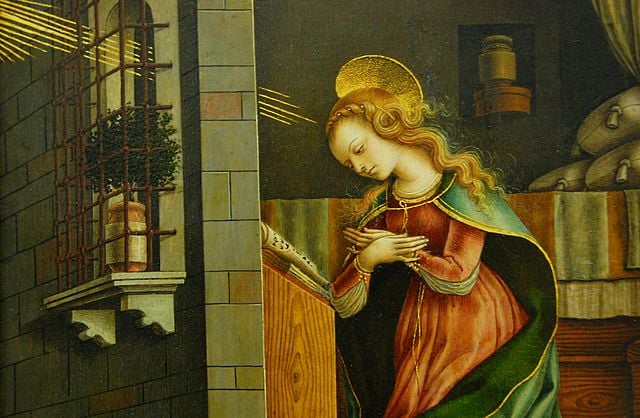
Photo credit: The Virgin Annunciate, by Carlo Crivelli (c. 1435-c. 1495) [public domain / Wikimedia Commons]

*
Summary: Protestant anti-Catholic apologist Jason Engwer mightily tries to disprove the perpetual virginity of Mary, but there are just too many good opposing biblical arguments.
Previous Post
June 24, 2025
Zwingli's Watered-Down Original Sin
Next Post
June 26, 2025 Intercession of the Saints: Zwingli vs. Scripture
Recent Comments
"And lastly, I belong to no denomination and am free to serve God as He ..."
Is Venerating Men & Angels Worship? ..."
"And obeisance doesn't mean "worship". It means "respect", "obey", or "submission". Very weird that you ..."
Is Venerating Men & Angels Worship? ..."
"Many of these scriptures you have noted have been taken out of context. With Daniel, ..."
Is Venerating Men & Angels Worship? ..."
""Protestants often point out that Jesus is now triumphant in heaven and object to Catholics ..."
Three More Anti-Catholic Lies About Catholicism ..."
Browse Our Archives
Select a Category & Last Things About Me Anti-Catholicism Atheism & Agnosticism Baptism and Sacramentalism Bible and Tradition Blessed Virgin Mary Books by Dave Armstrong C. S. Lewis Calvinism & General Protestantism Catholic Apologetics Catholic Apologists Catholic conversion Catholic converts Christmas Church (Ecclesiology) Church History Conversion and Converts Development of Doctrine Eastern Orthodoxy Ecumenism & Christian Unity Eucharist & Liturgy Fathers of the Church French Translations G. K. Chesterton Hell Hell & Satan Hell & Satan & Last Things Heresies & Comparative Religion Holistic Health Inquisition & Crusades & Scandals James White Jews & Judaism & Old Testament John Calvin John Henry Newman Liberal / Modernist Theology Life Issues Literary Resume Lutheranism Mariology Martin Luther Music Orthodoxy Papacy & Infallibility Personal Page Philosophy & Science Political & Ethical & Moral Issues Protestant Persecution & Intolerance Protestantism Purgatory Purgatory & Penance Romantic & Imaginative Theology Saints & Purgatory & Penance Salvation Salvation & Justification Satan & Last Things Sexuality and Gender Issues Spanish Translations Traditionalism vs. Radical Catholic Reactionaries Traducciones al español / tradução para português Trinitarianism & Christology Uncategorized Videos
Select a Month October 2026 September 2026 August 2026 July 2026 June 2026 May 2026 April 2026 March 2026 February 2026 January 2026 December 2025 November 2025 October 2025 September 2025 August 2025 July 2025 June 2025 May 2025 April 2025 March 2025 February 2025 January 2025 December 2024 November 2024 October 2024 September 2024 August 2024 July 2024 June 2024 May 2024 April 2024 March 2024 February 2024 January 2024 December 2023 November 2023 October 2023 September 2023 August 2023 July 2023 June 2023 May 2023 April 2023 March 2023 February 2023 January 2023 December 2022 November 2022 October 2022 September 2022 August 2022 July 2022 June 2022 May 2022 April 2022 March 2022 February 2022 January 2022 December 2021 November 2021 October 2021 September 2021 August 2021 July 2021 June 2021 May 2021 April 2021 March 2021 February 2021 January 2021 December 2020 November 2020 October 2020 September 2020 August 2020 July 2020 June 2020 May 2020 April 2020 March 2020 February 2020 January 2020 December 2019 November 2019 October 2019 September 2019 August 2019 July 2019 June 2019 May 2019 April 2019 March 2019 February 2019 January 2019 December 2018 November 2018 October 2018 September 2018 August 2018 July 2018 June 2018 May 2018 April 2018 March 2018 February 2018 January 2018 December 2017 November 2017 October 2017 September 2017 August 2017 July 2017 June 2017 May 2017 April 2017 March 2017 February 2017 January 2017 December 2016 November 2016 October 2016 September 2016 August 2016 July 2016 June 2016 May 2016 April 2016 March 2016 February 2016 January 2016 December 2015 November 2015 October 2015 September 2015 August 2015 July 2015 June 2015 May 2015 April 2015 March 2015 February 2015 January 2015 December 2014 November 2014 October 2014 September 2014 August 2014 July 2014 June 2014 April 2014 March 2014 February 2014 January 2014 December 2013 November 2013 October 2013 September 2013 August 2013 July 2013 June 2013 April 2013 March 2013 February 2013 January 2013 December 2012 November 2012 October 2012 September 2012 August 2012 July 2012 June 2012 May 2012 April 2012 March 2012 February 2012 January 2012 December 2011 November 2011 October 2011 September 2011 August 2011 July 2011 June 2011 April 2011 March 2011 February 2011 October 2010 September 2010 August 2010 July 2010 April 2010 March 2010 December 2009 October 2009 August 2009 July 2009 June 2009 May 2009 March 2009 February 2009 October 2008 September 2008 April 2008 March 2008 February 2008 January 2008 December 2007 November 2007 October 2007 May 2007 March 2007 February 2007 January 2007 November 2006 October 2006 September 2006 August 2006 July 2006 June 2006 May 2006 April 2006 March 2006 February 2006 October 2005 June 2005 April 2005 February 2005 July 2004 May 2004 April 2004
Follow Us!
TAKE THE
Religious Wisdom Quiz
What city did David capture and make the capital of Israel?
Select your answer to see how you score.
Bethlehem Samaria Jerusalem Hebron
Books by This Author Books by Dave Armstrong
Related posts from Biblical Evidence for Catholicism

Three More Anti-Catholic Lies About Catholicism (#6-4)
Biblical Evidence for Catholicism

Top Ten Anti-Catholic Lies (#10-7)
Biblical Evidence for Catholicism

Holy Ground: Why Mary Had NO Other Children...
Biblical Evidence for Catholicism
Protestant Confessions & "Ever-Virgin" Mary
Biblical Evidence for Catholicism
TRENDING AT PATHEOS Catholic

I was strolling through the top floor of the brand new Parthenon...

What Does Gêvâh Mean For Kimberley Guifoyle &...
This week, a lot of the news is focused on Kimberly Guilfoyle....

INNER CIRCLE: Profound Mystery (Of Christ In All...
Ephesians 5:31-32 “For this reason, a man will leave his father and...

Do Not Rejoice When Your Enemy Falls: The...
Turning an execution into a public spectacle is a disturbing expression of...

'The Chosen' S6 Trailer: The Passion Gets Very...
Not many watching 'The Chosen' worry about spoilers, but just because they...

The purpose-driven labor priest
A labor activist reads Rick Warren and it gets me wondering about...
view all Catholic blogs
What Are Your Thoughts?leave a comment
Ad-Free & Subscriber Log-In Subscription Support
- About Us
- 2026 Calendar
- Videos
- Podcasts
- Library of World Religions
- Faith In Media Tracker
- Advertise With Us
- Write for Us
- Privacy Policy
- Terms of Service
- Do Not Sell My Data
- Contact Us
- Radiant Digital
- Manage Newsletter Subscriptions
- Unsubscribe From Notifications
- Sitemap
Copyright 2008-2026, Patheos. All rights reserved.
Subscription Support Ad-Free & Subscriber Log-In
Follow Patheos