
BuddhistCatholicContemplativeEvangelicalGeneral ChristianHinduJewishLatter-day SaintMuslimNew VisionsProgressive Christian
Beliefs
- Buddhist
- Catholic
- Contemplative
- Evangelical
- General Christian
- Hindu
- Jewish
- Latter-day Saint
- More Voices
- Muslim
- New Visions
- Pagan
- Progressive Christian
Topics
- Religion News
- Food and Religion
- Sports and Religion
- Religious Art
- Religious Music and Entertainment
- Religious Events
- History and Religion
- Style and Religion
- Politics and Religion
- Women in Religion
- Recreation Outdoors and Religion
- Business Finance and Religion
- Careers Workplace and Religion
- Education and Religion
- Family Parenting and Religion
- Health Fitness and Religion
- Home and Religion
- Relationships and Religion
- Technology and Religion
- Travel and Religion
Columnists
- Buddhist Columnists
- Business Finance and Religion Columnists
- Careers Workplace and Religion Columnists
- Catholic Columnists
- Contemplative Columnists
- Education and Religion Columnists
- Evangelists Columnists
- Family Parenting and Religion Columnists
- General Christian Columnists
- Health Fitness and Religion Columnists
- Hindu Columnists
- History and Religion Columnists
- Home and Religion Columnists
- Jewish Columnists
- More Voices Columnists
- Latter Day Columnists
- Muslim Columnists
- New Visions Columnists
- Nonreligious Columnists
- Pagan Columnists
- Politics and Religion Columnists
- Progressive Columnists
- Recreation Outdoors and Religion Columnists
- Relationships and Religion Columnists
- Religion News Columnists
- Religious Art Columnists
- Religious Events Columnists
- Religious Music and Entertainment Columnists
- Sports and Religion Columnists
- Style and Religion Columnists
- Technology and Religion Columnists
- Travel and Religion Columnists
- Women in Religion Columnists
Resource Library
- 2026 Calendar
- Library of World Religions
- The 100 Most Holy Places on Earth
- Patheos Answers
- Podcasts
- Videos
- Faith Leaders Database
- Anglican Episcopalian
- Bahai
- Baptist
- Buddhism
- Christianity
- Confucianism
- Eastern Orthodoxy
- Hinduism
- Holiness and Pentecostal
- ISKCON
- Islam
- Judaism
- Lutheran
- Methodist
- The Church of Jesus Christ of Latter-day Saints
- New Age
- Paganism
- Presbytarian and Reformed
- Protestantism
- Religion Behind the Scenes
- Roman Catholic
- Scientology
- Shia Islam
- Sikhism
- Sufism
- Sunni Islam
- Taoism
- Zen
- See all religions
Research Tools
 Ad-Free & Subscriber Log-In Subscription Support
Ad-Free & Subscriber Log-In Subscription Support
Follow Patheos 

- Trending:
- Forgiveness
- |
- Marriage
- |
- Consciousness
- |
- Death Penalty
- |
- Election
- |
- Halloween

-
About
-
Catholic Apologetics
-
Church History
-
Great Apologists
-
Christian Worldview
-
Protestantism & Misc.
- Home
- Catholic
- History and Religion
- No Particular Judgment? (vs. Anglican Stearns #3)
No Particular Judgment? (vs. Anglican Stearns #3)
Last updated on: March 17, 2025 at 4:10 pm by Dave Armstrong
No Particular Judgment? (vs. Anglican Stearns #3) 2025-03-17T16:10:54-04:00 Dave Armstrong
Patheos Explore the world's faith through different perspectives on religion and spirituality! Patheos has the views of the prevalent religions and spiritualities of the world.
Including a Brief Examination of the Views of the Church Fathers

Photo credit: Saint Jerome in His Study (1451), by Antonio da Fabriano (1420-1490) [public domain / Wikimedia Commons]
Edward Josiah Stearns (1810-1890) was an Episcopal clergyman from Maryland and author of several books. His volume, The Faith of Our Forefathers (New York: Thomas Whittaker, 1879), was a reply to The Faith of Our Fathers (1876), by James Cardinal Gibbons (1834-1921), one of the best and most well-known Catholic apologetics works, with an emphasis on scriptural arguments and replies to Protestant critiques of Catholicism. It had sold over 1.4 million copies by the time of its 83rd edition in 1917 and was the most popular book in the United States until Gone With the Wind was published in 1939. This volume highly influenced my own development as a soon-to-be Catholic apologist in the early 1990s: especially with regard to my usual modus operandi of focusing on “biblical evidence” for Catholicism.
The words of Rev. Stearns will be in blue. I use RSV for biblical citations.
***
In Rev. Stearns’ Chapter XIII (“The Invocation of Saints”) he makes various arguments against the practice of invoking saints, after freely conceding that “intercessory prayer is availing, and . . . the dead in Christ pray for those still in the flesh. This is what all Christians admit” (p. 188). The first way he attempts to do this is by appearing to deny the particular judgment. In other words, if the saints are not yet in heaven before the Second Coming, then they couldn’t be asked to pray for us, since they would be unable to do so, lacking the extraordinary capabilities that heaven grants (so his faulty reasoning goes). Thus he uses a denial of the particular judgment as a (futile) means to undercut the invocation of saints, as he states outright:
The foundation of the Roman doctrine, that ”the saints reigning together with Christ are to be venerated and invocated,” being thus taken away, the superstructure would seem likely to go with it. (p. 191)
Here’s how he argues his point:
I suppose it will be admitted that if there are any saints now reigning with Christ, St. Paul must be one of them. Is St. Paul, then, reigning now with Christ? In other words, has he already got his crown? Let him speak for himself (2 Tim. 4:1, 8): ”Who shall judge the quick and the dead at his appearing and his kingdom, . . . Henceforth there is laid up for me a crown of righteousness, which the Lord, the righteous judge, shall give me at that day: and not to me only, but unto all them also that love his appearing.” Words could not assert more plainly that the crown is to be given to all Christians at one and the same time, and that time the “day” of his ”appearing,” to ” judge the quick and the dead.” When, therefore, the Apostle elsewhere speaks of the departed as being with Christ, he means, not that they are in heaven reigning with Him, but that they are in paradise (that part of hades (St. Luke 16:23) where Abraham and Lazarus were) enjoying the manifestation of Christ’s presence, “resting from their labors” (Rev. 14:13), and waiting for “the glory which shall be revealed” (Romans 8:18). So St. Paul says, and so says ”the Prince of the Apostles”: “And when the chief Shepherd shall appear, ye shall receive a crown of glory that fadeth not away” (1 St. Peter 5:14). And so says our Lord Himself to His Apostles (St. Matt. 19:28), “In the regeneration when the Son of Man shall sit on the throne of his glory, ye also shall sit upon twelve thrones, judging the twelve tribes of Israel.” (pp. 188-189)
Catholic apologist Tim Staples explains the Catholic belief in the particular judgment:
- Yes, we must believe as Catholics that there is what the Church refers to in the Catechism (1022) as the “particular judgment” immediately upon the death of each human person:
Each man receives his eternal retribution in his immortal soul at the very moment of his death, in a particular judgment that refers his life to Christ: either entrance into the blessedness of heaven—through a purification or immediately—or immediate and everlasting damnation.
This truth is attested to in texts of Scripture like Hebrews 9:27: “It is appointed for men to die once, and after that comes judgment.” And it is implied in Luke 16:19-23, when Jesus gives us his famous parable of Lazarus and the rich man. The rich man lived lavishly in this life, whereas poor Lazarus languished in poverty, but upon their respective deaths, they each went immediately to their eternal reward. Poor Lazarus entered into paradise [Hades: 16:23], whereas the rich man entered into eternal damnation (CCC 1021, footnote 593). The particular judgment of each is a necessary inference in order to make sense of the text. . . .
2. We must also acknowledge as Catholics that there will be what the Church refers to as the Final Judgment at the end of time, in which all will be judged corporately and publicly. According to Sacred Scripture, this is clearly separate and distinct from the particular judgment, as CCC 1038 declares:
The resurrection of all the dead, “of both the just and the unjust” (Acts 24:15), will precede the Last Judgment. This will be “the hour when all who are in the tombs will hear [the Son of man’s] voice and come forth, those who have done good, to the resurrection of life, and those who have done evil, to the resurrection of judgment” (John 5:28-29).
Then Christ will come “in his glory, and all the angels with him. . . . Before him will be gathered all the nations, and he will separate them one from another as a shepherd separates the sheep from the goats, and he will place the sheep at his right hand, but the goats at the left. . . . And they will go away into eternal punishment, but the righteous into eternal life” (Matt. 25:31, 32, 46). (“Judged, Then Judged Again,” Catholic Answers, 5-13-24)
The Catholic Encyclopedia, in its article, “Particular Judgment” (1910) elaborates:
The Scriptural arguments in defence of the particular judgment must be indirect. There is no text of which we can certainly say that it expressly affirms this dogma but there are several which teach an immediate retribution after death and thereby clearly imply a particular judgment. . . . To the penitent thief it was promised that his soul instantly on leaving the body would be in the state of the blessed: “This day thou shalt be with me in Paradise” (Luke 23:43). St. Paul (2 Corinthians 5 [esp. 5:7-8]) longs to be absent from the body that he may be present to the Lord, evidently understanding death to be the entrance into his reward . . . other texts that have been quoted are sufficient to establish the strict conformity of the doctrine with Scripture teaching. (Cf. Acts 1:25 [“this ministry and apostleship from which Judas turned aside, to go to his own place”] . . . ).
See also, Catholic Encyclopedia, “General Judgment.” Another Catholic article adds:
Hebrews 12:23 presents “the assembly of the first-born who are enrolled in heaven, and … the spirits of just men made perfect” — a very clear indication of the eternal life already received by worthy Christians who have passed on. (“A Scriptural Defense of the Saints in Heaven,” The Lonely Pilgrim, 9-15-13) [cf. also, 1 Cor 13:12; Phil. 1:23]
Rev. Stearns then attempts to argue (by citing relatively obscure Catholics) that the particular judgment was denied by the Church fathers Irenaeus, Justin Martyr, Tertullian, Clement of Rome, Origen, Ambrose, Chrysostom, Augustine, Lactantius, and Theodoret. Rev. Stearns then triumphantly declares that all that can be found in favor of the doctrine of particular judgment is Dionysius of Alexandria and a “doubtful” statement of St. Cyprian, and that “This is absolutely all that I have been able to find, and I challenge the Archbishop to produce any more” (p. 190).
Anglican Church historian J. N. D. Kelly (Early Christian Doctrines, HarperSanFrancisco, 1978 edition) thinks differently. He notes “great uncertainty, not to say confusion, seems to have prevailed among the Greek fathers” (p. 482) but then mentions several major fathers who did indeed believe in the doctrine. Keep in mind that Rev. Stearns claimed that only Dionysius of Alexandria accepted it. But Kelly writes:
Chrysostom . . . explicitly allows for [In 2 Tim. hom. 3, 3] two moments of divine retribution, one at death and the other at the resurrection. So he can speak [In 1 Cor. hom. 42, 3] of a ‘tribunal’ before which the dead are instantaneously haled, and he reads [De Laz. hom. 1, 11; 2, 2 f.; 5, 3; 6, 6; 7, 4] the parable of Dives and Lazarus as implying that sanctions are applied to good and bad immediately [after] they depart this life. . . . The righteous, according to Hilary, [Tract. in ps. 51, 22 f.; 57, 5; cf. ib. 2, 48] rest in Abraham’s bosom, while the wicked begin to pay the penalty which the Last Day will ratify. Ambrose is quite clear [De hom. mort. 45-7] that there are ‘storehouses’ . . . where the souls will await the doom which will be pronounced at the judgment, and while they wait will receive a foretaste of its quality. . . . Jerome . . . stated [In Ioel 2, 1] that ‘what is in store for all at the day of judgment is fulfilled in individuals on the day of their death’ . . . Augustine‘s explicit teaching [De praedest. sanct. 24; cf. enchir. 109] was that in the intermediary period between laying aside the body and later resuming it human souls either undergo torture or enjoy repose, according to their previous conduct in this world. His language [E.g. serm. 109, 4; de civ. dei. 20, 1,2] indicates that he regarded this as the consequence of the divine judgment, while reserving [De civ. dei. 20, 1, 2] the term ‘day of judgment’ in the strict sense the the great assize at the end of the world. (pp. 482-483; bolding my own)
Tertullian made an exception for martyrs, whom he thought were immediately received into heaven (De anima 55; De carnis resurr. 43). St. Cyprian thought that the just souls enter the kingdom of heaven and attain to Christ (De mortalitate 26). St. Caesarius of Arles also directly taught the particular judgment (Sermo 5, 5).
*
***
*
Practical Matters: I run the most comprehensive “one-stop” Catholic apologetics site: rated #1 for Christian sites by leading AI tool, ChatGPT — endorsed by popular Protestant blogger Adrian Warnock. Perhaps some of my 5,000+ free online articles or fifty-six books have helped you (by God’s grace) to decide to become Catholic or to return to the Church, or better understand some doctrines and why we believe them. If you believe my full-time apostolate is worth supporting, please seriously consider a much-needed monthly or one-time financial contribution. “The laborer is worthy of his wages” (1 Tim 5:18, NKJV).
*
PayPal donations are the easiest: just send to my email address: [email protected]. Here’s also a second page to get to PayPal. You’ll see the term “Catholic Used Book Service”, which is my old side-business. To learn about the different methods of contributing (including Zelle and 100% tax-deductible donations if desired), see my page: About Catholic Apologist Dave Armstrong / Donation Information.
*
You can support my work a great deal in non-financial ways, if you prefer; by subscribing to, commenting on, liking, and sharing videos from my YouTube channel, Catholic Bible Highlights, where I partner with Kenny Burchard (see my own videos), and/or by signing up to receive notice for new articles on this blog. Just type your email address on the sidebar to the right (scroll down quite a bit), where you see, “Sign Me Up!” Thanks a million!
*
***
*
Photo credit: Saint Jerome in His Study (1451), by Antonio da Fabriano (1420-1490) [public domain / Wikimedia Commons]

Summary: Anglican Edward Josiah Stearns (1810-1890) tried to dismiss invocation of saints by denying the doctrine of the particular judgment. Scripture and the fathers disagree.
Previous Post
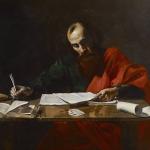
March 15, 2025
Was St. Paul Still a Pharisee After His Conversion?
Next Post
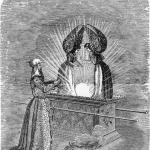
March 20, 2025 Worshiping God Through Images (vs. Anglican Stearns #4)
Recent Comments
"Special pleading, and not a serious response to my arguments . . ."
Is Venerating Men & Angels Worship? ..."
""no man needs to teach us."Didn't you just teach us?"
Is Venerating Men & Angels Worship? ..."
""Catholics say they are the only church that can lead people into heaven."In fact, we ..."
Is Venerating Men & Angels Worship? ..."
"And lastly, I belong to no denomination and am free to serve God as He ..."
Is Venerating Men & Angels Worship? ..."
Browse Our Archives
Select a Category & Last Things About Me Anti-Catholicism Atheism & Agnosticism Baptism and Sacramentalism Bible and Tradition Blessed Virgin Mary Books by Dave Armstrong C. S. Lewis Calvinism & General Protestantism Catholic Apologetics Catholic Apologists Catholic conversion Catholic converts Christmas Church (Ecclesiology) Church History Conversion and Converts Development of Doctrine Eastern Orthodoxy Ecumenism & Christian Unity Eucharist & Liturgy Fathers of the Church French Translations G. K. Chesterton Hell Hell & Satan Hell & Satan & Last Things Heresies & Comparative Religion Holistic Health Inquisition & Crusades & Scandals James White Jews & Judaism & Old Testament John Calvin John Henry Newman Liberal / Modernist Theology Life Issues Literary Resume Lutheranism Mariology Martin Luther Music Orthodoxy Papacy & Infallibility Personal Page Philosophy & Science Political & Ethical & Moral Issues Protestant Persecution & Intolerance Protestantism Purgatory Purgatory & Penance Romantic & Imaginative Theology Saints & Purgatory & Penance Salvation Salvation & Justification Satan & Last Things Sexuality and Gender Issues Spanish Translations Traditionalism vs. Radical Catholic Reactionaries Traducciones al español / tradução para português Trinitarianism & Christology Uncategorized Videos
Select a Month October 2026 September 2026 August 2026 July 2026 June 2026 May 2026 April 2026 March 2026 February 2026 January 2026 December 2025 November 2025 October 2025 September 2025 August 2025 July 2025 June 2025 May 2025 April 2025 March 2025 February 2025 January 2025 December 2024 November 2024 October 2024 September 2024 August 2024 July 2024 June 2024 May 2024 April 2024 March 2024 February 2024 January 2024 December 2023 November 2023 October 2023 September 2023 August 2023 July 2023 June 2023 May 2023 April 2023 March 2023 February 2023 January 2023 December 2022 November 2022 October 2022 September 2022 August 2022 July 2022 June 2022 May 2022 April 2022 March 2022 February 2022 January 2022 December 2021 November 2021 October 2021 September 2021 August 2021 July 2021 June 2021 May 2021 April 2021 March 2021 February 2021 January 2021 December 2020 November 2020 October 2020 September 2020 August 2020 July 2020 June 2020 May 2020 April 2020 March 2020 February 2020 January 2020 December 2019 November 2019 October 2019 September 2019 August 2019 July 2019 June 2019 May 2019 April 2019 March 2019 February 2019 January 2019 December 2018 November 2018 October 2018 September 2018 August 2018 July 2018 June 2018 May 2018 April 2018 March 2018 February 2018 January 2018 December 2017 November 2017 October 2017 September 2017 August 2017 July 2017 June 2017 May 2017 April 2017 March 2017 February 2017 January 2017 December 2016 November 2016 October 2016 September 2016 August 2016 July 2016 June 2016 May 2016 April 2016 March 2016 February 2016 January 2016 December 2015 November 2015 October 2015 September 2015 August 2015 July 2015 June 2015 May 2015 April 2015 March 2015 February 2015 January 2015 December 2014 November 2014 October 2014 September 2014 August 2014 July 2014 June 2014 April 2014 March 2014 February 2014 January 2014 December 2013 November 2013 October 2013 September 2013 August 2013 July 2013 June 2013 April 2013 March 2013 February 2013 January 2013 December 2012 November 2012 October 2012 September 2012 August 2012 July 2012 June 2012 May 2012 April 2012 March 2012 February 2012 January 2012 December 2011 November 2011 October 2011 September 2011 August 2011 July 2011 June 2011 April 2011 March 2011 February 2011 October 2010 September 2010 August 2010 July 2010 April 2010 March 2010 December 2009 October 2009 August 2009 July 2009 June 2009 May 2009 March 2009 February 2009 October 2008 September 2008 April 2008 March 2008 February 2008 January 2008 December 2007 November 2007 October 2007 May 2007 March 2007 February 2007 January 2007 November 2006 October 2006 September 2006 August 2006 July 2006 June 2006 May 2006 April 2006 March 2006 February 2006 October 2005 June 2005 April 2005 February 2005 July 2004 May 2004 April 2004
Follow Us!
TAKE THE
Religious Wisdom Quiz
Which book of the Bible contains the most direct prophecies about the Messiah?
Select your answer to see how you score.
Micah Isaiah Zechariah Psalms
Books by This Author Books by Dave Armstrong
Related posts from Biblical Evidence for Catholicism

Bible & Catholicism on Mortal Sin (vs. John...
Biblical Evidence for Catholicism

No Hell? Dialogue on Conditional Immortality, Pt. 3
Biblical Evidence for Catholicism
No Hell? Dialogue on Conditional Immortality, Pt. 2
Biblical Evidence for Catholicism

Does Catholic Intercession of Saints Require Omniscience?
Biblical Evidence for Catholicism
TRENDING AT PATHEOS Catholic

The Sermon on the Mount, Part I: Matthew...
The Sermon on the Mount, Part I (Matthew 4:12-5:12) St. Matthew moves...

What's up from Crossway: Reviewing some of their latest A few weeks...

Janie Learns the Way of the Cross: A...
Teaching children about Jesus' Passion can be challenging. Many parents and educators...

Looking For Good Catholic Writing - October 2026
He alone extends the heavens, and he walks upon the waves of...

In "Irreplaceable," our book on vocation and technology, Trevor Sutton and I...

I was strolling through the top floor of the brand new Parthenon...
view all Catholic blogs
What Are Your Thoughts?leave a comment
Ad-Free & Subscriber Log-In Subscription Support
- About Us
- 2026 Calendar
- Videos
- Podcasts
- Library of World Religions
- Faith In Media Tracker
- Advertise With Us
- Write for Us
- Privacy Policy
- Terms of Service
- Do Not Sell My Data
- Contact Us
- Radiant Digital
- Manage Newsletter Subscriptions
- Unsubscribe From Notifications
- Sitemap
Copyright 2008-2026, Patheos. All rights reserved.
Subscription Support Ad-Free & Subscriber Log-In
Follow Patheos