
BuddhistCatholicContemplativeEvangelicalGeneral ChristianHinduJewishLatter-day SaintMuslimNew VisionsProgressive Christian
Beliefs
- Buddhist
- Catholic
- Contemplative
- Evangelical
- General Christian
- Hindu
- Jewish
- Latter-day Saint
- More Voices
- Muslim
- New Visions
- Pagan
- Progressive Christian
Topics
- Religion News
- Food and Religion
- Sports and Religion
- Religious Art
- Religious Music and Entertainment
- Religious Events
- History and Religion
- Style and Religion
- Politics and Religion
- Women in Religion
- Recreation Outdoors and Religion
- Business Finance and Religion
- Careers Workplace and Religion
- Education and Religion
- Family Parenting and Religion
- Health Fitness and Religion
- Home and Religion
- Relationships and Religion
- Technology and Religion
- Travel and Religion
Columnists
- Buddhist Columnists
- Business Finance and Religion Columnists
- Careers Workplace and Religion Columnists
- Catholic Columnists
- Contemplative Columnists
- Education and Religion Columnists
- Evangelists Columnists
- Family Parenting and Religion Columnists
- General Christian Columnists
- Health Fitness and Religion Columnists
- Hindu Columnists
- History and Religion Columnists
- Home and Religion Columnists
- Jewish Columnists
- More Voices Columnists
- Latter Day Columnists
- Muslim Columnists
- New Visions Columnists
- Nonreligious Columnists
- Pagan Columnists
- Politics and Religion Columnists
- Progressive Columnists
- Recreation Outdoors and Religion Columnists
- Relationships and Religion Columnists
- Religion News Columnists
- Religious Art Columnists
- Religious Events Columnists
- Religious Music and Entertainment Columnists
- Sports and Religion Columnists
- Style and Religion Columnists
- Technology and Religion Columnists
- Travel and Religion Columnists
- Women in Religion Columnists
Resource Library
- 2026 Calendar
- Library of World Religions
- The 100 Most Holy Places on Earth
- Patheos Answers
- Podcasts
- Videos
- Faith Leaders Database
- Anglican Episcopalian
- Bahai
- Baptist
- Buddhism
- Christianity
- Confucianism
- Eastern Orthodoxy
- Hinduism
- Holiness and Pentecostal
- ISKCON
- Islam
- Judaism
- Lutheran
- Methodist
- The Church of Jesus Christ of Latter-day Saints
- New Age
- Paganism
- Presbytarian and Reformed
- Protestantism
- Religion Behind the Scenes
- Roman Catholic
- Scientology
- Shia Islam
- Sikhism
- Sufism
- Sunni Islam
- Taoism
- Zen
- See all religions
Research Tools
 Ad-Free & Subscriber Log-In Subscription Support
Ad-Free & Subscriber Log-In Subscription Support
Follow Patheos 

- Trending:
- Forgiveness
- |
- Marriage
- |
- Consciousness
- |
- Death Penalty
- |
- Election
- |
- Halloween

-
About
-
Catholic Apologetics
-
Church History
-
Great Apologists
-
Christian Worldview
-
Protestantism & Misc.
- Home
- Catholic
- History and Religion
- Consecrated Celibacy (vs. Lutheran von Hase)
Consecrated Celibacy (vs. Lutheran von Hase)
Last updated on: March 29, 2025 at 10:05 am by Dave Armstrong
Consecrated Celibacy (vs. Lutheran von Hase) 2025-03-29T10:05:31-04:00 Dave Armstrong
Patheos Explore the world's faith through different perspectives on religion and spirituality! Patheos has the views of the prevalent religions and spiritualities of the world.
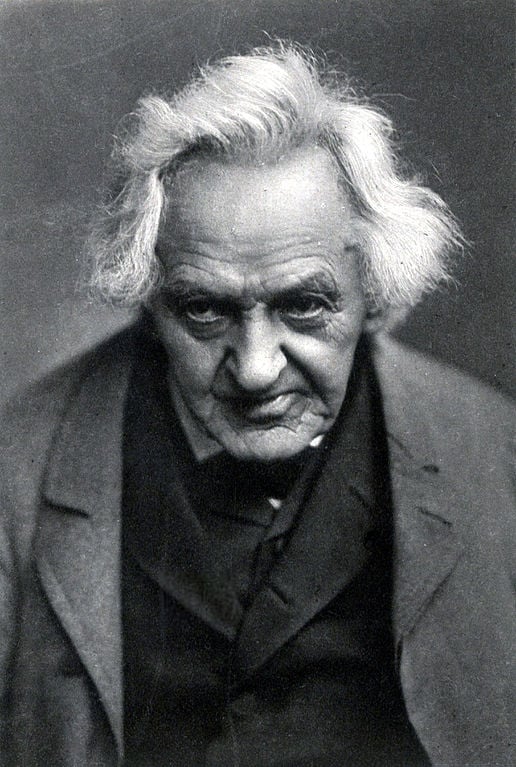
Photo credit: Karl August von Hase (1800-1890), in 1890 [public domain / Wikimedia Commons]
Karl August von Hase (1800-1890) was a German Lutheran theologian and church historian, who was a professor of theology at Jena from 1829 to 1883, and the great-grandfather of Dietrich Bonhoeffer. He wrote many books; his most influential one being A History of the Christian Church (1834; 12th edition, 1900). I will be critiquing one portion of the first volume of von Hase’s two-volume work (one / two), Handbook to the Controversy with Rome (1862; 7th edition, 1900; English translation by A. W. Streane, London: The Religious Tract Society, 1906). The translator wrote that it “has been fitly called indispensable for a knowledge of the Roman controversy, and a masterpiece of Protestant theology . . . unrefuted and irrefutable” and he himself described it as “a powerful statement of the case against Rome” (v. 1, p. viii). His words will be in blue. I use RSV for biblical citations.
*****
The conception that obedience to the dictates of nature was not becoming for the higher religious life came first from without into later Judaism, and fixed itself in the celibate vow of the Essene. (pp. 174-175)
The Essenes began in the second century BC. Jeremiah the prophet lived from c. 650- c. 570 BC, and he wrote in his book:
Jeremiah 16:1-2 The word of the LORD came to me: [2] “You shall not take a wife, nor shall you have sons or daughters in this place.”
Granted, he seems to have been an isolated example (though the prophets Elijah and Elisha may also have been celibate, as no mention is made of wives in their stories), but this shows that consecrated virginity for spiritual purposes was not completely unknown in ancient Judaism; nor did the “conception” of it come “first” some 450 years later.
St. Jerome derives comfort from another source : ‘ Peter washed away the defilement of marriage by means of the blood of martyrdom.’ (p. 176)
No individual Church father speaks for the Church, in terms of authority. Nor do even the mass of fathers. What they do is indicate the presence of holy tradition. But individual ones can be, and too often were, wrong in their opinions. This would be an example. The Catholic Church has never taught this. It teaches that marriage is a sacrament. Sacraments confer grace. They can hardly do that and be at the same time “defilement.”
Protestant contra-Catholic polemicists often use this tired tactic: if they can’t find an actual Church document to “prove” some argument of theirs that the Catholic Church is in error, they will look for — typically — either a scholar or a Church father to back themselves up. But we never said that either of those sorts of persons are part of Catholic magisterial authority, so it’s barking up a wrong tree. It’s essentially irrelevant.
there arose a glorification of the state of virginity, and with this a hesitation as to the compatibility of the priestly office with marriage. (p. 176)
Nothing — technically — “arose” because it was already a principle clearly stated in Holy Scripture by our Lord and St. Paul. We only “glorify” what they taught us should be glorified:
Matthew 19:10-12 The disciples said to him, “If such is the case of a man with his wife, it is not expedient to marry.” [11] But he said to them, “Not all men can receive this saying, but only those to whom it is given. [12] For there are eunuchs who have been so from birth, and there are eunuchs who have been made eunuchs by men, and there are eunuchs who have made themselves eunuchs for the sake of the kingdom of heaven. He who is able to receive this, let him receive it.”
1 Corinthians 7:7-9 I wish that all were as I myself am. But each has his own special gift from God, one of one kind and one of another. [8] To the unmarried and the widows I say that it is well for them to remain single as I do. [9] But if they cannot exercise self-control, they should marry. For it is better to marry than to be aflame with passion.
1 Corinthians 7:17 Only, let every one lead the life which the Lord has assigned to him, and in which God has called him. This is my rule in all the churches.
1 Corinthians 7:32-35 I want you to be free from anxieties. The unmarried man is anxious about the affairs of the Lord, how to please the Lord; [33] but the married man is anxious about worldly affairs, how to please his wife, [34] and his interests are divided. And the unmarried woman or girl is anxious about the affairs of the Lord, how to be holy in body and spirit; but the married woman is anxious about worldly affairs, how to please her husband. [35] I say this for your own benefit, not to lay any restraint upon you, but to promote good order and to secure your undivided devotion to the Lord. (cf. 7:28)
1 Corinthians 7:38 So that he who marries his betrothed does well; and he who refrains from marriage will do better.
In the biblical and Catholic view, one is to serve God in whatever state that God calls one to. Marriage is good and a sacrament (“he who marries . . . does well”) and celibacy is “better” for the reasons that Paul details in this chapter. That’s biblical teaching. We simply follow it, and so we require priests (in the Latin rites, not in eastern Catholicism) to be single, in order to draw from those who are in a state of life that Paul calls “better”.
How Protestants often counter this is to make out that we think marriage is bad because we say that consecrated virginity if heroic self-sacrifice and “better”: as Paul does. It’s not “bad vs. good”; it’s “good and better”. If one has to caricature an opponents’ views in order to “refute” it, then one must have an exceedingly weak case; otherwise, one would critique the actual view and not a distorted, made-up one.
Dr. von Hase does make a fair point when he notes about St. Paul’s view:
He was disposed to wish on account of the present distress that all were as he. . . . No order is to be made in this matter, and his dissuasion from wedlock, subject to such decision and depending completely upon individual tastes and dispositions, is given under the presumption of the approaching end of the world. (p. 175).
This is indeed true. Paul refers to “in view of the present distress” (7:26); however, though his remarks do have that larger context and presupposition, he goes on to make general points about singleness and marriage, that apply to all situations. And Jesus’ remarks in Matthew 19 had nothing to do, in context, with the end times, etc. He said what he did in response to a discussion about divorce under Mosaic Law.
. . . at the great Council of Nicaea – the result of ecclesiastical morality was to demand a victory over nature, and many votes were given in favour of the new decision, . . . (p. 177)
It’s not a matter of overcoming “nature”; rather, it’s an espousal of heroic — strictly personal — renunciation of a good thing, and heroic sacrifice for the sake of the kingdom (great Christian and biblical ideals, last time I checked). Jesus and Paul taught that; we follow it. As I have noted many times in defending Catholic views in this regard, every organization has requirements that one may choose to follow, so as to join, or not. No one is forced at gunpoint to join any group or way of life.
Short people have a hard time playing in the NBA. Those who are allergic to dander would find it difficult being employed at a dog kennel. One who hates preparing meals would not be a chef, etc. ad infinitem. And so, if one is called to marriage by God, then they can’t be a Catholic priest in the western rites. But they can do so in Eastern Catholicism, where it’s permitted. That option is open to them. Catholicism incorporates both visions of the priesthood within itself.
There arose [in the Council of Nicaea] Paphnutius, an Egyptian bishop, . . . (p. 177)
Here we go again, appealing to an individual opinion . . .
who had lost an eye in the Christian persecutions and was so honoured among the people that miracles were ascribed to him. This aged confessor, who had never touched a woman, urged that so heavy a yoke should not be laid upon the priests; moreover that untarnished wedlock was an honourable thing, and the intercourse of the man with an honoured spouse chastity. (p. 177)
The Church never taught otherwise, so this was neither here nor there. But Dr. von Hase barges on and ridiculously continues:
Chastity and marriage are considered as irreconcilable opposites, and marriage thus only as an institution for the legal satisfaction of evil lusts. (p. 183)
This is sheer nonsense. What a disappointment! I was hoping for some serious arguments from this supposedly “unrefuted and irrefutable” two-volume work. Pope Anastasius I wrote in 400: “If anyone . . . believes that human marriages . . . are blameworthy, let him be anathema” (Denzinger #206, 2012 edition, p. 76). Pope John III, writing in 574 — long before celibacy requirements for priests — , was equally clear:
If anyone condemns human marriage and despises the procreation of children . . . let him be anathema.
If anyone says that the formation of the human body is the work of the devil and that the conception of children in their mothers’ womb is brought about through the activity of the devil . . . let him be anathema.
If anyone says that the creation of all flesh is not the work of God but of bad angels . . . let him be anathema. (Denzinger, ibid., #461-463, p. 159)
Marriage is “bad” and sex is “evil”? That’s not Catholic teaching. It was, however, Gnostic and Manichaean teaching, which Pope John III was roundly condemning. Adultery and fornication and other sexual sins are evil, but not sex per se, in a valid marriage.
all voted in support of his view, that it should simply be left to the discretion of individuals whether they should give up intercourse with their wives. (pp. 177-178)
That’s fine. This was the conciliar decision at that time. At a later date, the Church deemed it better to require celibacy for most of her priests, following Paul’s principles in 1 Corinthians 7. This isn’t dogma; it’s discipline and practice, and can change over time, as the Church sees fit.
Where nature is taboo, there arises a danger of the unnatural and the criminal. (p. 181)
Funny that this didn’t happen with John the Baptist, almost all of Jesus’ disciples (save Judas and whoever was married) and St. Paul. They seemed to do quite fine, and all were martyred, save St. John. The Catholic Church has had a long line of consecrated virgin-saints for 2000 years. Rather than closely examine what the Bible has to say on the subject. Dr. von Hase prefers to tell horror stories as attempted disproofs of biblical teaching (another old tactic of those who can provide scarce biblical rationale). Perhaps my favorite such anecdote from Dr. von Hase is this one:
Then come the experiences of the confessional, which, although but seldom including criminality, yet reveal to the unmarried man all the weaknesses of the female sex, and incite him to avail himself of them. (p. 181)
I would say that this is one reason of scores why the Catholic Church requires a very long discernment period with regard to a vocation from God of the priesthood (and the celibate priesthood). One must be called by God to undertake this special consecrated life. It can’t be done under one’s own “power.” For that matter, marriage has many challenges of a different nature as well and requires the same divine power to fulfill. But married men can be tempted, too (as all married men know well).
In any event, these sorts of stories and truisms about the weakness of human concupiscence do not disprove what Jesus and St. Paul taught as truths. All they prove is that some folks sin and fall short (which we already knew without him telling us). We don’t resolve the Catholic-Protestant dispute simply by trading scandalous stories of lousy examples of each group. Nothing’s accomplished by that. In the end, it has to be decided by the Holy Bible that we both hold to be God’s inspired revelation.
The celibacy of priests rests simply upon an ecclesiastical law which, as it once came into being, so can again fall into disuse. It was only by sophistry that the Council of Trent succeeded in making it into a dogma, . . . (p. 183)
Dr. von Hase correctly describes the status of celibacy in his first sentence, then oddly and surprisingly enough, contradicts himself in his second. A dogma is far different from an ecclesiastical practice or discipline. Trent simply stated that consecrated virginity is superior to marriage:
If anyone says that the married state excels the state of virginity or celibacy, and that it is better and happier to be united in matrimony than to remain in virginity or celibacy, let him be anathema. (Canon X on the Sacrament of Matrimony)
This, of course, reiterates what St. Paul plainly taught:
1 Corinthians 7:32-35, 38 . . . The unmarried man is anxious about the affairs of the Lord, how to please the Lord; [33] but the married man is anxious about worldly affairs, how to please his wife, [34] and his interests are divided. And the unmarried woman or girl is anxious about the affairs of the Lord, how to be holy in body and spirit; but the married woman is anxious about worldly affairs, how to please her husband. [35] I say this for your own benefit, . . . to secure your undivided devotion to the Lord. . . . [38] . . . he who marries his betrothed does well; and he who refrains from marriage will do better.
This being the case, why is Dr. von Hase not disputing against St. Paul rather than misrepresenting and blasting the Council of Trent? Well, we know why: that wouldn’t look very good for his case. The “whipping boy” is supposed to be the big bad Catholic Church: not apostles and the Bible. That would be bad PR. But whether this isn’t evident in his words or not, this is what it comes down to (its logical reduction): he opposed Paul and inspired Scripture from God, which the Catholic Church is simply being obedient to.
Obviously, it’s not a command for all to be celibate, but Paul does teach that consecrated celibacy is “better” than marriage and this is what lies behind the Catholic view on celibate priests and nuns. It’s “better” because it involves heroic renunciation of a sort that Paul understands well, since he gave up many things and suffered much in order to be the greatest evangelist of all time and the intellectual theologian of the New Testament. He wrote about this:
2 Corinthians 11:23-28 Are they servants of Christ? I am a better one — I am talking like a madman — with far greater labors, far more imprisonments, with countless beatings, and often near death. [24] Five times I have received at the hands of the Jews the forty lashes less one. [25] Three times I have been beaten with rods; once I was stoned. Three times I have been shipwrecked; a night and a day I have been adrift at sea; [26] on frequent journeys, in danger from rivers, danger from robbers, danger from my own people, danger from Gentiles, danger in the city, danger in the wilderness, danger at sea, danger from false brethren; [27] in toil and hardship, through many a sleepless night, in hunger and thirst, often without food, in cold and exposure. [28] And, apart from other things, there is the daily pressure upon me of my anxiety for all the churches.
2 Corinthians 12:10 For the sake of Christ, then, I am content with weaknesses, insults, hardships, persecutions, and calamities; for when I am weak, then I am strong.
Philippians 3:7-8 But whatever gain I had, I counted as loss for the sake of Christ. [8] Indeed I count everything as loss because of the surpassing worth of knowing Christ Jesus my Lord. For his sake I have suffered the loss of all things, and count them as refuse, . . .
Philippians 4:11-12 Not that I complain of want; for I have learned, in whatever state I am, to be content. [12] I know how to be abased, and I know how to abound; in any and all circumstances I have learned the secret of facing plenty and hunger, abundance and want.
St. Paul knew all about voluntary suffering and deprivation for the sake of the kingdom and his calling as an evangelist and writer of much of the New Testament. St. Luke records the words of God concerning Paul: “I will show him how much he must suffer for the sake of my name” (Acts 9:16). Catholic priests give up marriage and family for the sake of devotion to a higher and noble cause. It’s the same biblical, Christian self-sacrificing principle and is only a matter of degree.
the true substantial question is lost sight of, viz. whether the Church is justified and compelled, forbidding what Christ has left open, to demand the vow of celibacy from her priests? (p. 183)
Our Lord Jesus Christ didn’t leave this “open”! He said, “Not all men can receive this saying, but only those to whom it is given. . . . there are eunuchs who have made themselves eunuchs for the sake of the kingdom of heaven. He who is able to receive this, let him receive it” (Matthew 19:11-12). We simply say that Catholic priests are the equivalent of those whom Jesus described as “eunuchs who have made themselves eunuchs for the sake of the kingdom of heaven.”
Then He noted twice when He said this, how there will be men who cannot “receive” it because it hasn’t been “given” to them. In other words, it’s spiritually discerned by those given the grace by God to comprehend it. Dr. von Hase, unfortunately, seems to be among men of that class, who are unable to “receive” this teaching. And so basically he caricatures, mocks, and dismisses it. But he has not come within a thousand miles of dismantling the strong biblical case to be made for it. He scarcely even tries.
If we want to accuse someone of lowering marriage from what it is and ought to be, I would say that Protestantism is the far greater culprit, since it took away the sacramental status of marriage. I guess that means that Protestants no longer thought that it conveyed grace. And, more and more they allow divorce (which we don’t at all) and they cheapen marriage also by accepting contraception, which works against procreation and the love of children (and has directly led to abortion, philosophically and legally), and, more and more, premarital sex and homosexual sex: all of which cheapens marriage and makes it less holy than it is, and all of which we absolutely oppose, as we always have.
Much of this would have also been opposed in 19th century German Lutheranism, no doubt. One can thus hope that if Dr. von Hase were alive today, he would sing a much different tune, and go after legitimate blameworthy targets, rather than bogus ones.
Married priests, said Perrone, would not go with the same readiness as missionaries among barbarous nations. (p. 185)
Martin Luther was ashamed to see that it was the single Catholic priests who went to minister to the sick during epidemics or the outbreak of highly contagious diseases in his Saxony. The married Lutheran pastors with families were too afraid to do so.
Further it is alleged that the married priest is held back by innumerable domestic cares for his household, for his wife and children, from the sole care of his soul. (p. 185)
Yes; that was essentially “alleged” by the Apostle Paul, as we saw above. Dr. von Hase needs to argue against the proper target, rather than pretending that he (Paul) isn’t relevant to the discussion.
A capable man has time for everything which it becomes him to do. (p. 186)
Every man has the limitations of time and can’t minister with the same quality to more and more people, adding up to many hundreds in many cases. One person can only do so much; only so many hours in a day. It’s a very practical, sensible concern: how to get good things done more efficiently and successfully.
The Council of Trent, from the superior favour accorded to virginity as compared with the wedded state, . . . [made] merely an aesthetic judgement which is formed upon slender grounds and about which a warm dispute can be carried on, . . . (p. 188)
“Merely . . . aesthetic”? Again, it simply followed Paul’s straightforward teaching. Dr. von Hase apparently thinks that he and all Protestants by extension can reject whatever they don’t personally care for in Scripture. It’s a denial of biblical inerrancy, inspiration, and infallibility. But I understand that he was considered a theological “liberal” in his time, and this is what we always get from them: condescension towards Holy Scripture as well as Holy Tradition.
The motive . . . which mainly is responsible for the Catholic notion of assigning superior favour to the virgin state, viz. the worship of the Holy Virgin, . . . (p. 188)
I see. I guess Paul had nothing to do with it, huh? Again, we follow Paul: “let every one lead the life which the Lord has assigned to him, and in which God has called him” (1 Cor 7:17). If it’s consecrated celibacy, one must follow that; if it’s marriage, one must do that.
Not that I would wish to deny that there have existed many truly Catholic priests, who have lived only for their sacred office and their congregations, vanquishing the weaknesses of the flesh, and relinquishing that higher something offered by God. The very thought that as standing in the midst between God and mankind they were by the special favour of God raised above the common lot of men, may easily unite with the sentiment of spiritual insufficiency in themselves to induce pious fervour. There exists an ideal of the Catholic priesthood as of the Protestant pastor with his parsonage, and there are to be found in real life numerous approximations to both. The Catholic ladder, from the highest dignitaries of the Church, here and there still possessed of princely rank and riches, down to the poor chaplain and mendicant friar, has at any rate something impressive, and harmonizes with the essential nature of a Church, which with its brilliant externals yet desires to embrace all the relationships of life. (p. 192)
Thank you! At least it wasn’t all negative and caricature . . . I’ll end on this positive note, then.
*
***
*
Practical Matters: I run the most comprehensive “one-stop” Catholic apologetics site: rated #1 for Christian sites by leading AI tool, ChatGPT — endorsed by popular Protestant blogger Adrian Warnock. Perhaps some of my 5,000+ free online articles or fifty-six books have helped you (by God’s grace) to decide to become Catholic or to return to the Church, or better understand some doctrines and why we believe them. If you believe my full-time apostolate is worth supporting, please seriously consider a much-needed monthly or one-time financial contribution. “The laborer is worthy of his wages” (1 Tim 5:18, NKJV).
*
PayPal donations are the easiest: just send to my email address: [email protected]. Here’s also a second page to get to PayPal. You’ll see the term “Catholic Used Book Service”, which is my old side-business. To learn about the different methods of contributing (including Zelle and 100% tax-deductible donations if desired), see my page: About Catholic Apologist Dave Armstrong / Donation Information.
*
You can support my work a great deal in non-financial ways, if you prefer; by subscribing to, commenting on, liking, and sharing videos from my YouTube channel, Catholic Bible Highlights, where I partner with Kenny Burchard (see my own videos), and/or by signing up to receive notice for new articles on this blog. Just type your email address on the sidebar to the right (scroll down quite a bit), where you see, “Sign Me Up!” Thanks a million!
*
***
*
Photo credit: Karl August von Hase (1800-1890), in 1890 [public domain / Wikimedia Commons]

Summary: I offer biblically based responses to several arguments against priestly celibacy from the German Lutheran Karl August von Hase (1800-1890) in his allegedly “irrefutable” work.
eunuchs for the sake of the kingdom
undistracted devotion to the Lord
Previous Post
March 26, 2025
Relics: Biblical Proofs (vs. Anglican C. H. H. Wright #2)
Next Post
March 31, 2025 Intercessors in Heaven: Four Protestant Commentaries
Recent Comments
"And lastly, I belong to no denomination and am free to serve God as He ..."
Is Venerating Men & Angels Worship? ..."
"And obeisance doesn't mean "worship". It means "respect", "obey", or "submission". Very weird that you ..."
Is Venerating Men & Angels Worship? ..."
"Many of these scriptures you have noted have been taken out of context. With Daniel, ..."
Is Venerating Men & Angels Worship? ..."
""Protestants often point out that Jesus is now triumphant in heaven and object to Catholics ..."
Three More Anti-Catholic Lies About Catholicism ..."
Browse Our Archives
Select a Category & Last Things About Me Anti-Catholicism Atheism & Agnosticism Baptism and Sacramentalism Bible and Tradition Blessed Virgin Mary Books by Dave Armstrong C. S. Lewis Calvinism & General Protestantism Catholic Apologetics Catholic Apologists Catholic conversion Catholic converts Christmas Church (Ecclesiology) Church History Conversion and Converts Development of Doctrine Eastern Orthodoxy Ecumenism & Christian Unity Eucharist & Liturgy Fathers of the Church French Translations G. K. Chesterton Hell Hell & Satan Hell & Satan & Last Things Heresies & Comparative Religion Holistic Health Inquisition & Crusades & Scandals James White Jews & Judaism & Old Testament John Calvin John Henry Newman Liberal / Modernist Theology Life Issues Literary Resume Lutheranism Mariology Martin Luther Music Orthodoxy Papacy & Infallibility Personal Page Philosophy & Science Political & Ethical & Moral Issues Protestant Persecution & Intolerance Protestantism Purgatory Purgatory & Penance Romantic & Imaginative Theology Saints & Purgatory & Penance Salvation Salvation & Justification Satan & Last Things Sexuality and Gender Issues Spanish Translations Traditionalism vs. Radical Catholic Reactionaries Traducciones al español / tradução para português Trinitarianism & Christology Uncategorized Videos
Select a Month October 2026 September 2026 August 2026 July 2026 June 2026 May 2026 April 2026 March 2026 February 2026 January 2026 December 2025 November 2025 October 2025 September 2025 August 2025 July 2025 June 2025 May 2025 April 2025 March 2025 February 2025 January 2025 December 2024 November 2024 October 2024 September 2024 August 2024 July 2024 June 2024 May 2024 April 2024 March 2024 February 2024 January 2024 December 2023 November 2023 October 2023 September 2023 August 2023 July 2023 June 2023 May 2023 April 2023 March 2023 February 2023 January 2023 December 2022 November 2022 October 2022 September 2022 August 2022 July 2022 June 2022 May 2022 April 2022 March 2022 February 2022 January 2022 December 2021 November 2021 October 2021 September 2021 August 2021 July 2021 June 2021 May 2021 April 2021 March 2021 February 2021 January 2021 December 2020 November 2020 October 2020 September 2020 August 2020 July 2020 June 2020 May 2020 April 2020 March 2020 February 2020 January 2020 December 2019 November 2019 October 2019 September 2019 August 2019 July 2019 June 2019 May 2019 April 2019 March 2019 February 2019 January 2019 December 2018 November 2018 October 2018 September 2018 August 2018 July 2018 June 2018 May 2018 April 2018 March 2018 February 2018 January 2018 December 2017 November 2017 October 2017 September 2017 August 2017 July 2017 June 2017 May 2017 April 2017 March 2017 February 2017 January 2017 December 2016 November 2016 October 2016 September 2016 August 2016 July 2016 June 2016 May 2016 April 2016 March 2016 February 2016 January 2016 December 2015 November 2015 October 2015 September 2015 August 2015 July 2015 June 2015 May 2015 April 2015 March 2015 February 2015 January 2015 December 2014 November 2014 October 2014 September 2014 August 2014 July 2014 June 2014 April 2014 March 2014 February 2014 January 2014 December 2013 November 2013 October 2013 September 2013 August 2013 July 2013 June 2013 April 2013 March 2013 February 2013 January 2013 December 2012 November 2012 October 2012 September 2012 August 2012 July 2012 June 2012 May 2012 April 2012 March 2012 February 2012 January 2012 December 2011 November 2011 October 2011 September 2011 August 2011 July 2011 June 2011 April 2011 March 2011 February 2011 October 2010 September 2010 August 2010 July 2010 April 2010 March 2010 December 2009 October 2009 August 2009 July 2009 June 2009 May 2009 March 2009 February 2009 October 2008 September 2008 April 2008 March 2008 February 2008 January 2008 December 2007 November 2007 October 2007 May 2007 March 2007 February 2007 January 2007 November 2006 October 2006 September 2006 August 2006 July 2006 June 2006 May 2006 April 2006 March 2006 February 2006 October 2005 June 2005 April 2005 February 2005 July 2004 May 2004 April 2004
Follow Us!
TAKE THE
Religious Wisdom Quiz
Who asked Jesus, "What is truth?"
Select your answer to see how you score.
Caiaphas Pilate Nicodemus Herod
Books by This Author Books by Dave Armstrong
Related posts from Biblical Evidence for Catholicism

Top Ten Anti-Catholic Lies (#10-7)
Biblical Evidence for Catholicism

Jesus Founded the [Catholic] Church. If Not Him,...
Biblical Evidence for Catholicism

Jerusalem Council vs. James White & Sola Scriptura
Biblical Evidence for Catholicism

Apostolic Succession: 40 Biblical Arguments
Biblical Evidence for Catholicism
TRENDING AT PATHEOS Catholic

I was strolling through the top floor of the brand new Parthenon...

What Does Gêvâh Mean For Kimberley Guifoyle &...
This week, a lot of the news is focused on Kimberly Guilfoyle....

INNER CIRCLE: Profound Mystery (Of Christ In All...
Ephesians 5:31-32 “For this reason, a man will leave his father and...

Do Not Rejoice When Your Enemy Falls: The...
Turning an execution into a public spectacle is a disturbing expression of...

'The Chosen' S6 Trailer: The Passion Gets Very...
Not many watching 'The Chosen' worry about spoilers, but just because they...

The purpose-driven labor priest
A labor activist reads Rick Warren and it gets me wondering about...
view all Catholic blogs
What Are Your Thoughts?leave a comment
Ad-Free & Subscriber Log-In Subscription Support
- About Us
- 2026 Calendar
- Videos
- Podcasts
- Library of World Religions
- Faith In Media Tracker
- Advertise With Us
- Write for Us
- Privacy Policy
- Terms of Service
- Do Not Sell My Data
- Contact Us
- Radiant Digital
- Manage Newsletter Subscriptions
- Unsubscribe From Notifications
- Sitemap
Copyright 2008-2026, Patheos. All rights reserved.
Subscription Support Ad-Free & Subscriber Log-In
Follow Patheos