
BuddhistCatholicContemplativeEvangelicalGeneral ChristianHinduJewishLatter-day SaintMuslimNew VisionsProgressive Christian
Beliefs
- Buddhist
- Catholic
- Contemplative
- Evangelical
- General Christian
- Hindu
- Jewish
- Latter-day Saint
- More Voices
- Muslim
- New Visions
- Pagan
- Progressive Christian
Topics
- Religion News
- Food and Religion
- Sports and Religion
- Religious Art
- Religious Music and Entertainment
- Religious Events
- History and Religion
- Style and Religion
- Politics and Religion
- Women in Religion
- Recreation Outdoors and Religion
- Business Finance and Religion
- Careers Workplace and Religion
- Education and Religion
- Family Parenting and Religion
- Health Fitness and Religion
- Home and Religion
- Relationships and Religion
- Technology and Religion
- Travel and Religion
Columnists
- Buddhist Columnists
- Business Finance and Religion Columnists
- Careers Workplace and Religion Columnists
- Catholic Columnists
- Contemplative Columnists
- Education and Religion Columnists
- Evangelists Columnists
- Family Parenting and Religion Columnists
- General Christian Columnists
- Health Fitness and Religion Columnists
- Hindu Columnists
- History and Religion Columnists
- Home and Religion Columnists
- Jewish Columnists
- More Voices Columnists
- Latter Day Columnists
- Muslim Columnists
- New Visions Columnists
- Nonreligious Columnists
- Pagan Columnists
- Politics and Religion Columnists
- Progressive Columnists
- Recreation Outdoors and Religion Columnists
- Relationships and Religion Columnists
- Religion News Columnists
- Religious Art Columnists
- Religious Events Columnists
- Religious Music and Entertainment Columnists
- Sports and Religion Columnists
- Style and Religion Columnists
- Technology and Religion Columnists
- Travel and Religion Columnists
- Women in Religion Columnists
Resource Library
- 2026 Calendar
- Library of World Religions
- The 100 Most Holy Places on Earth
- Patheos Answers
- Podcasts
- Videos
- Faith Leaders Database
- Anglican Episcopalian
- Bahai
- Baptist
- Buddhism
- Christianity
- Confucianism
- Eastern Orthodoxy
- Hinduism
- Holiness and Pentecostal
- ISKCON
- Islam
- Judaism
- Lutheran
- Methodist
- The Church of Jesus Christ of Latter-day Saints
- New Age
- Paganism
- Presbytarian and Reformed
- Protestantism
- Religion Behind the Scenes
- Roman Catholic
- Scientology
- Shia Islam
- Sikhism
- Sufism
- Sunni Islam
- Taoism
- Zen
- See all religions
Research Tools
 Ad-Free & Subscriber Log-In Subscription Support
Ad-Free & Subscriber Log-In Subscription Support
Follow Patheos 

- Trending:
- Forgiveness
- |
- Marriage
- |
- Consciousness
- |
- Death Penalty
- |
- Election
- |
- Halloween

-
About
-
Catholic Apologetics
-
Church History
-
Great Apologists
-
Christian Worldview
-
Protestantism & Misc.
- Home
- Catholic
- History and Religion
- Reply to François Turretin #14: Eucharist, Pt. 2
Reply to François Turretin #14: Eucharist, Pt. 2
Last updated on: June 6, 2026 at 12:04 am by Dave Armstrong
Reply to François Turretin #14: Eucharist, Pt. 2 2026-06-06T00:04:56-04:00 Dave Armstrong
Patheos Explore the world's faith through different perspectives on religion and spirituality! Patheos has the views of the prevalent religions and spiritualities of the world.
False premises; unfounded, unbiblical divine “impossibilities”; cessationism; ten types of physical divine presence
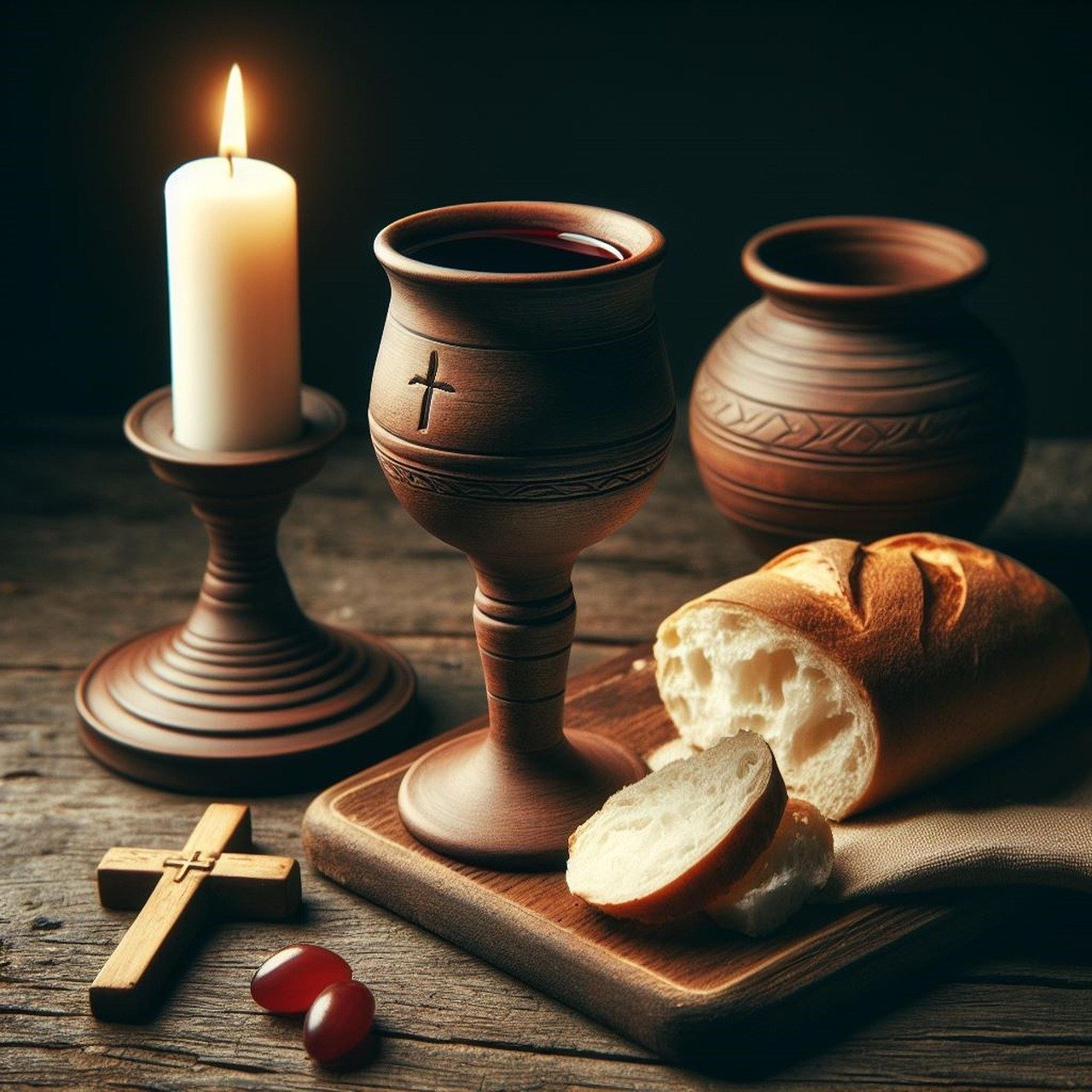
Photo credit: image by VesaL (4-8-24) [Pixabay / Pixabay Content License]
François Turretin (1623-1687) was a Genevan-Italian Reformed scholastic theologian and renowned defender of the Calvinistic (Reformed) orthodoxy represented by the Synod of Dort, and was one of the authors of the Helvetic Consensus (1675). He is generally considered to be the best Calvinist apologist besides John Calvin himself. His Institutes of Elenctic Theology (three volumes, Geneva, 1679–1685) used the scholastic method. “Elenctic” means “refuting an argument by proving the falsehood of its conclusion.” Turretin contended against the conflicting Christian perspectives of Catholicism and Arminianism. It was a popular textbook; notably at Princeton Theological Seminary, until it was replaced by Charles Hodge’s Systematic Theology in the late 19th century. Turretin also greatly influenced the Puritans.
This is a reply to portions of a section of Institutes of Elenctic Theology (Vol. 3, 19th Topic: The Sacraments / 28th Question: The Corporeal Presence of Christ in the Supper and the Oral Manducation of It). I utilize the edition translated by George Musgrave Giger and edited by James T. Dennison, Jr. (Presbyterian and Reformed Publishing Company, Phillipsburg, New Jersey: 1992 / 1994 / 1997; 2320 pages). It uses the KJV for Bible verses. I will use RSV unless otherwise indicated. All installments of this series of replies can be found on my Calvinism & General Protestantism web page, under the category, “Replies to Francois Turretin (1632-1687).” Turretin’s words will be in blue.
*****
Is Christ corporeally present in the Eucharist, and is he eaten with the mouth by believers? We deny against the Romanists and Lutherans.
And they “deny” against the Church fathers, medieval theologians, and the Bible. Not a good place to be . . .
The fiction of transubstantiation having been overthrown, . . .
I must have missed it. But it’s not overthrown if I am around to shoot down the weak and insufficient and radically unbiblical arguments against it. One day all saved believers will know what the truth of the matter is and will all agree. What a marvelous and blessed concept!: total unity. How sad that it was supposed to be like that in the Church all along.
The Scriptures so often propose to us the communion of the body and blood of Christ as the foundation and source of all his blessings . . .
Isn’t it odd and sad that Turretin can so casually and frequently make reference to “the body and blood of Christ” while at the same time denying that it really is that? But that’s the first thing that theological falsehood and heresy do: change the plain meanings of words.
Hence they invented a local and corporeal presence in order that it might be eaten with the mouth.
We didn’t invent anything. Jesus introduced these ideas, that had never crossed anyone’s mind:
John 6:50-51, 53-58 “This is the bread which comes down from heaven, that a man may eat of it and not die. . . . if any one eats of this bread, he will live for ever; and the bread which I shall give for the life of the world is my flesh. . . . unless you eat the flesh of the Son of man and drink his blood, you have no life in you; he who eats my flesh and drinks my blood has eternal life, . . . For my flesh is food indeed, and my blood is drink indeed. He who eats my flesh and drinks my blood abides in me, and I in him. . . . he who eats me will live because of me. . . . This is the bread which came down from heaven, not such as the fathers ate and died; he who eats this bread will live for ever.”
How many repetitions of an obvious truth does one need? It’s almost as if God was anticipating the eucharistic nonsense that we have been burdened with since the 1520s, and made the truth of the matter so clear in Scripture that no one without a prior bias or constant brainwashing could possibly deny it. Yet they do . . . so our apologetic and exegetical task still remains.
It is not inquired whether our union with Christ is necessary for salvation (which we acknowledge and urge) . . .
Note how he rightfully holds that partaking of Holy Communion is “necessary for salvation.”
Christ’s body is proposed in the Supper to us and represented by the sacramental signs as dead and his blood as poured out of his veins (in which manner it is impossible for Christ’s body to be made present to us at this day corporeally and indistantly [adiastatōs], since he can die no more); . . .
This is simply not impossible at all for God to do. Nothing logically forbids it, for those who grant miracles, the supernatural, and God’s omnipotence. Turretin assumes it but doesn’t prove it. Again, he thinks like the Pauline “unspiritual man.” His God is “too small.” As a thought experiment, imagine that instead of becoming one man, Jesus, in the incarnation, God the Father decided to become 10,000 men? Who could tell Him that it was “impossible” to do that? It’s no more impossible than one incarnation was. It’s no more impossible than God subsisting in three Persons, yet being one God and not three. Yet Turretin wants us to believe that it’s “impossible for Christ’s body to be made present to us at this day corporeally.” Nonsense!
Christ commands us “to do this in remembrance of him” (Lk. 22:19). Now memory is only of things absent and past, not of those present; nor, if all things are said to be present to faith, is this understood of a local presence . . .
Actually, the words used suggest a timeless present. The one crucifixion of Jesus in history is supernaturally made present to us in the Mass. See:
*
The Timeless Crucifixion & the Sacrifice of the Mass [9-25-09]
*
Time-Transcending Mass and the Hebrew “Remember” [National Catholic Register, 8-3-18]
*
From the passages in which the departure of Christ from the world is spoken of. (a) Where he predicts that he will go out of the world and will no longer be present here in his body: “Ye have the poor always with you; but me ye have not always” (Mt. 26:11); “I came forth from the Father, and am come into the world: again, I leave the world, and go to the Father” (Jn. 16:28); . . .
*
Being sacramentally present is a different category of presence, so that there is no conflict in His saying that He would be gone in the sense of what He was during His earthly life. “Apples and oranges” in other words . . .
*
“They shall see the Son of man coming in the clouds” (Mt. 24:30).
*
Exactly! That’s obviously visible presence; whereas eucharistic Real Presence is discerned only by faith and revelation. This isn’t complicated. I contend that Protestants who deny the Real Presence don’t have enough faith. It’s a “miracle too far” for them. This is primarily a spiritual lack, as opposed to an intellectual one. Many of these same Protestants who deny the Real Presence, by the way, disbelieve in all miracles since the apostolic age (what’s known as cessationism). The Wikipedia article on the topic states,
The cessationist doctrine arose in the Reformed theology: initially in response to claims of Roman Catholic miracles. . . .
It was when these miracles in the Catholic Church were used as a polemic against the post-Reformation Protestant churches that John Calvin began to develop a doctrine of cessationism, and it was primarily in the Calvinist tradition that this doctrine was developed. . . .
The Roman Catholic Church and most other wings of Protestantism were never cessationist by doctrine.
In other words, disbelief in continuing miracles wasn’t based on the Bible (where, of course, it is never taught), but rather, upon anti-Catholic prejudice and polemics; not exactly an indisputable criterion of belief in anything. Sure enough, in the same volume 3 of the work I am critiquing, Turretin adopts cessationism: “miracles are accidents and extraordinary gifts which were given to the church only for a time, not always; for the establishment of Christianity, not for its continuance” (18.13.43; from an article on Turretin’s ecclesiology).
*
Obviously, if one is already hostile to miracles under false and unbiblical pretenses, then one will be disinclined to accept miracles at every Church gathering, which is what occurs in the Catholic Mass. So there is an inveterate false premise before we even begin this discussion. This is why one must always examine the underlying premises and presuppositions of one’s dialogical opponents. They determine everything else. It reminds me of Jesus’ remarks about “a foolish man who built his house upon the sand” (Mt 7:26), as opposed to building it on a “rock” (7:24).
*
From all these, an invincible argument is derived.
*
In fact, it isn’t “invincible” at all because it’s built upon false premises, or “sand” — as Jesus would say.
*
He who departed in body from the earth and left the world that he might betake himself to heaven where he is to remain until the restitution of all things; who is sought in vain on earth where he no longer is; and must be sought in heaven, where he sits at the right hand of God, cannot be said to be carnally present in the sacrament. . . . It is repugnant to the words of Christ, which speak of his departure and leaving the world, not only concerning the disappearance and hiddenness of his body. But how can he be said to leave the world and to be raised up into heaven, if he as yet remains perpetually on earth?
*
This doesn’t follow because he is again comparing apples and oranges. There are at least twenty major types of divine presence, that I can think of: ten involving physicality and ten in an immaterial sense:
Immaterial Divine Presence
God is omnipresent.
God can be and was specially present in empty spaces (e.g., the temple, tabernacle, and above the ark of the covenant).
God was “with” the victorious armies of the Israelites (Jud 6:16) and with holy men like Moses and Joshua.
God was present in sublime visual scenes, such as described by Isaiah, Daniel, and St. John (Is 6:1-7; Dan 7:1-10; Rev 1:12-16).
God was specially present in — even to the point of being equated with — the Angel of the Lord.
God indwells believers. The Bible says this interchangeably about all three Persons of the Holy Trinity. Once again, God is “in” physical matter (us).
We are continually working towards being united to God in the sense of theosis / divinization (2 Cor 3:18; Eph 4:15; 2 Pet 1:4).
Jesus’ disciples are “in Christ”.
Jesus’ disciples are “in the Father” (1 Jn 2:24), and (the same thing) “in him” (Acts 17:18; 1 Jn 2:5; 3:6).
Jesus’ disciples are “in the Holy Spirit” and “in the Spirit”.
Divine Presence Involving Physicality Wholly or Partially
God can be and was present in a special way in matter (the pillars of cloud and fire, the burning bush).
God was present in theophanies in the Old Testament.
God became a man, Jesus, in the incarnation (Jesus’ 33 years or so of earthly life).
Jesus was present for forty days as the incarnate God the Son risen from the dead, with a resurrected body capable of walking through walls (Jn 20:19, 26).
Jesus will be physically present in His glorified post-Ascension state when He returns in the Second Coming.
Jesus is present sacramentally (a different sort of miraculous physicality) in the Holy Eucharist.
We’re mysteriously united to Jesus in His death and resurrection in baptism (Rom 6:3-8).
We’re united in a profound sense to Jesus’ death and resurrection on an ongoing basis (2 Cor 4:10; Phil 3:10; Gal 2:20).
St. Paul said that “in my flesh I complete what is lacking in Christ’s afflictions” (Col 1:24) and “I bear on my body the marks of Jesus” (Gal 6:17).
Jesus is somehow connected to His Church, the Body of Christ; so much so that He told Paul that he was persecuting Him when he was persecuting the Church (Acts 9:4-5; 22:7-8; 26:14-15).
Yet a little later, Turretin wrote:
The union which exists between us and Christ is nowhere said to be corporeal, but spiritual and mystical, which can be brought about in no other way than by the Spirit and faith (1 Cor. 6:17; Eph. 3:17).
This is untrue, since #17-20 above (especially #19) refer to mysterious but literal corporeal aspects of our union with Jesus.
*
Much of theology involves rather fine distinctions. Turretin knew all of this (or should have, as a theologian). But he appears to either be unaware of or to ignore many of these necessary distinctions in direct proportion to how much he is hostile in an anti-Catholic sense, and hence he descends to being a prisoner of his own bias, leading to false premises and equally false conclusions drawn from them. This particular one isn’t rocket science. But Turretin only regards as relevant to this discussion, #13 and #15 of the types of presence and ignores the others, which — considered as a whole — highly suggest by analogy and variety that eucharistic Real Presence is altogether possible, if not plausible and likely and actual.
*
Christ in consoling the minds of his sad disciples ought to have used this distinction—that he would indeed visibly depart, but still would be invisibly with them by the presence of his body, to such a degree that he could be both received into their hands and taken into their mouths. But he employed far different means (to wit, the substitution of the Holy Spirit in place of his bodily presence, whom he promised to send that he might remain with them forever as his vicar).
John 6:56 For my flesh is food indeed, and my blood is drink indeed. [56] He who eats my flesh and drinks my blood abides in me, and I in him.
So we see that in fact Jesus did say what Turretin said He ought to say if indeed the Real Presence and transubstantiation are true. Thus, according to Turretin, in this saying Jesus proved what Catholics have been saying all along. But sadly, Turretin and those who think like he does in effect act like those who heard this from Jesus:
John 6:60-61, 64, 66 Many of his disciples, when they heard it, said, “This is a hard saying; who can listen to it?” [61] But Jesus, knowing in himself that his disciples murmured at it, said to them, “Do you take offense at this? . . . [64] But there are some of you that do not believe.” For Jesus knew from the first who those were that did not believe, and who it was that would betray him. . . . [66] After this many of his disciples drew back and no longer went about with him.
Based on how Turretin argues, he likely would have taken that approach if he were alive when Jesus was (i.e., not having enough faith or submissive obedience when Jesus taught about the Eucharist and transubstantiation). But one hopes not.
*
Now what need was there of the invisible presence of the Holy Spirit if the flesh of Christ always remains invisibly?
*
He’s our Helper, of course, and we have plenty of moments (indeed, the vast majority of the time) when we are not partaking in Holy Communion. But Jesus and the Father indwell us, too, according to Scripture. If we are to become one with God (deification) and begin that process in this life, then Holy Communion is one profound way that we do that on an ongoing basis in this life.
*
*
***
*
Practical Matters: I run the most comprehensive “one-stop” Catholic apologetics site: rated #1 for Christian sites by leading AI tool, ChatGPT — endorsed by popular Protestant blogger Adrian Warnock. Perhaps some of my 5,000+ free online articles or fifty-six books have helped you (by God’s grace) to decide to become Catholic or to return to the Church, or better understand some doctrines and why we believe them. If you believe my full-time apostolate is worth supporting, please seriously consider a much-needed monthly or one-time financial contribution. “The laborer is worthy of his wages” (1 Tim 5:18, NKJV).
*
PayPal donations are the easiest: just send to my email address: [email protected]. Here’s also a second page to get to PayPal. You’ll see the term “Catholic Used Book Service”, which is my old side-business. To learn about the different methods of contributing (including Zelle and 100% tax-deductible donations if desired), see my page: About Catholic Apologist Dave Armstrong / Donation Information.
*
You can support my work a great deal in non-financial ways, if you prefer; by subscribing to, commenting on, liking, and sharing videos from my YouTube channel, Catholic Bible Highlights, where I partner with Kenny Burchard (see my own videos), and/or by signing up to receive notice for new articles on this blog. Just type your email address on the sidebar to the right (scroll down quite a bit), where you see, “Sign Me Up!” Thanks a million!
*
***
*
Photo credit: image by VesaL (4-8-24) [Pixabay / Pixabay Content License]
Summary: Calvinist theologian François Turretin says transubstantiation is impossible and offers various and sundry weak arguments: all of which I shoot down from the Bible and logic.
Calvinism & General Protestantism
Institutes of Elenctic Theology
Previous Post
February 27, 2025
Reply to François Turretin #13: Transubstantiation, Pt. 2
Next Post

March 6, 2025 The Sacrifice of the Mass in Hebrews & Revelation
Recent Comments
"Special pleading, and not a serious response to my arguments . . ."
Is Venerating Men & Angels Worship? ..."
""no man needs to teach us."Didn't you just teach us?"
Is Venerating Men & Angels Worship? ..."
""Catholics say they are the only church that can lead people into heaven."In fact, we ..."
Is Venerating Men & Angels Worship? ..."
"And lastly, I belong to no denomination and am free to serve God as He ..."
Is Venerating Men & Angels Worship? ..."
Browse Our Archives
Select a Category & Last Things About Me Anti-Catholicism Atheism & Agnosticism Baptism and Sacramentalism Bible and Tradition Blessed Virgin Mary Books by Dave Armstrong C. S. Lewis Calvinism & General Protestantism Catholic Apologetics Catholic Apologists Catholic conversion Catholic converts Christmas Church (Ecclesiology) Church History Conversion and Converts Development of Doctrine Eastern Orthodoxy Ecumenism & Christian Unity Eucharist & Liturgy Fathers of the Church French Translations G. K. Chesterton Hell Hell & Satan Hell & Satan & Last Things Heresies & Comparative Religion Holistic Health Inquisition & Crusades & Scandals James White Jews & Judaism & Old Testament John Calvin John Henry Newman Liberal / Modernist Theology Life Issues Literary Resume Lutheranism Mariology Martin Luther Music Orthodoxy Papacy & Infallibility Personal Page Philosophy & Science Political & Ethical & Moral Issues Protestant Persecution & Intolerance Protestantism Purgatory Purgatory & Penance Romantic & Imaginative Theology Saints & Purgatory & Penance Salvation Salvation & Justification Satan & Last Things Sexuality and Gender Issues Spanish Translations Traditionalism vs. Radical Catholic Reactionaries Traducciones al español / tradução para português Trinitarianism & Christology Uncategorized Videos
Select a Month October 2026 September 2026 August 2026 July 2026 June 2026 May 2026 April 2026 March 2026 February 2026 January 2026 December 2025 November 2025 October 2025 September 2025 August 2025 July 2025 June 2025 May 2025 April 2025 March 2025 February 2025 January 2025 December 2024 November 2024 October 2024 September 2024 August 2024 July 2024 June 2024 May 2024 April 2024 March 2024 February 2024 January 2024 December 2023 November 2023 October 2023 September 2023 August 2023 July 2023 June 2023 May 2023 April 2023 March 2023 February 2023 January 2023 December 2022 November 2022 October 2022 September 2022 August 2022 July 2022 June 2022 May 2022 April 2022 March 2022 February 2022 January 2022 December 2021 November 2021 October 2021 September 2021 August 2021 July 2021 June 2021 May 2021 April 2021 March 2021 February 2021 January 2021 December 2020 November 2020 October 2020 September 2020 August 2020 July 2020 June 2020 May 2020 April 2020 March 2020 February 2020 January 2020 December 2019 November 2019 October 2019 September 2019 August 2019 July 2019 June 2019 May 2019 April 2019 March 2019 February 2019 January 2019 December 2018 November 2018 October 2018 September 2018 August 2018 July 2018 June 2018 May 2018 April 2018 March 2018 February 2018 January 2018 December 2017 November 2017 October 2017 September 2017 August 2017 July 2017 June 2017 May 2017 April 2017 March 2017 February 2017 January 2017 December 2016 November 2016 October 2016 September 2016 August 2016 July 2016 June 2016 May 2016 April 2016 March 2016 February 2016 January 2016 December 2015 November 2015 October 2015 September 2015 August 2015 July 2015 June 2015 May 2015 April 2015 March 2015 February 2015 January 2015 December 2014 November 2014 October 2014 September 2014 August 2014 July 2014 June 2014 April 2014 March 2014 February 2014 January 2014 December 2013 November 2013 October 2013 September 2013 August 2013 July 2013 June 2013 April 2013 March 2013 February 2013 January 2013 December 2012 November 2012 October 2012 September 2012 August 2012 July 2012 June 2012 May 2012 April 2012 March 2012 February 2012 January 2012 December 2011 November 2011 October 2011 September 2011 August 2011 July 2011 June 2011 April 2011 March 2011 February 2011 October 2010 September 2010 August 2010 July 2010 April 2010 March 2010 December 2009 October 2009 August 2009 July 2009 June 2009 May 2009 March 2009 February 2009 October 2008 September 2008 April 2008 March 2008 February 2008 January 2008 December 2007 November 2007 October 2007 May 2007 March 2007 February 2007 January 2007 November 2006 October 2006 September 2006 August 2006 July 2006 June 2006 May 2006 April 2006 March 2006 February 2006 October 2005 June 2005 April 2005 February 2005 July 2004 May 2004 April 2004
Follow Us!
TAKE THE
Religious Wisdom Quiz
Which book of the Bible contains the most direct prophecies about the Messiah?
Select your answer to see how you score.
Micah Isaiah Zechariah Psalms
Books by This Author Books by Dave Armstrong
Related posts from Biblical Evidence for Catholicism

On Protestant Explanations of Catholic Conversion
Biblical Evidence for Catholicism

Protestant Confessions & "Ever-Virgin" Mary
Biblical Evidence for Catholicism

A Few "Worst" & "Best" Arguments vs. Protestantism
Biblical Evidence for Catholicism
Reply to Anglican Sean Luke on Denominationalism
Biblical Evidence for Catholicism
TRENDING AT PATHEOS Catholic

The Sermon on the Mount, Part I: Matthew...
The Sermon on the Mount, Part I (Matthew 4:12-5:12) St. Matthew moves...

What's up from Crossway: Reviewing some of their latest A few weeks...

Janie Learns the Way of the Cross: A...
Teaching children about Jesus' Passion can be challenging. Many parents and educators...

Looking For Good Catholic Writing - October 2026
He alone extends the heavens, and he walks upon the waves of...

In "Irreplaceable," our book on vocation and technology, Trevor Sutton and I...

I was strolling through the top floor of the brand new Parthenon...
view all Catholic blogs
What Are Your Thoughts?leave a comment
Ad-Free & Subscriber Log-In Subscription Support
- About Us
- 2026 Calendar
- Videos
- Podcasts
- Library of World Religions
- Faith In Media Tracker
- Advertise With Us
- Write for Us
- Privacy Policy
- Terms of Service
- Do Not Sell My Data
- Contact Us
- Radiant Digital
- Manage Newsletter Subscriptions
- Unsubscribe From Notifications
- Sitemap
Copyright 2008-2026, Patheos. All rights reserved.
Subscription Support Ad-Free & Subscriber Log-In
Follow Patheos