
BuddhistCatholicContemplativeEvangelicalGeneral ChristianHinduJewishLatter-day SaintMuslimNew VisionsProgressive Christian
Beliefs
- Buddhist
- Catholic
- Contemplative
- Evangelical
- General Christian
- Hindu
- Jewish
- Latter-day Saint
- More Voices
- Muslim
- New Visions
- Pagan
- Progressive Christian
Topics
- Religion News
- Food and Religion
- Sports and Religion
- Religious Art
- Religious Music and Entertainment
- Religious Events
- History and Religion
- Style and Religion
- Politics and Religion
- Women in Religion
- Recreation Outdoors and Religion
- Business Finance and Religion
- Careers Workplace and Religion
- Education and Religion
- Family Parenting and Religion
- Health Fitness and Religion
- Home and Religion
- Relationships and Religion
- Technology and Religion
- Travel and Religion
Columnists
- Buddhist Columnists
- Business Finance and Religion Columnists
- Careers Workplace and Religion Columnists
- Catholic Columnists
- Contemplative Columnists
- Education and Religion Columnists
- Evangelists Columnists
- Family Parenting and Religion Columnists
- General Christian Columnists
- Health Fitness and Religion Columnists
- Hindu Columnists
- History and Religion Columnists
- Home and Religion Columnists
- Jewish Columnists
- More Voices Columnists
- Latter Day Columnists
- Muslim Columnists
- New Visions Columnists
- Nonreligious Columnists
- Pagan Columnists
- Politics and Religion Columnists
- Progressive Columnists
- Recreation Outdoors and Religion Columnists
- Relationships and Religion Columnists
- Religion News Columnists
- Religious Art Columnists
- Religious Events Columnists
- Religious Music and Entertainment Columnists
- Sports and Religion Columnists
- Style and Religion Columnists
- Technology and Religion Columnists
- Travel and Religion Columnists
- Women in Religion Columnists
Resource Library
- 2026 Calendar
- Library of World Religions
- The 100 Most Holy Places on Earth
- Patheos Answers
- Podcasts
- Videos
- Faith Leaders Database
- Anglican Episcopalian
- Bahai
- Baptist
- Buddhism
- Christianity
- Confucianism
- Eastern Orthodoxy
- Hinduism
- Holiness and Pentecostal
- ISKCON
- Islam
- Judaism
- Lutheran
- Methodist
- The Church of Jesus Christ of Latter-day Saints
- New Age
- Paganism
- Presbytarian and Reformed
- Protestantism
- Religion Behind the Scenes
- Roman Catholic
- Scientology
- Shia Islam
- Sikhism
- Sufism
- Sunni Islam
- Taoism
- Zen
- See all religions
Research Tools
 Ad-Free & Subscriber Log-In Subscription Support
Ad-Free & Subscriber Log-In Subscription Support
Follow Patheos 

- Trending:
- Forgiveness
- |
- Marriage
- |
- Consciousness
- |
- Death Penalty
- |
- Election
- |
- Halloween

-
About
-
Catholic Apologetics
-
Church History
-
Great Apologists
-
Christian Worldview
-
Protestantism & Misc.
- Home
- Catholic
- History and Religion
- Reply to François Turretin #13: Transubstantiation, Pt. 2
Reply to François Turretin #13: Transubstantiation, Pt. 2
Last updated on: June 6, 2026 at 12:04 am by Dave Armstrong
Reply to François Turretin #13: Transubstantiation, Pt. 2 2026-06-06T00:04:56-04:00 Dave Armstrong
Patheos Explore the world's faith through different perspectives on religion and spirituality! Patheos has the views of the prevalent religions and spiritualities of the world.
Language of “bread” & “wine” after consecration; transubstantiation and transformation: compendium from the Church fathers
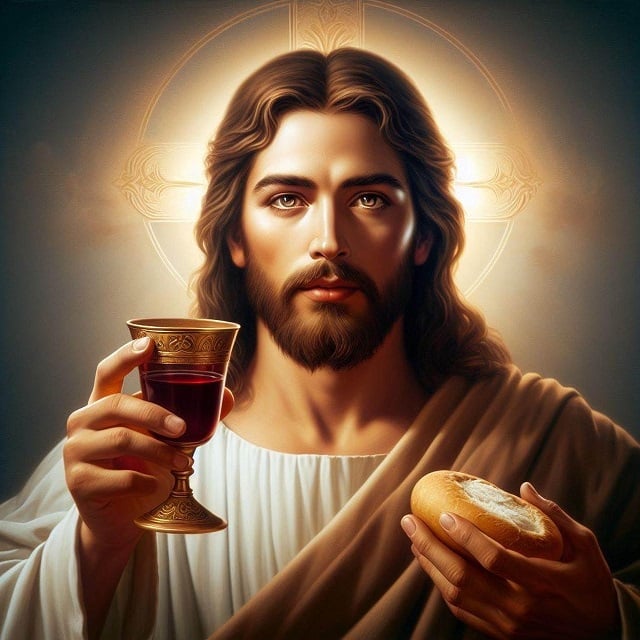
Photo credit: image by VilmaAndrade (6-5-24) [Pixabay / Pixabay Content License]
François Turretin (1623-1687) was a Genevan-Italian Reformed scholastic theologian and renowned defender of the Calvinistic (Reformed) orthodoxy represented by the Synod of Dort, and was one of the authors of the Helvetic Consensus (1675). He is generally considered to be the best Calvinist apologist besides John Calvin himself. His Institutes of Elenctic Theology (three volumes, Geneva, 1679–1685) used the scholastic method. “Elenctic” means “refuting an argument by proving the falsehood of its conclusion.” Turretin contended against the conflicting Christian perspectives of Catholicism and Arminianism. It was a popular textbook; notably at Princeton Theological Seminary, until it was replaced by Charles Hodge‘s Systematic Theology in the late 19th century. Turretin also greatly influenced the Puritans.
This is a reply to portions of a section of Institutes of Elenctic Theology (Vol. 3, 19th Topic: The Sacraments / 27th Question: Transubstantiation). I utilize the edition translated by George Musgrave Giger and edited by James T. Dennison, Jr. (Presbyterian and Reformed Publishing Company, Phillipsburg, New Jersey: 1992 / 1994 / 1997; 2320 pages). It uses the KJV for Bible verses. I will use RSV unless otherwise indicated. All installments of this series of replies can be found on my Calvinism & General Protestantism web page, under the category, “Replies to Francois Turretin (1632-1687).” Turretin’s words will be in blue.
*****
Third, the testimony of faith bears specially upon this subject, which confirms the testimony of the senses and of reason and teaches that the invention of transubstantiation is no less repugnant to Scripture and the analogy of faith than to the senses and reason. Here belong all those arguments adduced from the Scriptures in the preceding question. To them we add the following. First, from the passages where the Eucharistic symbols retain the same name after the consecration which they had before (namely, the name of bread and wine). This would not have been done if in virtue of the consecratory words they had ceased to be bread and wine and were changed into the body and blood of Christ.
St. Paul refers to “eat this bread and drink the cup” (1 Cor 11:26) but in the same context also expresses himself literally: “Whoever, therefore, eats the bread or drinks the cup of the Lord in an unworthy manner will be guilty of profaning the body and blood of the Lord. . . . For any one who eats and drinks without discerning the body eats and drinks judgment upon himself” (11:27, 29). He speaks in both ways, here and in 1 Corinthians 10:16-17 (“The bread which we break, is it not a participation in the body of Christ?”).
Jesus did the same in John 6:51 (“if any one eats of this bread, he will live for ever; and the bread which I shall give for the life of the world is my flesh”) and in Matthew 26:26 (“Jesus took bread, and . . . gave it to the disciples and said, “Take, eat; this is my body”). The metaphorical use refers to the accidents of outward appearance, while the literal use refers to transubstantiation and the body and blood of the Lord. It seems to me the only way to interpret these two complementary motifs is as I have done (or else as Lutherans do: with bread and wine and the body and blood both continuing to be present after consecration). Otherwise, we are left with mere bread and wine being passed out, and no body and blood of Christ at all, or Jesus ludicrously being equated with mere bread and wine, and the Bible disallows that.
Note also that Paul’s use of “drink the cup” (1 Cor 11:26-27). No one can literally “drink a cup” and must drink what it contains. But how do we know what is in this cup? We know by the context and in this instance it highly suggests, or, I submit, virtually demands, a reading that it contains Jesus’ blood. (“In the same way also the cup, after supper, saying, ‘This cup is the new covenant in my blood . . .'”: 1 Cor 11:25). Again, Paul writes in the previous chapter, “The cup of blessing which we bless, is it not a participation in the blood of Christ?” (1 Cor 10:16). It’s the same scenario at the Last Supper (“And he took a cup, and when he had given thanks he gave it to them, saying, “Drink of it, all of you; for this is my blood of the covenant, . . .”: Mt 26:27-28). Thus, three times, it’s made crystal clear that we drink Christ’s transubstantiated blood, just as He repeatedly said that we must do to be saved, in John 6.
Beyond these factors, we could also say that general use of “bread” and “wine” after consecration is simply referring to the appearance, which is what Catholics refer to when we say that these are the “accidents” of the body and blood of Christ.
But to what purpose would Paul so often without any limitation call it bread, if it was no longer bread?
To call it what it looked like. In effect, he — like Jesus — was describing the accidental properties, since in context he also refers to “the body” and/or “the blood.” The latter fact can’t be ignored by Protestants bent on a wrongheaded, eisegetical symbolic interpretation.
Would he not on this point have afforded to believers an occasion of erring by believing that to be true bread which was anything else than bread?
No; he avoids giving that impression by also mentioning “body” and “blood” in the same context. Jesus does the same, as shown above.
The eighth class is drawn from the testimony of a purer antiquity. That the dogma of transubstantiation was unknown to it, both their writings testify (as we have seen) and many of our opponents are compelled to confess, however they may try to draw them over to their side. Peter a Marca, Archbishop of Paris, yields to us the suffrages of most of the fathers, especially of Chrysostom, Epiphanius, Irenaeus, Cyprian, Theodoret, . . .
If it is afterwards inquired when and how this monstrous dogma was introduced into the church, the answer is easy. It is recent and newfangled, not a trace of it occurring among the ancients even down to the eighth century. . . .
It is evident that it was not settled before the Council of Trent. Now let our opponents go and glory in its antiquity.
Glad to do so! One wearies of having to prove the same obvious thing over and over, but here goes. First, here are two prominent Protestant historians of Christian doctrine, providing an overview of patristic belief regarding the Eucharist:
In general, this period, . . . was already very strongly inclined toward the doctrine of transubstantiation, and toward the Greek and Roman sacrifice of the mass, which are inseparable in so far as a real sacrifice requires the real presence of the victim…… (Philip Schaff, History of the Christian Church, vol. 3, A. D. 311-600, revised 5th edition, Grand Rapids, Michigan: Eerdmans, reprinted 1974, originally 1910, p. 500)
Theodore [c. 350-428] set forth the doctrine of the real presence, and even a theory of sacramental transformation of the elements, in highly explicit language . . . ‘At first it is laid upon the altar as a mere bread and wine mixed with water, but by the coming of the Holy Spirit it is transformed into body and blood, and thus it is changed into the power of a spiritual and immortal nourishment.’ [Hom. catech. 16,36] these and similar passages in Theodore are an indication that the twin ideas of the transformation of the eucharistic elements and the transformation of the communicant were so widely held and so firmly established in the thought and language of the church that everyone had to acknowledge them. (Jaroslav Pelikan [at this time a Lutheran], The Emergence of the Catholic Tradition (100-600), Chicago: Univ. of Chicago Press, 1971, 236-237)
And here is just a small representative sampling of the fathers themselves:
St. Ignatius of Antioch: They abstain from the Eucharist and from prayer, because they confess not the Eucharist to be the flesh of our Saviour Jesus Christ, which suffered for our sins, and which the Father, of His goodness, raised up again. (Letter to the Smyrnaeans, ch. 7)
St. Justin Martyr: Likewise have we been taught that the food which is blessed by the prayer of His word, and from which our blood and flesh by transmutation are nourished, is the flesh and blood of that Jesus who was made flesh. (First Apology, chapter 66)
St. Irenaeus: . . . the bread which is His body. . . . the Eucharist, which is the body and blood of Christ . . . (Against Heresies, V, 2, 3)
Tertullian: He declared plainly enough what He meant by the bread, when He called the bread His own body. He likewise, when mentioning the cup and making the new testament to be sealed “in His blood,” affirms the reality of His body. For no blood can belong to a body which is not a body of flesh. (Against Marcion, Book IV, chapter 40)
Origen: You know how, when you have received the Body of the Lord, you reverently exercise care lest a particle fall, and lest anything of the consecrated gift perish. . . . you observe such caution in keeping His Body, and properly so, . . . (Homilies on Exodus, 13, 3)
St. Cyprian: And therefore we ask that our bread—that is, Christ—may be given to us daily, that we who abide and live in Christ may not depart from His sanctification and body. (On the Lord’s Prayer / Treatise IV, 18)
St. Hilary of Poitiers: As to the verity of the flesh and blood there is no room left for doubt. For now both from the declaration of the Lord Himself and our own faith, it is verily flesh and verily blood. And these when eaten and drunk, bring it to pass that both we are in Christ and Christ in us. Is not this true? (The Trinity, Book VIII, 14, 17)
St. Athanasius: You will see the Levites bringing loaves and a cup of wine, and placing them on the table. So long as the prayers and invocations have not yet been made, it is mere bread and a mere cup. But when the great and wondrous prayers have been recited, then the bread becomes the body and the cup the blood of our Lord Jesus Christ. . . . When the great prayers and holy supplications are sent up, the Word descends on the bread and the cup, and it becomes His body. (Sermon to the Newly-Baptized)
St. Basil the Great: It is good and beneficial to communicate every day, and to partake of the holy body and blood of Christ. . . . once the priest has completed the offering . . . (Letter XCIII, To the Patrician Cæsaria)
St. Cyril of Jerusalem: For as the Bread and Wine of the Eucharist before the invocation of the Holy and Adorable Trinity were simple bread and wine, while after the invocation the Bread becomes the Body of Christ, and the Wine the Blood of Christ . . . (Catechetical Lecture XIX, 7)
Having learnt these things, and been fully assured that the seeming bread is not bread, though sensible to taste, but the Body of Christ; and that the seeming wine is not wine, though the taste will have it so, but the Blood of Christ . . . (Catechetical Lecture XXII, 9)
J. N. D. Kelly summarizes Cyril’s eucharistic theology:
Even the pioneer of the conversion doctrine, Cyril of Jerusalem, is careful to indicate that the elements remain bread and wine to sensible perception, and to call them ‘the antitype’ of Christ’s body and blood: ‘the body is given to you in the figure of bread, and the blood is given to you in the figure of wine’. (Cat. 22, 9; 23, 20; 22, 3)
. . . He uses the verb ‘change’ or ‘convert’, pointing out that, since Christ transformed water into wine, which after all is akin to blood, at Cana, there can be no reason to doubt a similar miracle on the more august occasion of the eucharistic banquet. (Cat., 22, 2)
Chrysostom exploits the materialist implications of the conversion theory to the full . . . Thus the elements have undergone a change, and Chrysostom describes them as being refashioned or transformed. In the fifth century conversionist views were taken for granted by Alexandrians and Antiochenes alike. According to Cyril . . . the visible objects are not types or symbols . . . but have been transformed through God’s ineffable power into His body and blood. Elsewhere he remarks that God ‘infuses life-giving power into the oblations and transmutes them into the virtue of His own flesh.’ (Chrysostom: In prod. Iud. hom. I, 6; in Matt. hom. 82, 5; Cyril: In Matt. 26,27; In Luc. 22, 19) (Early Christian Doctrines, San Francisco: Harper & Row, 5th revised edition, 1978, 441, 443-444)
See also:
John Calvin and St. Cyril of Jerusalem: Comparative Eucharistic Theology [6-14-04]
St. Gregory of Nyssa: So nourishment (bread and wine) by becoming flesh and blood gives bulk to the human frame: the nourishment is the body. Just as in the case of other men, our Saviour’s nourishment (bread and wine) was His Body; but these, nourishment and Body, were in Him changed into the Body of God by the Word indwelling. So now repeatedly the bread and wine, sanctified by the Word (the sacred Benediction), is at the same time changed into the Body of that Word; and this Flesh is disseminated among all the Faithful. (The Great Catechism, chapter XXXVII; the footnote in NPNF 2 for this passage states: “Gregory distinctly teaches a transmutation of the elements very like the later transubstantiation: he also distinctly teaches that the words of consecration effect the change. There seems no reason to doubt that the text is correct.”)
St. Ambrose: We observe, then, that grace has more power than nature, and yet so far we have only spoken of the grace of a prophet’s blessing. But if the blessing of man had such power as to change nature, what are we to say of that divine consecration where the very words of the Lord and Saviour operate? For that sacrament which you receive is made what it is by the word of Christ. But if the word of Elijah had such power as to bring down fire from heaven, shall not the word of Christ have power to change the nature of the elements? You read concerning the making of the whole world: “He spake and they were made, He commanded and they were created.” Shall not the word of Christ, which was able to make out of nothing that which was not, be able to change things which already are into what they were not? For it is not less to give a new nature to things than to change them. . . . The Lord Jesus Himself proclaims: “This is My Body.” Before the blessing of the heavenly words another nature is spoken of, after the consecration the Body is signified. He Himself speaks of His Blood. Before the consecration it has another name, after it is called Blood. (On the Mysteries, Chapter IX, 50, 52-55)
St. John Chrysostom: It is not a man who makes the sacrificial gifts become the Body and Blood of Christ, but He that was crucified for us, Christ Himself. The priest stands there carrying out the action, but the power and grace is of God. “This is My Body,” he says. This statement transforms the gifts. (Homilies on the Treachery of Judas, 1, 6)
St. Augustine: For not all bread, but only that which receives the blessing of Christ, becomes Christ’s body. (Sermons, 234, 2)
J. N. D Kelly states (citing Ennar. 98):
One could multiply texts like these which show Augustine taking for granted the traditional identification of the elements with the sacred body and blood. There can be no doubt that he [Augustine] shared the realism held by almost all of his contemporaries and predecessors. (Early Christian Doctrines, San Francisco: Harper & Row, 1978, 447)
See also:
St. Augustine’s Belief in the Substantial Real Presence [1996]St. Augustine’s Eucharistic Doctrine and Protestant “Co-Opting” [9-25-10]
St. Augustine’s Eucharistic Doctrine: Simultaneous Assertion of Realism and Symbolism [2-17-11]
*
What Saint Augustine, Bishop, Saint and Doctor of the Catholic Church Actually Held Pertaining to Transubstantiation: A Response to Turretinfan (+ Part Two) [Paul Hoffer, 8-20-11]
*
St. Cyril of Alexandria: He states demonstratively: “This is My Body,” and “This is My Blood“(Mt. 26:26-28) “lest you might suppose the things that are seen as a figure. Rather, by some secret of the all-powerful God the things seen are transformed into the Body and Blood of Christ, truly offered in a sacrifice in which we, as participants, receive the life-giving and sanctifying power of Christ. (Commentary on Matthew [Mt. 26:27] )
Moreover, the belief of these same Church fathers, en masse, in the Sacrifice of the Mass attests to their eucharistic realism, over against Calvin’s and Turretin’s mere mystical symbolism and denial of the substantial, bodily Real Presence of Jesus in the Holy Eucharist.
*
***
*
Practical Matters: I run the most comprehensive “one-stop” Catholic apologetics site: rated #1 for Christian sites by leading AI tool, ChatGPT — endorsed by popular Protestant blogger Adrian Warnock. Perhaps some of my 5,000+ free online articles or fifty-six books have helped you (by God’s grace) to decide to become Catholic or to return to the Church, or better understand some doctrines and why we believe them. If you believe my full-time apostolate is worth supporting, please seriously consider a much-needed monthly or one-time financial contribution. “The laborer is worthy of his wages” (1 Tim 5:18, NKJV).
*
PayPal donations are the easiest: just send to my email address: [email protected]. Here’s also a second page to get to PayPal. You’ll see the term “Catholic Used Book Service”, which is my old side-business. To learn about the different methods of contributing (including Zelle and 100% tax-deductible donations if desired), see my page: About Catholic Apologist Dave Armstrong / Donation Information.
*
You can support my work a great deal in non-financial ways, if you prefer; by subscribing to, commenting on, liking, and sharing videos from my YouTube channel, Catholic Bible Highlights, where I partner with Kenny Burchard (see my own videos), and/or by signing up to receive notice for new articles on this blog. Just type your email address on the sidebar to the right (scroll down quite a bit), where you see, “Sign Me Up!” Thanks a million!
*
***
*
Photo credit: image by VilmaAndrade (6-5-24) [Pixabay / Pixabay Content License]
Summary: Calvinist theologian François Turretin says transubstantiation is impossible due to post-consecration biblical references to “bread” & “wine” & alleged absence in the fathers.
Calvinism & General Protestantism
Institutes of Elenctic Theology
Previous Post
February 26, 2025
Reply to François Turretin #12: Transubstantiation, Pt. 1
Next Post
February 28, 2025 Reply to François Turretin #14: Eucharist, Pt. 2
Recent Comments
"Special pleading, and not a serious response to my arguments . . ."
Is Venerating Men & Angels Worship? ..."
""no man needs to teach us."Didn't you just teach us?"
Is Venerating Men & Angels Worship? ..."
""Catholics say they are the only church that can lead people into heaven."In fact, we ..."
Is Venerating Men & Angels Worship? ..."
"And lastly, I belong to no denomination and am free to serve God as He ..."
Is Venerating Men & Angels Worship? ..."
Browse Our Archives
Select a Category & Last Things About Me Anti-Catholicism Atheism & Agnosticism Baptism and Sacramentalism Bible and Tradition Blessed Virgin Mary Books by Dave Armstrong C. S. Lewis Calvinism & General Protestantism Catholic Apologetics Catholic Apologists Catholic conversion Catholic converts Christmas Church (Ecclesiology) Church History Conversion and Converts Development of Doctrine Eastern Orthodoxy Ecumenism & Christian Unity Eucharist & Liturgy Fathers of the Church French Translations G. K. Chesterton Hell Hell & Satan Hell & Satan & Last Things Heresies & Comparative Religion Holistic Health Inquisition & Crusades & Scandals James White Jews & Judaism & Old Testament John Calvin John Henry Newman Liberal / Modernist Theology Life Issues Literary Resume Lutheranism Mariology Martin Luther Music Orthodoxy Papacy & Infallibility Personal Page Philosophy & Science Political & Ethical & Moral Issues Protestant Persecution & Intolerance Protestantism Purgatory Purgatory & Penance Romantic & Imaginative Theology Saints & Purgatory & Penance Salvation Salvation & Justification Satan & Last Things Sexuality and Gender Issues Spanish Translations Traditionalism vs. Radical Catholic Reactionaries Traducciones al español / tradução para português Trinitarianism & Christology Uncategorized Videos
Select a Month October 2026 September 2026 August 2026 July 2026 June 2026 May 2026 April 2026 March 2026 February 2026 January 2026 December 2025 November 2025 October 2025 September 2025 August 2025 July 2025 June 2025 May 2025 April 2025 March 2025 February 2025 January 2025 December 2024 November 2024 October 2024 September 2024 August 2024 July 2024 June 2024 May 2024 April 2024 March 2024 February 2024 January 2024 December 2023 November 2023 October 2023 September 2023 August 2023 July 2023 June 2023 May 2023 April 2023 March 2023 February 2023 January 2023 December 2022 November 2022 October 2022 September 2022 August 2022 July 2022 June 2022 May 2022 April 2022 March 2022 February 2022 January 2022 December 2021 November 2021 October 2021 September 2021 August 2021 July 2021 June 2021 May 2021 April 2021 March 2021 February 2021 January 2021 December 2020 November 2020 October 2020 September 2020 August 2020 July 2020 June 2020 May 2020 April 2020 March 2020 February 2020 January 2020 December 2019 November 2019 October 2019 September 2019 August 2019 July 2019 June 2019 May 2019 April 2019 March 2019 February 2019 January 2019 December 2018 November 2018 October 2018 September 2018 August 2018 July 2018 June 2018 May 2018 April 2018 March 2018 February 2018 January 2018 December 2017 November 2017 October 2017 September 2017 August 2017 July 2017 June 2017 May 2017 April 2017 March 2017 February 2017 January 2017 December 2016 November 2016 October 2016 September 2016 August 2016 July 2016 June 2016 May 2016 April 2016 March 2016 February 2016 January 2016 December 2015 November 2015 October 2015 September 2015 August 2015 July 2015 June 2015 May 2015 April 2015 March 2015 February 2015 January 2015 December 2014 November 2014 October 2014 September 2014 August 2014 July 2014 June 2014 April 2014 March 2014 February 2014 January 2014 December 2013 November 2013 October 2013 September 2013 August 2013 July 2013 June 2013 April 2013 March 2013 February 2013 January 2013 December 2012 November 2012 October 2012 September 2012 August 2012 July 2012 June 2012 May 2012 April 2012 March 2012 February 2012 January 2012 December 2011 November 2011 October 2011 September 2011 August 2011 July 2011 June 2011 April 2011 March 2011 February 2011 October 2010 September 2010 August 2010 July 2010 April 2010 March 2010 December 2009 October 2009 August 2009 July 2009 June 2009 May 2009 March 2009 February 2009 October 2008 September 2008 April 2008 March 2008 February 2008 January 2008 December 2007 November 2007 October 2007 May 2007 March 2007 February 2007 January 2007 November 2006 October 2006 September 2006 August 2006 July 2006 June 2006 May 2006 April 2006 March 2006 February 2006 October 2005 June 2005 April 2005 February 2005 July 2004 May 2004 April 2004
Follow Us!
TAKE THE
Religious Wisdom Quiz
Which book of the Bible has the most chapters?
Select your answer to see how you score.
Proverbs Genesis Psalms Isaiah
Books by This Author Books by Dave Armstrong
Related posts from Biblical Evidence for Catholicism

On Protestant Explanations of Catholic Conversion
Biblical Evidence for Catholicism

Top Ten Anti-Catholic Lies (#10-7)
Biblical Evidence for Catholicism

Protestant Confessions & "Ever-Virgin" Mary
Biblical Evidence for Catholicism

A Few "Worst" & "Best" Arguments vs. Protestantism
Biblical Evidence for Catholicism
TRENDING AT PATHEOS Catholic

The Sermon on the Mount, Part I: Matthew...
The Sermon on the Mount, Part I (Matthew 4:12-5:12) St. Matthew moves...

What's up from Crossway: Reviewing some of their latest A few weeks...

Janie Learns the Way of the Cross: A...
Teaching children about Jesus' Passion can be challenging. Many parents and educators...

Looking For Good Catholic Writing - October 2026
He alone extends the heavens, and he walks upon the waves of...

In "Irreplaceable," our book on vocation and technology, Trevor Sutton and I...

I was strolling through the top floor of the brand new Parthenon...
view all Catholic blogs
What Are Your Thoughts?leave a comment
Ad-Free & Subscriber Log-In Subscription Support
- About Us
- 2026 Calendar
- Videos
- Podcasts
- Library of World Religions
- Faith In Media Tracker
- Advertise With Us
- Write for Us
- Privacy Policy
- Terms of Service
- Do Not Sell My Data
- Contact Us
- Radiant Digital
- Manage Newsletter Subscriptions
- Unsubscribe From Notifications
- Sitemap
Copyright 2008-2026, Patheos. All rights reserved.
Subscription Support Ad-Free & Subscriber Log-In
Follow Patheos