
BuddhistCatholicContemplativeEvangelicalGeneral ChristianHinduJewishLatter-day SaintMuslimNew VisionsProgressive Christian
Beliefs
- Buddhist
- Catholic
- Contemplative
- Evangelical
- General Christian
- Hindu
- Jewish
- Latter-day Saint
- More Voices
- Muslim
- New Visions
- Pagan
- Progressive Christian
Topics
- Religion News
- Food and Religion
- Sports and Religion
- Religious Art
- Religious Music and Entertainment
- Religious Events
- History and Religion
- Style and Religion
- Politics and Religion
- Women in Religion
- Recreation Outdoors and Religion
- Business Finance and Religion
- Careers Workplace and Religion
- Education and Religion
- Family Parenting and Religion
- Health Fitness and Religion
- Home and Religion
- Relationships and Religion
- Technology and Religion
- Travel and Religion
Columnists
- Buddhist Columnists
- Business Finance and Religion Columnists
- Careers Workplace and Religion Columnists
- Catholic Columnists
- Contemplative Columnists
- Education and Religion Columnists
- Evangelists Columnists
- Family Parenting and Religion Columnists
- General Christian Columnists
- Health Fitness and Religion Columnists
- Hindu Columnists
- History and Religion Columnists
- Home and Religion Columnists
- Jewish Columnists
- More Voices Columnists
- Latter Day Columnists
- Muslim Columnists
- New Visions Columnists
- Nonreligious Columnists
- Pagan Columnists
- Politics and Religion Columnists
- Progressive Columnists
- Recreation Outdoors and Religion Columnists
- Relationships and Religion Columnists
- Religion News Columnists
- Religious Art Columnists
- Religious Events Columnists
- Religious Music and Entertainment Columnists
- Sports and Religion Columnists
- Style and Religion Columnists
- Technology and Religion Columnists
- Travel and Religion Columnists
- Women in Religion Columnists
Resource Library
- 2026 Calendar
- Library of World Religions
- The 100 Most Holy Places on Earth
- Patheos Answers
- Podcasts
- Videos
- Faith Leaders Database
- Anglican Episcopalian
- Bahai
- Baptist
- Buddhism
- Christianity
- Confucianism
- Eastern Orthodoxy
- Hinduism
- Holiness and Pentecostal
- ISKCON
- Islam
- Judaism
- Lutheran
- Methodist
- The Church of Jesus Christ of Latter-day Saints
- New Age
- Paganism
- Presbytarian and Reformed
- Protestantism
- Religion Behind the Scenes
- Roman Catholic
- Scientology
- Shia Islam
- Sikhism
- Sufism
- Sunni Islam
- Taoism
- Zen
- See all religions
Research Tools
 Ad-Free & Subscriber Log-In Subscription Support
Ad-Free & Subscriber Log-In Subscription Support
Follow Patheos 

- Trending:
- Forgiveness
- |
- Marriage
- |
- Consciousness
- |
- Death Penalty
- |
- Election
- |
- Halloween

-
About
-
Catholic Apologetics
-
Church History
-
Great Apologists
-
Christian Worldview
-
Protestantism & Misc.
- Home
- Catholic
- History and Religion
- John Calvin’s Ten Striking “Catholic” Views
John Calvin’s Ten Striking “Catholic” Views
Last updated on: June 13, 2026 at 1:04 pm by Dave Armstrong
John Calvin’s Ten Striking “Catholic” Views 2026-06-13T13:04:34-04:00 Dave Armstrong
Patheos Explore the world's faith through different perspectives on religion and spirituality! Patheos has the views of the prevalent religions and spiritualities of the world.
Photo credit: self-designed cover of my self-published book (2010).
John Calvin (1509-1564) was the second most important leader in the earliest days of Protestantism, and arguably, even more historically influential, in terms of theology, than its founder, Martin Luther.
Citations from Institutes of the Christian Religion (abbreviated as “Inst.) were translated by Henry Beveridge for the Calvin Translation Society in 1845, from the 1559 edition in Latin; reprinted by Wm. B. Eerdmans Publishing Co.: Grand Rapids, Michigan, 1995, and available for free online.
*****
1) The One True Church (Infallible? & Indefectible) / Councils & Bishops / Roman Primacy
To those to whom he is a Father, the Church must also be a mother. (Inst., IV, 1:1)
Beyond the pale of the Church no forgiveness of sins, no salvation, can be hoped for, . . . the abandonment of the Church is always fatal. (Inst., IV, 1:4; cf. 1:20)
To prevent the truth from perishing in the world, the Church is its faithful guardian, because God has been pleased to preserve the pure preaching of his word by her instrumentality . . . (Inst., IV, 1:10)
But if the holy prophets felt no obligation to withdraw from the Church on account of the very numerous and heinous crimes, not of one or two individuals, but almost of the whole people, we arrogate too much to ourselves, if we presume forthwith to withdraw from the communion of the Church, . . . (Inst., IV, 1:18)
I always hold that the truth does not perish in the Church . . . (Inst., IV, 9:13)
When any doctrine is brought under discussion, there is not a better or surer remedy than for a council of true bishops to meet and discuss the controverted point. There will be much more weight in a decision of this kind, to which the pastors of churches have agreed in common after invoking the Spirit of Christ, than if each, adopting it for himself, should deliver it to his people, or a few individuals should meet in private and decide. (Inst., IV, 9:13)
While we are unwilling simply to concede the name of Church to the Papists, we do not deny that there are churches among them. (Inst., IV, 2:12)
I deny not that the early Christians uniformly give high honour to the Roman Church, and speak of it with reverence. . . . pious and holy bishops, when driven from their sees, often betook themselves to Rome as an asylum or haven. . . . It therefore added very great authority to the Roman Church, that in those dubious times it was not so much unsettled as others, and adhered more firmly to the doctrine once delivered, as shall immediately be better explained. . . . she was held in no ordinary estimation, and received many distinguished testimonies from ancient writers. (Inst., IV, 6:16)
2) Baptismal Regeneration & Other Agreements Regarding Baptism / Sacramentalism
At whatever time we are baptised, we are washed and purified once for the whole of life. Wherefore, as often as we fall, we must recall the remembrance of our baptism, and thus fortify our minds, so as to feel certain and secure of the remission of sins. . . . it is not abolished by subsequent sins. (Inst., IV, 15:3)
. . . forgiveness, which at our first regeneration we receive by baptism alone . . . we are washed from our sin. (Inst., IV, 15:4)
The first access to God, the first entrance to immortal life, is the remission of sins. . . . our cleansing in baptism. (Inst., IV, 16:3)
God, regenerating us in baptism, . . . (Inst., IV, 17:1)
[Calvin also thought that Catholic baptism was valid (IV, 15:16), which is why he, like Luther, never got rebaptized; that it initiates us into the Church as children of God (IV, 15:1; 16:9; 17:1; 18:19) and unites us to Christ (IV, 15:6); that infant baptism is valid, by the analogy to circumcision (IV, 16:11) and Jesus welcoming children (IV, 16:7); that immersion isn’t necessary (IV, 15:19); and that sacraments nourish, strengthen, and sustain us, and increase our faith (IV, 14:7, 9, 12, 19), and are tied to salvation itself (IV, 18:19). He thought ordination was a sacrament (IV, 14:20; 19:31). And he approved of a rite of confirmation, very much like ours, presided over by a bishop, though he didn’t call it a sacrament (IV, 19:4, 6), and for “the presbyters of the Church to be called to anoint the sick” (Inst., IV, 19:18)]
3) Apostolic Succession
For neither are the light and heat of the sun, nor meat and drink, so necessary to sustain and cherish the present life, as is the apostolical and pastoral office to preserve a Church in the earth. (Inst., IV, 3:2)
All ecclesiastical officers may be properly called apostles, because they are all sent by the Lord and are his messengers . . . pastors (except that each has the government of a particular church assigned to him) have the same function as apostles. (Inst., IV, 3:5)
Such is the sacred, inviolable, and perpetual law, enjoined on those who succeed to the place of the apostles,—they receive a commission to preach the Gospel and administer the sacraments. (Inst., IV, 3:6)
4) Necessity of Good Works / Sanctification Organically Connected to Justification
A man is justified freely by faith alone, and yet that holiness of life, real holiness, as it is called, is inseparable from the free imputation of righteousness. That repentance not only always follows faith, but is produced by it, ought to be without controversy . . . it is certain that no man can embrace the grace of the Gospel without retaking himself from the errors of his former life into the right path, and making it his whole study to practice repentance. (Inst., III, 3:1)
The gift of good works . . . shows that we have received the Spirit of adoption. (Inst., III, 14:18)
Our last sentence may refute the impudent calumny of certain ungodly men, who charge us, first, with destroying good works . . . The allegation is that justification by faith destroys good works. . . . that when faith is so highly extolled, works are deprived of their proper place. But what if they are rather ennobled and established? We dream not of a faith which is devoid of good works, nor of a justification which can exist without them: . . . This faith, however, you cannot apprehend without at the same time apprehending sanctification; . . . whom he justifies he sanctifies. But as the question relates only to justification and sanctification, to them let us confine ourselves. Though we distinguish between them, they are both inseparably comprehended in Christ. . . . you cannot possess him without being made a partaker of his sanctification: for Christ cannot be divided. . . . he bestows both at once but never the one without the other. Thus it appears how true it is that we are justified not without, and yet not by works, since in the participation of Christ, by which we are justified, is contained not less sanctification than justification. (Inst., III, 16:1)
Nor must we hence assume a license of sinning for the future . . . Those who, from hopes of impunity, seek a license for sin, only provoke the wrath and justice of God. (Inst., IV, 15:3)
5) Eucharist: Real Presence (?) & Salvation
There are some who define the eating of the flesh of Christ, and the drinking of his blood, to be, in one word, nothing more than believing in Christ himself. But . . . we are quickened by the true partaking of him, which he designated by the terms eating and drinking, lest any one should suppose that the life which we obtain from him is obtained by simple knowledge. (Inst., IV, 17:5)
I am not satisfied with the view of those who . . . only make us partakers of the Spirit, omitting all mention of flesh and blood. As if it were said to no purpose at all, that his flesh is meat indeed, and his blood is drink indeed; that we have no life unless we eat that flesh and drink that blood; . . . (Inst., IV, 17:7)
The very flesh in which he resides he makes vivifying to us, that by partaking of it we . . . are reared to eternal life. (Inst., IV, 17:8)
Who sees not that the communion of the flesh and blood of Christ is necessary to all who aspire to the heavenly life? (Inst., IV, 17:9)
The true and substantial communication of the body and blood of the Lord, . . . are received not by the imagination or intellect merely, but are enjoyed in reality as the food of eternal life. (Inst., IV, 17:19)
The corporeal presence which the nature of the sacrament requires . . . secures the immortality of our flesh, . . . (Inst., IV, 17:32)
[Calvin also thought that partaking of Holy Communion presupposed “unity in true doctrine” (IV, 1:7), that those “polluted with malice and wickedness” ought not partake (IV, 17:40), and that “no meeting of the Church is held without . . . the dispensation of the Supper, . . . (IV, 17:44); i.e., “at least once a-week” (IV, 17:43; cf. 46); in other utterances he talks about a mystical presence, which may or may not be contradictory to the above statements; that’s why I added the question mark]
6) Penance, Absolution, Indulgences, & Excommunication
There were, moreover, solemn rites, which, as indications of repentance, were wont to be prescribed to those who had lapsed. (Inst., IV, 12:6)
Pastors . . . exhort the people . . . to other exercises of humiliation, repentance, and faith, . . . left to the judgment of the Church. (Inst., IV, 12:14)
I will speak briefly of the rite of the early Church, . . . By the order observed in public repentance, those who had performed the satisfactions imposed upon them were reconciled by the formal laying on of hands. This was the symbol of absolution by which the sinner himself regained his confidence of pardon before God, and the Church was admonished to lay aside the remembrance of the offence, and kindly receive him into favour. [an indulgence] . . . I consider that ancient observance of which Cyprian speaks to have been holy and salutary to the Church, and I could wish it restored in the present day. (Inst., IV, 19:14)
This was the method observed by the ancient and purer Church, . . . When the penitent had thus made satisfaction to the Church, he was received into favour by the laying on of hands. [this is an indulgence: the relaxation of temporal punishment for sin] (Inst., IV, 12:6)
The discipline of excommunication . . . has been committed to the Church. Now, the Church binds him whom she excommunicates, not by plunging him into eternal ruin and despair, but condemning his life and manners, and admonishing him, that, unless he repent, he is condemned. (Inst., IV, 11:2; cf. 12:2)
Excommunication . . . although it also punishes, it is to bring him to salvation, by forewarning him of his future doom. (Inst., IV, 12:10)
7) Perpetual Virginity of Mary
The word brethren, it is well known, is employed, in the Hebrew language, to denote cousins and other relatives. (Commentary on John [2:12])
Under the word brethren the Hebrews include all cousins and other relations, whatever may be the degree of affinity. (Commentary on John [7:3])
It is said that he did not know the Virgin until she had given birth to her first Son. By this the Evangelist signifies that Joseph had not taken his wife to live with her, but to obey God, and to fulfill his duty towards him. It was not therefore for carnal love, nor for profit, nor for anything else that he took his wife: but it was in order to obey God, . . . Now there have been some fantastic [other translations: strange, crazy] people who have wanted to gather from this passage that the virgin Mary had had other children than the Son of God, and that Joseph had then afterwards lived with her: but this is madness.
For the Evangelist did not want to recite what had happened afterwards: he only wants to declare the obedience of Joseph, . . . he deprived himself of a wife. He could marry another, since he could not enjoy the woman he had married: but he preferred to leave his right, and abstain from marriage (being nevertheless married), . . . than to look at what would have come to his pleasure. He forgot all these things, in order to submit himself fully to God. And besides, our Lord Jesus Christ is called the first born. Not that there was a second or a third: . . . Scripture speaks thus, of calling the first born, although there is no second. We see therefore the intention of the Holy Spirit: and yet, to addict ourselves to these foolish subtleties, would be to abuse the Holy Scripture, . . . when men are thus fretful, and their ears are ticklish to call for new speculations, it is necessary that the devil possesses them so much that they harden themselves, . . . they maintain their errors and dreams with a diabolical obstinacy. (Sermon 22 on Matthew 1:22-25, in Corpus Reformatorum, Vol. 74: John Calvin: All the Works That Remain [Opera Quae Supersunt Omnia], Vol. 46, pp. 259-272; probably dated between 1559-1561; translated from the French by means of Google Translate)
[Note: some Calvinists deny with insufficient reason that Calvin held this view. Thomas Henry Louis Parker, author, editor, or translator of numerous volumes about or by Calvin, states in his book, Calvin: an Introduction to his Thought (Westminster John Knox Press, 1995), that “Calvin holds . . . the perpetual virginity of Mary” (p. 66). The article “Mary” (by David F. Wright) in the Encyclopedia of the Reformed Faith (edited by Donald K. McKim, Westminster John Knox Press, 1992), proclaims that he “undoubtedly favored it” (p. 37). The Second Helvetic Confession (1564: Reformed) and notes in the Geneva Bible (1560), the primary Bible of English Calvinists, held to it as well. According to Calvin’s successor, Theodore Beza (1519-1605), Catholics and Protestants agreed on the perpetual virginity of Mary at the Colloquy of Poissy in 1561, within Calvin’s lifetime]
8) Lenten-Like Fasting & Abstinence
When manifestations of the divine anger appear, as pestilence, war, and famine, the sacred and salutary custom of all ages has been for pastors to exhort the people to public fasting and extraordinary prayer. (Inst., IV, 12:14)
A holy and lawful fast has three ends in view. We use it either to mortify and subdue the flesh . . . , or to prepare the better for prayer and holy meditation; or to give evidence of humbling ourselves before God, when we would confess our guilt before him. (Inst., IV, 12:15)
Whenever supplication is to be made to God on any important occasion, it is befitting to appoint a period for fasting and prayer. (Inst., IV, 12:16)
But there is another temporary fast, when we retrench somewhat from our accustomed mode of living, either for one day or a certain period, and prescribe to ourselves a stricter and severer restraint in the use of that ordinary food. This consists in three things—viz. the time, the quality of food, and the sparing use of it. By the time I mean, that while fasting we are to perform those actions for the sake of which the fast is instituted. For example, when a man fasts because of solemn prayer, he should engage in it without having taken food. The quality consists in putting all luxury aside, and, being contented with common and meaner food, . . . In regard to quantity, we must eat more lightly and sparingly, only for necessity and not for pleasure. (Inst., IV, 12:18)
They slept on the ground, their drink was water, their food bread, herbs, and roots, their chief luxuries oil and pulse. From more delicate food and care of the body they abstained. . . . By such rudimentary training they prepared themselves for greater offices. . . . it appears that pious men were wont to prepare for the government of the Church by monastic discipline, that thus they might be more apt and better trained to undertake the important office . . . (Inst., IV, 13:8)
9) Holy & Sacred Places
It was inconsiderate in Xerxes when. . . he burnt or pulled down all the temples of Greece, because he thought it absurd that God, to whom all things ought to be free and open, should be enclosed by walls and roofs, as if it were not in the power of God in a manner to descend to us, that he may be near to us, and yet neither change his place nor affect us by earthly means, but rather, . . . raise us aloft to his own heavenly glory, which, with its immensity, fills all things, and in height is above the heavens. (Inst., IV, 1:5)
10) Opposition to the Contraceptive Mentality / Procreation the Purpose of Marriage
I will contend myself with briefly mentioning this, as far as the sense of shame allows to discuss it. It is a horrible thing to pour out seed besides the intercourse of man and woman. Deliberately avoiding the intercourse, so that the seed drops on the ground, is double horrible. For this means that one quenches the hope of his family, and kills the son, which could be expected, before he is born. This wickedness is now as severely as is possible condemned by the Spirit, through Moses, that Onan, . . . tore away the seed of his brother out [of] the womb, and . . . tried to destroy a part of the human race. When a woman in some way drives away the seed out the womb, through aids, then this is rightly seen as an unforgivable crime. (Commentary on Genesis [38:10], 1563; translated by John King)
*****
NOTE: see the video in which I discuss this article: Calvin’s Strikingly Catholic Views: Ten Catholic Truths John Calvin Embraced!!! [with Kenny Burchard, Catholic Bible Highlights, 1 hr, 28 minutes, 2-13-25], and also my related article, Martin Luther’s Ten Important “Catholic” Views (2-2-25) and the corresponding video with Kenny Burchard, that discusses these points and adds additional information: Luther’s Shocking Catholic Confessions: Ten Catholic Truths Martin Luther Embraced!!! [Catholic Bible Highlights, 2-6-25]
*
***
*
Practical Matters: I run the most comprehensive “one-stop” Catholic apologetics site: rated #1 for Christian sites by leading AI tool, ChatGPT — endorsed by popular Protestant blogger Adrian Warnock. Perhaps some of my 5,000+ free online articles or fifty-six books have helped you (by God’s grace) to decide to become Catholic or to return to the Church, or better understand some doctrines and why we believe them. If you believe my full-time apostolate is worth supporting, please seriously consider a much-needed monthly or one-time financial contribution. “The laborer is worthy of his wages” (1 Tim 5:18, NKJV).
*
PayPal donations are the easiest: just send to my email address: [email protected]. Here’s also a second page to get to PayPal. You’ll see the term “Catholic Used Book Service”, which is my old side-business. To learn about the different methods of contributing (including Zelle and 100% tax-deductible donations if desired), see my page: About Catholic Apologist Dave Armstrong / Donation Information.
*
You can support my work a great deal in non-financial ways, if you prefer; by subscribing to, commenting on, liking, and sharing videos from my YouTube channel, Catholic Bible Highlights, where I partner with Kenny Burchard (see my own videos), and/or by signing up to receive notice for new articles on this blog. Just type your email address on the sidebar to the right (scroll down quite a bit), where you see, “Sign Me Up!” Thanks a million!
*
***
*
Photo credit: self-designed cover of my self-published book (2010) [see book and purchase information]
Summary: I collect statements of the Protestant “reformer” John Calvin (1509-1564) in ten different areas where he either agrees with Catholic positions or comes remarkably close to them.
Calvin and the Catholic Church
Calvin’s Catholic-sounding views
INstitutes of the Christian Religion
Previous Post

February 11, 2025
Biblical "Hope" & Catholic Moral Assurance of Salvation
Next Post
February 12, 2025 Newman, Sinless Mary, & Development (vs. Javier Perdomo)
Recent Comments
"And lastly, I belong to no denomination and am free to serve God as He ..."
Is Venerating Men & Angels Worship? ..."
"And obeisance doesn't mean "worship". It means "respect", "obey", or "submission". Very weird that you ..."
Is Venerating Men & Angels Worship? ..."
"Many of these scriptures you have noted have been taken out of context. With Daniel, ..."
Is Venerating Men & Angels Worship? ..."
""Protestants often point out that Jesus is now triumphant in heaven and object to Catholics ..."
Three More Anti-Catholic Lies About Catholicism ..."
Browse Our Archives
Select a Category & Last Things About Me Anti-Catholicism Atheism & Agnosticism Baptism and Sacramentalism Bible and Tradition Blessed Virgin Mary Books by Dave Armstrong C. S. Lewis Calvinism & General Protestantism Catholic Apologetics Catholic Apologists Catholic conversion Catholic converts Christmas Church (Ecclesiology) Church History Conversion and Converts Development of Doctrine Eastern Orthodoxy Ecumenism & Christian Unity Eucharist & Liturgy Fathers of the Church French Translations G. K. Chesterton Hell Hell & Satan Hell & Satan & Last Things Heresies & Comparative Religion Holistic Health Inquisition & Crusades & Scandals James White Jews & Judaism & Old Testament John Calvin John Henry Newman Liberal / Modernist Theology Life Issues Literary Resume Lutheranism Mariology Martin Luther Music Orthodoxy Papacy & Infallibility Personal Page Philosophy & Science Political & Ethical & Moral Issues Protestant Persecution & Intolerance Protestantism Purgatory Purgatory & Penance Romantic & Imaginative Theology Saints & Purgatory & Penance Salvation Salvation & Justification Satan & Last Things Sexuality and Gender Issues Spanish Translations Traditionalism vs. Radical Catholic Reactionaries Traducciones al español / tradução para português Trinitarianism & Christology Uncategorized Videos
Select a Month October 2026 September 2026 August 2026 July 2026 June 2026 May 2026 April 2026 March 2026 February 2026 January 2026 December 2025 November 2025 October 2025 September 2025 August 2025 July 2025 June 2025 May 2025 April 2025 March 2025 February 2025 January 2025 December 2024 November 2024 October 2024 September 2024 August 2024 July 2024 June 2024 May 2024 April 2024 March 2024 February 2024 January 2024 December 2023 November 2023 October 2023 September 2023 August 2023 July 2023 June 2023 May 2023 April 2023 March 2023 February 2023 January 2023 December 2022 November 2022 October 2022 September 2022 August 2022 July 2022 June 2022 May 2022 April 2022 March 2022 February 2022 January 2022 December 2021 November 2021 October 2021 September 2021 August 2021 July 2021 June 2021 May 2021 April 2021 March 2021 February 2021 January 2021 December 2020 November 2020 October 2020 September 2020 August 2020 July 2020 June 2020 May 2020 April 2020 March 2020 February 2020 January 2020 December 2019 November 2019 October 2019 September 2019 August 2019 July 2019 June 2019 May 2019 April 2019 March 2019 February 2019 January 2019 December 2018 November 2018 October 2018 September 2018 August 2018 July 2018 June 2018 May 2018 April 2018 March 2018 February 2018 January 2018 December 2017 November 2017 October 2017 September 2017 August 2017 July 2017 June 2017 May 2017 April 2017 March 2017 February 2017 January 2017 December 2016 November 2016 October 2016 September 2016 August 2016 July 2016 June 2016 May 2016 April 2016 March 2016 February 2016 January 2016 December 2015 November 2015 October 2015 September 2015 August 2015 July 2015 June 2015 May 2015 April 2015 March 2015 February 2015 January 2015 December 2014 November 2014 October 2014 September 2014 August 2014 July 2014 June 2014 April 2014 March 2014 February 2014 January 2014 December 2013 November 2013 October 2013 September 2013 August 2013 July 2013 June 2013 April 2013 March 2013 February 2013 January 2013 December 2012 November 2012 October 2012 September 2012 August 2012 July 2012 June 2012 May 2012 April 2012 March 2012 February 2012 January 2012 December 2011 November 2011 October 2011 September 2011 August 2011 July 2011 June 2011 April 2011 March 2011 February 2011 October 2010 September 2010 August 2010 July 2010 April 2010 March 2010 December 2009 October 2009 August 2009 July 2009 June 2009 May 2009 March 2009 February 2009 October 2008 September 2008 April 2008 March 2008 February 2008 January 2008 December 2007 November 2007 October 2007 May 2007 March 2007 February 2007 January 2007 November 2006 October 2006 September 2006 August 2006 July 2006 June 2006 May 2006 April 2006 March 2006 February 2006 October 2005 June 2005 April 2005 February 2005 July 2004 May 2004 April 2004
Follow Us!
TAKE THE
Religious Wisdom Quiz
Who prayed for rain after a long drought and sent his servant to look seven times?
Select your answer to see how you score.
Elijah Isaiah Samuel Hosea
Books by This Author Books by Dave Armstrong
Related posts from Biblical Evidence for Catholicism
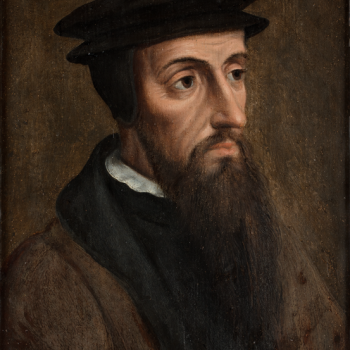
John Calvin & Calvinists on Forensic Justification
Biblical Evidence for Catholicism
Proof That Calvin Affirmed Mary's Perpetual Virginity
Biblical Evidence for Catholicism

Unconditional Reprobation: Calvinist Biblical Prooftexts
Biblical Evidence for Catholicism
Renowned Calvinists On Unconditional Reprobation
Biblical Evidence for Catholicism
TRENDING AT PATHEOS Catholic

I was strolling through the top floor of the brand new Parthenon...

What Does Gêvâh Mean For Kimberley Guifoyle &...
This week, a lot of the news is focused on Kimberly Guilfoyle....

INNER CIRCLE: Profound Mystery (Of Christ In All...
Ephesians 5:31-32 “For this reason, a man will leave his father and...

Do Not Rejoice When Your Enemy Falls: The...
Turning an execution into a public spectacle is a disturbing expression of...

'The Chosen' S6 Trailer: The Passion Gets Very...
Not many watching 'The Chosen' worry about spoilers, but just because they...

The purpose-driven labor priest
A labor activist reads Rick Warren and it gets me wondering about...
view all Catholic blogs
What Are Your Thoughts?leave a comment
Ad-Free & Subscriber Log-In Subscription Support
- About Us
- 2026 Calendar
- Videos
- Podcasts
- Library of World Religions
- Faith In Media Tracker
- Advertise With Us
- Write for Us
- Privacy Policy
- Terms of Service
- Do Not Sell My Data
- Contact Us
- Radiant Digital
- Manage Newsletter Subscriptions
- Unsubscribe From Notifications
- Sitemap
Copyright 2008-2026, Patheos. All rights reserved.
Subscription Support Ad-Free & Subscriber Log-In
Follow Patheos